
Some of my writing projects start with an idea for a good plot or character. Others are inspired by something I see or witness in my daily perambulations around town. But no matter how my ideas arrive, they all boil down to “what if….”
 On rare occasions, usually at the midpoint of a story that I didn’t outline, it felt as if I was looking for water in the desert, as the ideas were few and far between. That’s when I used to find myself trying to make a novel out of a manuscript rife with unplanned stupidity.
I no longer force my brain to work when it’s on its last legs.
For me, the first stages of laying down a story are more like creating an extensive and detailed outline. This method helps me build an overall logic into the story as it evolves.
At every story’s outset, we meet our protagonist and see them in their familiar surroundings. The inciting incident occurs once we have met them, whether they are ready for it or not. At that point, we must take them to the next stumbling block. But what is that impediment, and how do we overcome it?
And, just as importantly, what repercussions will they face for having crossed that barrier?
Answering that question isn’t always easy. The place where writing becomes work is a hurdle that the majority of people who “always wanted to be an author” can’t leap. Their talents lie elsewhere, and that is okay.
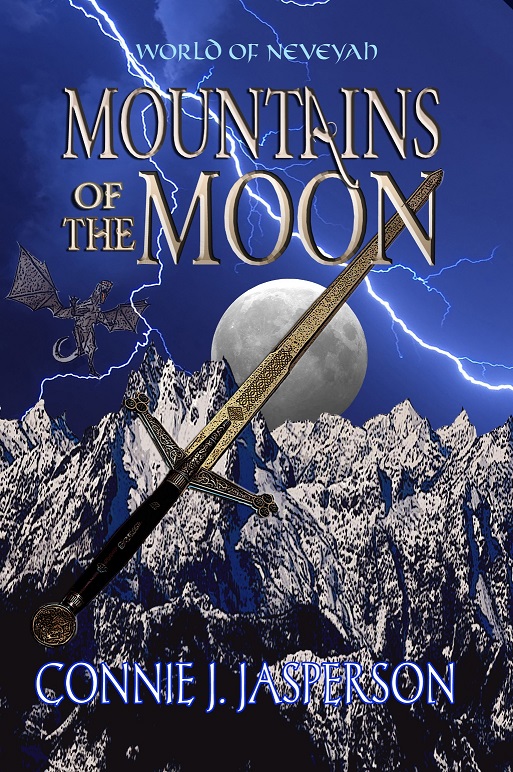 Fortunately, I know what must happen next in my current work in progress because the story is already canon, a historical side note in Mountains of the Moon. At this point, I am brainstorming the characters’ motivations that lead to the desired ending.
I have found it helps to write the last chapter first – in other words, start with the ending. My first NaNoWriMo novel in 2010 began with the final chapter. I managed to write 68,000 words in 30 days thanks to my great characters, whom I wanted to learn more about. I was desperate to know how they arrived at that ending.
What happens when the first lull in creativity occurs? It often happens within the first ten pages. But no matter where it happens, we need to remember that an imbalance of power drives plots, and knowledge is power.
The dark corners of the story are illuminated by the characters who have critical knowledge. This is called asymmetric information, and the enemy should have more of that commodity than our protagonist.
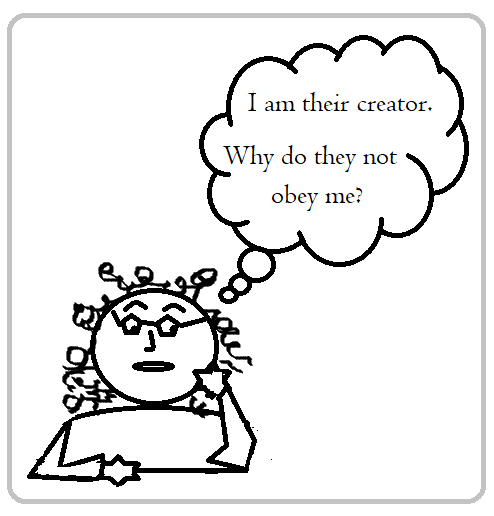 The enemy puts their plan in motion, and we have action. The protagonists are moved to react. The characters must work with a limited understanding of the situation because asymmetric information creates tension. A lack of knowledge creates a crisis.
Plots are comprised of action, reaction, and consequences. I must place events in their path so the plot keeps moving forward. These events will be turning points, places where the characters must re-examine their motives and goals, and how much they are willing to endure to achieve them.
At several points in this process, I will stop and think about the characters. What do they want? How motivated are they to get it? If they aren’t motivated, why are they there?
Answering a few questions about your characters can kick the plot back into motion. Start with the antagonist because his actions force our characters to react:
- Why does the enemy have the upper hand?
- How does the protagonist react to pressure from the antagonist?
- What are the consequences of this reaction for both characters?
- How does the struggle affect the relationships between the protagonist and their cohorts/romantic interests?
- What complications arise from a lack of information?
- How will the characters acquire that necessary information?
Our characters are unreliable witnesses. The way they tell us the story will gloss over their failings. We can accidentally make them into Penny Perfects if we aren’t careful. The story takes shape as the characters are compelled to overcome their weaknesses and confront their deepest fears.
My first drafts are just the skeleton of the tale, an expanded outline. I flesh out what I can as I write, and that first draft will still be somewhat thin with significant gaps.
 Once the first draft is finished, I add visuals, action, and reactions. I may have gotten the large things down, but much will evade my imagination. To resolve that problem, I insert notes to myself, such as:
- Fend off the attack here.
- Shouldn’t they plan an assault here? Or are they just going to defend forever? Make them do something!
- Contrast tranquil scenery with turbulent emotions here.
We all know that arcs of action drive plots. Every reader knows this, too. Unfortunately, when I’m tired, random, disconnected events that have no value will seem like good ideas. Action inserted for shock value can derail what might have been a good plot.
I never show my first drafts to anyone because the manuscript is more like a series of disjointed events and conversations than a novel. I save that file as a first draft once I have written the ending, because if (deities forbid) something should happen to a later draft, I will need that original file, despite it being not much more than a long and fluffy outline. The file name might be: my_novel_fst_draft
 I then resave the manuscript as a second draft and begin stitching it all together, focusing on worldbuilding, expanding on scenes, and filling in the plot holes: my_novel_snd_draft
I must be honest. It usually takes five or six drafts and several years for me to make a coherent story with a complete plot arc and interesting characters with logical actions and reactions.
I am not able to churn out novels the way some prolific authors have done over the years. I write for fun and don’t worry about deadlines, which, in my opinion, is the sole reason for pursuing any art form.


 Life in the Realm of Fantasy