Tag Archives: #amwriting

Elements of the story: making effective revisions

puppy happy dance via pinterestThere is no feeling of accomplishment like that of having completed a novel, or a shorter piece. Once that final sentence is written, there is that happy-dance moment, where we are shouting and the world is singing.

Following that, we have the urge to immediately look the finished manuscript over and see where some revisions could be made.

I know it’s tempting, but don’t do it. We need to gain some distance from our work in order to see it more clearly, so put it aside. If you work on something else for a couple of weeks, or even a month or two, you will gain a better perspective on what you just finished, and your revisions will bring out the best in your work.

But when we do get back to it, where do we start?

Stephen King said it so eloquently in his book, On Writing: “I got a scribbled comment that changed the way I rewrote my fiction once and forever. Jotted below the machine-generated signature of the editor was this note: ‘Not bad, but PUFFY. You need to revise for length. Formula: 2nd Draft = 1st Draft – 10%. Good luck.’ — Stephen King, On Writing, 2000

This means we must cut the fluff.  If your 1st draft is 100,000 words, try to cut 10,000 words out of it, making it 90,000. The following is a list of things to consider:

  1. Dialogue pitfalls: Search for clichés. Speaking as a reader, do a global search for the word alabaster. If you have used it to describe a woman’s skin, get rid of it, and find a different way to describe her. It’s an overused word that has become cliché. Find different ways to say what you want, unless you have a character who uses clichés–if so, he’d better have a good reason. Even then, don’t go overboard. Click here for a looooong list of common clichés: ProWriting Aid.
  2. Try to make your sentences do without these words: very, that, just, so, and literally. There will be places where they are the only words that will work, and you will use them in that instance. Usually just cutting them out of the sentence and adding nothing makes the sentence stronger. Fluffy, over-blown prose weakens the narrative.
  3. Flowery prose, even in a medieval setting, is off-putting to a reader. Do a global search (Cntrl F) for two letters: ly. This will bring up all the adjectives  (oops adverbs, thank you David Cantrell) because they end in ly. Look at each instance and if it is possible, get rid of them. Often the sentence is stronger without that extraneous word. Find a way to show the idea without flowery prose. This is where you grow as a writer–you give visual clues that enhance the story.
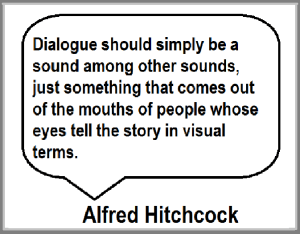
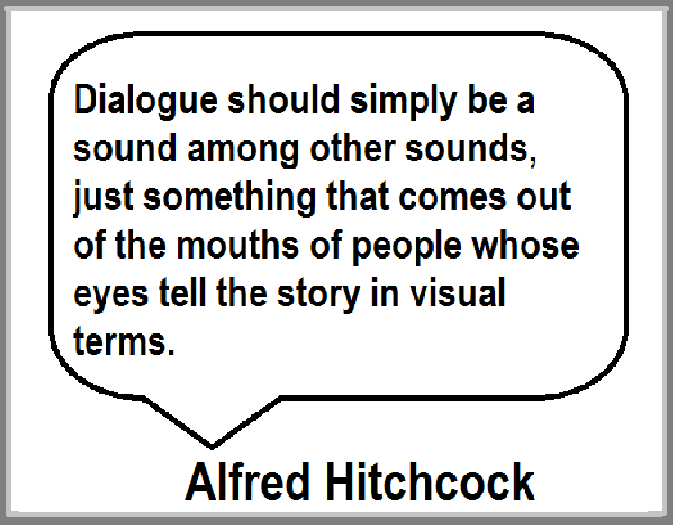
  4. Alfred Hitchcock quote re dialogueExamine the ms for conversations that are opportunities for info dumps. Info is good, but don’t dump it–dole it out as needed, and only when needed.
  5. Are people long-winded, and ranting on and on, with nary a pause for breath?  Decide what is really important in what they are saying and cut everything else.  Conversation in literature must have a purpose, or it is as boring as hell. Cut those marathon speeches down to where they sound like normal people talking, not like orators.
  6. Conversation must pertain to and advance the story. Small talk and verbal tics are obnoxious, and should be avoided at all cost. DO NOT have your characters preface sentences with “Hmmm…” and DO NOT have them use the name of the person they are speaking to, unless there are more than two characters in the scene. You can avoid things like “Well, Bill, it was like this…” just by having the speaker turn to Bill, and say it.
And now for my pet peeve: People do not smile, snort, or smirk dialogue. I mean really: “That’s a lovely dress,” snorted Clara. (eeew. )  Stick to simple dialogue tags, such as said and replied. In fact, it is often best to do away with speech tags (attributions) altogether for a few exchanges every now and then, if:  A. you have only 2 speakers, and B. you have clearly established who is speaking. You can also show who is speaking in other ways:

  1. Miss a few beats. Beats are little bits of physical action inserted into dialogue: John fell quiet and stared out the window. Halee turned and walked out the door. Used sparingly, these pauses serve to punctuate the dialogue, to give the scene movement, and to maintain a strong mental picture in the absence of description. They’re best placed where there is a natural break in the dialogue, because they allow the reader to experience the same pause as the characters.
  2. Don’t over do the action within the conversation. If your characters are rattling pans, slicing apples or staring out the window between every line of dialogue, the scene becomes about the action and not the dialogue, and the impact of the conversation can be lost entirely.
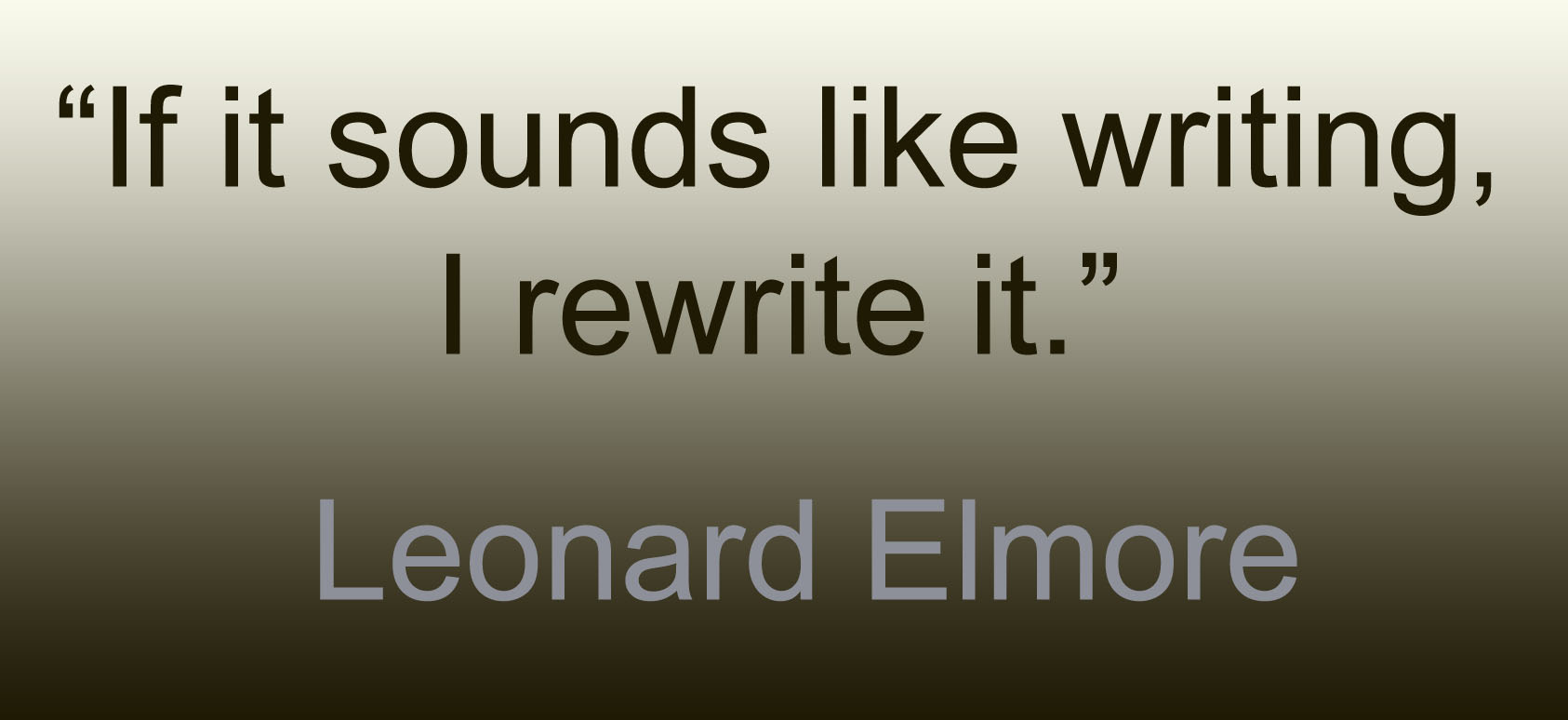
leonard elmore quoteIn our first draft we are trying to make our point, and we inadvertently repeat ourselves. A good way to find where you are repeating yourself is to read a chapter from the bottom up, one paragraph at a time. My editors frequently  tell me, “You said it once, that’s enough.”

In my own work, I hear repetitions and other things I need to cut, if I read it aloud to someone else. I think that’s because when another person is listening, we are more aware of how a given passage sounds.

Also, consider not including a prologue. About half of the readers see the word “prologue” and assume it will be a boring info dump, so they skip it.

This begs the question, “Why go to the trouble of writing it if they aren’t going to read it?” If you must have a prologue, consider calling it Chapter 1– and make it clear that is occurring twenty years before the present day (or whatever). Make it immediately exciting, make it a true first chapter. And don’t do an excerpt from a Holy Book as your prologue. I did that once, and it flew like an iron kite. So I moved my Holy Book to the appendices, and if a reader is interested, they can read it there.

These are just a few things to look for when you begin revisions. And just so you know, revisions are not editing, they are rewriting. If you are “editing” your own manuscript, you have a fool for a client. There is no such thing as self-editing–the best you can do is make revisions and admire your work. You may do very well at that–some people do.

You must make revisions before you hire an editor. Then, ask other authors who they might recommend as an editor and see if you can work well with that person. Your editor will likely point some things out that you didn’t see, but that a reader will. At that point, you will make revisions again. But the results will be so worth it!
5 Comments

Filed under Humor, Self Publishing, Uncategorized, writing

Mapping the Story

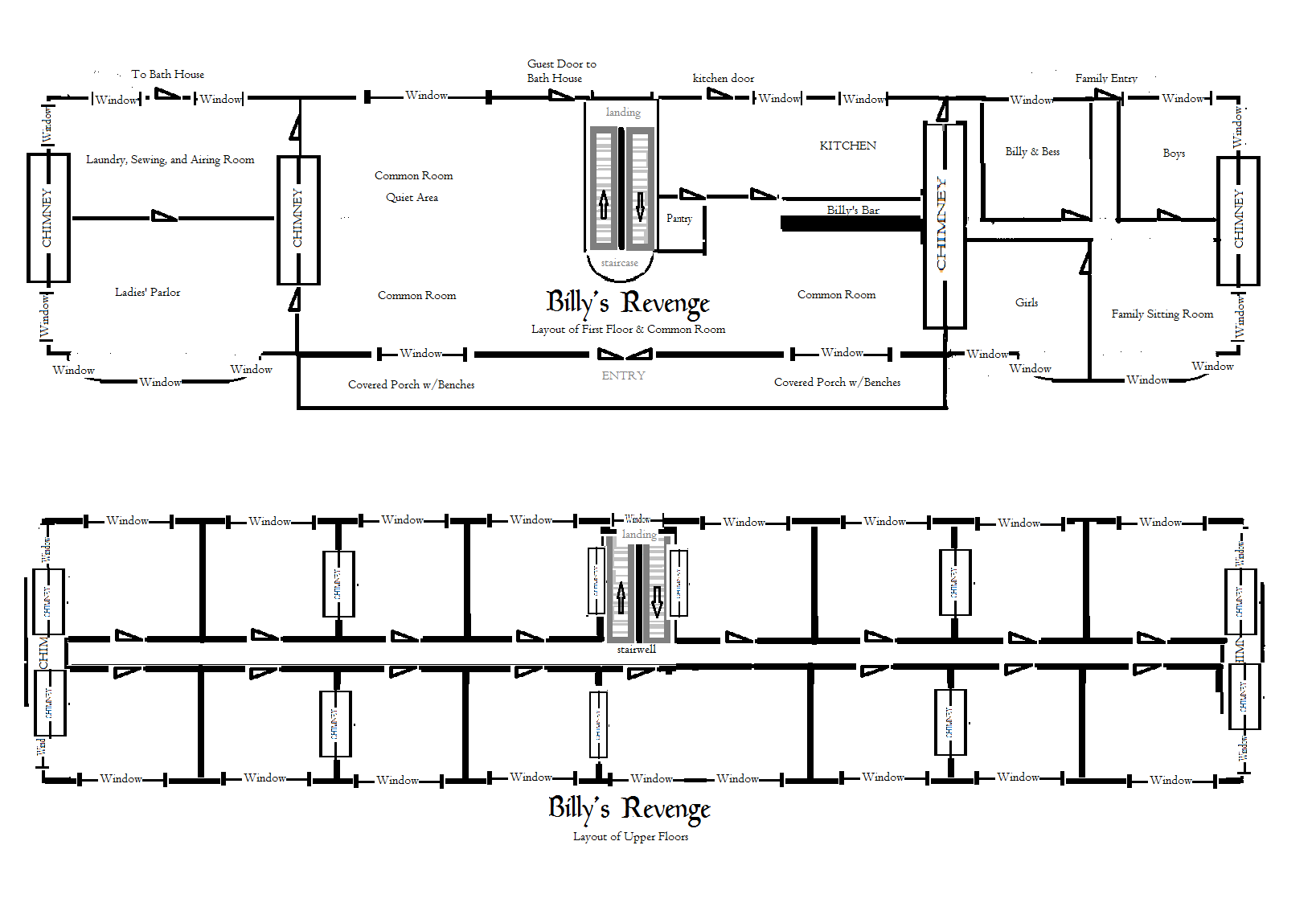
Billy's Revenge Floor plan ground floor

Billy’s Revenge © Connie Jasperson 2015

I was worried I wouldn’t have a blog post for today. The power was out most of Saturday due to a large storm here, and there have been times when that  lasts three days here.  When that happens I have no way to post my blog, although I hear you can post them from cell phones if you know the magic words.

I’ll just say that if I have to key my blog on a cell phone, it will take 5 years to get it ready for posting.  I am the world’s slowest text-message-er. Of course, if you have predictive texting set up, and make good use of auto-fill, you could have some real fun, and do it quickly! But that was another blog post.

After the power outage, my printer/scanner was not speaking to my computer, so I couldn’t print or scan. I did behave, no temper tantrums here. My IT man, (a.k.a. my beloved, long-suffering husband with the patience of a saint) took the time to rectify that situation. I was at the limits of my endurance with that thing.

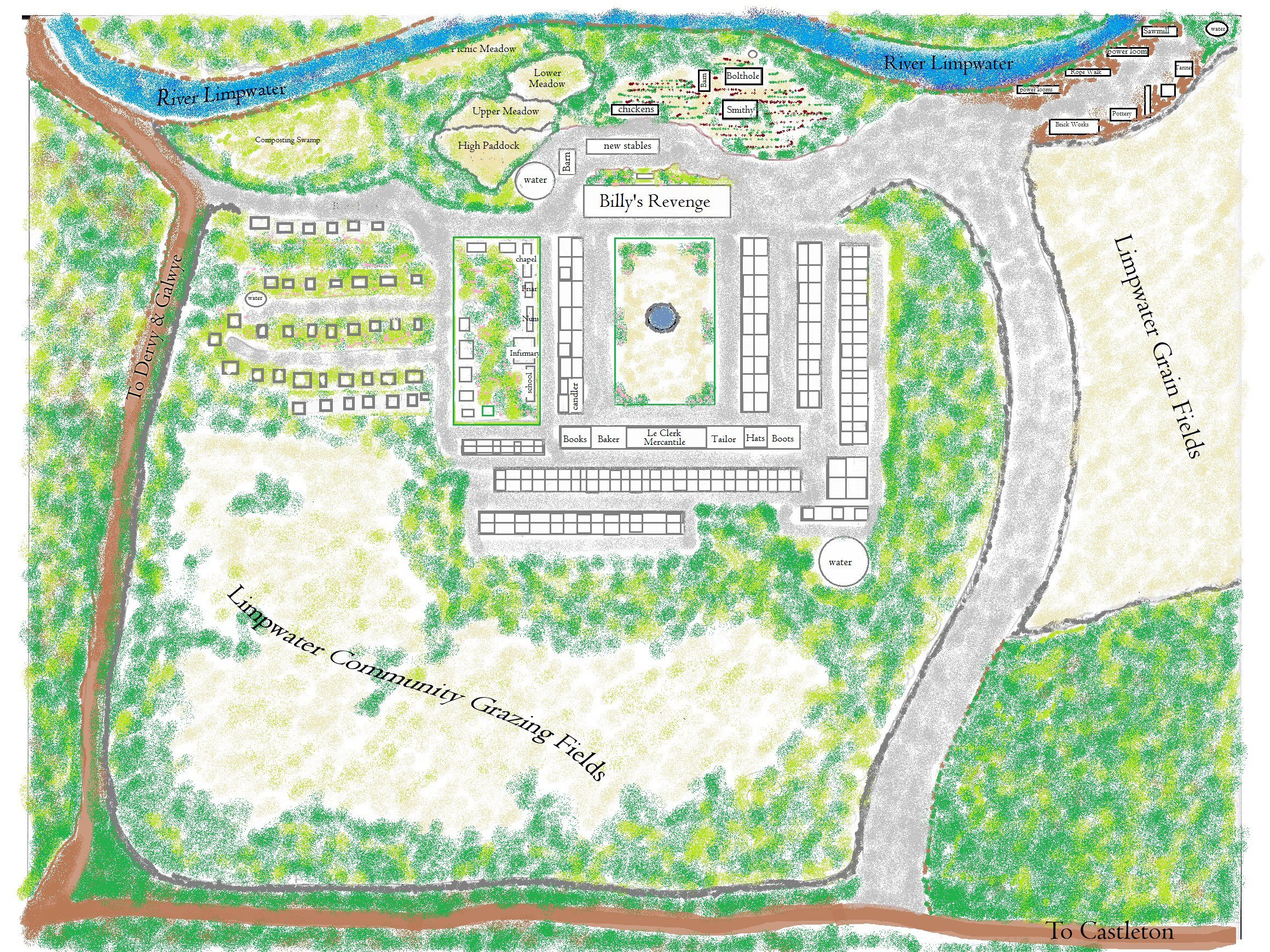
So, because our power was out, I worked on a pencil sketch of a new map for an upcoming novel, Billy’s Revenge. On Sunday, I digitalized it. It isn’t complete, and is out of proportion in some places but when it is finished, it will tell me everything I need to know about Limpwater.

Map of Limpwater copy

Map of Limpwater, © Connie Jasperson 2015

I always have some sort of map to work with, even if it’s just scribbled, when I am writing in a world of my invention, and they all start out as pencil sketches. Eventually, they become the digital versions you see in my books.

That book will consist of 1 novel and 4 short stories that all revolve around the inn known as Billy’s Revenge. Huw the Bard returns, as does Julian Lackland. Billy Ninefingers has a few misadventures that threaten his career, mess with his chances  to convince Dame Bess to marry him, and set him on a path he never thought he would find himself traveling.

In the opening short story, we meet Eddie, Billy’s father, and see the origins of the Rowdies. Eddie’s story sets the stage for Billy’s trouble with Bastard John. Several short stories that were cut from The Last Good Knight will be included at the end of Billy’s novel, as they don’t pertain to Julian Lackland as much as they do the entire group of Rowdies, Billy Ninefingers included, and they are fun stories.

BNF sign

BR Pub Sign © Connie Jasperson

I’ve had the sign that will hang over the porch in front of Billy’s inn ready for quite a while–hanging it is going to be the trick.

When the power went out, I had Photoshop open and was working on the cover for Valley of Sorrows. But while I know how the graphics will be and I am happy with their layout, I’m not really happy with the art I have located so far, but it’s still early days. I will keep searching, which I enjoy doing.

Anyway Saturday  was not as productive as it could have been.

And Sunday was a busy, catch-up day. Fortunately, it rained off and on all day, so I was able to finish a lot of what I needed to get done.  Today will be as crazy as any Monday ever is, and I will simply have to make time for revisions.  All I need is an hour here and there. I am close to having it ready for editing. I will have Valley of Sorrows published in the spring of 2016, if all continues to go well.

4 Comments

Filed under Books, Publishing, Uncategorized, writer, writing

The clock, groceries, and a new thesaurus

Jetsonslogo640x480At times the world seems to be conspiring against me.  I have to drop what I’m doing, load up the van, and head up to town for something as mundane as groceries. Food should order itself, deliver itself, and put itself away.

But no. Where is my android butler and why is he not doing the shopping? Just like the flying car I was promised when I was child, my android butler is in the Jetsons‘ style garage of my imagination.

But sometimes I get two or three pages of writing done in the 20 or 30 minutes before I have to leave the house for an appointment. There is something about the pressure of knowing I will have to quit at a certain time that forces me to be more productive than I would ordinarily be.

Why is this? When I am pressed for time I use every second to get those ideas out of my head. I don’t stop and research on the good, old, time-wasting internet, and I don’t worry about whether or not I am overusing a word in the narrative. This is a rough draft–all of that can be ironed out when I have more leisure–the next day usually.

clockSome of my best ideas have come about under a time crunch.  Normally when I am writing on a stream-of-consciousness level, I can key about fifty words a minute–paltry compared to today’s young-uns who grew up keying their homework rather than writing it in cursive.

I do admit that just because I can key those words does not mean they will all make sense, or be worth reading. But that again is why we are driven to look at what we just wrote the day after we wrote it–did it say what I meant? How many times did I use the word “noose” in that particular chapter and where am I going to find six different alternatives for such a unique word?

Apricot poodle puppy portrait. Isolated on a white background (studio shoot), via Google Images

A little rephrasing here, cutting there, and voila! It looks like a poodle!

It’s a jungle in my head sometimes, and my ancient  student edition of Roget’s Thesaurus is my friend. But neither the old student version of the thesaurus from 40 years ago, nor the modern, online version is cutting it for me right now.

I need more synonyms. Lots, and lots more!

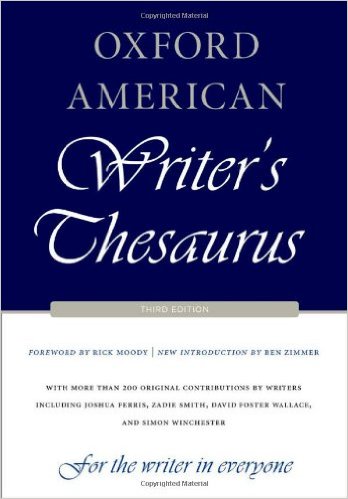
I have just now invested in a bigger, better, hardcover thesaurus. Thus I now have the Oxford American Writers’ Thesaurus winging it’s way to my doorstep. I expect the drone to drop it on Saturday.

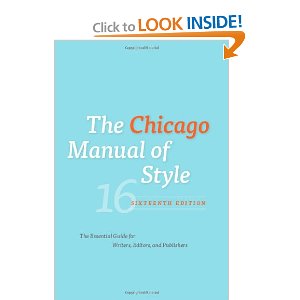
ozford american writers thesaurusSome references have to be in hard-copy–such as The Chicago Manual of Style, which is the most comprehensive style guide geared for writers of essays, fiction, and nonfiction. Strunk and White’s Elements of Style is a good beginner style guide, but I found it hard to navigate and couldn’t always find what I wanted. The Chicago Manual of Style is written specifically for writers, editors and publishers and is the industry standard.

Just as a side note–if you are using AP style you are writing for the newspaper, not for literature–two widely different styles with radically different requirements. AP style was developed for expediency in the newspaper industry and is not suitable for novels or for business correspondence. For business, you want to use the Gregg Reference Manual.

Eternal_clock

Eternal Clock, Robbert van der Steeg CC|2.0 via Wikimedia Commons

All in all, I like the way being forced to produce words in a short time helps me lay down a rough draft. But being short on time is big pain when I am trying to revise and iron out stubborn, repetitive wrinkles in a narrative.

Summer is nearly over, and with that comes the long, dark days of the northern winter. I won’t be going as many places (I hope). But with the advent of September I will be spending longer hours editing for clients. My personal productivity will drop in regard to my own work, but I will still find time to write.

And I will also find time to revise. I am nearly at the end of two books written for the World of Neveyah series. Valley of Sorrows will wind up the Tower of Bones series–it is completed and is in revisions. The Wayward Son is nearly complete. While The Wayward Son is not actually a part of the Tower of Bones series, much of it does run concurrently with Forbidden Road, as it is the story of John Farmer’s redemption.

Today will be busy–groceries can wait until tomorrow. Today I am working as hard as I can, trying to get Valley of Sorrows ready to be edited, so that the ToB series will be complete, and also to get John’s story out there too.

2 Comments

Filed under Books, Humor, Literature, Publishing, writer, writing

But what if they don’t like what I #amwriting

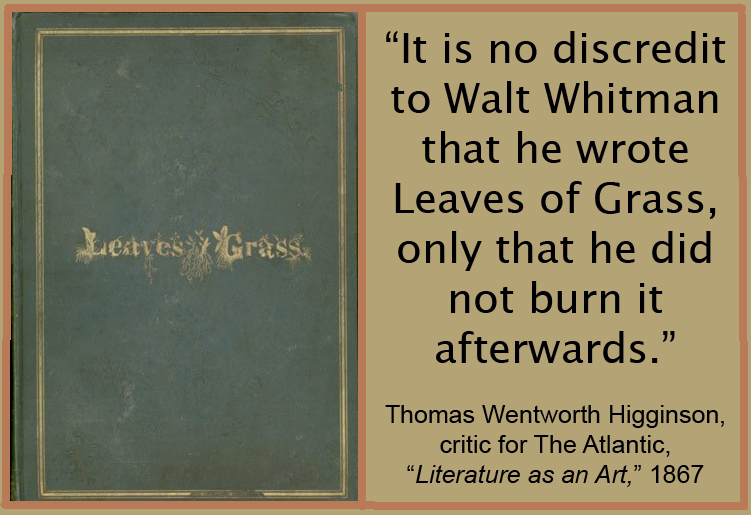
leaves of grass memeI’m just going to come out and say it–sometimes people don’t like what I write.

I know!  Who knew?

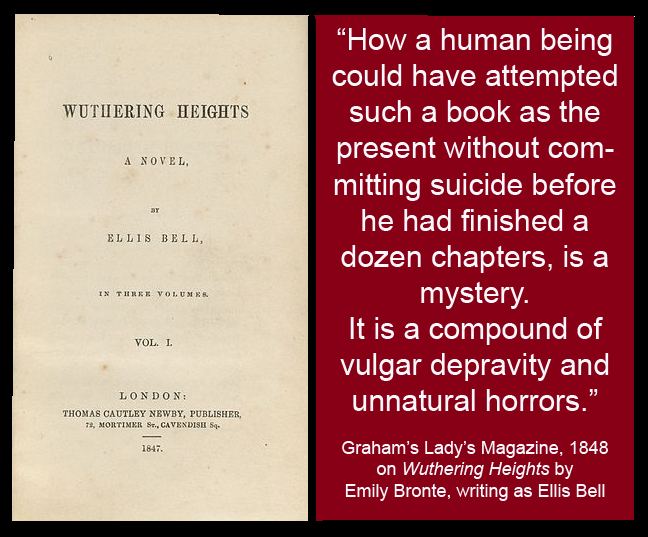
But it’s true, and I’ve the reviews to prove it. However, for every person who dislikes my work for one reason or another, someone else loves it, and they are the reader I am writing for.

If you focus your attention on reviews, good or bad, you risk losing your enjoyment of the craft. Writing is an extremely personal thing, and when a novel is completed we offer it to the public, who then airs their opinion on the quality (or lack thereof) of the fruit of our  labors. We are proud of our work when it is well received, and we are proud of it when it is ignored or disparaged.

Wuthering_Heights,_1847I rarely look at my reviews because I have to concentrate on what I am currently writing, not on what I’ve already done. Every now and then a friend will post a good review by another reviewer on my personal Facebook page and I appreciate that sort of thoughtfulness.

But honestly, I don’t talk a lot about reviews on my personal page, good or bad. This is because I think my friends and family know what my job is and how selling my product works. I already bore them enough as it is with all my going here and there to hawk my books BS.

The minute we publish, whether through the traditional route or by going indie, we are putting ourselves and the thing we cherished most in the hands of the reading public.

At that point you must walk away from it emotionally.

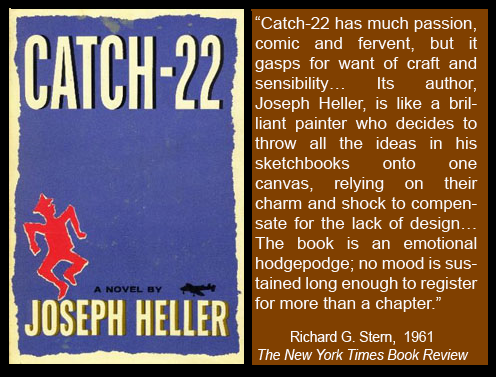
Catch22But while I do like having reviews, I want a variety of them. This shows the potential buyer that more people than just my friends are reading my books.  A mix of good and bad reviews is good because even the bad ones go a long way toward establishing credibility in the reading community. The reviews and numbers of stars will level out and in the end, the more reviews you have, the better for your book.

Most readers are smart. I don’t know about other people, but want to judge a book or product for myself, rather than be told what to think by a reviewer.  This is because most reviews on Amazon are not very enlightening, and alternatively, reviews bought in advance by publishers don’t impress me, good or bad.

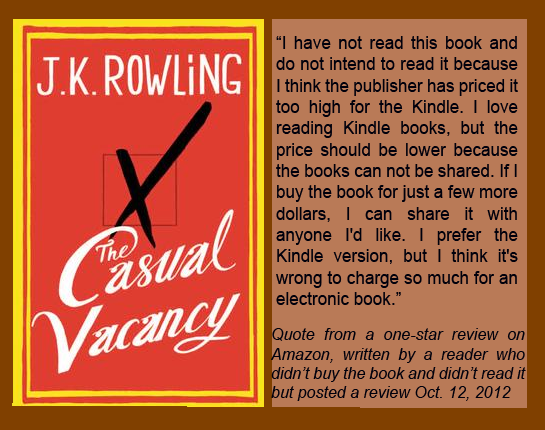
The_Casual_VacancyI make my own mind up when I read the book for myself. I enjoyed The Casual Vacancy by J.K. Rowling, even though a kajillion people couldn’t wait to take her down a notch. Read my review of that book here.

You won’t write anything worth reading if you only do it with the intention of getting glorious reviews. Write because you have something to say, and write what YOU want to read. Never publish anything less than your best work and ignore the reviews, good and bad.

Some of the best books ever written have received the worst reviews. Your book could be one of them, so don’t look at bad reviews as a measure of your worth as a writer. Ignore them and just keep on writing. You are writing because you love it and that is what you do.

Everything else is just fluff.

5 Comments

Filed under Literature, Publishing, Uncategorized, writer, writing

Elements of the story: identifying and crafting a strong theme

The Plaza After Rain, Paul Cornoyer PD|100 via Wikimedia Commons

The Plaza After Rain, Paul Cornoyer PD|100 via Wikimedia Commons

“Theme” is an idea or message that flows through a story from beginning to end. Theme is what readers think the work is about but it is also what the work itself says about the subject.

It is ephemeral in that theme is only an idea, but it is like the moon–it is there and the world is greatly affected by it through the pull of gravity: witness the tides.

In a given work the theme might never be mentioned outright, but the characters’ actions are motivated by it and the plot revolves around it. Here is a link to a list of 101 common themes in books.

How do you make something as hard to get a grip on as a theme central to your story? The theme was an idea about the plot, a notion you had about your story when you first began to write it, no matter what the setting you placed it in was, or whether the genre was fantasy, sci-fi, paranormal, or contemporary fiction.

Brothers in Arms, Bujold, coverPerhaps you are writing a tale where a group of people face heroic challenges in a war. On the surface this looks like it it is all about the action, but in reality it is is not. It is about relationships, the bonds of friendship, and the way the events of this war bind a group of soldiers together and also the way events test those bonds, perhaps breaking them. The theme of this tale is the way fighting a common enemy binds strangers from all walks of life together: creating brothers- and sisters-in-arms.

The way I look at it, the theme is as important as the main character. You spend as certain amount of time creating strong characters. Perhaps you are like me and make personnel files for each new character so you know who they are, how they think, and how they will react in a given situation. Or not, but you know your characters the minute the enter the story.

I try to identify my theme early on, and write a short paragraph to myself to remind me of what that central idea was so I stay on track. During the initial writing process I regularly refer back to that little note, to ensure I have not lost my way. I want to write in such a way that I emphasize and exploit that idea throughout the book or short-story.

Initially, when I first started writing full time, I was not always good at sticking to my original idea. At times the core themes became mushy, which, when you read these stories, takes away from the cohesiveness of what otherwise could have been good work. Theme is glue that binds your plot and characters.

The best way to get a grip on both identifying and solidifying the theme is to practice writing with a specific core theme in mind. Write a short story, just a piece of flash fiction. Make every paragraph represent some aspect of that central concept.

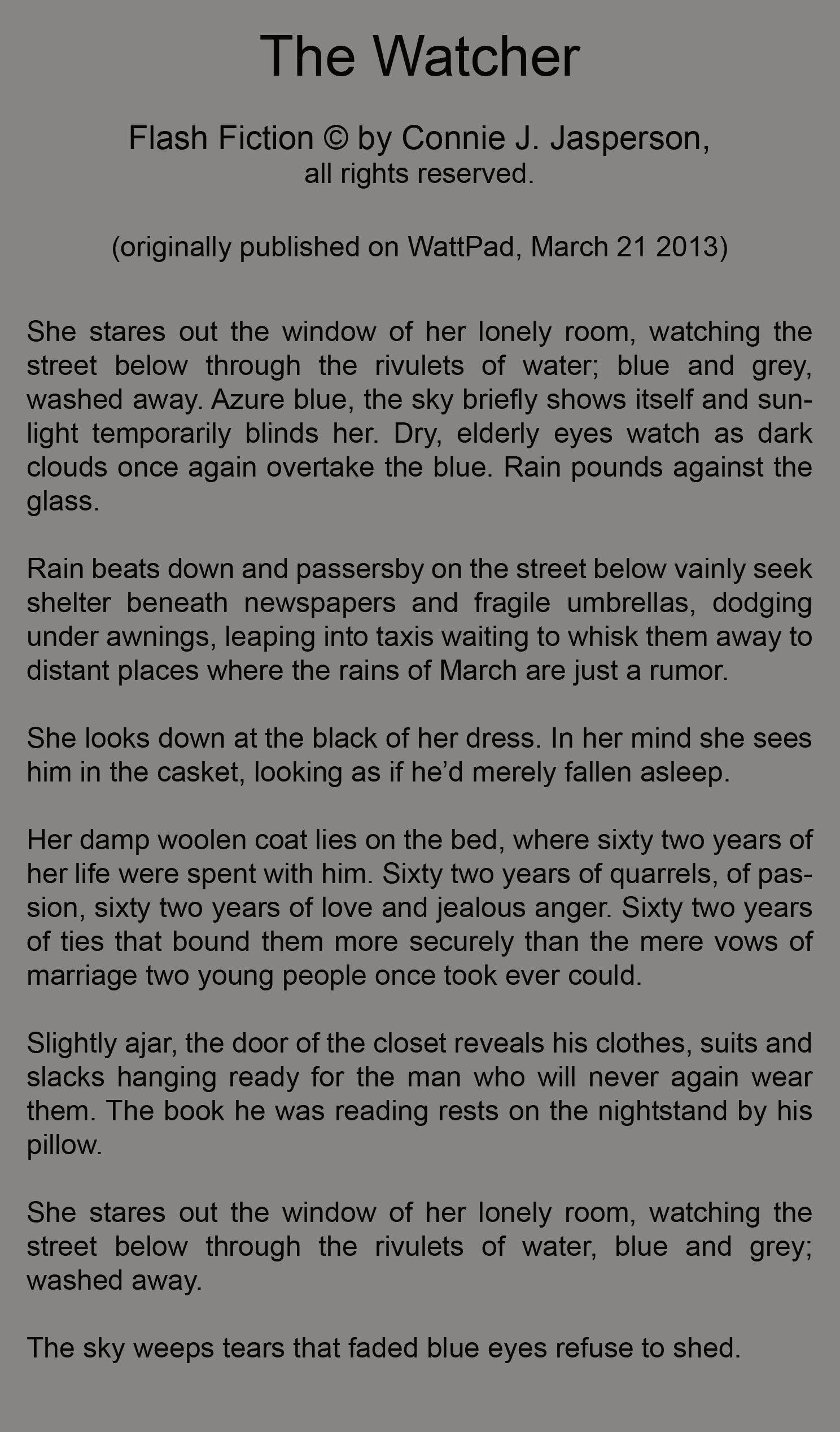
I tend to think of themes and then write stories set in fantasy worlds, but not always. Take this piece of Flash Fiction I wrote in 2013:

the watcher flash fiction

It is set in a contemporary environment with no fantasy elements. The idea came from the painting at the top of this post by Paul Cornoyer, and the action is minimal–an elderly woman staring out a window. But the theme is grief, and everything in these short paragraphs points to and represents her sense of loss.

How do you identify your theme? Sometimes it’s difficult, unless you start out with one in mind. Most of my books are based around the hero’s journey, and how the events my protagonists experience shape them. Alongside the theme of good vs evil are the sub-themes of brotherhood, and love of family.

These concepts are important to me on a personal level, and so they find their way into my writing. Ask yourself what is important to you? When you look for a book, what catches your interest?I am not talking genre here, I am speaking of the deeper story. When you look at it from a distance, what do all the stories you love best have in common?

  • Political thrillers: Set against the backdrop of a political power struggle. Political corruption, terrorism, and warfare are common themes.
  • Romance Novel: Two people as they develop romantic love for each other and work to build a relationship. Both the conflict and the climax of the novel are directly related to that core theme of developing a romantic relationship, although the novel can also contain subplots that do not specifically relate to the main characters’ romantic love.
  • Literary fiction focuses on the protagonist of the narrative, creating introspective, in-depth character studies of interesting, complex and developed characters. Action and setting are not the point here, although they must also be carefully developed in such a way they frame the character, and provide a visual perspective.
  • Science Fiction: realistic speculation about possible future events, based solidly on adequate knowledge of the real world, past and present, and on a thorough understanding of the nature and significance of the scientific method. Science and technology are a dominant theme, but based on current reality. Characters are still subject to sub-themes such as morality and love, but setting and science are the main themes.
  • Fantasy: Often set in alternate, medieval, or ancient worlds, common themes are good vs evil, hero’s journey, coming of age, morality, romantic love. Can also be set in urban settings with paranormal tropes.

the hobbit movie poster 2On the surface these types of books look widely different but all have one thing in common–they have protagonists and side-characters. These people will all have to deal with and react to the underlying theme of the book. Morality, love, coming of age–these ideas can be found in nearly every book on my shelves or in my Kindle.

In my mind, the genre and the setting in which these characters react to the wider concepts are just a backdrop. The world they are set in is the picture-frame, a backdrop against which the themes of the story play out, and characters are shaped by a force beyond their control–the author.

4 Comments

Filed under Literature, Publishing, writer, writing

Is it damn fool, damnfool, or damned fool?

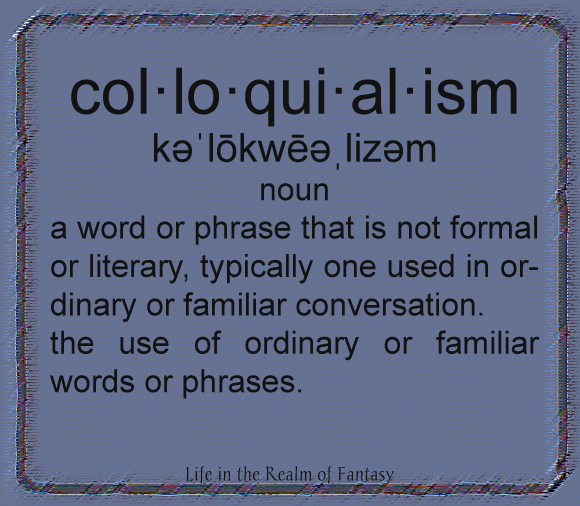
colloquialism memeOne of the more interesting things about being an editor is the amazing amount of time you spend stopping what you are doing and doing a little research. This is especially true if you are editing a piece that has a lot of colloquialisms in it.

Fortunately, some colloquialisms have made it into the Webster’s Dictionary, and the rest are out there on the internet somewhere.

Let’s consider the question of if we mean damn fool, damnfool, or damned fool:

According to the Urban Dictionary

  • A person who is extremely foolish. Their actions are not only irresponsible to themselves, but can possibly be harmful towards others.
  • If a guy tries and talk you out of using a condom, he is a damn fool. (You can’t make this stuff up–you have to go to the internet for it.)
  • Did you see that damned fool? He was swerving all over the road. (end quoted text)
And just for fun, lets see what Wiktionary has to say:
  • damn fool (adjective)
  • damnfool 
  1. (informal) Contemptibly foolish. (end quoted text)
He was a damned fool.

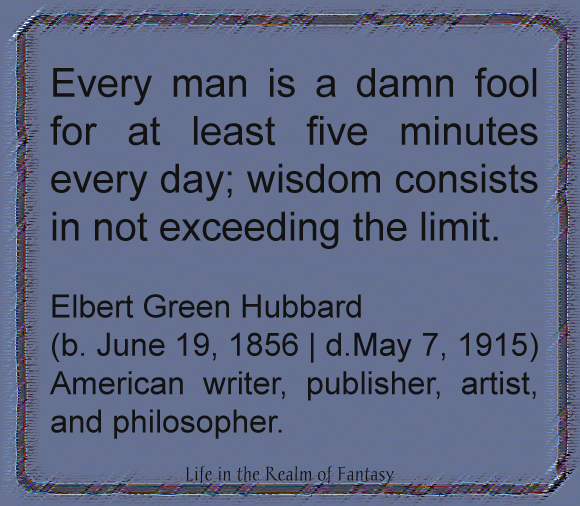
Ellbert Hubbard memeHow I see it:

  1. He was a damned fool. (I just cursed him to hell.)
  2. He was a damn fool. (He was contemptibly foolish)
  3. He did a damnfool thing. (He was contemptibly foolish and I will curse him to hell.)
Now this can be tricky if you are unsure which of these damnfool things the author meant, so this is where I insert a comment asking the author what kind of a damned fool she is writing about.
.
What other fun little “OMG I have to stop and look this up” things do I play with when I should be working?
  • I love looking up Pagan rituals, or indigenous peoples’ religious rituals.
  • I love anything to do with history, and exact dates.
  • Ooh! Ooh! Let me look it up on a map!
Yep–looking things up is part and parcel of the fun. I’m just not as keen on looking up where to properly place commas–the rules make my head hurt.
 .
So let’s talk commas and where to stick ’em, or better yet, where NOT to stick ’em. I found a wonderful website that has a handy-dandy list of comma don’ts phrased in simple language that did not make my eyes go numb: The Proper Care & Feeding of Commas
 .
chicago manual of styleImproperly installed commas can wreak havoc in a paragraph. This is because they are punctuation: “…the act or practice of inserting standardized marks or signs in written matter to clarify the meaning (of a sentence.)” (quoted from Google)
.
Commas are there to separate clauses and to make sentences understandable. Consistently used according to the accepted rules, commas make it so that every English-speaking reader understands what you have written. We don’t put them in to indicate to the reader where we pause or take a breatheveryone pauses and breathes differently and what makes sense to you will not make sense to someone else.
.
These are the same rules for everyone, which make our work understandable in Brisbane, Houston, London, Hong Kong or Seattle. But the rules in the Chicago Manual of Style (my go-to manual) are often ambiguously phrased and are hard to remember. SO, when checking on simple points, I love this website for a quick list of comma dos: Your Dictionary: Comma Rules
 .
Dialect and local sayings play a huge part in contemporary work–sometimes I get a piece that was written by a UK author.  Perhaps it is an Urban Fantasy and it will have all sorts of words I have never heard of: again, I go to Your Dictionary: Common UK Expressions. This  is also a problem with American dialects and local slangs–the internet is my friend! Texas-talk is “a whole nuther thang” and sometimes more difficult to follow than Cockney EnglishHowdy Get Rowdy
 .
It is an editor’s job to do a certain amount of research whenever a question arises in the manuscript to ensure his comments will help the author clarify ambiguous and hard-to-understand areas. Having fun surfing the internet looking up obscure and interesting facts is just one of the perks!
.
keep-calm-and-say-you-fool-you-damn-fool

2 Comments

Filed under Books, Fantasy, Humor, Literature, Publishing, Uncategorized, writer, writing

What did I just write? Labeling short fiction

Cover_of_the_WLT_March_2013_issue

World Literature Today, March 2013 issue published bi-monthly at the University of Oklahoma

When you write a lot of different short stories, you really get to explore all aspects of your creative mind. You never know what will fall out of your head, so you find yourself writing in a wide variety of genres, things you never thought you would find interesting.

But they consume you and you can’t stop writing.

So now you have this wonderful backlog of short stories to enter in contests and submit to various publications–but now you find that this contest wants general fiction, and this one is fantasy. And this one is sci-fi only!

Dude–how do I know what tale to send to who?

If your work is nonfiction, it’s no problem, because your work is targeted to a magazine with a specific readership, so the sub-genre will be readily apparent and where you should submit it was likely clear the day you decided to write it.

Where this gets dicey is when you write short fiction with no specific contest or magazine in mind. When you sit down to write a short story with an open mind, random ideas flow and because you are working within the limits of 3000 to 7000 words, your stories are creative and stretch you. But they will be widely different from your normal work, and will not always be in a genre you can easily identify. You have all this work, but no idea where to submit it.

TheJoyLuckClubMainstream (general) fiction–Mainstream fiction is a general term publishers and booksellers use to describe works that may appeal to the broadest range of readers and have some likelihood of commercial success. Mainstream authors often blend genre fiction practices with techniques considered unique to literary fiction. It will be both plot- and character-driven, and may have a style of narrative that is not as lean as modern genre fiction, but is not too stylistic either. The prose of the novel will at times delve into a more literary vein than genre fiction, but the story will be driven by the events and action that force the characters to grow.

BelovedNovelLiterary Fiction–Literary fiction tends to be more adventurous with the narrative, with the style of the prose taking a prominent place. Stylistic writing and the exploration of themes and ideas form the substance of the piece. Writer’s Relief Author’s Submission Service defines literary fiction as “…fiction of ideas. While the story must be good, emphasis on action is not often as important as emphasis on the ideas, themes, and concerns of the book. Literary fiction tackles “big” issues that are often controversial, difficult, and complex.”  (end quoted text)

Science fiction–Wikipedia says:  “Science Fiction  is fiction dealing with imaginative content such as futuristic settings, futuristic science and technology, space travel, time travel, faster than light travel, parallel universes and extraterrestrial life.” BE WARNED: the internet is rife with purists and impurists in the sci-fi field, snobs and folks with their heads up their anachronisms. Anyway, if you use magic for any reason you are NOT writing any form of sci-fi.

Parafaith_war_coverHard Sci-fi is characterized by rigorous attention to accurate detail in the physics, chemistry, and astrophysics. Emphasis is placed on accurately depicting worlds that more advanced technology may make possible. Soft Sci-fi is characterized by works based on social sciences such as psychology, economics, political science,sociology, and anthropology.

Other main sub-genres of Sci-fi include: Space-operasCyberpunk, Time Travel, Steampunk, Alternate history, Military, Superhuman, Apocalyptic and Post-Apocalyptic.

The main thing to remember, is this–Science and Magic cannot coexist in the Genre of Science Fiction. The minute you add magic to the story, you have Fantasy.

Fantasy: Wikipedia says: “Fantasy is a genre of fiction that commonly uses magic and other supernatural phenomena as a primary plot element, theme, or setting. Many works within the genre take place in imaginary worlds where magic and magical creatures are common. Fantasy is generally distinguished from the genres of science fiction and horror by the expectation that it steers clear of scientific and macabre themes, respectively, though there is a great deal of overlap between the three, all of which are sub-genres of speculative fiction.” 

I’ll be truthful–fantasy has its share of snobs and damnfools when it comes to defining the sub-genres:

Lord Fouls BaneHigh fantasy–High fantasy is defined as fantasy fiction set in an alternative, fictional world, rather than the real, or “primary” world, with elves, fairies, dwarves, dragons, demons, magic or sorcery, wizards or magicians, constructed languages, quests, coming-of-age themes, and multi-volume narrative . Often the prose is more literary and the primary plot is slowed by many side quests. Think William Morris and J.R.R. Tolkien.

Epic Fantasy–These stories are often serious in tone and epic in scope, dealing with themes of grand struggle against supernatural, evil forces. Epic fantasy shares some typical characteristics of high fantasy includes fantastical elements such as elves, fairies, dwarves, dragons, demons, magic or sorcery, wizards or magicians, constructed languages, quests, coming-of-age themes, and multi-volume narratives. Tad Williams’s Memory Sorrow and Thorn is classic Epic Fantasy.

Paranormal Fantasy–Paranormal fantasy often focuses on romantic love and includes elements beyond the range of scientific explanation, blending together themes from all the speculative fiction genres. Think ghosts, vampires, and supernatural.

Urban Fantasy– can take place in historical, modern, or futuristic periods, and the settings may include fictional elements. The prerequisite is that they must be primarily set in a city.

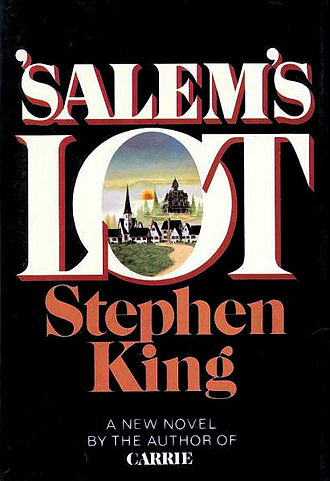
330px-SalemslothardcoverHorror–Wikipedia says “Horror fiction, horror literature and also horror fantasy are genres of literature, which are intended to, or have the capacity to frighten, scare, or startle their readers by inducing feelings of horror and terror. Literary historian J. A. Cuddon has defined the horror story as “a piece of fiction in prose of variable length… which shocks or even frightens the reader, or perhaps induces a feeling of repulsion or loathing.

Romance– Novels of this type of genre fiction place their primary focus on the relationship and romantic love between two people, and must have an “emotionally satisfying and optimistic ending.”

Now that you know what the genre of your story is, you can seek out magazines and contest looking for that sort of work. Choose carefully who you submit your work to, carefully follow their submission guidelines, and only submit the work you have that best fits what they publish.

Never submit anything that is not your best work, and do not assume they will edit it, because they won’t. And let’s be real–no one will even consider publishing work that is poorly written, sloppily formatted, and generally unreadable.

Comments Off on What did I just write? Labeling short fiction

Filed under Books, Literature, Publishing, writer, writing

Elements of the story: Conversation, gestures, and actions

My Writing LifeCreating memorable characters is the goal of all authors–after all, who would read a book if the characters are bland or uninteresting? But what is it that makes a character interesting? Is it just witty conversation?

That is surely a part of it, but think about the people you know. Picture the ones you like to spend time with. What is it about them that captured your interest in the first place? I’m not talking lovers here, so set the intangible, irresistible chemistry aside, for the moment.

Was it their gestures, their mannerisms that intrigued you before you got to know them? Something about them caught your interest, and you found a kindred spirit.

That is what we want to do for our characters.

And no, I don’t mean for you to inject an excess of flushing, smirking, eye-rolling, or shrugging into your story.

I want you to think natural: People don’t only use their faces to communicate. People’s bodies and faces are in constant motion, and that is how you want your characters to seem. You can do this in small, unobtrusive ways by visualizing your conversations and the character’s who are having them.

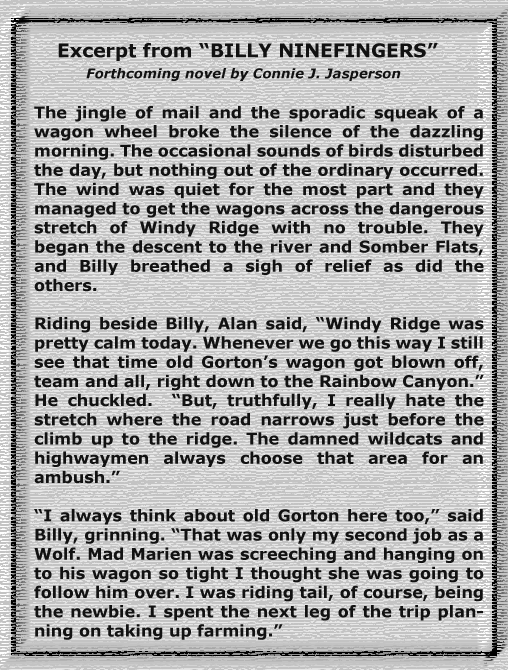
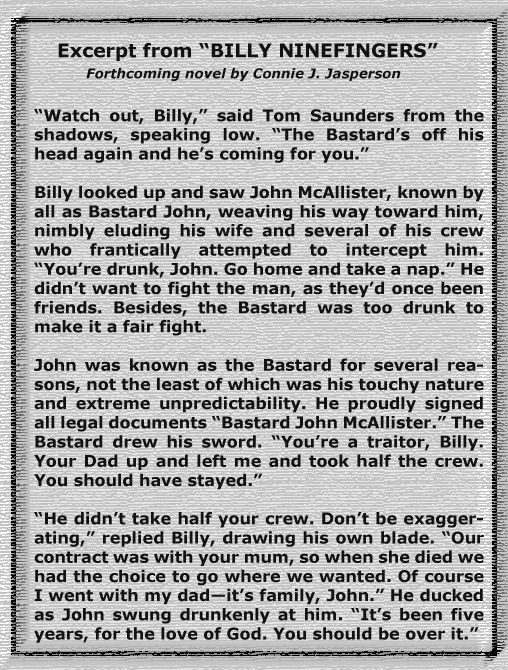
Consider this excerpt from one of my works in progress, Billy Ninefingers. These excerpts are from my rough draft and will be tightened up, but I am using them as the examples today.  This tale takes place in the world of Waldeyn, and Huw the Bard figures prominently in it, although not in the opening chapters. This conversation happens just before the first plot point. It is the calm before the storm and reveals some of Billy’s personality and his sidekick, Alan Le Clerk. It shows them as mercenaries and as people, and also shows their environment.

Conversation 1 Billy and Alan


Billy and Alan are clearly friends. It’s a sunny day and they are obviously wearing armor. Their conversation tells us they’re concerned about the trail they are on. Through that, we learn that world they live in is dangerous and people must hire guards to protect them from more than just highwaymen if they choose to travel. The three paragraphs of that conversation are all the reader needs to know about the work they do and the trail they are riding. That scene ends and the next scene  takes them and the merchant they are guarding to their destination, the dark, dirty town of Somber Flats.

That is where we come to the lead-up to the inciting action. This is where we meet Bastard John, and it is one of the few times he will be in such a place that we can see who he is. The second plot point makes no sense unless the reader knows that the Bastard is an obnoxious bastard, and proud to be so-named.

Conversation 2 Billy and Bastard John


We know the Bastard is a bastard when he is drunk. We know he is capable of acting on any thought that passes through his alcohol-soaked mind. We also see that Billy has a sense of fair-play.

Picture your conversations as if your were there with them. People miss a few beats when they are speaking. They gather their thoughts and  speak in short bursts. They shift in their chair, or stand up, or wave a hand to emphasize a point. They turn, and they sometimes mumble.

And it is important to remember that every character’s mannerisms are individual, uniquely theirs. You, as the author visualize them this way, but it is your task to commit their personalities to paper, and that is where many authors fail.

Through physical actions and conversational interactions we make our characters knowable and likable (or not, as the case may be). Their actions also help to show the environment they exist in. Within the scene of the conversation, you have the opportunity to convey the setting and the mood of your characters.

Claude Monet Painting in his Garden, by Pierre-Auguste Renoir [Public domain or Public domain], via Wikimedia Commons

Claude Monet Painting in his Garden, by Pierre-Auguste Renoir [Public domain], via Wikimedia Commons

We use our words sparingly and with intention, painting the setting as if we were artists in the style of the  impressionists. With color and small hints a good author gives the impression of detail, offering the reader a framework for  to hang his imagination on.

When characters act and speak naturally within a clearly visualized impression of a setting, we as readers,  suspend our disbelief and become immersed in the story.

Comments Off on Elements of the story: Conversation, gestures, and actions

Filed under Fantasy, Literature, Publishing, Uncategorized, writer, writing

Lay, lie, laid

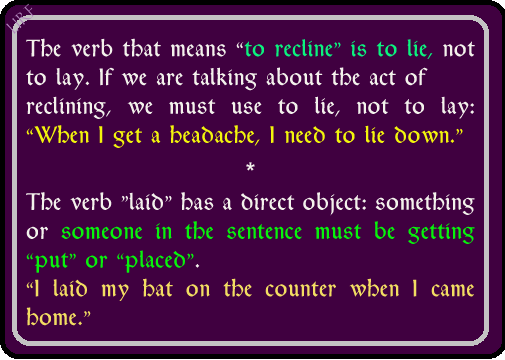
to lie means to restIs it to lay, to lie, or what? I want to get this right but these words can be a complicated morass of misery. It boils down to a simple concept: is it RECLINING  or was it PLACED THERE?

“Lay” is a verb meaning to put or place something somewhere. It has a direct object. Its principal parts are “lay,” “laid,” “laid,” and “laying.”

What the words refer to is the action: If you set it (object) there, it is laying there. Lay it there. Lay it on the pillow.

If it is resting or reclining, it is lying there. Lie down. Lying down. Lie down, Sally. (Clapton had it wrong? Say it isn’t so!)

The internet is your friend, and can teach you many things besides how to make cute kitty memes. Quote from the wonderful website Get it Write: The verbs to lie and to lay have very different meanings. Simply put, to lie means “to rest,” “to assume or be situated in a horizontal position,” and to lay means “to put or place.” (Of course, a second verb to lie, means “to deceive,” “to pass off false information as if it were the truth,” but here we are focusing on the meaning of to lie that gives writers the most grief.)

As another great resource, in his July 7th, 2015 post on this subject for Writers’ Digest,  Brian A. Klems gave us a useful chart:

Lay vs. Lie Chart


Infinitive    Definition         Present    Past    Past Participle    Present Participle


to lay      to put or place     lay(s)           laid     laid                     laying
something down

to lie     to rest or recline    lie(s)            lay      lain                     lying

“end of quoted text” 
Brian A. Klems is an awesome author and blogger. Check out his personal blog at The Life of Dad.

>>><<<

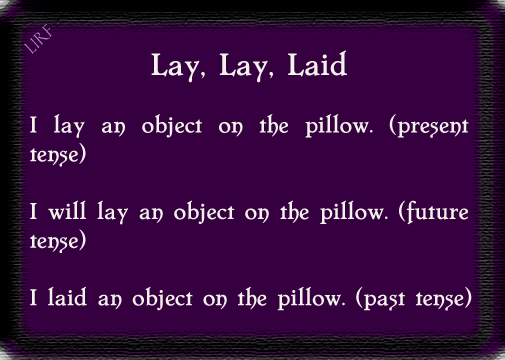
This is where things get tense: present, past and future.

A ring lay on the pillow. 

Lay, Lie, Laid

But I needed to rest:

LYING AS IN RESTING copy

So what this all boils down to is:

final comment lay laid

But just to confuse things:

A living body lies down and rests as is needed.

A dead body is cleaned up and laid out by other people,  if said corpse was important to them. However, after having been laid out, said corpse is lying in state to allow mourners to pay their respects.

5 Comments

Filed under Humor, Literature, Publishing, Uncategorized, writer, writing

Achieving balance

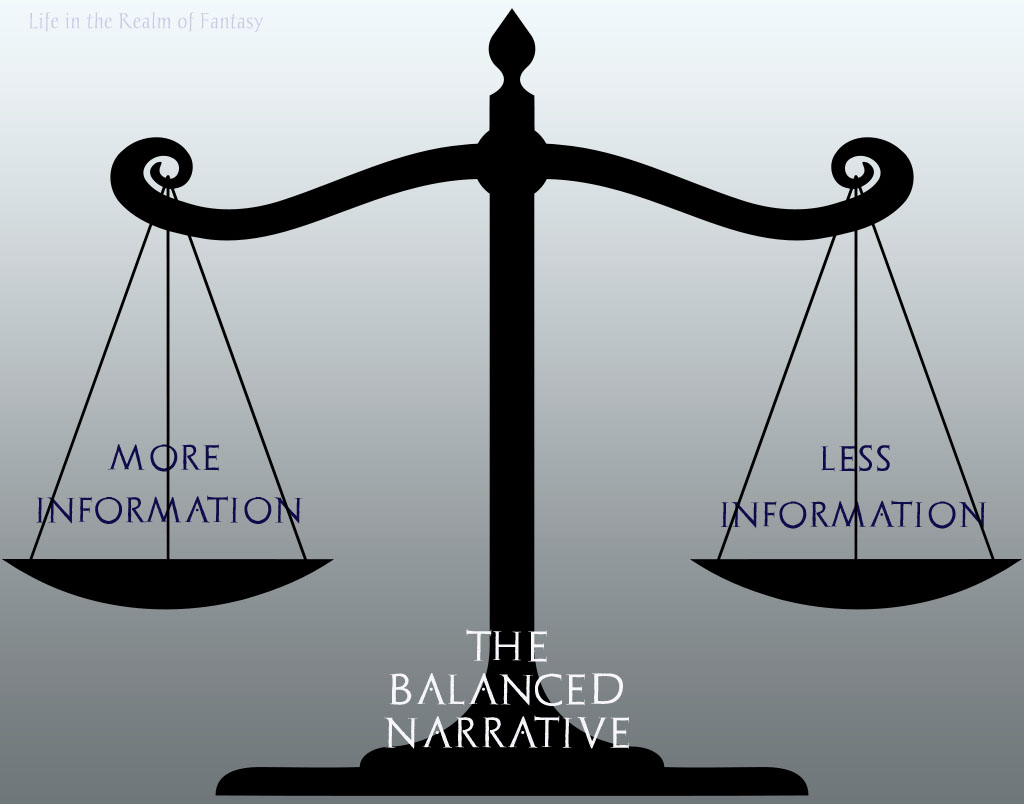
the balanced narrativeYou’ve heard the saying, “a little knowledge is a dangerous thing.” The implication is that a small amount of knowledge can lead to overconfidence and leaping to invalid conclusions based on what you do know without taking into account the things that you don’t know.

When we are newly-hatched authors, we eagerly soak up the wisdom offered to us through writing seminars and handbooks on the craft of writing.

But if you are an avid reader, someone who reads widely and in many different genres, you can see that writing is not simply a matter of following rules.

This is especially true in regard to the many-layered concept of exposition, introducing background and necessary information into the narrative.

Sometimes there is life in a manuscript that has broken all the rules. The work shines because it’s clear that the writer had passion and it was conveyed in the written word. Life is a natural consequence of the rush of creativity and is set into the manuscript when the first words are written.

Unfortunately it is easy to murder what began as a beautiful story. Consider those writers who spend years carefully combing every spark of accidental passion out of their work, creating textbook-perfect sentences that are flat, toneless. The reader has no desire to care about the characters or their struggle.

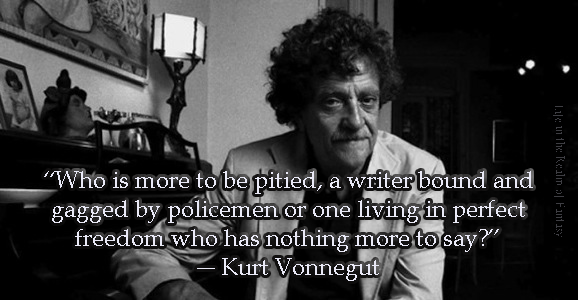
kurt-vonnegut_quoteI’ve also known people who use “the ‘f’ word” regularly in their work  because they think it’s cutting edge, and then they have the balls to say they write like Kurt Vonnegut.

They don’t.

Blindly breaking rules without understanding them is not good writing craft. Vonnegut understood the rules, and when he broke them, he did it to inject life into his work.

He understood balance and was not afraid to use it.

You want to create a balanced narrative:

  1. Information must be delivered only as the protagonists need it.
  2. The information can never be something everyone already knows.
  3. You must offer SOME information–people appearing out of nowhere mean nothing if you do not offer an explanation for them.
  4. No one will die if you use an adjective to describe an object, once in a while.
  5. Show people by using simple, general descriptions such as handsome or dark-haired, and use their mannerisms to convey their moods–things that allow the reader to form their own idea of what the characters look like and how they are feeling. But do give the reader something to build their visualization around.
  6. Stick to simple basic speech tags like said and replied, and if the conversation has only two people, skip them sometimes for a sentence or two.

I know a few authors who are like pendulums. They have no concept of balance and leave each meeting of their writing group with the notion that they have to go all or nothing when deploying information.

Thus, if they have been told they gave too much information, they go too far and now their characters appear out of the ether, with unexplained powers and do things that make no sense.

First you have to realize that no one writes a perfect, completely flawless manuscript, not even Neil Gaiman. And then you have to decide: are you writing for the critics who might be out there, or because you love to write.

If you are not writing for the joy of writing, quit now.

Otherwise, keep writing. Only by continued practice will you develop the balance you know you need. And you don’t have to be committed to only writing novels. Some of the best work I’ve ever read was in the form of short stories.

You can gain a handle on balance by writing short-stories and essays.

With each short-story you write, you increase your ability to tell a story with minimal exposition. This is especially true if you limit yourself to writing the occasional practice story—telling the whole story in 1000 words or less. These practice shorts serve several purposes:

  • You have a finite amount of time to tell what happened, so only the most crucial of information will fit within that space.
  • You have a limited amount of space so your characters will be limited to just the important ones.
  • There is no room for anything that does not advance the plot, or affect the outcome.
  • You will build a backlog of short stories and characters to draw on when you need a good story to enter into a contest.

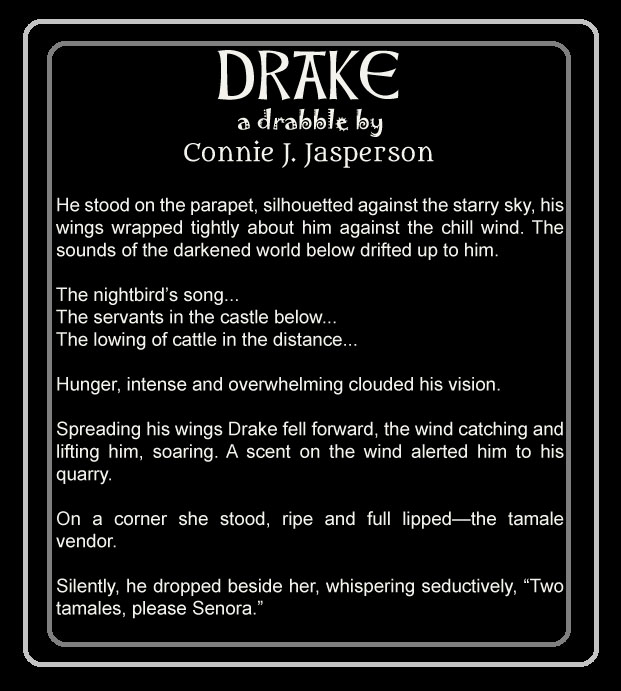
Go for the gusto, and try writing flash fiction–give yourself less than 1000 words to tell a story. Or really challenge yourself–tell that story in around 100 words ( a drabble):

Drake - a drabble by cjj

Drake, © Connie J. Jasperson 2013, All Rights Reserved

4 Comments

Filed under Humor, Publishing, Uncategorized, writer, writing