We humans find it easy to remember simple sayings, little proverbs, if you will. New authors are bombarded with many axioms about the craft of writing. Some will be good, and some will lead to later problems.
 The commonly repeated writing proverbs were originally intended to encourage writers to craft stories that readers would understand and enjoy.
Writers must know the basic rules of grammar. You don’t have to memorize the Chicago Manual of Style. With so much information available online, you don’t necessarily have to buy it unless you are an editor. However, knowledge of the most basic rules enables a reader to understand your work.
It is also true that writers should develop a broader vocabulary, work on character arcs, and use words to show the visual world in which the story is set.
If we are open to learning, we gain knowledge and confidence, and our work improves.
The craft of writing is a vast subject. It fascinates me, and I know I’ll never learn all there is to know about the subject.
I’ve been writing professionally for more than twenty years. Online writers’ forums are usually good places where good people offer good advice. However, there are a few gurus, those whose voices are so loud they override the rest, and they are often too harsh in applying the “rules of writing.”
One must use common sense when writing. I’ve seen many an online kerfuffle between strong egos, especially if they are protected by anonymity in a forum.
 Today, I’m discussing the eight commonly repeated mantras found in these forums. They are fundamentally good but also have the potential to backfire. An author with too rigid a view of these sayings won’t be able to see beyond the rules that imprison them and limit their creative existence.
The rules most likely to backfire (in my opinion) are as follows:
- Remove all modifiers.
This advice is complete crap. Use common sense, and don’t use unnecessary modifiers. Why do I say this? Some adverbs and adjectives are necessary. When we refer to modifiers, what do we mean?
Any word that modifies (alters, changes, transforms) the meaning and intent of another word is a modifier. Adjectives modify nouns, and adverbs modify verbs. These words can add emphasis, explanation, or detail to an otherwise bald statement.
 We also use them as conjunctions to connect thoughts: “otherwise,” “then,” and “besides.” However, the overuse of “ly” words can fluff up our prose and ruin the taste of our work.
- Don’t use speech tags.
What? Who said that?
Too many speech tags, especially odd and bizarre ones, can stop the eye. When the characters are snorting, hissing, and ejaculating their dialogue, I will put the book down and never pick it up again. My favorite authors seem to stick to common tags like ‘said‘ and ‘replied‘. Or, they show who was speaking by including an action or other visual in that paragraph.
- Show, Don’t Tell. Don’t Ever Don’t do it!
Nothing is more disgusting than a scene where a person’s facial expressions are described in minutia. Yes, lips do stretch into smiles, and eyebrows draw together, and that is an important part of showing mood.
But expressions are only part of the signals that reveal the character’s interior emotions.
Another extreme is the scene where the author leans too heavily on the internal, describing the stomach-churning, gut-wrenching shock and wide-eyed trembling of hands.
And don’t forget the recurring moments of weak-kneed nausea.
For me, the most challenging part of writing the final draft of any novel is balancing the visual indicators of emotion with the more profound, internal clues.
- Write what you know and don’t dare to write something you don’t.
Please, use your imagination.
 Your life experiences shape your writing, but your imagination is the story’s fuel and source. J.R.R. Tolkien understood senseless conflicts and total warfare because he had experienced them.
His books detail his view of the utter devastation of war. However, they are set in a fantasy environment and feature elves and orcs, neither of which abound in England.
We must understand what we’re writing about. Are you writing a police procedural? Research the subject, and if necessary, interview people in that profession.
- If you’re bored with your story, your reader will be too.
That’s NOT true. You have spent months, years even, immersed in that story. You know it inside and out, but your reader doesn’t.
And the commonly bandied writing proverbs go on and on.
- Kill your darlings.
We shouldn’t be married to our favorite prose or characters. Sometimes we must cut a paragraph, a chapter, or even a character we love because it no longer fits the story. But remember, people read for pleasure and because they love good prose. If a sentence that you particularly like works, keep it. If you must cut a character, use them in another story.
- Cut all exposition.
Exposition informs both the reader and the characters. The timing of when we insert the exposition into the narrative is crucial. The reader wants to know what the characters know. But they only need that knowledge when it becomes necessary, and they don’t want paragraphs of information dumped on them.
Bad advice is good advice taken to an extreme. But all writing advice has roots in truth.
- Too much telling takes the adventure out of the reading experience.
- Too much showing is tedious and can be disgusting. It takes effort to find that happy medium, but writing is work.
 Proverbs help us educate ourselves because they are easy to remember. Unless an author is fortunate enough to have a formal education in the subject, we must rely on the internet and handy self-help guides to learn the many nuances of the writing craft.
That is what I have done. I buy books on the craft of writing modern 21st-century genre fiction and listen to the advice of the literary giants of the past.
But we have to use caution. While the majority of online writers’ forums are great, some aren’t helpful because they have become a soapbox for a few self-proclaimed gurus. These are people armed with a bit of knowledge, a large ego, and a loud voice.
My advice? Be careful, and don’t share your work with any group until you have seen how they treat each other.
 I study the craft of writing because I love it, and I apply the proverbs and rules of advice gently. Whether my work is good or bad, I don’t know. But I write the stories I want to read, so I am writing for a niche audience of one: me.
However, I read two or three books a week. I love books where the authors clearly know the rules but break them when necessary.
So, my friends, go forth, and write. Now, more than ever, the world needs your stories.
 Getting those ideas out of your head now is what is important. The bloopers and grammar hiccups can all be ironed out in the second draft.
 Yes, we do need to show moods, and some physical description is necessary. Lips stretch into smiles, and eyebrows draw together. Still, they are not autonomous and don’t operate independently of the character’s emotional state. The musculature of the face is only part of the signals that reveal the character’s interior emotions.
 Bad advice is good advice taken to an extreme. But all writing advice has roots in truth. So, when it comes to making revisions, consider these suggestions:
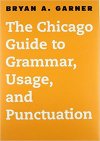 I recommend investing in a grammar book, depending on whether you use American or UK English. These books will answer your questions, and you won’t be in doubt about how to use the standard punctuation readers expect to see.
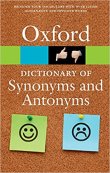 I recommend checking out the NaNoWriMo Store, which offers several books to help you get started. The books available there have good advice for beginners, whether you participate in November’s writing rumble or want to write at your own pace.
 I study the craft of writing because I love it, and I apply the proverbs and rules of advice gently. Whether my work is good or bad—I don’t know. But I write the stories I want to read, so I am writing for a niche audience of one: me.
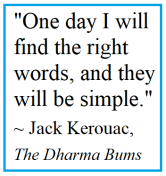 Even if you have an MFA degree, you could spend a lifetime learning the craft and never learn all there is to know about the subject. We join writing groups, buy books, and most importantly, read. We analyze what we have read and figure out what we liked or disliked about it. Then, we try to apply what we learned to our work.
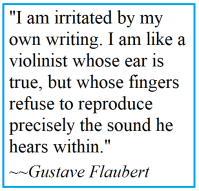 You have just spent the last year or more combing through your novel. This is another example of silly advice that doesn’t consider how complex and involved the process of getting a book written and published is. I love writing, but when you have been working on a story through five drafts, it can be hard to get excited about making one more trip through it, looking for typos.
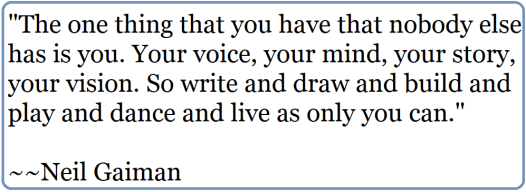 When we first embark on learning this craft, we latch onto handy, easy-to-remember mantras because we want to educate ourselves. Unless we’re fortunate enough to have a formal education in the art of writing, we who are just beginning must rely on the internet and handy self-help guides.
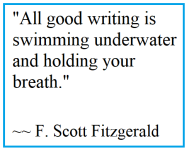 We can easily bludgeon our work to death in our effort to fit our square work into round holes. In the process of trying to obey all the rules, every bit of creativity is shaved off the corners. A great story with immense possibilities becomes boring and difficult to read. As an avid reader and reviewer, I see this all too often.