
When I was at the beginning stage of my writing life in the 1970s, I had no idea how a person could become a writer if they weren’t born under a lucky star. Over the next twenty years, I wrote reams of poetry and short stories. I also wrote the outlines of many novels.
 I still had no idea there was a wider community of writers in my area, and even if I had, I wouldn’t have felt worthy of gate-crashing one of their meetings.
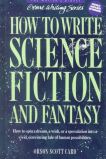
One day in 1990, I stumbled upon a book offered in the Science Fiction Book Club catalog: How to Write Science Fiction and Fantasy by Orson Scott Card. The day that book arrived in my mailbox changed my life.
That day, I stopped feeling guilty for thinking I could be a writer.
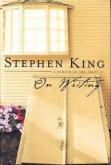 The next book I bought was in 2002: On Writing, A Memoir of the Craft by Stephen King.
But if I were beginning today, I would have access to many more resources for new writers. Even if you aren’t participating in NaNoWriMo, I recommend checking out the NaNoWriMo Store, as it offers several good books to help you get started.
Are you a first-time writer or a young author? While it is written for middle graders, adults just starting out will find good advice in this book.
From the official Blurb: Partly a how-to guide on the nitty-gritty of writing, partly a collection of inspiration to set (and meet) ambitious goals, Brave the Page is the go-to resource for middle-grade writers. Narrated in a fun, refreshingly kid-friendly voice, it champions NaNoWriMo’s central mission that everyone’s stories deserve to be told. The volume includes chapters on character, plot, setting, and the like; motivating essays from popular authors; advice on how to commit to your goals; a detailed plan for writing a novel or story in a month; and more!
Are you writing a memoir, but don’t know how to get started?
From the official Blurb: Written by former NaNoWriMo Program Director Lindsey Grant, Ready, Set, Memoir! is full of helpful lists, exercises, inspiring quotes from famous memoirists, advice, lessons, and humor to help walk you through the writing process. This guided journal will inspire and motivate you to write—and finish!—your memoir.
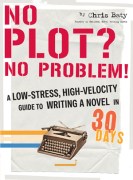
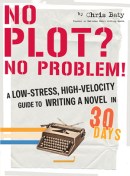 Finishing off the resources from the official NaNoWriMo store is Grant Falkner’s handbook, No Plot, No Problem!
This book is a resource for people who just want to write but have no idea where to start.
From the official Blurb: When you add No Plot? No Problem! to your personal library, it’ll give you a run for your lexical money! It’s a writing heavyweight, muscled with advice, activities, pep talks, and prompts that are sure to match your brain swing for swing in a literary tussle. Challenge this guide, and win, and you’ll have written a champ of a novel that can hold its own in the ring!
But maybe you are ready to move beyond the beginning stages and need more advanced information. My personal library of books on craft is huge. I can’t stop buying them. But what are the books I refer back to most frequently?
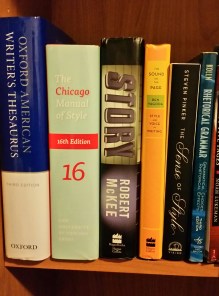
The following is the list of books that are the pillars of my reference library:
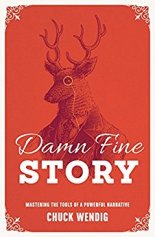
 Damn Fine Story, by Chuck Wendig
- Dialogue, by Robert McKee
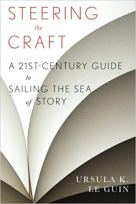
- Steering the Craft: A Twenty-First-Century Guide to Sailing the Sea of Story, by Ursula K. Le Guin
- Story, by Robert McKee
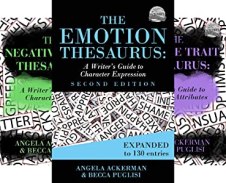
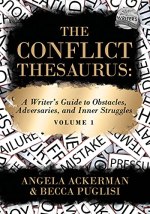
- The Emotion Thesaurus Angela Ackerman and Becca Puglisi, and I also have the companion books in that series.
- The Writer’s Journey, by Christopher Vogler
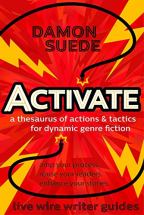
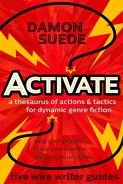
- VERBALIZE by Damon Suede and its companion book, Activate.
These are hard times for many would-be authors. How do we find cost-free resources?
I usually begin my hunt for information by “googling” a question. No matter what browser you use, if you don’t ask, you don’t receive. Be wary of misinformation! Read several articles to get a broader view of the subject. I also check the date when something was posted to ensure the information is current. I bookmark the site if that information is relevant to my needs.
Note: If you are researching for a novel, your browsing history may look a little … unusual … after a while.
 Many local libraries offer a service where one can submit a question and have it answered by email. If that isn’t an option and we’re feeling ambitious, you can check out eBooks on any subject.
Cost-free resources for authors to bookmark in general:
www.Thesaurus.Com This is good for when I need to know, “What’s another word that means the same as this word but isn’t weird or repetitive?”
Oxford Dictionary online is brilliant when I need to know, “Does this word mean what I think it means? Am I using it correctly?”
Wikipedia – The font of all knowledge, or so I hear. My go-to source of info is often Wikipedia. This resource is created and edited by volunteers. All articles must provide proper citations and reference links to outside sources to support every statement. Articles that don’t meet specific criteria are flagged. Some opinions may be presented as facts when discussing art or literature. But overall, I always find something useful by looking at the links in their footnotes and going directly to those sources.
Some other cost-free resources:
 Here is a link to the great Neil Gaiman’s absolutely wonderful, infinitely comforting, yet utterly challenging advice for writers: Writing Advice from Neil Gaiman | Discover MasterClass | MasterClass – YouTube
Your best resource is a good writers’ group. A good group is the best way to learn about this craft. Your area may have established writers’ groups, and some may be able to accept new members. The best way to find out is to Google writers’ groups in your town and make inquiries.
Attend a few meetings as an observer to see if this group is a good fit for you.
Maybe you don’t feel comfortable meeting in person or via Zoom. Many online writers’ forums exist, and one might fit your needs. From 2010 through 2012, I participated in an excellent online group, Critters Workshop. The support I found there gave me the courage to dive into the waters of my local writing community.
 In 2010, I gained a wonderful local group through attending write-ins for NaNoWriMo. Nowadays, we meet weekly via Zoom, as some members are now living far away from Olympia. My fellow writers are a never-ending source of support and information about both the craft and the industry. We write in various genres and gladly help each other bring new books into the world. But more than that, we are good, close friends.
I hope this short list of resources for the struggling author has been of help. May your words flow freely, and may inspiration never fail you.
 Let’s start with craft. If you are at the beginning stage of your writing life, it’s hard to know where to find help in shaping your work into a coherent story. For many years, I didn’t even know books on the craft of writing existed.
 Finishing off the resources from the official NaNoWriMo store is the handbook,
  The following is the list of books that are the pillars of my reference library:
 We usually start our online hunt for information by “googling” a question, no matter what browser you use. Be wary and read several articles to get a broader view of what you are looking for. I also check dates to ensure the information is current and bookmark it if it is relevant to my story. Note: Your browsing history may look a little … unusual … after a while.
 www.Thesaurus.Com
 So, let’s talk about writers’ groups. A good group is the best way to learn about this craft. Your area may have established writers’ groups, and some may be able to accept new members. The best way to find out is to google writer’s groups in your town and make inquiries.


 Life in the Realm of Fantasy