
I always felt undereducated about writing. As a single mother working two jobs, my options for a formal education were limited, so I chose to educate myself. I knew books on the craft of writing existed, and the local library stocked a few. But they were written for people with more education about the craft than my scant two years of college had blessed me with, and it was hard to know which handbooks were the best for what I hoped to write.
 Fortunately, in 1990, I discovered a book offered in the Science Fiction Book Club catalog: How to Write Science Fiction and Fantasy by Orson Scott Card.
I’ve said this before, but I will repeat it: The day that book arrived in my mailbox changed my life. That day, I stopped feeling guilty for thinking I could be a writer.
The next book I bought was in 2002: On Writing, A Memoir of the Craft by Stephen King.
For writers beginning the journey today, self-education resources are easy to acquire and affordable. New writers can find many great handbooks, such as: Spilling Ink: A Young Writer’s Handbook, by Ellen Potter and Anne Mazer. While it is written for middle graders, adults just starting out will find good advice in this book.
From the official Blurb: In Spilling Ink: A Young Writer’s Handbook, you’ll find practical advice in a perfect package for young aspiring writers.
After receiving letters from fans asking for writing advice, accomplished authors Anne Mazer and Ellen Potter joined together to create this guidebook for young writers. The authors mix inspirational anecdotes with practical guidance on finding a voice, developing characters and plot, making revisions, and overcoming writer’s block. Fun writing prompts will help young writers jump-start their own projects, and encouragement throughout will keep them at work.
Are you writing a memoir, but don’t know how to get started? I’ve mentioned this book before, and it is still useful: Ready, Set, Memoir!
From the official Blurb: Written by former NaNoWriMo Program Director Lindsey Grant, Ready, Set, Memoir! is full of helpful lists, exercises, inspiring quotes from famous memoirists, advice, lessons, and humor to help walk you through the writing process. This guided journal will inspire and motivate you to write—and finish!—your memoir.
But maybe you are ready to move beyond the beginning stages and need more advanced information.
My personal library of books on craft is huge. I can’t stop buying them. But which books do I refer back to most often?
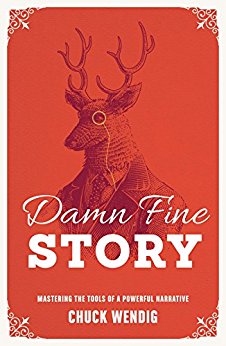 Here are the books that form the foundation of my reference library:
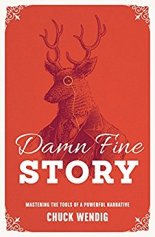
- Damn Fine Story, by Chuck Wendig
- Dialogue, by Robert McKee
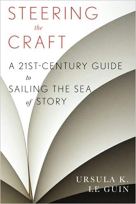
- Steering the Craft: A Twenty-First-Century Guide to Sailing the Sea of Story, by Ursula K. Le Guin
- Story, by Robert McKee
- The Emotion Thesaurus by Angela Ackerman and Becca Puglisi, and I also have the companion books in that series.
- The Writer’s Journey, by Christopher Vogler
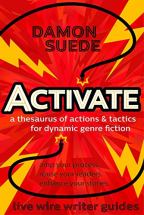
- VERBALIZE by Damon Suede and its companion book, Activate.
How do we source information for our work? Research is crucial for injecting realism into worldbuilding and character development.
Most people start an online hunt for information by “Googling” a question, no matter what browser they use. Nowadays, we must be wary of AI misinformation as well as other, possibly dubious, sources. Read and cross-check several articles to get a broader view of what you are looking for.
Also check the post dates to ensure the information is current. Bookmark the sites that are relevant to your work. I will admit that your browsing history may look a little odd after a while.
Question: How many bodies of average-sized adults can you fit into the trunk of a Mini Cooper?
Answer: None. The Mini Cooper has no trunk.
Some libraries have a service where one can submit a question and have it answered by email. If that isn’t an option and we’re feeling ambitious, we can check out books on any subject.
Online resources for authors to bookmark in general:
www.Thesaurus.Com This is good for when I need to know, “What’s another word that means the same as this word but isn’t weird or repetitive?”
Oxford Dictionary online is brilliant for when I need to know, “Does this word mean what I think it means? Am I using it correctly?”
Wikipedia – The font of all knowledge, or so I hear. My go-to source of info is often Wikipedia. This resource is created and edited by volunteers. All articles must provide proper citations and reference links to outside sources to support every statement. Articles that don’t meet specific criteria are flagged. Some opinions may be presented as facts when discussing art or literature. But overall, I always find something useful by looking at the links in their footnotes and going directly to those sources.
Also, check out:
You can learn just about anything on YouTube. That’s where I learned how to make a glass orb and how medieval swords were made. Here is a link to Brandon Sanderson’s YouTube series on the craft of writing: Brandon Sanderson’s Writing Lecture (2025) – YouTube
Grammar and Mechanics matter – never doubt this. They are the traffic signals that keep our narrative flowing naturally and ensure your work is understandable to all readers. Find a style guide that you can understand and follow easily.
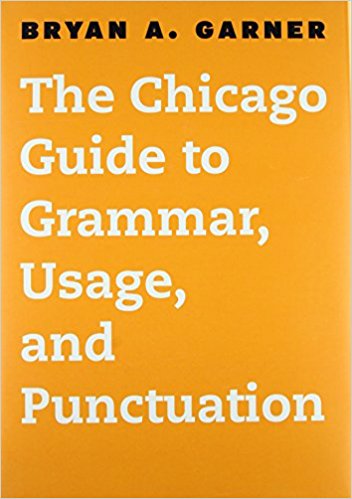 I use Bryan A. Garner’s “The Chicago Guide to Grammar, Usage, and Punctuation.” It distills the information creative writers need and is far easier to understand than the Chicago Manual of Style, which is geared toward professional editors.
Maybe (like me) you came up in the world of business before the computer revolution. If so, you may be familiar with several other grammar style guides. Each is tailored to a particular kind of writing:
- The AP manual is for journalism.
- The Gregg manual is for business writing.
Your best resource is a good writers’ group.
A good group is the best way to learn about this craft. Your area may have several established writers’ groups, and some may accept new members. Google “writers’ groups” in your town, search for them on Facebook, and make inquiries at the local library, as they may know of one.
Attend a few meetings as an observer to see if this group is a good fit for you.
If you don’t feel comfortable meeting in person or via Zoom, look for online writers’ forums that fit your needs. I participated in an excellent online group, Critters Workshop, for several years while testing the waters of my local writing community.
In 2010, I gained a wonderful local group, and we still meet weekly. My fellow writers are a never-ending source of support and information about both the craft and the industry. We write in a wide diversity of genres and gladly help each other bring new books into the world. But more than that, we are good, close friends.
So now you have my short list of self-education resources for authors. I hope this helps!
 I still had no idea there was a wider community of writers in my area, and even if I had, I wouldn’t have felt worthy of gate-crashing one of their meetings.
 The next book I bought was in 2002:
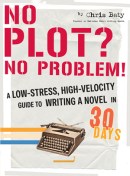 Finishing off the resources from the official NaNoWriMo store is Grant Falkner’s handbook,
 Damn Fine Story
 Many local libraries offer a service where one can submit a question and have it answered by email. If that isn’t an option and we’re feeling ambitious, you can check out eBooks on any subject.
 Here is a link to the great Neil Gaiman’s absolutely wonderful, infinitely comforting, yet utterly challenging advice for writers:
 In 2010, I gained a wonderful local group through attending write-ins for NaNoWriMo. Nowadays, we meet weekly via Zoom, as some members are now living far away from Olympia. My fellow writers are a never-ending source of support and information about both the craft and the industry. We write in various genres and gladly help each other bring new books into the world. But more than that, we are good, close friends.


