Tag Archives: character arc

The Character Arc part 2 – the void that drives them #amwriting

I am in the process of making an outline for a new novel, which I intend to begin writing in November for NaNoWriMo. I have the setting and the society, as it’s an established world, and I have the basic idea for the plot—a murder. But before I get to that, I need the characters.
writing craft - voidWhen I plan a character, I make a simple word picture of them. The word picture is made of a verb and a noun, the two words that best describe each person.

At the outset, I want to know the good things about these characters. I make a personnel file for them. But I need more than a picture of my favorite actor and a brief bio. I must decide the verb (action word) that drives them and the noun (object of the action) that holds them back.

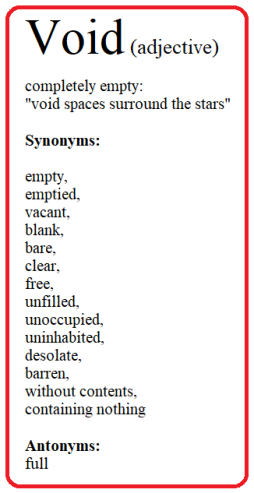
This is their void, the emptiness they must fill.

First, I assign nouns that tell us how they see themselves at the story’s outset. I also look at sub-nouns and synonyms, which means I must put my thesaurus to work.

Let’s look at four characters from my novel, Julian Lackland, published in 2020. Each of these side characters impacts Julian’s life for good or ill.

Julian’s Noun is: Chivalry (Gallantry, Bravery, Daring, Courtliness, Valor, Love)

Beau’s Noun is: Bravery (Courage, Loyalty, Daring, Gallantry, Passion)

Lady Mags’s Noun is: Audacity (Daring, Courage)

Bold Lora’s Noun is: Bravado (Boldness, Brashness)

The way we see ourselves is the face we present to the world. These self-conceptions color how my characters react at the outset. By the end of the story, how they see themselves has changed because their experiences will both break and remake them.

Next, we assign a verb that describes their gut reactions, which will guide how they react to every situation. They might think one thing about themselves, but this verb is the truth. Again, we also look at sub-verbs and synonyms:

Julian has 2 Verbs. They are: Defend, Fight, (Preserve, Uphold, Protect)

Beau’s 2 Verbs are: Protect, Fight (Defend, Shield, Combat, Dare)

Lady Mags’s 2 Verbs are: Fight, Defy (Compete, Combat, Resist)

Bold Lora’s 2 Verbs are: Desire, Acquire (Want, Gain, Own)
void - definitionWhen I write my characters, I know how they believe they will react in a given situation. Why? Because I have drawn their portraits using words:

Julian must Fight for and Defend Chivalry. Julian’s commitment to defending innocents against inhumanity is his void, and ultimately it breaks his mind.

Golden Beau must Fight for and Protect Bravery. Beau’s deep love and commitment to protecting and concealing Julian’s madness is his void. Ultimately, it breaks Beau’s health.

Lady Mags must Fight for and Defy Audacity. She’s at war with herself in regard to her desire for a life with Julian and Beau. Despite their often-expressed wish to have her with them, a triangular marriage goes against society’s conventions more than even a rebel like Mags is willing to do. That war destroys her chance at happiness and is her void.

Bold Lora must Fight for and Acquire Fame. She believes that to be famous is to be loved. Orphaned at a young age and raised by various indifferent guardians, she just wants to be loved by everyone. Julian’s fame has made him the object of her obsession. If she can own him, she will be famous, adored by all. This desperate striving for fame is Lora’s void.

Placing a verb phrase (Fight for and Acquire) before a noun (Fame) in a personality description illuminates their core conflict. It lays bare their flaws and opens the way to building new strengths as they progress through the events.

Or, it will be their destruction.

By the end of the book, the characters must have changed. Some have been made stronger and others weaker – but all must have an arc to their development.

What two words describe the primary weaknesses of your characters, the thing that could be their ultimate ruin? The case of Julian’s story, it was:

Julian Lackland: Obsession and Honor

Golden Beau Baker: Love and Loyalty

Lady Mags De Leon: Stubbornness and Fear (of Entrapment)

Bold Lora: Fear (of Being) Forgotten

So, in that story, a girl who was ignored by everyone, a child who’d lived on the outside of things, decides that the one person who had ever shown her kindness should become her lover, and then fame would follow. The way she goes about it changes everything.

Julian Lackland took ten years to get from the NaNoWriMo novel to the finished product. He spawned the books Huw the Bard and Billy Ninefingers, both of which were written and published before the final version of Julian’s story was completed. Billy and Huw play a huge role in shaping Julian’s life.

Plot-exists-to-reveal-characterSometimes the path to publication is fraught with misery; next week, we will discuss that. Other times, the book writes itself and flies out the door. Who knows how my next novel will go?

I do have four characters for my next novel. I have discovered their verbs and nouns—and I need to settle on one of these people as my protagonist. I’ve written a great deal of backstory for each of them and still haven’t figured out who can best tell this story.

Plotting and pacing is my next problem. When I make the outline, I must place events in their path so the plot keeps moving forward. These events will be turning points, places where the characters must re-examine their motives and goals.

I am a step ahead in this process, though. When I begin plotting the events for my next novel, I already know my characters’ weaknesses. I just need to discover the situations they believe they can’t handle.
magicA character’s preconceptions color their experience of events. We readers see the story through their eyes, which shades how we perceive the incidents.

Our characters are unreliable witnesses. The way they tell us the story will gloss over their own failings. The story happens when they are forced to rise above their weaknesses and face what they fear.

But the truth is, once I begin writing on November 1st, the characters will ignore all my hard work and drive the story far off the plotted track. But that’s fodder for a mid-November blog post.
4 Comments

Filed under writing

The Character Arc part 1 – Theme and Sub-theme #amwriting

I am drawn to books where the protagonist faces their personal demons and finds a hero within themselves. I love the story of someone who meets the unknown and finds the courage to do what they believe is morally right.

2WritingCraft_themeThis is a literary theme and is known as the hero’s journey. But it is only the overarching theme. For that hero’s main character arc to work, they need subthemes.

Subthemes are personal. In a movie score, a particular musical motif plays whenever a specific character enters the scene, and we feel their emotional state. When you discover a character’s void, the thing they lack, you have found the subtheme you need to expand on.

Here are three of the many themes that can help you shape a character’s arc of change:

  • Learning to live with grief.
  • Overcoming a lack of self-worth.
  • Moving beyond an unrequited romantic love.

WritersjourneysmallWhat is the “hero’s journey” and why am I so fond of it?  Christopher Vogler broke it down for writers in his book, the Writer’s Journey. But what is essentially is is this:
The concept of the heroic journey was first introduced by the American mythologist, writer, and lecturer Joseph Campbell in The Hero with a Thousand Faces (published in 1949). In this ground-breaking work, he discusses the monomyth or the hero’s journey. He describes how this motif is the common template of a broad category of tales that involve

  1. a hero going on an adventure,
  2. and who, in a decisive crisis, wins a victory,
  3. and who then returns to his home, changed or transformed.

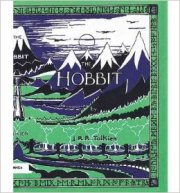
Take Tolkien’s masterpiece, The Hobbit:

the hobbitWhen Bilbo Baggins fights the giant spiders, he also faces his own cowardice and is amazed that he could do such a thing. This is only the first step in his personal arc. As the story progresses, he discovers that he has courage, which has nothing to do with the invisibility conferred on him by the ring he found earlier. Bilbo has courage, and yes, he is afraid. But he is not afraid to be courageous.

This is a core concept of this book and is the central theme of the entire Lord of the Rings series.

The theme of courage is one I find important and admirable, and it emerges in my writing. Courage is a strength beyond the physical. We’re often filled with self-doubt about our ability to do what might be needed in an emergency.

What genre are you drawn to read? That is most likely the genre in which you will write.

Some novels are set against the backdrop of a political power struggle. Political corruption, terrorism, and warfare are common themes. The characters within these stories have personal themes, voids they must overcome to resolve the situation.

Some novels focus on developing romantic relationships. The characters must have personal themes, inner voices they must overcome, as well as the external forces keeping them apart. The romance novel’s conflict and climax are devoted to the overarching theme of growing love. These novels might feature subplots that do not specifically relate to the main characters’ romantic love but enable them to overcome their voids. They must become strong enough to overcome the roadblocks to their happily ever after.

Ulysses cover 3Other novels are entirely character-driven, focusing on the protagonist of the narrative. Much thought is given to how prose is crafted stylistically, using a wide vocabulary. These novels feature thoughtful, in-depth character studies of complex, often troubled, characters. The story is in their day-to-day dealings with these issues. Action is less important than introspection, and the setting frames the characters and their arcs of growth.
The character arc is vital even if we’re writing science fiction. Yes, we want to set our characters in a realistic future based solidly on adequate knowledge of real-world science. If we intend to write hard sci-fi, we need a good understanding of the scientific method, so our plot doesn’t evolve into fantasy. Science and technology are dominant themes, but our characters are what will keep the readers reading. They will have personal voids, so sub-themes such as morality and love will arise, and the setting is only the backdrop.

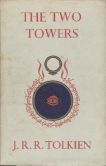
Lord_of_the_Rings_-_The_Two_Towers_bookLet’s look again at J.R.R. Tolkien’s LOTR series. Personal growth and the many forms heroism can take are central themes of his stories. While many side-quests take the different characters away from the physical journey of the One Ring, Tolkien never strayed from the concept of the hero’s journey. The arcs of each character, as they go through their adventures and meet and overcome their personal void, support the overall theme of heroism in the face of death.

Any person’s fundamental fears and insecurities can become a character’s sub-theme, the thread you can expand on to shape their relationships.

On the surface, the many genres of books look widely different. However, they all have one thing in common–they have protagonists and side characters. These people will all have to deal with and react to the book’s overarching theme, but each will have their own story and personal journey.

The world in which a narrative is set is like a picture frame. It is the environment against which the story’s themes play out. The characters are shaped by a force beyond their control—the author.

The central theme of your story emerges when you are laying down the first draft. If your inspiration seems to faint somewhere in the middle, it may be that you have lost track of what you initially imagined your story was about. The characters no longer know what they are fighting for. Was it love? Was it destiny? Was it the death of hope?

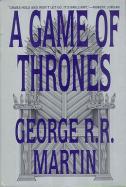
AGameOfThronesWhen we are constantly prodded to make our work focus on action and events, it becomes easy to forget that characters have an internal arc. They must grow for good or ill.
Ask yourself if the action has been inserted for its shock value. Or is this scene necessary to force change and growth on the protagonist and companions? How will their fundamental ethics and ideals be challenged by this event?

  • If there is no personal cost or benefit to the characters, there is no need for that scene.

Remember, just because an idea no longer works for this novel doesn’t mean it won’t work in another. You never know when you will need those ideas, so don’t throw them away—always keep the things you cut in a separate file.

I label that file “outtakes,” and believe me, it has come in handy when I need an idea to jump-start a new story.

In many ways, writing genre fiction can become a trap. Sometimes we are so busy plotting roadblocks for our protagonist and his nemesis that the action takes over, and the main theme becomes tenuous.

  • The action should force the character to change. If you absolutely must have that action, find a way for it to force growth on or otherwise affect the characters involved in it.

When we are deep in the creative process, it’s easy to forget that characters must evolve.

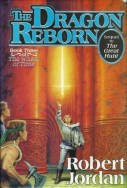
WoT03_TheDragonRebornI step away from my project for a week or two or even longer when stuck. When I come back to it, the characters and their journey is new again, inspiring me to finish their story. This is why I am a slow writer.

I write for a niche market–people like me. If I’ve learned nothing else over these last few years, it’s that as an indie, I have all the time in the world to get my work as right as I can make it.

Our next post will look at ways of discovering the personal void that initially holds our characters back, and how that void shapes them.

8 Comments

Filed under writing

The Character Arc part 4 #amwritng

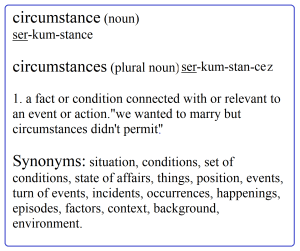
Today in our focus on writing, we’re talking about circumstances (situations) our characters find themselves in and how they are shaped by them. We’re delving a little deeper into our discussion of the Character Arc, which was begun last week.

Part 1

Part 2

Part 3

We met Dave, a hapless accountant whose moment of madness in “paying it forward” and purchasing a stranger’s lunch has led to his being taken hostage and forced to become a spy.

What does Dave want more than anything? He wants the Agents who kidnapped him to let him go home.

After the inciting incident, Dave must want nothing more than to achieve that objective.

So how do his circumstances reshape his personality? After all, we have a character arc here, not a flat line.

Let’s look at the plot outline:

On page one, Dave-the-accountant is shown in his ordinary world. He likes who he is and sees nothing wrong with his existence. We see a man who is only sure of himself when numbers are involved and see him in his office where he is working his way up the corporate ladder. The only thing Dave does well is straightening out tangled financial reports, and he is brilliant at that.

People like Dave, as he’s a good listener. However, he rarely volunteers anything conversationally because he has nothing of interest to contribute unless they are discussing accounting. He receives an unexpected bonus for having done well in getting one of their high-profile clients off the hook with the IRS.

Usually, Dave buys a sandwich from the machine in the employee lounge and eats at his desk while he works. But receiving the bonus calls for a little celebration. He tells the receptionist he’s going out for lunch and walks down the street to a café he has passed every day but never entered.

On page three, Dave does a random act of kindness that does not go unpunished. After he’s seated, Dave notices a striking woman. He imagines what it would be like to be a suave man of the world, wishing he were bold enough to introduce himself to her. He pictures her inviting him to dine with her.

Even though he is sure the woman wouldn’t give him the time of day, Dave suddenly chooses to “pay it forward” by purchasing her lunch when he pays for his.

He leaves the café before she finds out what he’s done, mentally berating himself for being such a coward.

5,000 words into the story, Dave-the-accountant has become Dave-the-kidnap-victim. Unbeknownst to Dave, the woman he was so taken with is a well-known double agent. Because he acted on the wild notion to pay for her lunch, he has drawn the attention of the people who were following her.

Two days later, as he walks to work, a white limousine pulls up alongside him. Four men in dark suits hustle him into the backseat. Here, the story can go in several directions, but in all of them, Dave must make choices that will change his life.

The next event happens 10,000 words into the story. Dave’s kidnappers realize he is not a double agent, but decide he is useful anyway. He’s an unremarkable person, a man who doesn’t stand out in a crowd. His ability to see the patterns in financial numbers is just the skill they need to nail a criminal they’ve been trying to get evidence on for years.

What does Dave fear? At first, he fears he’s going to die, but as time goes on, he fears he will lose his job.

15,000 words into the story, Dave agrees to do what the Secret Service wants, on the promise he will be allowed to go home and won’t lose his job over it.

Getting back to the security of his comfortable middle-class life becomes Dave’s primary goal. Every scene and conversation will push him closer to either attaining that goal or discovering a new purpose.

25,000 words into the story, Dave learns that, despite their glib assurances, the government was not “there to help” him. He has lost his job and barely manages to keep his apartment. The agents have one more task for him, and he’s desperate to not have to dig into his retirement funds, so he agrees to it.

45,000 words into the story, Dave is in a tough situation, trying to get evidence on an extremely dangerous person. He has lost faith in himself and the people he trusted but can’t turn back now, as he is in a situation that will get him killed if he’s discovered.

60,000 words to the end – In completing that last task and going back to his old world, Dave finds he is no longer happy as an unassuming accountant. He’s seen what is out there in the world, and no longer fits in his old corporate life.

Each event pushes Dave a little further out of his comfort zone. He has to become an actor, but in doing so, he realizes he’s been acting all his life. How does this new awareness change him?

No one can go through these sometimes traumatic and terrifying events and not be changed by them.

Many different endings are possible, some of which could lead to another book.

This was the scenario for a mystery/thriller of sorts. Still, the principle of events forcing change on the protagonist’s character arc is universal across all genres.

Dave’s character arc is driven by the desire to go back to the comfort of his old life. Nothing evokes such longing in a person as the memory of home, a place where they were happy and secure.

That longing for a time that no longer exists, and which may never have been as wonderful as we recall, is a good theme that fits well into any genre. Trying to achieve the unobtainable opens the story up to myriad possibilities, all of which should force growth or change upon the characters.

When I look back at the books that moved me, the catalyst for my emotional attachment was the characters, way more than the events, the setting, or the genre. What drew me to these imaginary people was the way they were affected by the events they lived through.

I remained invested in them to the very end of the book. That, to me, is the mark of good writing.

5 Comments

Filed under writing

The Character Arc, part 3 #amwriting

Today in our focus on writing, we’re continuing our discussion of the Character Arc, which was begun last week.

Part 1 Posted on Monday July 13, 2020

Part 2 Posted on Wednesday July 15, 2020

Today we’re talking about circumstances (situations) our characters find themselves in, and how their view of “self” is shaped by them.

But first, maybe you’re a writer like me, one who needs a few notes and a loose outline help me get the manuscript started.

Many writers work at a day job, and using the note-taking app on the cellphone during work hours is frowned on. If you are in that category and you are not working from home, you can go old-school with a pocket-sized notebook, and write those ideas down.

That way, you can unobtrusively make notes whenever you have an idea that would work well in your story, and you won’t appear distracted or off-task.

Once you have assembled your random ideas, and maybe even written a chapter or two, it’s time to think about who the characters are and how they react to their circumstances.

At the outset of the story, we meet our protagonist and see him/her in their normal surroundings.

Once we have met them and seen them in their comfort zone, an event occurs, which is the inciting incident. This is an occurrence that falls in the first chapters of the story, forcing the protagonist out of their usual circumstances. It hooks the reader and is the first point of no return.

The protagonist, in those opening paragraphs, has been shaped by the situation and lifestyle in which they are accustomed to living.

We’re going to plot a mystery with an eye toward how the protagonist is changed by their circumstances. If it seems familiar, it’s because this is a scenario I’ve used before:

The story opens when Dave, an unmarried accountant, has received an unexpected bonus and splurges on lunch in a restaurant. He sees a woman from across the café and develops a small, instant infatuation. He wishes he were brave enough to walk up and introduce himself.

What is the action he would do that falls within his comfort zone? What would he spontaneously do that is unusually bold for him?

Perhaps he chooses to secretly “pay-it-forward,” buying her lunch when he pays for his own on his way out. You must show him as a shy person not given to speaking to women he doesn’t know, much less buying their lunch.

So, this act is a bold one for Dave, and it must change his life.

Because he acted on the wild notion to pay for her lunch, he draws the attention of the people who were following her. These people operate on a level a mere accountant wouldn’t know exists.

To them, that act of buying her lunch was a secret code. They decide that Dave is a spy posing as an accountant. Unbeknownst to Dave, who goes about his life as he always does, regretting only that he didn’t dare to say hello to the woman, his every move is now on their radar.

His habitual routine is now interpreted according to a very different set of rules, by people who live and breathe conspiracy theories.

Buying a stranger lunch was the inciting incident. Everything that happens from here on occurs because of that innocent act.

This is where Dave is thrown out of his comfort zone and into the situation that is the core idea of our plot. For the rest of the novel, his circumstances will transform his way of thinking.

Two days later, as he walks to work, a white limousine pulls up alongside him. Four men in dark suits hustle him into the backseat. He is forced at gunpoint onto a plane bound for Oslo, Norway, handcuffed to a suitcase. The only other key that can remove the handcuffs is at the American Embassy in the custody of a mysterious woman, Lisa Desmond.

This is the new circumstance in which our protagonist finds himself as a result of the inciting incident.

How does Dave react to his kidnapping and what is his physical condition at the moment he is kidnapped?

How does Dave change his situation for better or worse?

How do the antagonistic forces react when they discover he is not a spy but is just an accountant who is now in danger of losing his job?

This is where we discover who the woman in the café really is and what role she will play in Dave’s new life as an unwilling spy.

Everything you will write from the point of the inciting incident to the last page will detail Dave’s quest and how the circumstances he finds himself in as each scene progresses shape his view of himself.

For a writer, winging it in short bursts can be exhilarating. Still, my years of experience with NaNoWriMo has taught me that writing by the seat of my pants for extended lengths of time only works until I run out of ideas for what to do next.

With a simple outline, I don’t become desperate and start writing random bunny trails to nowhere into the plot.

DISCLAIMER: This does NOT apply to anything written during November and National Novel Writing Month (NaNoWriMo). By day ten, I will have written an incredible number of events-to-nowhere into the manuscript. These are things that have nothing at all in common with the original story. However, I volunteer as a Municipal Liaison, so during NaNoWriMo, I must get my word-count. I write some crazy things during NaNoWriMo.

But I won’t trash them.

In December, I cut them and paste them into a separate document. I save those outtakes in my ‘idea file.’

Some of the prose will be good, and with a few minor changes (names, places), these outtakes are the seeds from which other stories grow.

I will post the fourth and final installment in The Character Arc series on Wednesday. Through the events that form the arc of the plot, Dave’s character arc becomes more defined. He becomes more decisive and able to act in the open as opposed to remaining hidden.

At first, Dave just wants to get rid of the suitcase and go back to his job. He wants that desperately and believes that somehow it will happen. On Wednesday, we will delve more deeply into Dave’s objectives.

We will explore how setting goals and working to achieve them gives Dave more control over his circumstances and forces him to become a bolder person.


Credits and Attributions

Eye on Flat Panel Monitor,  Image by Royalty-Free/Corbis © 2013

7 Comments

Filed under writing

The Character Arc part 2 #amwriting

I received much of my early education from Ballantine Books’ Adult Fantasy Series. These were readily available through Doubleday’s Science Fiction Book Club (books by mail) or at the drug store in the paperback section.

When I was in the fifth grade, I read The Hobbit for the first time. Bilbo was real to me, and when you ask others who are dedicated fans of Tolkien, they will tell you that it is his characters that make his stories so epic.

While I will read nearly anything you put in front of me, Tolkien got me hooked on high fantasy, and I went out of my way to find it after that.

So, what is high fantasy? Wikipedia says, “High fantasy or epic fantasy is a subgenre of fantasy,[1] defined either by the epic nature of its setting or by the epic stature of its charactersthemes, or plot.[2] The term “high fantasy” was coined by Lloyd Alexander in a 1971 essay, “High Fantasy and Heroic Romance.”

Other than the works of Tolkien and C.S. Lewis, high fantasy wasn’t easy to find back in the early days, and a lot of what was out there was difficult to read.

But lighter fantasy was beginning to emerge in speculative fiction,

I read Anne McCaffrey’s sci-fi fantasy Dragon Riders of Pern series to the point that I wore out three copies each of her first six books in the series.

What makes a reader purchase and re-read a book to the point that she would wear out several copies of it?

The characters.

Sure, the dragons were great, and the setting was amazing, but the characters became my dearest friends as we moved through the events of their story.

McCaffrey’s characters were strong, brave, romantic—and the protagonists were most often competent women. They had a character arc that took them from a place of weakness to a place of strength.

Another series of books that influenced me as a young adult were Niel Hancock’s Atlanton Earth series. That series opens with “Greyfax Grimwald,” and is an exploration of the Buddhist interpretation of the cycle of life and death. War is the great evil, and the threat of war is a thread that runs throughout the series.

Some critics have trivialized Hancock’s books as “commodified fantasy.” Still, I enjoyed them for the often brilliant prose as much as for the deeper themes. Otter and Bear were endearing characters, people whose thoughts and emotions felt engrossing and real to me.

These were books where the storyline followed the hero’s journey. In each, the protagonists came to a point where they lost their faith or had a crisis of conscience.

This point of personal crisis was where I, as a reader, discovered who they really were as human beings.

In reading these stories, I absorbed one of the basic principles of storytelling: A flawed hero is far more relatable than a perfect hero.

In looking back at my favorite books, a sense of danger, an unavoidable threat, was evident from the opening pages. How the characters reacted to that event felt unpredictable because the authors gave them agency.

As I discussed in my previous post, agency is the ability your character has to surprise you when you are writing them and their reactions. They seem to drive the keyboard, making their own choices.

When our characters are faced with an unavoidable threat that removes the option of going about life as usual, we should give them agency. This leaves them with several consequential choices, many of which will be made in stressful situations.

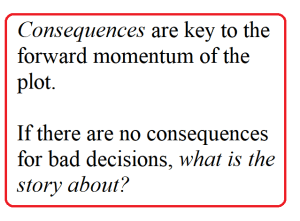
I have used the word consequential before as relating to the choices your characters must make. I chose that word intentionally. When there are no consequences for bad decisions a character might make, what is the story about?

My roots aren’t only in high fantasy—I love a good cozy mystery as much as anyone. In a cozy mystery, getting to know the main character as a friend is central to the story. The events that ensue are a means to further explore the life of the protagonist.

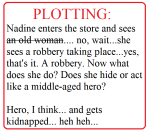
Why would a random trip to a convenience store interest a reader if something out of the ordinary does not occur? After all—we go out for bread every day, and it’s not too exciting. Frankly, I’m not interested in reading about Amy buying a loaf of bread. But make her the witness to a robbery and things begin to get interesting. Better yet, give her options:

  1. She can hide and wait for the intruders to leave.
  2. She can decide to be a hero.
  3. What other options does Amy have? What does she see when she looks around the store?

Whatever Amy chooses to do, there will be consequences. If things go awry, she could become a hostage. If she goes unnoticed but tells the police what she knows, she and her family could be in danger.

Once she is in the middle of these consequences, Amy will have more crisis points to face, and a lack of bread will only be one of them. She will have many decisions to make, and each choice will drive the plot.

The results of her decisions will change her outlook on life and give her wisdom she wouldn’t have had without those experiences.

At the end of the story, Amy will be more outgoing, surer of herself, and willing to step outside of her usual, rather boring, bubble of security.

The obstacles your characters face and the choices they make in those situations are the story. Giving your characters an active role and allowing them agency is what makes them human.

I recommend that in the first draft, you use all the adverbs and modifiers you need because you must get the idea down before you forget it. The first draft is where we take an idea, a “what if” moment, and give it form on paper.

When it is finished, the first draft is basically made up of sections of brilliance interspersed with a catalog of events: who did what, where they did it, and why. These adverbs and modifiers are your guideposts, prose you will remove and make active later, but getting the raw concept on paper is the crucial thing at this stage.

At the outset, giving my characters agency is challenging. This is because, in the first draft, the protagonist and his motives are still somewhat unformed.

In one of my current works-in-progress, my main character has been put through a personal death of sorts. His world has been shaken to the foundations, and he no longer has faith in himself or the people he once looked up to.

This low point is a crucial part of the hero’s journey.

If you are stuck with a character you can’t figure out, ask yourself what personal revelations come out about the protagonist, or conversely, what does he discover about himself?

How are they emotionally destroyed by the events?

How was their own personal weakness responsible for this turn of events?

How does this cause them to question everything they ever believed in?

What makes them pull themselves together and just keep on going?

How are they different after this personal death and rebirth event?

This is where he is taken down to his component parts emotionally and rebuilds himself to be more than he ever believed he could be.

By the time you finish writing the lowest point of your protagonist’s life, you should have come to know them and how they will react in any given situation.

When your characters are real to you, that feeling will come across in your writing.

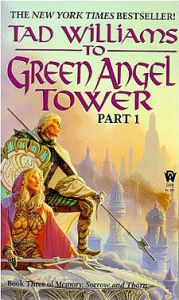
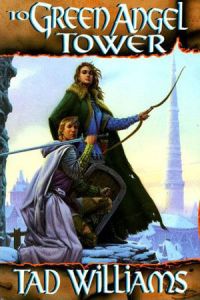
I have shown the covers of both halves of the final book in the high fantasy series by Tad Williams that shaped my early style of writing. Tad writes literate fantasy that is both epic and relatable. His characters are brilliantly portrayed–raw, human, and not perfect:

Memory, Sorrow, and Thorn


Credits and Attributions:

Wikipedia contributors, “High fantasy,” Wikipedia, The Free Encyclopedia, https://en.wikipedia.org/w/index.php?title=High_fantasy&oldid=967547546 (accessed July 14, 2020).

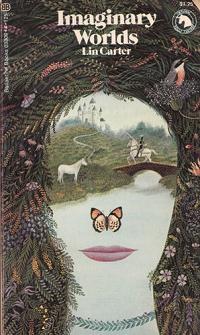
Front cover art for the book Imaginary Worlds – the Art of Fantasy written by Lin CarterBallantine Books, 1973 Cover artist, Gervasio Gallardo. Fair Use.

2 Comments

Filed under writing

The Character Arc part 1 #amwriting

We who write fiction spend a lot of time plotting the events a character will go through. We may write to an outline, or we might keep it in our head, but most of the action is usually known before we write it.

Even if you don’t plot in the traditional sense of the word, you should give some advance consideration to character development.

The term character arc is used to describe the personal growth and transformation of a character throughout a story. In narratives with a strong character arc, the protagonist begins as one sort of person. Through the events they experience, they are transformed. Often the change is for the better, but sometimes they change for the worse.

Great writing contrasts the relative security of the characters’ lives as they were in the opening paragraphs against the hazards of their life when they are in the midst of change.

Give me the book that immerses me in the uncertainty, fear, and anger—let me experience the emotional journey as well as the events of the narrative.

The novels that have the most influence on me as a writer are those that allow the reader to experience the characters’ journey.

These authors introduced me to characters who were multi-dimensional. They were people with a past and a present, and who hoped to survive long enough to enjoy a future.

In the opening act, the characters are introduced, and the scene is set. A great story evolves when the antagonist and protagonist are strong but not omnipotent. Both must have character arcs that show either

  1. Personal growth over the length of the story
  2. Stagnation or the inability to grow

Stagnation is a kind of death. This is a creative ploy to use for an antagonist who is unable to see their fatal flaw.

Each scene is an opportunity to advance the events of the story. But every small arc of action is also an opportunity to illuminate the motives of the characters.

The characters begin to be changed by the events they experience. How you show their emotional state is critical at this point because emotions engage readers. If you want a reader to experience the sense of crisis that you believe your story deserves, you must

  1. Foreshadow or hint at knowledge the characters don’t have, information that affects the outcome of the plot.

Very few people are evil for no reason at all. Sometimes they are likable, people who appear innocuous, even loving. If this is the case in your story, you need to insert small clues for the reader early on about the negative aspect of their personality. This is so that their despicable behavior isn’t seen as unexpected and contrived.

Fleshing out the antagonist and making their motives realistic is essential. They are as central to the story as the protagonist because their actions force change.

It’s important to remember that at no point in the narrative can people be sitting around idly chit-chatting about the changes they have been through in their life unless it affects the action at that moment.

Instead, they should be dealing with the consequences of the decisions they have just made and trying to make better plans.

Consequences are central to the forward momentum of the plot.

If consequences are to have meaning, motivations are crucial. What drives the characters to endure the results of their poor planning? What keeps them focused on achieving their goal?

Just as importantly, what will they NOT do? What is out of character for them? If you know that, you won’t muddy the narrative with look-alike and sound-alike characters.

The obstacles your characters face and the choices they make in those situations are the story.

Sometimes, in the first draft of my manuscripts, the motives of my protagonist haven’t quite come into focus for me. I tend to allow a character’s choices to push their personal growth, and then in a later draft, I have to sort out why they have made that decision.

Agency is the power of an individual to act independently. When we give the characters agency, we allow them to make their own free choices.

Giving your characters an active role and allowing them agency can make writing their story a joy. Remember, we write as much for ourselves as we do for a potential reader.

At times, I have a character I just can’t figure out. I make a character study, a personal history. Once I know their past, I understand what drives them and what triggers their emotions.

I then decide what personal revelations must come out about them in foreshadowing and figure out how to make it emerge organically.

In the character study, I ask the most important question of all: what does the character discover about herself?

When I have the answers about why, I look at the final event, the situation that ends the story to see if it passes the logic test. These people’s personal quirks and characteristics, their moral compass influenced the decisions that led them to that place.

Did I keep those clues distinct to each character, or was there a blurring of personalities within the group?

Most importantly, do my characters have recognizable motivations? Sure, we want to be subtle and not drop a ton of backstory on the reader. However, we can’t be too obscure in trying to keep the air of mystery.

If a beta reader can’t follow our protagonist’s reasoning, we haven’t done our job.

Creating intrigue yet making it believable is a balancing act.

Reading is the key. Every novel that leaves a mark on my heart has unique, individual characters that I can relate to.

When I stumble upon a book that engrosses me, I study that author’s work even if I don’t like one of their characters. I want to see how they fit the backstory into the narrative, ensuring their characters’ motivations made sense.

Their good writing habits help me improve in my own work. In my next post, I’m going to discuss the influence of novels that I once loved, and how they shaped my writing for good and for ill.

8 Comments

Filed under writing