Tag Archives: fiction

The long and winding road

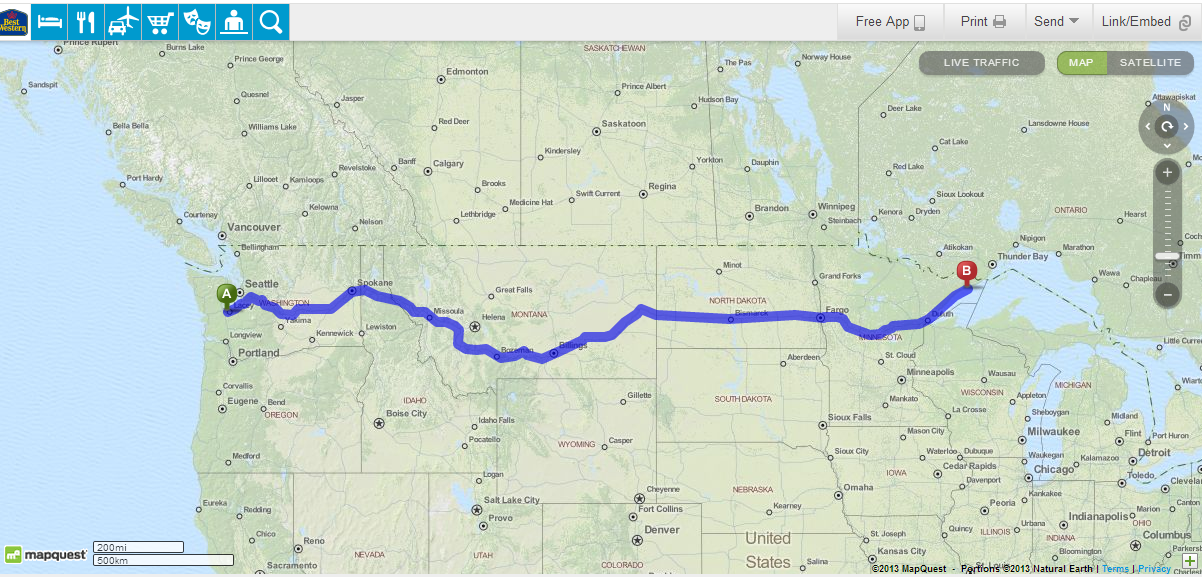
map quest to Grand Marais MinnesotaI love road trips. One of the best road trips I ever went on was with my husband, Greg. We drove to Grand Marais, Minnesota for his 94 year-old grandmother’s funeral — 1830.01 miles each way —  3 full, 12-hour days on the road from Olympia, Washington, and another three days for the trip back home.

The first night out, we stayed in Bozeman, Montana. We didn’t have a lot of time for sight-seeing, but we did stop in the Badlands on the western border between North Dakota and Montana, as there is an amazing and dangerous feeling to the landscape, and we shot a lot of pictures on the cheap digital camera we bought when we realized we had left the good one at home. (More on how that turned out later).

Theodore_Roosevelt_National_ParkOf course, the Badlands  were created by the Yellowstone Supervolcano, but at the time I didn’t know that. The second night we stayed in Bismark North Dakota. On the third afternoon, we checked into our hotel and met up with Greg’s sister, Eileen.We tootled around town, and had a great time.  The funeral was scheduled for 1:00 p.m. the next day.

We ate the free breakfast at the Best Western, and to kill time until the funeral, we hiked around the shore of Lake Superior all morning. It was the second week of May, and there was still snow in the shady places. We had a great time, trying to keep our then twelve-year-old nephew, Sam-the-dare-devil, from falling into Lake Superior and drowning.

churchAfter a leisurely lunch, we walked up to Bethlehem Lutheran Church where the service was scheduled.  The church there is the same as any other Lutheran church in America–from the inside it looks like an upside-down viking-longship and the comparison is intentional, a traditional style of architecture in ELCA Lutheran Churches. It’s a comforting place with an air of Lutheran prosperity but not too ornate.

Yes, it was comforting—but empty.

Really, really empty.

Apparently the funeral actually took place at 10:00 a.m., and the email we Pacific Northwesterners had all received had teensy little typo–just one small digit. 1:00 or 10:00 not really that large a mistake when you look at it, but it’s quantum physics we’re talking here. Just one teensy atom, more or less, changes everything.

800px-Old_headstonesIt was quite upsetting, but how can you be angry at an 85 year old lady who very kindly tried to notify you a loved one had passed on? She had done her best to let us know, and we should have checked in with the church when we arrived in town. We missed seeing the cousins from South Dakota by two hours–but we now have their phone numbers, just in case they ever want to do a road trip with us.

The irony of having driven  well over 1800 miles to accidentally blow-off a loved-one’s funeral was not lost on us. It’s a good thing that sort of thing doesn’t happen in books.

“Wait–where’s the rest of the story? You were supposed to meet the Evil Minion of the Bull God! What do you mean your prophets got the time wrong and you missed him by three hours, so oh, well, sorry…!”

So about all the lovely pictures we shot on the way to and from Grand Marais – The little thing didn’t have a viewing window, so we had no idea what our photos looked like. Also, apparently the capacity for storing images on the cheepo camera was 20 shots – anything over that deletes the previous ones.  All we had to show for our trip was 20 wonderful shots of our nephew Paul’s high-school graduation, which we had made it home in time to attend.

Unfortunately, it was impossible to tell who was in the photos, or what they were actually depicting, so I found this image on the City College of San Francisco website, which I think totally commemorates the experience.

graduation


Comments Off on The long and winding road

Filed under Adventure, Battles, Fantasy, Humor, Uncategorized, writer, writing

Negotiating the SpaceTime Continuum

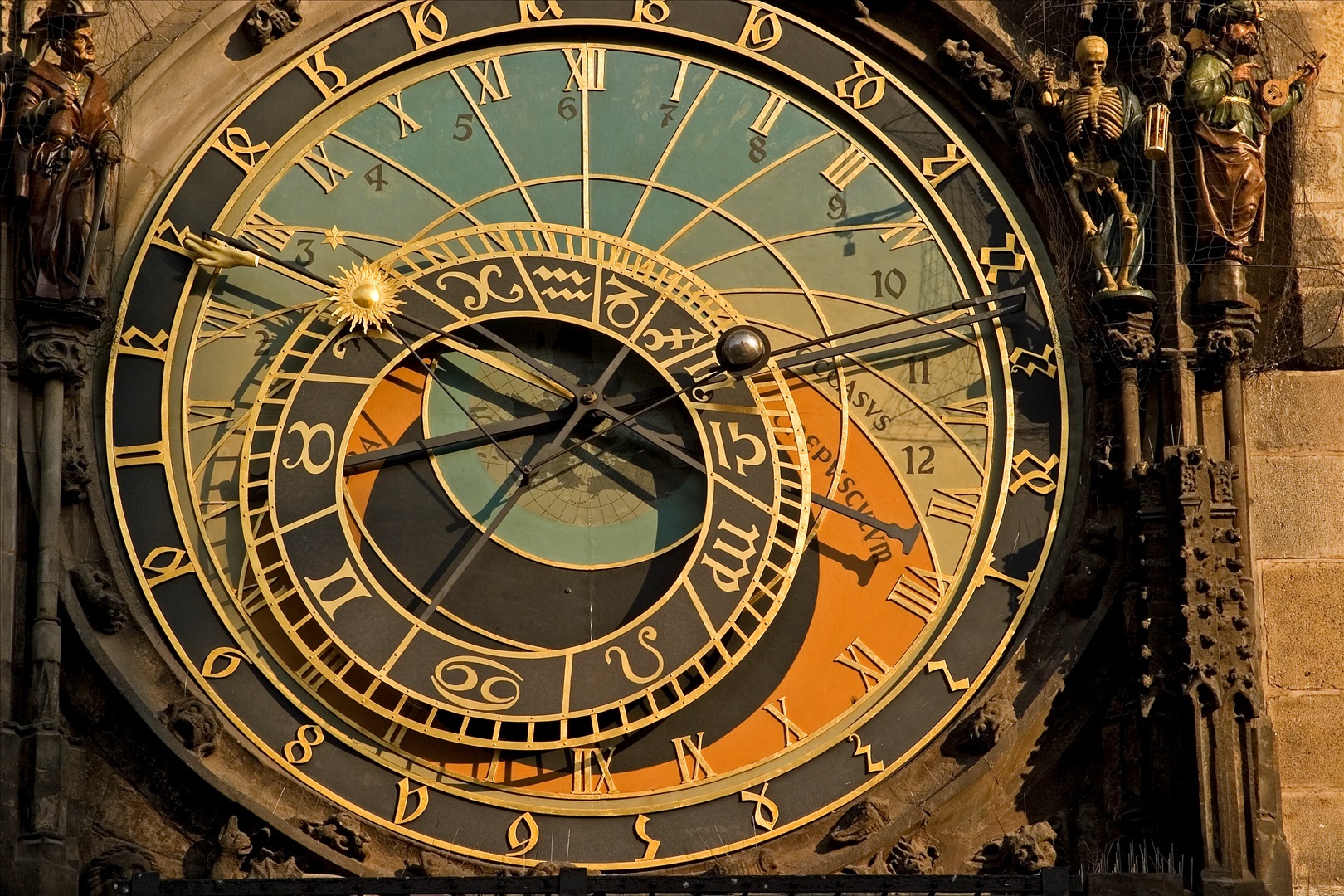
Eternal_clockKeeping it all straight sometimes requires a good calendar. But what if, when first you wrote the first two books, you created a world in which the calendar was a lunar thing?  Not only that, but you went all astrological when you named the months, and Norse God when you named the days? And to top it off, a small portion of the third book follows events that took place parallel to events in the second book…and your protagonist must rendezvous with the protagonists of the other book on a certain day so they can complete the … … …. *DOH*

Talk about a walk through the space-time continuum–this would be it. In my current work in progress I realized I would need to keep things organized if I wanted to make sense, and not accidentally contradict myself.

In cosmology, the concept of space-time combines space and time to a single abstract universe. Apparently we all move through this, and time either passes us, or we pass time. It’s all relative (Einstein humor) to how fast you are going and a lot of sub-atomic particle stuff I can’t really take the time to explain here.

But if we make a picture of that abstract concept  our tiny human brains can grasp it. We call that picture a ‘calendar,’ which makes it all rather simple. My characters will progress through their space-time continuum at a rate I can comprehend, because I am their appointment secretary, and I am in charge of their calendar.

I am a retired bookkeeper, so I use the spreadsheet program called Excel to do things like that, but anyone can draw a calendar.

Full CalendarTime and Calendar of Neveyah

Each year consist of 365 days, and is divided into four seasons: Winter, Spring, Summer, and Harvest. The last month of the year is Holy Month.

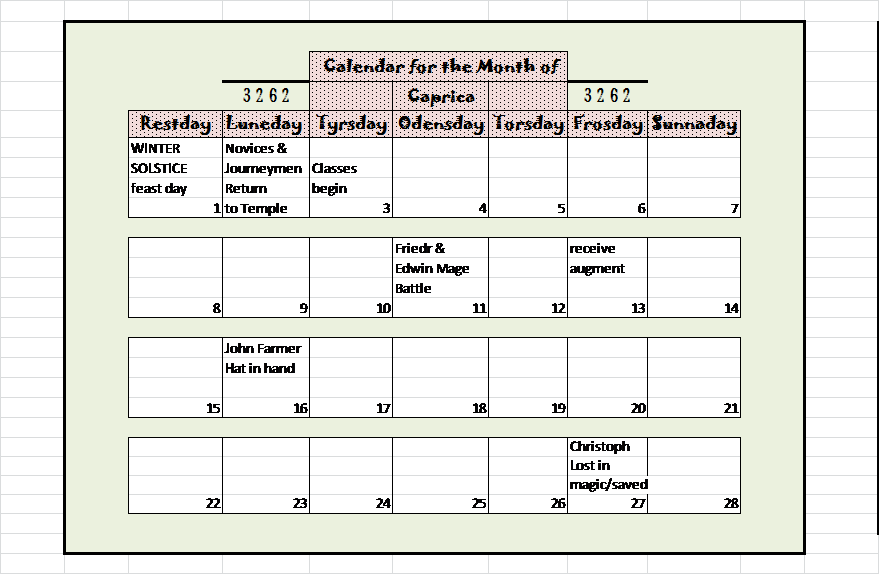
Each season consists of three months, making twelve months that equal 28 days each, plus a Holy Month. Autumn and Winter are separated by the ‘Holy Month” of 29 days. The Holy Month is called Solstice and the actual winter solstice falls on the first day of the month following, or the first day of Caprica.  This is a month that is sacred to the Goddess Aeos, Goddess of Harvest, Hearth and Home.  It is a time when people travel to visit family, and simply take time off for a small vacation, often taking two weeks to do it.  On the last night of the Solstice Month each family holds a ritual feast in their home, a feast of thanks-giving and prayers for the New Year. Every four years an extra day is added to Solstice and that day is a festival day all across Neveyah. That year is called a Long Year though it is really only one day longer.

The months are as follows:

Caprica, Aquas, Piscus,   (Winter) Begins on actual day of Winter Solstice

Arese, Taura, Geminis     (Spring)

Lunne, Leonid, Virga          (Summer)

Libre, Scorpius, Saggitus (Harvest)

Holy Month (Has no season, but would be winter)

Days of the Week:

1. Sunnaday – Minimal business is conducted; each family’s tasks for the Temple as a whole are completed, such as chopping firewood, quilting, making clothes, and preserving food. The members of the temple clergy assemble in work gangs to accomplish these tasks from which they all benefit.

Calendar Capricas 3262 Neveyah2. Lunaday

3. Tyrsday

4. Odensday

5. Torsday

6. Frosday

7. Restday – no business is conducted, and only minimal work is done on farms and other places where some work must be done seven days a week. This is a day for people to spend with their families or to pursue their personal interests.

Prague-Astronomical_clock-Clock-Old_Town_Prague-Prague_Astronomical_Clock-originalI am a good secretary–my calendar is is adjustable. If I find something doesn’t work in the time-span I am writing it for, I can adjust accordingly.  Book three is the only book in which the dates are important, but I have to be conscious of the fact that they are important, and try not to screw it up.

Now if I could only keep my own calendar straight…I know I had something planned for today…but what? Apparently I forgot to put it on my Google calendar.

Comments Off on Negotiating the SpaceTime Continuum

Filed under Adventure, Books, Fantasy, Humor, Literature, Uncategorized, writer, writing

Unnatural Disaster

maryjanesWe live in a rather rainy part of the world, and the path to our front door is muddy.  We have not yet traded our builder-grade beige carpet for hardwood, so we remove our shoes when we come in.  A shoe rack stands just inside the door, and for a home with only two people, the rack is quite full.

Yesterday we had an unnatural disaster when the shoe rack collapsed –apparently under the weight of the shoes.

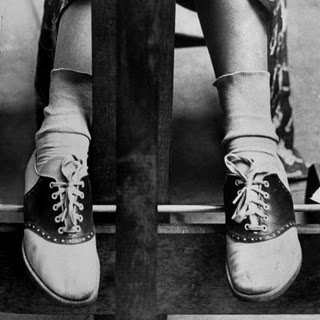
This is strange, in a way. When I grew up, I only ever had two pairs of shoes at a time. One was the traditional saddle-shoe all schoolgirls of my generation wore, and the other was for church–black Mary Janes, perhaps with a bow on the toe, but most likely not. My mother didn’t waste money on things that were

a. fads or

b. likely to fall apart.

alfred-eisenstaedt-college-coed-sporting-ubiquitous-saddle-shoes from Life MagazineWe were an average middle-class family, and it was a sign of our wealth that I had two pairs of shoes. In the summer we would have cheap white or navy blue canvas shoes to play in, as we had outgrown our saddle-shoes by the end of the school year, and mother would wait until the week before school to buy us our next pair.

We couldn’t really go barefoot, as we lived in a rural area where tetanus was still an issue, and even though we had been vaccinated against it, our parents had grown up during the Great Depression and still worried.

navy bellbottomsSo, the minute I graduated from high-school and went out into the world, what is the first thing I did?  My sister and I rode the Greyhound to Seattle and went to the navy surplus store where we bought two pairs of woolen navy bell-bottom trousers with the double-buttons down the front and the lace-up back.

They were very hip and were the envy of our friends.

waffle stompersMy sister and I shared most of our clothes, but she had a better sense of style than I did, so when she said we had to go navy, I went.  We also bought navy pea-coats. While we were there, I bought a pair of Waffle-Stompers, leather hiking boots with rugged soles. I was pretty naive, a total country-girl. There were so many stores with hundreds of shoes, most of which I could afford on my salary as a babysitter–in Olympia the selection was rather limited so Seattle was the place to go.

Somehow, once I bought that pair of hiking boots, I was unable to walk past a shoe display without jonesing like a junkie. If I didn’t get a new pair of shoes when I wanted them, I would feel quite deprived. Soon I had red shoes, blue shoes, tall shoes, flat shoes. Shoes for walking, shoes for sitting and everything in between.

flip flpsShoes were crack–and I was addicted.  How could such a thing happen? It made no sense to me, and when I had my first child, I was suddenly financially unable to support my habit. Suddenly I was back to having one or two pairs of shoes and feeling quite lucky to have them.   For the next fifteen years, I had only three pairs of shoes at most. One pair was for work, one was a dusty pair of black pumps for dress (hardly ever worn) and the third pair was flip-flops.

So what happened that I should once again have gained so many shoes that my shoe rack would collapse under the strain? I gained weight, I lost weight. I worked in an office and had to wear dress-shoes, then I was retired and needed comfy shoes. Somehow the shoes landed on the rack and never left. The rack became a repository for abandoned shoes.

Both my husband and I  really only wear three pairs each and one pair is flip-flops. So today is weed-out-the-fluff day, and many shoes will go to shoe heaven.

But not this pair… or this pair…and this is my favorite pair…and not these–I can’t throw these away because I might wear them….

red shoes

4 Comments

Filed under Adventure, Books, Fantasy, Humor, Literature, Uncategorized, writer, writing

Inspiration, where art thou?

Joseph_Vernet_-_Soldiers_in_a_Mountain_Gorge,_with_a_Storm_-_WGA24728Over the last few months I have spent a great deal of time searching for cover art for Mountains of the Moon,  a book, set in the world of Neveyah, and one that takes place in a rugged mountainous area. A lot of the action at the end of the book is in a ruined keep. I have four heroes, five bad guys, and great deal of hilarity to cover, and it’s hard to know just what will work.

I have no idea what to commission, if anything, and I have been unable to find the right combination of stock pictures, so here I am, writing a fourth book set in that world, with no idea of what sort of cover is appropriate for the one that is currently on hold.

What ever I get, it has to be colorful and eye-catching and SIMPLE.

So this takes me to another cover dilemma–writing the dreaded blurb. So what do the professionals all do?  By “blurb” I mean a condensed, concise, and compelling description of your book, in other words, a book advertisement. The blurb is a book publisher’s description, or even a review comment (but I hate those.)

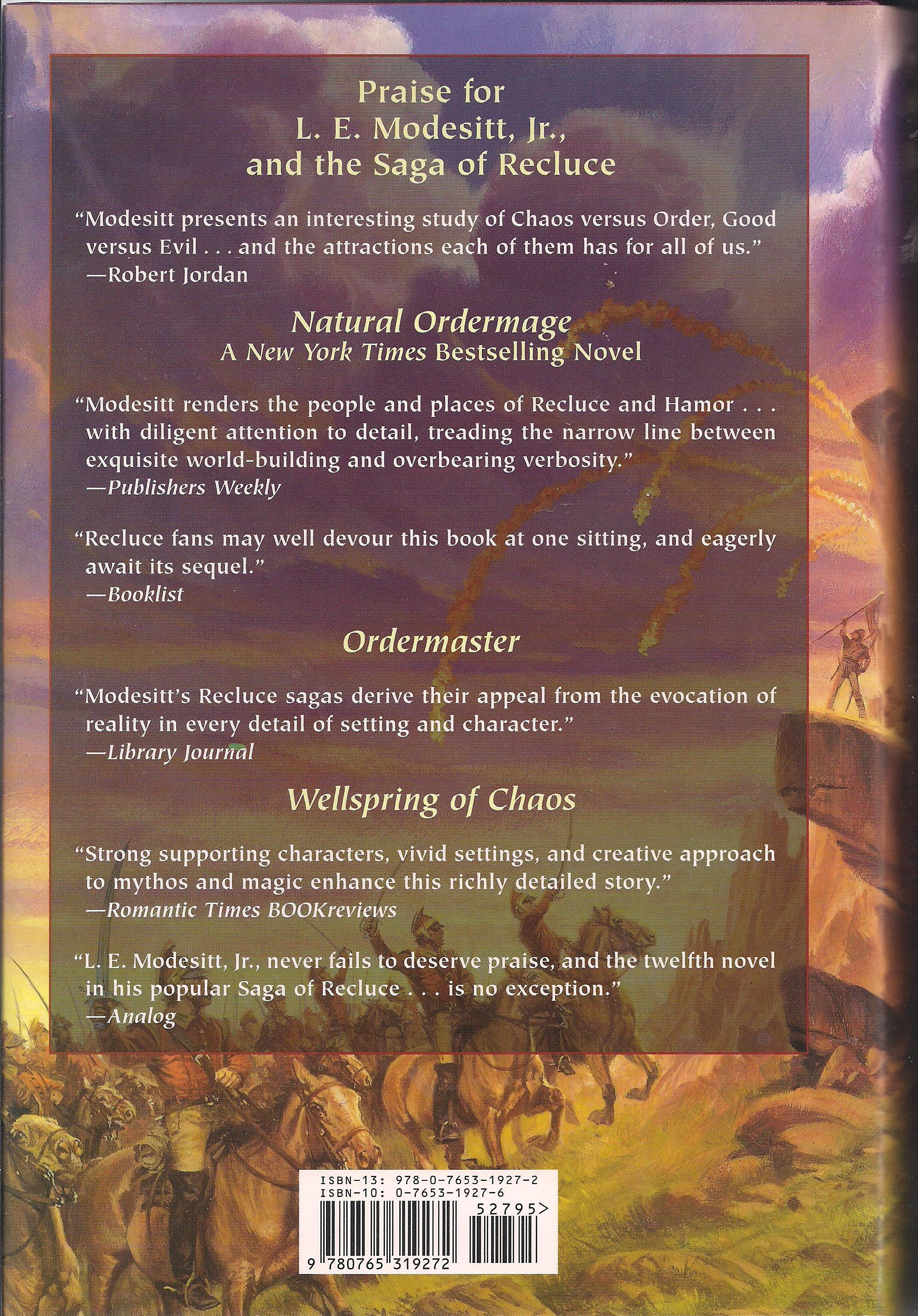
Back Cover of Mage-Guard of Hamor by L. E. Modesitt Jr.

Back Cover of Mage-Guard of Hamor by L. E. Modesitt Jr.

I went out to several books on my shelves, and discovered that the big publishers don’t write blurbs any more. They just put glowing descriptions of the author’s other work on the back.  I feel that is a bit disrespectful to the reader on the part of the big name publisher–expecting the purchasing public to just blindly follow the well-known author. After several recent expensive disappointments at the hands of authors whom I quite respected, I have decided I am not going to buy your damned $25.00 book unless I know what I am getting, no matter WHO publishes you. I will stand in that aisle and read as much of the book as I need to, if that is what it takes to get an idea of what is inside, proprieties be damned.

ANYWAY–a blurb like that won’t help an indie, because your other work won’t sell your  book–the book has to sell itself. BUT some of the older books on my shelves have great blurbs, little teasers that sold me that book back in the day.

1. Who or What is your book about? Choose either the idea of the book or the main character and stick to that. If you choose the character,  use only the main character in your description, and forget the others, because it is that character’s story that you are trying to sell. (I personally am always intrigued by the idea of the book, and a good example will follow below.)

2. Run it past your reading group, your friends, and your online author buddies. Run it by someone, anyone! Ask them if it makes them want to run out and buy the book, and heed their answer. Ask them why it works or why it doesn’t.

3. Keep it short! I have found that a little exercise currently popular in online writing groups is really helpful – getting in the habit of writing 100 word flash fiction. I write a 100 word flash fiction nearly every day, because you really have to choose your words wisely, if you want to tell your story in such a short space. It is a warm-up exercise for my real work, and I have quite a good backlog of ideas that will become short-stories or novellas, all written this way.

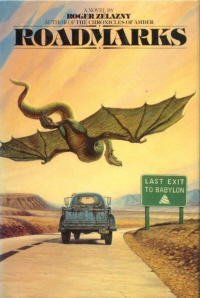
Roadmarks_firstLet’s look at the cover and the blurb on  ‘Roadmarks’, a classic sci-fi fantasy written by the late Roger Zelazney. It was published in 1979 by Del Rey Science Fiction. The cover art is awesome–and it really caught my eye. It is simple, with plenty of visual room for the graphics.

The blurb is intriguing too, as the publisher sold me the IDEA of the novel:

“The Road runs from the unimaginable past to the far future, and those who travel it have access to the turnoffs leading to all times and places–even to the alternate time-streams of histories that never happened. Why the Dragons of Bel’kwinith  made the Road–or who they are–no one knows. But the Road has always been there and for those who know how to find it, it always will be!”

I have the cover design for Huw The Bard, and the blurb. That book is covered!  But Mountains of the Moon–not so much. Finding the art for that book is proving a challenge, but I have six months at least so something will turn up.

1 Comment

Filed under Adventure, Battles, Fantasy, Humor, Literature, Uncategorized, writer, writing

Phil’s Cosmic Roulette Wheel

Photograph courtesy of RL5 Photography via www.spaceneedle.com

Photograph courtesy of RL5 Photography via http://www.spaceneedle.com

Today I want to discuss Phil’s Cosmic Roulette Wheel. Perhaps it’s fate, perhaps it’s the universe–whatever it is, it steers us down the path to perdition, and throws the almighty wrench in the works just when everything was going so well. In my world of Neveyah where the Tower of Bones series is set, Gods have a direct hand in the action.

The strange part was naming them. I’ve a friend, a Leo, named Phil. Phil is a lion among men and I thought, why not name a god Phil?

It turns out that if you write fantasy you  should probably give your  gods names that evoke omnipotent power. Apparently Phil is a bit too neighborly for a good ‘god-name,’ go figure. So I have opted for less comfortable names for my gods.

Phil is a longtime friend of mine, a man who will argue the opposite side of any topic you choose, and he will do it with passion and will even have some evidence to back his position.  He also enjoys the occasional rant on Facebook, but hey–who doesn’t? I figure he should get a blog and rant to his heart’s content, but what do I know.

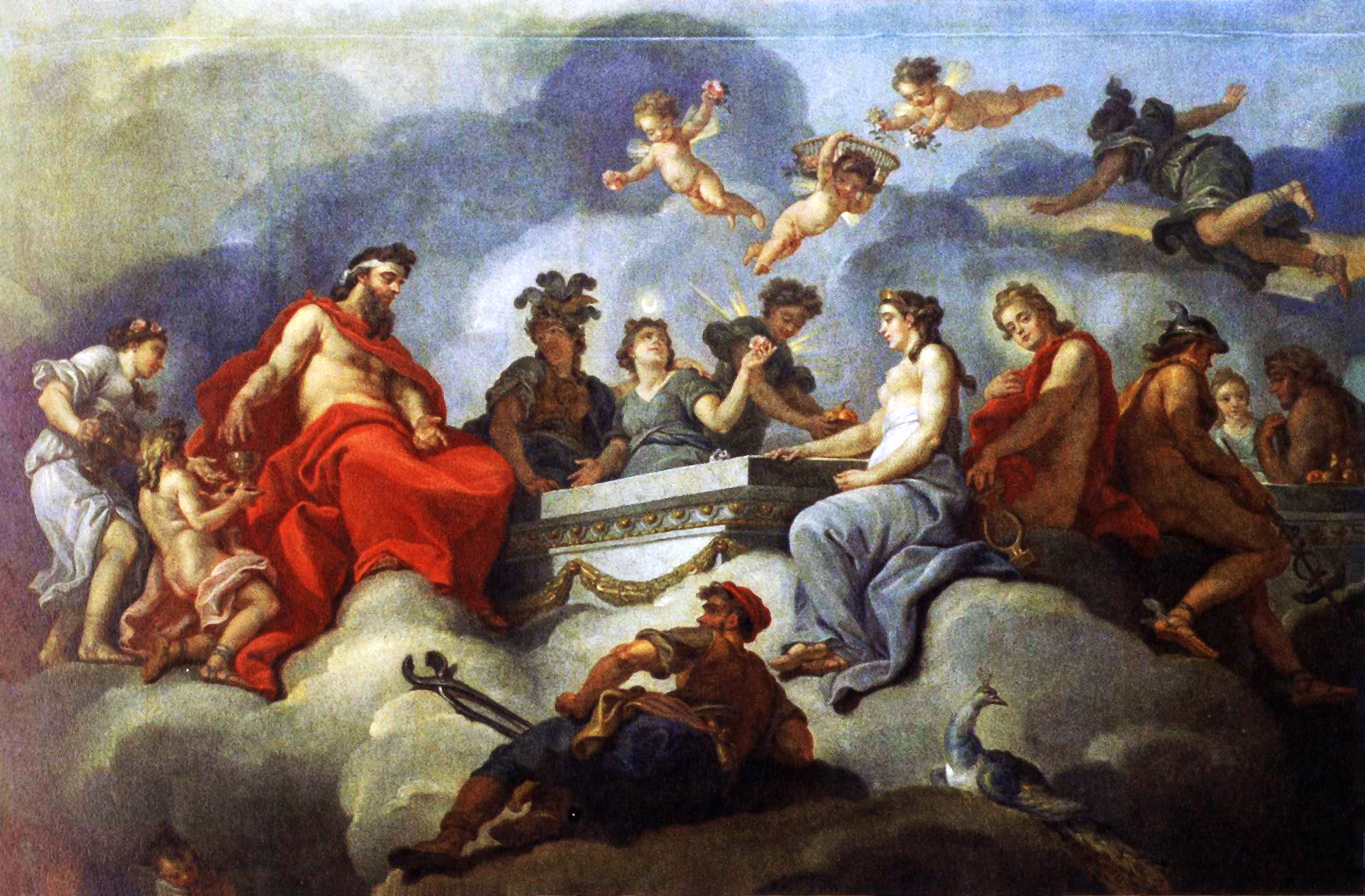
Die_Einführung_des_Ganymed_in_den_Olymp_(van_Loo)_-_AusschnittAny way, Phil was on a rant about something, and I forget exactly what it was, but the upshot was he is a bit of an atheist.

Well, that takes all the fun out of blaming the gods for everything that’s wrong in your life!

But I’m not here to argue about religion. Religion is like sex and politics–everyone has their own version, and other folks don’t want to hear about how great it is.

Phil got me to thinking about how events seem to occur, driving us to a specific moment in time. There is a sense of destination in the way events occur, as if the only place you could have found yourself, no matter how you tried to avoid it, was at that stop light.

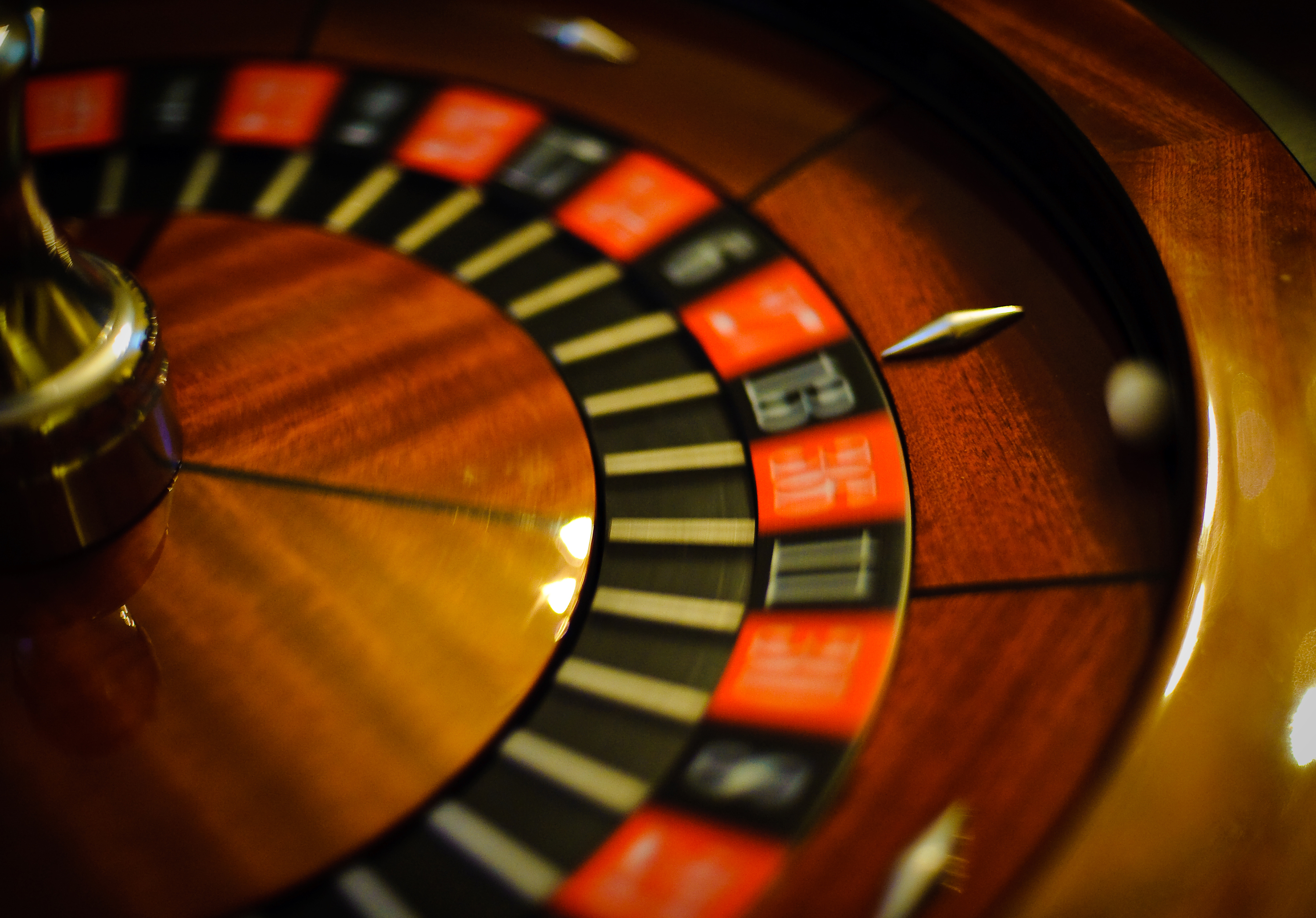
Roulette_-_detailThe upshot of all of this is the epiphany I had– the realization that Phil the God (who is an atheist) uses this giant cosmic roulette wheel to determine the fates of each denizen of his universe.  There he is, sitting in his heavenly bathrobe, watching movies on netflix and spinning his cosmic roulette wheel.

Now I know why things just seem to happen so randomly. Phil’s Cosmic Roulette Wheel is spinning and where it stops, no one knows….

2 Comments

Filed under Adventure, Books, Fantasy, Humor, Literature, mythology, Uncategorized, writer, writing

The Dilemma

GRAELENT AND THE FAIRY-WOMAN - Illustration from Legends & Romances of Brittany by Lewis Spence, illustrated by W. Otway Cannell.Romantic love and passion are two things that make up the bulk of many a book I’ve begun to read and then set aside over the past few years. Truthfully, romance novels don’t interest me the way adventure novels do–if they are seasoned well with a bit of romance. Graphic romance with no plot is porn, and I think we should just call it that and be done with it. Adventure with no romance is a travelogue detailing a rough trip, but nothing to write home about.

Dilemma.

In a novel, one without the other just does not work. Words splashed on a page for their shock value have been done and over-done, so for me it’s important to keep myself writing for the quality of the tale. If I do it right, I will intrigue the reader and challenge them, making them want to read more.

Adventure must have some sort of romance to drive the plot forward, some unattainable goal whether it is love or an object. I like to look back at history and see what it was about some tales that have kept the interest of readers, not just for years, but for centuries. What do these tales embody that new works should also have, to make them timeless?

Let’s examine the Arthurian Legend. From the website, www.arthurian-legend.com.

I quote:

Illustration by H.J. Ford for Andrew Lang's Tales of Romance, 1919. Arthur meets the Lady of the Lake and gets the Sword Excalibur“The legend of King Arthur and the knights of the Round Table is the most powerful and enduring in the western world. King Arthur, Guinevere, and Sir Lancelot did not really exist, but their names conjure up a romantic image of gallant knights in shining armour, elegant ladies in medieval castles, heroic quests for the Holy Grail in a world of honour and romance, and the court of Camelot at the centre of a royal and mystical Britain.”

There we have the essence of what constitutes a timeless tale: Powerful people doing heroic deeds, and finding a bit of romance along the way. Set them in intriguing surroundings and dress them in metal or velvet (or both) and voila! Now all you must do is cue the magic–bring on the wise old sorcerer.

Hey, it worked for J.K. Rowling!

Boys_King_Arthur_-_N._C._Wyeth_-_p82I do a lot of reading, and if I am not reading, I am writing. My hope is that at some point in every tale I write, my readers will find themselves completely involved in the tale to the exclusion of the world around them. If that happens, then I have had an impact on my reader, the same way as Anne McCaffrey, Tad Williams, and Mercedes Lackey have each impacted me.

Someday I will have written that tale.

But if I do that,  I’ll have to sustain the momentum…keep writing good stuff only and forget writing crap….but crap is so much easier to write.

Unfortunately we’re only as good as our next book.

*Doh*

4 Comments

Filed under Battles, Books, Dragons, Fantasy, knights, Literature, mythology, Uncategorized, writer, writing

Courting the Muse

EDWAERT_COLLIER_VANITAS_STILL_LIFEMusic and writing are completely intertwined for me. For each book there is a certain mood I am trying to convey in my writing, and that mood is influenced heavily by the music I am listening to, as well as the art I am creating. My mind is a junk room of ideas–sometimes the best ideas are hidden in the dusty corners.

Lately I have been listening to Eric Whitacre on YouTube a lot, and finding such joy in his love-affair with sound.  He finds the most amazing poetry and sets it to incredible music.

Fly to Paradise

Lux Aurumque

Albert_Bierstadt_-_Rocky_Mountain_Landscape_-_Google_Art_Project (1)Some of my ideas come from  nature but the others just randomly pop in there, like visitors from outer-space.

Every writer knows they are only as good as their next book.

We write drivel, and we write magic–often on the same page, in the same paragraph. We can spend 2000 words describing an attic, and we are at a complete loss as to how to describe an emotion or a scent. We use too may ‘ly’ words and we don’t use enough.

Frequently we don’t follow the rules no matter how often the gurus tell us to.

Writers struggle to bring people who never lived to life, and struggle to show us worlds that defy the laws of nature. Writers struggle with morality and with gods. We battle the forces of Darkness, and sometimes we are the Darkness. We write short stories, serial novels, and screenplays. We write novellas that we intend to make into novels at some point, but may never get around to.

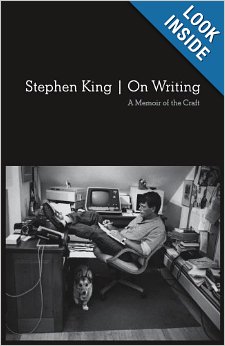
on writingEvery day we write, spending hours alone in dusty offices or struggling to find half-an-hour in a quiet corner of the laundry-room, away from the din.

Somewhere along the line, I stopped making excuses for not writing, and began doing it. At first, maybe I didn’t have a typewriter, but I did have a pencil and paper, so I used them.

We writers are artists, painting with words, and we are unable to sleep until that picture is on the page.

For me, writing is about staying fired-up over an idea, and getting that idea out of my head and into its proper alternate universe.

I love this gig!

2 Comments

Filed under Adventure, Battles, Books, Fantasy, Humor, Literature, writing

Version Control, or The Name of the Beast

Anne_Anderson05 - Beauty sat down to dinner with the Beast illustration PDArt - Wikimedia CommonsThis is the 1st post in the series “WORD—A Shifty Beast,” focusing on helping authors of both fiction and non-fiction get the most out of using Microsoft Word, if that is your chosen word-processing program.

I use MS Word as my word-processing program. It is a reasonably priced thing, although if I could afford to buy a different program I would use  Corel WordPerfect. It is much easier to find the hinky formatting errors in your manuscript with WP, but that is a blog post for another day.

Microsoft WORD is a versatile program and has many wonderful tricks for writing letters, making awesome presentations and pretty brochures. It is good in a business setting.

However, for the author, Word is a shifty beast at best. One must learn how to make it work, and there is a learning curve. Just like every other product out there, WORD is the creation of many layers. It has had many incarnations, and some were more successful than others, and there are inherent flaws in the design. All that aside, of all the versions of WORD I have used, I like the 2007 – 2010 version best.

Most authors are using some form of WORD, whether it is the free version, or the inexpensive student version I use.  I’ve had to do a lot of desktop support for various clients via chat and cell-phone lately, so today we begin a series on using MS WORD as your word-processing program.

When we first begin to write seriously we learn how critical it is to have proper naming of our files to ensure version control.  The most recent file will usually be the best edited unless you have accidentally saved an earlier version over it.

Oh, the Agony….  Experience is a hard teacher.

ALWAYS use a separate file-folder for each version, and ALWAYS use consistent file labeling practices to avoid this tragedy!

You would be amazed at how many authors I meet who don’t know how to properly save files, and the reason they don’t know is they have never worked as an office manager using WORD, so they have no concept of how easily something that should have been simple can veer out of control.

I am a structural editor, and as such I deal with a lot of different authors and am responsible for saving their files in a consistent and manageable way. I spent many years as an office manager for a charter-bus company, and here is where my hard-earned knowledge of how to use my word-processing program comes in:

  1. I create a master folder for each individual author in my CJJASP Editing folder. That folder is inside the CJJasperson Writing folder in my dropbox account, which is what I write from at all times.
  2. I never use the documents library on my computer for saving anything important. I use dropbox because my work is always saved into the cloud and I can access it from a computer at the public library if my computer is toast for any reason. My work is also always available on my desktop if the internet is down so I can save it to a thumb drive, and when internet access is reestablished, the files I have changed will be saved automatically. GoogleDocs is also free, and many people use it successfully.

Dropbox is free, gives you as much storage as a thumb drive and is always accessible.

DB screenshot

I have an icon on my desktop that takes me directly to a standard library of files (menu) when I click on it. But I can access this menu on the main website from any computer by going to dropbox dot com and entering my email and password. Yes, it is password protected, and a good 6 to 8 combination of letters and numbers is best.

  1. I use a specific sort of naming system. For any new master-folder, the file-name will ALWAYS be:  Book_ AuthorName_script.doc .   This is the main file folder for this book and this author! every thing pertaining to this book will be in this file in sub-folders.

There will be at least two sub-folders in this file, and there may be up to eight. (One for each step of the editing process.) Version control is critical, so proper naming of the files is absolutely essential.

First: The original raw manuscript in its entirety is saved in this folder. Lets use Joan Hazel’s wonderful book, Burdens of a Saint for example:  I will name it this way:

Burdens of a Saint-JHazel-script  (It will look like Book_ AuthorName_script.doc)

Word will automatically add the .doc as the extension.

There will be 2 folders for every step of the process this manuscript goes through with me: One folder will contain files from the author’s desk to me, and the other will be from my desk to the author.

  1. Inside of the master file is a folder labeled:  1st Round Edits JH (Book initials>version>author initials)

I will copy and save each individual chapter to a new document, and I will give them a specific name. Yes, I am separating each chapter out of the whole ms, but we will not lose their order because we have a reliable system for naming files and will ALWAYS use it!

save as screen shot

First of all, be sure to save it as an actual Word DOCUMENT and not a Template.  If you save it as a template, you will keep getting a warning the document is read only and it won’t let you save it.

I will do each chapter one at a time, saving them and closing them out. Any time I am confused as to what chapter I am supposed to be on, I look at the library of files to see what I have already saved, and go the next chapter.  (Libraries are the menus you get when open “Save As” and are where you go to manage your documents, music, pictures, and other files. You can browse your files the same way you would in a folder, or you can view your files arranged by properties like date, type, and author.  The picture below is of a Windows Explorer library.)

As I save each chapter, they will automatically sort themselves into the proper order as long as you name them this way:

Book title initials>Chapter # > author initials  –  it will look like this:

BOAS chapt 1 JH submitted.doc 

This  tells me: it is chapter 1 of Burdens of a Saint, by author Joan Hazel, and is the raw unedited version. This is important to save it this way, in case we need to refer back to it. This file will remain unaltered.

Each consecutive raw chapter will be named in this way and the list will look like this:

Folder shot

Inside  BOAS beta 1st Round Edits JH,  I create a second folder, this one labeled: 1st Round Edits CJJASP complete. It will be at the top of the list and will look like this:

These are the first edits of the individual chapters, with my comments and suggestions in the right-hand column, and are what I send to the author for their consideration. These I will name like this:

BOAS beta chapt 1 cjjasp edit 1.doc   Again, each consecutive chapter will be named in this way, and the library will look the same as the one in the image above.

  1. The Author will make the changes or not as they see fit, and will send me each corrected chapter back.  When those chapters come back to me, that is the beginning of round 2.  The files will be named with the number 2.

BOAS 2nd Round Edits JH  (sub-folder name for files submitted by author)

BOAS chapt 1 JH rnd 2.doc   (document name for each document in the folder)

BOAS chapt 2 JH rnd 2.doc   (see the pattern here?)

2nd Round Edits CJJASP complete (folder name for files edited 2nd round)

BOAS chapt 1 cjjasp 2nd rnd edit.doc (and so on)

You, as an author, will create many versions of your manuscript. YOU MUST manage your versions with meticulous care, or you will lose files, have to rewrite sections you just wrote (and which were brilliant) or any number of horrible, irritating situations will arise.

These situations were not caused by your word processing program, so don’t blame Bill Gates.  They were caused by you not knowing how to prevent them from happening.

But that’s not a problem now, right?

4 Comments

Filed under Books, Fantasy, Literature, Uncategorized, writer, writing

Kamikaze Noveling

NaNoWriMo-General-FlyerWell, here we are again, back at the beginning, right where my crazy life as a full-time author began. November is National Novel Writing Month and for the next 30 days I plan to write at least 1667 words per day, or double that if possible.

It’s kamikaze noveling–Some people go so far as to use a program called Write or Die. I am crazy, but not that crazy–this program forces you to keep pouring down the words or it will make noises at you, and perhaps delete what you have already written.

I would have to shoot the damned thing. (sorry.)

Even without the cattle prod of Dr. Wicked’s little program, I am going to literally spew the words on to paper, and get that novel written. I will not make corrections, I will not go back and redo anything.  I will just write it as it falls out of my head. Corrections happen in the second draft, and that is for January. What I have to concentrate on now is writing this first draft, just getting it out of my head.

I will not be writing the book I so carefully outlined and planned all last month after all.  I will instead be doing a complete rewrite of the book I have been stalled on for the last year, Valley of Sorrows.  I had an epiphany last Thursday, and I know what I have to do to make that story live. All I have to do is scrap 70,000 words and start over from a different character’s point of view.

*doh*

But writing is like painting your walls–if you don’t like what you’ve written, change it!

SO, What is this NaNoWriMo all about anyway?

nano_12_new_Come_Write_In_Logo1There is an online organization — NaNoWriMo.org —  and according to their Wikipedia page, this is what they are all about:

The goal of NaNoWriMo is to get people writing, no matter how bad the writing is, through the end of a first draft. The idea is that many people are scared to start writing because it won’t be any good, and if there’s a time to celebrate length, rather than quality, more people will write an entire first draft, which they can then proceed to edit if they wish.[citation needed]

The project started in July 1999 with just 21 participants, but by the 2010 event over 200,000 people took part – writing a total of over 2.8 billion words.[2]

Writers wishing to participate first register on the project’s website, where they can post profiles and information about their novels, including synopsis and excerpts. Word counts are validated on the site, with writers submitting a copy of their novel for automatic counting. Municipal leaders and regional forums help connect local writers with one another for holding writing events and to provide encouragement.

2013-ML-Facebook-ProfileBut as for how I became involved in it–a young writer friend of mine in the Philippines whom I had met while writing fanfiction for an RPG gamers fansite talked me into entering the 2010 NaNoWriMo. I was hooked! Now I find myself in my second year as Municipal Liaison for the Olympia Washington USA region, helping 1471 local writers pry that book out of their creative mind and get it on paper.

That first year I had no idea what to write, as I had been working on several writing projects for the previous two years. But one night it occurred to me – How does a Hero gracefully retire from the business of saving the world?

Perhaps he doesn’t.

Perhaps there are so few Heroes that there is no graceful retirement… and then I wondered – how did he find himself in that position in the first place? He had been young and strong once; he must have had companions. Why did he not quit when he was ahead? At that point I had my story.

And thus Julian Lackland and Lady Mags were born, and Golden Beau. But they needed a place to live – so along came Billy Nine-fingers, Captain of the Rowdies and his inn, Billy’s Revenge. When I first met Billy and his colorful crew of mercenaries I was hooked. I had to write the tale.

Julian’s tale was originally published through a small publisher, and while that didn’t go so well, it was a great learning experience. He is once again in the works with a new title, a new editor, several new vignettes,  and a leaner style of storytelling. Over the last three years, the characters in Julian’s book  spawned two other novels, one of which, Huw the Bard, is in the editing process at Eagle Eye Editors.

This year is already starting in an awesome way. I am on fire to get John’s story written, and to bring Edwin and the boys home. Now I know what has to be written and at midnight tonight, the first words go down.

I will be sitting in a 24 hour restaurant with some of our other WriMos, at our 2nd annual “First Hours of November” write-in. We will drink coffee and write, write write. I will stay there until the sun is up, writing this wonderful story with 6 or 7 of my new best friends.

Life doesn’t get better than this.

2013-Participant-Twitter-Header (1)

3 Comments

Filed under Battles, Books, Humor, knights, writer, writing

Cover Reveal: The South Sea Bubble, by Alison Deluca

Alison DeLuca TNWE myrddinAs I have mentioned before, I am in love with fabulous art, and I totally adore beautiful book covers.  I have been working on covers for my own books,and was thrilled to find some of the best art in the world in the public domain, free and with a creative commons license allowing it to be remixed and used in anyway.  While my books have always had great graphics, thanks to the awesome Ceri Clark, prior to Tales from the Dreamtime, the art I have found for her to work with  wasn’t what I really wanted, and I wasn’t sure how to achieve what I wanted to see on my book covers. Beginning this year ALL my books will have much more appropriate art, eye-candy (in my opinion.)

Selecting art to cover your book is apparently a common problem, as I have seen some fairly awful book covers sold under the auspices of major publishing houses, so I don’t feel too badly in regard to my own sad efforts.

Alison DeLuca HeadshotToday my dear friend and fellow co-founder of Myrddin Publishing Group, Alison Deluca is revealing the cover to her new book, The South Sea Bubble, the 4th and final installment in her wonderful steampunk series, The Crown Phoenix Series. The book is due to be released on November 5th, 2013.

Alison’s bio doesn’t do her any justice:

“Alison DeLuca is the author of several steampunk and urban fantasy books.  She was born in Arizona and has also lived in Pennsylvania, Illinois, Mexico, Ireland, and Spain.

Currently she wrestles words and laundry in New Jersey.”

This woman is so much more than those few words tell! She is a rock to those of us who rely on her wisdom and sharp humor to get us through the twists and turns of the publishing world.  Today, she has agreed to let me give you all a sneak peak at The South Sea Bubble and the beautifully conceived and put together cover cover!

But first–the Blurb:

An Edwardian hospital hides many secrets:

A mysterious patient lurks in the cellar…

A secret passage leads to danger…

Coded messages reveal new riddles..

Visions of danger haunt the people of Grimstead Manor…

Lizzie and Miriam find horror, adventure, and romance surrounding the strange vessel known as The South Sea Bubble.

“Compulsive reading!”

“Addictive steampunk.”

BUT  wait…. I’ve read the first three books in the series and I’m DYING to read this book.  Let’s have just a teensy look inside:

Oh, stop the dramatics,” Simon groaned. “What on earth are you talking about? Of course I’m not leaving until we sort all of this out and you tell me what – is – going – on!” His voice rose in volume on each successive word.

Miriam looked at him. Her eyes were dark and very direct. “No, Simon.” Her lower lip trembled, but she took a deep breath and seemed to recover. “I will not.”

“Oh, is that so?” His voice dripped with sarcasm. “And I suppose you think I’m just going to waltz off and forget all about you, Lampala, and last summer.” He raised one finger and stabbed the air in her direction. “I’m not going to, my girl, and don’t you forget it. I will not give up on you, although apparently you have given up on me.”

Okay. They’re grownups now…. having a bit of a tiff…. This book intrigues me already. I’m all about it!

I pressed Alison to talk to me about how she and her cover designer worked together to come up with the cover.

My cover artist throughout the Crown Phoenix series is Lisa Daly, my best friend from high school. We continued the theme of showcasing main characters on the front, although this one shows Simon, the first male cover.

Lisa and I chose the model because not only does he embody Simon’s physical characteristics (good looks, blond hair) but also his strong-willed, hot-tempered personality. No wonder Miriam found herself dreaming about him at night.

We got permission from Joachim Muller, a German photographer, to use his image of the lovely octopus in the lower left corner. Also, the bathysphere, which is the South Sea Bubble, frames Simon – a theme within the story.

Thank you so much for allowing me to showcase this on your blog, Connie!

***
And here, my friends, is the gorgeous cover, revealed at last:
The south sea bubble Alison Deluca
Due to be released November 5, 2013

1 Comment

Filed under Battles, Books, Fantasy, Humor, Literature, Steampunk, writer, writing