Tag Archives: flash fiction

#FlashFictionFriday: #NewYears2016

472px-judith_leyster_merry_trioAt this time of the year, I find myself looking back at my own life, and feeling such gratitude for the blessings and the bounty my husband and I have enjoyed.

All in all, 2016 was a good year on the home front, with the low points being more than balanced by the joys. My suspicion is that people who don’t know what it is like to suffer a little pain don’t appreciate the true beauty of life.

In some ways it has been a hard year, true, but through it all I had the joy of grandchildren, the love of my husband and our children,  great books to read, and music to surround me. I have rediscovered my gratitude — both for the bounty I enjoy, and the people I am privileged to share my life with.

On New Year’s Eve we will enjoy a dinner party at the home of close companions. We’ll party in the company of my sister and her husband, a few comrades from our old school days, and several soul-mates we have only met comparatively recently. We’re a mixed bag of nuts, as close as blood-relatives, a gang of retirees who support each other through the highs and lows of life.

May your new year bring you joy and prosperity and the ability to appreciate them. May you have the good health to enjoy them, and may your imaginary friends never stop talking to you!

In the meantime, I offer you this poem (originally posted on Jan 1 of this year):

>>><<<

New Years Eve at the Drunken Sasquatch

Bloody Bill reigns from behind his bar

Over the rowdy throng.

And I shall nurse my cider mulled

And sometimes sing along.


The Leprechaun plays Hendrix, loud,

The vampire sings the blues.

The dragon racks the billiard balls,

The Reaper chalks his cue.


We’re having such a lively time

The floorboards sway and heave.

The Drunken Sasquatch is the place

To spend a New Year ’s Eve.


New Years Eve at the Drunken Sasquatch, © 2016 Connie J. Jasperson

1 Comment

Filed under #FlashFictionFriday, writing

#flashFictionFriday: Science Officer’s Log

Today’s flash fiction was inspired by the recent announcement of the  European Southern Observatory‘s discovery of a roughly Earth-sized planet orbiting our nearest neighboring star, Proxima Centauri.  Planet Proxima b is larger than Earth, but could have liquid water on its surface. Proxima Centauri is around four light years from us. It’s a small red dwarf with a radius of around 60,000 miles (97,000 km), which is around 14% the size of our sun. It  is estimated to have a mass of around 12% of that of the sun, and is 1.4 times the diameter of Jupiter.


Science Officer’s Log

  • Week: 15
  • Month: 4
  • Day: 15
  • Year: 47 (Post Earth Era)
  • Logged by: Jamal Baines, Acting Science Officer

Last week our ship arrived at a three-star system, and stopped at the edge.  I’m not sure why we’ve stopped because, before they disappeared, no one thought to warn me it was going to happen. It’s been two weeks since the adults who used to run things disappeared. Not sure what happened, but I don’t think they planned to leave.

I’m fourteen now, so I should be an adult about things, but I miss my mom.

The internal system is functioning as it should. Maybe we were supposed to stop here. The telescopes are observing the dwarf star of the trio, and I’m logging the information as it comes in. I just don’t know how to interpret it yet.

From outside, our ship seems like an immense moon or a small planet, but it’s an asteroid ship. We’re self-supporting so things are pretty complicated. When I first joined the science pod, Dr. Abrams told me that because we live underground, we’re safe from radiation and most stray comets.

I don’t know if anyone will ever go outside again, because I don’t know if anyone apprenticed in the maintenance pod was trained to pilot the O.A. Shuttles.

We finally got all the kids together for a meeting, and we have an idea of how to go forward.  I’m not sure what I’m supposed to write here because we didn’t do anything other than deciding who was going to do what. The younger kids are afraid, and everyone agreed we needed the older kids to take charge.

Shelena’s oldest, seventeen, and she is captain. Darius is fifteen, and he’s first officer. They were apprenticed in the bridge pod, so she is most familiar with how Captain Gonzales ran things, and Darius is good at keeping things organized. Shelena knows where all the information is, so at least we’ll have that, and we can continue our education. I got to be science because that’s where I was apprenticing. Sanjay is 17, and is in charge of sickbay, for the same reason. The androids are functioning perfectly, handling the work humans don’t usually have to do, like running the mess hall and the sewage treatment plants.

There are only fifty-six of us old enough to have been apprenticed into the ship’s management systems for any length of time. The others are working in the areas where they were, still trying to learn from those of us more advanced. The pre-teen kids not old enough to have been apprenticed are minding the babies and little ones.

Darius thinks the adults got sucked into a dimensional rift. I guess that’s possible, but I can’t see how. But regardless, we have to support the farms, because they’re what keeps this ship’s environmental systems running. So, just like before the adults disappeared, we’re all taking our turns working in the agrarian pod. Things are pretty easy to work, if you know the controls. So far, we’re all getting along, no quarrels to speak of.

That’s all I can think of for right now. I’ll write more tomorrow because Doctor Abrams always kept a daily log, so I should too.

J.B.

This artist’s impression shows a view of the surface of the planet Proxima b orbiting the red dwarf star Proxima Centauri, the closest star to the Solar System. The double star Alpha Centauri AB also appears in the image to the upper-right of Proxima itself. Proxima b is a little more massive than the Earth and orbits in the habitable zone around Proxima Centauri, where the temperature is suitable for liquid water to exist on its surface.

This artist’s impression shows a view of the surface of the planet Proxima b orbiting the red dwarf star Proxima Centauri, the closest star to the Solar System. The double star Alpha Centauri AB also appears in the image to the upper-right of Proxima itself. Proxima b is a little more massive than the Earth and orbits in the habitable zone around Proxima Centauri, where the temperature is suitable for liquid water to exist on its surface. Artist’s rendering by This artist’s impression shows a view of the surface of the planet Proxima b orbiting the red dwarf star Proxima Centauri, the closest star to the solar system. The double star Alpha Centauri AB also appears in the image. Proxima b is a little more massive than the Earth and orbits in the habitable zone around Proxima Centauri, where the temperature is suitable for liquid water to exist on its surface. Credits: ESO/M. Kornmesser


Science Officer’s Log © Connie J. Jasperson 2016

6 Comments

Filed under #FlashFictionFriday, Fantasy, writing

#flashfictionfriday: The Sea Doves

sanddollar

For more information on the life cycle of the common sand dollar, go to http://www.gma.org/tidings/sand-dollar

An older lady walking with a cane, and a young boy of about four strolled along the beach, following the line of shells and debris left by the retreating tide.

“Grandma, what’s this?” The boy picked up a round, flat shell, with a design that looked like a flower etched on the rounded top.

“It’s a sand dollar,” replied the grandmother. “When the little creature inside dies, it leaves its teeth behind. Their teeth are shaped like doves. If you shake it you can hear the doves inside, rattling around.”

“Real doves? Like the ones by our house?” He peered intently at it, turning it over in his chubby hands and then, holding it up to his ear, he shook it.  He  danced with excitement, his eyes bright. “I can hear them!”

They walked a while further and the boy bent down again, picking up another sand dollar. “This one is is broken. What happened to the doves? Did they fly to my yard back home?”

The grandmother chuckled. “Perhaps they did. Shall we open one and see if they’re the kind of doves that fly?”

“Okay. I’ll find one.”  After a few moments of searching, the boy shouted, “I found it.” Quickly bending down, he picked up his find and held it out to his grandmother. “Can you open it now?”

“We’ll need a rock,” said Grandma. “Get me a good rock for pounding on things, about the size of your fist.”

Soon the two were bent over a driftwood log, with the sand dollar lying ready to be opened. “What should I do?”

“Give it a good whack. Not too hard, but just enough to crack it open.”

The boy shook his head. “I’m too strong. What if I smash it? I’m much stronger than you, so maybe you should whack it.”

Laughing again, Grandma complied. Soon the shell was opened and the little dove-shaped teeth were exposed.

The boy waited for a moment, then asked, “How come they aren’t flying away?”

Grandma thought for a moment. “Perhaps they only fly when we aren’t looking at them. Maybe we have to close our eyes and wish as hard as we can.”

The boy did so and after a moment Grandma said, “Look!”

His eyes flew open and he saw in the distance five white birds, flying away. “They did it! We let them loose! But they turned into seagulls.”

Grandma fingered the tiny bones in her pocket. “You’re right. Those were seagulls. Maybe they only turn into sea doves if we let them break out naturally.”

“Okay. We won’t hatch any more. I think there are enough seagulls on this beach right now. What we need are sea doves.”

Grandma agreed. The two walked on, stopping occasionally and examining the amazing finds left behind by the tide.


The Sea Doves, © Connie J. Jasperson 2016, All Rights Reserved

7 Comments

Filed under #FlashFictionFriday, Fantasy, writing

#flashfictionfriday: October Sky

Louis_Français-CrépusculeIt had been the coldest October I could remember. Rafts of ice floated up and down the lake, blown by the winds, breaking up and re-forming as if dancing a ballet. The leaves had been off the trees since the end of September, almost as if they couldn’t fall fast enough.

It was in the last, quiet hour before sunset when the real beauty of my rustic lake home was revealed to me. The sun drifted its way behind the hills as the wind died off to nothing. The lake became a mirror reflecting the pink-blue-purple-gold of the sky and the deep green of the evergreen forested hills. It was a green so deep that it appeared to be black.

I would sit at my frozen picnic table with a steaming mug of coffee warming my hands, watching the snow geese and the western grebes. Only the voices of the loons and the geese pierced the blanket of peace I had wrapped about myself.

When the colors had faded, and I could no longer feel my fingers, I would go back into the house and stoke up the fire, still in the thrall of the lake’s spell. Then, only when I had absorbed the tranquility of my lake, would I pick up a brush and enter my world of canvas and color.

On the first morning I saw the naked trees stark against the incredible sky, I knew I had to somehow capture the power. Attempt followed attempt and soon my house was littered with the “almosts.” The bones of the trees were right, but the essence of the sky was missing. Each night I worked longer and more feverishly until one day I realized that I had to back off and gain some perspective.

And so it was that in the small hours before dawn one morning I put away the brushes and paints, and covered the canvasses, frustrated by my inability to capture the essence of the lake and the sky that was mirrored in it. Exhausted, I fell into my bed drained and unable to concentrate, yet sleep escaped me. My mind was filled with the loons and the trees and their sky.

At last, knowing it was futile to try to sleep I rose and made myself tea. Wrapping a blanket about myself I walked out to my small sitting room to watch the trees greeting the pale dawn. The warmth and fragrance of the steaming cup of tea made me feel rested as my bed never had, and the familiarity of the ritual soothed away my frustrations.

The serenity of the moment deepened, a sense of sacredness pervaded the garden. Willingly, I gave myself to the experience, allowing the essence of the moment to seep into my soul.

The air felt strange, alive and crystalline, and the trees beckoned to me. I could feel them calling me to come out and greet the sun with them, and bemused, I answered their call. Stepping outside, still wrapped in my blanket, I walked through the frozen grass, until I was in the orchard among the trees on the shore of the lake.

Looking west to the black-forested hills, I held my breath, overcome by the feeling of anticipation that infused me. Something told me I stood on the verge of an event, vast and unfathomable, though what it could be I couldn’t imagine.

Gradually I realized that the ground was vibrating, and had been for a while, shaking as if a giant walked nearby. As I became aware of the vibrations beneath my feet, a deep rumbling began to penetrate my reverie, shattering the peace. The unfamiliar thunders grew louder with every moment, and the birds fell silent as if waiting to see what approached.

Huddling nervously in my blanket, my eyes were drawn to the north and there, emerging from the mist I saw machines—great, huge, monstrous machines I had no words to describe. They came slowly and relentlessly down the middle of my lake. The waters rolled and boiled around them as they passed me by, paying me less attention than they did the trees. The ice floes broke and tipped crazily, riding the waves that danced about the giant treads.

The line of machines continued south, grinding through the swamp, going I knew not where and coming from where I could not imagine. As they came, the waters grew, and waves began splashing at my feet and then my knees. At last, realizing that I was in trouble, I turned and raced for the higher ground and the safety of my house.

Still the waters rose, following me, and still the machines came rolling down from the north.

I closed the door and stood to gaze out the window at the rising waters and the monstrous machines that continued their unrelenting journey south. The waters rose, and my house began swaying, creaking and groaning under the water’s assault.

I fell to my knees praying to the God I didn’t believe in, but he wasn’t listening.  My house shook and rocked, and lifted with the rising water, turning slowly as if to say goodbye to the lake and the hills to the west. Dishes and furniture careened off paintings and walls—my life in small objects passing before my eyes. I looked, disbelieving, through the shattered windows and saw the inconceivable sky spinning around like a child’s top spins.

I covered my head, and screamed my prayer, but the only answer I received was the sure and profound sound of breaking glass and furniture shattering.  At last, when I believed it would never stop, the floor I clung to gave a great lurch and the noise of destruction stuttered into silence, a silence every bit as loud as the din had been.

Throwing back my blanket, determined to get out of the wreckage while I could, I saw the last of the machines going south into the broken swamp. The trail they blazed through the marshland was a great scar that would never heal, and I wept at the sight of it.

I surveyed the damage to my home with stunned eyes. My house was now perched all askew upon a slight rise that had been perhaps fifty feet behind it before. Everything I had ever owned was now in full view of anyone who might choose to make a leisurely visit to my remote home. Every item of clothing, every bit of dish, smashed or whole, everything dangled from the branches of the broken trees, displayed everywhere.

Despite the carnage, the sky hung pink-blue-purple-golden and unchanged while the naked trees made lewd gestures with my most personal of possessions. The ridiculousness of the situation penetrated my shock, and I began laughing, and falling to my knees I laughed until I couldn’t breathe. Eventually, my laughter became sobs, and I howled until I was spent.

The silence was too much, making me intensely aware of my frail mortality. Stepping through the rubble, I gathered my canvasses, paints, and brushes. Miraculously my easel was untouched, and so I did the only thing I could think of.

I painted the pathetic wreck of my house reflected in the perfection of the lake and the hills.

I painted the obscene trees against the incredible sky as they proudly displayed the debris of my life.

And then I painted those awesome machines as they paraded past me, not realizing that I was there and not caring.

When I was done, three paintings leaned against my ruined fireplace. Exhausted, I found my bed and righted it. Crawling into it I finally fell asleep, resting dreamlessly.

When my eyes opened, I was disoriented. I awoke in my bedroom and looking around, I could see no signs of the previous day’s events. In disbelief, I went to the kitchen and found all my kitsch and accumulated knick-knacks still to be there, whole and in their tasteless entirety. There were no broken dishes, no broken furniture.

Awed and amazed at the power of the dream I had just experienced I set about preparing my breakfast. “Idiot,” I muttered, still feeling rather giddy. I wondered what my sister would say when I called to tell her about it.

Making a cup of coffee, I went to sit by the window in the sitting room.

As I passed the fireplace I froze. Three pictures leaned against the uninjured hearth.

One was of obscene trees decorated with my personal possessions, silhouetted against an incredible sky. In the second picture, my sad house perched askew on the hill, broken and sad, framed by the astounding sunset.

And the third picture was a terrifying image of gigantic, grotesque machines tearing up my lake, plowing through the swamp with the waters roiling wildly about the monstrous treads, beneath the sky that had eluded my skills until that night.

Even I had to admit that the power of the paintings was overwhelming.


October Sky © Connie J. Jasperson 2016 All Rights Reserved

Written circa 1992 and originally published On Wattpad, December 2012

Republished on Edgewise Words Inn, April 2015

8 Comments

Filed under #FlashFictionFriday, writing

#FlashFictionFriday:Happy Hour at the Drunken Sasquatch

796px-Louis_Ducros_(circle)_Pifferari_in_einer_römischen_TaverneI’m always at the Drunken Sasquatch for Happy Hour, as I have nowhere else to be. But Harry Wolfe was a family man with a problem, and he looked distinctly out of place there among the regulars. I had told him I thought the perfect person to resolve it would be in at about four, and sure enough, there she was.
He set his root-beer on the table. “Everyone knows Grandma is no one to mess with! Sure, my stepdad was a big, bad wolf. I won’t argue that he received a kind of back-handed justice. And who is sitting there proudly wearing his hide?” Harry gazed at the elderly woman seated at the bar. “Not my stepdad, that’s for sure.”

The elderly woman in the ratty fur coat turned to see what all the noise was about. We smiled and waved at Grandma.

“See how innocent she looks?  She could be any old barfly. But that’s no ordinary old drunk.” I tried to impress on him how perfect she was for his problem. “That’s Grandma, and she’s the one for the job.”

Harry capitulated. “Um… okay, but no violence. They’re terrible tenants, but they’re college kids, right?”

“So are you going to ask her?”

Harry’s eyes showed the whites, as he mastered his panic. “No! She’s…could you ask her?” The werewolf was actually shaking in his boots.

“Okay,” I said. “I’ll do it.” Very few things intimidate a dragon. I took my orange juice to the bar and found a stool next to the lady in question.

“Mrs. Johnson?” I asked.

“Who wants to know?”

“Dan Dragonsworthy. My friend has a rental property, occupied by some tenants who’re trashing it…he was wondering if you were still in the vigilante business.”

“You mean that nice young man doesn’t want to dirty his paws with such matters.” She met my gaze. “Sure, but it will cost him. I don’t work for free.”

I brought Harry over and introduced him. They got down to the nitty-gritty, and a price was arranged. Grandma fixed Harry with her steely gaze. “Tell me everything you know about these tenants.”

“Well, they’re pigs.”

“We know that. What do they look like?”

“They’re pigs, Yorkshire pigs, to be exact, and seemed so charming and British. They’re foreign exchange students and had good references, but now I’m assuming they were forged.”

“What exactly have they done to your property?” Grandma tried to look comforting. It scared the willies out of me. As I said, very few things scare a dragon, but that look on this old lady was one of them.

Harry said, “Every Saturday night they have these huge parties with hundreds of people and live bands. Loud punk music all night long. My phone is always ringing off the hook, with the other tenants’ complaining.”

“Over on Walnut Street?” Grandma asked, and Harry nodded. “Yeah,” she said. “Those are some great parties.” Grandma thought for moment. “I hate to evict my friends, but business is business, and a girl’s gotta make a living.”

She fished around in her handbag, setting things on the bar: old Kleenexes, mints, a pearl-handled Colt forty-five, her cell phone, a hacksaw, her checkbook, a crescent wrench, a dog-eared address book… and so on… and so on. Finally, she came to a small stack of business cards, with a rubber band wrapping them. Pulling one card from the bundle, she handed it to Harry. “Send the legal paperwork to me at this address here, along with half the fee. I’ll collect the other half when the job is done, Tuesday at the latest. Just make sure a large dumpster is delivered to the curb in front of the place Monday morning.” She turned, tossing everything back into her bag and addressed herself to her gin and tonic. It was a dismissal Harry and I both could recognize.

As we sat down at our table, Harry said, “I don’t like doing things this way, but I can’t have my property destroyed. She’s definitely the one for the job. I hate to have to play the Grandma card, but those pigs have got to go. I just hope she doesn’t harm them.”

Looking at the little old lady seated at the bar, I had to agree. “When you have a tough job, you can always count on Grandma. It may not be pretty, but she gets results.”

Harry shivered.


Happy Hour at the Drunken Sasquatch © 2016 Connie J. Jasperson, All Rights Reserved

6 Comments

Filed under #FlashFictionFriday

#FlashFictionFriday: The Cat, the Jeweler, and the Thief

Barliman gazed at the statue of the cat, and then out the polished window, not seeing the passersby. His eyes turned back to the stylishly dressed thief who stood before him. “It’s a nice enough  statue, well-made. What makes it worth the amount you are asking?”

Scuttle smiled. “It’s more than merely well-made. It’s brilliant. Look at it—have you ever seen such detail rendered in marble?” Thin, with a face slightly resembling that of a pleasant, well-favored weasel, he kept his desperation tightly tamped beneath a business-like demeanor.

Scuttle’s lady, Mari, was so ill that an ordinary herb doctor wouldn’t do. Their landlady believed she had contracted river fever and insisted only a healer from the Church could resolve it. But the Church never healed the poor; only the wealthy could afford a Church Healer. For that reason, Scuttle had to have those coins. He put on his most persuasive voice. “This is a miracle of art, created in marble. The hand of a master freed this cat from the stone.”

“I agree it’s beautiful, but I doubt you came by it honestly. I will be limited in who I can resell it to. Who made it? If I can at least tell a prospective purchaser whose hand created it, I will understand its value, and be better able to get a fair price for it.”

Scuttle snorted. “A fair price…usury has no concept of ‘fair.’ But all right, I’ll tell you who I believe to have made it. Benevolio.” Raising his hand, he forestalled Barliman’s comment. “I have no proof, and there is no maker’s mark on it anywhere.” Picking up the statue he held it to the light, turning it to reveal the remarkable craftsmanship. “Look at the face. Each hair, each whisker, every feature is there in the most minute detail, as if a cat had turned to stone as it sat there. Even soles of the paws which can’t be seen unless one picks the statue up–only Benevolio himself could have created such a masterpiece.”

Silence reigned in the shop as Barliman digested that comment. He pulled his magnifier from his pocket and examined the life-sized statue inch by inch. Scuttle had expected he would, and occupied himself with calculating the value of the objects displayed in the shop. Silver tea services, gold-handled cutlery, delicate jewelry set with precious stones—all rested on dark velvet in glass cases, gleaming in the light cast by wide diamond-paned windows. The fact they were on display meant those items had been purchased from more reputable sources.

The thief had come to Barliman because the jeweler sometimes supplied the wealthier class with things they could acquire nowhere else. Scuttle was a discreet thief, a man who ordinarily only stole on commission. However, the cat had been liberated from the house of a prosperous merchant newly in town, something he had only done because of Mari’s illness. The fact he was there in person to sell the statue indicated to the jeweler that this had been a private matter, making Scuttle’s bargaining position perilous. The jeweler was his only resort–no one else would have given him a copper for the statue, much less what he needed.

What Mari needed.

Barliman set the cat back down on the counter. He replaced the magnifier in the pocket of his vest. “With no maker’s mark, I can’t guarantee authenticity. That will substantially lower the price I can get for it. Therefore, I can’t give six golds coins. Three is my offer–consider, it please. It comes to three months wages for an ordinary man.”

“Five would be less than fair for a statue of this quality, and you would still make an absurd profit. If you can’t offer five, I must withdraw it.” Scuttle had no idea what he would do if Barliman refused. He didn’t dare take the time to go all the way to Westerberg. Three days there and back—Mari would be dead before he returned.

Barliman pursed his lips, deliberating. “Five golds, then.”

Though he felt like dancing, Scuttle comported himself with dignity as the coins were handed over. Barliman placed the cat statue beneath the counter and bowing, the thief departed the shop.

>>><<<

As the door closed behind the thief, the curtain behind the jeweler whisked open. Cardinal Valente stood framed in the doorway. “Good.” The Cardinal’s acidic tones fell like lead in the shop. “Here is your five golds, plus fifteen more for your trouble.”

Barliman handed Valente the heavy, marble statue. “Whose hand created this cat?” he asked. “Even Benevolio could never have done such fine work.”

Instead of answering, the Cardinal set the statue on the counter. “Observe.” He muttered some incomprehensible words, passing his hands over the cat.

Fantasy Desk With Books And Scrolls © Unholyvault | Dreamstime.com

Fantasy Desk With Books And Scrolls © Unholyvault | Dreamstime.com

To Barliman’s surprise, the statue stretched and yawned, then stood up and jumped down. Twining about the Cardinal’s ankles, the cat purred.

“God’s hand created this cat. A spell turned it to stone, and I placed it in the home of my concubine. Then I allowed rumors of its existence to come to Scuttle’s ears.”

Barliman could not conceal his dismay. “Why? Was it to trap him? He has…skills. He’s useful, and not only to me. Imprisoning him would be bad for my business.”

“He is indeed useful. However, a personal matter  interfered with my thief’s ability to gain an artifact I must have. He needs coins to resolve the issue but he is not a man to ask for charity, and I am not known for my generosity. Hence, I devised a way for him to help himself.” The Cardinal laughed, a grating sound. “By the day after tomorrow at the latest, my thief will resume the important task I have set before him, and soon I will have my artifact.” A sly smirk lit his bony features. “And now I know what matters most in the world to my thief, and where to lay my hands on it if I should ever need a bargaining chip. That knowledge alone was worth twenty golds. Never forget this: knowledge is power, Barliman. It’s good to be the one with the knowledge.”


The Cat, the Jeweler, and the Thief © Connie J. Jasperson 2016 All Rights Reserved

Comments Off on #FlashFictionFriday: The Cat, the Jeweler, and the Thief

Filed under #FlashFictionFriday, Fantasy, Literature

#FlashFictionFriday: Edna’s Garden

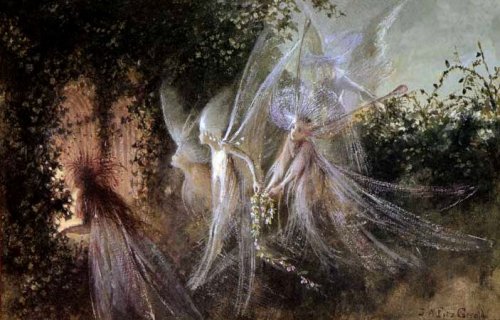
Fairies Looking Through A Gothic Arch John Anster Fitzgerald

Fairies Looking Through A Gothic Arch, John Anster Fitzgerald

This morning I noticed there were fairies in the back garden.

I was a little surprised. At first, I thought they were a side effect of my medication. But hallucinations were not listed on any of the labels, which, by the way, I had to read with the magnifier. I decided they weren’t, and several hours later they were still there.

At first, I couldn’t see them well, and wasn’t sure if they were bugs or birds, but no…when I looked closer with my magnifier, I could see they were definitely fairies.

It seems odd to me, to think that after all these years of wishing for a fairytale ending in my life, I should finally have a garden full of fairies. But life is what it is, and sometimes the things you want elude you until you no longer need them.

When I had lunch, they had progressed to building a rather large bower in the yew hedge. I was glad to see that because it meant they were staying, and they’re a lot more interesting to watch than birds.

They ignored me as they went about their business, rather like the rest of the world, probably just seeing a really old lady, nothing to worry or fret about. I was concerned that Rufus would pester them, but they didn’t interest him. He is the laziest cat, but he does sometimes work up the energy to bother the birds.

I thought about sharing the information with Violet, as they’re something she would enjoy, but she worries about me too much. If I were to call her up and say, “Violet, guess what! Fairies are nesting in the back yard,” she would say, “That’s nice, Edna. Have you a unicorn now too? Perhaps you should stop driving.” She would immediately call my daughter.

That would be bad.

Violet should talk…she’s as bad off as me or worse. But I think we’re doing quite well, for a couple of old crackpots. Funny how ninety-two doesn’t feel as old when you’re wearing that birthday hat as it seemed when we were young and whining about turning sixty-two.

So now I have a garden full of fairies. I wonder if they eat the same sort of things the birds like? Maybe I should get some of that fancy wild-bird food with all the sunflower seeds. And I should probably fill the birdbath.

Then I’ll give Violet a call and invite her over for coffee on the back porch, just to see if she notices anything out of the ordinary. If she does, I’ll pretend like I don’t see them.

She’s always moaning about how nothing exciting ever happens in this town, so this should be good for a laugh.


“Edna’s Garden” © 2016 Connie J. Jasperson, All Rights Reserved

Click here to read part 2

3 Comments

Filed under #FlashFictionFriday, Fantasy, Literature, writing

#flashfictionfriday: A Little Love Story

In the long ago days, before every home had a word-processor, and even before I had my beloved secondhand typewriter, I wrote stories. My writing was for myself, or for my children, as it never occurred to me that I could ever really “be a writer,” although that was what I always answered when asked.

My handwriting was better in those days, perhaps because I wrote daily. Some of my short tales were good, some were bad, and most have vanished over time.

This little tale survived the many moves and purges, and dates back to 1984.

Duet, by David Teniers de Jonge - (1640s) via Wikimedia Commons

Duet, by David Teniers de Jonge – (1640s) via Wikimedia Commons

A LITTLE LOVE STORY

An old man and his wife of many years sit on a rough bench outside the door to their home.  It’s a rough cabin, just one large room with a large attic. The furniture is rough but sturdy and clean from daily scrubbing as is the rest of the home.  Everything in their home they built or made for themselves, right down to the small flute the old man plays as the old woman mends his rough, homespun shirt.

It’s just the two of them now; their son has long since married and moved away. Occasionally they walk the two day’s journey to see him and his family, but it’s unlikely they will ever do so again.

To look at them it would be hard – nay – impossible to believe they ever were young and beautiful or strong and handsome but once upon a time they were just that.

Once upon a time, the old woman had abundant dark hair, thick and curling to her knees when it was unbound.  Her dark eyes were full of fun and her red lips smiled often.  When she thought of what her life would be like, she knew without a doubt she would be as rich as a queen, and as happy as any woman could ever be.  To her, the future was as bright as new-minted gold; all things were possible.

Her laughter made the grumpiest person smile.  The entire village loved her, and though many a handsome, well-to-do young man wanted her for his wife, her eyes saw only the poor but hardworking son of the carpenter’s widow. Whenever she was asked, she vowed she would only marry the young man with the easy smile that charmed all who saw him.

Once upon a time, the old man was handsome, tall and strong, with a smile to melt the hardest heart. But no matter how many beautiful girls danced with him, or tried to kiss him, he only saw her – the merchant’s daughter. She filled his dreams and he vowed to all that he would wed only her.

Everyone said theirs was a story of true and eternal love.

He worked hard, and built the small house for her with his own hands, swearing it was only the beginning of the fine mansion he would build for her and vowing she would live a life of ease and luxury.  Her father was pleased and gave him her hand in marriage.

She didn’t care. She would have lived in a mud hut if it meant she would be with him.

One beautiful spring day and they were married and the entire village celebrated. They lived blissfully for the first year, and the following spring they were blessed with a child.

It is sad but true: to know what happiness is, a person must understand sorrow and pain. Their infant son didn’t live for more than a day. Heartbroken, they buried their child and tried to go on with their life.  Over the next five years, they buried three more children. Only the love she had for her husband kept her going. In his arms, she found solace and peace.  His steadfast love and support carried her through those dark days, and though she was not the merry girl she once had been, she was still a good-natured, loving wife.

The good old king died, and his son took the throne. The young king’s rule was not as kind or as benevolent as his father’s rule had been.  He taxed the people cruelly and life became hard, but still their home was their haven.

Each night they fell asleep in each other’s arms and in the morning they woke happy.

One spring the brash young king’s men came to the village and took her husband to fight the war in a land far away. Bereft and alone, she struggled to keep the home they had built, taking in sewing and laundry, working hard and praying morning and night for her husband’s safe return.

After two seasons had passed, the goddess heard her prayers. Though she feared he would be lost to her, her husband came home, wounded and with a limp which he never lost, but alive and still strong in his love for her. His smile had grown melancholy while he was away, but still melted her heart whenever he smiled at her, which he did at every opportunity.

At long last they were blessed with a healthy boy, and not only did he survive, he thrived in the sunshine of his parent’s love.

And their days passed, turning into years. The king’s taxman saw to it they never grew rich, but he could never steal their true wealth. The boy grew to be a strong, handsome lad and one day he married, leaving his parents somewhat lonely but happy for their son.  And still time passed.

In middle age the woman was still striking; strong and nice to look at, though she had grown somewhat stout. Her laugh was jolly, and her smile still as free as it had always been and she was known by all to be a good and generous woman. When good advice was needed the village sought her out, and her wisdom never failed them; she was as a mother to them all.

The man was still strong but needed a straw hat when working, as his hair was growing thinner with the years. The younger men admired his strength and heeded his wisdom.

Each night the man and woman kept each other warm and every morning they woke happy, knowing they would spend it working together in the little kingdom which was their home.

The old woman’s hair became thin and white, and her smile lacked all the teeth she once had, but the old man still saw the most beautiful girl in the world.

The old man’s pate became as bald as an egg, and his scraggly beard white as snow. He too lacked some teeth, but when she looked at him she saw the one boy in the world who made her heart skip a beat; the boy for whom she would have done anything to have for her own.

An old man and his wife of many years sit on a rough bench outside the door to their home.  When they sit there, they are rich.  Their home is finer than any castle ever known and their lives more blessed. Every promise the man ever made to his wife was kept, if not in the manner he once had planned, although he has only just recently come to understand that.

Every dream she’d ever had came true, though she too only realized it as she became an old woman.

The Goddess of Hearth and Home looks on them and smiles.  One day soon, they will be young and strong, and merry and free again. One day soon they will rise from the bench hand in hand and walk into the sunlight, together forever and always, leaving old shells behind, no longer needed.

One day, soon.


A Little Love Story, © 2016 Connie J. Jasperson

2 Comments

Filed under #FlashFictionFriday, Literature, Romance, writing

#FlashFictionFriday: Laundry Day Blues

Politics and fashion may come and go, but laundry is eternal. I originally wrote this poem in 1996 as a bit of joke-on-me, when I was living in Olympia and working two jobs, one of which was 2-hour commute every day. I had no washing machine. My children and I decided that the $20.00 every two weeks I had budgeted for the laundromat would be better spent on a movie matinee or making a day trip to picnic by the ocean.

Thus, laundry was done in my bathtub and hung on lines to dry. My neighbors thought I was nuts.

Nowadays I have that miracle of modern technology, the washing machine, and still, I resent being taken from my book just to sort, wash, fold, and put away clothes.

vi edgewise words inn, the laundry meme

LAUNDRY DAY BLUES

I’d love to claim I’m reading

the best book of the year.

I’d love to swear I’ve read it

but laundry day is here.

clothespin tiny

My book rests by the sofa

tempting and serene.

But I’ve a pile of laundry

to somehow sort and clean.

clothespin tiny

The cover art is lovely

with elves and all their kin.

It’s by my favorite author–

would reading be a sin?

clothespin tiny

Alas for me it would be

for socks don’t wash themselves.

When the task is finished.

I’ll run off with my elves.


Laundry Day Blues © Connie J. Jasperson 2016

2 Comments

Filed under #FlashFictionFriday, Fantasy, Humor

#FridayFiction: Meriko’s Eyes

Meriko's Eyes © cjjasp 2016

Meriko pressed against the wall, hiding ever deeper in the shadows.  One never knew what lurked in the streets of the city anymore. Since the change, things had been difficult. According to the internet, society was crumbling.

Of course, the web had always declared that.

The darkness in the alley emphasized the scarcity of electricity even though the grid was back up. Meriko’s own scant ration of wattage was reserved for her computer—her lifeline, her source of income and her only reliable link to the life she once had.

She knew things were still bad but had no idea how widespread the problems were. She hadn’t witnessed any violence outside her windows in weeks, but still, emails from her fellow employees at GiantSoft were rife with rumors of murder and worse, and now she went out only when she had no other choice. She wasn’t completely out of touch—she still had interactions with friends through emails and social media. Even if they never saw each other, the network of workers did have a kind of camaraderie.

It was just…she had found a solitary existence more difficult to endure than she had initially believed it would be.

Normally, she had everything delivered to her: food, clothing, everything. She never had to leave home.  However, her self-imposed solitude had at last driven her out of her flat; loneliness and the handsome face of a young man viewed from her window.

She emerged into the alley behind her building. The cool, damp air held a musty scent of mold and garbage mingled with other even less desirable odors, but she didn’t notice them, her senses open to other, worse things. Fortunately she didn’t sense the evil miasma of nightwalkers in the area. Nevertheless, she cleared her mind of any thoughts that might draw attention to her and quickly crossed the alley to the Double Joy restaurant, melting into the shadows. After a moment’s indecision, she entered the café through the backdoor.

Boldly walking as if she had simply been to the restroom, she sat on the only empty stool at the counter and ordered yaki-soba and bubble tea, adding a tip as she paid the bill.  Sipping her drink, she waited for her meal. Even if nothing came of her plan, it was good to be around real people, hearing real voices instead of virtual conversations through the social interface.

She had a flat full of cat statues to keep her company, but they only underscored her isolation, their marble features forever perfect and unchanging.

Meriko could barely tolerate the aromas of the restaurant, the scents of food mingled with the odors of others like her, people so desperate to escape their solitary lives that they would brave the shadowed streets just to dine in a sweltering café with strangers.

“How can you see with those dark glasses, girlie?” said the drunk next to her, with a leer.  The smell of stale beer made her ill, and reflexively, she leaned away from him.

“Oh, you know,” she said noncommittally. “It’s the fashion, so….”

“Hey there! Don’t be bothering the other customers,” the man behind the counter warned the drunk. “If you bother her again, you’re out of here.”

“I’m behaving, don’t worry,” the drunk mumbled, and after a few moments, he staggered out the front door into the night. As he left, fresh air came in, but it was quickly cut off by the slamming of the door.

“I hate drunks,” the man behind the counter said.  “They can eat elsewhere. I don’t need their money.” He busied himself with cleaning the counter and the soda machine.

Meriko pushed her food around the plate and stared through the service window at the young cook in the back.  He was why she came here, despite the danger in doing so.

Tonight she had come in close to closing time, and soon she was the only customer there. So she had timed it right.

She’d watched him come and go every night since he had started working there, observing him from the window of her flat.  The restaurant was just across the alley from her building, so much of her view was taken up by the alley and the back of this restaurant.

“May I have a box to take my leftovers home in?” The man behind the counter brought her a box. “Have a nice evening,” she said, as she walked out the front door.  She was so lonely.  Maybe tonight she would find a friend.  Other people had companions in their lives. Maybe this was the night for Meriko.

***

Ten minutes after closing the restaurant, the cook, a young man named Kai, walked down the dark city street to his bus stop. Usually he was the only one there, but tonight a girl was there, and a to-go box from his restaurant sat on the bench beside her.  He was sure she’d been in the café earlier. He’d seen her carrying the box as she left.

He’d noticed her because she was wearing dark glasses.

“Hello,” he said cheerfully. “Did I see you tonight in my restaurant? Well, it’s not mine, but I work there.”  His smile was unforced and honest, elevating his face from handsome to beautiful.

“Yes,” she said, smiling. “I go there often, but tonight I was later than usual. They were almost closed.”

“I only work the late shift, so that’s why I haven’t seen you before,” he said as he sat on the bench and checked his phone to see the time.  “My name is Kai.  What’s yours?”

“Meriko,” she answered, feeling happy for the first time in weeks.  He was so handsome!

They sat talking for five or so minutes.  Finally he asked, “Why do you wear dark glasses in the night? You wore them inside our restaurant.  I heard you tell the drunk that it was the fashion, but…well, maybe I am not up on the current trends or something.”

“Ah…it’s a genetic condition. My eyes are extremely sensitive to the light,” she told him. “Do you have any hobbies?” she asked, trying to distract him.

“Oh, so it’s painful to go without them,” he said, as if he understood. “So are you a vampire or something?” he joked. “That would be a hoot, me hanging out with a vampire.”

“No.” She laughed. “I’m not a vampire! I am just a girl, just a regular girl. Hobbies…I like collecting old Pokémon cards from before the change. Do you collect anything?”

“So let me see your eyes then, Meriko, who is just a regular girl,” he said, leaning forward to take the sunglasses off her.

“No! Don’t do that,” she said. But it was too late.

Meriko looked at the statue of the handsome young man sitting on a bus bench, holding a pair of dark sunglasses.  The lights of the approaching bus turned the corner as it made its way to her stop, but Meriko had already fled into the darkness, crying.

“Why do they always want to see my eyes?  Why can’t they ever just want to talk?”  Still sobbing, she crept through the shadows to her home.

Statues.  Meriko’s life was full of statues.


Meriko’s Eyes © 2016 Connie J. Jasperson, all rights reserved

Meriko’s Eyes was first published on WattPad in January 2013 as Fortune’s Fool. It was republished in March 2015 by Edgewise Words Inn, under the title Meriko’s Eyes.

8 Comments

Filed under Fantasy, writing