Tag Archives: LIFE EXPERIENCES

My Stressless #writinglife

So, today is the first day of November, and NaNoWriMo has begun. But November is also the month of cooking, my other hobby. And it’s also a month of doctor appointments – go figure.
MyWritingLife2021On Monday, I had to drive to Seattle to take the hubby for a consult with a neurosurgeon. Getting to the doctor was fine. It was a matter of spending one hour sitting in traffic trying to leave Olympia and another hour of actually rolling forward once we made it past the Nisqually River. I had planned ahead for that, so we were on time. The upshot is no back surgery for him unless there is no other option, as Parkinson’s patients do very poorly after surgeries.

Which explains his cognitive difficulties after the hip replacement. Surgery Complications for People with Parkinson’s | APDA (apdaparkinson.org)

However, the neurosurgeon explained some of the non-surgical options which may help. Surgery is a last resort, and hopefully, one we can avoid.

The trip home was easy once I found an entrance to the southbound lanes of I-5. I found all sorts of options to go north, but Olympia is 65 miles south of Seattle, so north was the wrong direction. I finally went north, passed a southbound onramp, exited, and doubled back to that street. An hour later, we were back in Olympia.
30 days 50000 wordsSo, what am I writing today? I’m working on the second half of a novel I began writing seven years ago, so all the world-building and character creation has happened. The plot for this half is evolving. I know the ending, and over the next thirty days, my characters will take me from this high point in the middle, through several hurdles yet to be determined, to that final victory.

I expect you’re wondering how a novel goes half-finished for seven years—I sometimes wonder too, but it happened, so there you go. During that time, I wrote a novel that is nearly ready to be published. I also reworked two existing novels into one and published it (Shadows of Redemption). Also, I finished my alternate Arthurian mashup, Bleakbourne on Heath, finally getting it published.

I can write quickly during NaNoWriMo, but revisions usually take several years.

My half-finished novel was set aside when I was stricken with the idea for my forthcoming book, The Ruins of Abeyon. If all goes well with the beta read and Irene’s final edit, Ruins will be out this summer.

Our new furniture has arrived, and we no longer live like college students. Dining on a card table and sitting in a folding saucer chair was fun for the first week or two, but it wore thin after four months. Hauling my 70-year-old self out of the chair meant for teenagers was not a pretty sight.

desk_via_microsoft_stickersI’m settling into the new office. In my old house, my ramshackle desk was in the Room of Shame, a jumbled mess of a storeroom. My new desk is not duct taped together and has the right amount of storage for what I need.

All in all, this office has the best ambiance of any room I’ve ever had. Writing is easy here, and I hope this novel will fly out of my head and be finished in about 55,000 words.

Unless I am suddenly stricken with a new novel.

(Saints forbid, because I think I’m really going to finish it this time.)

Our apartment has very little storage, so I am gradually unpacking. The shelves do their appointed tasks, and the extra storage is ideal. Even so, some of what I had thought we could keep will have to go.

office chairToday, the office/guestroom walls are barren, but I hope to have all the family pictures hung by the end of this week. The hide-a-bed sofa and side chair make a pleasant conversation area or guest room, whichever is needed. All I lack is my new desk chair, which is on its way here from Norway. (Yes, I splurged on a Stressless desk chair since I spend most of my time sitting in front of my computer.) It should be here in a week or two, and I can hardly wait as my current desk chair loses its appeal after an hour or so.

November is not just for writing here at Casa del Jasperson. My oldest daughter and her family will be with us for Thanksgiving this year, so a certain amount of food preparation will happen. And yes, the vegan will roast a turkey for her son-in-law, along with all the trimmings. Thanksgiving falls on Thursday, the 23rd, so my pre-cooking will be done over the course of that week. Anything that can be cooked in advance will be, and writing will happen as always.

food and drinkWhat are some of my planned treats? Cranberry and walnut shortbread, for one thing. Shortbread is so easy and affordable to make that it always surprises me when people don’t. I have veganized all of my old traditional recipes, so everyone can sneak a treat now and then.

November is one of my favorite months. I connect with the local writing scene, meet new authors, and make lots and lots of comfort foods. I feel incredibly fortunate to be at this place in my life. Happiness means something different for each person, but for me, it’s a comfy home with my husband, a good space for writing, and food with family and friends.

So, on this first day of NaNoWriMo 2023, may you find a little joy, and may your words flow freely!

4 Comments

Filed under writing

Life is a river #amwriting

Most people have struggled in their personal life at one time or another. During the years I was raising my children, I had three failed marriages, worked three part-time jobs, and it was hard to find time to write.

We came through the lean times as a tight-knit family. But I think of life as being like a river, because you never know what is around the bend. By the time my last chick left the nest, I had gained financial security, but a new difficulty arose.

Two of my children developed adult onset epilepsy, a complication which has made our comfortable life… interesting.

When you look at the statistics detailing the age of all patients at the time of their first seizure, the number of those whose first documented seizure occurs after reaching adulthood is far higher than those who experience it as children.

Yet little research has been done to document the experience of living with a seizure disorder as an adult.

They once lived their lives the way normal adults do. They used to be able to legally drive a car without endangering other people, to say nothing of themselves. They didn’t have to worry that a short flight of stairs could kill them or that cooking their breakfast could send them to a long stay in the burn unit.

There is anger, confusion. Why me? What did I do wrong? What can I change? There is even denial–it can’t be epilepsy; it’s never going to happen again.

The truth is, no one knows what causes most forms of epilepsy, and each patient responds to the medications differently. And every well-meaning auntie in the universe has sage advice to offer, despite not having any experience with it. “Try marijuana.” “Go on a Keto diet.” These are effective treatments for some people, but not for everyone, and not my son or daughter.

There is no miracle drug or diet out there at this time.

Epilepsy is not a poster-child kind of disease, so funding for research is limited. At this point, because the cause is rarely knowable, all the medical community can do is offer drugs to control the symptoms. Most times, seizure disorders are not operable, unless it is a tumor or some other obvious thing. When you look at the wide spectrum of patients with adult onset, you see those “easy-to-find with an MRI” causes are quite rare.

Many, like my son, are never quite able to get it under control, and it affects their jobs, their relationships, and their ability to live a fully independent life.

Others, like my daughter, go many years between seizures, and their lives are mostly unaffected by it. She has her own business, volunteers at her son’s school and is also the co-chairwoman of the PTA there.

Both of my children have suffered terrible injuries during seizure episodes. Both have spent time in the hospital, had to have surgeries to repair wounds incurred, and no one has ever been able to find the cause of their seizures.

Writing has been an escape that kept me sane when nothing was certain except my daughter and son were in terrible trouble, and the doctors didn’t know why and couldn’t cure it. The medical community wants to cure it, but the way this condition affects each sufferer is different, which frustrates the doctors as much as the patients.

For many people, after they have a large seizure event, there is a post-seizure stage where they suffer an altered state of consciousness. This can be dangerous if they are alone. They’re locked in a dream and make no sense when they speak. As they begin to come out of that stage, they’re unable to think clearly, can’t focus their attention or follow a conversation. This altered state is like sleepwalking and sleep-talking, which is why it’s dangerous. As they move out of this stage, they will also have problems with short term memory, and may have decreased verbal and interactive skills.

Fortunately, that is a temporary thing, lasting only one or two hour for some, but it can go one or two days for my son. After recovering from that stage, it still takes about two weeks for my son to get back to where he can think clearly enough to work on whatever project he is doing. He can’t be alone then, but  between his wonderful girlfriend and I, we care for him until he can be on his own again.

This post-seizure state cost my son his long-time job (ten years) as a software developer at Amazon and made it difficult for him to find work elsewhere. Most employers can’t accommodate an employee who is randomly unable to work for two weeks, two or three times a year.

After a time of intense depression and searching for answers that don’t exist, my son decided to be proactive. He started his own company, doing what he loves. He is now writing his own software and apps and is his own boss so he can work around his situation.

We could allow this epilepsy thing to overshadow our every waking moment, but that would change nothing. Research, they say, is ongoing, but nothing has changed treatment-wise since my daughter’s first seizure at the age of twenty-eight—sixteen years ago. My children still sometimes have seizures, and we have learned to laugh and enjoy our life despite the occasional setback.

The hours spent in hospitals as my son or daughter recovered from injuries incurred during a seizure helped forge my writing. Life is what happens when we aren’t on that merry-go-round, and other than that, our lives are good.

Life is a journey, and you never know what lies around the corner, but a sense of humor can be a solace when nothing else is. Wikipedia, the fount of all knowledge, says: Gallows humor has the social effect of strengthening the morale of the oppressed and undermines the morale of the oppressors. According to Wylie Sypher, “to be able to laugh at evil and error means we have surmounted them.”

Laughing and making crude jokes about the situation is how we survive the chaos and fear—it is what gets us through to the better days that wait just beyond the battle. Life can deal us a hand full of the worst cards, and epilepsy is not the end of the world.

My father’s career in the military ended when he lost his left leg as a result of a bone infection–he was forced into retirement after 15 years of service. While he was in the hospital, his family lost everything when their farm burned to the ground. He had survived WWII, but lost his brother in Korea. Yet despite what he had been through in France and the losses on the home front, he had a wicked sense of humor and an enormous passion for life.

Other people inspire me to avoid self-pity. I have two writing companions, one here in Washington state and one in California. Both are paralyzed, life changing events that would be devastating to any family. Yet they made it through the dark days and live every day to the fullest. Both have wonderful laughs, both make me feel weak in the face of their power and self-determination.

Loss of limbs, loss of physical independence, loss of loved ones, loss of jobs, loss of dignity, loss of face—we all deal with loss and hard times in one way or another.

But in between those rough times, we have times of happiness and joy, forgetting the pain and anger for a moment. Those are the precious hours we have earned, and they are the real life we are given.

Life is a river. What the river has taken is gone, and we can’t get it back, but the currents are carrying us in a different direction, to new shores. Yes, we must adapt to these changes, but that is what humans do.

My life is good today, and easy as compared to last summer. “Easy” won’t always be the case, so I am enjoying it while I have it. Life is always in a state of change, and when I next find myself in the midst of chaos and pain, I will try to think of the good things I still have, and I will find a way to be grateful.

We none of us know what the future holds—all we can ever really be sure of is this moment, this minute, and this beautiful day.


Credits and Attributions:

Wikipedia contributors, “Gallows humor,” Wikipedia, The Free Encyclopediahttps://en.wikipedia.org/w/index.php?title=Gallows_humor&oldid=759474185     (accessed  July 22, 2018).

8 Comments

Filed under Epilepsy, writing

My Writing Life: David P. Cantrell

My Writing LifeToday indie author and blogger, David P. Cantrell, has consented to answer a few questions for us. Dave is a fellow staff-member at Edgewise Words Inn, a reader-oriented blog where Dave Cantrell, Lee French, and I post a variety of short articles, human interest stories, some short stories, memes, and generally have a great time just writing. At the end of this post, I will be reblogging Dave’s most recent post on Edgewise Words Inn, a little thing called “Ten Things I’ve learned as a Quadriplegic.” I think you’ll find that post as interesting and inspiring as I did.

But first, my virtual interview with Dave:

CJJ: Tell us a little of early life and how you began writing:
DPC: I grew up in Southern California after immigrating from Indiana at age five. I was a mediocre student in grade school, sports were much more interesting, but sadly, I was a mediocre athlete too. I wasn’t horrible at either of them, mind you—I got by.

I’ve often wondered where I’d be today if my family hadn’t moved to a new school district. I had completed one semester of eighth grade before the summer of the move. The new district couldn’t accommodate split semesters and required me to restart the grade. I became very bored in math and petitioned to join an experimental math class (eighth grade algebra—it sounds quaint now.)

The math teacher let me in for a semester with the proviso that I earn a Cee or better, otherwise it was back to regular math. I struggled, but the teacher worked with me, and I didn’t want to be put back. I think she took pity on me when she wrote a Cee on my report card. Whether she did or not, I’ll never know, but that Cee changed my life. Ultimately, I got a Bee in the subject, and took Geometry during the summer following middle school—No I wasn’t that nerdy, my girlfriend wanted company. I started high school taking a junior level math class.

I learned to enjoy reading in eighth grade. It’s difficult to remember which book lit the flame, but I think it was I Robot by Isaac Asimov. At any rate, reading eventually ignited the writing flame.

CJJ: You are right–the love of reading is the jumping-off-point to attempting to write. I happen to know what you are working on, but my readers don’t, so let’s talk about your current work in progress. 

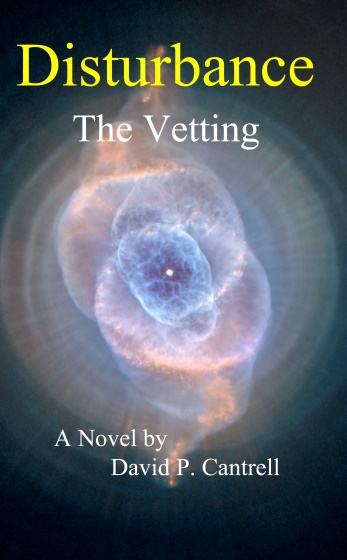
Disturbance - the VettingDPC: My one and only book is a work in progress. I published part one, Disturbance: The Vetting, in July 2014 and took it off the market in January 2015. The initial publishing was a mistake, but I’m glad I made it. I’ve learned a good deal about the process of writing, formatting and editing because of the mistake. I’ve met wonderful, supportive authors from around the globe as a result of it too.

CJJ: How did you come to write this novel?
DPC: Well-meaning idiots made me do it. That’s mean, but true in a sense. I started posting short “Slice-of-Life” stories on Facebook, items like “The Chicken Parmesan Saga.” I was encouraged to create a blog and gave it a go. I beta read Sci-Fi novels for a talented author, Jasper T. Scott. His comments gave me the idea that I might be able to write. I jumped into the deep-end.

CJJ: I’m mostly an outliner, myself. Do you have a specific ‘Creative Process’ that you follow, such as outlining or do you ‘wing it’?
DPC: Please define creative process. I tried to outline, but got hung-up on the order of things. What comes first, character or story? Can they exist independently? I’m a wing-it writer that prays for an outline to magically appear, and in it does sometimes.

CJJ: This is the question I hate to be asked, but here I am asking you: how does your work differ from others of its genre?
DPC: I want to write stories that make the reader think or learn something new. I love action oriented stories as much as the next person, but I want to write page turner’s that make the reader stop and think about what they’ve just read every once in a while. I get frustrated by the mantra to keep the story moving forward, if the words don’t keep it moving they are useless, not necessary.

CJJ: Why do you write what you do?
DPC: I write for the joy of research (I love an excuse to learn new things) and the hope to touch a stranger with my words.  Touching strangers is why I smile and say hello to them as they walk their dog down my block. Their response makes me feel good.

I recall a day my wife asked me to pick up something from our local grocer on my way home from work. It must have been summer because daylight abounded. I was a middle aged over-weight man walking across a parking lot and saw a stunning mid-twenties women dressed to the nines walking to her own car with a bottle of wine.  I worried if I said anything she’d think I was perverted. As I passed her we made brief eye contact and I said, “You look beautiful the evening.”  The smile on her face brings tears to my eyes as I write this.

CJJ: I like that little vignette you just painted for us, and feel somewhat the same myself when it comes to making people smile. So, when it comes to publishing, I know why I chose the indie route for my work, but I’m curious as to why you’ve chosen this path.
DPC: Is there a better way for an unknown to get their work before a world audience? I don’t care if I make a lot of money selling books. Don’t get me wrong, I’d love to do it, but it isn’t why I’m writing. I want to touch others, and honestly, I want the ego stroke that comes with it.

CJJ: What advice would you offer an author trying to decide whether to go indie or take the traditional path?
DPC: If money is your goal, try the traditional path. No one can promise better odds of making money on that path, but if you don’t give it a go you’ll always think you should have.

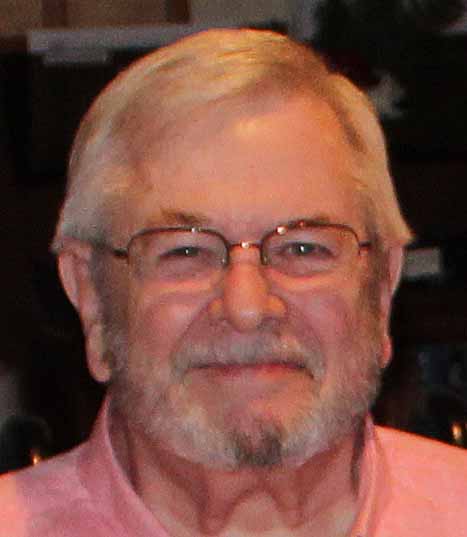
Dave Cantrell Author pictureDavid P. Cantrell lives with his wife of nearly four decades in the beautiful coastal community of Arroyo Grande< California. He is a retired CPA, enthusiastic (but not particularly good) home cook and avid reader. He enjoys history, historical novels, science fiction, non-fiction, fantasy, crime, thrillers, contemporary fiction and even a western now and again.

Before a spinal cord injury in 2009, he spent his creative efforts writing IRS defenses for his clients and on woodworking; building a variety of items, from chessboards to a Murphy Bed. The spinal cord injury left him paralyzed from the neck down, but with the help and love of his wife and caring therapists, he was able to recover significant function. Woodworking was behind him, and he accepted that.

Thank you Dave—you are a joy to know and to have as a friend, and you are an integral part of my personal writing life.

And now, “Ten Things I’ve learned as a Quadriplegic” By David P. Cantrell

(Reblogged from Edgewise Words Inn)

Being a quadriplegic (aka tetraplegic) is a learning opportunity. I found my opportunity when a confluence of events left me prostrate. Actually, I don’t remember being on the floor, I learned it later from my wife. She also told me I repeatedly asked if I’d had a heart attack while in the local ER. I don’t remember that either, but I’m not surprised. After all, I was an overweight, hypertensive, diabetic, chain-smoking CPA working on a deadline.

The first thing I clearly remember is the voice of an EMT talking to his ambulance driver as we arrived at a bigger hospital. I wasn’t sure why I was in the ambulance, but I knew something very strange was happening. I learned a good deal about myself over the following months.

  1. Paralyzed means: Crap, I can’t move and I don’t mean immobile.
    There’s a big difference between the two. Immobile means I can’t move right now because I’m drugged, strapped down or really-really sleepy, perhaps all three. Paralysis means so much more.
  1. Disrespect or abuse of a good woman’s love and support deserves retribution.
    If I’ve done either, shame on me. The memory of ICU, day one, is vague, but real. My teary-eyed wife held my hand, which I could not feel, and said, ‘I have your heart and your mind, that’s all I need.’ To this day, it’s our motto ….(To read the rest, click here to be transferred to Edgewise Words Inn and the rest of Ten Things I’ve Learned as a Quadriplegic)

Comments Off on My Writing Life: David P. Cantrell

Filed under Adventure, Battles, Books, Fantasy, Humor, Literature, Uncategorized, writer, writing