
As many of you know, every November I set a writing quest goal for myself. Some years, it is to write the skeleton of an entire novel in 30 days. Other years, the goal might be to write a complete short story every day.
 This year, my goal is to write the skeleton of a novel that is the second half of a duology. I can’t publish the first book until the second book is finished, as I intend to publish the two halves of that story simultaneously.
Also, I need to source the proper cover art for a different book that is ready for the final stage of the publication process. I have found some good candidates, but none are exactly what I am looking for.
Writing 50,000 words in thirty days has never been a problem for me. I just sit down and let my fingers spew random stuff that sometimes turns into a usable novel, so getting a desired word count has never been a problem.
Unfortunately, meeting the goal of writing a complete story arc for a novel in only 30 days is, and always will be, a struggle. Thus, I work from an outline. That helps rein in the randomness.
Writing for at least an hour every day without fail for an entire month takes determination.
Meeting that goal builds discipline.
I do have some strategies I developed during my 12 years as a municipal liaison for the now-defunct organization, NaNoWriMo.
- Set aside time to write every day, at least one hour.
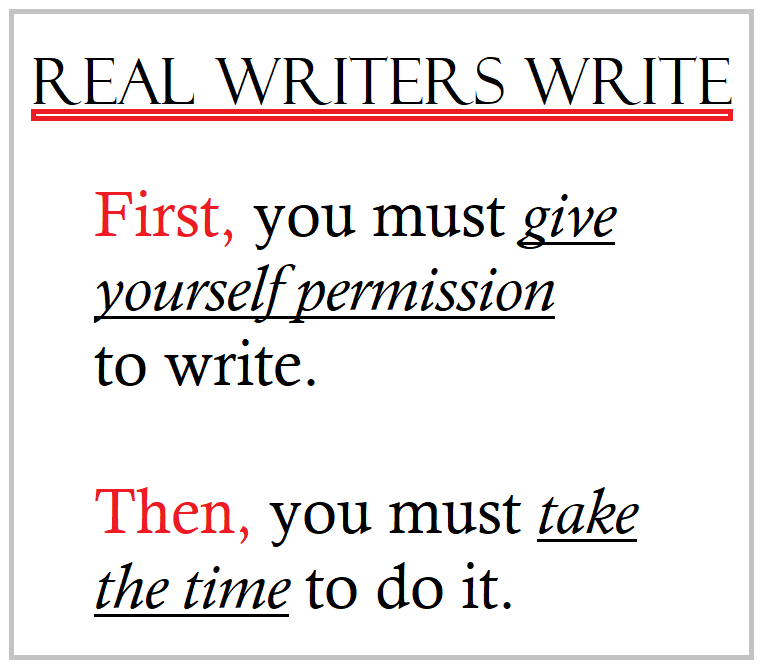 If you need quiet time, make that hour inviolable, an hour during which you are NOT to be bothered unless an amputation has occurred or the house is on fire. When I was still working, I found that by rising an hour early, the kids were still sleeping and the house was quiet. I also wrote while everyone else was watching TV.
The most important thing about developing a writing process is to find one that works for you.
Give yourself permission to try different things until you find something that works.
- Do you work best in short bursts?
- Are you at your best when you have a long session of privacy and quiet time?
- Or is your process something in the middle, a melding of the two?
What if my style changes? What if the way that worked last month no longer works?
Give yourself permission to change and find a way that works best for you. Be willing to be flexible.
I have my best ideas when I’m about to leave the house. That’s no joke. If that is a problem you also have, do as I do and write those thoughts down. I keep a notebook in my bag just for those moments.
You will be productive once you find your best style.
But first, you must give yourself permission to write.
- Go to a coffee shop or the library to write. You might find the place packed with other writers!
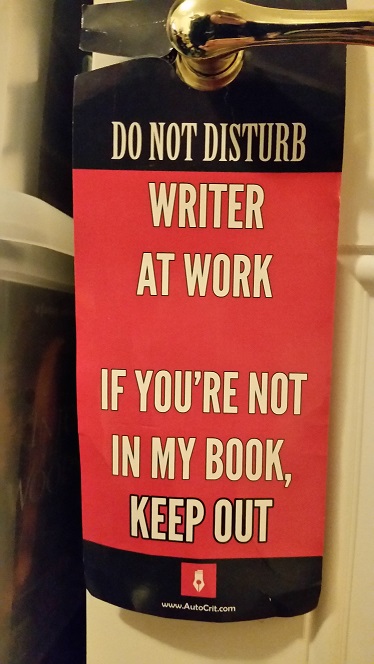 My regional NaNoWriMo group had over 250 writers. Your region may have had that many or more. We have evolved into a more diverse group, one that is not focused on achieving word count in November. Your local region may have also reformed with a new direction.
As a group, we old hands are nurturing budding novelists, playwrights, poets, and songwriters. We hold in-person write-ins at coffee shops and also virtual write-ins via Zoom. New and aspiring writers in our area can find us through our Facebook group and also through our Discord channel.
- Sit your backside down and write your ideas as they come into your head. Don’t delete and don’t cut anything just yet.
Don’t worry about story arc, or worldbuilding, or anything like that. Get the characters and the plot on paper. Once you begin writing those characters, their story and their world will take shape. You can worry about info dumps and issues like that later.
The exposition you put into your first draft is your brain doing the worldbuilding and character development that is necessary to take the story from the opening page to “the end.” You will trim back the exposition and expand on the important things after the first draft is finished and revisions have begun. Right now, you need the info your crafty mind is dumping into the story.
- To be happy, we must have a balanced life.
Writers and other artists must make sacrifices for their craft. It’s just how things are.
But you don’t have to sacrifice your family for it. Sacrifice one hour of sleeping in, or something ephemeral and unimportant, like one hour of TV.
That is why I scheduled my writing time when I had to hold down a job. I had to cook and clean for my family and ferry them to their various after-school activities. They helped with the housework if I nagged long enough, but sometimes it was easier to admit defeat and do it myself.
I take comfort in the fact that they are raising their own teenagers now.
(Insert evil laugh here.)
Give yourself small rewards for every milestone, writing or otherwise. It might be a batch of cookies or an afternoon of binging on that show you love so much.
I’m a grandma now and living alone, as my spouse has late-stage Parkinson’s. He is being well cared for in an Adult Family Home, one staffed by wonderful people who are trained to care for patients who require that much assistance. I visit him every morning without fail, and I schedule everything, including my writing, around his needs.
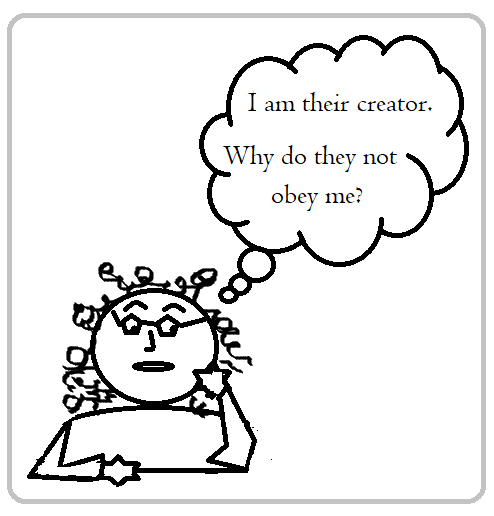 Nowadays, I have to force myself to do the ordinary household tasks (like laundry, my least favorite of all). My reward for doing that is an hour or two of reading or writing, whichever I am in the mood for.
However, for the month of November, my afternoons will be spent writing.
I will reward myself for achieving my writing goals. My self-indulgence is rewatching my favorite episodes of “The Brokenwood Mysteries.” Smart dialogue, wildly creative plots, great cast, and lovely New Zealand scenery.
Whatever your writing goals and however you choose to reward yourself, I hope you have a great and productive November.
 If you are looking for something similar to the old NaNoWriMo (before it went off the rails) ProWriting Aid is running a Novel November quest, with a wordcount counter and plenty of ways to connect with other writers. I have signed up for this, just to see if it’s a good fit for me.
Go to What is Novel November? – ProWritingAid Help Center
Credits and Attributions:
Caution I stop for Hallucinations © Connie J. Jasperson 2025
I am their creator © Connie J. Jasperson 2025
 When I can’t write anymore, I eat chocolate and read trashy romance novels about vampires.
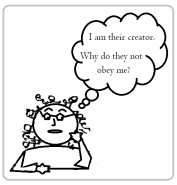 I need to spend several days visualizing the goal, picturing each event, and mind-wandering on paper until I have concrete scenes. I need to write a few paragraphs that will become the final chapters.
 My heroes and villains all see themselves as the stars and winners in this fantasy rumble. They intend to prevail at any cost. What is the final hurdle, and what will they lose in the process? Is the price physical suffering or emotional? Or both?
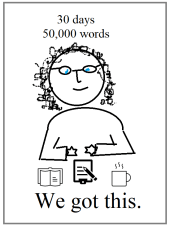 My mental rambling is accomplishing something. My characters are all getting their acts together. They are finding ways to resolve the conflict and are ready to commence the fourth act, where they will embark on the final battle.
 The well of inspiration has gone dry.
 Arcs of action drive plots. Every reader knows this, and every writer tries to incorporate that knowledge into their work. Unfortunately, when I’m tired, random, disconnected events that have no value will seem like good ideas.
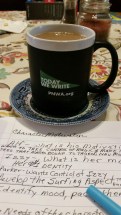 As you clarify why the protagonist must struggle to achieve their goal, the words will come.
 Food scenes serve as transitions between events. The act of dining occurs, but the conversations are the point of that scene. This is an opportunity to rest and regroup.
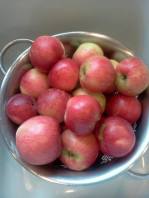 I’ve read many unforgettable fantasy books. One that shall go unnamed stands out, but not for a good reason. The author gave each kind of fruit, bird, or herd beast a different, usually unpronounceable, name in the language of her fantasy culture. She must have spent hours devising that hot mess of fantasy foods.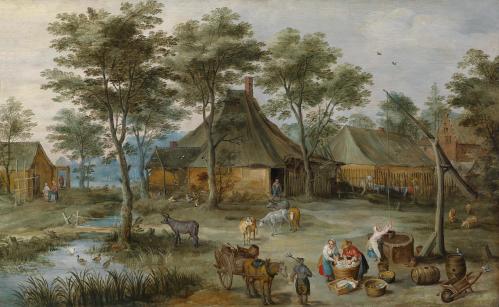
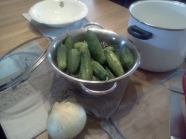
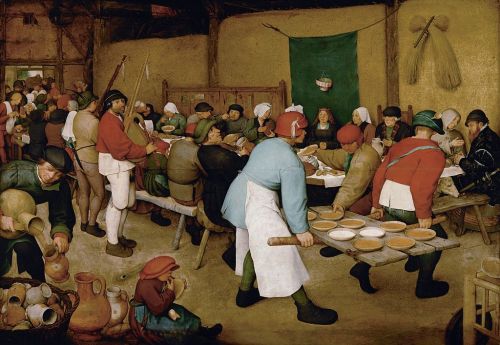
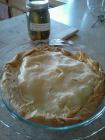 In my current work in progress, my people have a melding of familiar European and New World ingredients for their diet and do a lot of foraging. Fish, maize, and potatoes are essential staples, as are beans and wild greens. For a good list of what this diet might entail, visit this link:
  On Monday, I had to drive to Seattle to take the hubby for a consult with a neurosurgeon. Getting to the doctor was fine. It was a matter of spending one hour sitting in traffic trying to leave Olympia and another hour of actually rolling forward once we made it past the Nisqually River. I had planned ahead for that, so we were on time. The upshot is no back surgery for him unless there is no other option, as Parkinson’s patients do very poorly after surgeries.
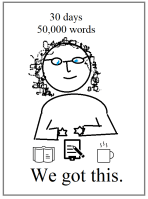 So, what am I writing today? I’m working on the second half of a novel I began writing seven years ago, so all the world-building and character creation has happened. The plot for this half is evolving. I know the ending, and over the next thirty days, my characters will take me from this high point in the middle, through several hurdles yet to be determined, to that final victory.
 I’m settling into the new office. In my old house, my ramshackle desk was in the Room of Shame, a jumbled mess of a storeroom. My new desk is not duct taped together and has the right amount of storage for what I need.
 Today, the office/guestroom walls are barren, but I hope to have all the family pictures hung by the end of this week. The hide-a-bed sofa and side chair make a pleasant conversation area or guest room, whichever is needed. All I lack is my new desk chair, which is on its way here from Norway. (Yes, I splurged on a Stressless desk chair since I spend most of my time sitting in front of my computer.) It should be here in a week or two, and I can hardly wait as my current desk chair loses its appeal after an hour or so.
 What are some of my planned treats? Cranberry and walnut shortbread, for one thing. Shortbread is so easy and affordable to make that it always surprises me when people don’t. I have veganized all of my old traditional recipes, so everyone can sneak a treat now and then.
 Getting those ideas out of your head now is what is important. The bloopers and grammar hiccups can all be ironed out in the second draft.
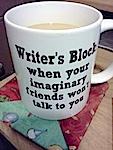 Yes, we do need to show moods, and some physical description is necessary. Lips stretch into smiles, and eyebrows draw together. Still, they are not autonomous and don’t operate independently of the character’s emotional state. The musculature of the face is only part of the signals that reveal the character’s interior emotions.
 Bad advice is good advice taken to an extreme. But all writing advice has roots in truth. So, when it comes to making revisions, consider these suggestions:
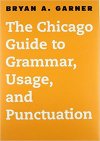 I recommend investing in a grammar book, depending on whether you use American or UK English. These books will answer your questions, and you won’t be in doubt about how to use the standard punctuation readers expect to see.
 I recommend checking out the NaNoWriMo Store, which offers several books to help you get started. The books available there have good advice for beginners, whether you participate in November’s writing rumble or want to write at your own pace.
 I study the craft of writing because I love it, and I apply the proverbs and rules of advice gently. Whether my work is good or bad—I don’t know. But I write the stories I want to read, so I am writing for a niche audience of one: me.
 Magic or the supernatural are core plot elements in most of my work. I see them as part of the world, the way the Alps were a core plot element in the story of the
 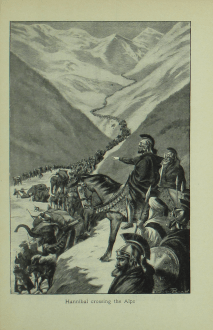 Hannibal paid a heavy price for bringing his superweapons (elephants) to the battle. The ability to use magic should come at some cost, either physical or emotional. Or it should require coins or theft to acquire magic artifacts.
  It’s fair to write stories where magic is learned through spells if one has an inherent gift, and it’s also fair to require a wand. That is how magic was always done in traditional fairy tales and J.K. Rowling took those worn-out tropes and made them new and wonderful.
 I can suspend my disbelief when magic and supernatural abilities are only possible if certain conditions have been met. The best tales featuring characters with paranormal skills occur when the author creates a system that regulates what the characters can NOT do.
 A crucial reason for establishing the science of magic and the paranormal before randomly casting spells or flinging fire is this: the use of these gifts impacts the wielder’s companions and influences the direction of the plot, creating tension.
 or the paranormal in your NaNo novel, how can you take these common tropes in a new direction?
 First, what sort of world is your real life set in? When you look out the window, what do you see? Close your eyes and picture the place where you are at this moment. With your eyes still closed, tell me what it’s like. If you can describe the world around you, you can create a world for your characters.
 What does the outdoor world look and smell like? Is it damp and earthy, or dry and dusty? Is there the odor of fallen leaves moldering in the gutters? Or have we wandered too near the chicken coop? (Eeew … get it off my shoe!) If an author can inject enough sight, sound, and scent into a fantasy or sci-fi setting, the world will feel solid when I read it.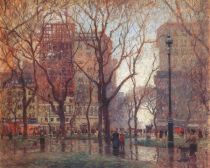
 What about transport? How do people and goods go from one place to another?
 Names and directions might drift and change as you write your first draft. Also, if they’re invented words, consider writing them close to how they are pronounced.
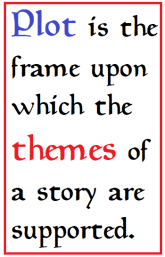
 When someone asks me what a book I wrote is about, my mind grinds to a halt as I try to decide what to say. I could give them the rundown of the plot, which is the arc of events the characters experience.
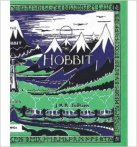
 The story writes itself when I begin with a strong theme and solid characters. A 19th-century writer many have heard of but never read,
  When
When Love is only one theme, yet it has so many facets. Other themes abound, large central concepts that build tension within the narrative.
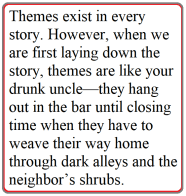 Sometimes, we can visualize a complex theme but can’t explain it. If we can’t explain it, how do we show it? Consider the theme of “grief.” It is a common theme that can play out against any backdrop, whether sci-fi or reality based, where humans interact on an emotional level.
 Even if you don’t have an idea of what you want to write, it’s time to go out to
  Once there, create a profile. You don’t have to get fancy unless you are bored and feeling hypercreative.
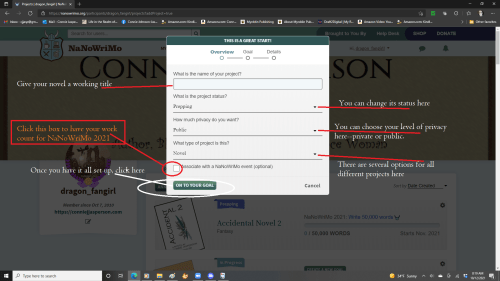 You can play around with your personal page a little to get used to it. I use my NaNoWriMo avatar and name as my
  Next, check out the community tabs. If you are in full screen, the tabs will be across the top. If you have the screen minimized, the button for the dropdown menu will be in the upper right corner and will look like the blue/green and black square to the right of this paragraph.
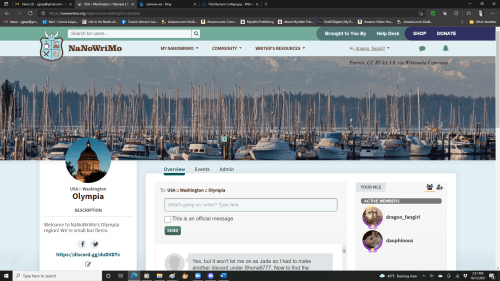 You may find the information you need in one of the many forums listed here.
 Make a master file folder that is just for your writing. I write professionally, so my files are in a master file labeled Writing.
 Give your document a label that is simple and descriptive. My NaNoWriMo manuscript will be labeled: Stowe_Bridge_NaNoWriMo_2023.
 This year we will have write-ins at the local library. The authors in our region will come together and write for two hours and support each other’s journey. We will also meet via the miracle of the internet, using Discord and Zoom. My co-ML and I are finalizing a schedule for November.


 Life in the Realm of Fantasy