Tag Archives: plot arc

Idea to Story part 6 – Plotting the End #writing

We have been working on plotting a novel for the last month in our series, Idea to Story. The previous installments are listed below, but at this point, we have our two main characters, Val (Valentine), a lady knight, and the enemy, Kai Voss, a court sorcerer. Both are regents for the sickly, underage king.
We also have our ultimate enemy, Donovan Dove, Kai’s half-brother and most trusted advisor. I have landed on a working title that speaks to the genre, Valentine’s Gambit.

We have allowed the characters to tell us the story. Save everything you cut to a new document, labeled and dated: “Outtakes_ValentinesGambit_03-08-25.” (That stands for Outtakes, Valentine’s Gambit, March 2025.)

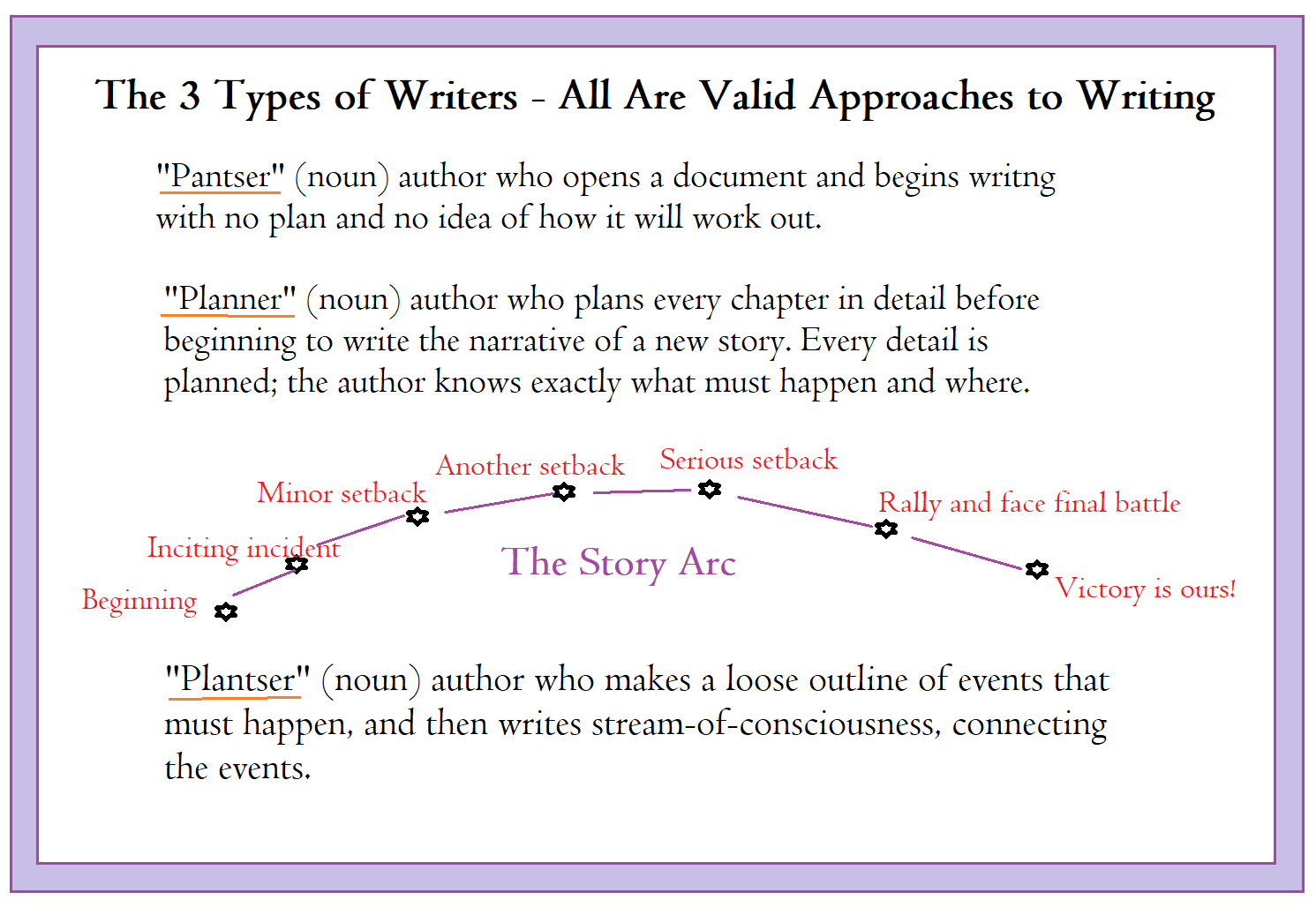
The Inciting Incident: The plot as it stood last week: Twelve-year-old Edward has been steadily declining in health since the deaths of his parents. Information has come to Val’s attention that someone highly trusted has cursed the young king with a wasting illness. She immediately suspects Kai and moves Edward to a safe place. The story is off and running.

Kai has also received information from his most trusted source that Edward is being poisoned. His suspicions immediately fall on Val, whom he believes wishes to take the throne and rule as a warrior queen. When he discovers the king has been taken from the castle (kidnapped, as he believes), he rallies the soldiers loyal to him and mounts a search.

Roadblocks arise as Val and her soldiers hinder Kai’s attempts to regain custody of Edward. Kai finds a way around them, leading to another crisis scene and a stalemate.

At the Midpoint, Donovan Dove springs his trap, capturing both Kai and Valentine and imprisoning them in his dungeon. He posts announcements in all the towns proclaiming that they are traitors who have tried to kill the young king. He assumes the role of regent and plans to behead them at dawn.
Val immediately comprehends what just happened and finds a way to escape. Against her better judgment, she makes a spur-of-the-moment decision to free Kai, dragging him to her grandmother’s house. Only now is the mage discovering the magnitude of his brother’s betrayal.

This dungeon scene tells the reader that our true quest will be rescuing Edward before he dies from Donovan’s curse.

Now, we must consider the best way to end this mess. Something big and important must be achieved in the final chapters.

First, Val and Kai have to stop blaming each other and agree to work together.

  • Val’s grandmother has some tough love for both of them.

Second, they must gather a core group of talented people. Donovan has murdered the friends he used as messengers in his betrayal, but several other friends of each are in hiding. So, Val and Kai must leave her grandmother’s hut and rally their supporters.

They need a thief/spy and two soldiers, and Val knows where to find them. They also need a healer because Edward is near death. Val’s grandmother could fill that role—she is already named and her abilities are established.

  • They can build up an army if you choose, but limiting the number of named characters is crucial.

Third, they need a base, a place to live, and resources to gather while they devise the plan to free Edward. Grandmother’s hut is known to Donovan’s minions so they must move on.

What is the core conflict? For me, a good way to find the ending is to revisit the notes I have made as the story evolves. If I have been on top of things, each change has been noted, so I’m looking at the current blueprint of the novel to this point.
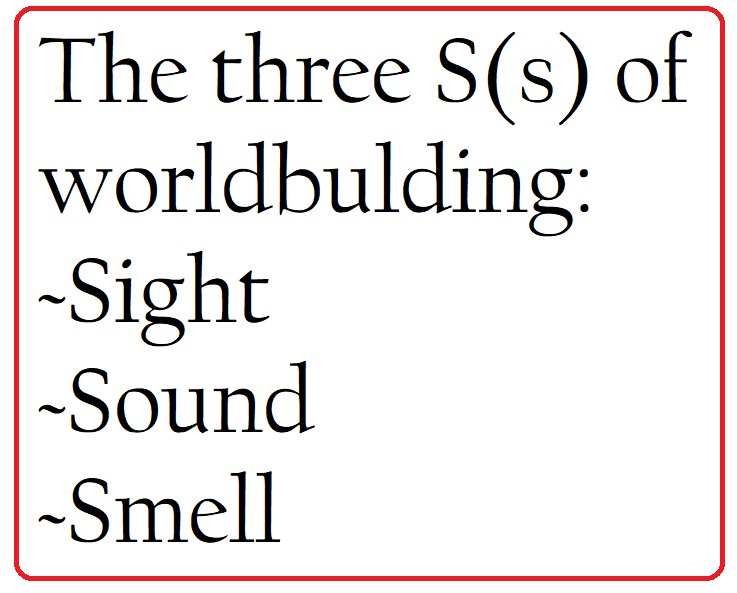
This is when I go back to square one. By seeing the whole picture of the story to this point, I usually find the inspiration to put together the final scenes that I know must happen. I sit down with a notebook (or, in my case, a spreadsheet) and make a list of what events must occur between the place where they escape the dungeon and the end. I save that document with a title, something like:

Valentines_Gambit _Final_Chpts_Worksheet_03-08-2025

At first, the page is only a list. The chapter headings are pulled out of the ether, accompanied by the howling of demons as I force my plot to take shape:

  • Chapter – Val drags Kai to a safe place. Discovery of the deaths of close friends.
  • Chapter – Donovan’s plan revealed.
  • Chapter – Evading Donovan’s bespelled soldiers.
  • Chapter – Discovering where Edward is being held
  • (and so on until the last event) Mage duel – ends when Kai casts a beginner’s spell to trip Donovan, and Val kills him.
  • Final chapter – Val and Kai reinstated as regents. Together they raise Edward to adulthood and he grows up to be a good, beloved king, Will they marry? It’s a romance, so yes, they will live as happily as people ever do.

I begin writing details that pertain to the section beneath each chapter heading as they occur to me. Once that list is complete, those sketchy details get expanded on and grow into complete chapters, which I then copy and paste into the manuscript.

So, let’s talk about the elephant in the room – what to do with scenes that no longer work now that we’re nearing the end. Something we all suffer from is the irrational notion that “if we wrote it, we have to keep it,” even though it no longer fits.

Let’s be honest. No amount of rewriting and adjusting will make a scene or chapter work if it’s no longer needed to advance the story. If the story is stronger without that great episode, cut it.

What you have written but not used in the finished novel is a form of world-building. It contributes to the established canon of that world and makes it more real in your mind. I urge you to save your outtakes with a file name that clearly labels them as background or outtakes. Not having to reinvent those useful sections will significantly speed up other projects.

Use the outtakes as fodder for a short story or novella set in that world. This is how prolific authors end up with so many short stories to make into compilations. It’s useful to know that with a few name changes, every side quest not used in the final manuscript can quickly be made into a short story.

Another good reason to save everything you cut in a separate document is this: I often reuse some of that prose later, at a place where it makes more sense.

That need to cut and rearrange is why I don’t number my chapters in the first draft. You may have noticed in the example above that I head each section with the word “chapter” (and no number) written out. I want to be able to find the word “chapter” with a global search when I do insert the numbers.

This is because (in my world) most first drafts are not written linearly. For me, the story arc changes structurally as I lay down that first draft, so chapter numbers become confusing. Nowadays, I put the numbers in when the manuscript has made it through the final draft and is ready for my editor.

Designing the ending is as challenging (and yet easy) as writing the opening scenes. It is so satisfying to write those final pages—one of the best feelings I have experienced as an author.

The sample plot that we have used for this series has a happy ending. This is because within the first five chapters, when we began writing our characters, it became a Romantasy and romance readers want happy endings.

Sometimes, we all want happy endings.
PREVIOUS IN THIS SERIES:

Idea to story, part 1: novel, poetry, memoir, or short story? #writing | Life in the Realm of Fantasy

Idea to story part 2: thinking out loud #writing | Life in the Realm of Fantasy

Idea to story part 3: plotting out loud #writing | Life in the Realm of Fantasy

Idea to story part 4 – the roles of side characters #writing | Life in the Realm of Fantasy

Idea to story part 5 – plotting treason #writing | Life in the Realm of Fantasy

11 Comments

Filed under writing

Idea to story part 5 – plotting treason #writing

We have been working on plotting a novel for the last month in our series, Idea to Story. The previous installments are listed below, but at this point we have our two main characters, Val (Valentine), a lady knight, and the enemy, Kai Voss, court sorcerer. Both are regents for the sickly, underage king.

I write fantasy, but every story is the same, no matter the set dressing: Protagonist A needs something desperately, and Antagonist B stands in their way. In this story, Valentine begins as our protagonist, and we are setting Kai up as the visible antagonist.

The plot as it stood last week: Twelve-year-old Edward has been steadily declining in health since the deaths of his parents. His bodyguards, led by Val, believe the court sorcerer has cursed him with a wasting illness. Edward’s other guardian, Kai, and his advisors believe Val is poisoning him.

Kai’s most trusted advisor is his older half-brother, Donovan Dove. Donovan is highly educated and an accomplished mage. However, his mother was a commoner and therefore not allowed to marry his father, so he has been relegated to supporting roles, such as tutoring his younger brother in all aspects of magic and the other gentlemanly arts as befits the heir to their father’s earldom. Their father appointed him as steward of their lands, so he is in charge of running the family estate while Kai is away from home doing his job of tending to the young king’s education.

Donovan is thirty-eight, exceptionally handsome and charming. He gambles well and rarely loses.

  • His nouns are passion, desire, and deceit. His modifiers (adjectives) are suave, worldly, courtly, enigmatic, and devious.
  • Donovan’s verbs are shape, create, mold, conceal, charm.

Donovan’s void is obsession and jealousy.

Our characters have told us what the plot is while we were creating them, by virtue of their personalities: their nouns, verbs, and voids. So, we’re going to allow them to continue telling us what the conflict is, and we will observe and create a framework, a series of guideposts to write to.

We will drop Val and Kai into the soup as soon as the main side characters are in place. We present them with a quest that appears to be the real one but is only a smoke screen concealing the true villain’s motives and allowing him to neatly get rid of them. This first quest gets the story moving and keeps the reader reading.

  • Regardless of genre or plot, this is the place where the characters are set on the path to their destiny.

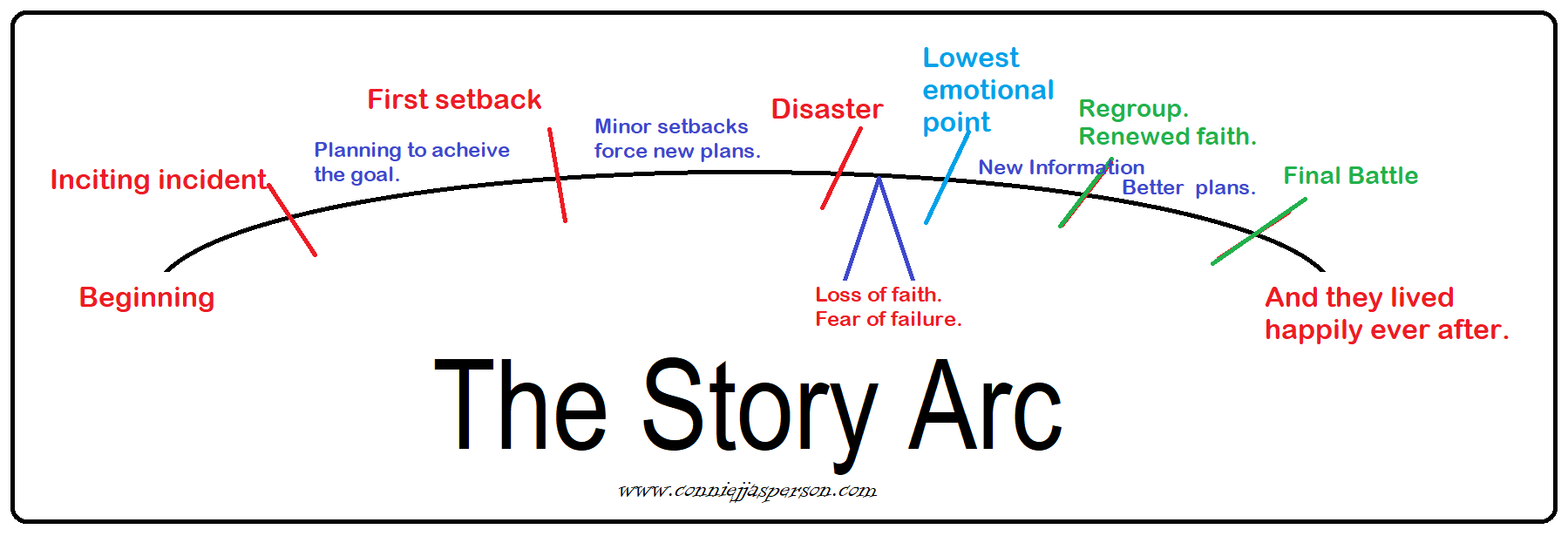
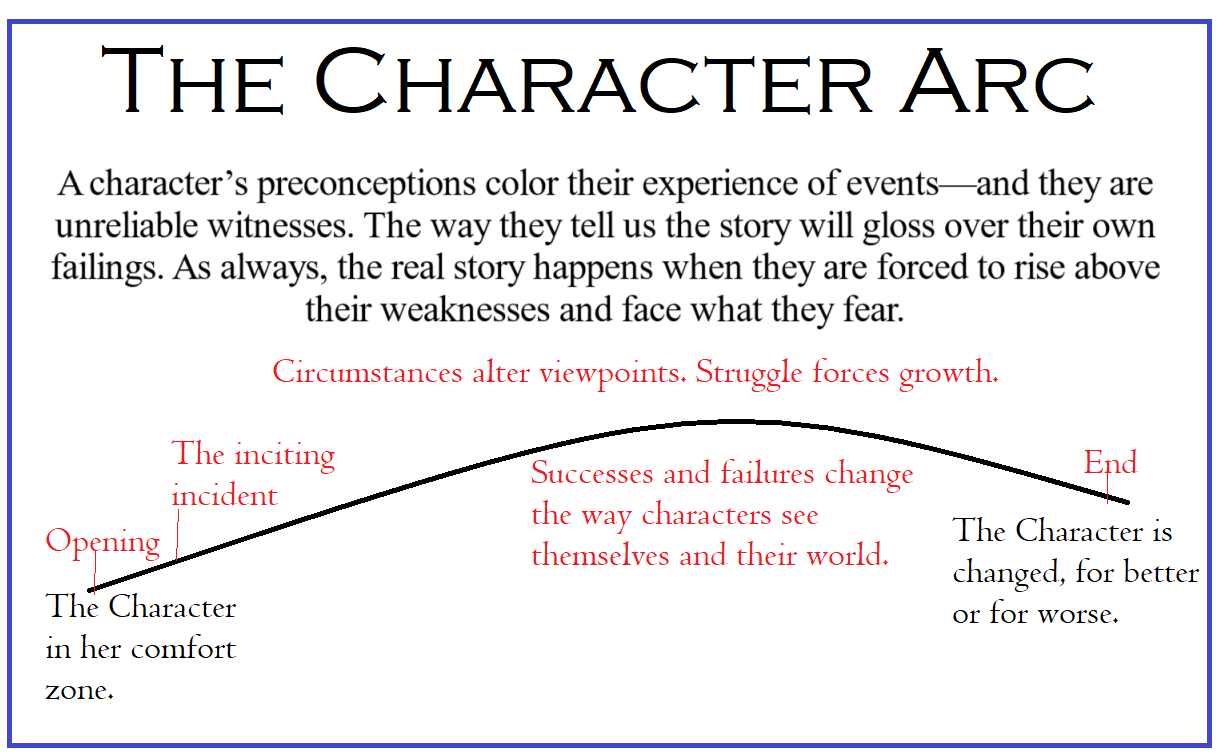
For this story, we will use a four-act plot arc, dividing the story into quarters. The first act ends with the inciting incident.

The inciting incident is where the protagonists first realize they’re blocked from achieving the desired goal.  In this case, information has come to Val’s attention that someone highly trusted has cursed the young king with a wasting illness. She immediately suspects Kai and moves Edward to a safe place.

Kai has also received information from his most trusted source that Edward is being poisoned. His suspicions immediately fall on Val, whom he believes wishes to take the throne and rule as a warrior queen. When he discovers the king has been taken from the castle (kidnapped, as he believes), he rallies the soldiers loyal to him and mounts a search.

A roadblock arises, as both characters believe the other intends to kill Edward. Val and her soldiers are very good at what they do. Kai attempts to find a way around them, leading to another crisis scene and a stalemate.

The second act ensues with more action leading to more trouble, rising to a pitch when the hidden adversary springs his trap.

  • This is where personal weaknesses are exposed in our two main characters, offering the opportunity for growth.

The way I see this plot now, at the midpoint, both Valentine and Kai Voss are waking up in the dungeon and realizing they have been played by Donovan Dove.

Or, if they aren’t, they should be. After all, the struggle is the story.

Val immediately comprehends what just happened and finds a way to escape. Against her better judgement, she makes a spur of the moment decision to free Kai, who is still in shock. Only now is the mage discovering the magnitude of his brother’s betrayal.

This dungeon scene tells us what the plot needs to be from here onward, and what our true quest is: rescuing Edward before he dies from Donovan’s curse.

We must open each act with a strong scene, an arc of action that illuminates the characters, their wants and emotions. This allows the reader to learn things as the protagonist does. We have the chance to insert subtle clues regarding things the characters are not aware of, knowledge that will affect the plot.

The hints we offer at the beginning and through the first half of the book are important. Foreshadowing piques the reader’s interest and makes them want to know how the book will end. However, we want to keep the real villain and the depth of his villainy secret until the moment Kai and Val stumble into his trap.

Only then will the small clues that all is not as it appears make sense.

I work best when I create a broad outline of the story arc as the characters reveal it to me.  I also like to know how it will end so that I can write to that ending.

  • What moral (or immoral) choice will our protagonists have to make in their attempt to achieve their objective?
  • What happens at the first pinch point? How does the false information come to them?
  • How does Donovan keep his true motives secret until he has Val and Kai where he wants them?
  • How does Donovan dispose of the side characters who deliver the false information he has given them?
  • At the midpoint how is the health and emotional condition of Val and Kai?
  • How will Val and Kai set aside their animosity and learn to trust each other?
  • What is Donovan’s plan now that he has custody of the king?

At the ¾ point, Val and Kai should have gathered some resources and rallied their companions. They should be preparing to rescue Edward and planning how to face Donovan for the final battle.

Subplots should be introduced after the inciting incident has taken place. If you introduce them too soon, they can distract the reader, making for a haphazard story arc. In my opinion, side quests work best if they are presented once the tone of the book and the main crisis has been established, and only if they are necessary to the completion of the final, overarching quest.

How long do you plan the book to be? Take that word count and divide it by 4. Place the culmination of your first major event at the ¼ mark. The following two quarters are the middle. If you have set your first half action up right and have an idea of how the story should end, the middle and the ending should fall into place like dominoes.

PREVIOUS IN THIS SERIES:

Idea to story, part 1: novel, poetry, memoir, or short story? #writing | Life in the Realm of Fantasy
Idea to story part 2: thinking out loud #writing | Life in the Realm of Fantasy
Idea to story part 3: plotting out loud #writing | Life in the Realm of Fantasy
Idea to story part 4 – the roles of side characters #writing | Life in the Realm of Fantasy
6 Comments

Filed under writing

Layers of Depth: the uneven distribution of information

Plot points and conflicts are driven by the characters who have critical knowledge. The fact that some characters are working with limited information creates tension.

WritingCraftSeries_depth-through-conversationIn literary terms, this uneven distribution of knowledge is called asymmetric information. We see this all the time in the corporate world.
  • One party in a business transaction has more or superior information compared to another.
  • That inequality of information gives them an edge against the competition.

In a story, as in real life, a monopoly of information creates a crisis. An idle conversation will bore your reader to tears, so only discuss things that advance the plot. A conversation scene should be driven by the fact that one person has knowledge the others need.

The reader must get answers simultaneously as the characters, gradually over the length of a novel.

When I am writing a scene, I ask my characters three things:

The first question I ask is: “What is the core of the problem?” In the case of one story that was begun several years ago and never taken beyond the first draft stage, the core of the problem is Jared, my main character. The story is set in the World of Neveyah, and one of the canon tropes of stories set in that world is that all mages are trained by and work for the Temple of Aeos.

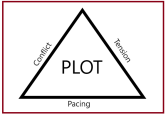
The_Pyramid_Conflict_Tension_PacingJared is hilarious, charming, naïve, a bit cocky, and completely unaware that he’s an arrogant jackass. He is a young man who is exceptionally good at everything and is happy to tell you about it. Jared has no clue that his boasting holds him back, as no one wants to work with him.

This boy is both the protagonist and the antagonist of this story.

The second question I ask is: “What do the characters want most?” Jared is a mage, and as such, he is a member of the Clergy of Aeos. He wants to be just like his childhood hero, or better. Jared needs approval and admiration to bolster his sense of self-worth. Everything he does is an effort to be seen as worthy.

Unfortunately, the leaders of the Temple of Aeos have plenty of heroes on hand and just want a mage who can be relied upon to get a job done well and with no fanfare.

The third question I ask my characters is this: “What are they willing to do to get it?” Jared has boasted many times that he will meet and overcome any obstacle, no matter how difficult the path to success is.

His mentors like him, but despair of his ever succeeding as a mage. They devise a simple (and on the surface) heroic seeming quest tailored to improve his attitude. They layer it with dirty and disgusting obstacles that he hasn’t planned for. Jared meets and works his way through these roadblocks one by one. His mentors ensure that when he does “rescue the kid,” he gets their message quite clearly. This is where the asymmetric information comes into play. Jared’s innocent assumptions make for a wonderfully wicked plot arc.

How will Jared’s story end? It ends in a satisfying mess with all the acclaim the young hero could ask for—along with a large serving of humble pie. But nothing can keep Jared down for long—he takes that embarrassment and embraces it with his own personal flair.

Epic Fails meme2When I started writing this story, I had the core conflict: Jared’s misguided desire to be important. I had the surface quest: rescuing the kidnapped kid. I had the true quest: Jared learning to laugh at himself and developing a little humility.
I had all the pieces and the completed first draft, but other projects had more priority. Then the pandemic hit, and this story was shelved.

Now, with all the hustle and bustle of moving to a new home, I need something short and sweet to work on for relaxation, and I came across Jared’s story. It needs serious revisions, but it’s one of my favorite Neveyah stories, as it is not dark as they usually are. Jared’s tale of woe is full of gallows humor, detailing the deeds of a hero who becomes a man.

4 Comments

Filed under writing

#NaNoWriMo prep part 4 Plot Arc #amwriting

Today we’re continuing prepping our novel by thinking about the plot, the story our characters inhabit. In post one, we thought about what kind of project we want to write–novel, short stories, poems, memoir, personal essays, etc.

Post two of this series introduced the protagonist(s), so we have an idea of who they are and what they do.

In post three, we explored the setting, so we already know where they are and what their circumstances are.

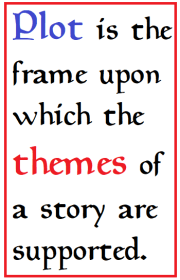
plot is the frame upon which the themes of a story are supportedNow we’re going to design the conflict by creating a skeleton, a series of guideposts to write to. I write fantasy, but every story is the same, no matter the set dressing: Protagonist A needs something desperately, and Antagonist B stands in their way.
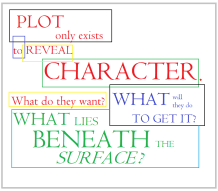
What does the protagonist want? Everyone wants something. The story is in if they acquire it or not. Doubt, uncertainty, the unknown—these nouns comprise the story.

This is where we have to sit and think a bit. Are we writing a murder mystery? A space-opera? A thriller? The story of a girl dealing with bulimia?

Let’s write a historical fiction.

My uncle fought in WWII in Ardennes and was wounded. He never discussed his wartime experiences, but I like to use that battle as my example for plotting. Here in the US, that battle is referred to as the Battle of the Bulge. A book about that battle may be compiled from personal accounts, interviews, photographs, and diaries. But the author must build the events of Ardennes in December 1944 and January 1945 out of words that express memories, opinions, and wishes.

Even though your novel about this battle may explore an Allied soldier’s experiences, in reality, this narrative is a fantasy because the events it explores have disappeared into the mists of a long-ago time. They now exist only in a few places:

  • military archives
  • newspaper accounts
  • history as written by the victors
  • the memories of a dying generation
  • the handwritten diary of the soldier
  • the author’s mind
  • the pages of the book you are constructing
  • the readers’ minds as they are reading

Plot-exists-to-reveal-characterWhere does our soldier’s story begin? We open the story by introducing our characters, showing them in their everyday world, and then we kick into gear with the occurrence of the “inciting incident,” which is the first plot point. That might be their arrival at their first camp in the Ardennes region.
For our soldier, the inciting incident might be the orders that transfer him and his unit to Ardennes. After that, many things will occur before he and his fellow soldiers return home. Each event will range in intensity from the inconvenience of filthy living conditions to the unavoidable confrontation with the horror of war.

We will make a list, a ladder of events that give us landmarks to write to, like a connect-the-dots picture.

First, how long do you plan the book to be? If you plan to write 50,000 words, take that word count and divide it by 4. The first quarter opens our story and introduces the inciting incident. This is the moment of no return, even if our characters still believe they can salvage things.

The following two quarters are the middle of the narrative, exploring the obstacles that our soldier faces. If you are writing a historical novel, your plot will follow the historical calendar of actual events. The Battle of the Bulge was fought between 16 December 1944 and 25 January 1946, and reams of documentation still exist about that terrible month.

117th_Infantry_North_Carolina_NG_at_St._Vith_1945

117th Infantry North Carolina NG at St. Vith.

Your plot arc might include these events, but in chronological order:

  • Initial German assault
  • Attack on the northern shoulder
  • German forces held up
  • Germans advance west
  • German advance halted

Attack in the center: our soldier will either be with the US 30th Infantry Division at the Battle for St. Vith (Americans) or the Meuse River bridges (British 29th Armoured Brigade of 11th Armoured Division). He likely couldn’t be at both unless he was in the US Army Air Force.

  • Attack in the south
  • Allied counteroffensive
  • German counterattack
  • Allies prevail

You will connect those dots. Take each incident and write the scenes that our soldier experiences. You might also write scenes showing the commanders planning the offensives and switch to show the enemy’s plans.

No matter what sort of book you plan to write, this is all you need at first. It’s just a skeleton of the plot. You will write the scenes between these events, connecting them to form a story with an arc to it.

As we write, our soldier’s thoughts and interactions will illuminate and color in the scenes. His encounters, how he saw the enemy—were they people like him or were they faceless—all his emotions will emerge as you write his story.

No matter what genre we are writing in, you must introduce a story-worthy problem, a test that will propel the protagonist to the middle of the book.

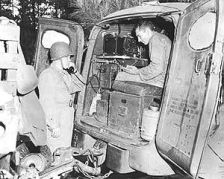
300px-SCR-299dooropen

US Army Signal Corps photo of SCR-299 radio set in operation 1942, US Army Signal Corps

This event is the hook. We raise a question and set the protagonist on the trail of the answer. In finding that answer, the protagonist is thrown into the action.

  • If you are writing genre fiction, get to the action quickly.

Drop the protagonist into the soup as soon as possible, even if the conflict is interpersonal. Some books open with a minor hiccup that spirals out of control with each attempt to resolve it. This is the place where the characters are set on the path to their destiny.

Some plots are action and adventure. Other books explore a relationship that changes a character’s life for good or ill, while others detail surviving hardship.

When do the protagonists first realize they’re utterly blocked from achieving their desired goal? Note this event on your outline somewhere in the first quarter. This is the moment our protagonist realizes their problem is much worse than they initially thought.

At this point, they have little information regarding the magnitude of the trouble.

This is where the skeleton list comes in handy for me. Crucial knowledge that affects my characters’ choices, the information they don’t have, should be doled out at the point in the story arc where they need it. If I give all the information in the first 10 pages, there’s no point in reading the book any further—the reader knows it all.

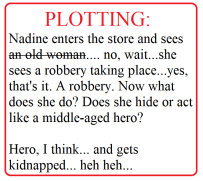
plottingLIRF07122020One thing that I do is make notes that help limit my tendency toward heavy-handed foreshadowing. I try to keep it brief, but what will be enough of a hint, and where should it go?

Subplots will emerge as we begin writing. It’s a good idea to note them on the outline as they come to you. In my opinion, side quests work best if they are presented once the book’s tone and the central crisis have been established. Good subplots are excellent ways of supporting the emotional parts of the story.

Now is the time to read in your genre and let your ideas simmer for a while. If you are writing in a fiction genre, read the bestsellers so you know what kind of plot the reading public is looking for. Don’t worry about inadvertently channeling their ideas—there is no such thing as a story that has never been told.

Whatever you write, you will take it one step further and give it your own spin.


Posts in this series:

#NaNoWriMo prep part 1: Deciding on the Project #amwriting

#NaNoWriMo prep part 2: Character Creation #amwriting

#NaNoWriMo prep part 3: Designing Worlds #amwriting


Credits and Attributions:

Wikimedia Commons contributors, “File:117th Infantry North Carolina NG at St. Vith 1945.jpg,” Wikimedia Commons, the free media repository, https://commons.wikimedia.org/w/index.php?title=File:117th_Infantry_North_Carolina_NG_at_St._Vith_1945.jpg&oldid=661386897 (accessed October 14, 2022).


14 Comments

Filed under writing