
This is the third installment of our NaNoWriMo Prep series. I’ve listed links to the previous posts at the end of this rant. We now have an idea of who our characters are. We also know a bit about the world in which our narrative will be set. We know the genre we’re writing in.
 Now, we’re going to hear what our characters have to say about what their story might be.
Our characters step from our imagination and onto the first page. When we begin writing, we see them as people we are just getting to know. At first, our characters want us to think they’re unselfish. They desperately desire what they believe they deserve. They will evolve as we write because they will tell us their backstory. But we have an idea of their personality and how they might react.
In real life, people are a mix of good and bad at the same time. Some lean more to good, others to bad. Either way, most people have good, logical reasons for their decisions. How they deal with the hurdles you will present to them will show you who they are. By the end of November, you will know them well.
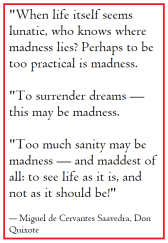 An important point to remember is that no matter how decent they are, people lie to themselves about their motives. It’s human nature to obscure truths we don’t want to face behind other, more palatable truths. Those secrets will emerge as you write.
So, what is the story about at this early stage? Do you have an idea of the core conflict, the central problem that all the other events lead up to?
Sometimes, we have a banger of a plot, and the book writes itself. Other times, we have brilliant characters but only a vague idea of their conflict.
Consider the beginning: At the outset of any good story, we meet our protagonist and see them in their surroundings. An event occurs (the inciting incident), and the hero is thrown out of his comfort zone and into the situation, which is the core idea of your plot.
This is the circumstance in which your protagonist finds himself at the story’s beginning. This is where I ask myself several questions.
- How will the story start?
- In the first paragraph on page one, what is the hero’s condition (strength, health, emotional state)?
- What event could possibly entice her out of her comfort zone?
- What is the core conflict?
If you know what the situation is, write it down:
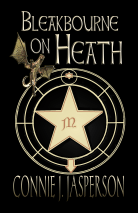 In my most recent book, Bleakbourne on Heath, Leryn the Bard hunts for strange folk tales and new songs (how it starts).
- He wants to find a wife and have a normal life (what he wants).
- But he has stopped in Bleakbourne on the river Heath and immediately becomes caught up in Merlin’s troubles (the conflict).
- Leryn cares about the distinctly different people of Bleakbourne, who become his family. By the midpoint, he is driven to protect Bleakbourne and the people he loves no matter the cost (how far he will go to achieve his goal).
A few sentences detailing your flashes of inspiration will remind you of what you need when you begin writing. You don’t have to go into detail, just jot those ideas down and keep the list handy.
This kind of pre-writing serves an important purpose for novels I intend to begin in November.
I do it so I don’t become desperate and resort to off-the-wall events or killing off characters (ala G.R.R. Martin) just to stir things up.
 I’m going off-topic here for a moment. While the death of a character stirs the emotions, it must be a crucial turning point in that story. It must be planned and be the impetus that changes everything. The death of a character must drive the remaining characters to achieve greatness.
Death for the shock value doesn’t help because you run out of characters. Readers don’t like it when you kill off someone they’ve become attached to, and you might wish you had that character later. Nothing says “oops!” more clearly than bringing a dead character back to life (Bobby Ewing).
Yeah, you can pretend the entire last year was all a dream as they did in the TV series Dallas. But I think keeping the characters I’ve invested so much time into creating alive is a lot easier than trying to bring them back from the dead.
 Unless, of course, you are writing paranormal fantasy. Death and resurrection may be the whole point if that’s the case.
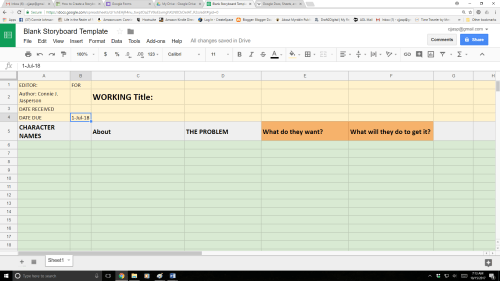
Once I begin work on my November novel, a more detailed outline of my story arc will evolve. As mentioned a gazillion times, I keep my notes in an Excel workbook. It contains maps, calendars, and everything about any novel set in that world, keeping it in one easy-to-find place.
As the writing progresses, the plot evolves and deviates from what I originally planned. It always does because nothing is engraved in stone. The characters themselves will drive the story in a different direction than was first imagined. I will note those changes on the outline and update my list of made-up words. Also, (if needed), I will edit my sketchy maps.
Many writers will fall by the way and never finish their novels, as they forget what they’re writing, don’t know how to go forward, and then lose momentum. I suggest you write those first ideas down when they occur to you, so when you begin writing the novel, you will have these keys to unlock the story.
 If your employment isn’t a work-from-home job, using the note-taking app on your cellphone to take notes during business hours will be frowned upon. I suggest keeping a pocket-sized notebook and pencil or pen to write those ideas down as they come to you.
That is an old-school solution but will enable you to discreetly make notes whenever you have an idea that would work well in your story. The best part is that you don’t appear distracted or off-task, and you will have those ideas in November when you need them.
Next up, we’ll look a little deeper into discovering what the core of the story might be.
Previous posts in this series:
#NaNoPrep: creating the characters #amwriting | Life in the Realm of Fantasy (conniejjasperson.com)
#NaNoPrep: The initial setting #amwriting | Life in the Realm of Fantasy (conniejjasperson.com)
 No matter how many characters you think are involved, one will stand out. That person will be the protagonist.
 Once I know the basic plot, I make a page in my workbook with a bio of each character, a short personnel file. Sometimes, I include images of RPG characters or actors who most physically resemble them and who could play them well—but this is only to cement them in my mind.
 Names say a lot about characters. If you give a character a name that begins with a hard consonant, the reader will subconsciously see them as more intense than one whose name starts with a soft sound. It’s a little thing, but it is something to consider when conveying personalities.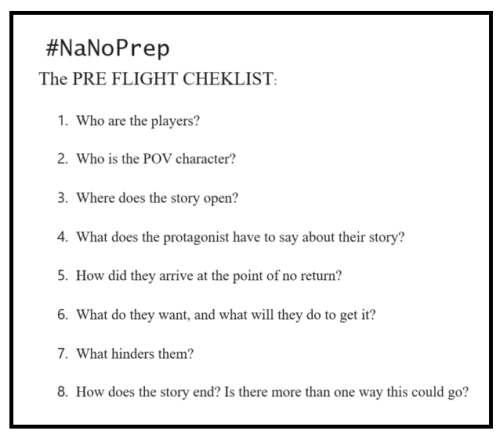
 We know our genre and have written a few paragraphs that describe our characters and who they are the day before the story opens. Also, we know where the story takes place. (To catch up on earlier posts, the list is at the bottom of this article.)
 Every reader knows that stories have a beginning, a middle, and an end. They start in a place of relative comfort, and through rising action, they follow the characters through events that change them for better or worse.
 In your musings, on what day does the serious event occur, the one that changes everything? THAT day is where the story begins, and everything that happens before that moment is backstory and isn’t necessary. A plot outline I have used before as an example is set as a political thriller, but it could easily be a paranormal fantasy, a sci-fi thriller, or a romance.
 If you work at a day job and using the note-taking app on your cellphone to take notes during work hours is frowned on, you can still capture your ideas for the storyboard.


 Life in the Realm of Fantasy