Tag Archives: scene transitions

#DecemberWriter – Dialogue and smooth transitions #writing

The best stories have an arc of rising action flowing smoothly from scene to scene. The changes from scene to scene should feel organic to the narrative and not jar the reader.

MyWritingLife2021These transitions are often small moments of conversation, italicized thoughts (internal dialogues), or contemplations written as free indirect speech. These moments are a form of action that can work well when a hard break, such as a new chapter, doesn’t feel right. The reader and the characters receive information simultaneously, but only when they need it.

Pacing has a scientific equation that can be described in two ways:

Action + reaction +action +reaction = pacing.

Push + glide + push +glide = pacing.

Usually, the overall pacing isn’t apparent while the reader is involved in the story. However, if the pacing is off, a narrative can quickly become jarring or boring, and readers will notice that.

Dialogue is an excellent tool for the reaction part of the pacing equation, but it must have a purpose and move toward a conclusion of some sort. This means conversations or ruminations should offer information of some kind to keep moving the story forward.

What can be revealed in conversations or free indirect speech? Necessary information is the obvious answer, but what else? We use it as a component of world-building to convey the atmosphere and show the scene. We also use it to expand on our theme.
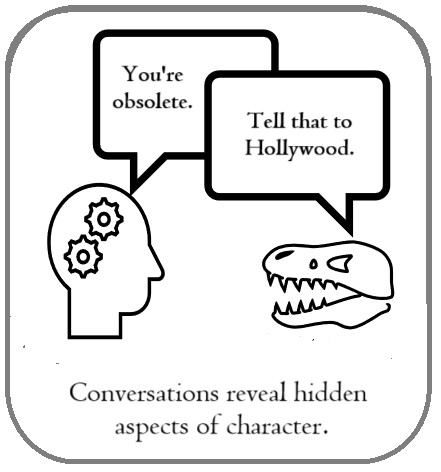
ConversationsA character’s personal mood can be shown in many ways. A moment of gallows humor lightens and shows certain characters as human. Exchanging information about the backstory in a bantering way when characters are under great stress is more entertaining than a blunt dump.

Whether humor comes into it or not, moments of regrouping and processing what just occurred are necessary for the reader as well as for the pacing.

Sometimes, a writer comes to the end of a scene and doesn’t know how to transition to the next. We have a choice to either end it with a hard break or write a short transition scene.

I always look at the overall length of what has gone before. If it’s too short, say 500 or so words, I look for a way to expand the action without slowing it, or I write a brief transition scene.

For the transition conversation, whether it’s an internal monologue or spoken aloud, I ask myself three questions:

  1. Who needs to know what?
  2. Why must they know it?
  3. How many words do I intend to devote to it?

Once I know what must be conveyed and why, I find myself walking through the Minefield of Too Much Exposition.

It is easy to write long paragraphs with lines and lines and lines of uninterrupted dialogue.

carrotTrim that back to “Just the facts, ma’am,” and add a little guesswork to show the characters don’t know everything. We have to keep the carrot (information) dangling just out of reach, or we’ll lose the reader.

We want to avoid bloated exposition because readers will skip over walls of words, hoping to “get to the good part,” and they could miss the information they need, lending confusion to the narrative.

A certain amount of information from the protagonist’s point of view can be dispersed via indirect speech. The point of view character is an unreliable narrator, so their thoughts and conversations are suspect. It’s a good way to misdirect the reader and add an element of surprise when their suppositions are proven wrong.

Let’s look at a scene that opens upon a place where the reader and the protagonists must receive information. The way the characters speak to us can take several forms:

  • Direct dialogue: Nattan said, “I was going to give it to Benn in Fell Creek, but he wasn’t home, and I had to get on the road.”
  • Italicized thoughts: Nattan stood looking out the window. Benn’s not home. What now?
  • Free indirect speech: Nattan stood looking out the window. Benn wasn’t home, so who should he give it to?

Wikipedia describes free indirect speech as a style of third-person narration that uses some of the characteristics of a third-person point of view along with the essence of a first-person direct speech.

The following is an example of sentences using direct, indirect and free indirect speech:

Quoted or direct speech: He laid down his bundle and thought of his misfortune. “And just what pleasure have I found, since I came into this world?” he asked.

Reported or normal indirect speech: He laid down his bundle and thought of his misfortune. He asked himself what pleasure he had found since he came into the world.

Free indirect speech: He laid down his bundle and thought of his misfortune. And just what pleasure had he found, since he came into this world?

According to British philologist Roy Pascal, Goethe and Jane Austen were the first novelists to use this style consistently and nineteenth century French novelist Flaubert was the first to be consciously aware of it as a style. [1]

When I began writing seriously, I was in the habit of using italicized thoughts and characters talking to themselves to express what was happening inside them.

That wasn’t wrong, but I used italics too freely. When used sparingly, italicized thoughts and internal dialogue have their place. We have to be careful with them because a wall of italicized words is difficult for people with compromised vision (like me) to read.

In the years since I first began writing seriously, I’ve evolved in my writing habits. Nowadays, I am increasingly drawn to using the various forms of free indirect speech to show who my characters think they are and how they see their world, and I rarely use italics.
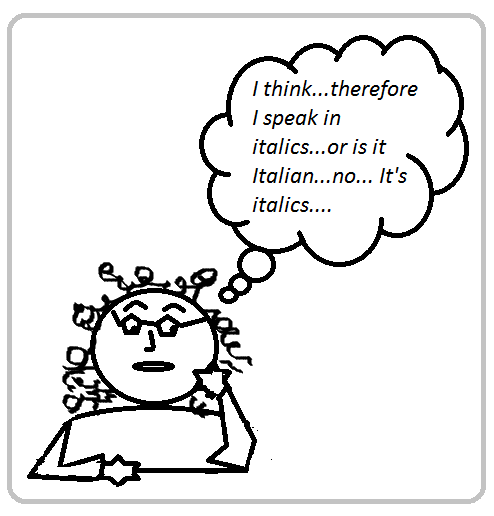
strange thoughtsThe main thing to watch for when employing indirect speech in a scene is to stay only in one person’s head. You can show different characters’ internal workings, provided you have a hard scene or chapter break between each character’s dialogue.

If you aren’t careful, you can slip into “head-hopping,” which is incredibly confusing for the reader. First, you’re in one person’s thoughts, and then another—like watching a tennis match.

Readers like it when we find ways to get the story across with a minimum of words.

Writing conversations and showing a character’s critical thoughts as an organic part of the unfolding plot make good transition scenes. They’re a good means of giving information and revealing hidden aspects of a character.

I hope your writing has continued now that November and the month of writing quests has passed. Keep writing new words every day, even if it’s only a paragraph or two. This will keep you in the habit and bring your novel closer to completion.

Credits and Attributions:

[1] Wikipedia contributors, “Free indirect speech,” Wikipedia, The Free Encyclopedia, https://en.wikipedia.org/w/index.php?title=Free_indirect_speech&oldid=817276599 (accessed Dec 7, 2024).
Comments Off on #DecemberWriter – Dialogue and smooth transitions #writing

Filed under writing

Dissecting the Scene: plot points #amwriting

Scenes are the Legos, the building blocks of the story. We all loved building things with our Legos, but readers are impatient. For that reason, no scene can be wasted, written just to entertain us, the writer. All of those scenes are background and world building, and should be saved in a separate file.

We want to ensure that each scene has a function. When I am writing the first or even the second draft, I can find myself at a loss as to what needs to happen next to advance the story.

I keep a list of plot points that could be explored and try to nudge my plot forward by exploring one of these actions:

  • Information
  • Confrontation
  • Reunion
  • Revelation
  • Negotiation
  • Decision
  • Capitulation
  • Catalyst
  • Contemplation/Reflection
  • Turning Point
  • Resolution
  • Deep emotions

Exploring each of these plot points alters the characters’ view of their world. Every change in a character’s awareness directly impacts the direction of the story and doles out information the reader and/or the characters require to advance.

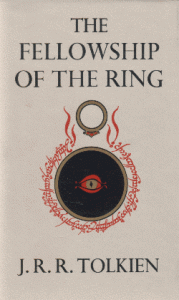
I like to use a watershed scene from the book, the Fellowship of the Ring, as an example of this. If you have only seen the movie, the version you know is quite different. You haven’t seen the real story as J.R.R. himself told it.

So, toward the end of book one of J.R.R. Tolkien’s Lord of the Ring series, we come to The Council of Elrond. The scene is set in Rivendell, Elrond’s remote mountain citadel.

Each character attending the Council has arrived there on a separate errand. Each has different hopes for what will ultimately come from the meeting. Despite their various agendas, each is ultimately concerned with the ring of power. Each wants to protect their people from Sauron’s depredations if he were to regain possession of it.

This scene serves several functions:

Information/Revelation: The Council of Elrond conveys information to both the protagonists and the reader.

It is a conversation scene, driven by the fact that each person in the meeting has knowledge the others need. Conversations are an excellent way to deploy necessary information. Remember, plot points are driven by the characters who have critical knowledge.

The fact that some characters are working with limited information is what creates the tension. At the Council of Elrond, many things are discussed, and the full story of the One Ring is explained, with each character offering a new piece of the puzzle. The reader and the characters receive the information at the same time at this point in the novel.

Inter-racial bigotry and confrontation: A well-placed verbal confrontation gives the reader the context they need to understand why the action occurs.

At the Council of Elrond, long-simmering racial tensions between Gimli the Dwarf and Legolas the Elf surface. Each is possessed of a confrontational nature, and it isn’t clear whether they will be able to work together or not.

Thus, we have action/confrontation in this vignette, followed by conversation, followed by the characters’ reactions.

The conversation and reaction give the scene context, which is critical. A scene that is all action can be confusing if it has no context.

Other conflicts are explored, and heated exchanges occur between Aragorn and Boromir.

Negotiation: What concessions will have to be made to achieve the final goal? These concessions must be negotiated.

First, Tom Bombadil is mentioned as one who could safely take the ring to Mordor as it has no power over him. Gandalf feels he would simply lose the ring or give it away because Tom lives in a reality of his own and doesn’t see Sauron as a problem.

Bilbo volunteers, but he is too old and frail. Others offer, but none are accepted as good candidates for the job of ring-bearer for one reason or another.

Each justification Gandalf and Elrond offer for why these characters are wrong for the job deploys a small bit of information the reader needs.

Turning Point: After much discussion, many revelations, and bitter arguments, Frodo declares that he will go to Mordor and dispose of the ring, giving up his chance to live his remaining life in the comfort and safety of Rivendell. Sam emerges from his hiding place and demands to be allowed to accompany Frodo. This moment is the turning point of the story.

(The movie portrays this scene differently, with Pip and Merry hiding in the shadows. Also, in the book, the decision about who will accompany Frodo, other than Sam, is not made for several days, while the movie shortens it to one day.)

The arc of the story is supported by smaller arcs. These arcs of conflict and reflection are scenes.

The arc of the scene is like any other: it begins, rises to a peak, and ebbs, ending on a slightly higher point of the overall story arc than when it started, leading to the brief transition scene.

Transitions can be as simple as a change of setting, one character leaving the room for a breath of air. They can be hard transitions; the scene ends, and with it, so does that chapter.

Within a chapter, conversations can serve as good transitions that propel the story forward to the next scene, offering a chance to absorb what just happened. This rhythm of action – reaction – action – reaction is how we adjust the pacing. Pacing is how we affect the reader’s emotions.

With each scene, we push the character arc, raising the stakes a little. Our protagonist is shaped by experiencing events and receiving needed information through action and conversation.

All the arcs together form a cathedral-like structure: the novel.

By creating small arcs, we offer the reader the chance to experience the rise and fall of tension, the life-breath of the novel at the same time as the protagonist does. This is how we give the reader a sense of immediacy.


Credits and Attributions:

Facade of the Cathedral of Milan, Italy, in February 2009, after its cleaning.  MarkusMark, CC BY-SA 3.0 <https://creativecommons.org/licenses/by-sa/3.0&gt;, via Wikimedia Commons

6 Comments

Filed under writing

Chapter Length and Point of View #amwriting

Authors just starting out often wonder how long a chapter should be. A good rule of thumb is to consider the comfort of your reader. Many readers want to finish a chapter in one sitting. With that said, you must decide what your style is going to be.

Over the years, I’ve read and enjoyed many books where the authors made each scene a chapter, even if it was only two or three hundred words long. They ended up with over 100 chapters in their books, but it worked for me when I was reading it.

I’ve attended seminars given by authors who say they have a specific word-count limit for their chapter length. One keeps them at 1,500. One of my favorite authors sometimes has chapters of only five or six-hundred words, which keeps each character’s storyline separate and flows well. I personally have found that for my style of storytelling, 2,500 to 3,000 words is a good length.

In a book, each chapter should detail the events of one scene or several related scenes. Chapters are like paragraphs, in that cramming too many disparate ideas into one place makes them feel erratic and disconnected.

One of my forthcoming books has longer chapters, as it is really a collection of short stories that take place over forty years of one character’s life. It follows the chronological order of his life and the chapters are vignettes detailing large events that changed him profoundly. These long chapters do contain hard breaks.

Conversations make good transitions to propel the story forward to the next scene, and they also offer ways to end a chapter with a tidbit of information that will compel the reader to turn the page. Information is crucial but should be offered only as the reader requires it.

A good conversation is about something one or more characters don’t know. It builds toward something the characters are only beginning to understand. A conversation is an opportunity to close a scene or chapter with a hook.

That is true of every aspect of a scene or chapter. They reveal something new and push the story forward toward the final showdown.

Fade-to-black and hard scene breaks: I don’t like fade-to-black transitions except as a finish to a chapter. Fading-to-black at the end of a scene can make the story feel mushy if there is no finite transition.

When a length of time has passed between the end of one scene and the beginning of the next, it makes sense to wind it up with a firm finish and a hook and start a new chapter.

Having said that, if you are writing a short story, dividing it into chapters isn’t an option. At the end of a scene, you may find that a hard break is required. Editors with open calls for short stories will often ask that you insert an asterisk or hashtag to indicate a hard scene break.

With each scene, we push the character arc, raising the stakes a little. Our protagonist grows and is shaped by receiving needed information through action and conversation, followed by reaction and regrouping. This allows the reader to experience the story as the protagonist does, and then to reflect and absorb the information gained before moving on to the next scene.

Some editors suggest you change chapters, no matter how short, when you switch to a different character’s point of view. I agree, as a hard transition between characters is the best way to avoid head-hopping.

Head-hopping: first you’re in his head, then you’re in hers, then you’re back in his—it gives the reader “tennis neck” and makes following the storyline difficult. Sometimes more than one character has a point of view that needs to be shown but readers will thank you if you limit point of view changes.

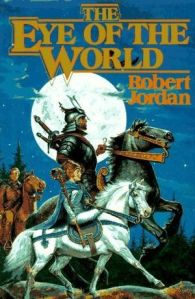
One of the problems some readers have with Robert Jordan’s brilliant Wheel of Time Series is the way he wandered around between storylines as if he couldn’t decide who the main character was. Rand Al Thor begins as the protagonist, but Matrim, Perrin, Nynaeve, and Egwene are also given prime story lines.

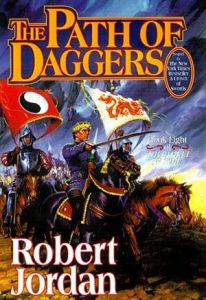
I’m a dedicated WoT fan, but even I found that exceedingly annoying long about book eight, Path of Daggers. I was halfway through reading that book when I realized there was a good chance that we were never going to see Rand do what he was reborn to do.

At that point, I kept reading because the world and the events were so intriguing.

As very few of us are writers at Robert Jordan’s level, I suggest you concentrate on developing a single compelling, well-rounded main character, with the side characters well-developed but not upstaging the star.

It’s easier for the reader to follow the story when they are only in one character’s mind for the majority of the story. If you do switch POV characters, I strongly suggest that you change scenes with a hard, visual break such as two blank spaces between paragraphs or end the chapter.

Now we come to a commonly asked question: Should I use numbers, or give each chapter a name?

What is your gut feeling for how you want to construct this book or series? If snappy titles pop up in your mind for each chapter, by all means go for it. Otherwise, numbered chapters are perfectly fine and don’t throw the reader out of the book. One series of my books has numbered chapters, the other has titled chapters.

Whichever style of chapter heading you choose, numbered or titled, be consistent and stay with that choice for the entire book.

To wind this up: Limit your point of view characters to one per scene. Limit each chapter to show events that are related, rather than a jumble of unrelated events.

When it comes to chapter length, you must make the decision as to the right length and end chapters at a logical place. But do end each chapter with a hook that begs the reader to continue on to the next chapter.

5 Comments

Filed under writing