Tag Archives: chapter length

Chapter length: What is enough and what is too much? #writing

Many times, I’m asked how long a chapter should be in a novel. Today seems like a good day to discuss this rather subjective topic.

Personally, I try to consider my readers’ comfort. I’m like many other readers. Once I begin reading a chapter, I want to finish it before I have to put the book down.

In my opinion, nothing is better than a long winter’s weekend spent sitting on the sofa in my comfy jammies, reading a book I’ve waited more than a year for.

However, life is hectic, and most of us rarely have the opportunity to sit and read all day, no matter how much we wish we could.

Having said all that, each author must decide what their style is based on their own reading preferences. This opinion might change as a writer’s career progresses, and it may not.

I’ve read and enjoyed many books where the authors made each scene a chapter. I barely noticed that detail because:

  1. Their transitions were smooth.
  2. The pacing was flawless.
  3. The story was engaging.

Some well-known authors limit their chapter length. One suggested 1500, while another has said not more than 2500.

One of my favorite authors sometimes has chapters of only five or six hundred words, which keeps each character’s storyline separate and flows well. For my storytelling style, 1,500 to 2,500 words is a good length. This allows a reader to take a break for whatever reason, and if the hook I ended the chapter on is good, they will return as soon as possible.

I feel that each chapter should detail the events of one scene or several closely related scenes. I see chapters the way I do paragraphs. Cramming widely different events into one place throws off the pacing. It makes the narrative feel erratic and disconnected.
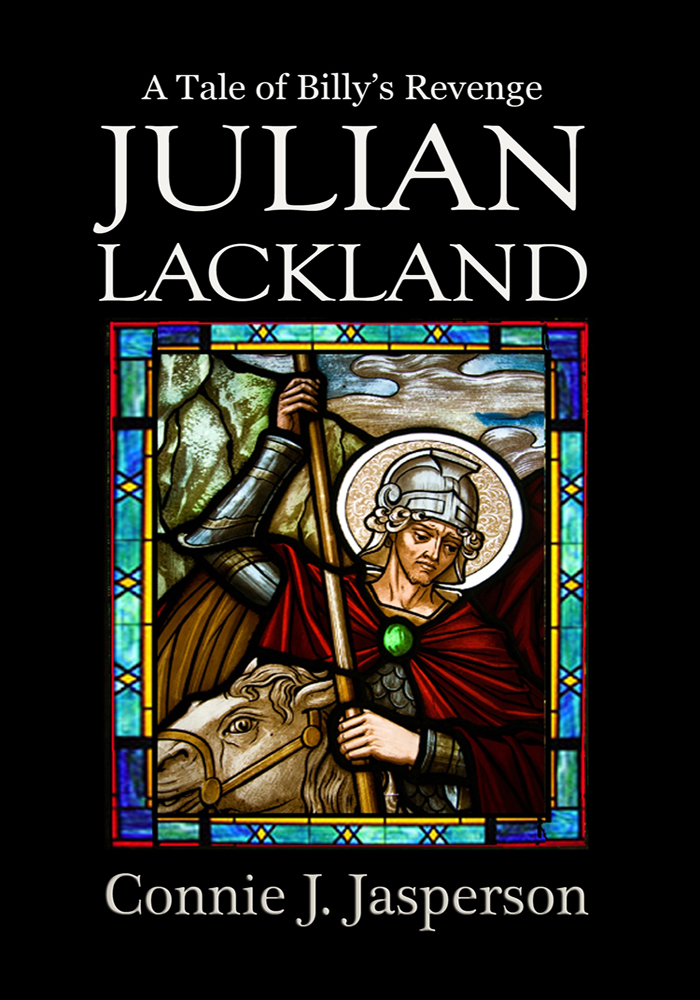
Some books require longer sections. This is true of my novel, Julian Lackland. The overall story arc is comprised of short stories that detail important events in chronological order.

So, what is a transition?

Transitions move us from one scene to the next. They offer a chance to convey necessary information in just a few words.

Soft transitions: Brief conversations make good transitions to propel us to the next scene. They also offer ways to end a chapter with a tidbit of information that will compel the reader to turn the page. Information is crucial, so we want to provide it when the protagonist and the reader require it.

Hard transitions: This chapter is over. A new chapter begins.

Sometimes, a hard transition consists of a hashtag or extra space between closely related scenes. This is useful in a short story or when small incidents combine to form a larger crucial event that should be covered in one chapter.

When the next chapter opens, the protagonist steps into an opening paragraph that leads into the next action sequence. We find out who and what new misery is waiting for him on the other side of that door.

I use fade-to-black transitions only to finish certain kinds of events. I haven’t written smut in years, and don’t see a reason to start now. So, I use that literary device when two characters are romantically involved.

Consider the passage of time. When a real chunk of time has passed between the end of one event and the beginning of the next, end the chapter and give it a firm finish with a hook. Good hooks encourage the reader to keep turning the pages.

With each scene, we push all the main characters forward and raise the stakes a little more. Action and information keep the reader engaged. Good transitions are crucial to pacing. They let the reader reflect and absorb what they’ve learned before moving on to the next scene.

This brings me to how the narrative point of view can influence the length of a scene or chapter. Some editors suggest you change chapters, no matter how short, when you switch to a different character’s point of view.

I agree with this stance, as a hard transition when you switch narrator-characters is the best way to avoid head-hopping and subsequent confusion.

But what is head-hopping? When you change the narrative point of view in the same scene, one paragraph to the next, with no definite separation, you create a “viewpoint tennis match.”

First, you’re in Character A’s head hearing her thoughts, then you’re in Character B’s head hearing his. Then you’re back in A’s head. It becomes challenging to know who is speaking or thinking. The characters tend to lose their individuality and begin to sound the same.

However, sometimes it is okay to switch narrator-viewpoint within a chapter. Some events require showing more than one character’s perspective. However, be careful how you handle the narrator change. Use a hard break, such as an asterisk between the paragraphs where the switch is made.
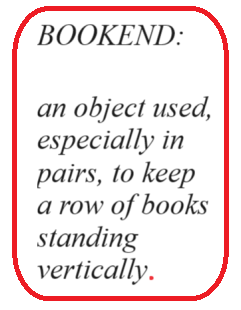
Between the larger scenes and within the chapter, we might include bookend scenes as a soft transition. These will only be a paragraph long, a few words exchanged between characters as they progress to the next event, or even a mention of the world through the protagonist’s eyes. These scenes are short but should reveal something and push the story toward the unknown.

Bookend scenes lay the groundwork for what comes next.

The short transition from scene to scene does the heavy lifting when it comes to conveying information. It is the best opportunity for clues about the characters and their history to emerge without an info dump.

You may be wondering: should I use numbers, or give each chapter a title?

If snappy titles pop up in your mind for each chapter, by all means, go for it. Otherwise, numbered chapters are perfectly fine. Whichever style of chapter heading you choose, be consistent and stay with that choice for the entire book.

I try to end my chapters at a logical place with a hook that entices the reader to continue reading. Sometimes I am successful at that. Other times it’s hard to think of a good hook.

But each narrative has logical places where chapters should begin and end. You, as the author, get to choose what those places are. The length of your chapters is up to you.
 

8 Comments

Filed under writing

Scenes, pacing, and chapter length #amwriting

Chapter breaks are transitions. I have found that chapter breaks fall naturally at certain places as I write. I’ve discussed this before, but I’m always happy to repeat myself. In my opinion, chapters can be the length they need to be.

chapterLengthWhen we commit to writing daily, our writing style grows and changes. When I began writing, some chapters totaled over 4,000 words.

As my writing style evolved, chapters became shorter. Now they average between 1,500 to 2,250. Some will be much shorter and some might be longer if the story demands it.

I try to consider the comfort of my reader. Many readers are like me—they want to finish a chapter in one sitting. Several years ago, I attended a seminar by a well-known author who said he has a specific word-count limit for chapter length.

 I’ve read and enjoyed many books where the authors made each scene a chapter, even if it was only two or three hundred words long. They ended up with over 100 chapters in their books, but the chapter length went unnoticed by me when I read it. L.E. Modesitt Jr. sometimes has chapters of only five or six hundred words, which keeps each point-of-view character’s storyline separate and flows well.

So, chapter length is a personal choice. But it does affect how the pacing of the overall story is perceived by the reader.

pacing memeAs a reader, books work best for me when each chapter details the events of one large scene or several related events. I think of chapters as if they were paragraphs. Paragraphs are not just short blocks of randomly assembled sentences.
  • A paragraph is a group of sentences that fleshes out a single idea.
  • That means that only one thought or speaker is featured in each paragraph.

Chapters are hard breaks. They are like paragraphs and can affect the overall pacing of the narrative. Packing too many unrelated ideas into one place makes them feel erratic and disconnected and throws off the pacing. It’s only my opinion, and in the end, you must decide what your style is going to be.

The way an author handles transitions is the key to a smooth, seamless narrative. As discussed in my previous post, a transition is a connecting scene moving the story forward to the following incident.

Conversely, the transition can be a scene that opens or closes a chapter by offering a tidbit of information that compels the reader to turn the page—the hook:

Conversations should detail something one or more characters don’t know.  A conversation is an opportunity to close a scene or chapter with a hook.

Fade-to-black: I’m not too fond of fade-to-black transitions except as a finish to a chapter. Fading-to-black in the middle of a chapter makes the story feel mushy.

Hard scene breaks: Sometimes, we must indicate that a space of time has passed with nothing happening that’s important or worth wasting words on. When a length of time has passed between the end of one scene and the beginning of the next, it makes sense to use the old 1-2-3:

  1. Wind the scene up with a firm finish.
  2. Leave the reader with a hook that makes them want to turn the page.
  3. Start a new chapter.

Sometimes an event occurs where more than one character has a point of view that needs to be shown. How you navigate this will significantly affect the readability of the narrative.

Most readers find it easier to follow the story when they are only in one character’s mind for the majority of the narrative.

If you switch POV characters, I strongly suggest changing scenes with a hard, visual break such as a blank space between paragraphs or ending the chapter.

Some editors suggest you change chapters, no matter how short when you switch to a different character’s point of view. That is my choice also, as a hard transition between characters is the best way to avoid head-hopping.

Head-hopping: first, you’re in his head, then you’re in hers, then you’re back in his—it gives the reader “tennis neck” and makes following the storyline difficult.

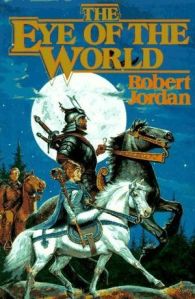
Howl's_Moving_Castle_(Book_Cover)I’ve mentioned before that one of the complaints some readers have with Robert Jordan’s brilliant Wheel of Time Series is how he wandered around between storylines as if he couldn’t decide who the main character was.
Then there is Howl’s Moving Castle, by Diana Wynne Jones. She consistently wrote two points of view into one paragraph. The story and characters are brilliant, but that habit made the dialogue difficult to follow in some places.

I don’t write at the level of Robert Jordan’s or Diana Wynne Jones’s prose and storytelling, so I try to focus on one storyline per scene and not head hop.

Now we come to a commonly asked question: Should I use numbers or give each chapter a name?

There is no rule—only authorial preference.

What is your gut feeling about how you want to construct this book or series? If good titles pop up in your mind for each chapter, by all means, go for it. Otherwise, numbered chapters are perfectly fine and don’t throw the reader out of the book.

Whether you choose numbered or titled chapter headings, be consistent and stay with that choice for the entire book.

To sum things up:

  • Limit point of view characters to one per scene.
  • Each chapter should detail related scenes and events rather than a jumble of unrelated happenings.
  • In regard to chapter length, you, as the author, must decide what the right word count is.
  • End your chapters at a logical place, but doend each chapter with a hook that begs the reader to continue on to the next chapter.

One final thing – Some literary contests and publications have a “novella,” a “novelette,” and a “short story” category. The length for these categories is based on word count.

WilliamBlakeImaginationLIRF05072022Short stories run up to 7,000 words, with under 4,000 being the most commonly requested length. 7,500–17,500 is the expected length for novelettes, and between 17,500 and 40,000 words are the standard length for novellas.
Short stories are constructed like novels but with one difference. If you are writing a short story, dividing it into chapters isn’t an option, but you may feel that a hard break is required at the end of a scene. In that case, editors with open calls for short stories will often ask that you insert an asterisk or hashtag to indicate a hard scene break.

Longer novelettes might have chapters. Novellas will probably be broken into chapters. The piece’s length determines whether or not hard chapter breaks are useful.

We each have an idea of how we want our finished work to look. We know what works for us as readers. Go with your gut, and chances are you will do fine.

2 Comments

Filed under writing

Chapter Length #amwriting

I was recently asked in an online group what length a chapter should be. I’ve discussed this before here, but I’m always happy to repeat myself. In my opinion, there is no hard and fast rule.

When we commit to writing daily, our writing style grows and changes. Fifteen years ago, I wrote long chapters, some over 4,000 words.

However, as time has passed, my writing style has evolved. Chapters have become shorter, averaging between 1,500 to 2,250. Some will be much shorter, for reasons I will go into further on down this article. Some might be longer if the story demands it.

However, it’s a good idea to consider comfort of your reader. Many readers want to finish a chapter in one sitting. I’ve attended seminars given by authors who say they have a specific word-count limit for their chapter length, a personal choice.

I’ve read and enjoyed many books where the authors made each scene a chapter, even if it was only two or three hundred words long. They ended up with over 100 chapters in their books, but the chapter-length went unnoticed by me when I read it.

L.E. Modesitt Jr. sometimes has chapters of only five or six-hundred words, which keeps each point-of-view character’s storyline separate and flows well.

For me as a reader, books work best when each chapter details the events of one large scene or several related events.

Chapters are like paragraphs. Packing too many unrelated ideas into one place makes them feel erratic and disconnected. In the end, you must decide what your style is going to be.

The key to a smooth, seamless narrative is how an author handles transitions.

This could be a conversation that moves the story forward to the next scene within a chapter.

Conversely, the transition conversation could end a chapter by offering a tidbit of information that compels the reader to turn the page—the hook.

Information is crucial but should be given only as the reader requires it.

A good conversation is about something one or more characters don’t know. It builds toward something they’re only beginning to understand. A conversation is an opportunity to close a scene or chapter with a hook.

That is true of every aspect of a scene or chapter. Each should reveal something new and push the story forward toward the final showdown. If a scene is there to fluff the word count, I suggest removing it.

Fade-to-black: I don’t like fade-to-black transitions except as a finish to a chapter. Fading-to-black in the middle of a chapter makes the story feel mushy.

Hard scene breaks: When a length of time has passed between the end of one scene and the beginning of the next, it makes sense to use the old 1-2-3:

  1. Wind it up with a firm finish
  2. Leave the reader with a hook that makes them want to turn the page
  3. Start a new chapter.

Short stories are different. If you are writing a short story, dividing it into chapters isn’t an option. At the end of a scene, you may find that a hard break is required. Editors with open calls for short stories will often ask that you insert an asterisk or hashtag to indicate a hard scene break.

Pacing is deeply intertwined with chapter length. Most readers find it easier to follow the story when they are only in one character’s mind for the majority of the narrative.

Some editors suggest you change chapters, no matter how short, when you switch to a different character’s point of view. That is my choice also, as a hard transition between characters is the best way to avoid head-hopping.

Head-hopping: first you’re in his head, then you’re in hers, then you’re back in his—it gives the reader “tennis neck” and makes following the storyline difficult.

Sometimes an event occurs where more than one character has a point of view that needs to be shown. How you navigate this will significantly affect the readability of the narrative.

If you switch POV characters, I strongly suggest that you either change scenes with a hard, visual break such as two blank spaces between paragraphs, or consider ending the chapter.

I’ve mentioned before that one of the complaints some readers have with Robert Jordan’s brilliant Wheel of Time Series is how he wandered around between storylines as if he couldn’t decide who the main character was.

Rand Al Thor begins as the protagonist, but Matrim, Perrin, Nynaeve, and Egwene are also given prime storylines.

I’m a dedicated Wheel of Time fan, but I was halfway through reading the series when I realized there was a good chance that we were never going to see Rand do what he was reborn to do. At that point, I kept reading because the world, the characters, and the events were so intriguing.

As very few of us are writers at Robert Jordan’s level, I suggest you concentrate on developing a single compelling, well-rounded main character, with the side characters well-developed but not upstaging the star.

Now we come to a commonly asked question: Should I use numbers or give each chapter a name? The authors I am acquainted with seem divided by this question.

What is your gut feeling for how you want to construct this book or series? If good titles pop up in your mind for each chapter, by all means, go for it. Otherwise, numbered chapters are perfectly fine and don’t throw the reader out of the book.

Whether you choose numbered or titled chapter headings, be consistent and stay with that choice for the entire book.

Limit point of view characters to one per scene.

Each chapter should detail scenes and events that are related, rather than a jumble of unrelated happenings.

In regard to chapter length, you as the author must decide what the right word count is.

End your chapters at a logical place, but do end each chapter with a hook that begs the reader to continue on to the next chapter.

9 Comments

Filed under writing

Chapter Length and Point of View #amwriting

Authors just starting out often wonder how long a chapter should be. A good rule of thumb is to consider the comfort of your reader. Many readers want to finish a chapter in one sitting. With that said, you must decide what your style is going to be.

Over the years, I’ve read and enjoyed many books where the authors made each scene a chapter, even if it was only two or three hundred words long. They ended up with over 100 chapters in their books, but it worked for me when I was reading it.

I’ve attended seminars given by authors who say they have a specific word-count limit for their chapter length. One keeps them at 1,500. One of my favorite authors sometimes has chapters of only five or six-hundred words, which keeps each character’s storyline separate and flows well. I personally have found that for my style of storytelling, 2,500 to 3,000 words is a good length.

In a book, each chapter should detail the events of one scene or several related scenes. Chapters are like paragraphs, in that cramming too many disparate ideas into one place makes them feel erratic and disconnected.

One of my forthcoming books has longer chapters, as it is really a collection of short stories that take place over forty years of one character’s life. It follows the chronological order of his life and the chapters are vignettes detailing large events that changed him profoundly. These long chapters do contain hard breaks.

Conversations make good transitions to propel the story forward to the next scene, and they also offer ways to end a chapter with a tidbit of information that will compel the reader to turn the page. Information is crucial but should be offered only as the reader requires it.

A good conversation is about something one or more characters don’t know. It builds toward something the characters are only beginning to understand. A conversation is an opportunity to close a scene or chapter with a hook.

That is true of every aspect of a scene or chapter. They reveal something new and push the story forward toward the final showdown.

Fade-to-black and hard scene breaks: I don’t like fade-to-black transitions except as a finish to a chapter. Fading-to-black at the end of a scene can make the story feel mushy if there is no finite transition.

When a length of time has passed between the end of one scene and the beginning of the next, it makes sense to wind it up with a firm finish and a hook and start a new chapter.

Having said that, if you are writing a short story, dividing it into chapters isn’t an option. At the end of a scene, you may find that a hard break is required. Editors with open calls for short stories will often ask that you insert an asterisk or hashtag to indicate a hard scene break.

With each scene, we push the character arc, raising the stakes a little. Our protagonist grows and is shaped by receiving needed information through action and conversation, followed by reaction and regrouping. This allows the reader to experience the story as the protagonist does, and then to reflect and absorb the information gained before moving on to the next scene.

Some editors suggest you change chapters, no matter how short, when you switch to a different character’s point of view. I agree, as a hard transition between characters is the best way to avoid head-hopping.

Head-hopping: first you’re in his head, then you’re in hers, then you’re back in his—it gives the reader “tennis neck” and makes following the storyline difficult. Sometimes more than one character has a point of view that needs to be shown but readers will thank you if you limit point of view changes.

One of the problems some readers have with Robert Jordan’s brilliant Wheel of Time Series is the way he wandered around between storylines as if he couldn’t decide who the main character was. Rand Al Thor begins as the protagonist, but Matrim, Perrin, Nynaeve, and Egwene are also given prime story lines.

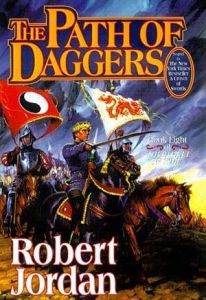
I’m a dedicated WoT fan, but even I found that exceedingly annoying long about book eight, Path of Daggers. I was halfway through reading that book when I realized there was a good chance that we were never going to see Rand do what he was reborn to do.

At that point, I kept reading because the world and the events were so intriguing.

As very few of us are writers at Robert Jordan’s level, I suggest you concentrate on developing a single compelling, well-rounded main character, with the side characters well-developed but not upstaging the star.

It’s easier for the reader to follow the story when they are only in one character’s mind for the majority of the story. If you do switch POV characters, I strongly suggest that you change scenes with a hard, visual break such as two blank spaces between paragraphs or end the chapter.

Now we come to a commonly asked question: Should I use numbers, or give each chapter a name?

What is your gut feeling for how you want to construct this book or series? If snappy titles pop up in your mind for each chapter, by all means go for it. Otherwise, numbered chapters are perfectly fine and don’t throw the reader out of the book. One series of my books has numbered chapters, the other has titled chapters.

Whichever style of chapter heading you choose, numbered or titled, be consistent and stay with that choice for the entire book.

To wind this up: Limit your point of view characters to one per scene. Limit each chapter to show events that are related, rather than a jumble of unrelated events.

When it comes to chapter length, you must make the decision as to the right length and end chapters at a logical place. But do end each chapter with a hook that begs the reader to continue on to the next chapter.

5 Comments

Filed under writing