Tag Archives: short-story arc

The infinity arc, or double-circular story arc #writing

We as writers must resonate with the stories we tell. They have to mean something to us or they won’t mean anything to a reader.

Lately, life has been a little hectic, and I’ve been unable to focus on my longer work. But I have been able to write and complete short stories in a variety of genres and lengths.

While my longer work is “resting” and going nowhere, there is an upside to this: I’ve had a chance to experiment with writing and delve more deeply into how my favorite authors construct their work.

I am a wordy writer. To counteract that problem, I set myself a wordcount goal and do my best to stay within it.

In microfiction, the author must build a world in fewer than 100 words, show mood and atmosphere, and give the reader a story with a complete arc.

This sharpens my skills in writing longer pieces because I must convey as much information as possible in as few words as I can. No matter the story’s length, my chosen words must be powerful and visual, showing the setting, combined with a strong theme, and conveying the intended atmosphere and mood.

My ideas usually fall out of my head in an outline form. This skeleton becomes the first draft. Other times, I write the story as it unfolds in my mind. Then, I make an outline and rewrite it so that it makes sense.

I’ve written several stories lately that have a “circular arc.” This kind of story takes us through an experience and returns us to where we began. For better or worse, we are changed by the events we have undergone.

Most of these pieces are essays on my real-life experiences and may someday end up in a published collection, but may just be put into a book for my grandchildren. They began as handwritten entries in my notebook. I put them into a Word Document and saved them in a file labeled Essays 2026.

My personal essays usually have a circular narrative arc and rarely run more than 500 words. The story begins at point A, takes the reader through an occurrence, and brings them back to where it started.

In this type of story, the characters return to where they began but are fundamentally changed by the story’s events.

The infinity arc is similar to the circular arc but presents one story from two different viewpoints: a double-circular arc.

The story begins with Character One, takes them through an occurrence, and brings them back. At that point, the story shifts to Character Two and retells the events from their perspective, returning them to where they began. (Two circular story arcs joined by one event.) If we graphed it out, it would look something like an infinity sign, a figure-eight lying on its side:

The story I’m using for today’s example is one I wrote about ten years ago. It features two protagonists, and I had intended to tell both stories in only 1,000 words. I was not entirely successful, but managed to keep it down to 1,025 words.
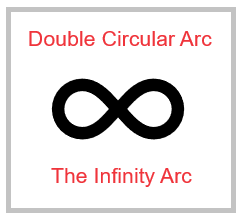
As I mentioned above, in the infinity or double-circular arc, two stories begin at the same place: the center of the infinity symbol. They experience the event simultaneously. Both characters are tested and changed by what they have lived through.

The characters in this story do not meet. In many stories with this kind of story arc, the two characters do meet and interact. Relationships across time are a popular romance trope.

But they don’t have to, and I think that makes a more interesting story.

In this tale, my characters briefly occupy the same patch of ground during a glitch in time. It ends where it began, but with two sets of characters having seemingly experienced two different events. Their perception of the meeting is colored by the knowledge and superstitions of their respective eras.

How is the story constructed?

  • It opens in the center of the infinity sign. In this tale, the antagonist is the catalyst, the place and moment where two realities meet.
  • The opening sentences establish the world, set the scene, and introduce the first protagonist.
  • The following three paragraphs show the situation and establish the mood. They also introduce the antagonist.
  • At this point, our first protagonist knows he must resolve the problem and protect his people, and he does so.

But the infinity arc presents us with a story from two viewpoints.

  • Again, I had to set the scene and establish the mood and characters. Here, we meet the second protagonist. He has the same needs as our first and must also resolve the problem.

Neither character would have understood the strange physics of what they experienced had Brian Cox been around to explain it.

  • The final paragraphs of the first half contribute to the overall atmosphere and setting of the story’s second part.
  • Each character’s understanding of what they saw and experienced is firmly grounded in the beliefs and lore of their era, and both do what they must to protect their people.

As a practice piece, the story had good bones. However, it’s not the right kind of story for submission to a magazine or contest, as it’s not commercially viable. In fact, much of what I write isn’t commercially viable, but I love writing it.

The act of writing something different, a little outside my comfort zone, forces me to be more imaginative in how I tell my stories. We should all have a little fun with writing. Give that double circular arc a shot and see what you come up with.


Credits and Attributions:

IMAGE: The  Hero’s Journey, Public Domain. Wikimedia Commons contributors, “File:Heroesjourney.svg,” Wikimedia Commons, https://commons.wikimedia.org/w/index.php?title=File:Heroesjourney.svg&oldid=1013027507 (accessed June 14, 2026).
 

1 Comment

Filed under writing

Crafting the very short story #amwriting

During the month of January I will be exploring the many aspects of the craft of writing short, salable works. I periodically discuss the importance writing to build stock for submissions to magazines, anthologies, or contests. However, many authors have difficulty keeping a story short, and there is an art to it.

Some authors are naturally skilled at this, so if you are one of those lucky people, this may be of no interest to you, but thank you for stopping by!

So, now we get down to business. First up is the short story, works that are 2,000 to around 7,000 words in length.

First, decide what length you want to write to—if you have no specific contest in mind, 2000 to 4000 is a good all purpose length that will fit into most submission guidelines. For those of you who have trouble writing short works for contests and anthologies with rigid word-count limits, this is where taking the time to do a little storyboarding becomes critical.

Let’s say you want to write a story that can be no longer than 2,000 words. You know what the story is, but when you sit down and begin writing, you think you have too much story for only 2,000 words. You need to map it out.

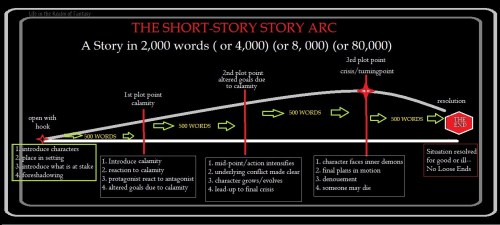
Short-stories are just like novels, in that they have an arc, and you can make it work for you.  By looking at it from the perspective of the story arc, you can see what you must accomplish, and how many words you must accomplish it in.

Every word in a 2,000-word story is critical and has a specific taskthat of advancing the plot. To that end, in a story of only 2,000 words:

  1. No subplots are introduced
  2. Minimal background is introduced
  3. The number of characters must be limited to 2 or 3 at most
  4. Every sentence must propel the story to the conclusion

For the purposes of this post, suppose we need to write a short story for submission to a fantasy anthology.

This method works for stories written in any genre and for essays, so the underlying method is not “fantasy” specific. I have used the following example before when talking about the (very short) short story, and I use it in my seminar on the subject.

First, we will carefully read the publisher’s guidelines, so we don’t waste our time writing something that won’t be accepted.

  • We discover that the guidelines stress that the wordcount limit is a strict 2,000 words, and longer submissions will not be considered.
  • The theme of this anthology is Truth and Consequences, and the theme must be strongly represented throughout the story.

Our submission will be titled A Song Gone Wrong.

The inciting incident happens off screen. We’re saving precious words by opening with our main character already in trouble, and everything the reader needs to know will be conveyed in the opening scene.

The Plot: Because he was a bit too specific when a putting a local warlord’s fling with another man’s wife into a song, our protagonist is now a wanted man in danger of being hung for treason.

Divide your story this way:

Act 1: the beginning: You have 500 words to show

  1. setting: the village of Imaginary Junction,
  2. general atmosphere: the weather is unseasonably cold
  3. introduce the protagonist and show him in his situation: In an alley, a bard, Sebastian, is  hiding
  4. introduce the antagonist(s): Soldiers of the lord he has inadvertently humiliated are searching for Sebastian.

Act 2: First plot point: You have 500 words to tell how

  1. the soldiers surround and capture Sebastian
  2. he is hauled before the angry lord and
  3. thrown into prison, sentenced to hang at dawn, but now you are at:

Act 3.: Mid-point: You have 500 Words to explain how

  1. Sebastian meets a dwarf, Noli, also sentenced to die.
  2. Noli is on the verge of managing an escape but needs help with one last thing.
  3. Noli and Sebastian manage to complete the escape route,
  4. but the guard seems suspicious, hanging around their cell door, hampering their escape

Act 4: Resolution–you have 500 words to show how

  1. The smart guard finally is relieved by a less wary guard, which allows
  2. Sebastian and Noli to squeeze through the escape route.
  3. They are spotted at the last minute, but Noli’s friends are waiting, and
  4. They are whisked to a dwarf safe-house, leaving Sebastian free to embark on his next short-story adventure

Once you have parsed out what needs to be said by what point, and in how many words, you can then get to the nitty-gritty of turning that far-fetched tale of woe into a good short-story.

You will see that to keep to the strict limit of words and still convey your story, you must choose your words carefully.

  • Use a wide vocabulary to show mood, setting, and reactions. You are an author, so you must craft the prose. It is your job to find words that best convey what you want to say, concisely in one or two sentences.
  • Sebastian can’t give Noli a recap of his troubles onscreen—all that will have to be off-stage.
  • Conversations are critical—they are the vehicle through which you convey the personalities and the minimal backstory of the piece.

You can quickly plot and write a story of any length this way, just by

  • Dividing the specified word count into four acts
  • Keeping the theme of the story in the forefront
  • Make use of your thesaurus. Put your large vocabulary to work by using words that say what you mean with the least amount of “helper” words (adjectives and adverbs).

After a few times of creating short stories using this method, you won’t need to think about it. Once you know the length a given tale has to be, you can mentally divide it into acts and just write for fun.

18 Comments

Filed under writing

#amwriting: keeping short stories short, when all your stories want to be long

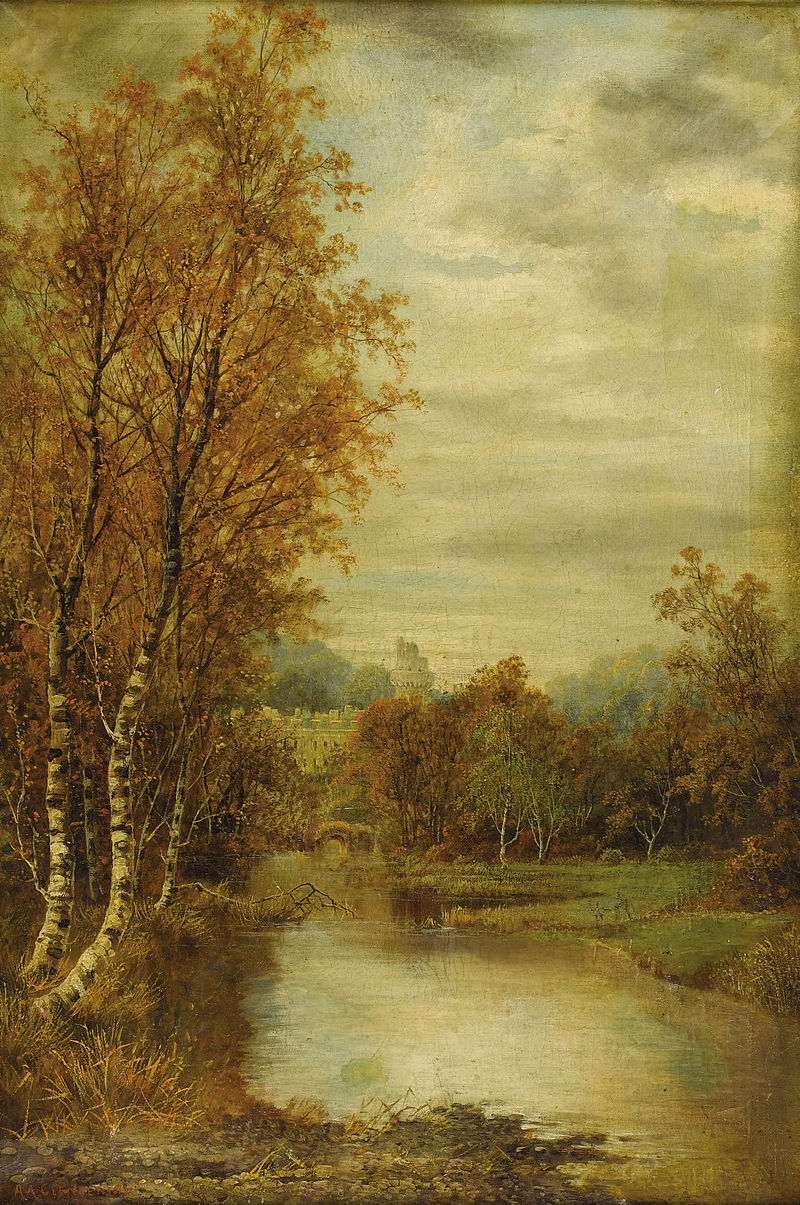
Autumn Landscape With Pond And Castle Tower-Alfred Glendening-1869

Autumn Landscape With Pond And Castle Tower-Alfred Glendening-1869

Over the summer I posted several times about why we need to write short stories, and each time I’ve talked about writing them to build stock for submissions to magazines, anthologies, or to enter into contests. Today, I want to talk about the art of keeping a story short.

First, decide what length you want to write to–if you have no specific contest in mind, 2000 to 4000 is a good length that will fit into most submission guidelines.

For those of you who have trouble writing short works for contests and anthologies with rigid word-count limits, this is where mapping your story becomes really important.

Let’s say you want to write a story that can be no longer than 2,000 words. You know what the story is, but when you sit down and begin writing, it’s like there is way too much story for only 2,000 words. You need to map it out.

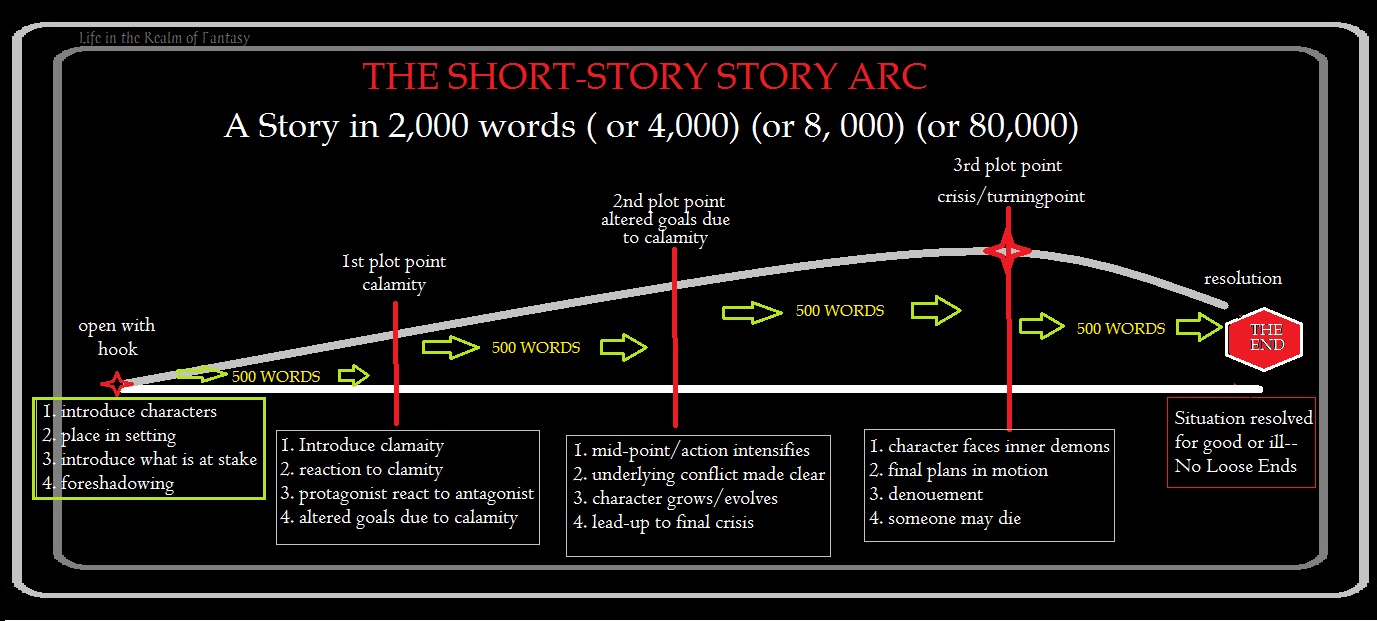
Short-stories are just like novels, in that they have an arc, and you can make it work for you.  By looking at it from the perspective of the story arc, you can see what you have to accomplish, and how many words you have to accomplish it in.

short story arc

Every word in a 2000 word story is critical and has a specific task–that of advancing the the plot. To that end, in a story of only 2,000 words:

  1. No subplots are introduced
  2. Minimal background is introduced
  3. The number of characters must be limited to 2 or 3 at most
  4. Every sentence must propel the story to to the conclusion

Lets say you are writing a fantasy, titled, A  Song Gone Wrong. Because he was a bit too specific when a putting a local warlord’s fling with another man’s wife into a song, our protagonist  is now a wanted man. Divide your story this way:

Act 1: the beginning: You have 500 words to show these plot points

  1. setting: the village of Imaginary Junction,
  2. the weather is unseasonably cold
  3. In an alley, a bard, Sebastian, is  hiding from the
  4. Soldiers of the lord he has inadvertently humiliated

Act 2: First plot point: You have 500 words to tell how

  1. the soldiers surround and capture Sebastian
  2. he is hauled before the angry lord and
  3. thrown into prison, sentenced to hang at dawn, but now you are at:

Act 3.: Mid-point: You have 500 Words to explain how

  1. Sebastian meets a dwarf, Noli, also sentenced to die
  2. Noli is on the verge of managing an escape, but needs help with one last thing
  3. Noli and Sebastian manage to complete the escape route
  4. but the guard seems suspicious, hanging around their cell door, hampering their escape

Act 4: Resolution–you have 500 words to show how

  1. The smart guard finally is relieved by a less wary guard, which
  2. allows Sebastian and Noli to squeeze through the escape route
  3. They are spotted at the last minute, but Noli’s friends are waiting, and
  4. they are whisked to a dwarf safe-house, leading to Sebastian’s next short-story adventure

Once you have parsed out what needs to be said by what point, and in how many words, you can then get to the nitty-gritty of turning that far-fetched tale of woe into a good short-story.

You will see that in order to keep to the strict limit of words, you will have to choose your words carefully. You will have to find words that really convey what you want to say, concisely in one or two sentences. Sebastian can’t give Noli a recap  of his troubles in your hearing–all that will have to be off-stage. On-screen conversations are critical–they will convey the personalities and the minimal backstory of the piece.

After a few times of creating short stories this way, you won’t need to think about it. When you know the length a given tale has to be, you can mentally divide it into acts and just write for fun.

2 Comments

Filed under Publishing, Uncategorized, writer, writing