Tag Archives: the story arc

#Preptober: is it historical fiction or sci-fi? #writing

Today, we’re continuing our Preptober series by designing a conflict and a story arc. I write fantasy, but every story is the same, no matter the set dressing. Protagonist A needs something desperately, and Antagonist B stands in their way.

Logo, my writing life.What does the protagonist want? Everyone wants something. The story is in the way they fulfill that need, or what happens when they don’t. Doubt, uncertainty, people facing the unknown as they struggle to succeed in their quest … these nouns are what makes the story interesting.

This is where we have to sit and think a bit. Are we writing a murder mystery? A space-opera? A thriller? The story of a girl dealing with bulimia?

Let’s do something different and write a historical fiction.

My Uncle Don fought in WWII in the Ardennes and was wounded, coming home with a steel plate in his head. He was an unfailingly kind man who never discussed his wartime experiences. Here in the US, that battle is referred to as the Battle of the Bulge.

  • Our proposed novel’s genre is historical fiction because it explores a fictional Allied soldier’s experiences. It isn’t a biography.

However, any historical fiction novel is a form of fantasy. This is because we must imagine how our soldier acted and reacted to the events, and the friends he made and lost along the way. Those events now exist only in a few places, such as military archives, old newspaper accounts, and the memories of a generation that is now in their nineties.

We will make a list of things we want to include in our worldbuilding. Filthy living conditions will provide the backdrop to the impending confrontation. Life on the frontline was brutal, and we need to use the environment to emphasize our characters’ experience of combat as it was in 1944-45.

We want to have a complete story arc, so what length should our manuscript top out at? We will plan for a mid-length novel of 75,000 words. We get out the calculator and divide our word count by 4.

  • The first quarter will be 18,175 words, the two middle quarters will be 37,500 words, and the final run-up to the climactic ending will be 18,175 words.
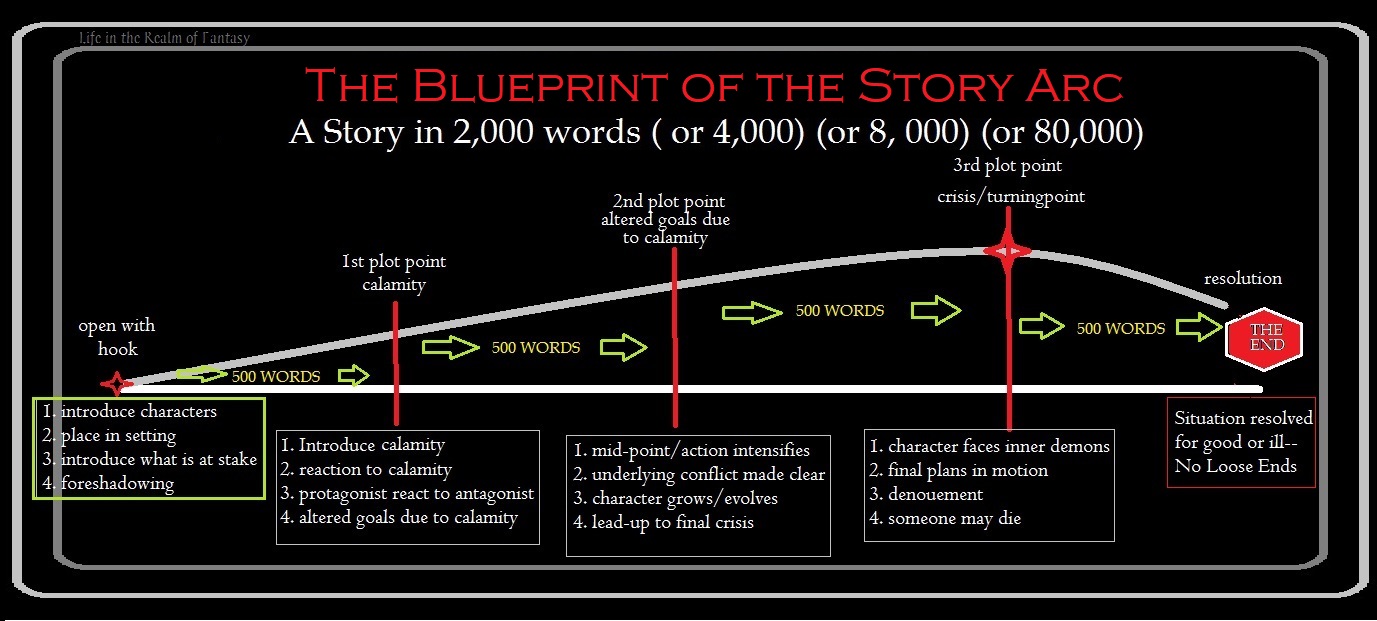
Visual depiction of dividing a story's wordcount into quarters.The first quarter opens our story and introduces the moment of no return, even if our characters still believe they can salvage things.

The following two quarters are the middle of the narrative, exploring the obstacles that our soldier faces. The final quarter winds our soldier’s story up.

Remember, the historical events are NOT movable or changeable if you want to remain in the historical fiction genre. Once you change the timeline or alter events in any way, you have ventured into alternate history and are writing speculative fiction.

I confess, spec-fic is my kind of book. But accuracy counts for readers of historical fiction.

Readers are smart. Military buffs will know that a soldier can’t be at both St. Vith and the Meuse River, unless he was in the US Army Air Force.

So, our four quarters can be divided this way if our soldier is American:

  1. Attack in the south
  2. Allied counteroffensive
  3. German counterattack
  4. Allies prevail

We will write the scenes that connect those events, and that is where we take a deep dive into history. We can invent characters and use our imagination to flesh out their lives within as accurate a WWII context as possible.

To complete our story arc, we will

  1. Take each incident and write the scenes that our soldier experiences.
  2. We might also write scenes showing the commanders planning the offensives and switch to show the enemy’s plans.
Drawing of an author saying "30 days, 50,000 words. We got this."No matter what genre of book you plan to write, all you need is a skeleton of the plot, just a series of events for you to connect. You will write the scenes between these events, connecting them to form a story with an arc to it.

As we write, our soldier’s thoughts and interactions will illuminate and color the scenes. His encounters, how he saw the enemy. Were they people like him or were they faceless? All his emotions will emerge as you write his story.

But maybe you aren’t writing a historical fiction. Some things are universal.

No matter what genre we are writing in, we start with a worthy problem, a test that will propel the protagonist to the middle of the book.

This event is the inciting incident and could be the hook. We discover a problem and set our heroine on the trail of the answer. In finding that answer, she is thrown into the action.

Drop the protagonist into the action as soon as possible, even if the conflict is interpersonal. It could be a minor hiccup that spirals out of control with each attempt to resolve it.

  • This is the place where the characters are set on the path to their destiny.

Some plots are action and adventure. Other books explore a relationship that changes a character’s life in one direction or another. Others, like our war story, explore surviving extreme hardship.

The inciting incident is the moment when the protagonists first realize they’re utterly blocked from achieving their desired goal. Note this event on your outline early in the first quarter. Then the trouble escalates, so make a note of the moment our protagonist realizes their situation is much worse than they initially thought.

At this point, our people have little information regarding the magnitude of their problem. One thing that I do is make notes that help limit my tendency toward heavy-handed foreshadowing. Most of what I write in the first draft will be severely cut back by the time I’m done with the final revisions.

Subplots will emerge once I begin writing. I note them on the outline as soon as I can, but sometimes I do forget.

The last weeks of Preptober are upon us and this is a good time to visit the brick-and-mortar bookstore and look at the books currently being offered in the genre you are writing in. Then you’ll know what you need to achieve in your work if you want to sell that story.
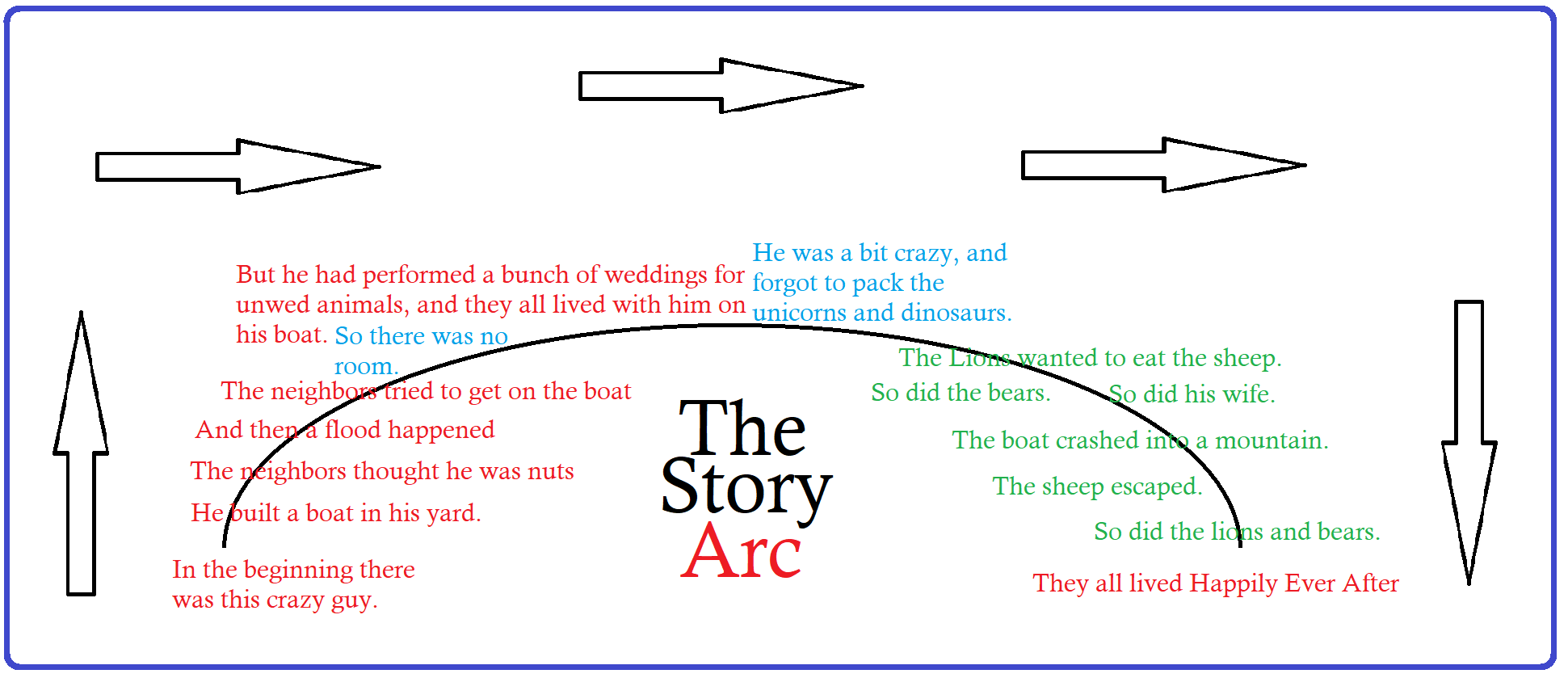
Depiction of the story arc.

1 Comment

Filed under writing

Constructing the short story – the double circular story arc #writing

I love writing short stories because they offer me opportunities to experiment with both style and genre. It’s a challenge for a wordy writer like me to build a world in only a few words and still tell a story with a beginning, a middle, and an end.

In any story, the words we choose must do some heavy lifting. They must be strong and visual to show the setting, and when we combine them with a powerful theme, a few well-chosen words will convey atmosphere and mood.

Usually, I write my ideas in an outline form that becomes the first draft, but not always. Sometimes I write the story as it unfolds in my mind. Then, I take that very rough draft and turn it into an outline and rewrite it.

Let’s say I need to write a story for a contest or publication with a 2,000-word limit. Once I have the outline in shape, I will mentally divide the story into 3 acts. Act 1 must be told in 500 words. I will have 1,000 words to spend on Act 2, and finally, Act 3 will have to wrap things up in 500 words.

  • For any story, if you know the intended word count, you can divide the plot outline that way.

Knowing my intended word count helps me write a story, from drabbles to novels. This method works for stories with a traditional arc as well as those with a circular arc.

In a circular narrative, the story begins at point A, takes the protagonist through life-changing events, and brings them home, ending where it started. The starting and ending points are the same, and the characters return home, but they are fundamentally changed by the story’s events. The Hobbit is a tale with a circular story arc, as are many tales that follow the Hero’s Journey.

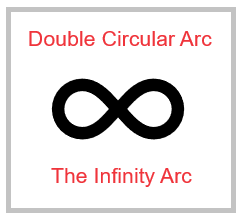
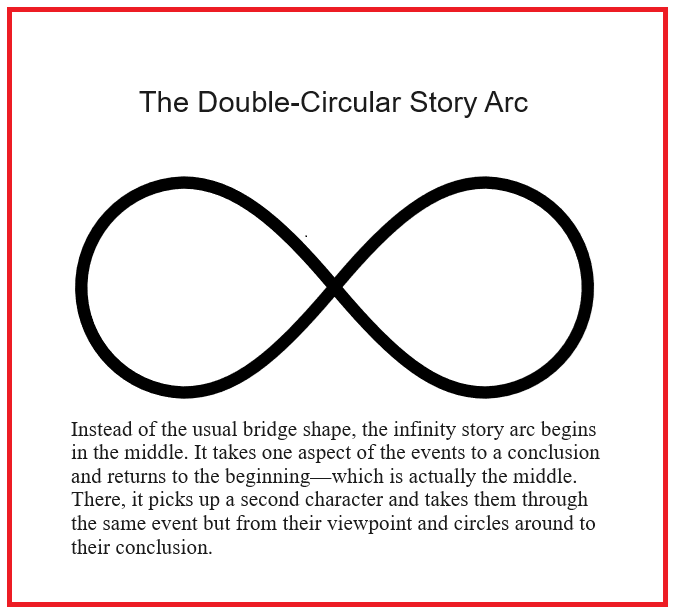
The infinity arc is similar but presents one story from two different viewpoints. The story begins with Character One, takes them through the events, and brings them back. At that point, the story shifts to Character Two and retells the events from their point of view, bringing them back to where they began. (Two circular story arcs joined by one event.) If we graphed it out, it would look something like an infinity sign, a figure-eight lying on its side: 

The story I’m using for today’s example is the Iron Dragon, which I wrote during NaNoWriMo 2015. That was the year I focused on experimental writing, putting out at least one short story every day and sometimes two. It’s the story of the web of time glitching and the perceptions of the characters who experienced it.

That year, a writing prompt I found on a writers’ website encouraged us to expand on the theme of dragons and use it to illustrate two aspects of a place. I chose to set my story in Wales, a country whose national symbol is the Red Dragon (Welsh: Y Ddraig Goch).

I am not Welsh, nor did we study Wales in school, so I had to go out and do some research. In the process, I learned a great deal and gained immense respect for a country I had known little about.

Once I had an idea of the two worlds I was building, I couldn’t resist setting two more goals to achieve.

  • I decided to experiment with the double circular story arc, seeing it as a way to tell one story as lived by two protagonists separated by twelve centuries and a multitude of legends.
  • I chose to use 1,000 words to tell both stories. I was not entirely successful, but I did keep it down to 1,025 words.

As I mentioned above, in the double circular arc, two characters are protagonists. Their stories begin at the same place, the center of the infinity symbol. They experience the event simultaneously but separately and arrive back at the same place. Both characters are tested and changed by what they have lived through. In some stories with this kind of story arc, the two characters never meet.

In the Iron Dragon, my characters physically don’t meet in person. However, they briefly occupy the same patch of ground during a glitch in the space-time continuum.

This story ends where it began, but with the two sets of characters having seemingly experienced two different events. Their perception of the meeting is colored by the knowledge and superstitions of their respective eras.

  • The first paragraph of the Iron Dragon begins in the middle of a story: the center of the infinity sign.

Those opening sentences establish the world, set the scene, and introduce the first protagonist.

  • The following three paragraphs show the situation and establish the mood. They also introduce the antagonist, which appears to be an immense iron dragon.

At this point, our first protagonist knows that he must resolve the problem and protect his people, which he does

But this is a story with two sides. Aeddan’s point of view is not the entire story.

  • Again, I had to set the scene and establish the mood and characters. Here, we meet the second protagonist, an engine driver named Owen. He has the same needs as Aeddan and also resolves the problem.

Neither character would have understood the strange physics of what just occurred had Brian Cox been around to explain it to them.

  • Each character’s understanding of what they saw and experienced is firmly based on the beliefs and lore of their era, and both do what they must to protect their people.
  • The final paragraphs wind it up. They also contribute to the overall atmosphere and setting of the second part of the story.

As a practice piece, the story had good bones. However, it’s not the right kind of story for submission to a magazine or contest, as it’s not a commercially viable piece.

The act of writing something different, a little outside my comfort zone, forces me to be more imaginative in how I tell my stories. We should all have a little fun with writing. Give that double circular arc a shot and see what you come up with.


Credits and Attributions:

IMAGE: The  Hero’s Journey, Public Domain. Wikimedia Commons contributors, “File:Heroesjourney.svg,” Wikimedia Commons, https://commons.wikimedia.org/w/index.php?title=File:Heroesjourney.svg&oldid=1013027507 (accessed July 20, 2025).

2 Comments

Filed under writing

The story arc – plot points, a series of life-changing events #amwriting

Every good story has an arc to it. It begins at a place of change and is created by one event following another until it comes to a place where the narrative is concluded.

MyWritingLife2021The inciting incident is followed by a series of plot points, places where complications are introduced into the narrative.

Real life is the same way. As many of you know, this last year has been one of change for me and my husband. If I were writing the story of this year,  it would begin with the inciting incident which occurred a year ago this last week. My husband was involved in a car wreck which ultimately led to his diagnosis of Parkinson’s disease. That was a bad day for us, but thankfully he wasn’t seriously injured, and we got it handled.

Just as in a novel, there was fallout from the inciting incident. Unfortunately, it meant the protagonist’s spouse could no longer drive. That would be the second plot point because it meant all plans for the summer had to be rearranged on the fly.

Orange_Door_with_Hydrangeas_©_Connie_Jasperson_2019The opening setting for this story is a small town in an exceedingly rural part of Thurston County. One must travel at least ten miles in any direction to find another city. After sundown, you must drive on narrow, winding, pitch-black country roads. I, the protagonist in my story, suffer from severe night blindness, which meant we had to return home before sundown, putting a real crimp in our social life.

The third pinch point comes in the sudden amount of traveling we had to do for physical therapy and neurology appointments. All medical services are twenty miles north in the Olympia area, as are the full-service grocery stores and a multitude of services we now need. It was like having a day job again. We would get up, have breakfast, and hit the road.

The story’s midpoint comes when, in January, we examined our options. Ultimately, we decided the best solution was to sell our home of eighteen years and move twenty miles north, back to Olympia.

The plot arc of the year had crested the midpoint, and now it was hurtling toward the next complication—trying to pack up, get the house ready to sell, and be a contributing grandparent to the family.

That was not easy.

Three family members have faced serious health problems since January. For one, epilepsy reared its head like the curse it is, and he landed in the hospital again. For the first time, I wasn’t any help other than offering a supportive voice on the other end of a phone call.

medical symbolMajor surgeries happened for the other two, and I was many miles away to the south, getting our house on the market. But our sons and daughters are entering middle age, and our older grandchildren are adults. Despite our worries, our granddaughters proved they were mature and more than capable of handling their lives.
And they all do so, brilliantly.

This is the final battle. The protagonists have been forced to let go and be the caring sounding board whenever one is needed.

And now, we approach the happy ending. The protagonists have managed to get packed up and moved by the deadline. Every task was done, and the house was ready to put on the market by the self-imposed deadline. As of today, our two characters have received some good offers and accepted one. Now they have to hope everything goes as well as possible and the deal closes by the end of June as it should.

Is there an epilogue? Of course. What is the setting for this final chapter? We find our couple in a small apartment in an urban village.

Lucky Coffee CupThe protagonists are settling into the new neighborhood. One of the niftiest things about their community is the Starbucks—and yes, I did say Starbucks. The owners of the Chambers Prairie Grange building took a huge risk, choosing to renovate rather than tear it down. It was built in 1908 when this area was outside the city limits and was long abandoned, falling into serious disrepair. This Starbucks has the feel and ambiance of a mom-and-pop coffee shop with plenty of comfortable, widely spaced seating placed with a post-pandemic eye. The original flooring has been refurbished, along with the original walls. Even the old Chambers Prairie Grange sign is hung inside there.

Moving to this neighborhood is coming full circle for me, the protagonist. I worked for a large rhododendron nursery in 1989, and the greenhouses I worked in were on the very site where my apartment building currently sits. Across the street from my windows is the property where my uncle and aunt lived in 1966. A large condominium complex is going up where my uncle’s house was, nearing completion. Some friends of ours have bought one of the condos.

From our windows, we have a view of the old grange hall. Back in the day, my ex-hubby’s heavy metal band played there for keggers. Attendees paid two dollars at the door. One dollar went to the band, the other to the host to pay for the beer. (No one underage allowed, no exceptions.) They played many a night there in the early 1970s before the grange hall was shut down and abandoned.

The epilogue of our story shows how life is much simpler for our protagonists. It shows the point of view character, me, admitting how she could get used to the lack of stress and how it feels like a vacation.

The story is an arc that begins at a place of change (the inciting incident), details the complicating events (pinch points), and concludes at a place of relative calm and introspection (the epilogue).

boxLIRF04182023I find that writing is easy here. Creativity comes in bursts, and I feel good about my writing. We have pared our possessions down to the point that they don’t possess us—something you don’t realize is a problem until you are faced with serious downsizing.
With my husband’s diagnosis of Parkinson’s, we have entered a new phase of life. Our children tell us we have earned our stress-free life, and it’s time to enjoy it.

Yes, winter was long and hard, but now summer is here, and the days are long and bright. So, let the good times roll—real life is unscripted, unpredictable, and no matter the plot points, life is always good.

12 Comments

Filed under writing

The Mushy Midpoint #amwriting

I am not good at winging it when plotting a novel. I might begin with nothing but a few characters and a loose idea for a plot, but somewhere toward the middle, I will lose momentum.

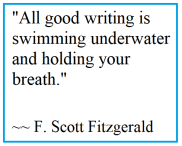
F Scott Fitzgerald on Good Writing LIRF07252022I will have to spend a day or two thinking about the story as a whole and writing an outline as a framework to guide the story. The plot points I originally planned to occur at each of the four quarters of the story will be met, but how?
In my head, I know that character plus objective plus risk equals a story. In practice, it’s more complicated than it looks.

Every story begins with the opening act, introducing the characters and setting the scene. It then kicks into gear with the occurrence of the “inciting incident,” that first plot point that triggers the rest of the story.

I’m very good at getting this part on paper. But here is where my storytelling skills sometimes fail me.

At the midpoint of my outline, another serious incident is scheduled to occur, an event setting them back even further. They will be aware that they may not achieve their objectives after all.

While I  know that bad things have to happen at this place, I sometimes can’t figure out what those things are.

In my logical mind, I know that the protagonists must get creative and work hard to achieve their desired goals. I know they must overcome their doubts and make themselves stronger.

But what are those doubts?

We have arrived at the first pinch point. The characters are on the hunt for the MacGuffin. The antagonist makes an appearance, and the heroes survive the first roadblock and—

Nothing.

This sudden blank wall is where creating an outline comes into play. But since I know what the ending is that I must write to, I approach this part of the outline as if I were writing a murder mystery.

When I can’t figure out the middle, I start at the end of my story and work my way backward until I have joined the dots connecting the ending to the beginning.

Crime writers ask themselves several things when they begin plotting a mystery. We can all learn from their method:

  • What crime was committed?
  • Who committed the crime?
  • How did they pull it off?
  • Why did they do it?

So, I look at what I originally planned for the ending and ask, “What led us to this point?”

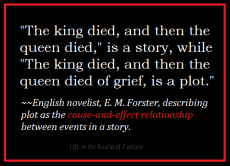
e.m. forster plot memeThe midpoint of the story arc is often where the protagonists lose their faith or have a crisis of conscience. Something terrible happens, and they must learn to live with it.
What was that terrible thing?

Maybe the protagonist has suffered a terrible personal loss or setback. Because of this, maybe she no longer believes in herself or the people she once looked up to.

How was her own personal weakness responsible for this turn of events?

How does this cause the protagonist to question everything she ever believed in?

What gives her the strength and the courage to pull herself together and finish the job?

How is she different after this personal death and rebirth event?

This midpoint crisis is where the protagonist makes the hard decisions and learns she truly has the courage to do the job. The antagonist has had their day in the sun and could possibly win.

What I sometimes forget is this: plot arcs hinge on our characters and their reasons for being there. No matter what genre we’re writing in, giving the individual players strong motivations makes the story easier to write.

If I haven’t made their motivations strong enough by the midpoint, I will lose track of the plot.

At the beginning of my story, I will know what “the crime” is, the incident that throws my characters into the action. I never lose track of that—it’s the middle that gets mushy for me.

I will know who the antagonist is and why they are acting against my main characters. I will even know why it is all happening.

The part I struggle with is the how.

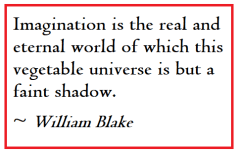
WilliamBlakeImaginationLIRF05072022So, starting at the end, I look at my characters’ location when the story finishes. Then I ask myself what they were doing just before the final encounter.
And before they did that, what were they doing? What did they accomplish to move the story forward to that place? What location did they begin that part of the journey from, and why were they there?

I work my way backward through each step of the problem. It’s not a perfect method, and may not work for everyone. But by working in reverse from a known point, I can see what needs to happen and begin to write the story again.

3 Comments

Filed under writing

How a monopoly of information drives the arc of the scene #amwriting

NaNoWriMo is in full swing. Many people are discovering that writing is much more work than they realize. Some have fallen by the way already, and others will falter along for a few more days. Then they too will disappear, and their work will lie forgotten until the urge to write resurfaces, like the sneaky shark that creativity is.

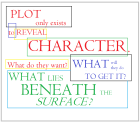
However, a few people new to the craft are developing a pPlot-exists-to-reveal-characterassion for the dirty habit of writing every day. They are joining the ranks of the old pros, the people who “do NaNo” every year whether they expect to be published or not.

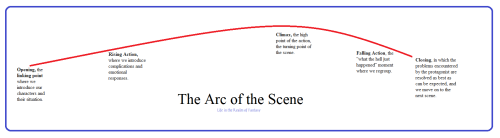
But all writers begin as readers. As we read, we see an arc to the overall novel consisting of:

  1. Exposition, where we introduce our characters and their situation.
  2. Rising action, where we introduce complications for the protagonist
  3. Climax, the high point of the action, the turning point of the narrative
  4. Falling action, the regrouping, and unfolding of events that will lead to the conclusion
  5. The resolution, in which the protagonist’s problems are resolved, providing the reader with closure.

Scenes are mini stories that support the overall arc. They come together to create the all-encompassing drama that is the novel. The way the narrative unfolds keeps our readers interested until the end of the book. Each scene has a job and must lead to the next. If we do it right, the novel will succeed.

The main difference in the arc of the scene vs. the overall arc of the novel is this: the end of the scene is the platform from which your next scene launches. This means each scene begins at a slightly higher point on the novel’s plot arc than the previous scene, driving the narrative.

876MilanoDuomoIn my mind, novels are like Gothic Cathedrals–arcs of stone supporting other arches until you have a structure that can withstand the centuries. Each scene is a tiny arc that supports and strengthens the construct that is our plot.
These small arcs of action, reaction, and calm push the plot and ensure it doesn’t stall. This tension increases the overall conflict that drives the story.

My writing style in the first stages may be different than yours. I lay down the skeleton of the tale, fleshing out what I can as I go. But there are large gaps in this iteration of the narrative.

So, once the first draft is finished, I flesh out the story with visuals and action. These are things I can’t focus on in the first draft, but I do insert notes to myself, such as:

  • Fend off attack here. Bandits wound Lenn. I don’t know how.

Or my notes might say something like:

  • Contrast tranquil scenery with turbulent emotions here.

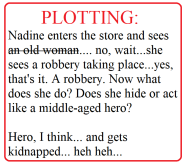
plottingLIRF07122020For me, the first draft is always rough, more like a series of events and conversations than a novel. In the second draft, I stitch it all together and fill in the plot holes.

In the first draft, most scenes I write are conversations interspersed with actions. Conversations between our characters should have an arc that supports the cathedral of the novel. They begin, rise to a peak, and ebb.

They inform us of something we must know to understand the forthcoming action. Conversations propel the story forward to the next scene.

A good conversation is about a thing or idea and builds toward some other thing or idea. Dialogue must have a premise and move toward a conclusion of some sort. Otherwise, it’s is a waste of words.

A scene that is all action is confusing if it has no context, no frame. A properly placed conversation can give the reader perspective when there is no silent witness (an omniscient presence). This view is needed to understand the reason for events.

A certain amount of context can arrive through internal monologue. But we don’t want the reader to face a wall of italics. I have two problems with long mental conversations:

  1. Italics are daunting in large chunks.
  2. Internal dialogue is frequently a thinly veiled cover for an info dump.

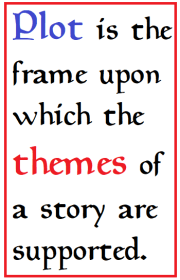
plot is the frame upon which the themes of a story are supportedPlot points are driven by the characters who have critical knowledge. The fact that some characters are working with limited information creates tension.
This inequality of knowledge is called asymmetric information. We see this all the time in the corporate world.

  • One party in a business transaction has more or superior information compared to another.
  • This individual’s drive and pursuit of pure self-interest can prevent others from entering and competing in an industry or market.
  • This person has the critical knowledge the competitors don’t have.
  • That inequality of information effectively eliminates his competition.

In other words, he has a monopoly and rises to the top.

In literary terms, a monopoly of information creates a crisis. In the novel, a conversation scene should be driven by the fact that one person has knowledge the others need. An idle conversation will bore your reader to tears, so only discuss things that advance the plot.

The reader must get answers at the same time as the other characters, gradually over the length of a novel.

I struggle with this too. Dispersing small but necessary bits of info at just the right moment is tricky. Hopefully, by the end of my second draft, all these bumps will have been smoothed out.

Now that we are a week into NaNoWriMo, I have written 20,000 words into my outline, which is gradually becoming a novel. Already many things have changed from the original plan.

Whether it will be an engaging story for a reader (or not) is something I can’t predict, but I’m enjoying writing it.

The Arc of the Scene

And that is what writing should be about—writing the story you want to read.

18 Comments

Filed under writing

The Story is in the Drama #amwriting

Drama and disaster can and will happen on a wide scale in our real lives. Tornadoes, hurricanes, earthquakes, volcanoes, droughts—the path of a natural disaster is erratic. Sometimes they miss you, and other times, your home is in their way.

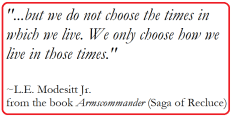
modesitt quote the times we live LIRF11012022Lesser dramas might only touch us on a peripheral level, yet they can affect our sense of security and challenge our values.
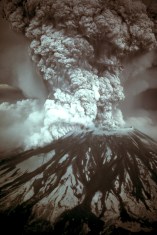

On May 18th, 1980, my friends and I watched the eruption of Mt. St. Helens from atop a hill in the middle of nowhere. My children had visited their father for the weekend, so my friends and I planned a fishing trip to a beaver pond in the next county. It was a long drive on narrow, dirt logging roads, but the possibility of trout for supper was just an excuse for a day spent in the deep forest.

We loaded our gear into my boyfriend’s Land Rover and set off at about 5:00 am, all five of us laughing and having a great time. The radio never worked, but the cassette deck played Led Zeppelin, Robin Trower, Genesis, and Ritchie Blackmore’s Rainbow as the soundtrack to our trek through the gorgeous country.

At about 09:00, we came up over the top of a treeless hill. The view was breathtaking, as if all of Lewis County lay before us in springtime glory.

Above it all towered a sight I will never forget, turning the blue sky black.

MSH80_eruption_mount_st_helens_05-18-80-dramatic-edit

Eruption of Mt. St. Helens May 18, 1980 Public Domain, via Wikimedia Commons

Conversations suddenly silenced, and we stopped, turning the engine off. We got out and stared, first at the raging column of dust, rocks, and lightning that dwarfed the mountain and then at each other. Helicopters and airplanes from news agencies and the USGS circled like so many carrion birds. What so many people had thought was just hysteria was true—the mountain had blown.

We never did make it to the beaver pond. The only fish we caught that day were the tuna sandwiches we had packed. Conversations were sober as we picnicked on that hilltop and watched the incredible show.

We had no way of hearing the news, but we knew it was terrible, that some people had died and others had lost everything. We had no idea just how bad it was, that one of our favorite places to fish, the Mount St. Helens Lodge at Spirit Lake, had disappeared along with its cantankerous owner. Harry R. Truman had become famous in the weeks before the eruption for refusing to evacuate.

Toward midafternoon, we returned to Olympia, all of us grateful to have homes to go to. When I turned on the television and found that more than fifty people had lost their lives, I felt devastated for them.

The true story of that day in my life is in disaster contrasted against calm and tranquility.

The story is in the hectic start to the morning, of five friends off on a day trip to go fishing. It is in the peace of the deep woods along those old dirt roads.

640px-St_Helens_before_1980_eruption_horizon_fixedThe camera zooms out and now we see the idyllic serenity of a clear sunny morning on Spirit Lake and Harry doing his morning chores.
This allows us to see what will be lost.

Then disaster strikes. The side of the mountain gives way, and the eruption is on.

Contrast that catastrophe against five people serenely picnicking on a hill, observing the apocalypse as it happens. The drama is in old Harry R. Truman’s stubborn end, and how it didn’t occur to us who watched from a distant hill that we would never rent a boat from him or fish in that lake again.

The bad juxtaposed against the good is the plot, but the experiences of those who witnessed it is the story. Contrast provides drama and texture, turning a wall of “bland” into something worth reading.

Stories of apocalyptic catastrophes resonate because disaster drives humanity to bigger and better things, and those who survive and rise above it become heroes. Readers love the drama of it all.

Disaster isn’t always apocalyptic, though. Dramas regularly happen on what seems an unimportant level to people who have resources. Not everyone has money, and not everyone can surmount the odds. The story is in the battle.

Think about those small daily tragedies people face, deeply personal catastrophes, which only they are experiencing. Love and loss, safety and danger, loyalty and betrayal are the eternal themes of tragedy and resolution. These are the seeds of a good story.

30 days 50000 wordsWe writers must make our words count. We must show our characters in their comfort zone in the moments leading up to the disaster. Not too much of a lead in, but just enough to show what will soon be lost.
Then, we bring on the disaster and attempt to write it logically, so it makes sense.

Contrast is a crucial aspect of worldbuilding and storytelling. In the end, we want readers to think about the story and those characters long after the last paragraph has been read. Drama and resolution are the keys to a great story.

Comments Off on The Story is in the Drama #amwriting

Filed under writing

#NaNoWriMo prep part 4 Plot Arc #amwriting

Today we’re continuing prepping our novel by thinking about the plot, the story our characters inhabit. In post one, we thought about what kind of project we want to write–novel, short stories, poems, memoir, personal essays, etc.

Post two of this series introduced the protagonist(s), so we have an idea of who they are and what they do.

In post three, we explored the setting, so we already know where they are and what their circumstances are.

plot is the frame upon which the themes of a story are supportedNow we’re going to design the conflict by creating a skeleton, a series of guideposts to write to. I write fantasy, but every story is the same, no matter the set dressing: Protagonist A needs something desperately, and Antagonist B stands in their way.
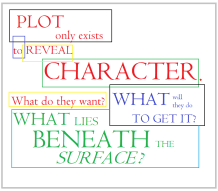
What does the protagonist want? Everyone wants something. The story is in if they acquire it or not. Doubt, uncertainty, the unknown—these nouns comprise the story.

This is where we have to sit and think a bit. Are we writing a murder mystery? A space-opera? A thriller? The story of a girl dealing with bulimia?

Let’s write a historical fiction.

My uncle fought in WWII in Ardennes and was wounded. He never discussed his wartime experiences, but I like to use that battle as my example for plotting. Here in the US, that battle is referred to as the Battle of the Bulge. A book about that battle may be compiled from personal accounts, interviews, photographs, and diaries. But the author must build the events of Ardennes in December 1944 and January 1945 out of words that express memories, opinions, and wishes.

Even though your novel about this battle may explore an Allied soldier’s experiences, in reality, this narrative is a fantasy because the events it explores have disappeared into the mists of a long-ago time. They now exist only in a few places:

  • military archives
  • newspaper accounts
  • history as written by the victors
  • the memories of a dying generation
  • the handwritten diary of the soldier
  • the author’s mind
  • the pages of the book you are constructing
  • the readers’ minds as they are reading

Plot-exists-to-reveal-characterWhere does our soldier’s story begin? We open the story by introducing our characters, showing them in their everyday world, and then we kick into gear with the occurrence of the “inciting incident,” which is the first plot point. That might be their arrival at their first camp in the Ardennes region.
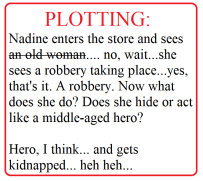
For our soldier, the inciting incident might be the orders that transfer him and his unit to Ardennes. After that, many things will occur before he and his fellow soldiers return home. Each event will range in intensity from the inconvenience of filthy living conditions to the unavoidable confrontation with the horror of war.

We will make a list, a ladder of events that give us landmarks to write to, like a connect-the-dots picture.

First, how long do you plan the book to be? If you plan to write 50,000 words, take that word count and divide it by 4. The first quarter opens our story and introduces the inciting incident. This is the moment of no return, even if our characters still believe they can salvage things.

The following two quarters are the middle of the narrative, exploring the obstacles that our soldier faces. If you are writing a historical novel, your plot will follow the historical calendar of actual events. The Battle of the Bulge was fought between 16 December 1944 and 25 January 1946, and reams of documentation still exist about that terrible month.

117th_Infantry_North_Carolina_NG_at_St._Vith_1945

117th Infantry North Carolina NG at St. Vith.

Your plot arc might include these events, but in chronological order:

  • Initial German assault
  • Attack on the northern shoulder
  • German forces held up
  • Germans advance west
  • German advance halted

Attack in the center: our soldier will either be with the US 30th Infantry Division at the Battle for St. Vith (Americans) or the Meuse River bridges (British 29th Armoured Brigade of 11th Armoured Division). He likely couldn’t be at both unless he was in the US Army Air Force.

  • Attack in the south
  • Allied counteroffensive
  • German counterattack
  • Allies prevail

You will connect those dots. Take each incident and write the scenes that our soldier experiences. You might also write scenes showing the commanders planning the offensives and switch to show the enemy’s plans.

No matter what sort of book you plan to write, this is all you need at first. It’s just a skeleton of the plot. You will write the scenes between these events, connecting them to form a story with an arc to it.

As we write, our soldier’s thoughts and interactions will illuminate and color in the scenes. His encounters, how he saw the enemy—were they people like him or were they faceless—all his emotions will emerge as you write his story.

No matter what genre we are writing in, you must introduce a story-worthy problem, a test that will propel the protagonist to the middle of the book.

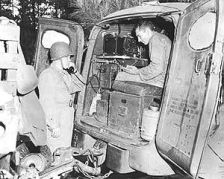
300px-SCR-299dooropen

US Army Signal Corps photo of SCR-299 radio set in operation 1942, US Army Signal Corps

This event is the hook. We raise a question and set the protagonist on the trail of the answer. In finding that answer, the protagonist is thrown into the action.

  • If you are writing genre fiction, get to the action quickly.

Drop the protagonist into the soup as soon as possible, even if the conflict is interpersonal. Some books open with a minor hiccup that spirals out of control with each attempt to resolve it. This is the place where the characters are set on the path to their destiny.

Some plots are action and adventure. Other books explore a relationship that changes a character’s life for good or ill, while others detail surviving hardship.

When do the protagonists first realize they’re utterly blocked from achieving their desired goal? Note this event on your outline somewhere in the first quarter. This is the moment our protagonist realizes their problem is much worse than they initially thought.

At this point, they have little information regarding the magnitude of the trouble.

This is where the skeleton list comes in handy for me. Crucial knowledge that affects my characters’ choices, the information they don’t have, should be doled out at the point in the story arc where they need it. If I give all the information in the first 10 pages, there’s no point in reading the book any further—the reader knows it all.

plottingLIRF07122020One thing that I do is make notes that help limit my tendency toward heavy-handed foreshadowing. I try to keep it brief, but what will be enough of a hint, and where should it go?
Subplots will emerge as we begin writing. It’s a good idea to note them on the outline as they come to you. In my opinion, side quests work best if they are presented once the book’s tone and the central crisis have been established. Good subplots are excellent ways of supporting the emotional parts of the story.

Now is the time to read in your genre and let your ideas simmer for a while. If you are writing in a fiction genre, read the bestsellers so you know what kind of plot the reading public is looking for. Don’t worry about inadvertently channeling their ideas—there is no such thing as a story that has never been told.

Whatever you write, you will take it one step further and give it your own spin.


Posts in this series:

#NaNoWriMo prep part 1: Deciding on the Project #amwriting

#NaNoWriMo prep part 2: Character Creation #amwriting

#NaNoWriMo prep part 3: Designing Worlds #amwriting


Credits and Attributions:

Wikimedia Commons contributors, “File:117th Infantry North Carolina NG at St. Vith 1945.jpg,” Wikimedia Commons, the free media repository, https://commons.wikimedia.org/w/index.php?title=File:117th_Infantry_North_Carolina_NG_at_St._Vith_1945.jpg&oldid=661386897 (accessed October 14, 2022).


14 Comments

Filed under writing

When your novel is only a novella #amwriting

Sometimes we find that our work-in-progress is not a novel after all. We get to the finish point, and that place might be only at the 40,000-word mark (or less).

WritingCraft_short-storyIn some circles, 40,000 words is a novel, but in fantasy, it is less than half a book.
You could try to stretch the length, but why? If you have nothing of value to add to the tale, it’s better to be known for having written a strong novella than a weak novel.

I’m a wordy writer but sometimes the finished work is shorter than I’d planned–a lot shorter. Then I have to make a decision. I could choose to leave it at the length it is now and have it edited. Or I could try to expand it.

If my beta readers feel the plot lacks substance at that length, I let it rest for a while then come back to it. Then I can see where to add new scenes, events, and conversations to round out the story arc.

Other times, the story is complete, but only about half the length of a novel. Sometimes this happens in the revision process.

In the second draft of any manuscript, I weed out many words and hunt for unnecessary repetitions of information. At that stage, the manuscript will expand and contract. It hurts the novelist in my soul, but the story may only be 35,000 words long when the second draft is complete.

I do a lot of rambling when trying to visualize the story. While I usually do it in a separate document, it often bleeds over into my manuscript. During the editing process, I sometimes find that besides the four chapters that don’t fit the plot anymore, three more chapters mainly deal with background info, and can be condensed into one.

CAUTION INFO DUMP ZONE AHEADA detailed history of everyone’s background isn’t required. As a reader, all we need is a brief mention of historical information in conversation and delivered only when the protagonist needs to know it.
Unfortunately, I sometimes forget to write it out in a separate document.

Once I condense rambling passages, I end up with a scene that moves the story forward.

Some other things to watch for in the second draft are areas where I have repeated myself but with slightly different phrasing. These are hard for me to pick out, but they can be found. I decide which wording I like the best and go with that.

Also, in the first draft, I use a lot of “telling” words and phrases I will later change or cut. I look for active alternatives for words and phrases that weaken the narrative:

  • There was
  • To be

When I change these words to more active phrasing, I sometimes gain a few words in the process as showing requires more words than telling.

But then I lose words in other areas. Again, I’m speaking as a reader here, but when reading conversations especially, it’s good for an author to use contractions. It makes the conversations feel more natural and less formal. It shortens the word count because two words become one: was not becomes wasn’t, has not becomes hasn’t, etc.

Most times, I can cut some words, even entire paragraphs. Often the prose is stronger without them, and these words need no replacement.

In the first draft, I regularly employ what I think of as crutch words. I can lower my word count when I get rid of them. These are overused words that fall out of my head along with the good stuff as I’m sailing along:

  • So (my personal tic)
  • Very (Be wary if you do a global search – don’t press “replace all” as most short words are components of larger words, and ‘very’ is no exception.)
  • That
  • Just
  • Literally

I have learned to be ruthless. Yes, I might have spent three days or even weeks writing a chapter that now must be cut. But even though I try to plot an outline in advance, the arc might change as I write the first draft. New events emerge, and I find better ways to get to the end than what was first planned.

It hurts when a really good chapter no longer fits the story. But maybe it bogs things down when you see it in the overall context. It must go, but that chapter will be saved. With a name change and perhaps a few place-name changes it could be the genesis of a short story.

I save everything I cut in a separate file, as I guarantee I will find a use for it later. I always have a file folder inside each master file labeled “Outtakes.” Those cut pieces often become the core of a new story, a better use for those characters and events.

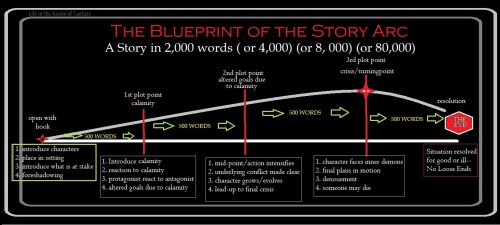
I have learned to pay close attention to the story arc. Once your first draft is complete, no matter how short or long, measure the story against the blueprint of the story arc.

blueprint-of-the-story-arc

  • How soon does my inciting incident occur? It should be near the front, as this will get the story going and keep the reader involved.
  • How soon does the first pinch point occur? This roadblock will set the tone for the rest of the story.
  • What is happening at the midpoint? Are the events of the middle section moving the protagonist toward their goal? Did the point of no return occur near or just after the midpoint?
  • Where does the third pinch point occur? This event is often a catastrophe, a hint that the protagonist might fail.
  • Is the ending finite, solid, and does it resolve the major problems? Even if this story is one part of a series, we who are passionate about the story we’re reading need firm endings.

Some people think they aren’t a real author if they don’t write a 900-page doorstop.

I tell them that it’s not important to have written a novel. Whether you write poems, short stories, novellas, or 700-page epic fantasies, you are an author.

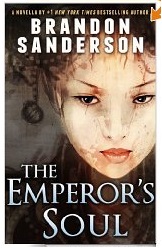
The Emperor's Soul - Brandon SandersonNovellas hold a special place in my heart. A powerful, well-written novella can be a reading experience that shakes the literary world:

  1. The Emperor’s Soul, by Brandon Sanderson
  2. A Christmas Carol, by Charles Dickens
  3. Breakfast at Tiffany’s, by Truman Capote
  4. Candide, by Voltaire
  5. Three Blind Mice, by Agatha Christie
  6. The Strange Case of Dr. Jekyll and Mr. Hyde, by Robert Louis Stevenson
  7. The Time Machine, by H.G, Wells
  8. Of Mice and Men, by John Steinbeck
  9. The Old Man and the Sea, by Ernest Hemingway
  10. Animal Farm, by George Orwell
  11. The Turn of the Screw, by Henry James

16 Comments

Filed under writing

How the Written Universe Works: The Inciting Incident #amwriting

Whether we show it in the prologue or the opening chapter, the first event, the inciting incident, is the one that changes everything and launches the story. The universe that is our story begins expanding at that moment.

the inciting incidentThe first incident has a domino effect. More events occur, pushing the protagonist out of his comfortable life and into danger. Fear of death, fear of loss, fear of financial disaster, fear of losing a loved one—terror is subjective and deeply personal.
I love stories about good people solving terrible problems, but I want them to mean something.

While I have experienced violent situations, I’ve also faced many things that shook my world but didn’t threaten my physical safety.

Arguments and confrontations are chaotic, leaving us wondering what just happened. We want to convey that sense of chaos in writing, but we must consider the reader. Readers want to see the scene and understand what they just read. We must design every action scene to ensure they fit naturally into a narrative from the first incident onwards.

The threat and looming disaster must be made clear to the reader at the outset. Nebulous threats mean nothing in real life, although they cause a lot of stress in our daily lives.

Those vague threats might be the harbinger of what is to come in a book, but they only work if the danger materializes quickly and the roadblocks to happiness soon become apparent.

Resolving disaster is the story. Hold the solution just out of reach for the following ¾ of the narrative. Every time we nearly have it fixed, we don’t, and things get worse.

The arc of the story begins with the first event, the inciting incident. The story’s arc occurs because the characters keep reaching for a resolution but can’t quite grasp it. Every attempt is blocked somehow.

959px-One_Ring_Blender_Render

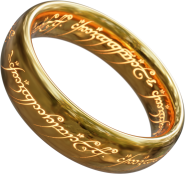
The One Ring, Peter J. Yost, CC BY-SA 4.0

The characters reap the rewards of minor successes but not the golden ring. Those small rewards keep hope alive and keep the reader involved.

If the first problem was taken care of too quickly, why? What sort of trap was laid, and why did the characters take the bait?

If we do this right, we will move our readers emotionally and they will remain invested in our book.

I mentioned that confrontations are chaotic. It’s our job to control that chaos and make a narrative out of it. Nothing upsets a reader more than a book where the author contradicts something that was said or that happened before.

I choreograph action sequences, which can take a little time. Each character’s reactions must be portrayed in such a way the reader doesn’t say, “He wouldn’t do that.”

In real life, people don’t all react the same way. So, our characters can’t all be superheroes in a fight scene. It’s easy to lose the characters’ individuality in the jumble of actions that a confrontation is.

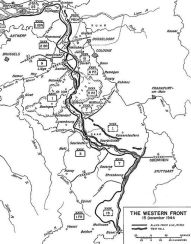
If your violence is war, go to history and see how battles were waged historically. Any war will do, but let’s say you are writing an account of a soldier’s experiences in modern warfare. Go to the Battle of the Bulgealso known as the Ardennes Counteroffensive.

512px-Western_Front_Ardennes_1944

US Army Center for Military History, Public domain, via Wikimedia Commons

I’ve used this battle as an example before because it was a pivotal point in World War II, and the placement of all the forces on both sides is well documented.

Also, one of my uncles fought and was wounded in that battle. Uncle Don came home with a metal plate in his head. American forces endured most of the attack, suffering their highest casualties of any operation during the war.

But you can look at any historical battle. Just remember that even though your book may explore a real soldier’s experiences, you are still writing a fantasy. The past is just hearsay, stories written by the victors. The future is a rumor that may not happen. The only moment that happens for sure is this moment, that moment you experience now.

Our characters exist in their own now, and the inciting incident kicks off their story. Perhaps the soldier’s inciting incident occurs when they join the army. From that point on, the actions and reactions of our soldiers must be logical even amidst the chaos of battle, or the reader will skip over that scene and possibly put the book down.

We make our characters knowable and likable (or not, as the case may be) through physical actions and conversational interactions. In the early part of the story, each scene should illuminate the characters’ motives. The reader must gain information at the same time as the protagonist does.

toolsHowever, the reader has an edge—they will be offered clues from the antagonists’ side, which the characters don’t know. The antagonist’s actions will affect the plot in the future. Even if the antagonist isn’t an overt enemy at the outset, the readers’ knowledge creates a sense of unease, a subliminal worry that things will go wrong.
Through the first half of the book, subtle foreshadowing is essential. This knowledge raises the stakes, increasing the tension.

Next week, we will look at ways to choreograph confrontations and violent encounters.

10 Comments

Filed under writing

Transitioning from scene to scene #amwriting

In my previous post, I showed how each scene is a small area of focus within a larger story and has an arc of its own. Small arcs hold up a larger arc. These arcs are created by events, and all the arcs form a cathedral-like structure that we call the story arc, which is the outer shell or the novel’s framework.

transitionsBy creating small arcs in the form of scenes, we offer the reader the chance to experience the rise and fall of tension, the life-breath of the novel.
Pacing is created by the way an author links actions and events, stitching them together with quieter scenes: transitions.

Transitions can be fraught with danger for me as a writer because this is where the necessary information, the exposition, is offered to the reader. This is the “how much is too much” moment.

In my first draft, the narrative is sometimes almost entirely exposition. This happens because I am telling myself the story, trying to get the events down before I forget them.

Every narrative has a kind of rhythm. While the characters might be in the midst of chaos, we must ensure there is order in the layout of the narrative.

  • action,
  • processing the action,
  • action again,
  • another connecting/regrouping scene

These “processing” scenes are transitions, moving the plot forward while allowing the reader to make sense of what just happened.

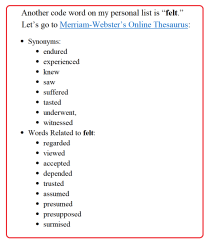
One word that slips into my first draft prose is the word “got.” It is a mental code word that I subconsciously used when laying down the story. This word signifies a small incident to revise in the second draft.

“Got” is on my global search list of “telling words.” The words in the list are signals to me, indications that a scene needs to be reworded to make it a “showing” scene.

Got:” He got the message = he understood.

Code_word_FeltCode words are the author’s first draft multi-tool—a compact tool that combines several individual functions in a single unit. One word, one packet of letters serves many purposes and conveys multiple mental images to the author.
In fact, all passive phrasing is a code. The author’s “subconscious writer” embeds signals in the first draft. It tells the author that the characters are transitioning from one scene to the next. They, or their circumstances, are undergoing a change. Is this change something the reader must know?

Each lull in the action should lead us into a new scene. When transitions are done right, readers won’t notice the narrative moving from one event to the next, as the progression feels natural.

Let’s look at two more code words for transitions:

  • Went
  • Thought

When I see the word “went,” I immediately know someone is going somewhere. It is a transition scene taking the characters to the next event.

I ask myself, “How did they go?” Went can be changed to any number of verbs:

  • walked
  • drove
  • rode
  • took
  • teleported
  • And so on and so on

You get the idea.

We can’t have non-stop action, as that is exhausting to write and more exhausting to read. The characters and the reader both need to process information, so the character arc should be at the forefront during these transitional scenes. That period of relative calm is when you allow your characters’ internal growth to emerge.

We allow the characters to justify the decisions that led to that point and plan their next move, making it believable.

The transition is also where you ratchet up the emotional tension.

We have more options than simply moving the characters from point A to point B, several paths to choose from.

strange thoughtsThought (Introspection):

  • Introspection offers an opportunity for new information to emerge.
  • It opens a window for the reader to see who the characters are and how they react and illuminate their fears and strengths. It shows that they are sentient beings, self-aware.

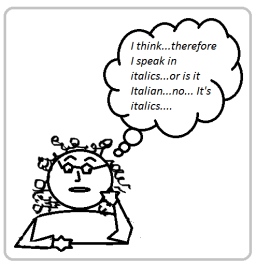
Keep the moments of mind wandering brief. Go easy if you use italics to set thoughts off. A wall of italics is hard to read, so don’t have your characters “think” too much if you use those.

  • Characters’ thoughts must serve to illuminate their motives at a particular moment in time.
  • In a conversation between two characters, introspection must offer information not previously discussed.
  • Internal monologues should not make our characters all-knowing. It should humanize them and show them as clueless about their flaws and strengths. It should even show they are ignorant of their deepest fears and don’t know how to achieve their goals.

Sometimes we have more than one character with information the reader needs to make sense of the next event.

The key is to avoid “head-hopping.” The best way to avoid confusion is to give a new chapter to each point-of-view character. Head-hopping occurs when an author describes the thoughts of two point-of-view characters within a single scene.

Visual Cues: In my own work, when I come across the word “smile” or other words conveying a facial expression or character’s mood, it sometimes requires a complete re-visualization of the scene. I look for a different way to express my intention, which is a necessary but frustrating aspect of the craft.

Fade-to-black is a time-honored way of moving from one event to the next. However, I don’t like using fade-to-black scene breaks as transitions within a chapter. Why not just start a new chapter once the scene has faded to black?

One of my favorite authors sometimes has chapters of only five or six hundred words, which keeps each character thread truly separate and flowing well. A hard scene break with a new chapter is my preferred way to end a fade-to-black.

Chapter breaks are transitions. As we write, chapter breaks fall naturally at certain places.

Conversations can serve as good transitions that propel the story forward to the next scene. However, they can easily become info dumps. In literary terms, a good conversation is about something we didn’t know and builds toward something we are only beginning to understand.

DangerThat is true of every aspect of a scene—it must reveal something we didn’t know and push the story forward toward something we can’t quite see.

The transition is the most challenging part of the narrative for me to formulate in the first draft. I get stuck, trying to decide what information needs to come out and what should be held back.

The struggle to connect my action scenes into a seamless arc is why writing isn’t the easiest occupation I could have chosen.

But when everything comes together, writing is the most satisfying job I have ever had.

4 Comments

Filed under writing