
The town I grew up in bears little resemblance today to the place it was ten years ago. New subdivisions have arisen along what used to be country roads. New shopping centers now exist in areas where few people once lived. The local municipalities have replaced stop lights with roundabouts at intersections that see heavy traffic.
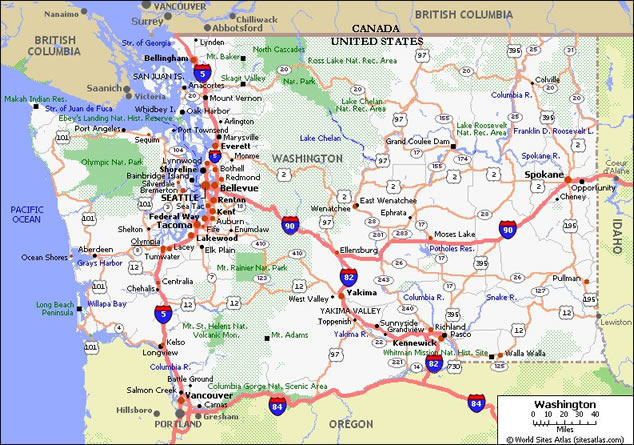
 Traffic along the I5 corridor has become unmanageable. Why is this so? All one has to do is look at a map.
The Puget Sound Basin is a narrow, winding corridor of valleys that run between the Cascade Mountains and the Salish Sea. This lowland stretch of valleys and rivers has been the trail from the Columbia River in the south to British Columbia since before Europeans arrived here. Indigenous people used this route as the main trading trail for thousands of years.
Unfortunately, Mother Nature didn’t plan for eight-lane freeways, and adding more lanes to I5 is not feasible.
We on the West Coast live in an active earthquake zone, so a double-decker highway isn’t a popular idea with those of us who must travel it. Their danger here was made apparent in the 1989 Loma Prieta earthquake – Wikipedia.
Cities grow where there is access to fresh water and sufficient food to supply their population. In the lowlands of Western Washington State, food from both land and sea and fresh water are plentiful.
 So how does this long-winded discussion of the history of my local terrain relate to worldbuilding?
No matter what genre you are writing in, maps are excellent multipurpose tools.
Maps show you the world. If you are writing a contemporary story set in your town, printing out a Google map keeps you from forgetting how long it takes to get from one point to another. I live in Olympia. Seattle is seventy miles north and Portland is around 112 miles to the south.
If my characters need to go to either city, it will take all day to go there, meet the appointment, and return to Olympia. They might even plan to stay overnight rather than drive home in the dark and pouring rain.
I write fantasy. In my world, people travel on foot and on horseback, but if they must go somewhere far away, they won’t push themselves to go more than twenty miles a day, unless there is a valid reason.
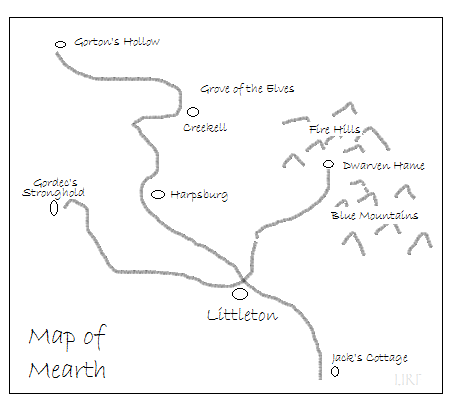 That distance is doable, assuming the weather is good, the road is fairly decent, and the characters are healthy. Small villages will crop up at intervals of five to ten miles apart, places where travelers might purchase food, or maybe even find shelter for the night.
Otherwise, they will be camping.
I love maps. My own maps start out in a rudimentary form, just a way to keep my work straight. I use pencil and graph paper at this stage, because as the rough draft evolves, sometimes towns must be renamed. They may have to be moved to more logical places. Whole mountain ranges may have to be moved or reshaped so that forests and savannas will appear where they are supposed to be in the story.
Perhaps you think you don’t need a map, and maybe you don’t.
However, if your characters are traveling and you are writing about their travels, you probably should make a rudimentary map. All you need is a few lines scribbled to indicate a trail or road, an indication of where mountains and water lie in relation to the trail, and a few marks indicating where the towns are.
I always make a map because, if am not really on top of it, the spelling of town names might accidentally evolve over the course of the first draft. Maudy will become Maury (this did happen), and distances will become too mushy even for me. The map is my indispensable tool for keeping my story straight.
What should go on a map? When your characters are traveling great distances, they may pass through villages on their way, and if these places figure in the events of the book, they should be noted on the map. This prevents you from:
- Accidentally naming a second village the same name later in the manuscript.
- Misspelling the town’s name later in the narrative.
- Forgetting where the characters were in chapter four.
Events and confrontations might impede your characters. Make a note of where they occurred.
If they are pertinent to the story, you will want to note these locations on your map so that you don’t contradict yourself if your party must return the way they came:
- rivers
- swamps
- mountains
- hills
- towns
- forests
- oceans
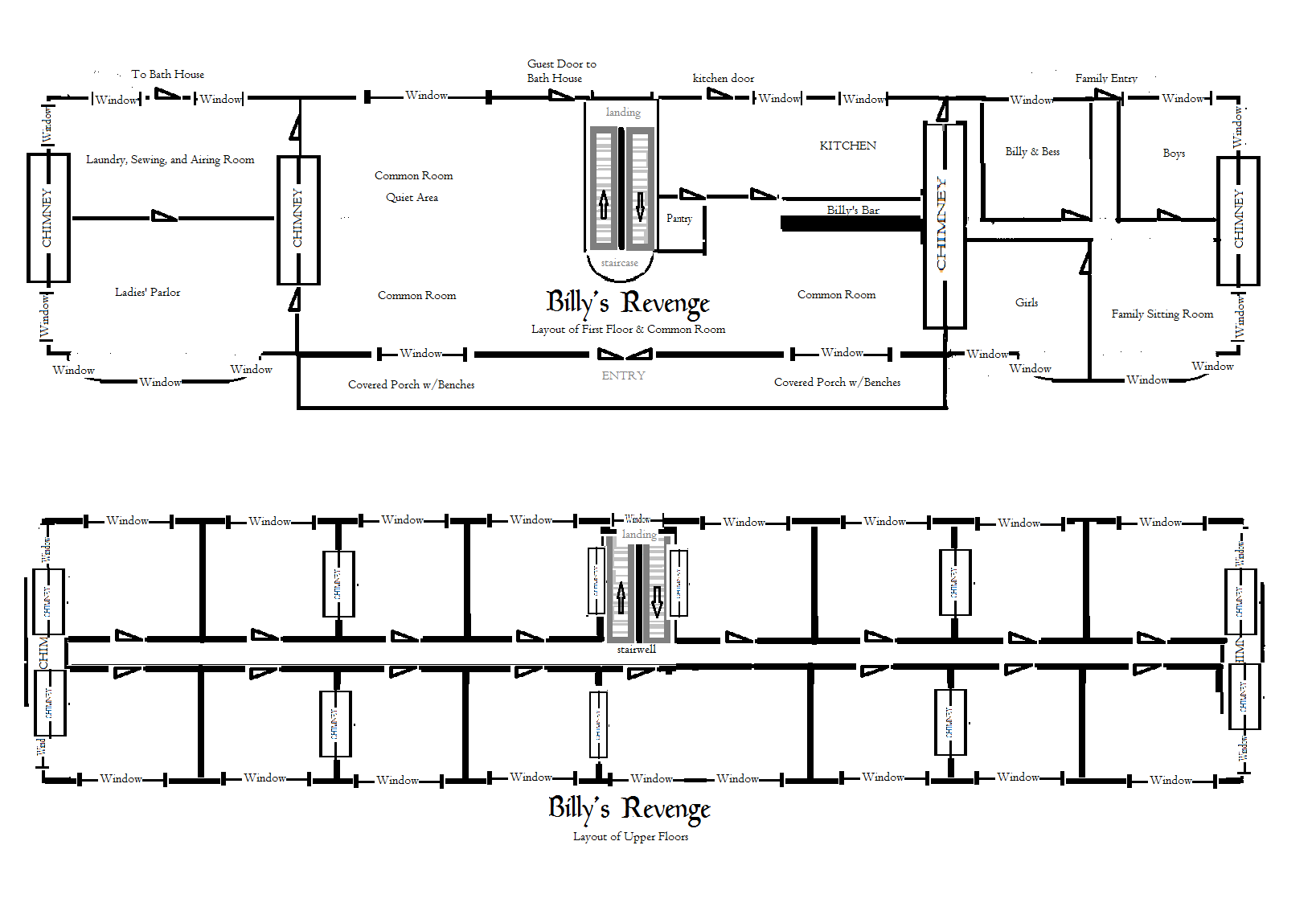 If your work is sci-fi, consider making a map of the space station or ship. Billy Ninefingers, is set in a wayside inn. I made a drawing of the floorplan and little map of the village because the inn is the world in which the story takes place. As far as distances in space go, I am not qualified to explain what is possible or not. For that, you need to do some research and look at current theories.
If you are writing fantasy, I suggest you keep the actual distances mushy because some readers will nitpick the details, no matter how accurate you are. Yes, you wrote it, but they don’t see it the way you do. This is because their perception of a league may be three miles while yours might be one and a half.
Historically, a league was the distance one could walk in an hour. Even though a league has no finite length, some readers will become so annoyed by this that they will give your book a three-star review, simply because they disagree with the length of time your character took to travel a certain distance.
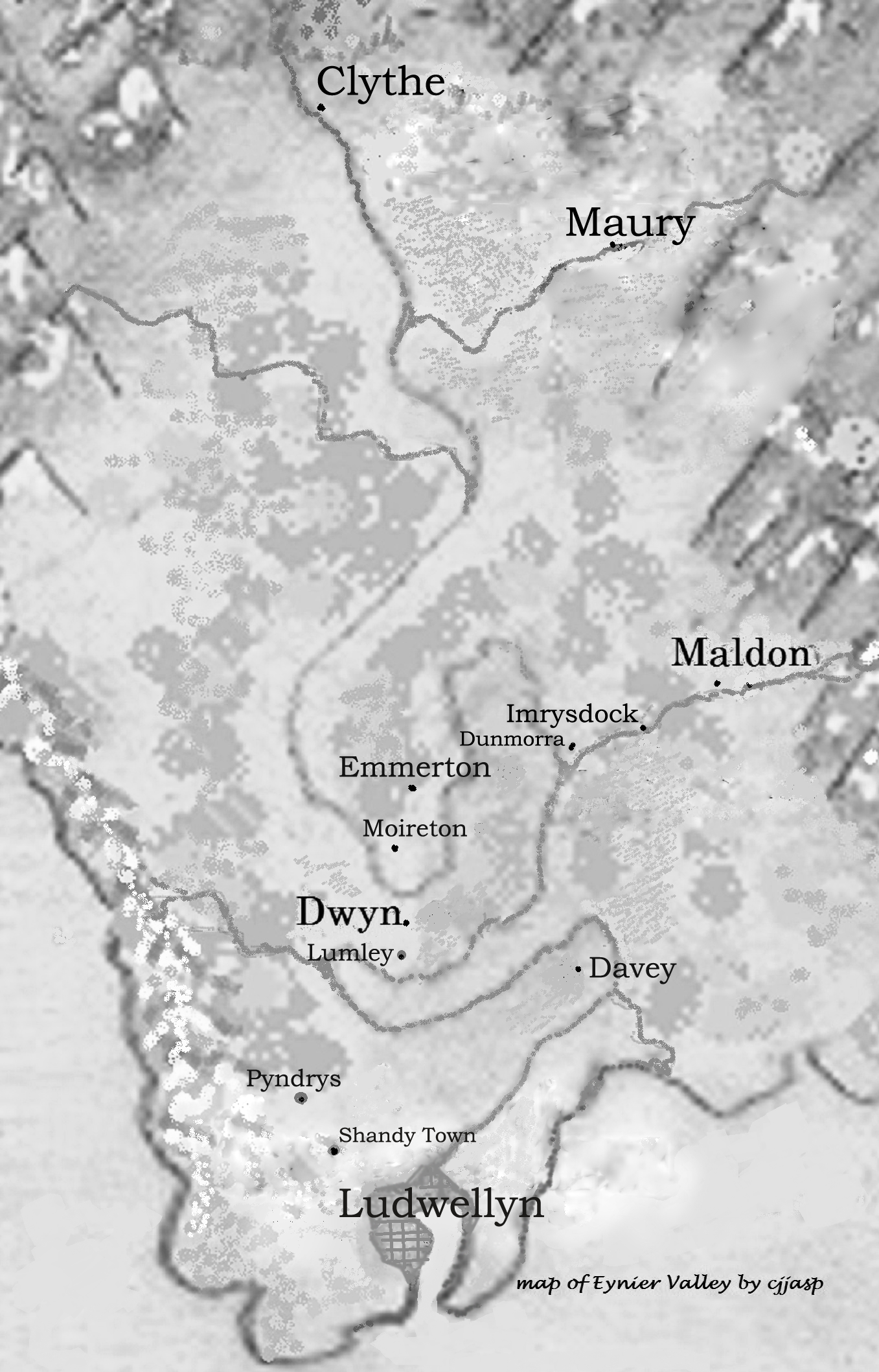
Huw the Bard is a good example of that. In the novel, Huw, (pronounced Hugh) takes two months to travel between the city of Ludwellyn and the village of Clythe. In his story, Huw Owyn is walking through fields, woods, and along several winding rivers for the first half of his journey. Somedays, he is unable to travel at all.
He must backtrack as frequently as he goes forward in an effort to sneak around those who are hunting him. It’s only safe for him to walk on the main road once he makes it to Maury, weeks after fleeing Ludwellyn.
©connie j jasperson 2014 – 2026
It is a stretch of road that he could have done in two weeks if he had been able to stay on the main road. But that inability to make progress creates opportunities for tension and mayhem.
Many readers (like me) love finding fantasy novels that include maps. If you are writing fantasy but feel your hand-drawn map isn’t good enough to include in the finished product, consider hiring an artist to make your map from your notes. Because I am an artist, my pencil-drawn map always evolves into artwork for the book.
Your mind is the medium through which the idea for a novel or story is filtered, and words are how it is made real. The key to making both fiction and non-fiction real for the reader is subtle but crucial: worldbuilding. Maps, no matter how rudimentary, are the foundation of worldbuilding in my writing process.



 Life in the Realm of Fantasy