Tag Archives: using contrast in writing

Exploring theme and morality: contrasts #writing

A few years ago, I wrote a short story for an anthology on the theme of Escape, published by the Northwest Independent Writers Association (NIWA). My story was titled “View from the Bottom of a Lake.” The genre of that story is not fantasy, although it is a dream, a memory of a time gone by.
One of the requirements for that anthology was that all stories must be set in the Pacific Northwest. I set mine in an environment I knew well, the shore of the lake that dominated my early years. With my setting established, I went online and looked up every synonym for the second requirement, which was the theme: “escape.”

Then, after I had all the synonyms, I looked for the antonyms, the opposites.

Capture. Imprisonment. Confront.
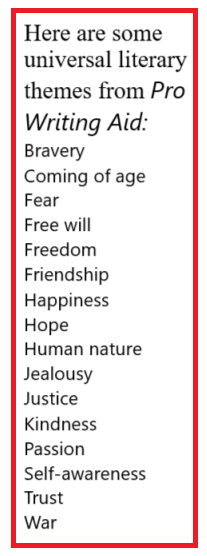
Universal Literary Themes such as braverym coming of age, etc.Once I had a full understanding of all the many nuances of the theme, I asked myself how I could write a story set in an environment I knew and loved. My solution was to set it in the late 1950s. Anything that is history may as well be fantasy because the victors write the history books.

Then, I began plotting.

The main theme of escape had to form the backbone of the plot, that was a given. I asked what my character needed most in her effort to escape. My gut answer was courage.

The first subtheme, the one that formed my main character, was courage. She is underage, fearful of her narcissistic mother, and armed with the knowledge of what she must do to escape.

Every day, she escapes her mother’s disdain by swimming in the lake and staying underwater as long as she can. In those brief moments of freedom, she plans for her long-term escape, determined that once she goes away to college, she won’t return. Her grandmother, who is also a prisoner in that household, is determined to help her escape by paying for her education.

Plot is the frame upon which the themes of a story are supported.The story loops around my protagonist’s fractured family and their twisted relationship with the nearest neighbors.

The second subtheme is hypocrisy. This is a theme of morality, of “do as I say, not as I do.” The parents live out their failed dreams through their children. The girl is forced to take ballet lessons that she despises, and the boy must play football. The girl’s mother is a former ballerina who got pregnant and had to get married, ending her career before it got started. The boy’s father’s glory days were his years as a small-town jock, before WWII changed everything.

In their social world, appearances are everything. And everything is colored by her mother and his father and what everyone knows but cannot speak of.

The final subthemes of that story are hope and perseverance, and in many ways, those themes are the most important.

For the girl, romance with the boy next door is still only a possibility, but the seeds are there through their lifelong friendship. Their plans will come to fruition if only they can survive their senior year and graduate with high grades. All they have to do is endure the pressure cookers of their homes for one more year, and they will achieve their post-high school dreams.

Thus, contrasts drive that short story, and strong themes enabled me to write that tale in three days. The brilliant Lee French was the editor for Escape, and her input was invaluable. View from the Bottom of a Lake is (in my opinion) my best work. Ever.

So, what can I take from that experience to breathe life into my current work-in-progress?

First, I need to identify the overall theme for this half of the story. A comprehensive list of literary themes can be found here: A Huge List of Common Themes – Literary Devices.

The main theme, as I see it now, is two-fold. The theme of religion is explored in the war of the gods, and how a lust for power corrupts one of them.
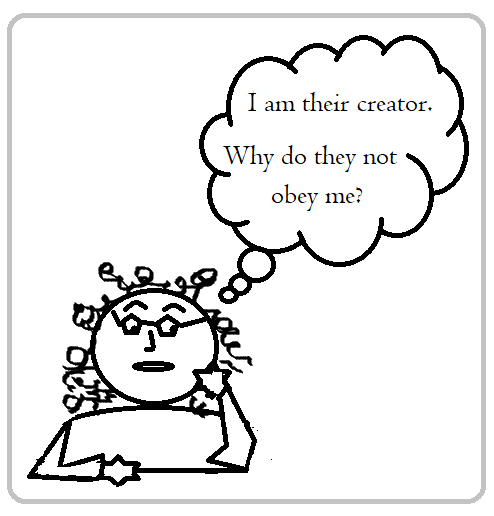
Cartoon: I am their creator. Why do they not obey me?The mortals are the playing pieces in their great game. For the people who must live their lives in the shadow of this war, the more immediate theme of change in the face of tradition underpins the plot. It is explored through the protagonist’s quest to save his people despite their stubborn clinging to xenophobic traditions.

  • My protagonists do have some allies, but they must unite the tribes and convince them of the danger presented by the antagonist.
  • My antagonist knows how the more traditional tribes fear change and ruthlessly stokes that fire.

The enemy presents himself as the man who will keep to the old ways, even though it means abandoning the Goddess Aeos and switching their loyalty to the Bull God. He lies to them about that minor detail, but justifies it as a good lie, a necessary lie.
The 3 S(s) of worldbuilding: Sight, Sound, Smell.So, a third subtheme that runs through the second half of this story is morality. The antagonist can manipulate things and people to achieve his goals. He doesn’t see this as immoral. While the villain is spreading disinformation, the protagonist must try to convey the truth to people who don’t want to hear it. He must convey the facts in such a way that even the staunch traditionalists will see how the antagonist manipulates them.

In real life, everyone is a mass of contradictions we aren’t really aware of. Sometimes, it helps if I use polarities (opposites, contrasts) to flesh out a character. They help me flesh out the protagonist and also the antagonist.

  • courage – cowardice
  • manipulative – honorable
  • truth – misinformation

Now, while I fill in the plot, I am also noting ideas that will support the themes as they come to me. Good use of contrasts will (hopefully) illuminate my characters’ motives and intentions as they work toward the final goal.

Over the next year, I will expand on all these themes and bring this epic to the desired conclusion.

I talk a lot about craft, and yes, it is important. But I believe the most important aspect of the writing process is to have passion for the characters and their story. Writing always flows well when I am emotionally involved.

How is your writing going? Are you able to stay emotionally involved with the characters and their lives?Doing the math: Character + Objective + Risk = Story
Leave a comment

Filed under writing

Employing contrast in the architecture of a story #writing

There is a quote from the Buddha that I have found especially true for creating a great story. “There has to be evil so that good can prove its purity above it.”

J.R.R. Tolkien understood this quite clearly. His work was written in a highly literate style that everyone understood a century ago. Reading the Lord of the Rings trilogy requires commitment, and today, fewer readers are willing to undertake it.

Tolkien employs contrasts throughout the length of his stories. He shows the peace and prosperity that Frodo enjoys and then asks him to choose his destiny. Frodo chooses the difficult path. Tolkien takes the hobbit and all the central characters through many personal changes. He forces them to face their fears, gives them reasons to continue, to not give up.

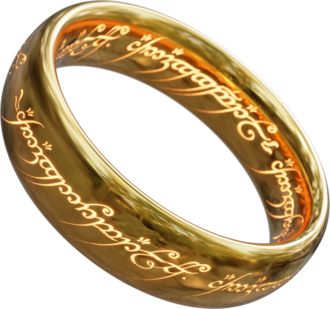
Frodo’s story is about good and evil, war and peace, and the hardships endured in the effort to destroy the One Ring and negate the power of Sauron. So why would ordinary middle-class hobbits living comfortable lives go to so much trouble if Sauron’s evil posed no threat to their peace and prosperity?

They do it because they can see that in the long run, Sauron’s orcs would overrun the Shire and destroy everything good and beautiful.

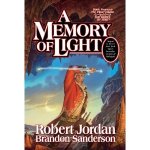
Lengthwise, the three books aren’t as long as people make them out to be, especially when compared to Robert Jordan and Brandon Sanderson’s long and winding 15-book Wheel of Time series (comprised of 4,410,036 words) or Tad Williams’ epic and highly literate Memory, Sorrow, and Thorn series (comprised of 1,121,720 words).

Tolkien’s trilogy totals only 455,175 words, which is considered an optimal length for a debut series in the epic fantasy genre. Fans of epic fantasy like and expect long books with large stories.

Whenever I talk about what we can learn from Tolkien, someone will respond that Tolkien wrote in a style that 21st-century readers find frustrating. Certainly, he used more words than a modern writer would dare to. A 21st century writer would face the slings and arrows of the modern critique group.

But while his style is more wordy than modern taste, his work is still compelling. He still has plenty to say that can resonate with us. In the process, he takes us on a journey with side quests and an epic, wonderful ending that was somehow left out of the movies – the Scouring of the Shire.

Hint: Yes, reading the books requires persistence, but if you want the real story and don’t have the time or patience, the audiobooks, as narrated by Andy Serkis (who played the role of Gollum in the movies), are a must-listen.

With the Ballantine Books paperback edition in 1965, J.R.R. Tolkien brought epic fantasy to my generation of college students. In the 1970’s, in my college town, the graffiti in downtown Olympia read “Frodo Lives.”  Frodo Lives! – Wikipedia

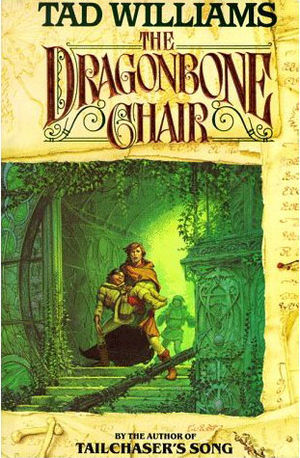
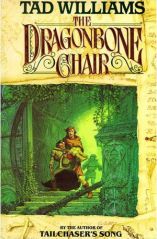
But how did Tolkien’s style of storytelling influence the genre as we know it today? For that, we take a look at Tad Williams’s masterpiece, The Dragonbone Chair. It’s the first book in the fantasy series Memory, Sorrow, and Thorn. It was published in 1988 and hooked me.

Williams takes the fourteen-year-old Simon, a kitchen boy, and Miriamele, a princess, and gives them an epic quest. He brings them together and then forces them down separate paths that eventually rejoin. Along the way, they grow into adulthood, and what they learn about themselves is both bitter and wonderful.

I read The Dragonbone Chair when it first came out in paperback. I loved it so much, I had to re-read it immediately upon finishing.

In both the Lord of the Rings trilogy and Tad Williams’ Memory, Sorrow, and Thorn, we have two of the most enduring works of modern fantasy fiction. Both feature an epic central quest and side quests, all of which must be completed for the protagonists to arrive at the final resolution.

In both series, we have moments of joy and contentment sharply contrasted with events causing terrible deprivation and loss. Each event urges us to keep reading, inspiring the deepest emotions and the desire to find out what happens next.

This use of contrast is fundamental to the fables and sagas that humans have been telling since before the discovery of fire. Contrast is why Tolkien’s work is the foundation upon which modern epic fantasy is built. The way Tad Williams wrote his characters, and his trimmed down prose further modernized the genre, but he kept the tropes of an engaging narrative, epic quests, and diverse fantasy cultures and races.

When the author employs the highs and lows of our human experience to tell their story, the reader empathizes with the characters. They live the story as if they were the protagonist.

And what about contrasts in world-building? It can be shown in subtle ways.

Juxtaposing plenty and poverty in your worldbuilding shows the backstory without requiring an info dump. Contrast and good pacing turns a wall of words into something worth reading.

In our real world, war, famine, and floods are followed by times of relative peace and plenty. The emotions and experiences of people living through all those times are the real stories.

This is not just a concept found in fantasy novels; it’s a part of our human history and our future.

We shouldn’t limit our reading to the old favorites that started us on this writing path. You may not love the novels on the NY Times literary fiction bestseller list, but it’s a good idea to read one or two of them every now and then as a means of educating yourself. We learn the architecture of stories by reading and dissecting novels and short stories written by the masters, both famous and infamous.

What you don’t like is as important as what you enjoy. Why would a book that you dislike be so successful? No matter how much money a publisher throws at them, some books are stinkers.

You don’t need to pay for books you won’t like. Go to the library or to the secondhand bookstore and see what they have from the NYT bestseller list that you would be willing to examine.

Give that book a postmortem.

  • Did the book have a distinct plot arc?
  • Did it have a strong opening that hooked you?
  • Was there originality in the way the characters and situations were presented?
  • Did you like the protagonist and other main characters? Why or why not?
  • Were you able to suspend your disbelief?
  • Did the narrative contain enough contrasts to keep things interesting?
  • By the end of the book, did the characters grow and change within their personal arc? How were they changed?
  • What sort of transitions did the author employ that made you want to turn the page? How can you use that kind of transition in your own work?
  • Did you get a satisfying ending? If not, how could it have been made better?

Reading and dissecting the works of successful authors is a necessary component of any education in the craft of writing.

When you read a book that you like or dislike, think about how you can apply what you learn to your own work.

I say this regularly, but I must repeat it – getting an education about the craft of writing is important. If you have a good library in your town, this sort of education is free, a price that fits my budget perfectly. What I learn from the masters helps me to plan the pacing, helps me balance the emotions and events in my own stories.


4 Comments

Filed under writing

#Writing the Disaster 

Severe weather, fires, famines, and floods are terrible to live through, and many harrowing stories emerge from these experiences. Stories of apocalyptic catastrophes resonate because disaster drives humanity to strive for greater things. Those who survive and rise above it become heroes.

One disaster we may all face at some point is famine driven by climate change. Hunger exists in this world, and famine is an enemy that takes no prisoners.

Food deprivation can have a lasting impact on a person. People can survive on very little, and unfortunately, many do. To go without adequate food for any length of time changes you, makes you determined to never go hungry again. You stockpile preserved foods in times of plenty as a shield against the next famine.

Unfortunately, for some, hunger will lead them to make choices that challenge the accepted morality of those who have no concept of what hunger truly is.

If you are looking for the seeds of a good story, consider the small tragedies people face each day, deeply personal catastrophes. These disasters happen on what seems an unimportant level to people who have resources.

I have used this example before, but it’s a real-life situation, one that may be familiar to you and your community. A young widow is working two part-time jobs and raising her two small children. How would you write her story? Perhaps she lives in an area with no public transportation. She struggles to pay for fuel, but what if her car breaks down? How will she get to work?

All her money goes to fuel, childcare, rent, and utilities. What little she has left after those bills are paid goes to food. She has no resources and no means to pay for car repairs. Without her car, she will lose both jobs. That is a profoundly personal disaster, one from which she and her children might not recover.

But maybe that plot isn’t big enough to inspire you to write a book about it. Perhaps you want to write about a disaster that inspires heroics in the face of widespread devastation. The world itself can provide us with plenty of drama. Wildfires, floods, tornadoes, hurricanes, earthquakes, tsunamis – these catastrophes regularly destroy thousands of communities.

courtesy Office360 graphics

Once we have introduced our characters and set the scene, it’s time to bring on the natural disaster. When you begin writing the story, it will be chaotic. Just get the bones of the events down as well as you can and move on. You must get the entire story down while it is fresh.

In the first draft, write each scene as fast as you can, and don’t worry about fine-tuning it because you will come back to it later. The second draft is where you will iron out the rough spots and make things logical.

In the second draft, we take apart the scenes where we have told the story and reword them. We show the events as if we were painting with words. We use power words to inject real, believable emotion into the experience.

The window shatters, and a two-by-four impales itself in the wall beside David amid a shower of glass shards. I stare, dumbstruck, as the wind tears the door from my hand and slams it against the wall.

Verbs in that scene are: stare, impales, shatter, tears, and slams. Show the bones of the event by using verbs with powerful visuals, and the reader’s mind will fill in the rest.

I suggest you open a new document and describe the disaster in great detail. Then save it as background material for that story and walk away from it. Let it rest, and move on to something else. When you return to it, read it aloud and see what you can cut and condense and still have the bones of the action. As always, verbs and power words are action’s best friend.

Droughts often cause famines and worse. To go without water is to die. Thirst is a more immediate pain than hunger. The human animal can survive for up to three weeks without food but only three to four days without water. Rarely, one might survive up to a week.

Even brackish water must taste sweet when one suffers from a lack of potable water. And when one is starving, foods they would consider repugnant under other circumstances will fill their belly.

Look at the continual strife in some third-world countries. You will see how long-term droughts have precipitated widespread famine, leading to civil unrest. Gang wars are fought over the right to own a water source, and these conflicts can erupt into revolution.

We often forget this when we have plenty to eat and never have to worry about whether we will have water in our faucet as long as we can pay the bills. However, if we learned anything from the empty grocery store shelves in 2020 and the subsequent supply chain crisis, it is that our well-fed lives are standing on a one-legged stool.

Once the events of the disaster are on paper the way we want them, we have the opportunity to ratchet up the reader’s emotions by the way we portray the aftermath. Who finds strength through the calamity, and who is broken by it? What roadblocks do they face, and how do they recover?

We must complete the story and provide the reader with some closure by ending with our characters in a place of comparative happiness and security.

Drama, heartache, disaster, and violence are the backdrop against which humanity’s story plays out. The most powerful books in the Western Canon of Great Literature explore both the good and evil of the human experience.

We connect with these stories across the centuries because the fundamental concerns of human life aren’t unique to one society, one technological era, or one point in time. We all want enough food, enough water, and reliable shelter.

When we contrast ease with hardship, we add emotional texture to our narrative. I love a good story featuring courage in the face of personal disasters. Readers like me will think about the story and those characters long after it has ended.

5 Comments

Filed under writing

The Story is in the Drama #amwriting

Drama and disaster can and will happen on a wide scale in our real lives. Tornadoes, hurricanes, earthquakes, volcanoes, droughts—the path of a natural disaster is erratic. Sometimes they miss you, and other times, your home is in their way.

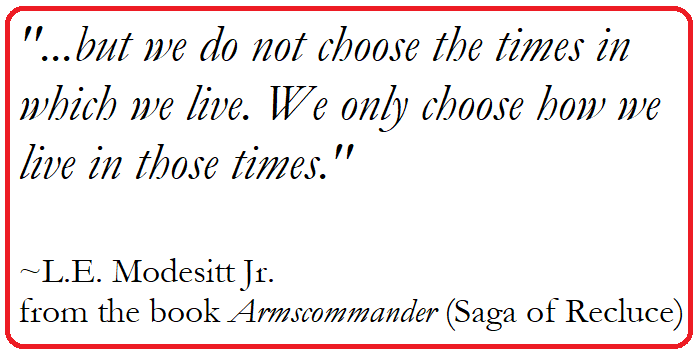
modesitt quote the times we live LIRF11012022Lesser dramas might only touch us on a peripheral level, yet they can affect our sense of security and challenge our values.
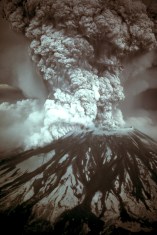

On May 18th, 1980, my friends and I watched the eruption of Mt. St. Helens from atop a hill in the middle of nowhere. My children had visited their father for the weekend, so my friends and I planned a fishing trip to a beaver pond in the next county. It was a long drive on narrow, dirt logging roads, but the possibility of trout for supper was just an excuse for a day spent in the deep forest.

We loaded our gear into my boyfriend’s Land Rover and set off at about 5:00 am, all five of us laughing and having a great time. The radio never worked, but the cassette deck played Led Zeppelin, Robin Trower, Genesis, and Ritchie Blackmore’s Rainbow as the soundtrack to our trek through the gorgeous country.

At about 09:00, we came up over the top of a treeless hill. The view was breathtaking, as if all of Lewis County lay before us in springtime glory.

Above it all towered a sight I will never forget, turning the blue sky black.

MSH80_eruption_mount_st_helens_05-18-80-dramatic-edit

Eruption of Mt. St. Helens May 18, 1980 Public Domain, via Wikimedia Commons

Conversations suddenly silenced, and we stopped, turning the engine off. We got out and stared, first at the raging column of dust, rocks, and lightning that dwarfed the mountain and then at each other. Helicopters and airplanes from news agencies and the USGS circled like so many carrion birds. What so many people had thought was just hysteria was true—the mountain had blown.

We never did make it to the beaver pond. The only fish we caught that day were the tuna sandwiches we had packed. Conversations were sober as we picnicked on that hilltop and watched the incredible show.

We had no way of hearing the news, but we knew it was terrible, that some people had died and others had lost everything. We had no idea just how bad it was, that one of our favorite places to fish, the Mount St. Helens Lodge at Spirit Lake, had disappeared along with its cantankerous owner. Harry R. Truman had become famous in the weeks before the eruption for refusing to evacuate.

Toward midafternoon, we returned to Olympia, all of us grateful to have homes to go to. When I turned on the television and found that more than fifty people had lost their lives, I felt devastated for them.

The true story of that day in my life is in disaster contrasted against calm and tranquility.

The story is in the hectic start to the morning, of five friends off on a day trip to go fishing. It is in the peace of the deep woods along those old dirt roads.

640px-St_Helens_before_1980_eruption_horizon_fixedThe camera zooms out and now we see the idyllic serenity of a clear sunny morning on Spirit Lake and Harry doing his morning chores.
This allows us to see what will be lost.

Then disaster strikes. The side of the mountain gives way, and the eruption is on.

Contrast that catastrophe against five people serenely picnicking on a hill, observing the apocalypse as it happens. The drama is in old Harry R. Truman’s stubborn end, and how it didn’t occur to us who watched from a distant hill that we would never rent a boat from him or fish in that lake again.

The bad juxtaposed against the good is the plot, but the experiences of those who witnessed it is the story. Contrast provides drama and texture, turning a wall of “bland” into something worth reading.

Stories of apocalyptic catastrophes resonate because disaster drives humanity to bigger and better things, and those who survive and rise above it become heroes. Readers love the drama of it all.

Disaster isn’t always apocalyptic, though. Dramas regularly happen on what seems an unimportant level to people who have resources. Not everyone has money, and not everyone can surmount the odds. The story is in the battle.

Think about those small daily tragedies people face, deeply personal catastrophes, which only they are experiencing. Love and loss, safety and danger, loyalty and betrayal are the eternal themes of tragedy and resolution. These are the seeds of a good story.

30 days 50000 wordsWe writers must make our words count. We must show our characters in their comfort zone in the moments leading up to the disaster. Not too much of a lead in, but just enough to show what will soon be lost.
Then, we bring on the disaster and attempt to write it logically, so it makes sense.

Contrast is a crucial aspect of worldbuilding and storytelling. In the end, we want readers to think about the story and those characters long after the last paragraph has been read. Drama and resolution are the keys to a great story.

Comments Off on The Story is in the Drama #amwriting

Filed under writing

Using Polarity #amwriting

When I get into revisions, I often find my characters seem two-dimensional. Certain passages stand out because the characters have life, an intensity that feels palpable.

Others, not so much.

ContrastsI aspire to write like my heroes, authors who create characters who come alive. While I’m in that world, I see the people and their stories as sharply as the author intends.
Some of my work manages to find that happy place, but other passages feel flat, lacking spark. That is where I look at contrast – polarity. When I use polarity well, my narrative makes my editor happy.

I know I say this regularly, but word choice matters. How I choose to phrase a passage can make an immersive experience or throw the reader out of the book. Sometimes I am more successful than other times.

My goal is to make vivid sensory images for my readers, but not one that is hyper-dramatic and overblown. Subtlety in contrasts is as essential as painting a scene with sweeping polarities. They both add to the texture of the narrative but must be balanced for optimal pacing.

Poets understand and use polarity. John Keats used both polarities and similes in his work. The last stanza of To Autumn begins with this line:

“Or sinking as the light wind lives or dies;”

We see one obvious polarity in that line, and also a sneaky one:

  • Lives or dies is a clear polarity.
  • Sinking implies heaviness, and Keats contrasted it with light wind, a less weighty, gentler sensory experience, the opposite of the weight of sinking.

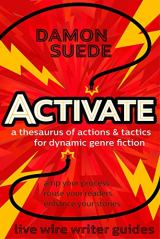
activatePolarity gives the important elements strength. It provides texture but often goes unnoticed while it influences a reader’s perception.
The theme is the backbone of your story, a thread that binds the disparate parts together. Great themes are often polarized: good vs. evil or love vs. hate.

Think about the theme we call the circle of life. This epic concept explores birth, growth, degeneration, and death. Within that larger motif, we find opportunities to emphasize our subthemes.

For example, young vs. old is a common polarized theme with many opportunities for conflict. Both sides of this age-old conflict tend to be arrogant and sure of their position in each skirmish.

Wealth vs. poverty allows an author to delve into social issues and inequities. This polarity has great potential for conflict, which creates a deeper narrative.

In my current outline, I seek to see beyond the obvious. I am searching for the smaller, more subtle contrasts to instill into my work. My intention is that these minor conflicts and hindrances will build toward each major plot point and support the central theme and add texture to the narrative.

This outline is evolving into a mystery. The main character is a peacekeeper who must solve it. To that end, I am inserting clues into the outline, guideposts for when I begin the first draft. On the line that details the plot arc for each chapter, some of those words will have antonym’s listed beside them, opportunities for roadblocks.

The theme of justice looms large in this novel. Hopefully, I can make this plot worthy of the characters I’ve created and who stand ready for NaNoWriMo.

Contrast is the fertile soil from which conflict grows. It can make protagonists more interesting, and in worldbuilding, it underscores the larger theme with less exposition.

Contrasts within the narrative shape the pacing of the action, as ease is contrasted against difficulty. In my projected piece, justice as a theme allows for many contrasts. Justice only exists because of injustice.

Polarity is a sneaky way for each word’s many nuances to raise or lower the tension in a scene.

Let’s look at the word cowardice. Cowardice is a gut reaction to fear. In real life, cowardice is often exhibited as a habitual evasion of the truth or as an avoidance mechanism.

It can be shown in an act as mild as a fib told for fear of hurting someone’s feelings. Or it can be as epic as an act of treason committed for fear of a political change in a direction the character finds untenable.

Bravery can be as small as a person facing a silly fear or as thrilling as a responder entering a burning building to rescue a victim.

I like stories with protagonists who contrast acts of bravery with small acts of cowardice. It adds texture to their otherwise perfect personalities and subtly powers their character arcs.

In all its many forms, polarity is a catalyst—the substance that enables a chemical reaction to proceed at a faster rate. In this case, the reactions we’re trying to speed up are the emotions of the reader.

oxford_synonym_antonymI use the Oxford Dictionary of Synonyms and Antonyms. This book is as essential to my writing as my copies of Damon Suede’s Activate and the Oxford Writer’s Thesaurus.

Here is a sample of words found in the “D” section of the Oxford Dictionary of Synonyms and Antonyms. I’ve posted this list of opposites before because they create powerful mental images:

  • dangerous – safe
  • dark – light
  • decline – accept
  • deep – shallow
  • definite – indefinite
  • demand – supply
  • despair – hope
  • discourage – encourage
  • dreary – cheerful
  • dull – bright, shiny
  • dusk – dawn

In short, by employing polarities in our word selections, we add dimension and rhythm to our work. Polarity is an essential tool for both character creation and worldbuilding.

Often you can find great reference books second-hand, which will save you some cash. But even at full price, the books I referenced above are good investments.

However, we’re all cash-strapped these days, so a comprehensive list of common antonyms can be found at Enchanted Learning. Their website is a free resource.

8 Comments

Filed under writing

Crafting contrasts: @TadWilliams and Tolkien – how contrasts drive the story #amwriting

One of my favorite quotes for writers comes from the Buddha. “There has to be evil so that good can prove its purity above it.”

mood-emotions-1-LIRF09152020J.R.R. Tolkien understood this quite clearly. The Lord of the Rings trilogy is a significant reading commitment, one fewer and fewer readers are willing to undertake. It was written in a highly literate style that everyone understood a century ago.

Lengthwise, the saga isn’t as long as people make it out to be when compared to Robert Jordan‘s or Tad Williams’ epic (and highly literate) fantasy series. The LOTR series totals only 455,175 words over the course of all three books.

Tolkien shows the peace and prosperity that Frodo enjoys and then forces him down a road not of his choosing. He takes the hobbit through personal changes, forces him to question everything.

Frodo’s story is about good and evil, war and peace, and the hardships endured in the effort to destroy the One Ring and negate the power of Sauron. Why would ordinary middle-class people, comfortable in their rut, go to so much trouble if Sauron’s evil posed no threat to their peace and prosperity?

300px-The_Dragonbone_ChairTad Williams’s masterpiece, the Dragon Bone Chair, is the first book in the fantasy series Memory, Sorrow, and Thorn. These are the first three books in the epic Osten Ard series.  I read this book when it first went to paperback and had to re-read it again immediately upon finishing it. This book (and indeed the whole series) had a profound impact on me, and also my children when they became older teens.

In both the Lord of the Rings trilogy and Tad Williams’ Osten Ard books, we have two of the most enduring works of modern fantasy fiction. Both feature an epic central quest and smaller side quests, all of which must be completed for the protagonists to arrive at the final resolution.

Through it all, we have joy and contentment sharply contrasted with deprivation and loss, drawing us in and inspiring the deepest emotions.

This use of contrast is fundamental to the fables and sagas humans have been telling since before discovering fire. Contrast is why Tolkien’s saga set in Middle Earth is the foundation upon which modern epic fantasy is built.

It’s also why Tad Williams’ work in The Dragonbone Chair, first published in 1988, changed the way people saw the genre of epic fantasy, turning it into hard fantasy. His work has inspired a generation of fantasy writers: George R.R. Martin and Patrick Rothfuss, to name just two of the more famous.

In all his works, whether it’s the paranormal Bobby Dollar series or his epic Osten Ard series, Tad Williams’ novels come to life because he juxtaposes emotions in his characters and builds contrasts into every setting in his worlds. Ease and beauty are juxtaposed against harshness and deprivation.

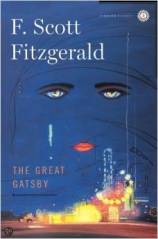
f scott fitzgerald The Great GatsbyNo matter where we live, San Francisco, Seattle, or Middle Earth, these fundamental human experiences are personal to every reader. We have each experienced pain and loss, joy and love.
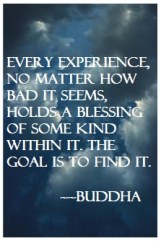
When the author successfully uses the contrasts of our human experience to tell their story, the reader empathizes with the characters. They live the story as if they were the protagonist.

So, what do I mean by contrasts in world-building? It can be shown in subtle ways.

Contrasting plenty against poverty in your world-building shows the backstory without requiring an info dump.

First comes the sunshine, and then the storm, and then the aftermath. Feast is followed by famine, thirst followed by a flood. Love and loss, safety and danger, loyalty and betrayal—contrast gives the story texture, and pacing turns a wall of words into something worth reading.

In our real world, war, famine, and flood are followed by times of relative peace and plenty. The emotions and experiences of people living through all those times are the real stories.

This is not just played out in fantasy novels; it’s our human history and our future.

I say this regularly, but I must repeat it: education about the craft of writing has many facets. We learn the architecture of story by reading novels and short stories written by the masters, both famous and infamous.

We shouldn’t limit our reading to the old favorites that started us on this writing path. You may not love the novels on the NY Times literary fiction bestseller list but it’s a good idea to read one or two of them every now and then as a means of educating yourself.

What you don’t like is as important as what you enjoy. Why would a book that you dislike be so successful? No matter how much money a publisher throws at them, some books are stinkers.

It’s alright to admit you disliked a book that Oprah or Reese Witherspoon recommends.

I despised House of Sand and Fog from page one but read it to the end. It begins in a bad place, and continues downhill, an unrelentingly depressing novel that left me with a bad taste in my mouth. Ugliness followed by more ugliness doesn’t make the ugliness beautiful.

clouds ms clipartPlot, in my opinion, is driven by the highs and lows. You don’t need to pay for books you won’t like. Go to the library or to the secondhand bookstore and see what they have from the NYT bestseller list that you would be willing to examine.
Give that book a postmortem. Why does—or doesn’t—it resonate with you?

  • Did the book have a distinct plot arc?
  • Did it have a strong opening that hooked you?
  • Was there originality in the way the characters and situations were presented?
  • Did you like the protagonist and other main characters? Why or why not?
  • Were you able to suspend your disbelief?
  • Did the narrative contain enough contrasts to keep things interesting?
  • By the end of the book, did the characters grow and change within their personal arc? How were they changed?
  • What sort of transitions did the author employ that made you want to turn the page? How can you use that kind of transition in your own work?
  • Did you get a satisfying ending? If not, how could it have been made better?

Reading and dissecting the works of successful authors is a necessary component of any education in the craft of writing.

Answering these questions will make you think about your own work. You will put more thought into how you deploy the contrasting events that change the lives of your characters.

7 Comments

Filed under writing

Employing polarity  #amwriting

When we have finished the first draft of our story and come back to revise it later, we find that in places, our characters seem two dimensional.

Certain passages stand out; the characters have life, intensity. Their emotions grab us, and we feel them come alive. We see them as sharply as the author intends.

In other passages, they are flat, lacking any sort of spark.

When we add contrast to the scenery – polarity – the setting comes alive. The imaginary world of the narrative becomes as real to the reader as the world of their living room.

The same is true for how we show our characters.

Word choice matters. How we phrase a passage makes an immersive experience or throws the reader out of the book.

Our goal is to make vivid sensory images for our readers.

John Keats used both polarities and similes in his work. The last stanza of To Autumn begins with this line:

“Or sinking as the light wind lives or dies;”

We see one obvious polarity in that line, and one sneaky one:

  • Lives or dies is an obvious polarity.
  • Sinking implies heaviness, and he contrasted it with light wind; a less weighty, gentler sensory experience opposite the weight of sinking.

Characters grow more distinct when portrayed with subtle contrasts. We all know opposites attract; it’s a fundamental law of physics. Contrast – polarity – supplies a needed missing component of the narrative, giving the important elements strength.

Polarity gives your theme dimension. Remember, the theme is the backbone of your story, the thread that binds the disparate parts together. Great themes are often polarized: good vs. evil or love vs. hate.

Think about the theme we call the circle of life. This epic concept explores birth, growth, degeneration, and death. Within that larger motif, we find subthemes. For example, young vs. old is a common polarity with many opportunities for conflict. Both sides of this age-old conflict tend to be arrogant and sure of their position in each skirmish.

Wealth vs. poverty offers an author the opportunity to delve into social issues and inequities. This polarity has great potential for conflict, which creates a deeper narrative.

What we must see beyond the obvious are the smaller, more subtle polarities we can instill into our work. Small, nearly subliminal conflicts support the main theme and add texture to the narrative.

  • Without injustice, there is no need for justice. Justice only exists because of injustice.
  • The absence of pain, emotional or physical, is only understood when someone has suffered pain. Until we have felt severe pain, we don’t even think about the lack of it. In literature, emotional pain can be a thread adding dimension to an otherwise stale relationship.
  • Truth and falsehood. The fundamental issue of trust adds drama to a plot and provides a logical way to underscore a larger theme.

Throughout the narrative, ease should be contrasted with difficulty. This is called pacing.

Many commonly used words have opposites, such as the word attractive, the opposite of which is repulsive. When you want to add texture to your narrative, look at how you could show the mood and the emotions of a scene by using antonyms, words with contrasting meanings.

  • create – destroy
  • crooked – straight/honorable
  • cruel – kind

Each polarity has many nuances. In daily life, cowardice is most often exhibited as a subtle, habitual evasion of the truth or as an avoidance mechanism. It can be shown in an act as mild as a fib. Or, it can be an event as large as an act of treason committed for personal gain.

Bravery can be as small as a person facing a silly fear, as large as a person not backing down when a strong personality attempts to assert authority over them, or as epic as a responder entering a burning building to rescue a victim.

When we have characters who contrast subtle acts of bravery with small acts of cowardice we add power to a scene.

In all its many forms, contrast is a catalyst for change when we wish to electrify an otherwise bland scene.

It’s the fertile soil from which conflict grows. Each small polarity pushes your characters a bit further and underscores your larger theme.

Here is a sample of words found in the “D” section of  the  Oxford Dictionary of Synonyms and Antonyms. This small selection is filled with opposites that create powerful mental images:

  • dangerous – safe
  • dark – light
  • decline – accept
  • deep – shallow
  • definite – indefinite
  • demand – supply
  • despair – hope
  • discourage – encourage
  • dreary – cheerful
  • dull – bright, shiny
  • dusk – dawn

Every time you employ polarities in your word selections, you show something about the world or a character without having to tell it.

You add a dimension of depth.

I love and regularly use the Oxford Dictionary of Synonyms and Antonyms to spur my creativity. It can be purchased in paperback, so it’s not too expensive. Often you can find these sorts of reference books second hand. The internet is also your friend. A large, comprehensive list of common antonyms can be found at Enchanted Learning. This website is a free resource.

Opposites add dimension and rhythm to our work. Polarity is an essential tool of world building.

Polarities, words that show contrast add dimension to an otherwise flat depiction, showing a written world that is as clear to the reader as the room they inhabit.

3 Comments

Filed under writing

How contrasts drive the story #amwriting

The Buddha offered a morsel of wisdom that authors should consider, “There has to be evil so that good can prove its purity above it.”

J.R.R. Tolkien understood this quite clearly.

Written in a style that was popular one-hundred years ago, the Lord of the Rings trilogy is a large reading commitment, one fewer and fewer readers are willing to undertake. Yet, compared to Robert Jordan or Tad Williams’ epic fantasy series, it is short, totaling only 455,175 words over the course of three books.

The story is sprawling, showing a world of plenty, ignorant of the disaster lurking at the edge of their border. Tolkien shows the peace and prosperity that Frodo enjoys and then forces him down a road not of his choosing. He takes the hobbit through personal changes, forces him to question everything. In the final confrontation with Sauron’s evil influence, Tolkien forces Frodo to face the fact he isn’t quite strong enough to destroy the ring. Frodo can’t give it up—he is willing to risk everything to retain possession of it when Gollum amputates his finger and takes the ring.

Frodo and Sam hunting down a case of genuine Canadian beer and spending spring break in Fort Lauderdale wouldn’t make much of a story, although it could have made an awesome straight-to-DVD movie.

Frodo’s story is about good and evil, and the hardships endured in the effort to destroy the One Ring and negate the power of Sauron. Why would ordinary middle-class people, comfortable in their rut, go to so much trouble if Sauron’s evil was no threat?

In both the Lord of the Rings trilogy and Tad Williams epic fantasy Osten Ard series, we have two of the most enduring works of modern fiction. Both feature an epic quest where through it all, we have joy and contentment sharply contrasted with deprivation and loss, drawing us in and inspiring the deepest emotions.

This use of contrast is fundamental to the fables and sagas humans have been telling since before discovering fire. Contrast is why Tolkien’s saga set in Middle Earth is the foundation upon which modern epic fantasy is built. It’s also why Tad Williams’ work in The Dragonbone Chair, first published in 1988, changed the way people saw the genre of epic fantasy, turning it into hard fantasy. The works of these authors inspired a generation of writers: George R.R. Martin and  Patrick Rothfuss, to name just two of the more famous.

My favorite books convey the beauty of life by contrasting joy, companionship, and love with drama, heartache, and violence. No matter the setting, Paris or Middle Earth, these fundamental human experiences are personal to each reader. They have experienced pain and loss, joy and love. When the author does it right, the reader empathizes, feels the emotions written into the story as if they were the protagonist.

Hunger is a fundamental agony that can linger for years. People can survive on very little, and unfortunately, many do. To have only enough food to keep you alive, but never enough to allow you to grow and thrive forms a person in a singular way. Acquiring food becomes your first priority. Having a surplus of food becomes a reason to celebrate. To go without adequate food for any length of time changes you, makes you more determined than ever to never go hungry again.

Thirst is a more immediate pain than hunger. The human animal can survive for up to three weeks without food, but only three to four days without water. Rarely, one can survive up to a week. When one has gone without water for any length of time, even brackish water must taste sweet. And when one is without food, even food they would never normally eat will fill their belly.

War happens because of famine and deprivation. Wars are fought over water. We forget this when we have plenty to eat and never worry if we will have water or not as long as we can pay the bills.

Need drives the human story, which is why we love tales of heroism and great achievements. Love and loss, safety and danger, loyalty and betrayal—contrast provides the story with texture, turning a bland wall of words into something worth reading.  First comes the calm, and then the storm, and then the aftermath. Feast is followed by famine, thirst followed by a flood. War, famine, and flood are followed by a time of peace and plenty. This is our history, and our future, and is how good tales are played out.

Employing contrast gives texture to the fabric of a narrative. When an author makes good use of contrasts to draw the reader in, readers will think about the story and those characters long after it has ended.

I say this regularly, but I must repeat it: education about the craft of writing has many facets. We must learn the basics of grammar, and we must learn how to build a story. We learn the architecture of story by reading novels and short stories written by the masters, both famous and infamous.

We can’t limit our reading to the classics. Those books may be the basis for the way fiction is written today, but the prose and style don’t resonate with the majority of modern readers.

I have a piece of homework for you. You can copy and use the following list of questions as part of your assignment.

We may not love the novels on the NY Times bestseller list, and we may find them hard going, but stay with it. Go to the library or to the bookstore and see what they have from that list that you would be willing to examine. Your local second hand bookstore might have quite a few recent bestsellers in their stock of general fiction. Buy or borrow it and give it a postmortem. Why does—or doesn’t—the piece resonate with you? Why would a book that you dislike be so successful?
As I said at the beginning, the plot is driven by the events and emotions that give it texture. How did they unfold? Did the book have a  distinct plot arc? Did it have:

  • A strong opening to hook you?

  • Was there originality in the way the characters and situations were presented?

  • Did you like the protagonist and other main characters? Why or why not?

  • Were you able to suspend your disbelief?

  • Did the narrative contain enough contrasts to keep things interesting?

  • By the end of the book, did the characters grow and change within their personal arc? How were they changed?

  • What sort of transitions did the author employ that made you want to turn the page? How can you use that kind of transition in your own work?

  • Did you get a satisfying ending? If not, how could it have been made better?

Reading and dissecting the works of successful authors is a necessary component of any education in the craft of writing. Answering these questions will make you think about your own work, and how you deploy the contrasting events that change the lives of your characters.


Credits and Attributions:

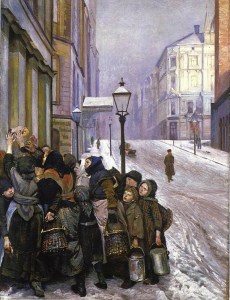
Struggle for Survival by Christian Krohg, 1889, oil on canvas.  Now hanging in the National Gallery of Norway.

Wikimedia Commons contributors, “File:Christian Krohg-Kampen for tilværelsen 1889.jpg,” Wikimedia Commons, the free media repository, https://commons.wikimedia.org/w/index.php?title=File:Christian_Krohg-Kampen_for_tilv%C3%A6relsen_1889.jpg&oldid=301415583 (accessed February 10, 2019)

Comments Off on How contrasts drive the story #amwriting

Filed under writing

Learning from the masters: @TadWilliams: contrast and texture #amwriting

tadwilliams-the-heart-of-what-was-lostOne of my favorite authors is Tad Williams, who wrote the watershed series, Memory, Sorrow, and Thorn. To my eternal joy, he has set another series of books in the world of Osten Ard. The first installment, The Heart of What Was Lost, is set to launch on January 3, 2017.
I have it on pre-order, as you might imagine—a Happy New Year present to me.

I became a confirmed fan of epic fantasy in 1988 when I first entered this world of Osten Ard and the books of Tad Williams. Each character was deserving of a novel, and the diverse races whose cultures were so clearly shown fascinated me. The arrogance some members of each race have with regard to their innate superiority struck me as illustrating a truth about the real world, something the Buddha once said: “We are what we think. All that we are arises with our thoughts. With our thoughts, we make the world.”  

Why did I become so captivated by Tad Williams’ work in the original series?

Contrast.

It is well-written, with harsh, beautiful prose, but more importantly an entire world is encapsulated in those pages. It is built from both good and evil, with all the many grey places between those two absolutes clearly defined. For each misery, some small glimmer of hope is introduced, offering a reason for the characters to keep struggling.

Tad Williams created the world of Osten Ard masterfully, exploring it through the diverse people’s thoughts and conversations. He used their impressions to show the setting, the history, and the core of the conflict. He started out slow, introducing Simon Mooncalf (Seoman) and the other players, showing a certain amount of background by Simon’s wandering path through the various places in his familiar environment.

Simon Mooncalf is an orphaned kitchen boy, serving in the immense castle, the Hayholt. He is in service to King John Presbyter, but he is a dreamer, unable to concentrate on the mundane tasks he’s been given. With the reputation of being an idiot, his fortunes change when he is apprenticed to the good Doctor Morgenes, the castle’s healer and wizard.

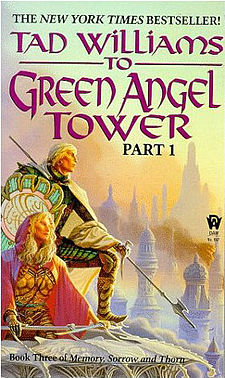
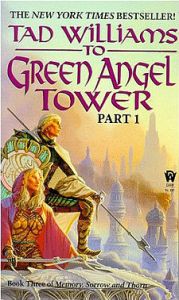
Green_Angel_Tower_P1Unfortunately, the king dies. Many dark, terrible events transpire, and ultimately Simon finds himself alone and on the run, carrying Dr. Morgenes’ true biography of the good King John.

The action then intensifies, as do Simon’s struggles. He finds friends who help him along the way, but they are also in danger. Love, friendship, and loyalty are tested when thrown against a lust for power, a desire for complete domination, and the endless desire of the ultimate mastermind behind the war, Ineluki, the immortal Storm King.

Tad Williams uses contrast. He opens in a place that feels comfortable and familiar, a place where food is plentiful and cats are lazy. He then slingshots the reader into a world of violence and darkness, hunger and fear. Simon is lost, alone, helpless, and terrified. Despite his being an orphan, he has only known comfort and now his life of deprivation is more than he can bear.

When I first began reading the series, it was clear to me that Tad Williams understood a fundamental truth of life: if you have never felt hunger, you can never understand what it is to have plenty. In the same context, if you have never known sorrow, how can you know joy? The contrasts of life are the flavors, the textures that give it meaning.

Since we are waxing philosophical, the Buddha also offered this morsel of wisdom for authors to consider, “There has to be evil so that good can prove its purity above it.”  

That contrast of good and evil is a fundamental truth for all writers of traditional fantasy fiction to consider when devising plots. It is one that J.R.R. Tolkien understood quite clearly. After all, what would have been the point of Frodo and Sam going to the depths of Mordor, suffering the hardships they endured if not to destroy the One Ring and negate the power of Sauron? And why would they do this, if Sauron was not the embodiment of evil?

In both the Lord of the Rings trilogy, and Memory, Sorrow, and Thorn, we have two of the most enduring works of modern fiction. Both feature an epic quest where through it all, we have joy and contentment sharply contrasted with deprivation and loss, drawing us in and inspiring the deepest emotions.

This use of contrast is why Tolkien’s work is the foundation upon which modern epic fantasy is built. It’s also why Tad William’s work changed the way people saw the genre of epic fantasy, turning it into hard fantasy. The works of these authors inspired a generation of authors: George R.R. Martin and  Patrick Rothfuss, to name just two of the more famous.

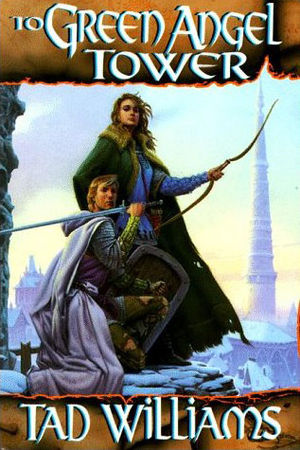
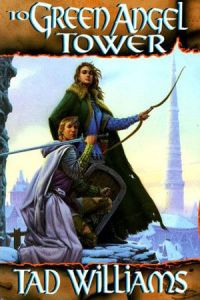
To_Green_Angel_Tower

In my own current work (as in all my work), good people have found themselves in bad situations. It’s my task to demonstrate the beauty of life through the drama, heartache, and violence.

Employing contrast gives texture to the fabric of a narrative. My intention is to use the emotions that are experienced when joys are contrasted against sorrows to draw the reader in. If I do this right, my readers will think about this story and these characters long after it has ended.

As a writer, if I can create a tale in which the reader experiences the full gamut of human emotion, I will have done my job.  The longer I am at this craft, the more I see that the rest of my life will be a training ground, teaching me new things, widening my writing horizons everyday. Reading and analyzing the works of the masters is a joy and a privilege, and is a necessary component of my education in the craft of writing.

1 Comment

Filed under writing