Tag Archives: writing a disaster story

Channeling memories to create drama #writing

I once had the distinctly shocking experience of viewing a natural disaster as it occurred, albeit from a distance. In that, I was fortunate. We were not harmed, yet what we saw deeply affected us.
On May 18th, 1980, my friends and I watched the eruption of Mt. St. Helens from atop a hill in the middle of nowhere. My children had visited their father for the weekend, so my friends and I planned a fishing trip to a beaver pond in the next county.

Successful fishing trips usually begin before dawn. My friend’s Land Rover pulled up in front of my home at about 5:00 am, and we set out with all five of us laughing and having a great time. It was a long drive on narrow, dirt logging roads, but the possibility of trout for supper was just an excuse for a day spent in the deep forest.

The radio in the Land Rover had never worked, but the cassette deck did. Led Zeppelin, Robin Trower, Genesis, and Ritchie Blackmore’s Rainbow were the soundtrack to our trek through the tall Douglas fir forests of Lewis County.

At about 09:00 am, we came up over the top of a treeless hill. The view was breathtaking, as if all the world lay before us in springtime glory. Conversations suddenly stopped, and my friend pulled off the road, turning the engine off.

We got out and stared, first at the raging column of dust, rocks, and lightning that dwarfed the mountain and then at each other. Helicopters and airplanes from news agencies and the USGS circled like so many carrion birds.

What so many people had thought was just hysteria had suddenly come true.

Mount St. Helens had erupted.

We never did make it to the beaver pond. The only fish we caught that day were the tuna sandwiches we had packed. While the food was good, the conversations were sober as we stared at that unbelievable sight.

This was before cell phones, and with the radio broken, we had no way of hearing the news. But we knew it was terrible, that some people had died and others had lost everything. We had no idea just how bad it was, that one of my father’s favorite places to fish, the Mount St. Helens Lodge at Spirit Lake, had disappeared along with its cantankerous owner. Harry R. Truman had become famous in the weeks before the eruption for refusing to evacuate.

Toward midafternoon, we returned to Olympia. We were grateful to have homes to go to, and when my friends left me off, I was still in shock, still unable to believe what I had seen. When I turned on the television and found that more than fifty people had lost their lives, I felt devastated for them.
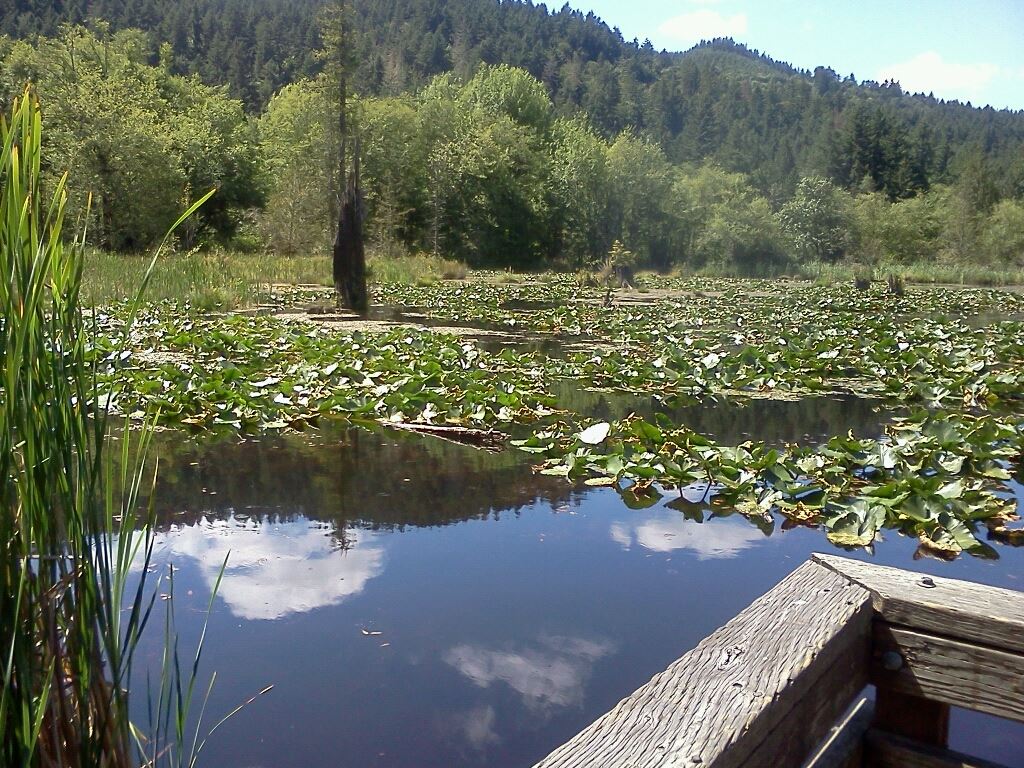
The story is in the hectic start to the morning, of five friends off on a day trip to go fishing. It is in the peace of the deep woods along those old dirt roads.

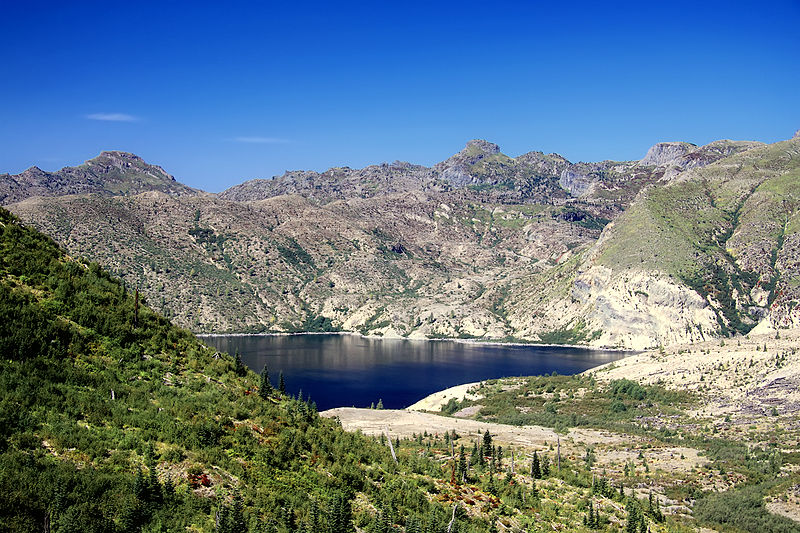
The camera zooms out and now we see the idyllic serenity of a clear sunny morning on Spirit Lake and Harry doing his morning chores.

This allows us to see what will be lost.

Then disaster strikes. The side of the mountain gives way, and the eruption is on.

Contrast that catastrophe against five people serenely picnicking on a hill, observing the apocalypse as it happens. The drama is in old Harry R. Truman’s stubborn end, and how it didn’t occur to us who watched from a distant hill that we would never rent a boat from him or fish in that lake again.

The bad juxtaposed against the good is the plot, but the experiences of those who witnessed it is the story. Contrast provides drama and texture, turning a wall of “bland” into something worth reading.

The true story of that day in my life is not the only time disaster contrasted against calm and tranquility.

At 11 o’clock on the morning of February 28, 2001, I was at work when a strong earthquake shook the Pacific Northwest, magnitude 6 point 8. I was terrified, thinking the building was going to come down on me. Fortunately, it did not.

I came home to find my dishes flung from the cupboards, the lamps tipped over, my cat hysterical, and my 17-year-old daughter at my mother’s house. A boy from her art class had driven her there when school closed early. He carefully drove down the narrow back alley behind my mother’s house as the road in front had collapsed.

(Sidenote: My daughter and that 17-year-old boy have been married for 23 years and have four boys. Not everything that happens as the result of a disaster is terrible.)
Stories that detail apocalyptic catastrophes capture our interest and glue us to the television. We write novels detailing them because disaster drives humanity to bigger and better things. The acts of heroism and the people who survive and rise above the disasters keep us turning the page.

We want to know how it will all turn out.

Disaster isn’t always apocalyptic. Dramas regularly happen on what seems an unimportant level to people who have resources. Not everyone has money, and not everyone can surmount the odds. The story is in the battle.

Think about those small daily tragedies people face, deeply personal catastrophes, which only they are experiencing. Love and loss, safety and danger, loyalty and betrayal are the eternal themes of tragedy and resolution. These are the seeds of a good story.

The contrast of ease against hardship can add drama to worldbuilding and storytelling. Writers want their readers to think about the story and those characters long after the last paragraph has been read. Drama and resolution are the keys to a great story.

Drama and disaster can and will happen on a wide scale in our real lives. Tornadoes, hurricanes, earthquakes, volcanoes, and droughts … the path of a natural disaster is erratic.

Sometimes trouble misses us, and we are merely bystanders, witnesses to the tragedy that unfolds in another person’s life. Other times, trouble strikes nearer to home.

What struggles have you faced? How can you channel the memory of the emotions you experienced to add drama to your work-in-progress? Your memories and experience of emotion can add depth to your writing. They were already paid for in pain and joy, so use them!


Credits and Attributions:

IMAGE: Eruption of Mt. St. Helens May 18, 1980, Public Domain, via Wikimedia Commons

IMAGE: McLane Pond in July 2018, photo by Connie J. Jasperson © 2018.

IMAGE: Spirit Lake near Mount St. Helens in 2009, in Washington State. Photo by Steven Pavlo, via Wikipedia.

2 Comments

Filed under writing

#Writing the Disaster 

Severe weather, fires, famines, and floods are terrible to live through, and many harrowing stories emerge from these experiences. Stories of apocalyptic catastrophes resonate because disaster drives humanity to strive for greater things. Those who survive and rise above it become heroes.

One disaster we may all face at some point is famine driven by climate change. Hunger exists in this world, and famine is an enemy that takes no prisoners.

Food deprivation can have a lasting impact on a person. People can survive on very little, and unfortunately, many do. To go without adequate food for any length of time changes you, makes you determined to never go hungry again. You stockpile preserved foods in times of plenty as a shield against the next famine.

Unfortunately, for some, hunger will lead them to make choices that challenge the accepted morality of those who have no concept of what hunger truly is.

If you are looking for the seeds of a good story, consider the small tragedies people face each day, deeply personal catastrophes. These disasters happen on what seems an unimportant level to people who have resources.

I have used this example before, but it’s a real-life situation, one that may be familiar to you and your community. A young widow is working two part-time jobs and raising her two small children. How would you write her story? Perhaps she lives in an area with no public transportation. She struggles to pay for fuel, but what if her car breaks down? How will she get to work?

All her money goes to fuel, childcare, rent, and utilities. What little she has left after those bills are paid goes to food. She has no resources and no means to pay for car repairs. Without her car, she will lose both jobs. That is a profoundly personal disaster, one from which she and her children might not recover.

But maybe that plot isn’t big enough to inspire you to write a book about it. Perhaps you want to write about a disaster that inspires heroics in the face of widespread devastation. The world itself can provide us with plenty of drama. Wildfires, floods, tornadoes, hurricanes, earthquakes, tsunamis – these catastrophes regularly destroy thousands of communities.

courtesy Office360 graphics

Once we have introduced our characters and set the scene, it’s time to bring on the natural disaster. When you begin writing the story, it will be chaotic. Just get the bones of the events down as well as you can and move on. You must get the entire story down while it is fresh.

In the first draft, write each scene as fast as you can, and don’t worry about fine-tuning it because you will come back to it later. The second draft is where you will iron out the rough spots and make things logical.

In the second draft, we take apart the scenes where we have told the story and reword them. We show the events as if we were painting with words. We use power words to inject real, believable emotion into the experience.

The window shatters, and a two-by-four impales itself in the wall beside David amid a shower of glass shards. I stare, dumbstruck, as the wind tears the door from my hand and slams it against the wall.

Verbs in that scene are: stare, impales, shatter, tears, and slams. Show the bones of the event by using verbs with powerful visuals, and the reader’s mind will fill in the rest.

I suggest you open a new document and describe the disaster in great detail. Then save it as background material for that story and walk away from it. Let it rest, and move on to something else. When you return to it, read it aloud and see what you can cut and condense and still have the bones of the action. As always, verbs and power words are action’s best friend.

Droughts often cause famines and worse. To go without water is to die. Thirst is a more immediate pain than hunger. The human animal can survive for up to three weeks without food but only three to four days without water. Rarely, one might survive up to a week.

Even brackish water must taste sweet when one suffers from a lack of potable water. And when one is starving, foods they would consider repugnant under other circumstances will fill their belly.

Look at the continual strife in some third-world countries. You will see how long-term droughts have precipitated widespread famine, leading to civil unrest. Gang wars are fought over the right to own a water source, and these conflicts can erupt into revolution.

We often forget this when we have plenty to eat and never have to worry about whether we will have water in our faucet as long as we can pay the bills. However, if we learned anything from the empty grocery store shelves in 2020 and the subsequent supply chain crisis, it is that our well-fed lives are standing on a one-legged stool.

Once the events of the disaster are on paper the way we want them, we have the opportunity to ratchet up the reader’s emotions by the way we portray the aftermath. Who finds strength through the calamity, and who is broken by it? What roadblocks do they face, and how do they recover?

We must complete the story and provide the reader with some closure by ending with our characters in a place of comparative happiness and security.

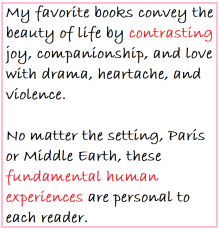
Drama, heartache, disaster, and violence are the backdrop against which humanity’s story plays out. The most powerful books in the Western Canon of Great Literature explore both the good and evil of the human experience.

We connect with these stories across the centuries because the fundamental concerns of human life aren’t unique to one society, one technological era, or one point in time. We all want enough food, enough water, and reliable shelter.
When we contrast ease with hardship, we add emotional texture to our narrative. I love a good story featuring courage in the face of personal disasters. Readers like me will think about the story and those characters long after it has ended.

5 Comments

Filed under writing

How the Written Universe Works: Choreographing Disaster #amwriting

The most powerful books in the Western Canon of Great Literature explore the human experience. Drama, heartache, disaster, and violence are the backdrop against which our lives play out.

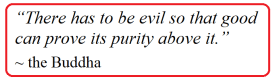
Buddha quoteReaders connect with these stories across generations and across the centuries because the fundamental concerns of human life aren’t unique to one society, one technological era, or one point in time.

In my last post, we touched upon choreographing violence, but didn’t discuss some of the root causes. Violence often follows disaster.

Some disasters are caused by the cyclical ebb and flow of weather patterns, and others are the effects of human activity.

  • Possible effects of famine: food deprivation leads to starvation and disease.
  • Possible effects of severe drought: droughts lead to wildfires, famines, and pandemics.

Drought and famine feed societal unrest:

  • Lust for power: The bullies rise to the top, inciting their followers to violence against those perceived as weaker.
  • Lust for wealth: Bully warlords may mount an armed invasion to steal resources a neighboring society has acquired.

Even a slight lowering of the standard of living can feed civil unrest.

One disaster we may all face at some point is famine. Hunger exists in this world, and while many worthwhile charities do their best to alleviate it, famine is an enemy that takes no prisoners.

On a human level, hunger affects a person forever after. People can survive on very little, and unfortunately, many do. To have only enough food to keep you alive forms a person in a singular way. Their physical growth will be less than that of a well-nourished person, and their worldview is narrower. They have no energy to spare for anything beyond their day-to-day existence.

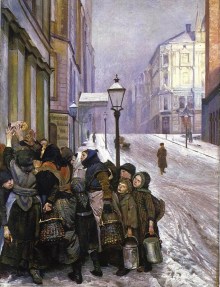
Christian_Krohg-Kampen_for_tilværelsen_1889Acquiring food becomes their first priority. Having a surplus of food becomes a reason to celebrate. To go without adequate food for any length of time changes a person and makes one determined to never go hungry again.
Unfortunately, for some, their desire to be well-fed will lead them to make choices that challenge the accepted morality of those who are not hungry.

Droughts often cause famines and worse. To go without water is to die. Thirst is a more immediate pain than hunger. The human animal can survive for up to three weeks without food but only three to four days without water. Rarely, one might survive up to a week.

Even brackish water must taste sweet when one suffers from a lack of potable water. And when one is without food, foods they would consider repugnant under other circumstances will fill their belly.

Look at the continual strife in third-world countries (not Ukraine, which is different and not a third-world country). You will see how long-term droughts have precipitated widespread famine, leading to civil unrest. Gang wars are fought over the right to own a water source, and these conflicts can erupt into revolution.

We forget this when we have plenty to eat and never have to worry if we will have water in our faucet as long as we can pay the bills.

But if we learn anything from the empty grocery store shelves in 2020 and the current supply chain crisis, it is that our well-fed lives are perched on a one-legged ladder.

Disaster on a wide scale can and will happen. But what of those small tragedies people face each day, deeply personal catastrophes, which only they are experiencing? These are also the seeds of a good story.

ContrastsLove and loss, safety and danger, loyalty and betrayal—the eternal themes of tragedy and resolution. Hardship contrasted against ease provides the story with texture, turning a wall of “bland” into something worth reading.

In real life, everything seems to be going along well. Life is good, calm, and peaceful. Then the tornado hits, the wildfire comes through, or the tidal wave—whatever the tool nature uses to destroy you, it decimates your home, your community, leaving you and your neighbors with nothing.

Then we must deal with the aftermath, cleaning up, searching for belongings, and searching for loved ones. This kind of disaster cuts deep into a person’s psyche.

Severe weather, fires, famines, and floods are terrible to live through, and many harrowing stories emerge from these experiences. Stories of apocalyptic catastrophes resonate because disaster drives humanity to bigger and better things, and those who survive and rise above it become heroes.

However, disasters regularly happen on what seems an unimportant level to people who have resources.

Consider the situation of a single mother working two part-time jobs. If she lives in my town, she lives where there is no public transportation. Other cities in my county have access to public transit, but not my community.

She struggles to pay for fuel, but what if her car breaks down? How will she get to work? All her money goes to fuel, childcare, rent, and utilities. What little she has left after those bills are paid goes to food.

She has no resources and no way to pay to repair her car. Without her car, she will lose both jobs. That is a profoundly personal disaster, one she and her children might not recover from.

How would you write her story?

Augustus_Edwin_Mulready_Fatigued_Minstrels_1883We writers must make our words count. We have to show the comfort zone in the moments leading up to the disaster, not too much, but just enough to show what will soon be lost.

Then, we have to bring on the disaster and write it logically so that the events make sense. We can’t tell the story. We must show it as if we were painters—and we have to inject real, believable emotion into the experience.

Open a new document and save it to your background file. Describe the disaster in great detail. Then save and walk away from it. Let that scene rest and move on to something else. When you return to it, re-read it, and see what you can cut and condense and still have the bones of the action. Use verbs and power words and go light on descriptors.

The window shatters, and I stare, dumbstruck. A two-by-four impales itself in the wall beside David amid a slow-motion shower of glass shards. The wind roars, tearing the door from my hand and slamming it shut.

Verbs in that scene are: stare, impales, shower, roars, tearing, slamming. Show the bones of the event by using verbs with powerful visuals, and the reader’s mind will fill in the rest.

Once the events are in order, we must show the aftermath of the calamity and the roadblocks they must overcome to recovery. We add the characters’ real-time reactions and emotions. Finally, we must leave our characters in a place of comparative happiness and security.

Employing contrast—ease against hardship—gives texture to the fabric of a narrative. When an author makes good use of courage in the face of personal disasters, readers think about the story and those characters long after it has ended.


CREDITS AND ATTRIBUTIONS:

Struggle for Survival by Christian Krohg, 1889, oil on canvas.  Now hanging in the National Gallery of Norway. Wikimedia Commons contributors, “File:Christian Krohg-Kampen for tilværelsen 1889.jpg,” Wikimedia Commons, the free media repository, https://commons.wikimedia.org/w/index.php?title=File:Christian_Krohg-Kampen_for_tilv%C3%A6relsen_1889.jpg&oldid=301415583 (accessed June 7, 2022)

Fatigued Minstrels, by Augustus Edwin Mulready, 1883, oil on canvas. Wikimedia Commons contributors, “File:Augustus Edwin Mulready Fatigued Minstrels 1883.jpg,” Wikimedia Commons, the free media repository, https://commons.wikimedia.org/w/index.php?title=File:Augustus_Edwin_Mulready_Fatigued_Minstrels_1883.jpg&oldid=335802594 (accessed June 7, 2022)

6 Comments

Filed under writing