I often write micro fiction, especially when I’m not inspired to work on my longer pieces. These tiny tales begin with an idea, as all the things we want to write do.
 Longer works sometimes stall at different points in the process. At first, we’re fired up about the project. As we write, the words flow, but then we come to days when we stare at the screen, unable to think of what to do next.
That is when we need to set the project aside for a day or two.
But we shouldn’t stop writing. If we don’t nurture the habit of writing every day, it’s easy to forget to go back to it.
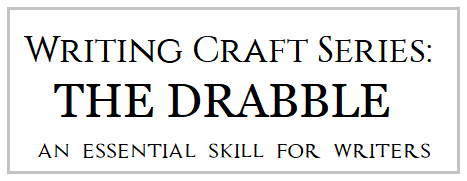
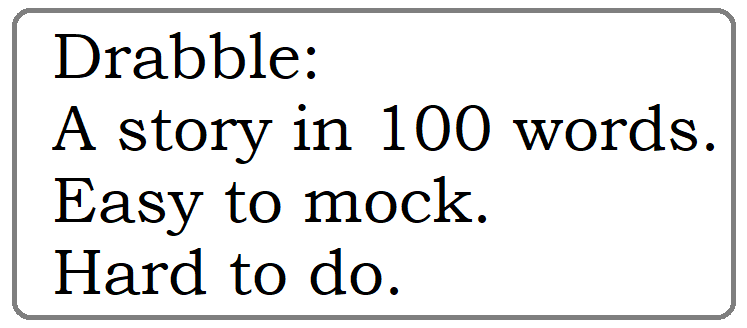
This is when I find myself writing micro fiction. Drabbles are a form of micro fiction, an entire story in exactly 100 words.
Some forms of poetry, such as haiku, are not micro fiction, as they don’t tell a fully developed story.
I find the time to write every day, even if it is only a line or two in my journal. This keeps me in practice. When I was young and raising a family, this habit showed them that writing was an important part of my life. I sat in a corner with a notebook, writing instead of pretending to enjoy the tired, poorly acted, badly written movies of the week that everyone seemed to love. ABC Movie of the Week – Wikipedia
I was an introvert in high school, as many ADD children are. I loved a good story and always had a book to read at lunch. I had plenty of practice at ignoring the snide comments the cool kids whispered when they thought I couldn’t hear.
 Later, as a young adult I discovered that if I couldn’t find the kind of tale I was looking for, I could write it myself.
All writing is a time commitment. I can dash off a drabble in five minutes, but it might take an hour or more to fit the story into the 100-word constraint.
We have 100 words to write a scene that tells the entire story of a moment in a character’s life. First, we need a prompt, a jumping-off point. A prompt is a word or visual image that kicks the story into motion in your head. If you need an idea, go to Reedsy’s Weekly Writing Prompts. I love that page, as the prompts change every week.
But prompts are only the beginning. To write a story of any length, we need these essential components:
- A setting,
- One or more characters,
- A small conflict,
- A resolution.
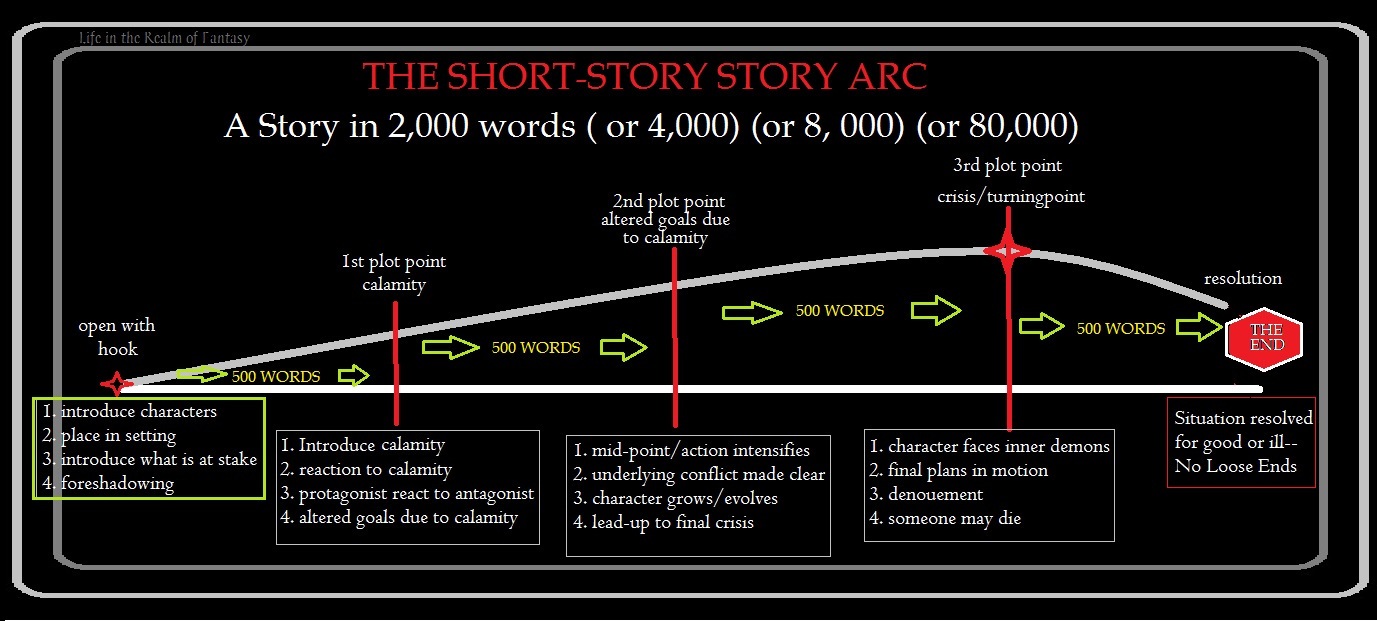
I use a loose outline to break every story’s arc into three acts, each with a specific word count. (I’ve included a graphic at the bottom of this post.) A drabble consists of only 100 words, but it is outlined in this way:
- I have about 25 words to open the story and set the scene.
- I have about 50 – 60 for the heart of the story.
- I give myself 10 – 25 words to conclude it.
Writing micro fiction teaches you to tell a story without exposition and to use words that convey strong images.
Novels are a little different: When I plan a novel, I divide my outline this way: 10,000 or so words to open the story, set the scene, introduce the characters, and get to the inciting incident. 50,000 or so words for the heart of the story. 10,000 or so words for the conclusion. It usually expands to around 125,000 words before I trim it back to around 90,000.
Whether it is a drabble or an epic novel, I delete exposition and backstory in the second and third drafts. Although sometimes the drabble wants to be a short story.
When I delete sections of longer works, I save them in a separate file because some ideas help establish mood and atmosphere for world-building. Other sections are good for character development and use in other, longer works.
- Every word you write and discard might be useful in a later story.
- Label the file with a title that says what it is.
- Save it in a master file that contains ideas for longer stories.
If you finish the drabble, you have created a small gift for yourself. The surge of pride that you experience in that moment of “Yes! I can write after all!” is a wonderful reward.
But why should we try to write something that short?
 Writing to a strict word count limit means that every word is precious. Word choices must be strong and used to create the greatest effect. When we shave away the unneeded info in the short story, we have more room to expand on the story’s theme and how it supports the plot.
This list of venues currently accepting submissions of micro fiction (100 to 300 words in length) comes from the home page at Barnett Ghostwriting:
- Barnett Ghostwriting
- SmokeLong Quarterly
- Flash Frog
- Nanoism
- Vestal Review
- Tiny Molecules
- Flash Fiction Magazine
- New Flash Fiction Review
- Microfiction Monday Anthologies
- Ellipsis Zine
I am unfamiliar with Barnett Ghostwriters, so I can’t vouch for them. Check SFWA’s Writers Beware before you submit your work anywhere.
Also, you may be only writing for your own pleasure. Maybe you don’t wish to submit your short works to anyone. Even so, don’t delete them. Each one can be a springboard for a longer work.
Or you might want to submit it to a drabble contest.
Contests for micro fiction abound online. Whether you choose to submit a drabble to a contest or hang on to it doesn’t matter. Either way, writing micro fiction hones your skills, and you will have captured the heart of your brilliant idea.
Micro fictions are the distilled essence of novels. They contain everything the reader needs to know about that one moment in time.
More importantly, you will have written your story, and that success is a reward in itself.