
I often tell new and beginning writers to read widely, including genres they don’t normally gravitate toward. I have a reason for this.
 The more you know about how other writers construct their work, the better you will be at expressing your own ideas. Having a large vocabulary is important. Knowing more words helps you express yourself with less repetition.
You gain that knowledge from reading and looking up the words you don’t know.
But knowing how to use that large collection of words effectively is most important, and that is where reading comes into it.
I have read so many novels that I can’t begin to count them. I’ve read biographies, autobiographies, books on natural history, and those are just the books I read as a bored schoolgirl during the long summers of the late 1960s. My first choice was genre works, such as sci-fi, fantasy, mysteries, but when those ran out, even the sad excuse of a newspaper that was our town’s scandal sheet would do.
I was a member of the Nancy Drew Book Club, and we received a new book every month.
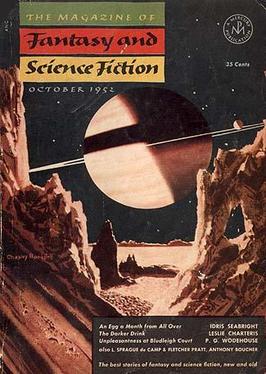 My sister and I risked our lives to sneak paperback books out of my parents’ bedroom. A tough one was Robert J. Donovan‘s PT 109.
We read Heinlein, E.E. “doc” Smith, Fritz Lieber, J.R.R. Tolkien, Jaqueline Suzanne, Ray Bradbury, Isaac Asimov, Anne McCaffrey, Nora Roberts, Mary Stuart … we read every book or magazine that came into the house.
Thank you, Dr. Ruth, and Everything You Wanted to Know About Sex (but were afraid to ask). Mom didn’t have to go to the trouble of explaining it to us. She just left the book out where we could steal it.
Education handled.
When we ran out of stolen gold, we read the Encyclopedia Britannica and Grolier’s Great Books of the Western World.
The books we read all contained words we didn’t understand until we looked them up in the dictionary.
You can do that online now, but I am a dinosaur. Back in the olden days, we had big fat dictionaries to thumb through.
 Here is where I make my confession. I had to take a college class to get through James Joyce’s work, and I’m not sure I exactly understood it. I’m not sure the professor did either.
I read the Diary of Samuel Pepys (pronounced Peeps) when I was fourteen. It was a volume in the Great Books, and I read it because my father insisted. Dad felt my fascination with my mother’s Elizabethan and Regency Historical romances should be tempered with a dose of reality.
Once I had finished the damned thing, he questioned me about it, as if it were a final exam. I didn’t enjoy the book because I didn’t like Mr. Pepys as a person. I felt he was sneaky and would go whichever way would benefit him the most.
But I have always loved history, and I did learn a great deal about the real politics and society of seventeenth-century Britain, and the Restoration of the monarchy after the death of Cromwell.
There have been other well-regarded books I didn’t enjoy too much, but I benefited from reading them.
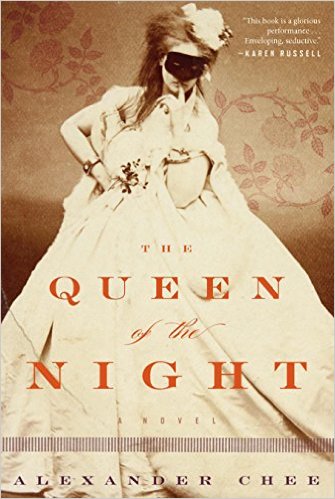 Unfortunately, I grew frustrated and resorted to listening to the audiobook of Alexander Chee’s The Queen of the Night. Not setting dialogue apart with quotes?
(Insert primal scream here.)
I’m an editor, and it’s my job to notice those things. It’s difficult for me to set that part of my awareness aside, but listening to the audiobook resolved that issue. This is a case where the audiobook is much better for an ordinary reader like me.
I can hear the grumbles now. I just mentioned literary authors, and you are writing a cozy mystery, a fantasy, a romance, women’s fiction, or sci-fi. Shall I toss out a few more names?
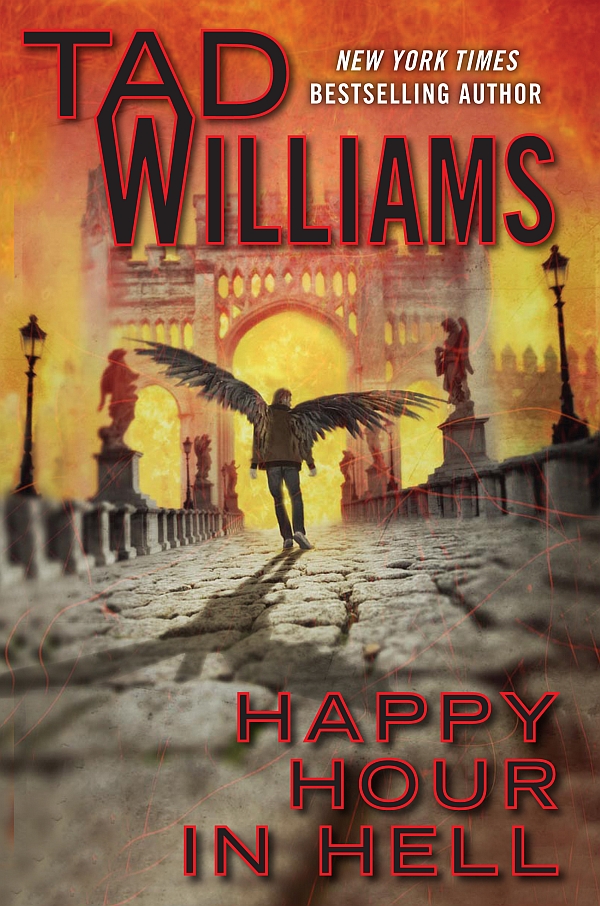 One author I love is Tad Williams. He mixes his styles. His Bobby Dollar series is Paranormal Film Noir: dark, choppy, and reminiscent of Sam Spade. In this series, he writes in a style reminiscent of post-WWII crime authors, such as Raymond Chandler or Dashiell Hammett. Each installment is a quick read for me and is commercial in that casual readers would enjoy Bobby’s predicaments as much as I did.
Yet Tad’s Memory, Sorrow, and Thorn Trilogy was a groundbreaking series that inspired countless fantasy authors. Those first three books and the subsequent novels set in that world are solidly epic literary fantasy. They are written for serious fantasy readers, people who want big stories set in big worlds.
These readers are like me and crave BIG books. In that series, Tad Williams employs lush prose, multiple storylines, and dark themes. Beginning slow and working up to an epic ending is highly frowned upon in local writing groups addicted to genres that embrace straight-forward prose and rapid-fire storylines, but Tad broke that rule, and believe me, it works. His powerful writing has generated millions of fans who are thrilled that he’s written more work in that amazing world.
 Roger Zelazny wrote one of the most famous fantasy series of all time, the Chronicles of Amber, and numerous other sci-fi-fantasy novels. He was famous for his crisp, minimalistic dialogue. He was clearly influenced by his contemporaries, wisecracking, hardboiled crime-fiction authors. Yes, it’s misogynistic, but it was written in a time when misogyny was the norm.
As my father told me when I was reading the Diary of Samuel Pepys and offended by his hypocrisy and innate assumption of superiority, you can’t judge the literature of the past or the society that produced it by today’s values.
You, as the reader, are an observer, not a participant. But that is a difficult thing to remember when their writing sucks you in and makes you feel like a participant.
Ernest Hemingway, James Joyce, Alexander Chee, and George Saunders each have a unique voice in their writing. Each of these writers has written highly acclaimed work that requires you to think.
But they can be difficult for an ordinary reader like me to read.
Ernest Hemingway used commas freely, passing them around in his narratives like party favors. Alexander Chee employs sentences that run on forever and doesn’t use quotation marks when writing dialogue.
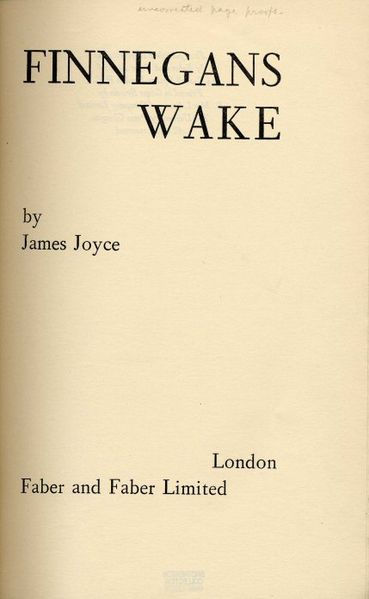 James Joyce wrote hallucinogenic prose and, at times, dispensed with punctuation altogether.
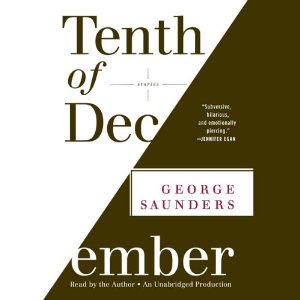
George Saunders writes as if he is speaking to you. He is almost poetic in one place and choppy in others.
F. Scott Fitzgerald used too many Jazz Age slang terms that must be looked up to understand what he was referring to. Yes, he lifted some of his prose from Zelda’s letters, but try to read it without that bias. He’s dead, so chastising him is useless.
We are writers with our own voice. Our style has its own rhythm, and it may not be popular with everyone. An editor might ask you to change something you did intentionally.
There will be times when you choose to use a comma in a place where a line editor might suggest removing it. If asked, you should explain that you did this to emphasize a point or make it clearer. Conversely, you might omit a comma for the same reason.
 Editors know that you are the author, and it’s your manuscript. If you understand the rule you are breaking, you will be able to explain why you are doing so.
Craft your work to make it say what you intend in the way you want it said. But be prepared to defend your choices if you deviate too widely from the expected.
Above all, read. Read everything you come across, whether you love it or not. Dissecting the books you don’t love is a free education if you have a good library in your town.
Reward yourself for all that hard work by indulging in your favorite comfort books. Then, curl up on the sofa and spend the day reading a book by your favorite author.
 My parents also had bought
 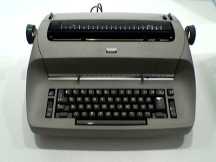 Then, in 1987, my father bought me a secondhand
 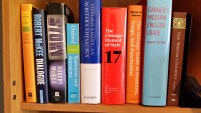 I’m proud to admit that my literary influences can be traced back to dragons, booze, elves,
  I shared what I wrote with other people and got feedback, some good, some bad. I learned from it all and kept trying. I bought books on the craft of writing.


