
Today in our NaNo Prep series, we’re looking at magic and the paranormal, two phenomena which fall into worldbuilding. Many first-time novelists in my region intend to write a fantasy of one sort or another. This post might interest you even if you aren’t writing a fantasy, because logic is a fundamental aspect of a narrative’s structure.
 Magic or the supernatural are core plot elements in most of my work. I see them as part of the world, the way the Alps were a core plot element in the story of the Carthaginian general, Hannibal‘s crossing the Alps with North African war elephants. The mountains were there, they were difficult to cross, and combined with his elephants, the Alps made Hannibal’s story a legend.
War elephants … what a concept; and yet, it’s a true story. Can you imagine how terrifying that must have been to people who’d never heard of such immense creatures as elephants? If you’re stumped for ideas, go to history. It’s far more fantastic than any fantasy I could imagine.
When I write fantasy, I take something that gives a person an edge (war elephants) and make it a double-edged sword (taking the battle to the enemy by crossing impassable mountains, costing half the general’s men and many elephants).
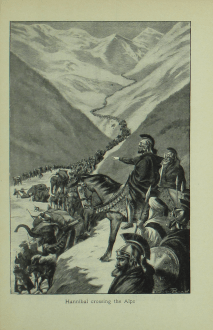 Hannibal paid a heavy price for bringing his superweapons (elephants) to the battle. The ability to use magic should come at some cost, either physical or emotional. Or it should require coins or theft to acquire magic artifacts.
There should be consequences for abusing magic.
The boundaries an author places on magic, science, or superpowers are good obstacles to success. Overcoming barriers is what the story is all about.
As a freelance editor, I saw some poorly constructed fantasies. The problem wasn’t with the characters or the quest—it was the magic. The authors had no purpose for it other than “magic!” and had created no science to rein it in, making it too random and convenient.
I returned those manuscripts, explaining why I couldn’t take their money just yet. Magic should have limits, and it should come at a cost. When they resubmitted the manuscripts, they had resolved those issues. I was impressed with how their solutions to the magic problem made their character’s journey memorable.
I’m a dedicated reader and have inadvertently purchased a few fantasies that looked promising from the blurb and the first few “look inside” pages but which turned out to be thinly disguised Harry Potter knockoffs.
Let’s don’t do that.
 It’s fair to write stories where magic is learned through spells if one has an inherent gift, and it’s also fair to require a wand. That is how magic was always done in traditional fairy tales and J.K. Rowling took those worn-out tropes and made them new and wonderful.
Rowling portrayed her magic right. She made it a natural part of the world and established limits, ensuring that even Voldemort had weaknesses. Also, she made magic a science that required proper education, something the fairy tales never addressed. Sorcerers and sorceresses just appeared out of nowhere with magic wands and unlimited capabilities.
If you intend your characters to have magic or paranormal abilities, it must be treated like a science in that it obeys fundamental laws.
If you’re like me, those laws will come to you when the protagonist needs to know them. That will create the tension your narrative needs but you must write those laws down so you don’t contradict yourself later.
I strongly feel the same rules should apply to the paranormal. Yes, some things have become canon regarding how we imagine vampires, werewolves, witches, and ghosts. But we all want to read a new take on these old stories which is why the Twilight series was so wildly popular when they first came out. My daughters loved that series, but here’s a secret—I never read them. So, I can’t give you an opinion of the logic of her portrayal of the paranormal. But they were very popular, so whatever she did, it struck a chord.
 I can suspend my disbelief when magic and supernatural abilities are only possible if certain conditions have been met. The best tales featuring characters with paranormal skills occur when the author creates a system that regulates what the characters can NOT do.
Some things to think about if your stories involve ghosts, shapeshifters, and other undead:
- Those rules should define the conditions under which a supernatural ability works.
- The same physics should explain why it won’t work if those conditions are not met.
- The number of entities able to use it is restricted to only a small group.
- The range (area) at which a skill or ability is effective should be limited.
I think it’s more believable when our characters are constrained to one or two special abilities.
Expertise in any field requires practice and dedication, working on the most minor details of technique. Magicians and wizards should develop skills and abilities through training and perseverance, as musicians do.
If your characters have paranormal abilities, how did they learn to use them? Was it trial and error, or did they have a mentor?
 A crucial reason for establishing the science of magic and the paranormal before randomly casting spells or flinging fire is this: the use of these gifts impacts the wielder’s companions and influences the direction of the plot, creating tension.
What if our protagonist is unable to fully use their abilities? What is the cause of that disability?
How can they overcome this? How is their self-confidence affected by this inability? Do their companions also struggle to master their skills?
So, we know limitations can drive the plot. They make us work to resolve this problem.
The group will learn what has to happen before the hero can fully realize their abilities. They must be worried it won’t happen and they will fail. The companions must wonder if they have backed the wrong general, must have doubts. “How many soldiers and war elephants will we lose in conquering these mountains? Is the Golden McGuffin worth all this misery?”
People with nearly unlimited powers are gods, and while writing about gods is traditional in classical literature (and who doesn’t love Loki), we want to be original in our thinking. Give your gods a fatal flaw of some sort.
To wind up this rant: if you have decided to include gods, magic, or the paranormal in your NaNo novel, how can you take these common tropes in a new direction?
Write those ideas down now, while you’re thinking about it. I feel sure you will make your world different from the other fantasy worlds out there. The possibilities are endless.
The 2023 #NaNoPrep series to date:
- #NaNoPrep: creating the characters #amwriting | Life in the Realm of Fantasy (conniejjasperson.com)
- #NaNoPrep: The initial setting #amwriting | Life in the Realm of Fantasy (conniejjasperson.com)
- #NaNoPrep: What we think the story might be about #amwriting | Life in the Realm of Fantasy (conniejjasperson.com)
- #NaNoPrep: The Heart of the Story #amwriting. | Life in the Realm of Fantasy (conniejjasperson.com)
- #NaNoPrep: Signing up and getting started 2023 #amwriting | Life in the Realm of Fantasy (conniejjasperson.com)
- #NaNoPrep: How a strong theme will help you write that novel #amwriting | Life in the Realm of Fantasy (conniejjasperson.com)
- #NaNoPrep: worldbuilding – society and how we live #amwriting | Life in the Realm of Fantasy (conniejjasperson.com)
Credits and Attributions:
Image: Hannibal Crossing the Alps, James Baldwin (editor and author) (1841-1925), Public domain, via Wikimedia Commons
 Magic should exist as an underlying, invisible layer of your written universe, the way gravity exists in reality. We know gravity works and accept it as a part of daily life.
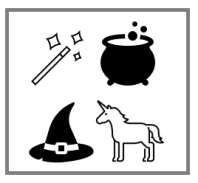 First, the ability to use magic is either learned through spells, an inherent gift, or both. Your world should establish which kind of path you are taking at the outset.
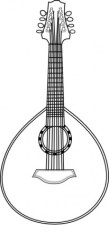 Consider musicians. A person who wins international piano competitions most likely won’t be a virtuoso at brass instruments.
 Like science and magic, superpowers are believable when they are limited in what they can do.


 Life in the Realm of Fantasy