
When we sit down to write, we consciously create pictures with words. If we have done our job, the ideas they generate in the reader’s mind are infinite.
 We often see memes and quotes about writing that resonate with us. Quotes often become memes because they are true and memorable and sometimes poke fun at us.
“One day I will find the right words, and they will be simple.” ― Jack Kerouac
The words we write create images in the mind of the reader. If the ideas they represent are phrased right, the complete picture will be understood. We must believe that readers will see the images we paint for them.
“The secret of being a bore is to tell everything.” – Voltaire
This is where it becomes difficult for me as a writer. I know I don’t have to spell everything out in minutia because readers are intelligent. But the insecure writer inside me fears that the reader will become confused if I don’t.
Still, I force myself to trim it down. My editor regularly points out the fluff. If I offer the reader a framework to hang their imagination on, they will see the story.
“The role of a writer is not to say what we can all say, but what we are unable to say.” – Anais Nin
I write because writing fiction helps me work my way through troubled times. When I write, I can better see how to navigate life experiences that seem too big, too scary. I face things head-on, use my incredible Office Managerial Superpowers and get things done.
I write for me, but readers may feel those emotions and sympathize with my characters’ situation. They may find a little comfort in knowing they aren’t alone.
I’m a poet. Keeping it simple isn’t my best thing, but I’m working on it.
“My aim is to put down on paper what I see and what I feel in the best and simplest way.” – Ernest Hemingway
Hemingway gives us a truism here—don’t use “ten-dollar-words.” That’s an old-fashioned term for long words used in place of more common words. Word nerds (like me) adore those rare, bombastic morsels of linguistic delectableness.
 However, obscure and pretentious prose (such as I enjoyed laying down in the preceding sentence) annoys the majority of readers. I want my work to please a reader, so I don’t indulge in ostentatious phrasing except in poetry.
Right now, my editor is combing her way through the final draft of a manuscript I hope to publish this spring. She keeps me on track and points out where a reader might have to find a dictionary and look up a word.
Sometimes I leave the words in, because they are the only ones that work, and I don’t want to underestimate my readers by dumbing down my prose. Occasionally looking up a word can be fun and reading on an electronic device makes it easy.
Even though writing fiction is a solitary occupation that takes up my early morning hours, I find that writing a few paragraphs in my journal each evening helps organize my daily life. Things that happened that day become clearer once I write them out. Tasks that seem too big to accomplish are easier to resolve once I have them broken down on paper.
Writing fantasy offers me the chance to express my ideas, in a safe, non-threatening environment, without pushing them on other people. These ideas become part of the scenery, subtle hints detailing the societal framework the protagonist must live in.
All writers do this, no matter what genre or category they write in. Our personal philosophies become entwined in the book in subtle ways. Whether intentional or not, we use our words to create societies and offer ideas that challenge the status quo.
Choosing our words well is part of the job. Often, I feel a bit poetic when visualizing the world in which the story takes place. I try to tame it, but it emerges, hopefully in palatable bites. I don’t want too much—it has to be just enough to create an atmosphere.
I became a poet and songwriter because I love words, love twisting them, love rhyming them—just love them. My whole family adores words in all their glory. My parents used proper words and expected us to know and use them.
My Dad loved words so much that he mangled them just because he liked how they sounded. He was an amputee, and sometimes he became so frustrated that he lost his words and resorted to creative cursing.
 Mama and Dad both invented words and twisted others: a screwdriver was a skeejabber. Any object can be a doo-dad, but they were often doodle-be-dads in our house. When one or the other parent was mystified, they were bumfuzzled.
Seldom-used arcane words are in my blood, so writing lean, relatable prose is an ongoing task. I’m always trying to tone it down but not flatten it. I want a little of the poet to show through and my narrative to be literate, but I also want it to be readable.
Striking the right balance is a process.
“To write well, express yourself like the common people, but think like a wise man.” – Aristotle
 Then there is the marketing of the finished product, but that is NOT my area strength, so I won’t offer any advice on that score.
 However, we must have a fundamental understanding of basic mechanical skills. These rules are the law of the road, and readers expect to see them. Knowledge of standard grammar and punctuation rules prevents confusion. Readers who become confused will set the book aside and give it a one-star review.
 Ernest Hemingway
 Each author is different, and the length of time they take on a book varies. Some authors are slow—their books are in development for years before they get to the finish line. Others are fast—their novels complete and ready to be published in a relatively short time. Regardless of your timeline, this is where project management skills really come into play.
 But as I said earlier, I have no skills in the area of marketing and no advice worth offering.
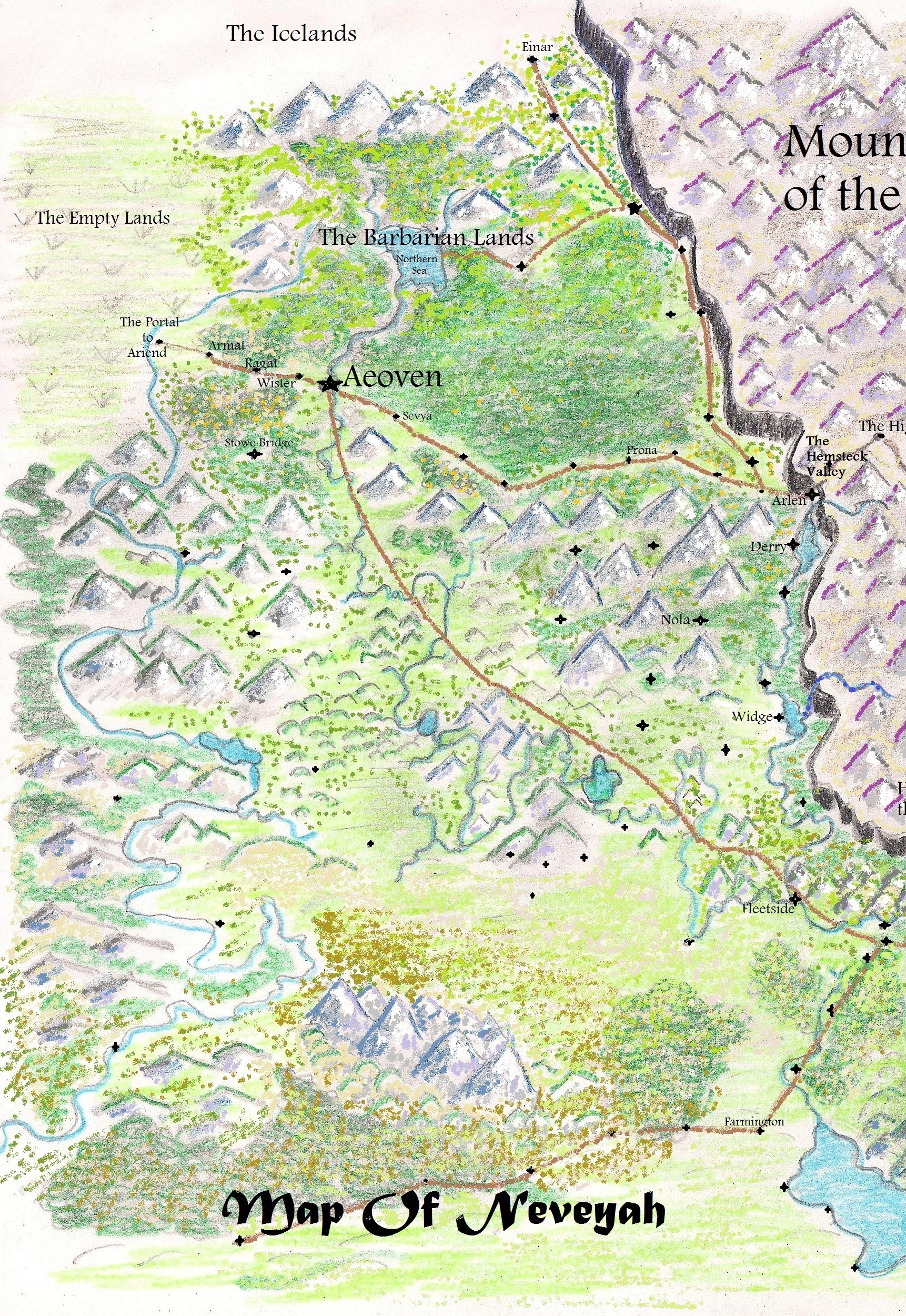
 I began my current project with an idea for a character, and I knew what the ultimate end of the story is because it is already canon in the Tower of Bones series. The difficulty I have had was devising a completely different culture, the pre-culture if you will.
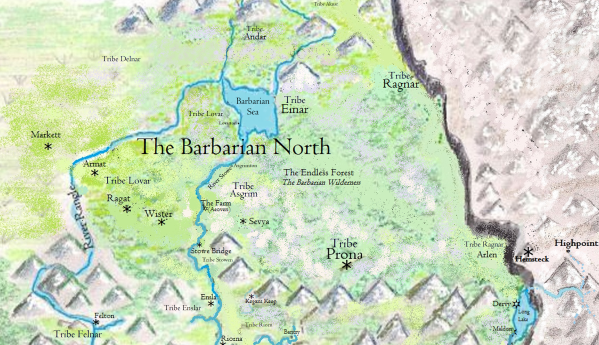 Alf’s best friend has triggered a mage trap and fallen to the Dark God. His wife has left him and dumped their sick child on him, and he has been chosen for a task he doesn’t want—that of Shaman. He believes that the Barbarian Tribes are the key to defeating Tauron because their culture is strongly rooted in the concept of community. Each member of the community can defend themselves against raiders, something the people living in the citadels of the south have forgotten.
 Pantser vs. Plotter
  Planster




 Life in the Realm of Fantasy
