

The Plaza After Rain, Paul Cornoyer PD|100 via Wikimedia Commons
“Theme” is an idea or message that flows through a story from beginning to end. Theme is what readers think the work is about but it is also what the work itself says about the subject.
It is ephemeral in that theme is only an idea, but it is like the moon–it is there and the world is greatly affected by it through the pull of gravity: witness the tides.
In a given work the theme might never be mentioned outright, but the characters’ actions are motivated by it and the plot revolves around it. Here is a link to a list of 101 common themes in books.
How do you make something as hard to get a grip on as a theme central to your story? The theme was an idea about the plot, a notion you had about your story when you first began to write it, no matter what the setting you placed it in was, or whether the genre was fantasy, sci-fi, paranormal, or contemporary fiction.
 Perhaps you are writing a tale where a group of people face heroic challenges in a war. On the surface this looks like it it is all about the action, but in reality it is is not. It is about relationships, the bonds of friendship, and the way the events of this war bind a group of soldiers together and also the way events test those bonds, perhaps breaking them. The theme of this tale is the way fighting a common enemy binds strangers from all walks of life together: creating brothers- and sisters-in-arms.
The way I look at it, the theme is as important as the main character. You spend as certain amount of time creating strong characters. Perhaps you are like me and make personnel files for each new character so you know who they are, how they think, and how they will react in a given situation. Or not, but you know your characters the minute the enter the story.
I try to identify my theme early on, and write a short paragraph to myself to remind me of what that central idea was so I stay on track. During the initial writing process I regularly refer back to that little note, to ensure I have not lost my way. I want to write in such a way that I emphasize and exploit that idea throughout the book or short-story.
Initially, when I first started writing full time, I was not always good at sticking to my original idea. At times the core themes became mushy, which, when you read these stories, takes away from the cohesiveness of what otherwise could have been good work. Theme is glue that binds your plot and characters.
The best way to get a grip on both identifying and solidifying the theme is to practice writing with a specific core theme in mind. Write a short story, just a piece of flash fiction. Make every paragraph represent some aspect of that central concept.
I tend to think of themes and then write stories set in fantasy worlds, but not always. Take this piece of Flash Fiction I wrote in 2013:
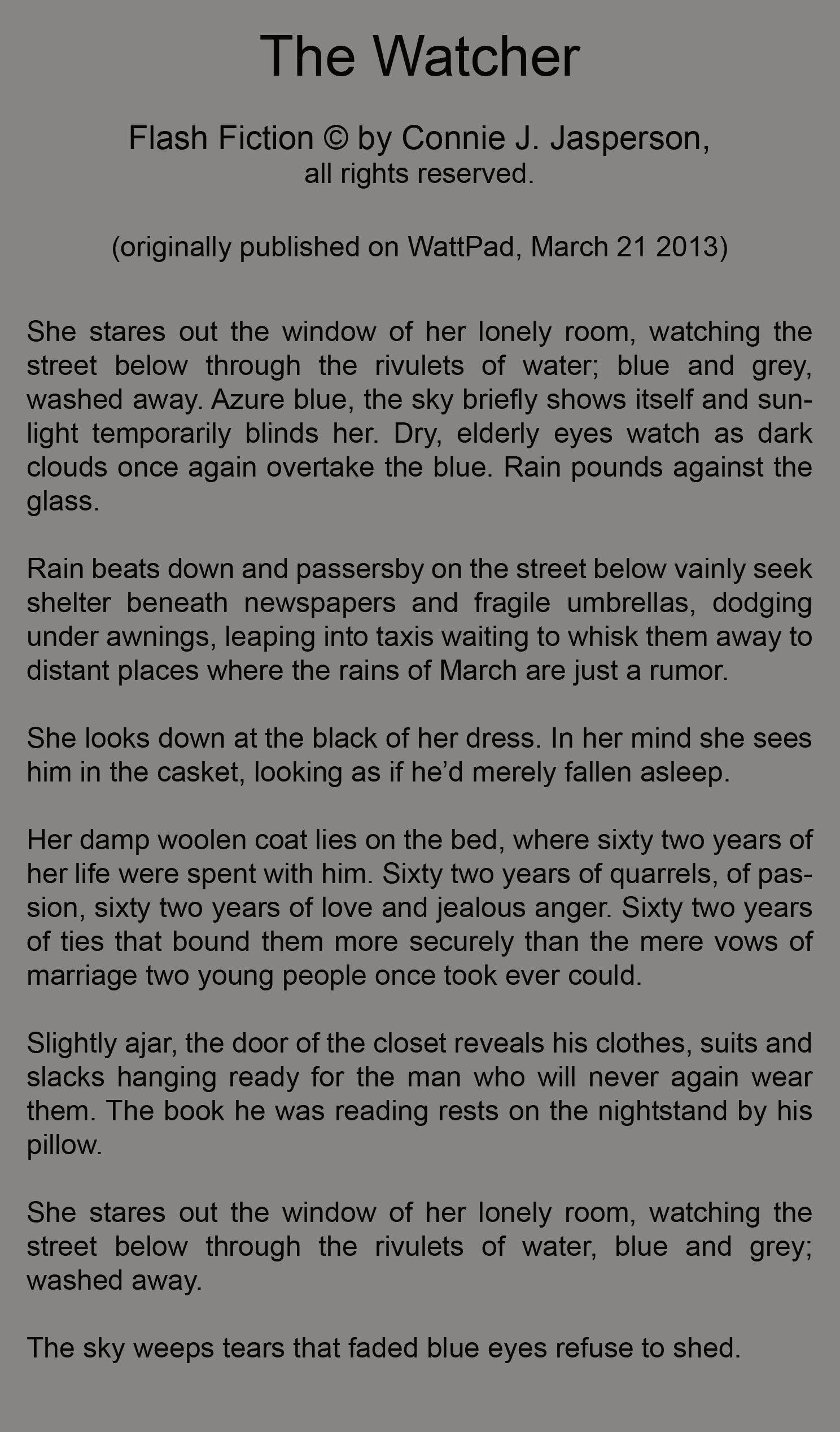
It is set in a contemporary environment with no fantasy elements. The idea came from the painting at the top of this post by Paul Cornoyer, and the action is minimal–an elderly woman staring out a window. But the theme is grief, and everything in these short paragraphs points to and represents her sense of loss.
How do you identify your theme? Sometimes it’s difficult, unless you start out with one in mind. Most of my books are based around the hero’s journey, and how the events my protagonists experience shape them. Alongside the theme of good vs evil are the sub-themes of brotherhood, and love of family.
These concepts are important to me on a personal level, and so they find their way into my writing. Ask yourself what is important to you? When you look for a book, what catches your interest?I am not talking genre here, I am speaking of the deeper story. When you look at it from a distance, what do all the stories you love best have in common?
- Political thrillers: Set against the backdrop of a political power struggle. Political corruption, terrorism, and warfare are common themes.
- Romance Novel: Two people as they develop romantic love for each other and work to build a relationship. Both the conflict and the climax of the novel are directly related to that core theme of developing a romantic relationship, although the novel can also contain subplots that do not specifically relate to the main characters’ romantic love.
- Literary fiction focuses on the protagonist of the narrative, creating introspective, in-depth character studies of interesting, complex and developed characters. Action and setting are not the point here, although they must also be carefully developed in such a way they frame the character, and provide a visual perspective.
- Science Fiction: realistic speculation about possible future events, based solidly on adequate knowledge of the real world, past and present, and on a thorough understanding of the nature and significance of the scientific method. Science and technology are a dominant theme, but based on current reality. Characters are still subject to sub-themes such as morality and love, but setting and science are the main themes.
- Fantasy: Often set in alternate, medieval, or ancient worlds, common themes are good vs evil, hero’s journey, coming of age, morality, romantic love. Can also be set in urban settings with paranormal tropes.
 On the surface these types of books look widely different but all have one thing in common–they have protagonists and side-characters. These people will all have to deal with and react to the underlying theme of the book. Morality, love, coming of age–these ideas can be found in nearly every book on my shelves or in my Kindle.
In my mind, the genre and the setting in which these characters react to the wider concepts are just a backdrop. The world they are set in is the picture-frame, a backdrop against which the themes of the story play out, and characters are shaped by a force beyond their control–the author.


 Life in the Realm of Fantasy