Tag Archives: writing

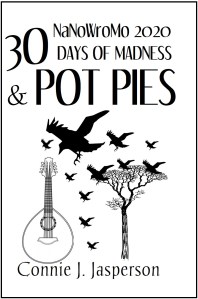
Jump-starting #NaNoWriMo2020 #amwriting

I have been a Municipal Liaison for NaNoWriMo since 2012. I started participating in this annual writing rumble in 2010. I  found myself taking the lead as the unofficial ML for my region in 2011 when our previous ML didn’t return. Organizing write-ins, cheering on my fellow writers—I didn’t know how it all worked. But it was a lot of fun, and I became close friends with a fantastic group of writers.

Over the years, I have learned many tricks to help people get a jump on their NaNoWriMo project.

Most writers will start an entirely new project. Some have an outline, others are flying blind, or in author speak, “pantsing it.”

Other writers will continue writing the first draft of an unfinished work-in-progress. On November first, they write all the new work in a separate manuscript that is for NaNoWriMo validation purposes.

This year I have several projects. One will be to write the final chapters of Bleakbourne on Heath, a novel that began life in 2015 as a weekly serial. I have the outline all written for that, and the ending is now firmly established. Finishing that should cover about 20,000 – to 25,000 words.

My second project is for my new duology set in Neveyah. I need to write the chapters that show my antagonist’s storyline. They are also outlined now, and when Bleakbourne is finished, I will move on to the Aeoven Cycle.

I also have three short stories and a novella to fill in on those days when I can’t focus on the tasks at hand, so I will have plenty to keep my mind churning.

Several years came where I had no novel-length ideas. For those years I wrote collections of short stories to submit to magazines and contests.

But what if you think you have no ideas worth writing?

Feel free to look on the internet for writing prompts.

Don’t let your flashes of inspiration slip into oblivion. Write them down and use them. A pre-prepared list of prompts can stimulate any number of projects. It’s like an “extra brain,” full of ideas to jump-start a short story.

Great novels all begin with a random idea, a “what if,” so I save this document to my computer’s desktop. It’s nothing fancy, just a list of ideas and one-liners that seemed interesting.

You could use sticky notes or a pencil and paper, but the important thing is to not forget them.

Whenever I don’t have a specific project to write on, I go to that list, select a prompt, and start writing. I write new words on that idea for fifteen minutes.

Often, I end up with a drabble or a poem to show for my fifteen minutes. Other times, what I produce is not worth much, but the act of writing new words is essential.

It trains your brain to think like a writer.

The following are some of my favorite prompts:

  • Edgar always said there was no place for pansies in this war. His preferred weapon was a dahlia.
  • Dogs and little children hated Winston. The rest of us merely despised him.
  • Death is the one thing you can take with you, and Sheila Harris was packed up and ready to go.
  • The body in the trunk of Edna’s car had become a real inconvenience.

Another trick to both jump-starting and finishing a NaNo Novel is to write the last chapter first. Then set it aside in a separate document from the NaNo Manuscript, and write the story to that moment.

Yes—it’s true. I wrote my first NaNoWriMo novel by writing the last chapter first and then wondering how the characters had gotten to that point, that place.

Once I knew how the book ended, I could write 60,000 to 70,000 words to connect up to that final denouement.

The original premise: An old man returns to a town that was the scene of his most treasured memories.

The book opens when he is a young man and takes him through grand love affairs and miserable failures. My soul was on fire with that book, and I couldn’t think of anything else.

Julian Lackland had a rough journey but was published this year.

Julian Lackland @ Books2Read

Julian Lackland @ Amazon

Julian wasn’t my first novel, but it was the first one I had completed. If you don’t finish your projects, the world will never read your work.

NaNoWriMo has shown me that writing prompts are an excellent tool that we can use to jump-start our imaginations. The Writer’s Digest website has an excellent post dedicated to writing prompts:

Creative Writing Prompts

If you want to practice writing something but can’t think of what, take a look and see if something interests you.  No two people are alike, so don’t be afraid to use a prompt from a popular site like Writer’s Digest. The way you go with it will be as unique and individual as you are.

Every day, things occur that I think would make such good magazine articles, and November is a great month to write them.

  • A spring day at the Olympia Farmer’s Market (one of the largest on the west coast).
  • The story of a mentally ill homeless woman whom I met on a rainy day.
  • A road trip down Washington State Route 105 from Westport to Raymond, and the ghostly, nearly abandoned coastal towns of rural Washington State.

So many random ideas and so little time to write those stories! That is why November and participating in NaNoWriMo has become so precious to me.

1 Comment

Filed under writing

The Antagonist’s Story Arc – part 2 #amwriting #nanowrimo2020

In Monday’s post, The Antagonist’s Story Arc, I explained how I organized my notes for each book or series using a workbook from a spreadsheet program, such as Excel or Google Sheets. Today I am continuing to plot out the opposition’s story arc to dovetail with what has already been established in the protagonist’s storyline.

So now, I go back to the notes on my protagonist, Alf, and look at my calendar of events. What clues have I inserted about the antagonist, Daryk, from Alf’s point of view? I need to make sure those are noted on Daryk’s timeline.

At this point, Daryk is only partially formed in my mind. I see him as he was before he triggered the mage trap, which is how Alf sees him. Daryk was a close companion, a canny adversary in any competition, and especially at the game of stones. He was a dedicated Sword of Aeos, deeply committed to rooting out the Bull God’s secret covens. Strategy and battle tactics were second nature to him. His best skill was how well prepared he was for every turn of events. He and Alf had worked together successfully since becoming hunters.

Alf only wants to remember him that way but knows he will be forced into a direct confrontation at some point. I have written the book’s opening chapter, where the event that changes everything occurs.

Since NaNoWriMo ended last year, I’ve gotten the first draft of most of Alf’s story arc written to the point where these two characters must face their destinies.

But only the protagonist has been fleshed out.

One thing that occurred to hold up this aspect of the first draft was the protracted illness and death of my good friend and structural editor, Dave Cantrell. Dave was an integral part of my writing posse, giving me the male perspective, which helped to round out my characters.

Now I need to decide how many chapters will be devoted to Daryk, and what events are important enough to be highlighted from his view. First, I need to identify his quest.

In a good novel, characters aren’t evil for no reason. Perhaps what the protagonist perceives as evil is merely a radically different way of living, a cultural difference. Or maybe they’re under pressure from some external force. In Daryk’s case, it is both.

While battling a mindbender and his coven, Daryk is separated from the Swords of Aeos. He enters the enemy’s altar room and finds a statue cut from amethyst crystal. This is a trap set to snare mages serving Aeos, Goddess of Hearth and Home.

The moment he touches it, Tauron, the Bull God, seizes Daryk’s mind. No mere mortal can withstand the personal attention of a god, and Daryk is now set on a collision path with destiny. Tauron is the God of War, jealous, paranoid, and insecure. He demands abject worship, extreme sacrifices, and harshly punishes those who fail. Success is rewarded richly, and the strongest rise to the top to rule over the weak.

Steeped in the lore of his warrior culture, Daryk is easily bent to the Bull God’s path. He is now convinced that he is the rightful heir to be the War Leader. He sees Alf as serving a weak and feeble deity, and that the tribes have lost their strength. His goal is to seize power and use the tribes to conquer Neveyah for the Bull God.

Tauron gives Daryk new gifts, one of which is the ability to sway large gatherings of people. Since he has no empathic magic, he needs to find and snare an empathically gifted healer to project his compulsions.

To do this, Daryk must accomplish several things from the outset:

  1. He must find the crystal cave and undertake a vision quest. The Bull God doesn’t know how Barbarian shamans are trained, so this quest is very different. The high trial Alf undertakes is vastly different from his first shamanic quest. Daryk was not trained to be a shaman, so he doesn’t know what the true trial entails. Since only the strongest are fit to rule, the test the Bull God sets before him is a much darker journey, one of overcoming and bending demons to his will.
  2. Having survived the trial, his first task is to find an empathically gifted healer and bind her to him. He uses Helene to project his spells of compelling and takes over her village to make his small army.
  3. Daryk needs a base of operations, so he must acquire a citadel. He and his new wife go to a lesser known place, Kyrano, as it isn’t somewhere Alf would look for him. Using compulsions to present themselves as distant relatives and charming the elderly baron, they are officially named his heirs. The old man dies that night in his sleep.
  4. Daryk needs to conceal the fact he is a rogue-mage, or he will have enemies on all sides, and he isn’t ready for that yet. He acquires a coven of elemental mages, binding them to him and using them to have a greater chi reserve to draw on when casting spells. They conceal from the population at large the fact that their new baron is a rogue mage.
  5. He must gather the resources to lay siege on Aeoven. Everything is at stake here: if he can’t defeat Alf on his home turf, Daryk will never bring Neveyah to the Bull God.

By charting his story arc, I’m laying the framework for what I will begin writing in November. Those weeks will be spent writing backstory and building Daryk’s world. I will connect Daryk’s timeline to Alf’s.

This kind of work is mind wandering, in a way. By writing this out, I am cementing Daryk and Helene’s characters and passionate commitment to their struggle in my mind.

Certain scenes showing critical information that Alf doesn’t have will be included in the final draft, but only those essential to the advancement of the plot. This is so the reader knows what is happening in the enemy’s camp.

For the reader, this knowledge raises the tension. Daryk must be shown to have a stronger position and better resources.

I intend to write about 30,000 words detailing Daryk’s story. Little of what I write will find its way into the final manuscript. My hope is that it will be there in how solidly I show these characters, their deities, and why they do what they must.

1 Comment

Filed under writing

The Antagonist’s Story Arc #amwriting #nanowrimo2020

We’re already approaching the middle of October. This is prime NaNo prep season for me. A few weeks ago, I shared that one of my projects was writing the final chapters to Bleakbourne on Heath, a novel that began life in 2015 as a weekly serial. I have the outline all written for that, and the ending is now firmly established. Finishing that should cover about 20,000 – to 25,000 words.

My second project is for my new duology set in Neveyah. I need to write the chapters that show my antagonist’s storyline. For my protagonist’s story to make sense and be compelling, I must show why my antagonist opposes Alf, and why we should have compassion for him and his struggle.

To that end, I must spend the next few days outlining what needs to happen for him at each point in the overall two-book story arc.

I also have three short stories and a novella to fill in on those days when I can’t focus on the tasks at hand, so I’ll be well set up with ideas.

So, let’s take a look at what I have to accomplish on Heaven’s Altar before November 1st.

The first hurdle I must leap is a trap of my own devising.

The calendar.

Neveyah Calendar © 2015 Connie J. Jasperson

In 2008 when we were designing the world of Neveyah as an RPG and before the story had been written, I had the bright idea to make a calendar where each month has

  1. 28 days
  2. The months are named after astrological signs and the days are sort of named like the Julian calendar.
  3. The 13th month is called Holy Month and is between Harvest and winter, but belongs to no season. It’s set aside for religious observances and family events.
  4. The 365th day of the year falls on the Winter Solstice and is called Holy Day. A day of feasting, it stands alone between Holy Month and Caprica, the first month of the new year. Every 4 years you have a double Holy Day, and the community throws a big party.

Was I out of my mind?

Yes! I suggest you stick to the common Julian calendar we know today, as it makes things a lot easier for you.

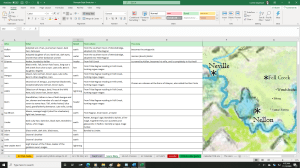
However, six books later, it’s canon in that world, so I have to roll with it. Fortunately, I was smart enough to make a visual calendar in an Excel workbook. I can cut and paste easily, note changes, and move events around if need be. This workbook covers all of the books set in the Tower of Bones world of Neveyah.

I was a bookkeeper for many years, so I use an Excel workbook to keep the stylesheet, plot outline, pertinent back history, and worldbuilding in one logical place. The tabs across the bottom show the different sheets detailing each aspect I need know for that world and that story.

I do this for every project or series, and you can do the same. If you don’t have Excel, you can use any free spread-sheeting program, such as Google Sheets. It’s just a visual way to keep things organized and avoid introducing conflicting elements.

The process of writing out my antagonist’s storyline is essential. At the outset, from Alf’s storyline, we know that Daryk has powerful earth-magic. However, Tauron, the Bull God, gives him new gifts, one of which is called “compelling.” Since he has no empathic magic, he needs to find and snare an empathically gifted healer to project his compulsions. He also needs to enslave a coven of elemental mages to have a greater chi reserve to draw on when casting spells.

So, there are five people with whom he has close relationships and conversations. The backstory of each of these characters must be created and added to both Daryk’s storyline and the overall cast of characters.

This is so I don’t inadvertently give two characters the same (or ludicrously similar) name.

I have already designed the magic systems for both sides of this conflict, and the world has been established. I have comprehensive maps that I use in conjunction with the calendar for plotting my events.

I’m fallible, but I do try to take everything into account when plotting my events. This way, when I begin writing I can concentrate on laying down the opposition’s story as if he were the hero and maybe generate a little sympathy for him.

4 Comments

Filed under writing

Thoughts on narrative perspective part 2: closeup on the antagonist #amwriting

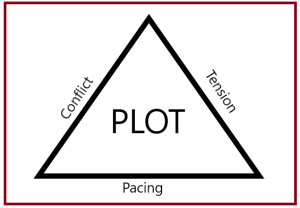
For scriptwriters, the closeup is an essential aspect of pacing. It focuses on one character and shows us details about them and their role that they (the characters) might not be aware of. This importance transfers over to how we show scenes in our written narratives. To get the most out of our words, we who write stories must frame our scenes the way scriptwriters do theirs.

We vary the narrative distance, which is our best tool to show humanity in our characters. The wide view shows the protagonist and their companions as they move through their environment.

Then we narrow the focus, perhaps take it down to a conversation between two people. One person drops out of the conversation, and we are left with the closeup view of our protagonist.

At our closest to them, we are in their heads. We hear their mental ruminations in real-time. By listening to this voice, the reader sees what the characters believe is at stake and how weak or strong they consider their position.

When we are drawn into a character’s head, we view them through the mirror in which they see themselves.

What we, as authors, have to consider is how that mirror is distorted. Never forget that all self-reflections are skewed, often to the positive, but usually toward the negative. We see flaws in ourselves that no one else does, so we don’t usually see ourselves as heroes.

This is because we subconsciously compare ourselves to others. We observe their abilities and are acutely aware of our own vulnerabilities in comparison. So, we strive to better ourselves.

Through manipulating the narrative distance, the author shows how the protagonist regards their companions, and what kind of people they are.

Sometimes, it raises the stakes if the author writes a chapter focusing on the antagonist. Take this opportunity to show us who the antagonist sees when they gaze into the mirror of self-reflection. Since nothing happens without a root cause, we can learn why they oppose the protagonist, and what their strengths are.

Now here is where we can make things interesting. What if the antagonist isn’t trying to be wicked? What if they are fighting for what they believe is the right thing? What if, in their view, they are the heroes who have the moral high ground?

Think of how much evil has come out of civil wars in humanity’s history. Then consider how firmly the opposite sides believed in their moral superiority, and what was lost or gained in the end. All interpersonal disputes are wars, just on a lesser scale.

How will you choose to show this on a smaller, personal level? The closeup shows us who the antagonist believes they are and why they have the right to oppose the protagonist.

Sometimes, if the writer shows little sympathy for the devil, it raises the emotional stakes.

Readers want to understand why the action is happening. Both sides need an opportunity to explore what they perceive as the conflict’s fundamental cause.

Authors show this through internal dialogue, moving out to a broader view with conversations, and expanding again to an external narrative.

As a reader, having hints of what is at stake for the opposition makes me care about the outcome. With the relationship established, we can widen the picture and show what is at stake for both sides. I want to feel a little compassion, or if not that, I want to understand how failing will change the losers’ lives.

Good pacing of narrative distance—moving in close, then widening out, and then moving back in—adds emotional power to the story. This tempo allows the reader to process the information and action at the same time as the characters.

Keep the stakes high and the emotions intense, and I will stay immersed in that book.


Credits and Attributions:

Wikimedia Commons contributors, “File:Before the Mirror.jpg,” Wikimedia Commons, the free media repository, https://commons.wikimedia.org/w/index.php?title=File:Before_the_Mirror.jpg&oldid=462235289 (accessed October 6, 2020).

Wikimedia Commons contributors, “File:Mirror of the souls.jpg,” Wikimedia Commons, the free media repository, https://commons.wikimedia.org/w/index.php?title=File:Mirror_of_the_souls.jpg&oldid=478982509 (accessed October 6, 2020).

7 Comments

Filed under writing

Thoughts on Narrative Perspective #amwriting

I regularly say this, but I’ll repeat myself: every author should be an avid reader. Years ago, I began writing out of desperation. I read exceedingly fast, and in those days, the library couldn’t stock new books in my favorite genres fast enough to keep up with my habit.

Even though I haunted the secondhand bookstores, I couldn’t afford to buy even used books in that quantity. Besides going to the library, I was limited to one new paperback book and two used ones a payday in those days. Every book I bought was money taken from the food budget to spend on something we couldn’t eat.

Nowadays, I am incredibly fortunate to be in a position to be able to read as much as I want, whenever I want.

It is the deep yearning for a good tale that fires my imagination and drives me write novels.

Every now and then, I can’t find the right book to read. When that happens, I consider what kind of story I’m craving. Books are food for the mind, and we all have different tastes. Sometimes we want a specific type of flavor, like when we crave chocolate or something spicy.

Usually, I feel that desire because a seed is growing, an idea for either a short story or a novel.

Because I gravitate to character-driven stories for my reading, I want to write about people striving to overcome forces greater than themselves. It might be fantasy, or it might not be. Several stories I’ve had accepted into anthologies recently were fantasy only in that they take place in the 1950s. I was a very young child then, so I have little memory of those days.

I love reading about characters who aren’t always the most well-behaved people. This means they are approachable, possessed of a flaw that resonates with me. It wouldn’t be a story if there weren’t a hero lurking deep within, waiting for some catastrophe to bring out that courageous side of them.

When I open the book, I want the first paragraphs to hook me. Those opening sentences establish three vital things:

  1. They set the tone of what is to follow, so if you want to snare the reader, don’t waste those precious sentences on “throat clearing” and backstory.
  2. They tell us who the story is about and how they see themselves.
  3. They establish the general narrative perspective.

I say ‘general’ because the authors whose work I like best tend to vary the narrative perspective/distance as the story progresses. I enjoy work where the pacing of a scene is shaped by the perspective of the characters and the narrative distance.

Imagine a scene where a woman empties the wastebaskets in the house, tidying up before she leaves for work. A crumpled note falls from the one beside her husband’s computer. She picks it up and automatically looks at it, not intending to pry, but just as a matter of habit.

They might bring us into the protagonist’s head, with free indirect discourse, taking us inside the character’s thoughts. What does Jake need a lawyer for?

Then we see what the author wants you to know about the character’s circumstances. His odd behavior suddenly made sense. Anger blinded her as Jake’s plan revealed itself.

And then they might move out to the external view. Sarah held the note, thinking, then pulled out her cell phone.

Good stories told from the protagonist’s point of view bring you in close, letting you feel the emotional intensity. Then the narrative perspective steps back a bit so you can process it at the same time as the protagonist does before you are brought in close again.

Perspective and pacing are the two areas I am looking closely at in my own work as I make revisions. I keep hoping that reading critically will improve the way I write prose.

So, all those books I plowed through last week weren’t just me avoiding housework. They were for research.

Honest.

2 Comments

Filed under writing

Autumn, and thoughts of #NaNoWriMo2020

September is ending. Here in my native northwestern forests, the colors of the big-leaf maples and alders paint the landscape in shades of yellow and gold.  Lower in the canopy, bursts of red and scarlet from our sumac and vine-maples shout that autumn has arrived, and summer is leaving.

In the high country, golden larches surprise those hikers who’ve never seen a deciduous conifer. They might think the forest is dying when really, it’s just going to take a long nap.

The autumn forest feels mysterious, a place of change and shadows, with depths we can’t really know.

The sky is also changing. Our days are shorter, and while the sun is shining this week, the monsoon months approach. Rain will be our most constant companion, or heaven forbid, lowland snow.

I don’t mind the snow now that I don’t have to drive in it, but something about the slightest dusting sends the Northwest into a panic. By the middle of October, gray overcast skies seem to linger unending, eternal.  Visitors from sunnier places wonder if the sun will ever shine again.

I always tell them to wait a day or two. When the clouds finally part, they reveal a shade of blue so beautiful that words can fail me.

These are the writing months, the mad dash to finish that first draft, and the build-up to NaNoWriMo. These are the days when inspiration knocks on the door, calling “Trick or treat!”

In October, I begin prepping for the month of intensive writing.

If I am going to be effective, I will need to make an outline of the basic story arc. I will make one even when my novel could end in several different ways.

Writing a story as it falls out of my head can be fun in short bursts. However, my years of experience with NaNoWriMo have taught me that I will quickly run out of ideas of what to do next if I don’t have some sort of guide.

In some novels, it feels as if the authors became desperate at the halfway point. Random sex and violence occur without any real feeling. It’s a terrible temptation to kill someone just to stir things up and raise the emotional stakes.

I don’t want to be faced with that dilemma. I intend to begin writing on November 1st with a solid notion of  who the story is about, what their problem is, and where the story will go. For me, good preparations are the key to a finished first draft. Sometime toward the middle of October, I will share some of my simple nano-prep ideas.

There are times when someone must die to advance the plot or fire up the protagonist, but readers get angry with authors who kill off too many characters they have grown to like.

Autumn and winter are also my reading days. In October I immerse myself in reading, mingled in with the writing I ordinarily do. I admit that some days I get so into what I’m reading that I forget to cook dinner.

Oops.

Today’s autumn glory will intensify and linger for a few short weeks. Then, the rain we Northwesterners are famous for will move in.

Those few leaves fortunate enough to go unraked will become soggy and moldy, waiting for the wind to set them flying. They will huddle in the gutters and against the foundations of buildings, seeking warmth and perhaps regretting their freedom.

And when the skeletal remains have turned to soil as all leaves must, perhaps a seed will take root. Maybe one day, the seedling-tree, nurtured by this year’s broken remains, will shade me as I walk.

In autumn, my ideas for stories are like fallen leaves. I cast them flying in the wind that is NaNoWriMo, letting them go where they will against the framework of my world and plot outline.

All I can hope is they come to rest in a place where they will nourish the seeds of the story I intend to write when November 1st arrives.


Credits and Attributions

Albert Bierstadt – Autumn Landscape PD|100 via Wikimedia Commons
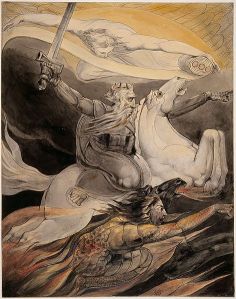
Autumn Landscape with Pond and Castle Tower-Alfred Glendening, 1869 PD|100 via Wikimedia Commons
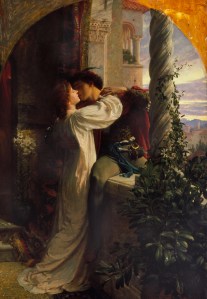
2 Comments

Filed under writing

Navigating the different ways in which we learn #amwriting

I went to school in a small town in Washington State and graduated in 1971. I don’t exactly know how that happened, as I was the most undereducated and socially ignorant student ever given a diploma from Tumwater High School.

While I didn’t thrive in school, I was a boomer, so I suppose they passed me along to make room for the next year’s students.

For the most part, I didn’t like school. Everything happened so fast and moved so quickly that I rarely understood what was going on, or what we were doing. I was the odd duck in the pond, never quite aware of the proper social cues, and always out of step.

Teachers regularly pointed out that I was an underachiever.

Music was my refuge, my guaranteed A. When it came to reading, English, and literature, I was ahead of the class. Because social studies/history and science were so reading-intensive, I managed to get decent grades in those classes too.

I was funneled down the college path by my parents, despite the fact I didn’t have a clue about algebra. Proficiency in advanced mathematics was a requirement for admission into any college or university.

No amount of private tutoring could do more than barely keep me from failing. Getting a “D” was the best I could do in that subject. But I did understand bookkeeping math, and because I could see why everything added up, I liked it. I was a bookkeeper for most of my working life.

In 1993, the company I worked for finally bought a computer. All the Microsoft products in those days came with a large book, but I needed to move my files from paper to Excel as quickly as possible. Out of desperation, I brought my then-fourteen-year-old son in on a Saturday, and he showed me how to transfer my handwritten spreadsheets to Excel.

Once Daniel began showing me how it worked, it was as if a supernova had gone off in my mind. All those wacky algebra equations I had never understood suddenly made sense.

In Excel, I had a visual system before me that showed me how it worked. A workbook has several spreadsheets in it, each made of rows and columns of cells. You must use the right language, such as =sum(A1+A2). But once I learned the language, the bookkeeping world was my oyster.

Best of all, if I changed the values in cells A1 and A2, the sum in A3 automatically updated.

And I could link cells between spreadsheets in the same workbook!

Hallelujah! The Income & Expense report automatically updated every time an entry was made in the check register, accounts receivable, or accounts payable.

No more poring over a 32-column spreadsheet with a yardstick and calculator for half a day only to be 3 pennies off at the end. Mistakes were easily and quickly dealt with, saving an incredible amount of time.

As an adult, I discovered that I am a visual learner. In other words, I don’t do abstract well at all. In 1997, I was diagnosed with a learning disability that no one ever thought about in my era. But it is actually pretty common: attention deficit disorder without hyperactivity (ADD).

So, I was not a lazy student, as my report cards all said. I really was working hard, trying to keep my head above water.

I was just unable to see the shore I was swimming toward.

And what does all that mean? I don’t see it as a disability, because for me, it can be worked around.

I just have a different way of learning that didn’t lend itself to the way traditional public school systems taught during the time I was growing up.

College was easier for me to navigate in some ways. As an adult, in classroom situations, I get confused easily when hearing verbal instructions.

However, college-level textbooks aren’t as ambiguous as those we had in elementary school. If I am given handouts with the high points written out in plain English, I can take the time I need to research and absorb the information.

Despite my less than happy years in public schools, I love learning. All my adult life, I have been educating myself, sometimes formally, but mostly via the internet. Being able to learn at my pace and not have to wonder what I missed is sheer heaven.

This is why writer’s conferences are good for me. Yes, most lectures are delivered verbally, but they are short, and the presenters are willing to answer questions. Also, having a laptop gives me the ability to take readable notes as the presentation goes along. And most presenters give useful handouts or direct you to books that illustrate their subject.

I did enjoy the PNWA virtual conference this last weekend and was able to sit in on many excellent seminars. Much of what I heard reinforced previous knowledge.

However, every new concept I was exposed to is still fermenting, rolling around in my mind, and will probably emerge in a blogpost. I heard several different ways of looking at one aspect of writing craft or another, but I still need to think about them.

Yes, even virtual conferences are a test of my endurance.

I still feel confused as I sit in a Zoom meeting, taking notes and trying to understand the finer distinctions between simple things that everyone else grasps right away.

But that no longer paralyzes me.

I now know how to navigate the way I learn. I go back to my notes to see what I want to investigate further. Then I go out to the internet and seek information from more than one source. By having several differently phrased explanations, something I didn’t quite understand will be made clear.

I absorb and remember information in a different way than the majority of people do, but I no longer panic over it. You may learn in yet another way.

None of us fit into that box in the center of the learning spectrum, the one labeled “normal.” The key is to relax and absorb the information in the way you feel most comfortable.

Being diagnosed with a learning disability at the age of 44 was a surprise, but it explained so much. I’d gone through life feeling like the lone puzzle piece from a jigsaw puzzle with a similar but different picture that had been put into the wrong box. And now I knew why I didn’t fit.

That diagnosis in 1997 gave me the tools I needed to educate myself. It also gave me the confidence to accept how I am different and be a little more outgoing. I still lack certain social skills, but I’m improving there too.

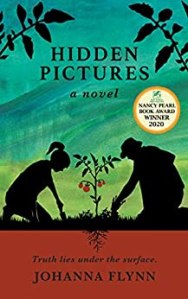
And one final update on the PNWA conference: my dear friend and fellow member of the Tuesday Morning Rebel Writers, Johanna Flynn won the Nancy Pearl award for her book, Hidden Pictures. This is so meaningful, beyond the cash prize, as it is an award that is voted on by librarians.

So, keep writing, and keep submitting your work. Educate yourself in the way you feel most comfortable and have faith in yourself. We never know what lies just around the corner.

4 Comments

Filed under writing

Virtual Conferences #amwriting

We are now entering the virtual convention season. PNWA (the Pacific Northwest Writers’  Association Conference) kicks off on Thursday the 24th. This will be the first year they’ve been virtual.

I will miss the people I usually see there and hope that next year we can meet in person.

However, while the in-person conference was a lot of fun, this is much gentler on the budget. I don’t have to rent a room for three nights, and I can prepare my own food as I normally do, which is not an easy thing for a vegan on the road.

I’m really looking forward to the awards night, as my good friend, author Johanna Flynn is up for the prestigious Nancy Pearl Award for her book, Hidden Pictures—and that is a big deal.

I was a reader in the short story category, and one of the stories I read is up for an award—this makes me happy. I love it when I come across a brilliant piece of writing, and some of the entries I read this year just shone.

The Nebulas were a virtual conference this last May, and I enjoyed how easy it was to navigate the whole thing. I wouldn’t have attended the Nebulas had it not been virtual, as the total cost for air-fare and rooms and dining would have been prohibitive. It was a real joy to be involved, even if only on a virtual level.

The reason I love conferences is simple. You meet people and make connections, and sometimes you forge friendships. If anything is missing from a virtual conference, it is that little touch of humanity.

However, much can be gained, even in these challenging times. This year, Brit Bennett, New York Times best-selling author of The Vanishing Half and The Mothers,  will be giving the keynote speech. I’m looking forward to an inspiring evening.

The master’s classes are included in the basic fee this year since it is a virtual conference. I’ve always enjoyed these classes when I had the extra money, but there were years when I couldn’t afford them. Many people have wanted to attend master’s classes but couldn’t find the extra money, so this year they will have that chance.

I am interested in writing craft seminars (of course). Still, I will be attending workshops on negotiating the rough waters of the business side of writing. Sunday will focus on screenwriting.

PNWA is offering both 20 minute and 1-hour seminars, which allows folks the chance to walk around and stretch their legs. I think a shorter meeting will encourage people to remain at their computers and engaged.

I hope to have a lot of new ideas for posts on craft and the business of writing in general. Some years I come home fired up about specific topics that were covered, in both craft and business. I hope to end this conference with new viewpoints on what sometimes feels like old dogmas.

I love learning. Discovering fresh ideas, seeing new ways of looking at things we take for granted—these are the reasons I attend writers’ conferences.

3 Comments

Filed under writing

Character Building: Writing Subtly Positive Emotions #amwriting

Most writers find it easy to connect with the flamboyant emotions, such as hate, anger, desire, and adoration. However, emotions have “volume” ranging from soft to loud. Today we are looking at generally positive emotions, but at low volume.

The volume control is a crucial part of the overall pacing of your story. “Loud” deafens us and loses it’s power when it’s the only sound. However, like the opening movement of Beethoven’s 5th Symphony, the entire range of volume can be effectively used to create a masterpiece.

These subtle emotions convey the mood of the piece.

As we said in the previous post, Writing Subtly  Negative Emotions, low-key shades of emotion can go almost unnoticed, but they lend solidity to the world. Under the surface, vibes, positive or negative, give us a rounded view of a character, making them less of a cardboard-Barbie and more of a real person.

We’re all aware of one positive emotion that can go bad—love. When love is reciprocated, it’s a positive feeling, and we all enjoy a good love story.

However, when love starts out with promise and then goes terribly wrong, you have the makings of a deep, dark story filled with possibilities.

But none of that—we’re focusing on the less intense, but still good, vibes today.

Another positive emotion with many nuances is Joy. The way we feel joy ranges from mild to overwhelming, from a slight smile to an experience so profound that tears spring to one’s eyes.

Subtle emotions don’t stand out and grab the reader.

They are there under the surface, tinting the reader’s opinions about the story and the characters. Small, quiet emotions linger, and if they are positive, they leave an impression we can’t describe, but we are happier for having experienced them.

These feelings are difficult for a writer to articulate. However, if you want to forge a connection between your reader and the characters in your narrative, you must include small indicators that individuals in the cast sometimes experience a sense of:

  • Competence
  • Confidence in their friends
  • Cooperation
  • Courage
  • Decisiveness
  • Discovery
  • Group ethics
  • Happiness
  • Individual moral courage
  • Purposefulness
  • Revelation
  • Satisfaction
  • Self-confidence
  • Serenity
  • Strength
  • Success
  • Sufficiency
  • Trust

These are good vibes that are rarely articulated, but they suffuse the scene and color the way in which the characters interact with each other.

Some positive emotions can be more intense, yet still not overpowering. Those moments can be shown by an immediate physical reaction, combined with internal dialogue or conversations. We  use the same 1 – 2 – 3  trick of word order when describing a mild experience as we do with louder emotions.

  1. Start with the visceral response. There will be an instant reaction. Good emotions are felt first in the chest, in varying degrees, from a feeling of warmth to the stronger, heart-pounding sensation. But we’re keeping it subdued, here.
  2. Follow up with a thought response. If it is a mild reaction, give it a moderate thought response. “Ah hah!” Whatever your style and word choices are, showing small moments of relatable happiness or pleasure makes our protagonist more sympathetic.
  3. Third, finish up with body language. That is how emotions hit us. We feel the shock then experience the mental reaction as we process the event. Our body language reflects these things.

What if you are writing a story where one of the antagonists will eventually become part of the protagonist’s inner circle? Including small positive thoughts early on in their narrative can foreshadow that this character may turn out to be the ally that turns the tide.

I’ve pointed out many times that conflict is what keeps the protagonist from achieving their goals. Large emotions are easy to write. But frequently, in real life, our smaller joys have a longer-lasting impact, and the memory of these can be the impetus that keeps the soldier fighting during the darkest hours.

Allowing ourselves and our characters to feel joy over small things, to experience a sense of accomplishment is a gift to the reader. The reader will experience those emotions as if they are theirs, and the book will be that much more meaningful to them.

6 Comments

Filed under writing

Character Building: Writing Subtly Negative Emotions #amwriting

Most writers find it easy to connect with the “loud” emotions, such as anger and hate. However, negative emotions have nuances the same way that positive emotions do.

Subtle shades of emotion give us a rounded view of a character, making them less of a cardboard-Barbie and more of a real person.

One negative aspect of our human character is a tendency for us to experience an uncharitable emotion known as schadenfreude. We are all familiar with it, as we experience it on a personal level every now and then. Some people take great joy in this, gaining a sense of superiority.

About schadenfreude, Via Wikipedia:

Schadenfreude is a complex emotion, where rather than feeling sympathy towards someone’s misfortune, schadenfreude evokes joyful feelings that take pleasure from watching someone fail. This emotion is displayed more in children than adults; however, adults also experience schadenfreude, though generally concealed.

In other words, we know it’s an unkind emotion, and we don’t like it in others. Like theft and lying, it is a fundamental aspect of our survival mechanisms that was hardwired into us before we came down from the trees. Primates in the wild have been observed exhibiting our most negative behaviors. 10 Facts About Chimpanzees That Hold A Dark Mirror To Humanity

For most of human history, popular humor has had an aspect of schadenfreude to it. Charlie Chaplin, The Three Stooges, and Jerry Lewis were all popular comedy acts of the 20th century who employed physical comedy that evoked a feeling of schadenfreude in the audience.

We don’t like admitting it, and we try to rise above it. This is one easily relatable emotion you can use to show that your protagonist or others in the cast are real.

Another negative emotion with many nuances is envy. Envy can take the form of wishing one had that lovely thing. Allowed to rage out of control, jealousy becomes the propellant fueling a violent takeover.

Subtle emotions are the kind that prey on you. These feelings are difficult for a writer to articulate. However, if you want to keep raising the tension in your narrative, you must include small indicators of:

  • Anguish
  • Anxiety
  • Defeat
  • Defensiveness
  • Depression
  • Indecision
  • Jealousy
  • Ethical Quandaries
  • Inadequacy
  • Paranoia
  • Powerlessness
  • Regret
  • Resistance
  • Temptation
  • Trust
  • Unease
  • Weakness

These are emotions that can be shown by an immediate physical reaction, combined with internal dialogue or conversations.

As with louder emotions, we want to create a sympathetic response in the reader. So, we use a simple 1 – 2 – 3  trick of word order when describing the character’s experience.

  1. Start with the visceral response. How does a “gut reaction” feel? Nausea, gut-punch, butterflies…how do you respond to internal surprises?
  2. Follow up with a thought response. If it is a mild reaction, it might be on the order of “Heck!” or “Oh dear….” Whatever your style and word choices are, showing their dismay makes them human.
  3. Third, finish up with body language. That is how emotions hit us. We feel the shock then experience the mental reaction as we process the event. Our body language reflects these things.

What if you are writing a story where the antagonist begins as part of the protagonist’s inner circle? Including small negatives like envy and schadenfreude in their narrative can foreshadow that this character may turn out to be the skunk in the laundry hamper.

Conflict is what keeps the protagonist from achieving their goals. Large conflicts and emotions are easy to write. But frequently, in real life, our smaller, more internal conflicts create greater roadblocks to success than any antagonist might present.

These tiny inner voices of self-destruction that hold us back are crucial to creating relatable characters.

8 Comments

Filed under writing