Tag Archives: writing

Muffins and Mayhem #amwriting

Friday morning, I took one of my current works in progress back to 12,000 words. (From 90,000.) I’ve been fighting this thing since that point. I hated to admit that I took a wrong turn so early on, but the story was going in completely the wrong direction.

Never one to quit as long as one foot remains un-shot, I still tried to force it, until Friday morning when I finally admitted I had written myself into a corner.

However, what I accomplished with the 3 months of work I just trashed is this: I have the world solidly built. I have the characters firmly in my head. Much of what was cut will be recycled back into the new version, but it is simply easier to begin at the place where it went awry.

I now know why the story arc was flatlined, AND I don’t need to murder anyone or add a dragon.

It feels like mayhem when it’s happening but it isn’t the end of the world. It’s just a detour.

This sort of thing happens to me all the time, which is why it takes me so long to write a novel.

For the coming year, I have one novel at the proofreading stage, one novel at the “needs two more chapters and then we’re done but first I have to think them up” stage, and two novels are at the beginning stage.

Short stories will continue to flow from my keyboard, although I haven’t had as much luck with selling them lately as I did last year. Some years are better for sales than others. I always think it’s a matter of the story hitting an editor’s inbox at the moment they are craving that sort of tale, so if your timing is off or you have sent it to the wrong magazine, it won’t sell.

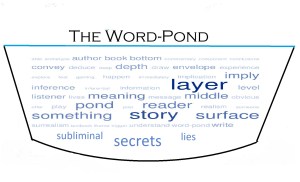
Here on Life in the Realm of Fantasy, 2020 will find us delving into the depths of the Word-Pond again, focusing on specific aspects of storytelling. Exploring all the many nuances of writing craft is my hobby. I love it when I learn something new.

And as always, I will continue looking at Art History with my Fine Art Friday posts. I think Friday is my favorite day of the week—I’m a confirmed Rembrandt fangirl. I find inspiration and knowledge in the archives of Wikimedia Commons.

Since this is the final week of the year and we’re all busy going here and there, you probably aren’t into a long-winded blogpost. I leave you with a quote from L. E. Modesitt Jr., one that, in my mind, can be applied to writing and publishing novels:

“Everything takes longer than you’d think … except disaster and failure.”  ~~ L.E. Modesitt Jr. “The Mongrel Mage.”

And I will also leave you with this quote from Erin Morgenstern, one that applies to life in general:

“A quality muffin is just a cupcake without frosting.” ~~Erin Morgenstern, “The Starless Sea.”

2019 was a year blessed with an abundance of quality muffins, so no complaints there. My disasters were few, and each one resulted in a positive change of some sort, so perhaps they weren’t failures.

Perhaps they were opportunities for growth.


Credits and Attributions:

Blueberry Muffin, National Cancer Institute, Renee Comet (photographer) [Public domain]

NCI Visuals Food Muffins, Unknown photographer/artist [Public domain]

Comments Off on Muffins and Mayhem #amwriting

Filed under writing

Writing Violence #amwriting

I don’t write horror, but some of my novels contain certain elements of that genre. These shocking, violent scenes were moments that changed my characters’ lives.

Violence is an aspect of depth that is difficult for some authors to write well.

I dislike graphic violence that is there for the shock value. If the violent events don’t somehow move the story forward, change the protagonist profoundly, or affect their view of the world, you have wasted the reader’s time.

Understanding how to design certain action scenes and where they fit into a narrative is a critical skill we must develop if we want our readers to love our work. When you raise the specter of failure, you also raise the emotional stakes and keep the reader turning the page.

Random carnage has no place in the well-crafted novel, no matter the genre. The key word here is random.

When it comes to writing scenes that involve violence, ask yourself three questions:

  1. Will this event profoundly change my protagonist’s life?
  2. What does this event accomplish that advances my plot?
  3. Why is this event unavoidable?

Blood and sex do have their place in some of the best stories I have read, and they were watershed moments in the protagonists’ lives. Those passages were difficult to read but were the events that changed everything.

When you read Stephen King’s work, you find shocking events and horror. But more importantly, you see a narrative that was carefully thought out. Every event pushes the protagonist’s story to its conclusion.

They were the moments that changed the protagonists for good or ill. These scenes were crafted seamlessly into the narrative.

Violence in the horror novel is all the more frightening when it is subtly foreshadowed and unavoidable and occurs at a surprising moment. It is not random, not inserted for shock value or just to liven things up.

This means you must plan your horror novel with an eye to ratcheting up the fear and tension in every scene. The threat and looming disaster must be shown, and the solution held just out of reach.

At first, emotions are high, and the situation sometimes chaotic, and often the protagonist believes he can resolve the situation if he can just achieve one thing.

In the process of experiencing these events, the protagonist suffers doubt, fear they may not have what it takes, and their quest won’t be fulfilled. From this point on, the forces driving the plot are a train on a downhill run, picking up speed, and there is no stopping it or turning back now.

Within the overall story arc, you must insert scenes that illuminate the motives of all the characters, including those of the antagonist. The characters continue to be put to the test, and the subplots kick into gear.

These scenes allow the reader to learn things as the protagonist does. They offer clues that the characters don’t know, information that will affect the plot.

Those clues are foreshadowing. Through the first half of the book, subtle foreshadowing is important, as it piques the reader’s interest and makes them want to know how the book will end.

  1. The first event, the inciting incident, is the one that changes everything and launches the story. Because the best stories are about good people solving terrible problems, this incident has a domino effect: more actions ensue that push the protagonist out of his comfortable life and into danger. This peril can be physical or emotional–after all, many things rock our world but don’t threaten our physical safety.
  2. At the midpoint, another serious incident occurs, launching the third act, and setting them back even further. Now the protagonist and allies are aware that they may not achieve their objectives after all. Bad things have happened, and the protagonists must get creative and work hard to acquire or accomplish their desired goals. They must overcome their own doubts and make themselves stronger.
  3. Just when the characters have recovered from the midpoint crisis, another crisis occurs, the event that launches the final act. This final event is where someone who was previously safe may die.
  4. Each violent event should be worse than the previous. They begin relatively minor as compared to the final event and grow progressively more difficult. As the narrative moves on, the reader must fear the protagonist will fail.

What are the consequences of failure? Fear is powerful motivator, so raise the stakes and the tension as the story progresses.

Scenes that involve violence are difficult to write well unless you know how the action will affect your protagonist. What will their long term reaction be?

Also, you must remember to give both the protagonist and the reader a small break between incidents for regrouping and planning.

Action, aftermath, action, aftermath—often compared to the way a skater crosses the ice: push, glide, push, glide.

Writing violence well requires planning on the part of the author. It requires us to sit back and consider what events will be unavoidable and will change the characters for good or ill.

Then we must insert them into the narrative in the right order, subtly foreshadowed, and all consequences must be both logical and advance the story.

THAT is where writing becomes work, but when done well, you can end up with a great novel.

A novel that I wish I had written is Dean Frank Lappi’s Black Numbers, the first novel in his Aleph Null series. This a deep, violent novel with great characters and intentional plotting, and kicks off a brilliant series. Nothing that happens in that novel is random. Every event serves a purpose, that of pushing the protagonist to his destiny.

We learn from the masters. If you must write violence into your work, you must study the works of other writers. Stephen King’s early work is an excellent place to start and is available in the public library.


Credits and Attributions:

Portions of this post were previously published on the Northwest Independent Writers Association blog as Crafting Violence, © Connie J. Jasperson, October 15, 2017.

3 Comments

Filed under writing

The pros and cons of using editing programs #amwriting

A number of people have asked me about editing programs, and if I use them in my own work. I do–but also, I don’t.

I rely on my knowledge of grammar and what I intend to convey more than I do editing programs, which are not as useful as we wish they were.

You may have found that your word processing program has spellcheck and some minor editing assists. Spellcheck is notorious for both helping and hindering you.

Spellcheck doesn’t understand context, so if a word is misused but spelled correctly, it may not alert you to an obvious error.

  • There, their, they’re.
  • To, too, two.
  • Its, it’s

Grammarly is an editing program I use for checking my own work, in tandem with Pro Writing Aid. I pay a monthly fee for the professional versions of these two programs. Each one has strengths and weaknesses.

For me, especially in my first draft, some words are like tics—they fall out of my fingers and into my keyboard randomly and out of my voluntary control. I don’t self-edit as I go because, at that point, I’m just trying to get the story down. The second and third drafts are where I shape my grammar and phrasing.

I want to write active prose, so I don’t want to use words with no power behind them.

Often removing an adjective or adverb strengthens the prose. They’re easy to find because these words frequently end with the letters ‘ly.’

You could do a global search for the letters ‘ly,’ and a list will pop up in the left margin of your manuscript.

It’s ridiculous to tell someone to remove all adverbs from a narrative. Words like “later,” or “everywhere,” or “never” or “alone” are also adverbs.

That sort of wrong-headed advice survives because it is based on a writing truth: unnecessary adverbs and adjectives fluff up the prose. Worse, they sometimes fail to tell us something that we need to know.

In other words, use adverbs and adjectives when they are necessary and cut them when they aren’t.

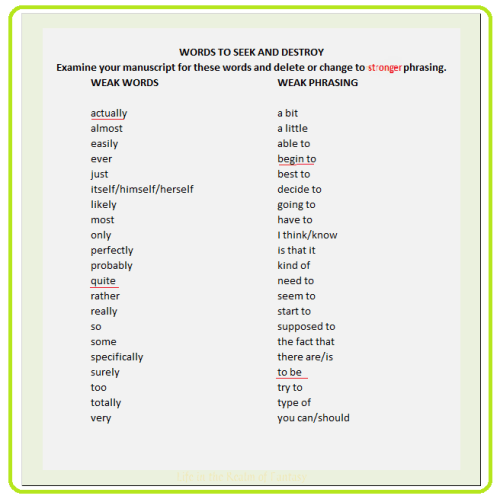
In my own work, I seek out adverbs, descriptors, qualifiers, and “weed words.” I look at how they are placed in the context of the sentence and decide if they will stay or go. Many will go, but some must stay.

A good program to help point out when certain passages are passive and need to be “made active” is Pro Writing Aid. I use the professional version for my own work, but they do have a free version that will show you some limited problems in your prose.

The BIG problem for those who don’t understand the basics of grammar is, these programs are unable to see the context of the work they are analyzing:

“The tea was cool and sweet, quenching her thirst.”

Grammarly suggested replacing quenching with quenched.

Pro Writing Aid made the same suggestion.

I have no idea why they make that suggestion, but you can see how a person blindly following mechanical advice could go wildly astray.

Context is defined as the parts of a written or spoken statement that precede or follow a specific word or passage, usually influencing its meaning or effect.

A person with no knowledge of grammar will not benefit from relying on Grammarly or any other editing program for advice. There is no way to bypass learning the craft of writing.

This is because these programs operate on algorithms defined by finite rules and will often strongly suggest you insert an unneeded article or change a word to one that is clearly not the right one for that situation.

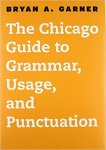
New writers should invest in the Chicago Guide to Grammar, Usage, and Punctuation, and learn how grammar works. If you don’t understand grammar or how to construct a sentence, a paragraph, or write dialogue, editing programs will just confuse and mislead you.

To get the best out of editing software, you must know the basics of how to write.

Currently, at this stage in our technology, understanding context is solely a human function.

Because context is so important, I am wary of relying on these editing programs for anything other than alerting you to possible comma and spelling malfunctions.

You might not agree with the program’s suggestions. You, the author, have control and can disregard suggested changes if, as illustrated above, they make no sense. I regularly reject weird suggestions.

However, when the editing program highlights something, I look at the problem sentence carefully. Just knowing that the way I phrased a sentence tripped the program’s algorithms encourages me to look at that passage with a critical eye.

I may not use the program’s suggestion, but something triggered the algorithm. That means my phrasing might need work. I may need to find a better way to get my idea across.

Even editors must have their work seen by other eyes—my blog posts are proof of this. I am the only one who sees them, and even though I write them in advance and go over them with two editing programs, and then look at them again before each post goes live, I still find silly errors two or three days later.

A good editing program is not cheap, but I feel it is a worthwhile investment. If you don’t have an editing program, you can find these words on your own.

If you are hasty or impatient, a global search can be dangerous and can mess up an otherwise good manuscript. I warn you, this is a boring, time-consuming task, but it is a crucial part of the job.

You can’t take shortcuts. If you are too impatient and choose to “Replace All” without carefully thinking things through, you run the risk of making a gigantic mess of your work. Some weed words are parts of other words, for example:

  • very—every
  • has—hasten, chasten

If you have decided something is a “crutch word,” examine the context. Inadvertent repetitions of certain words are easy to eliminate once we see them with a fresh eye.

Context is everything.

I can’t stress this enough: take the time to look at each example of the offending words individually.

It’s unfortunate, but there is no speedy way to do this. Every aspect of getting your book ready for the reading public must be done with the human eye, patience, and attention to detail.

11 Comments

Filed under writing

Theme and Depth Through Polarity #amwriting

In writing, theme is the backbone of your story. It is an idea thread that connects disparate events that would otherwise appear random. Themes are often polarized, and multiple themes can appear, creating opportunities for adding depth.

Polarity is a fundamental aspect of the inferential layer of the word-pond.

For example, a large theme that drives the action can be be something as common and subtle as family dynamics across generations. Those subtle tensions and interactions may not look like they are the story, but beneath the surface, families are fraught with emotions that create conflict.

In any story that explores the relationships within a family as part of the larger narrative, we begin with the circle of life – a theme that explores birth, growth, degeneration, and death.

Consider the first three installments in the epic film series, “Star Wars.” It’s an ambitious action adventure set in a science fiction universe, and Luke Skywalker must save the world. But fundamentally, it’s the story of a family.

George Lucas conceived the tale by exploring the circle of life in the fractured relationship of Luke and Anakin Skywalker, and how each man affected those people whom they came into contact with. Luke was a catalyst—his presence made things happen. Anakin embodied self-deception.

The same is true of George R.R. Martin’s A Game of Thrones book. It begins with a family and follows the circle of life and death.

If we learn anything from comparing these two epic series, it is that inside that overarching theme of the circle of life lies many common polarities.

Nowhere do we find more opportunities for conflict than within a family. Both sides of this age-old conflict tend to be arrogant and sure of their position in each skirmish.

Sub-themes in the family saga will be:

Good vs. evil

Illusions vs. reality

Jealous vs. trusting

Justice vs. injustice

Love vs. hate

Order vs. chaos

Truth vs. falsehoods

Wealth vs. poverty

Young vs. old

These same themes that we employ in the small story of one family can easily be applied to a larger, more epic saga, such as in Tolstoy’s War and Peace – the “family” is an entire nation.

Looking beyond the obvious, we find the subtle polarities to instill into our work. Small subliminal conflicts highlight and support the theme. When you add texture to the narrative, you add depth.

Take pain—in my personal experience, the absence of pain was only appreciated once I had experienced true physical pain.

It’s like everything else we take for granted: we don’t think about pain if we have never felt it.

I find inspiration in the Oxford Dictionary of Synonyms and Antonyms. When I am looking for a way to add a particular emotion to a scene, I look up the word I want to convey and see what the opposites are. This is an affordable resource for the cash-strapped author because it can be purchased in paperback for between $9.00 and $12.00 USD.

Here are some polarities we can apply when fleshing out a character:

  • courage – cowardice
  • crooked – honorable
  • cruel – kind

Consider a scene where you want to convey a sense of danger. Go to the “D” section of the Synonyms and Antonyms and look up danger:

  • danger – safety

Just past danger we find

  • dark – light

And just beyond dark, we find

  • despair – hope

Those are three “D” words that have great opposites. In one dark scene, we can convey peril, and the feeling of hopelessness a character might feel. The light and hope we offer at the end of the story shine brighter when they are contrasted against darkness and despair.

Think of Frodo and Sam on Mt. Doom after Gollum and the ring are destroyed. Darkness and sure peril are followed by light and salvation.

Polarity is an essential tool of world building. Small polarities in the interactions your characters have with each other add to the atmosphere and serve to show their world in subtle ways.

If you can’t afford to buy the Oxford Dictionary of Synonyms and Antonyms, the internet is your friend. A large, comprehensive list of common antonyms can be found at Enchanted Learning. This is a free resource.

I try to find ways to add depth by employing polarity. Each small polarity creates conflict, pushes my characters a bit further.

If I’m smart with the way I write it, small polarities will support and define my larger theme without beating the reader over the head.

As I say, this requires me to be skillful in the writing process, which is sometimes easier said than done.

4 Comments

Filed under writing

Revising the NaNoWriMo Novel Part 2 Word Choices #amwriting

No one writes perfect prose every time. Occasionally, even award-winning authors write an awkward description in the middle of an otherwise gripping passage. Consider this pearl, a quote from one of my favorite books dropped in the middle of an otherwise powerful, well-conceived battle scene:

A screaming black arrow knocks down yet another attacker. [1]

The narrative is written in an unusual mode, one this particular author, L.E. Modesitt Jr., uses in many of his books: Third person present tense. I have read this book several times, and there are several proofing errors, but that line in the final battle has always tripped my eye.

It’s a “first draft” telling line, a signal to the author indicating an intensity of emotion he wanted to convey in a ship-to-ship battle. I suspect he was in the zone and writing as quickly as he could. The many proofing errors in this book, much as I love it, told me that editors, even those working for a publishing giant like Tor, are fallible human beings. When an author is pushed to become a book producing machine, proofing and editing can suffer.

So how could we write a scene about a hazardous inanimate object and convey a sense of imminent danger without resorting to words that don’t quite fit? First, we must understand that these are the places where getting the prose right takes time, and sometimes, many attempts.

In a conversation, it’s easy to convey a sense of fear and peril. Danger seen through a character’s eyes is easily done—describe the shock and gut reactions and move on.

Danger described from an outside view (third person) is more difficult. In a fight or battle, sounds, visuals, and smells must be employed.

And this is where it gets tricky: for me as a reader, the best fight or battle scenes have both personal witness and third person narrative.

Hollywood has been quite good at portraying battle scenes with some degree of accuracy, although not always. In the movies, arrows arc, rain down and sometimes flash. They whiz past, and sometimes they appear in the victim’s back, seemingly out of nowhere. In the movies, they travel slowly.

But, in real life the arrow strikes the target nearly immediately after leaving the bow, even at a longer distance. An arrow is not as fast as a bullet, but they are fast.

My friend Michael, who is an archer, tells me that arrows, both ancient and modern, do make a sound, depending on how they are fletched (the feathers). The hissing sound as it passes the human ear varies from nearly inaudible to soft, depending on who fletched them and what style of fletching they used.

What you will hear is the snapping sound the bow makes when the archer lets the arrow fly, followed closely by the sound the arrow makes when striking a hard target. An arrow striking a soft target like a human or animal would make a sickening sound, but one that is not loud.

In my opinion, screaming is the wrong sound for arrows.

But it is an appropriate sound for the victim that was shot by the arrow.

There must be a certain amount of telling. What is the balance between telling and showing?

In describing, we must choose our words carefully. Examine the logic of your descriptions. How do we both show and tell in a balanced way?

In War and Peace, Tolstoy conveyed the feeling of each cannon ball hitting the ground and exploding, without resorting to clichés and awkward descriptors. Andrew Kaufman is the author of Understanding Tolstoy and Give War And Peace A Chance says:

“You see, hear, and feel everything in Tolstoy’s world: glistening sunrises, whining cannonballs, exhilarating troika races, glorious births, brutal deaths, and everything in between.” [2]

Good, immersive prose requires showing in such a way that the reader isn’t blown out of the scene. This means a small amount of telling is required. For that, we’ll go to Tolstoy’s War and Peace again. This quote, written in the same third person present tense as Modesitt’s quote, is an observation, a way of both telling and showing the reader what is goes on in the subconscious mind.

“When a man sees a dying animal, horror comes over him: that which he himself is, his essence, is obviously being annihilated before his eyes — is ceasing to be.” [3]

In that one sentence, Tolstoy shows us that in Napoleon’s time, soldiers weren’t the only casualties of war. A cavalry is made up of soldiers on horses. This means that living animals went to battle and were killed too.

Tolstoy gives us the visceral experience of witnessing a horse’s death but allows us to contemplate what death means on a human level. He uses powerful words that evoke deep emotion: dying, horror, essence, annihilated.

Witnessing the death of a horse brings us closer to understanding how frail a soldier’s grasp on life is when in the midst of a battle.

Modern writers would cut the words obviously being, but despite having been written 160 years ago, the sentence has power.

Word choices are especially important in action adventures. Strong, powerful words can make or break a sentence. To revise properly, we must step back from the manuscript for several days or even weeks.

Then we come back to the manuscript and consider the visual logic of our descriptions.

We move verbs to the front of sentences, placing them before the nouns so that most sentences lead off with action words.

In the second draft, we eliminate the many insidious forms of was and to be. They’re insidious because they’re signals to the author, saying that something needs to be made active. But they can slide under the radar in the editing process and end up in the final product.

It takes work and perseverance, to find the words that correctly evoke the emotions we want to convey.

But that is what good writing is about.


Credits and Attributions:

[1] Quote from The Magic Engineer, by L.E. Modesitt Jr., 1994; A Tor Book, Published by Tom Doherty and Associates, LLC. Fair Use.

[2] Quote from Andrew Kaufman, The Only Classic Needed for Modern Times © 2014 Off the Shelf, Simon and Schuster, Inc. Fair Use.

[3] Quote from War and Peace by Leo Tolstoy, PD|100. First published by The Russian Messenger (serial).

2 Comments

Filed under writing

Revising the NaNoWriMo Novel #amwriting

Many new authors are basking in the glow of not only having met their hoped-for word count of 50,000 words in the month of November but exceeding it.

A large number of new authors have emerged from this manic writing rumble with a finished novel—something they never thought possible. But now, what do they do with it?

NOW is the time to go back and look at what you have written.

First, protect your work.

Create a new file folder in your writing files for all the background documents you will need as you get down to the real work of writing your novel. These include the original manuscript as it emerged from your head and any research. This file is where you will save future versions and also any cut scenes. I title my background file this way: Book_Title_Background

In this background file, save a copy of your original manuscript in its bloody, raw form with a file name that denotes exactly what it is.

  1. If you are using MS Word, your manuscript title will look like this: Book_Title.docx

Saving the original draft in a separate file on a thumb drive or in a file storage service such as Dropbox, Google Drive, or OneDrive means you have a fallback manuscript in case something happens to your working files.

Now that we have Version Control out of the way let’s move on to rewriting.

In the rush of laying down the ideas in the first draft, we will have written some scenes that will need to be moved to a more logical place in the story arc or cut completely. Still others don’t yet exist and will need to be written so that the ultimate outcome makes sense.

This is a good time to draw up a brief outline that shows you at a glance what you have written. The act of writing this outline will take the better part of a day but will speed the revision process up by a month or so.

The outline allows you to cut and paste events, moving and rearranging scenes. Making the decisions first on a small, easily manageable scale rather than the larger manuscript ensures that you don’t get confused when you begin cutting and moving scenes forward or back along the timeline in the second draft.

  1. Timeline: Make a list of all the decisions your protagonist made on their way to the final scene. Don’t omit any—you need to see her/his actions at a glance.
  2. Now, if these choices don’t seem to follow a logical path, rearrange the order to ensure these decisions follow a logical connective evolution. Randomness is not good plotting.
  3. Timeline: List the new order of decisions. Are they all necessary to achieve the final goal? Or are some fluff—scenes you wrote just for wordcount that don’t advance the plot and which the reader won’t care about?
  4. Consider cutting each fluff scene. Your readers will be grateful.

Now, look at the outline of your story structure again. Ask yourself these questions:

  • Who is the story about now? Is the main character still the original protagonist or has a side character stolen the show? If so, you need to choose and expand on the character that best serves the story.
  • What is the core conflict? Is it still the same conflict as when you started?
  • How high are the stakes if the protagonist fails?
  • What does the protagonist want most now?
  • Did the protagonist grow and evolve as a person? If not, why not? Or did they devolve, becoming an antihero or an antagonist? Is there a new hero?
  • Where are the pivotal places where something important to the logic is missing?
  • Again, examine what doesn’t need to be included. Remove all the scenes that impart no important information to the reader and the protagonist.

Ask yourself what would make the ultimate ending feel more logical. Insert the idea for the new scene into the outline and re-examine the logic of the story arc.

Many stories are not ultimately told in chronological order. The plot should still be the same logical chain, but the story might contain flashbacks or memories. Make a note of where these occur.

Some authors use “flash forwards,” which can easily make the story arc feel clumsy and unbelievable. Inserting a flash forward requires good planning, which is where the brief outline comes in handy. The same goes for daydreams or prophetic dreams a character might have.

Many authors reject the outline process in the first draft because they prefer to “wing it.” When I write the first draft without an outline, my story will have flashes and moments of inspired writing but will wander and skip its way to the conclusion.

For me, a manuscript that I wrote “by the seat of my pants” will always require more work than a piece written to an outline. Taking a day to write a brief summary of the entire first draft in an outline form makes the second version easier for my beta readers to read and follow.

At the end of the second draft, because I have taken the time to examine the logic of my storyline, the plot and my character’s actions will make sense to my beta readers.

They, in turn, will have good suggestions for minor changes that I will consider when I write the final version.

Next up: prose, and how your writing style shapes the narrative in the revision process.

Comments Off on Revising the NaNoWriMo Novel #amwriting

Filed under writing

Write the Entire Book #amwriting

The end is nigh! NaNoWriMo 2019 is nearly over. Many books have been written, and many more are halfway done even though they have crossed the 50,000 word mark.

The truth is, ten times as many books were begun as made it to the 50,000 word mark. The reality sets in within the first week. Last year 70 writers in our region never got more than 5,000 words written.

Good first lines are critical. They have a singular duty, to involve the reader and kidnap them for the length of the book. But sometimes, the first lines are all an author has.

I know someone who began writing a novel they were exceedingly passionate about several years ago. But the first lines, introducing the characters, and the first few chapters were all that was ever written.

Yet the author of those few chapters speaks of their barely-begun book with enthusiasm as if they could pick it up and finish it any moment. When they talk about this book, it sounds so interesting; something I would love to read.

I confess I’ve become a little cynical when they talk about their plot and characters because I fear that talk is all that will ever happen. They have the entire book locked in their heads, and no one else will ever read it.

They have been stopped at the end of chapter three for five years. If they haven’t developed the discipline to dedicate an hour a day to writing by now, it’s very likely their book will never be completed.

Why does their book languish unwritten? Drama in their lives keeps them too busy to write. Once in a great while, when they’re bored and can’t find a book they want to read, they will open the file and read it. They will fall back in love with the words they have already written and talk about how they’re going to sit down and finish it someday.

But that won’t happen unless they make the time to do it.

We all have drama in our lives. For me, writing keeps the drama at arm’s length.

Participating in NaNoWriMo teaches authors discipline. You learn to write the entire book before you begin editing.

In your first draft, I recommend that you don’t spend too much time obsessing about the small things and the finer details as these will derail your work. You will never get past the first chapter if all you can focus on is writing a brilliant opener.

NaNoWriMo gives us the discipline to write the entire story as quickly as we can, at least 1,667 words a day. Once you have the entire structure of the novel laid down on paper, you won’t be left wondering where to go next, writing and rewriting the same first chapter.

When the entire story has been written, that is the time to worry about prose and phrasing. The second draft is when we write the words we would want to read.  

The second draft is when you should obsess about the opening line and first paragraphs.

If you are serious about writing, it’s necessary to read, to see how other authors begin and complete their work. It is good to read works published in your chosen genre, but to become an educated reader/author, you should look outside your favorite genre. You might find books that surprise you. You will be amazed at how much some of what you read in these new genres resonates with you even if you didn’t like the book.

This education doesn’t have to be expensive. Don’t spend your precious book purchasing funds on books you believe you won’t enjoy. Do a little advance research via the internet and then borrow the books from the library.

Published authors, whether Indie or traditionally published, have finished their work. Maybe they didn’t do as great a job as some people think they could have done, but they did finish the job.

Grand ideas about what you intend to write mean nothing if you don’t finish the job.

Do finish writing the story before you begin rewriting the first chapter.

If all you have ever written is the first chapter…over…and over…and over…, perhaps you need to set that idea aside. It may be that, at this point in your life, writing isn’t your passion, but reading is.

And without readers, there would be no need for authors.

1 Comment

Filed under writing

Subtext and First Person Point of View #amwriting (revisited)

We are winding down to the  final week of NaNoWriMo. This has been a busy month, and this week, being Thanksgiving week here in the US, is even more jammed. Today’s post is on First Person Point of View, a literary mode I have found myself using more often lately. This first posted on November 26, 2018, and expands on employing good subtext, which we discussed last week.


Third-person omniscient has been my usual mode to write in, but I’m not limited to it. When we write in third-person omniscient mode, the story is told from an outside, overarching point of view. The narrator sees and knows everything that happens within the world of the story, including what each of the characters is thinking and feeling.

This works because the narrator holds much of the information back from the reader, doling it out as the protagonists need it.

But what if we want to create a sense of intimacy, of being in the character’s head? And what if we don’t want the reader to know everything that is going on until the last minute?

This is where the literary devices of point-of-view and subtext come into play. It’s fairly easy to keep the reader guessing what is going on in either narrative mode if you make good use of subtext.

The first-person point of view is fairly common and is told from one protagonist’s personal point of view. It employs “I-me-my-mine” in the protagonist’s speech, allowing the reader or audience to see the primary character’s opinions, thoughts, and feelings.

A limited first person point of view is stream of consciousness. This is a narrative mode told from a first-person perspective, showing the thought processes as well as the actions and spoken words of the protagonist.

In real life, we can’t be all-seeing and all-knowing—witnesses are notoriously unreliable. First-person point-of-view employs the unreliable narrator which I like when the author understands how to make the subtext work.

Disbelief paralyzes me, but then my emotions coalesce into one thought—Ricky…of course.

Through the use of interior monologues (thoughts), we show the inner desires and motivations of the protagonists. We also offer the reader the incomplete thoughts they express to themselves but conceal from the other characters.

At times, we see the POV character’s rambling thoughts about a situation or person, as well as witness their conversations and actions.

How do we fit subtext into our narrative if we’re using a limited first person point of view? Subtext is the hidden story, the hints and allegations, and the secret motives of the entire cast. Subtext is the content that supports the dialogue and gives private purpose to the events each character experiences.

We don’t want to just lay it all out for the reader in the first paragraphs. Just as in all other narrative modes, in a limited first person point of view we have several ways available to reveal the subtext, the hidden motives and desires of our characters.

The Double Entendre: a word or phrase open to two interpretations, one of which is usually risqué or indecent. “My, those are some plump loaves you have rising there, ma’am.” This can be too in-your-face for many readers, especially if the author is heavy-handed. Many classic Noir detective novels of the 1930s through the 1960s employed the double entendre to convey ideas and intentions that referenced sexual matters and which the censors wouldn’t have allowed to be published.

Sarcasm: the use of irony to mock or convey contempt. “I didn’t attend the funeral, but I sent a nice letter saying I approved of it.—Mark Twain.

In my writing, I sometimes use sarcasm as a way to show subtle aggression and tension. Also, sarcasm, especially that which is self-directed, can highlight the dark humor of a bad situation.

Lying: The point-of-view character may be guilty of habitually telling falsehoods. “Sorry I’m late. Traffic was a bitch.” But perhaps the first page showed the character oversleeping, so this lie is a clue that the character is not always truthful.

In a first person narrative, if the protagonist is shown lying to others in small, insignificant ways, the reader should consider that what he tells us may be a lie too.

We can also employ the use of allegory, words, and images that can be interpreted to reveal a hidden meaning, typically a moral or political one. Animal Farm, written by George Orwell, is an allegory that uses animals on a farm to describe the overthrow of the last Russian Tsar, Nicholas II, and the Communist Revolution of Russia before WW I.

Symbolism: using an object or a word to represent an abstract idea. An action, person, place, word, or object can all have a symbolic meaning. Literary Devices.net gives us these examples:

  • The dove is a symbol of peace.
  • A red rose, or the color red, stands for love or romance.
  • Black is a symbol that represents evil or death.
  • A ladder may stand as a symbol for a connection between heaven and earth.
  • A broken mirror may symbolize separation.

For me, writing is as much about rewriting as it is writing new words. Sometimes I have a story that I think might have potential, but I can’t decide if the plot should continue down the bunny trail it’s on or not. I will share it with my writing buddies to see what they think about the premise.

Usually, I get good feedback that helps me steer the narrative in the right direction when I am embarking on the second draft.

I consider all feedback good, even when the first readers of a scene or short story don’t “get” what I am trying to convey. If the readers don’t see what I mean, their comments aren’t directly helpful.

That lack of comprehension shows that the reader missed the point of the story entirely—my subtext failed to do its job. The scene or story must be completely rewritten. My protagonist’s intentions must be made clearer to the reader.

The struggle to express my ideas is just part of the process, and having good friends who are willing to read and give honest, thoughtful feedback is priceless.


Credits and Attributions:

LiteraryDevices Editors. “Symbolism” LiteraryDevices.net. 2013. http://literarydevices.net/symbolism/  (accessed November 24, 2018).

Quill Pen, PD|by author, BWCNY at English Wikipedia.

Underwood Standard Typewriter, PD|75 yrs image first published in the 1st (1876–1899), 2nd (1904–1926) or 3rd (1923–1937) edition of Nordisk familjebok.

IBM Selectric, By Oliver Kurmis [CC BY 2.5 (https://creativecommons.org/licenses/by/2.5)%5D, from Wikimedia Commons

8 Comments

Filed under writing

Creating Depth: Subtext #amwriting

NaNoWriMo is in full swing and sliding toward the finish. We have slightly less than two weeks left. My manuscript is inching toward completion. I have crossed the 50,000 word line, but the book is less than half finished. Many scenes that currently exist will likely be cut, and new scenes written that better show the story.

A lot of new authors are discovering words like “subtext” and wondering what that means. Subtext is a complicated aspect of the story, existing in the depths of the inferential layer of the Word-Pond that is Story.

Since nothing has changed since I last wrote on this subject, here is the reprise of the post Subtext, first posted here in March of 2018.


A good story is far more than a recounting of he said, and she said. It’s more than the action and events that form the arc of the story. A good story is all that, but without good subtext, the story never achieves its true potential.

Within our characters, underneath their dialogue, lurks conflict, anger, rivalry, desire, or pride. Joy, pleasure, fear—as the author, we know those emotions are there, but conveying them without beating the reader over the head is where artistry comes into play.

The subtext is the hidden story, the hints and allegations, the secret reasoning. It is the content that supports the dialogue and gives private purpose to the personal events experienced by the characters.

These are implicit ideas and emotions. These thoughts and feelings may or may not be verbalized, as subtext is most often shown as the unspoken thoughts and motives of characters — what they really think and believe. It also shows the larger picture. It can imply controversial subjects, or it can be a simple, direct depiction of motives. Metaphors and allegories are excellent tools for conveying provocative ideas.

Subtext can be a conscious thought or a gut reaction on the part of the characters. It imagery as conveyed by the author.

When it’s done right, the subtext conveys backstory with a deft hand. When layered with symbolism and atmosphere, the reader absorbs the subtext on a subliminal level because it is unobtrusive.

An excellent book on this subject is Writing Subtext: What Lies Beneath by Dr. Linda Seger. On the back of this book, subtext is described as “a silent force bubbling up from below the surface of any screenplay or novel.” This book is an important source of information on how to discover and convey the deeper story that underpins the action.

Because subtext is so often shown as internal dialogue, some writers assume that heavy-handed info dumping is subtext.

It’s not. It’s description, opinions, gestures, imagery, and yes—subtext can be conveyed in dialogue, but dialogue itself is just people talking.

When characters are constantly verbalizing their every thought you run into several problems:

  1. In genre fiction, the accepted method of conveying internal dialogue (thought) is with italics. A wall of italics is a daunting prospect to a reader, who may just put the book down.
  2. Verbalizing thoughts can become an opportunity for an info dump.

Nevertheless, thoughts (internal dialogue) have their place in the narrative and can be part of the subtext. The main problem I have with them is that when a writer is expressing some character’s most intimate thoughts, the current accepted practice for writing interior monologue in genre fiction is to use italics… lots and lots of italics… copious quantities of leaning letters that are small and difficult to decipher. I recommend going lightly with them.

A character’s backstory is subtext, their memories and the events that led them to where they are now. We use interior monologues to represent a character’s thoughts in real time, as they actually think them in their head, using the precise words they use. For that reason, italicized thoughts are always written in:

  • First Person: I’m the queen! After all, we don’t think about ourselves in the third person, even if we really are the queen. We are not amused.
  • Present Tense: Where are we going with this?

We think in the first person present tense because we are in the middle of events as they happen. Immediate actions and mental commentaries unfold in the present, so they are written as the character experiences them.

But memories are different. Memories are subtext and reflect a moment in the past. If brief, they should be written in the past tense to reflect that. If it was a watershed moment, one that changed their life, consider writing it as a scene and have the character relive it.

This will avoid presenting the reader with a wall of italics and gives the event a sense of immediacy. Having the characters relive that experience brings home the emotion and power of the event. It shows the reader why the event was so important to the character that they would remember it so clearly.

Subtext expressed as thoughts must fit as smoothly into the narrative as conversations. My recommendation is to only voice the most important thoughts via an internal monologue, and in this way, you will retain the readers’ interest. The rest can be presented in images that build the world around the characters, as in this example:

Benny watched Charlotte as she left the office. Everyone knew she was rich. The clothes, the sleek sports car she drove—these were things that could have been owned by any well-employed girl, but something about her screamed confidence and money.

These are Benny’s impressions of Charlotte, and we could put all of that into Benny’s interior monologue, but why? This way, the reader is told all that they need to know about Charlotte, without resorting to an info dump, and we aren’t faced with a wall of italics.

Some things must be expressed as an interior monologue.

Benny looked down at his mop. I’m such an idiot.

The reader has  gained a whole lot of information in only two sentences.  They think they know who Benny is, and they have a clue about his aspirations. What they don’t know yet, but will discover as the plot unfolds, is who Benny really is and why he is posing as a janitor. That, too, will emerge via subtext and through descriptions of the environment, conversations Benny has with his employer, his interior monologues, and his general impressions of the world around him.

Don’t forget the senses. Odors and ambient sounds, objects placed in a scene, sensations of wind, or the feeling of heat when the sun shines through a window—these bits of background are subtext. Scenes require a certain amount of description.

Let’s say we’re writing a short story about a grandfather fixing dinner for his grandson. He’s had to go out shopping, and now he carries his groceries home in a snowstorm, fearing he will slip and fall. How do you convey that in the least obtrusive fashion? I would write it this way:

Willard gazed at the icy stairs leading from the unshoveled walk to the front door, his bag of groceries growing heavier.

Sometimes we see the world and the larger issues through the protagonist’s eyes, and other times we see the protagonist through the setting—what is shown in the scene.

The subtext must be organic, purposeful, and not just there to dump info or fluff the word count. I like books where the scenery is shown in brief impressions, and the reader sees exactly what needs to be there. We aren’t distracted by unimportant things. When you mention a detail it becomes important, so only add elements the reader needs to know about.

Subtext, metaphor, and allegory: impressions and images that build the world around and within the characters are as fundamental to the story as the plot and the arc of the story. Getting it right takes a little work, but please, do make an effort to be subtle and deft in conveying it. As a reader, I’m always thrilled to read a novel where the subtext makes the narrative a voyage of discovery.


Credits and Attributions:

Subtext by Connie J. Jasperson was first published on Life in the Realm of Fantasy on 05 Mar 2018.

Writing Subtext: What Lies Beneath by Dr. Linda Seger © published by Michael Wiese Productions; 2 edition (March 1, 2017)

2 Comments

Filed under writing

Choosing a Writing Group #amwriting

Last week at a write in, a new writer asked me about writing groups and how a person goes about finding one. It seemed as if it was time to revisit this subject here. Nothing has changed since I originally wrote this post, and it’s NaNoWriMo—I can plow the extra time into my NaNo novel. (Insert happy face here!)


Every writer needs honest, constructive feedback to grow in their craft. Many will join critique or beta reading groups. These groups come in all sorts and sizes, some specializing in general fiction and some in genres like mystery, science fiction, fantasy, or romance.

Most communities have clusters of authors. You will find groups for beginning writers and some that cater to more advanced crowds. I guarantee there will be one to fit your needs.

You may stumble upon a group who seems cliquish, unwelcoming, and daunting to new arrivals.

You are not required to return to a group if you were given the cold-shoulder the first time.

The seas are rough out there, but most writing groups are really good, supportive gatherings of authors who stay for years and welcome new authors into their group with open arms.

There is a difference in types of writing groups. Some are traditional critique groups, people who usually read a few pages aloud at their sessions and the others discuss it in detail in a round-table fashion, while the author listens.

Often, these groups are large and because they are pressed for time, they don’t allow the author to ask questions or clarify points of confusion. Despite that flaw, this sort of focus on your work can be just right for some authors.

A group like that can tell you if you have made editing errors. They will point out errors within the few pages they have sampled, which gives you a jumping off point for the rest of your novel.

For authors strapped for cash and unable to afford to hire an editor, this sort of group is an invaluable resource. What you learn about your writing habits in those pages will carry over into the larger manuscript.

However, because traditional critique groups focus only on 3 or 4 pages at a time, they lack the context to be able to discern inconsistencies and flaws in the overall story arc. They don’t see enough of the work to tell if your protagonist is developed sufficiently by the first 1/4 of the tale, or if you have flattened your arc by placing your inciting incident too far from the beginning.

Unless you have submitted your entire novel over a period of time, formal critique groups usually can’t see subtle problems with

  • pacing
  • the overall story arc
  • worldbuilding
  • character development

They can’t see these things because these larger elements can only be judged by sampling more than three or four pages of a novel.

One way around that is to seek input privately from one of the members if you have found someone who reads the genre in which you write. It must be someone you feel comfortable enough to share that much with.

If you are looking for input on large structural issues, my advice is to find a beta reading group.

But how do you select a group? Before you join a critique or beta reading group, you have the right to know what that group focuses on. Attend one of their meetings as an observer and take notes.

When you get home, ask yourself these questions:

  • Did they address places where the submitted chapter bogged down?
  • What did the group think about the characters?
  • Did they address places where they became confused?
  • Did the group point out spots they had to read twice?
  • How did the group address areas where the story became unbelievable or too convenient?
  • Did the readers care enough to wonder what would happen to the characters next?
  • How did the group phrase their comments? Was it supportive as well as instructional?
  • Did they encourage conversation about the chosen work?
  • Is discussion discouraged? If the author was not allowed to discuss their work or ask questions because of time constraints, it may be the wrong group for you.

Ask yourself, “What vibes did I get from this group of people? Will I benefit from sharing my work with this group? Did the comments they made to each other sound helpful?” Hopefully, the answer to those questions will be a resounding “yes.”

If not, run now. Run far, far away.

If you are considering joining the group, ask the leader/chairperson these questions:

  • If the group is a beta reading group focused on first drafts, what do they consider a first draft? Do you have to hire an editor and have it thoroughly edited before you submit it to this group? Because that is not a first draft, and that group would be a waste of your time.
  • Will you receive insights into your manuscript on points you hadn’t considered, or will the focus of the discussion center on minor editing issues that you are already aware of?
  • Ask the leader to define for you the specific areas that readers will be looking at: Character development, the arc of the scene, conversation arcs, pacing, and worldbuilding.

When you have found a group that you feel comfortable sharing your work with, and you trust them enough to submit your first piece to them, take notes on the experience. When you are home, ask yourself:

  • Do I still feel positive about my work or do I feel like my work was treated as being less than important?
  • Did I gain anything from the experience that would advance the plot, or did I just hear a rehash of armchair editing from a wannabe guru?
  • When I was discussing the direction I wanted to take the tale in, did I sense that they were interested in my story?

If the answers are anything other than a resounding “yes” you have the right to leave the group.

The answers to these questions have to be that you feel good about your work, that you saw through their eyes the weaknesses, and you now know what you need to do to make your story great. You must be filled with the conviction that you know what needs to be done, and you must still have passion for the story.

Authors attend their first meeting with hope and trepidation. We are filled with uncertainty and fear the first time we meet these people.

At the end of the day, you have to feel as if you have gained something from the experience.

Hopefully, you will be as fortunate as I have been, and find a group of authors who will support and nurture you in the craft of writing. The way to repay them for their help is to support them and their efforts wholeheartedly.


Credits and Attributions:

Choosing a Writing Group by Connie J. Jasperson first appeared here on Life in the Realm of Fantasy on 28 June 2017. It has been dusted off and refurbished for your reading pleasure.

3 Comments

Filed under writing