Monthly Archives: June 2015

#Inspiration: Oppression, rebellion and art

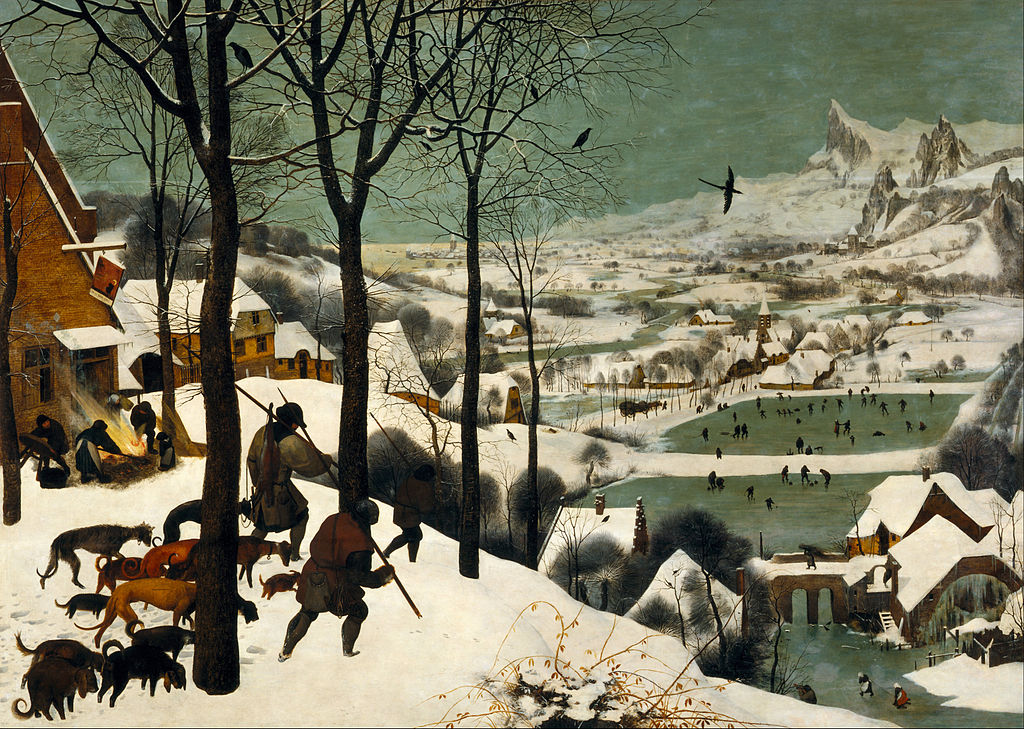
Hunters in the Snow, Pieter Bruegel the Elder, via Wikimedia Commons

Hunters in the Snow, Pieter Bruegel the Elder, via Wikimedia Commons

Writing, even writing fantasy, involves a certain amount of reality checking. You need to know how things actually worked.

Say you need to know what clothing the common European people wore during the renaissance looked like and how they dressed, both for celebrations, and for working.

I go to the 16th and 17th century painters and artists for that information. They always painted their subject with a heavy dose of religious allegory, but that was a part of village life–both the inquisition and the reformation was under way and the politics of religion was in the very air they breathed.

Any time you want an idea of average European village life in the Late Middle Ages through the 17th century, you need look no further than Wikimedia Commons.  There, under the heading  Category:Painters from the Northern Netherlands (before 1830) you will find the brilliant works of the Dutch Masters. These were artists living in what is now The Netherlands, and who were creating accurate records of the everyday life of the common people, along with stylized religious images.

During the 16th century, the Netherlands fought an 80 year war, trying to gain their independence from Spain, during the heart of the Spanish Inquisition. This was a period of extreme oppression and religious rebellion, and the art of times portrayed that very clearly.

I have learned, by rooting around the internet (so it must be true), that everything in the paintings of the time, no matter how commonplace, was allegorical, symbolic of some higher message. In art history (which I have always wanted to study), iconography is a visual language. This means that the way a subject is depicted and the way the image is organized, such as the number of figures used, their placing and gestures, all have specific meanings. The allegories they painted made heavy use of this visual language.

One particular family of of early Dutch painters from the county of Flanders pique my interest, the Brueghel Family. Five generations of their family were well-known painters, and print-makers.

One of my favorite early Dutch paintings is the Wedding Dance, by Pieter Brueghel the Elder:
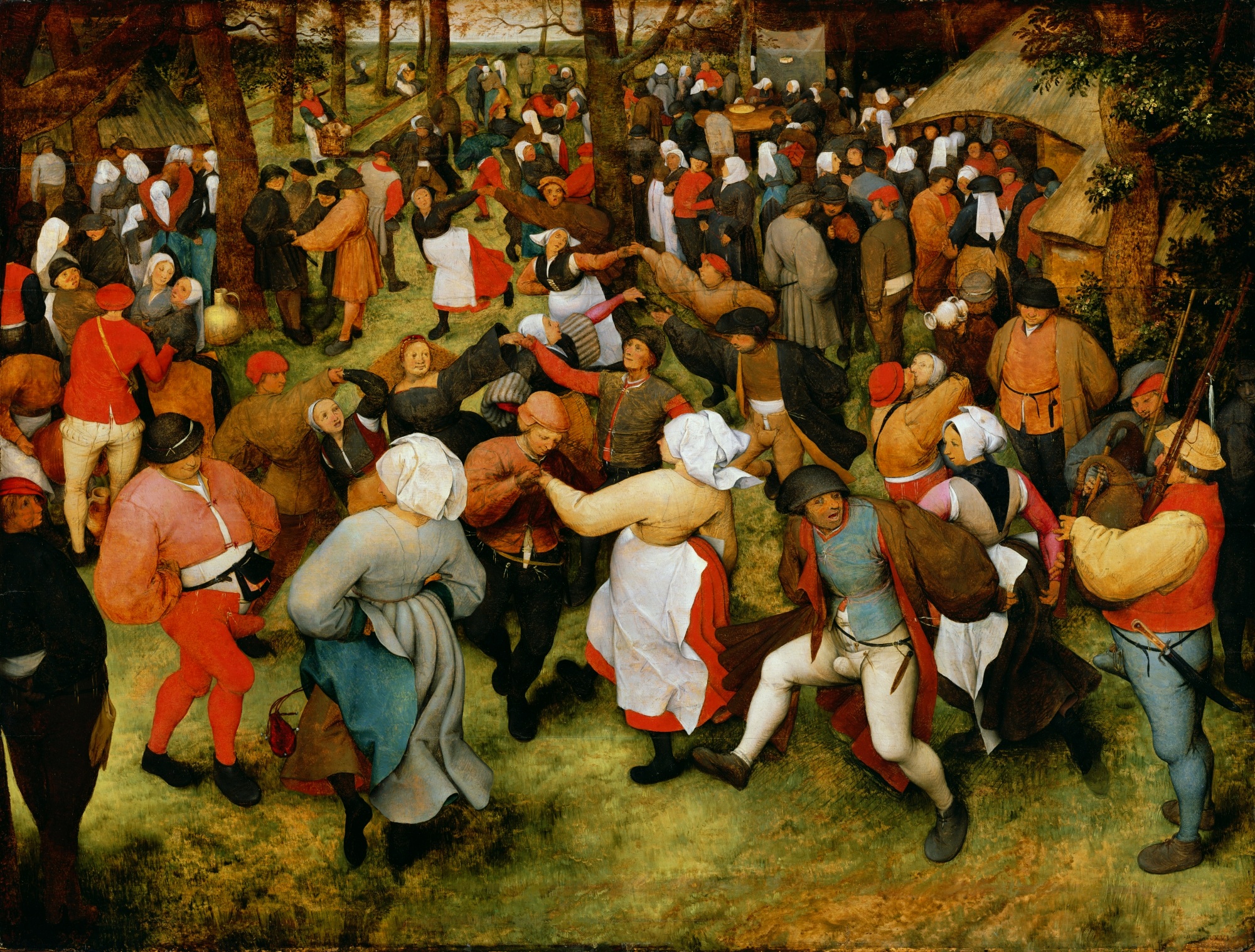
The Wedding Dance, c.1566 (oil on panel) by Bruegel, Pieter the Elder (c.1525-69)

The Wedding Dance, c.1566 (oil on panel) by Bruegel, Pieter the Elder (c.1525-69)

What makes this painting so spectacular to me is the amazing detail of the clothing. They loved color. From Wikipedia: The painting depicts 125 wedding guests. As was customary in the Renaissance period, the brides wore black and men wore codpieces. Voyeurism is depicted throughout the entire art work; dancing was tabooed at the time by the authorities and the church, and the painting can be seen as both a critique and comic depiction of a stereotypical oversexed, overindulgent, peasant class of the times.

All of these people are depicted as plump, which was a desirable trait–they were prosperous and not starving. All the things that (to this day) make a great party are there: music, food, and dancing. The men wear codpieces, emphasizing their male anatomy in the same way that in today’s society, women’s breasts are hyper-sexualized.  Perhaps codpieces should make a comeback in the men’s fashion world. I’ll show off my babyfeeders, if you parade your babymaker–that way we’ll both be sure we are getting something worth having. (or not.)

Anyway, back to the renaissance. They paid taxes, and this his how their IRS office looked to Brueghel’s eldest son, Pieter Jr. As you can see, not a lot has changed between then and now–we still pay in chickens and eggs. (heh heh.)

Pieter_Brueghel_the_Younger_(or_workshop)_The_Payment_of_the_Tithes_

The Payment of the Tithes (The tax-collector), also known as Village Lawyer, Pieter Bruegel, the Younger, signed P Brueghel

Brueghel’s eldest son, Pieter the Younger,  was never considered as fine a painter as his father or his brother, Jan Brueghel. He was considered a fine print-maker and his work shop was highly regarded. But he was not respected as an artist. Critics of the day felt he copied his father’s style, rather than developing his own. While he did paint in a folk-art style reminiscent of his father’s, his is sharper, more refined, taking it to the next level.

Notice how the people in the above picture are looking lean and ragged though, as opposed to the wedding picture painted by Pieter the Elder. The Little Ice Age had really gripped Europe, and times were hard.

So here is a painting by the second son of Pieter Brueghel the Elder, and a man who fathered his own dynasty of artists, Jan Bruegel the Elder. This is called People Dancing on a Riverbank and by their dress, with the neck-ruffs, you can see it depicts a wealthier class than his brother’s images, perhaps the merchant class rather than the peasants.

People_dancing_on_a_river_bank_by_Jan_Brueghel_the_elder

People Dancing on a riverbank, Jan Bruegel the elder, via Wikimedia Commons

One hundred years later, the Dutch were famous for their painters–and everyone wanted to own a Dutch masterpiece. Times had become quite hard, as the climate had cooled and crops regularly failed. Once-prosperous families often lived in the ruins of their family manors.
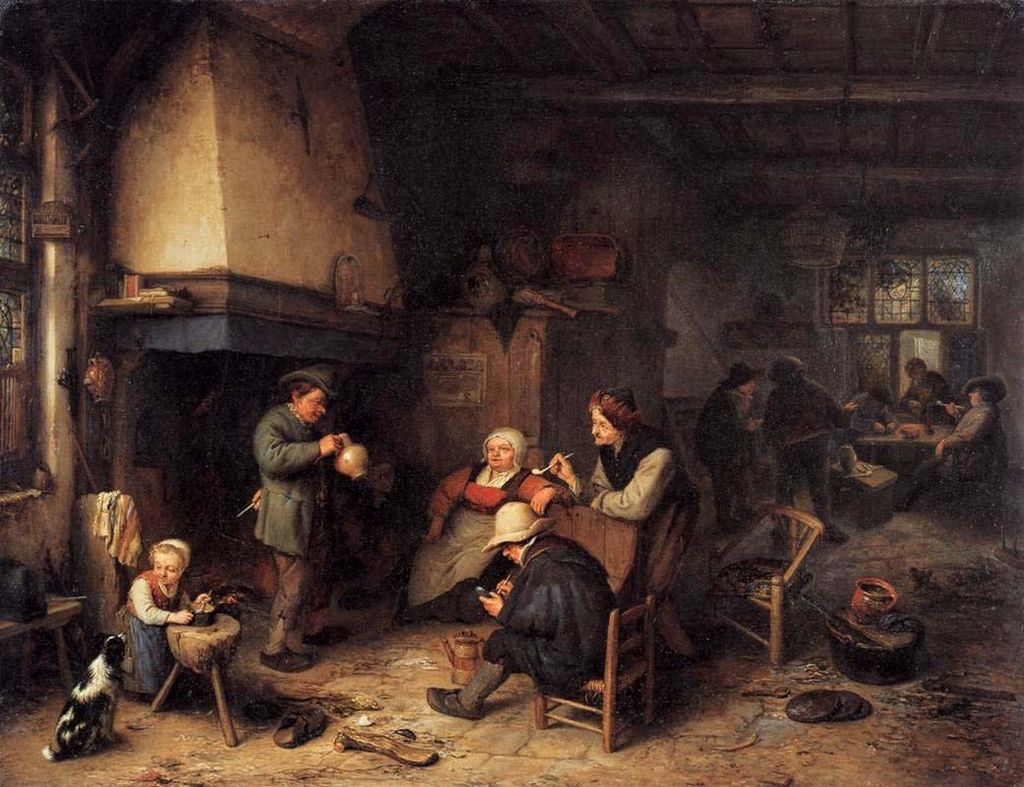
Peasants_in_an_Interior_(1661)_Adriaen_van_Ostade

Peasants in an Interior, Adriaen Van Ostade (1661) via Wikimedia Commons

In the above picture by Adriaen Van Ostade, these peasants are living in an enormous, decrepit farmhouse, almost like squatters. They are no longer plump, and are living in filthy conditions. The fire in the fireplace is very low, as if fuel was scarce.

Another famous Dutch painting, from the same time period but showing a different segment of society is The Milkmaid, by Johannes Vermeer. In this painting, Vermeer shows an everyday task, a small glimpse of something that occurred daily in every household, a woman cooking.
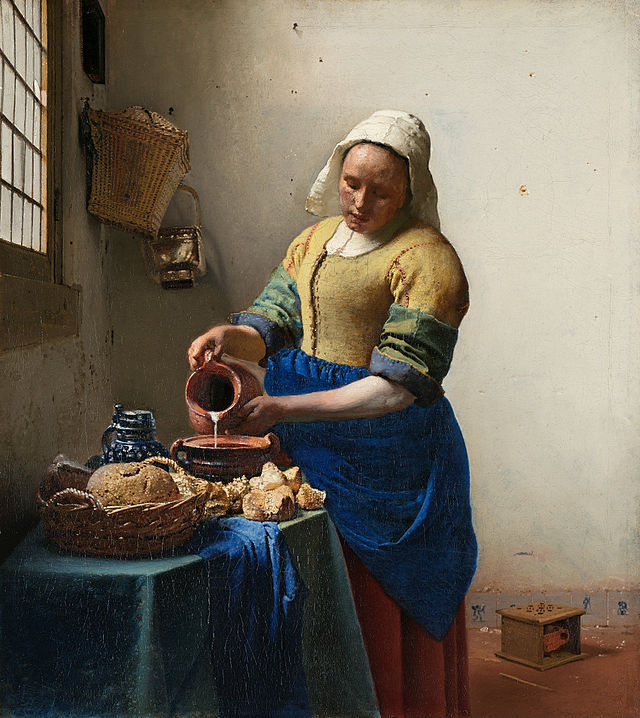
The Milkmaid, Johannes Vermeer, via Wikimedia Commons

The Milkmaid, Johannes Vermeer, via Wikimedia Commons

In the background on the floor is a foot-warmer which was filled with coals and was an essential luxury, showing this was one of the wealthier households.

According to Wikipedia, the fount of all knowledge: By depicting the working maid in the act of careful cooking, the artist presents not just a picture of an everyday scene, but one with ethical and social value. The humble woman is using common ingredients and otherwise useless stale bread to create a pleasurable product for the household.

I love art depicting the lives of ordinary people. I find the small details intriguing. It shows us that in many ways we are not that different than they were. We want food, decent shelter, and of course, stylish clothes to attract a mate.

And back then as it does now, a hint of anything taboo would most certainly find its way into even a religious painting.

The best part of all this is, a woman with an average education and on a tight budget (like me) can enjoy these wonderful works of art at will. I can examine them  in as much detail as I want, and take all the time I want, and no one will stop me or throw me out of their museum for loitering, because the internet is open all hours and is free.

Wikimedia Commons is a great resource to just roam around in, even when you are not looking for something specific.

8 Comments

Filed under Books, Humor, Literature, writer, writing

Beta Reading, or Editing–what’s the difference?

Book- onstruction-sign copyIndies rely heavily on what we refer to as beta readers to help shape their work and make it ready for editing. But in many forums, I’ve seen authors  use the term used interchangeably with editing, and the two are completely different.

And unfortunately, some indie published works are clear examples of work by authors who don’t realize the importance of working with an editor, although it is apparent that they have had assistance from beta-readers.

What is quite disappointing to me, is the many traditionally published works that seem to fall into the same lack-of-good-editing category, and I am at a loss as to why this is so.

So what is the difference between a beta reader and an editor?

Well, there is a HUGE difference.

Editing is a process, one where the editor goes over the manuscript line-by line, pointing out areas that need attention: awkward phrasings, grammatical errors, missing quote-marks or a myriad of things that make the manuscript unreadable. Sometimes, major structural issues will need to be addressed. It may take more than one trip through to straighten out all the kinks.

  1. In scholastic writing, editing involves looking at each sentence carefully, and making sure that it’s well designed and serves its purpose. In scholastic editing, every instance of grammatical dysfunction must be resolved.
  2. In novel writing, editing is a stage of the writing process in which a writer and editor work together to improve a draft by correcting errors and by making words and sentences clearer, more precise, and more effective. Weak sentences are made stronger, nonessential information is weeded out, and important points are clarified, while strict attention is paid to the overall story arc.
  3. The editor is not the author She can only suggest changes, but  ultimately all changes must be approved and implemented by the author.

Beta Reading is done by a reader. One hopes the reader is a person who reads and enjoys the genre that the book represents. Beta reading is meant to give the author a general view of  the overall strengths and weaknesses of his story.

The beta reader must ask himself:

  1. Were the characters likable?
  2. Where did the plot bog down and get boring?
  3. Were there any places that were confusing?
  4. What did the reader like? What did they dislike?
  5. What do they think will happen next?

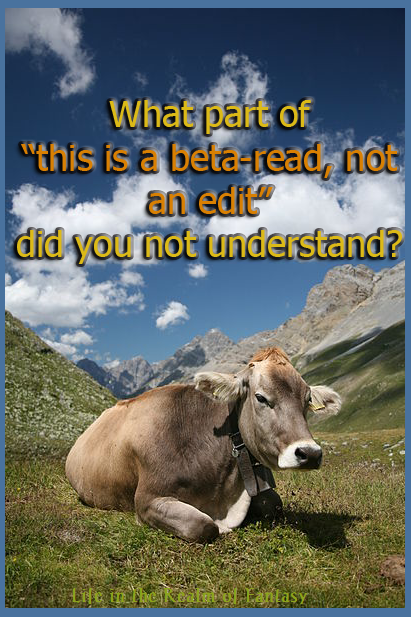
beta read memeBeta Reading is not editing, and  the reader should not make comments that are editorial in nature. Those kinds of nit-picky comments are not helpful at this early stage, because the larger issues must be addressed before the fine-tuning can begin, and if you are beta reading for someone, the larger issues are what the author has asked you to look at.

This phase of the process should be done before you submit the manuscript to an editor, so that those areas of concern will be straightened out first.

Editors and other authors make terrible beta readers, because it is their nature to dismantle the manuscript and tell you how to fix it. That is not what you want at that early point–what you want is an idea of whether you are on the right track or not with your plot and your characters, and whether or not your story resonates with the reader.

Do your self a favor and try to find a reader who is not an author to be a first reader for you. Then hire a local, well-recommended editor that you can work with to guide you in making your manuscript readable, and enjoyable.

If you notice a few flaws in your ms but think no one else will notice, you’re wrong. Readers always notice the things that stop their eye.

In my own work I have discovered that if a passage seems flawed but I can’t identify what is wrong with it, my eye wants to skip it. But another person will see the flaw, and they will show me what is wrong there.

That tendency to see our own work as it should be and not how it is, is why we need editors.

1 Comment

Filed under Books, Literature, Publishing, writer, writing

Mary Shelley and the Era of Romanticism

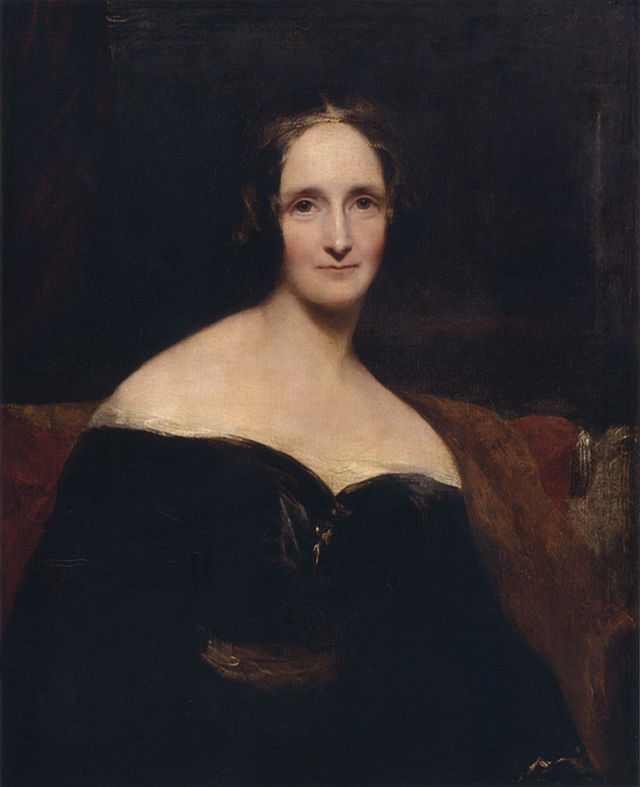
Mary_Shelley_by_Reginald_Easton.

Mary Shelley, by Reginald Easton

We often think that the great authors and artists of history were somehow wiser than we are.  We read their brilliant works, and they shine, as if they were slightly superhuman, and perfect in every way.

This is not always true. Sometimes they were wild teenagers with unrealistic ideals, haring off on adventures while their parents had nervous breakdowns over their behavior.

Mary Shelley , famous as the author of Frankenstein; or, The Modern Prometheus was born Mary Wollstonecraft Godwin on August 30, 1797. Her father was the political philosopher, William Godwin, and her mother was the philosopher and feminist, Mary Wollstonecraft. Both were famous in their day, and are still well known.

Mary’s mother died when she was eleven days old. Afterwards, Mary and her older half-sister, Fanny Imlay (her mother’s first child by an affair with a married man) were reared by their father. When Mary was four, her father married his neighbor, Mary Jane Clairmont. Mary Jane had a two year old daughter, Clara (Claire). Godwin considered all three girls his daughters and raised them accordingly.

William Godwin provided his three daughters with a good education, encouraging them to adhere to his liberal political theories, and values. He raised them to think independently, to his eternal regret.

Joseph Severn, 1845, Posthumous Portrait of Shelley Writing Prometheus Unbound in Italy.

Posthumous Portrait of Shelley Writing Prometheus Unbound in Italy, Joseph Severn, 1845

In 1814, at the age of seventeen, Mary Godwin began a romantic relationship with one of her father’s political followers, the married Percy Bysshe Shelley. Together with Mary’s stepsister, fifteen-year-old Claire Clairmont, Mary and Percy left for France and traveled through Europe.

Their relationship created a huge scandal among the nobility. Mary’s father completely disowned her, which both surprised and hurt her deeply.

Upon their return to England, Mary was pregnant with Percy’s child. Over the next two years, she and Percy faced social ostracism, they were in constant debt (often fleeing creditors), and they also suffered the death of their prematurely born daughter.

640px-George_Gordon_Byron,_6th_Baron_Byron_by_Richard_Westall_(2)

George Gordon Byron, 6th Baron Byron, by Richard Westall

In 1816, the couple famously spent the summer with Lord Byron, John William Polidori, and Claire Clairmont near Geneva, Switzerland. While the weather was horrendous, the summer was the most important, in literary terms, of any summer since.

This is where Mary conceived the idea for her novel, Frankenstein; or, The Modern Prometheus. It was also the infamous summer with no sun, a volcanic-winter event caused by the massive 1815 eruption of Mount Tambora in the Dutch East Indies (now known as Indonesia).  It was the largest eruption in at least 1,300 years, and, falling in the Little Ice Age as it did, caused worldwide famine in the year that followed.

They were prompted to go to Geneva by Mary’s stepsister, Claire Clairmont, who, in competition with her sister, had initiated a liaison with mad, bad, and dangerous to know Lord Byron the previous April.  Obsessed with him despite the fact that Byron’s interest in her had already waned, Claire used the opportunity of introducing him to the Shelleys to act as bait to lure him to Geneva.

The Shelleys and Byron rented neighboring houses on the shores of Lake Geneva. According to Wikipedia, the source of all knowledge:

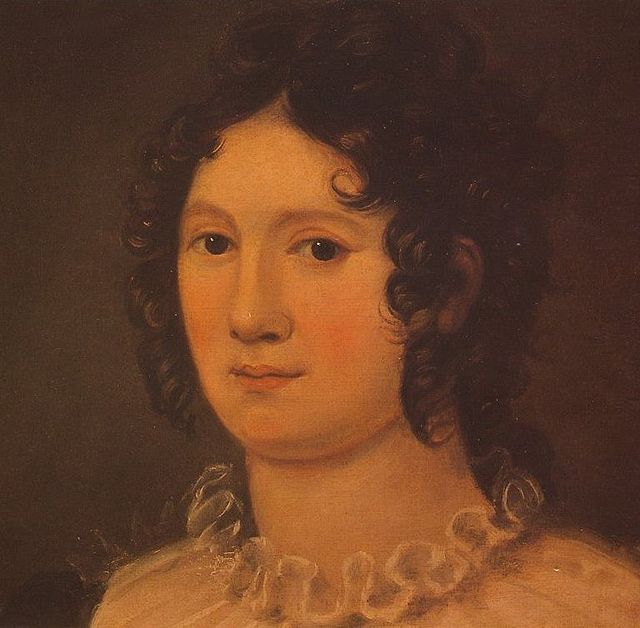
Claire Clairmont, by Amelia Curran

Claire Clairmont, by Amelia Curran

While on a boating tour the two took together, Shelley was inspired to write his Hymn to Intellectual Beauty, often considered his first significant production since Alastor, or The Spirit of Solitude. A tour of Chamonix in the French Alps inspired Mont Blanc: Lines Written in the Vale of Chamouni.

Shelley also encouraged Byron to begin an epic poem on a contemporary subject, advice that resulted in Byron’s composition of Don Juan.

Mary and Percy married in late 1816 after the suicide of Percy Shelley’s first wife, Harriet.

John William Polidori, by F.G. Gainsford

John William Polidori, by F.G. Gainsford

This reads more like a modern soap-opera than what we nowadays think would be the accepted behavior of well-to-do people living during the early 19th century.

But it was the Era of Romanticism.  Again, the Fount of All Knowledge, Wikipedia, has this to say about that:

The German painter Caspar David Friedrich said “the artist’s feeling is his law.”

To William Wordsworth, poetry should begin as “the spontaneous overflow of powerful feelings,” which the poet then “recollect[s] in tranquility,” evoking a new but corresponding emotion the poet can then mould into art. 

Wanderer Above the Sea of Fog, Caspar David Friedrich, 1818

Wanderer Above the Sea of Fog, Caspar David Friedrich, 1818

In order to express these feelings, it was considered that the content of the art needed to come from the imagination of the artist, with as little interference as possible from “artificial” rules dictating what a work should consist of. Samuel Taylor Coleridge and others believed there were natural laws which the imagination, at least of a good creative artist, would unconsciously follow through artistic inspiration if left alone to do so.

In other words–they were hippies, and it was the Regency equivalent of the summer of love.

The Shelleys left Britain in 1818 for Italy, where their second and third children died before Mary Shelley gave birth to her last and only surviving child, Percy Florence Shelley. In 1822, Percy Bysshe Shelley drowned when his sailing boat sank during a storm near Viareggio.

Mary Wollstonecraft Shelley was a prolific author. She wrote

  • History of a Six Weeks’ Tour (1817)
  • Frankenstein; or, The Modern Prometheus (1818)
  • Mathilda (1819)
  • Valperga; or, The Life and Adventures of Castruccio, Prince of Lucca (1823)
  • Posthumous Poems of Percy Bysshe Shelley (1824)
  • The Last Man (1826)
  • The Fortunes of Perkin Warbeck (1830)
  • Lodore (1835)
  • Falkner (1837)
  • The Poetical Works of Percy Bysshe Shelley (1839)
  • Contributions to Lives of the Most Eminent Literary and Scientific Men (1835–39), part of Lardner’s Cabinet Cyclopaedia
  • Rambles in Germany and Italy in 1840, 1842, and 1843 (1844)

She also wrote numerous short stories and articles that were widely published, along with many children’s stories, and numerous other unpublished work found in her papers after her death. After 200 years of being just Percy Shelley’s wife who got lucky with the popularity of Frankenstein, scholars now admit that Mary Shelley was a major figure of the Romantic Movement, significant for both her literary achievements and her political voice as a woman and a liberal.

Mary Shelley, by Richard Rothwell

Mary Shelley, by Richard Rothwell

Mary Shelley died at the age of 53 from a brain tumor.

Her life was not long, by today’s standards, but she lived it to the fullest. She gave up everything to follow Percy, and while he loved her, she nevertheless had to sit by while he had affairs, even with her stepsister, Claire.

Mary suffered terrible personal losses, the deaths of her children and her husband, and her sister Fanny. She lived every day of her life with passion, and dared to write articles and stories with a sharp political edge, and she got away with it in an era when women had no voice. Percy Shelley himself called her a “child of love and light.”

9 Comments

Filed under Literature, Publishing, writer, writing

More Disintegrating Eglish…Enlish…#language

gibberish-american businesses onlineThis weekend I happened to be out on Facebook. A friend of mine had a fun thread going, regarding the way English seems to sliding in a new direction. I find this interesting in same the way a cat finds a snake intriguing.

I want to play with it, but it may bite me.

I’ve said it before and I will say it again, English is the ever-disintegrating language. The very roots of English encourage this continual evolution.

Think about it–a bunch of smart guys in Victorian England applied the rules of a dead language, Latin, to an evolving language with completely different roots, Frisian, added a bunch of mish-mash words and usages invented by William Shakespeare, and called it “Grammar.”

We had a short discussion about words that either signify lazy speech habits or a shift in the language and came up with this short list, that is only the tip of the pox-ridden iceberg:

gibberish quoteSupposably…oh wait, did you mean supposedly?

Liberry…no sir you must go to the library for those books–the liberry can only give you hives.

Feberry...I hope you mean it will happen in February, because Feberry will never come.

Honestness...In all honesty I am not sure what to make of that one.

But my particular favorite is Prolly, which my granddaughters seem to think means Probably, but in all honestness, doesn’t.

It’s not a new problem. Jonathan Swift, writer and dean of St. Patrick’s Cathedral in Dublin, complained to Robert Harley, 1st Earl of Oxford and Earl Mortimer, in 1712: “Our Language is extremely imperfect. Its daily Improvements are by no means in proportion to its daily Corruptions; and the Pretenders to polish and refine it, have chiefly multiplied Abuses and Absurdities.” He went so far as to say, “In many Instances, it offends against every Part of Grammar.”

Well, that is prolly a little harsh.

English is like water–it shifts, it flows, it steals what it wants from every other language it comes across. That is what makes it so fun to play with. And also is what makes it so difficult to work with.


4 Comments

Filed under Humor, Literature, Publishing, writing