Monthly Archives: March 2016

#amwriting: poetry in prose

MSClipArt MP900390083.JPG RF PD Both poetry and prose have evolved over the last two-hundred years. In 1816 words were art, and they were frequently crafted into a piece  as if you were decorating a house–the author placed them in such a way as to be artistic as well as impactful.

Think Dickens, and Byron, and Mary Shelley.

A random comment in another forum led me to think about poetry and prose, which of course, led to a blog post.

Much of the time, modern poetry doesn’t rhyme. And even without rhyme, some authors write poetic narratives. But if it doesn’t rhyme, what makes poetry “poetic?” And where does it fit into modern prose?

As always, I turned to the “college of the internet” and did some research. Wikipedia, the fount of all knowledge says, “Poetry is a form of literature that uses aesthetic and rhythmic qualities of language—such as phonaesthetics, sound symbolism, and metre—to evoke meanings in addition to, or in place of, the prosaic ostensible meaning.” (End quoted text.)

In his April 19, 2012 blog post for Harriet, (the Poetry Foundation’s blog for poetry and related news) titled The Difference Between Poetry and Prose,  Martin Earl says a number of things.

Quote: “Prose is all about accumulation (a morality of work), while poetry as it is practiced today is about the isolation of feelings (an aesthetics of omission).” 

Well, that didn’t help. Taken individually, I understood each of the words that make up that sentence. Unfortunately, I didn’t understand what Mr. Earl intended to say by combining them so incomprehensibly.

I realized I would need an interpreter. So I prevailed upon Stephen Swartz, author, and professor of English at a well-known university, who is also a good friend of mine.

Stephen explained what Martin Earl may have meant: “I can only take that to mean that the writing of prose is, e.g. like a description, a compiling of details. a productive activity. I agree with the definition of poetry being a limitation of words/details in the service of presenting something esoteric such as thoughts and feelings, abstractions rather than the concrete. For prose, we accumulate words; for poetry we try to do more with less.”

Now THAT made sense to me.

However, I did find a portion of Martin Earl’s post to be understandable without the aid of my friendly neighborhood professor. Toward the middle, he explains the evolution of how poetry became prose, places it in a historical context and then explains that continued progression away from poetic prose in modern literature.

Earl writes, “In both classical and modern languages it is poetry that evolves first and is only much later followed by prose, as though in a language’s childhood, as in our own, poetry were the more efficient communicator of ideas.”

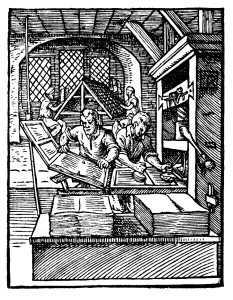
He goes on to say, “With the spread of the printing press after 1440, texts no longer had to be memorized. Poetry’s inbuilt mnemonics (rhyme, meter, refrain, line breaks) were no longer essential for processing and holding on to knowledge. Little hard drives were suddenly everywhere available.” (End quoted text.)

That makes complete sense to me on a personal level. I can remember anything I can set to a rhyme, or make into a song.

I believe using rhymes as mnemonics (which is defined as a memory device) is fundamental to human nature. We developed complex languages within our tribal communities while we were still in Africa, before the great diaspora. It was there in the earliest stages of our humanity that we gained the ability to describe the wider world to our children. With that, we had the capacity to understand and describe the motives of another person.  We could explain the how and why of an incident. We saw the divine in every aspect of life and developed mythologies combining all of these concepts to explain the world around us and our place in it.
Printer_in_1568-ceWe learned ways to memorize  and pass on ideas as abstract as legends or sagas. Through those stories, we could learn larger lessons from the mistakes and heroism of our ancestors.  My theory is that we developed poetry at the same time as we developed language.

Every tribe, every culture that ever arose in our world had this same tradition of passing down stories and legends using rhyme and meter.  Rhyme combined with repetition and rhythmic simplicity enabled us to remember and pass on wisdom to our children.

Wikipedia describes poetry as: “a form of literary art in which language is used for its aesthetic and evocative qualities in addition to, or in lieu of, its apparent meaning.”

It also describes prose as: “the most typical form of language. The English word ‘prose’ is derived from the Latin prōsa, which literally translates as ‘straight-forward.’”

In poetry, saying more with fewer words forces us to think on an abstract level. We have to choose our words based on the emotions they evoke, and the way they portray the environment around us. This is why I seem to gravitate to narratives written by authors who are also poets—the creative use of words elevates what could be mundane to a higher level of expression, and when it’s done well, the reader doesn’t consciously notice the prose, but they are moved by it.

We have no need to memorize our cultural knowledge anymore, just as we no longer need the ability to accurately tally long strings of numbers in our head.  We’ve begun to like our books with straightforward prose. Flowery language is no longer acceptable in the books we read.

This is also true of modern poetry.

The love of poetry continues, and new generations seek out the poems of the past while creating powerful poetry of their own.

Authors craft incredible narratives, often without knowing they are poets.
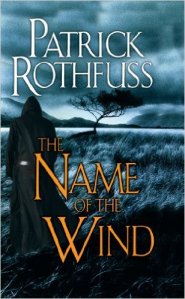
The Name of the Wind by Patrick Rothfuss 2nd coverPatrick Rothfuss, The Name of the Wind:

“It was night again. The Waystone Inn lay in silence, and it was a silence of three parts.

“The most obvious part was a hollow, echoing quiet, made by things that were lacking. If there had been a wind it would have sighed through the trees, set the inn’s sign creaking on its hooks, and brushed the silence down the road like trailing autumn leaves. If there had been a crowd, even a handful of men inside the inn, they would have filled the silence with conversation and laughter, the clatter and clamor one expects from a drinking house during the dark hours of night. If there had been music…but no, of course there was no music. In fact there were none of these things, and so the silence remained.” (End quoted text)

That is some powerful prose. It is both straightforward, and poetic.

That is where craft comes in. Choosing words for the emotions they evoke and the way they portray the environment the author has imagined is what lends great narrative prose its power. We can still appreciate beauty combined with impact when it comes to our prose.

6 Comments

Filed under Literature, writing

#amreading: The Queen of the Night by Alexander Chee

Queen of the Night alexander cheeEvery now and then I find myself reading/listening to a mainstream bestseller, and enjoying it. Alexander Chee has written just such a novel, in The Queen of the Night.

This novel has one of the best openings since Patrick Rothfuss’s brilliant opening lines in The Name of the Wind.

Quote from The Queen of the Night: When it began, it began as an opera would begin, in a palace, at a ball, in an encounter with a stranger who, you discover, has your fate in his hands. He is perhaps a demon or a god in disguise, offering you a chance at either the fulfillment of a dream or a trap for the soul. A comic element—the soprano arrives in the wrong dress—and it decides her fate.

These lines presage an immersive, sumptuous reading experience.

But first, THE BLURB:

Lilliet Berne is a sensation of the Paris Opera, a legendary soprano with every accolade except an original role, every singer’s chance at immortality. When one is finally offered to her, she realizes with alarm that the libretto is based on a hidden piece of her past. Only four could have betrayed her: one is dead, one loves her, one wants to own her. And one, she hopes, never thinks of her at all.

As she mines her memories for clues, she recalls her life as an orphan who left the American frontier for Europe and was swept up into the glitzy, gritty world of Second Empire Paris. In order to survive, she transformed herself from hippodrome rider to courtesan, from empress’s maid to debut singer, all the while weaving a complicated web of romance, obligation, and political intrigue.

Featuring a cast of characters drawn from history, The Queen of the Night follows Lilliet as she moves ever closer to the truth behind the mysterious opera and the role that could secure her reputation — or destroy her with the secrets it reveals.

The book so far:

From those intiguing opening lines forward it is filled with every kind of emotion, every human tragedy and triumph imaginable. It resounds with the pomp and grandeur of the most thrilling opera–as it should since it details the life of a Parisian opera star of outstanding brilliance–a true diva in the operatic sense.

Rumors abound regarding Lilliet–she is the topic of many conversations, but rumors barely touch on the truth of her life. Even she is not truly sure of who or what she is. Despite having achieved everything and more, she lacks something and is waiting for a “meeting with destiny” which she hopes will transform her life into the paradise she wants it to be.  That moment comes in chapter one, but the transformation….

You will have to read it to see.

This book is not cheap–the Kindle edition is $14.99. I bought it as an Audible download ($17.95) because I am heavily involved in editing right now for a Myrddin author and am also making revisions on my own work under an editor’s guidance. Then I bought the hardcover edition.

I am unable to read for pleasure until I am done with these two tasks. And because of some interesting style choices on the part of the author, such as not enclosing dialogue in quotes, I especially dare not attempt to read this particular book just now.

But I can listen to audio books, and what I am hearing in this book captivates me. When I am once again able to read for pleasure, this book will the first I crack open.

To purchase a book published by the large traditional publishers is a hefty financial commitment. To make your decision a little easier, Longreads posted the first chapter here: The Queen of the Night by Alexander Chee. Please go out to their wonderful site and if you like what you see, consider becoming a member.

4 Comments

Filed under Books, Literature

#amblogging: wanted: flatiron for curly quotes and other blogging twists

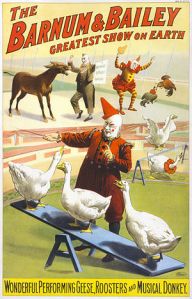
300px-Barnum_&_Bailey_clowns_and_geese2Blogging regularly is one of the best ways to improve your writing chops but it can be like working for the circus.  Even when you really know the vagaries of your platform, a lot of strange things can happen in your work. They go unnoticed, doing their thing in the background, keeping it interesting.

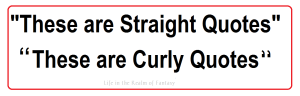
WordPress, the mighty bastion upon which my empire rests, uses ‘fancy quotes’ as the default format. While they do look better in a document, blogging can often be an off-the-cuff thing. Straight quotes are less apt to go awry.  I am not sure why this is the default, nor am I able to find a way to ‘unfancy’ them.

WordPress chooses to make things  fancy, but I don’t need fancy. Judging from the number of posts in their forums on the subject, I am not the only one.

In some places, these curvy morsels of madness are called ‘smart quotes.’ In others, they are ‘curly.’ I don’t like them because sometimes they end up facing the wrong way, and being a bit unobservant, I don’t catch that until after I’ve posted it.

I’ve discovered some out of date plug-ins that are no longer available for uncurling my curly quotes, but alas– ‘no longer available’ is not really helpful. I have a flatiron for my curly hair–I need one for WordPress’s curly quotes.

straight and curly quotesAnother seemingly random thing I’ve discovered the hard way: occasionally I will decide to cut a section and paste it elsewhere, only to find (after having published the post) that the cut section has magically reappeared, and I am now repeating myself, verbatim.

This happens so often that I neurotically look at the menu every time I right-click-cut anything, to make sure I am actually cutting and not merely copying.

I double-check the text. Yes, the cut piece is definitely cut and successfully pasted elsewhere. But when I click ‘save draft’ it magically reappears back in the place from which it was cut, and I am once again repeating myself.

gibberish-american businesses onlineThen there is the hinky formatting. Sometimes the formatting goes crazy  and no matter what I do, the spaces between the paragraphs vanish. My post becomes a wall of words. Highlighting the post and clicking on ‘clear formatting’ does not help.

The spaces will show up on the editing side of the piece, but they will have vanished when the post is saved and published. (Edit: removed repeated line. Cursed fluently.)

My hubby, the programmer, says this is most likely caused by some hidden formatting issue that happens when I am copying from a Word doc and pasting it into the post. I usually write my posts in a Word doc because I catch more mistakes that way. Then I paste it here and, using the ‘preview’ option, check, double-check, and check again for bloopers.

Randomly, the posts are rife with strange formatting that will not be removed no matter what remedy I try. If I was a programmer, I would know exactly what bit of code was causing it and fix it. Alas! I’m only an old lady with just enough knowledge to be dangerous.

Hinky formatting also occurs in my Blogger sites, but not as often. I love the way WordPress looks when it’s all going right, but I love the options Blogger offers and the compatibility with Google products such as YouTube videos. (Blogger is a Google product.)

Dealing with these little issues are why I try to write my posts several days in advance and schedule them for the time I want them to post. Once I have it scheduled, I will let it sit overnight and then come back and read it with fresh eyes. I catch a lot that way, but it’s amazing how many slip by me.

This is why I always say self-editing is not as effective as we’d like. No one sees my blog posts before they are published but me and invariably I miss some whopping eye stopper.

1024px-Trapeze_Artists_in_CircusThe most mysterious problem is the inadvertent posting of a piece that is

  • in the draft stage
  • full of bloopers
  • looks illiterate

Technically, that happens because I get side-tracked and instead of scheduling it as I normally do, for some crazy reason I click ‘publish’ instead of ‘save draft.’

I blame ghosts.

And curly quotes.

9 Comments

Filed under blogging, writing