
Speaking just for myself, I’d have to say that I feel undermotivated most days. Yeah, there’s battling the dragon that is my laundry pile and the eternal quest to find the bottom of the laundry hamper.
 Then, there’s hunting down and killing the trash and recycling so that we don’t live in a slum, alongside the unlovely side-quest for a clean bathroom. I do these tasks, but they don’t “bring me joy.” I do them so I can get to the good stuff, the best part of the day—which is writing.
Bet you didn’t see that one coming!
I always have multiple projects in the works. This last week, I had a brainstorm that set me in the direction I need to go in order to finish writing the second half of a long novel that has been in the works since 2016. It will be a duology, and while the first half is completed, the second half is barely started. I refuse to publish the first half until the second is ready to go. Readers want the complete story.
The problem I have had with this story is plotting the second half. I have plotted the high points and events, but why must Character B go to such an out-of-the-way place?
 Motivations drive emotions, and emotions drive the plot. People have reasons for their actions, and I needed to give my bad guy a good one. Now I know why he must go there.
B has enemies, more than merely our protagonist. A sub faction, a group acting alone, secretly hopes to stop him. Therefore, someone in B’s inner circle, a person he relies on, will die as the result of a botched assassination attempt on B’s life.
- This death must be laid squarely at the protagonist’s hands (wrongly in this case), and that will stoke the hatred Character B already feels for Character A.
- B is aware that he needs muscle, a company of super soldiers to fill out his army. But he is a traditionalist, and they must be of the tribes. His tribeless soldiers are somewhat trained but don’t really know how to fight. Thus, he needs these highly trained, uber-traditional soldiers, and he needs a lot of them.
In December, I wrote a post, Motivation, and the Council of Elrond. It explores what lies behind each character’s actions and reasoning. Frodo and Samwise end up going to Mount Doom alone, and the Council of Elrond foreshadows the events that occur to make this happen.
And I will just say this now – Boromir had to die because his death raises the stakes and is one of the most heart-wrenching scenes in the book.
 Sometimes, the story demands a death, and 99% of the time, it can’t be the protagonist. But death must mean something, wring emotion from us as we write it. Since the characters we have invested most of our time into are the antagonist and protagonist, we must allow a beloved side character to die.
Character B’s motivations must be clearly defined. Killing a side character can’t be only a means of livening up a stale plot. If a character must die, even a side character, it must galvanize the other characters, force them to action.
And most of all, I want to feel as if I have lost a dear friend when that side character dies.
It must be an organic part of the storyline, move the other characters, and force them to action. Thus, the character who must die in my novel was doomed from the first moment I decided to add them to the mix.
I’ve said this before, but we form our characters out of Action and Reaction. It’s a kind of chemistry that happens on multiple levels.
- It occurs within the story as the characters interact with each other.
- At the same time, the chemistry happens within the reader who is immersed and living the story.
- The reader begins to consider the characters as friends, sometimes even the bad guys.
And in the novel I am working on, my antagonist is a good guy, one who believes he is on the right side. I love this guy. He triggered a mage trap and was corrupted by an evil god, but he is fundamentally still the same person he always was.
It’s just that now he is fighting for the devil.
That emotional attachment is why every sacrifice our characters make must have meaning. It must advance the plot, or your reader will hate you.
 Motivations add fuel to emotions. Emotions drive the scene forward.
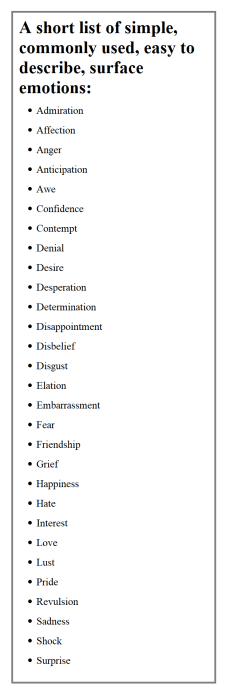
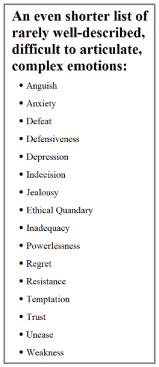
So, now I am designing a side character, a kindly mentor for Character B. When the arrow strikes, I want the reader to feel the emotions as strongly as my antagonist. This will involve a balance of more showing than telling, but I find strong emotions are easy to show.
What I struggle with is showing the subtler emotions.
Which is why it takes so long for me to finish writing a book.
Credits and Attributions:
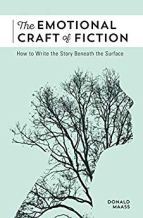
IMAGE: Front Cover of The Emotional Craft of Fiction: How to Write the Story Beneath the Surface – Kindle edition by Maass, Donald. Reference Kindle eBooks @ Amazon.com.
 Characters aren’t fully formed when you first lay pen to paper. They evolve as you go, growing out of the experiences you write for them. Sometimes, these changes take the story in an entirely different direction than was planned, which involves a great deal of rewriting. It helps me remain consistent if I note those changes on my outline because then I don’t forget them.
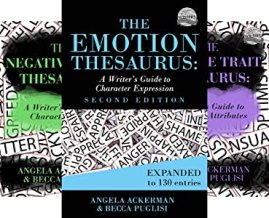 I highly recommend the
 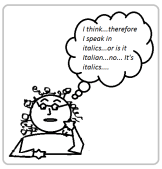 At any gathering of authors, a determined group will proclaim that thoughts should not be italicized under any circumstances. While I disagree with that view, I do see their point.
 In a good story, bad things have happened, pushing the characters out of their comfortable rut. They must become creative and work hard to acquire or accomplish their desired goals.
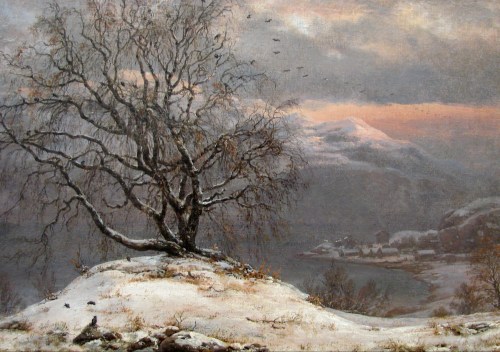
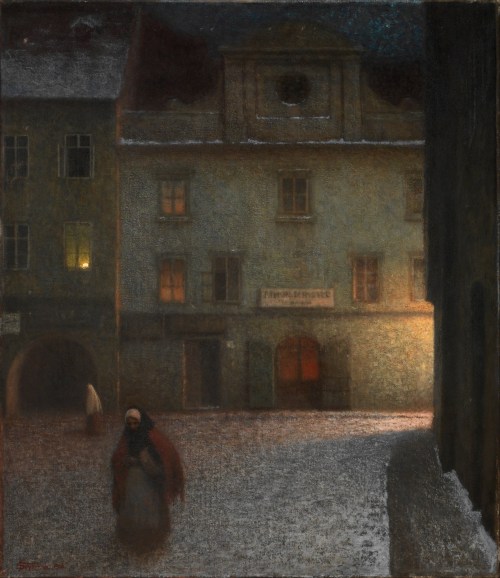 Artist: Jakub Schikaneder (1855–1924)
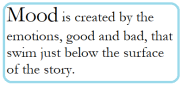 Mood is long-term, a feeling residing in the background, going almost unnoticed. Mood shapes (and is shaped by) the emotions evoked within the story.
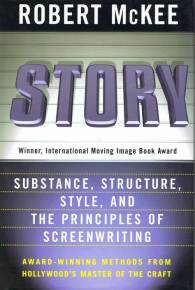 Robert McKee tells us that emotion is the experience of transition, of the characters moving between a state of positivity and negativity.
 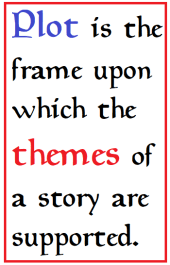 These visuals can easily be shown. Grief manifests in many ways and can become a thread running through the entire narrative. That theme of intense, subliminal emotion is the underlying mood and it shapes the story:
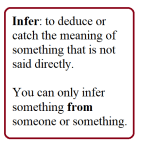 This is part of the inferential layer, as the audience must infer (deduce) the experience. You can’t tell a reader how to feel. They must experience and understand (infer) what drives the character on a human level.
 As we read, the atmosphere that is shown within the pages colors and intensifies our emotions, and at that point, they feel organic. Think about a genuinely gothic tale: the mood and atmosphere
  However, there is an accessible viewpoint just at the entrance, and we can go there and just absorb the peace. Several years ago, I shot this photo from that platform.
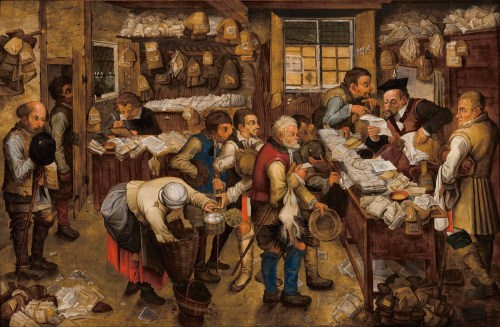 Action and interaction – we know how the surface of a pond is affected by the breeze that stirs it. In the case of our novel, the breeze that stirs things up is made of motion and emotion. These two elements shape and affect the structural events that form the plot arc.
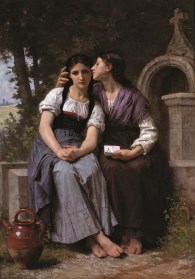 So, how can we use the surface elements to convey a message or to poke fun at a social norm? In other words, how can we get our books banned in some parts of this fractured world?
 Creating depth in our story requires thought and rewriting. The first draft of our novel gives us the surface, the world that is the backdrop.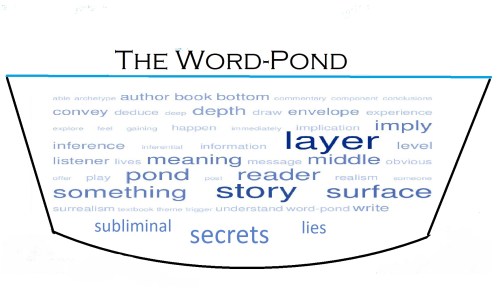
 Beta Reading is the first look at a manuscript by someone other than the author. The first reading by an unbiased eye is meant to give the author a view of their story’s overall strengths and weaknesses so that the revision process will go smoothly. This phase should be done before you submit the manuscript to an editor. It’s best when the reader is a person who reads for pleasure and can gently express what they think about a story or novel. Also, look for a person who enjoys the genre of that particular story. If you are asked to be a beta reader, you should ask several questions of this first draft.
 Editing is a process unto itself and is the final stage of making revisions. The editor goes over the manuscript line-by-line, pointing out areas that need attention: awkward phrasings, grammatical errors, missing quotation marks—many things that make the manuscript unreadable. Sometimes, major structural issues will need to be addressed. Straightening out all the kinks may take more than one trip through a manuscript.
 A good proofreader understands that the author has already been through the editing gauntlet with that book and is satisfied with it in its current form. A proofreader will not try to hijack the process and derail an author’s launch date by nitpicking their genre, style, and phrasing.
  The problem that frequently rears its head among the Indie community occurs when an author who writes in one genre agrees to proofread the finished product of an author who writes in a different genre. People who write sci-fi or mystery often don’t understand or enjoy paranormal romances, epic fantasy, or YA fantasy.
 Repeated words and cut-and-paste errors. These are sneaky and dreadfully difficult to spot. Spell-checker won’t always find them. To you, the author, they make sense because you see what you intended to see. For the reader, they appear as unusually garbled sentences.
 At some point, your manuscript is finished. Your beta readers pointed out areas that needed work. The line editor has beaten you senseless with the
  Also, the two combine to help in deciding how long it will take to complete a task.
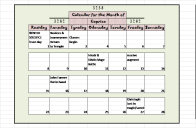 While I had finished the RPG game’s plot and the synopsis, I didn’t have some details of the universe and the world figured out. So, in a burst of creative predictability, I went astrological in naming the months. I thought it would give the player a feeling of familiarity.
 Time has a tendency to be elastic when we are writing the first draft of a story where many events must occur. Sometimes, many things are accomplished in too short a period for a reader to suspend their disbelief.
 What if your fantasy world uses leagues as a measure of distance? A league is 3.452 miles or 5.556 kilometers. Generally speaking, a horse can walk 32 miles or 51.5 K in a day.
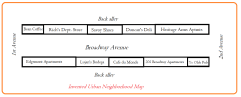 Many readers have a route they walk or run daily to maintain their health. These readers will know how long it takes to walk ten blocks. They will also know how far a healthy person can walk in one hour on a good road.
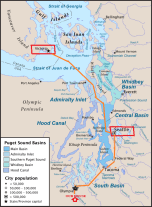 The part of the world where I live has large tracts of forests, many wide rivers, and is mountainous, with numerous volcanos. Our roads are often winding and sometimes travel in switchbacks up and over many of these obstacles. It takes time to go places even though the original road-builders plotted the roads through the most accessible paths.
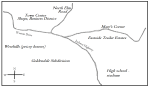
 Travel and events take time. A calendar, either fantasy or the standard Gregorian calendar we use today, and a simple hand-drawn map will help you maintain the logic of your plot.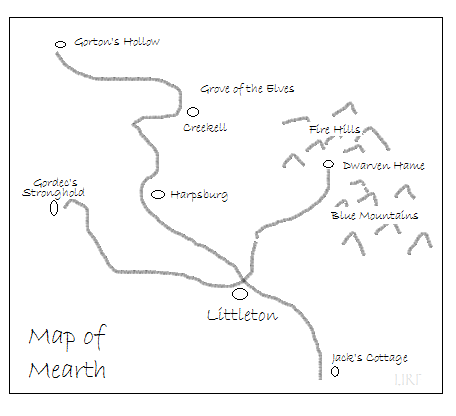
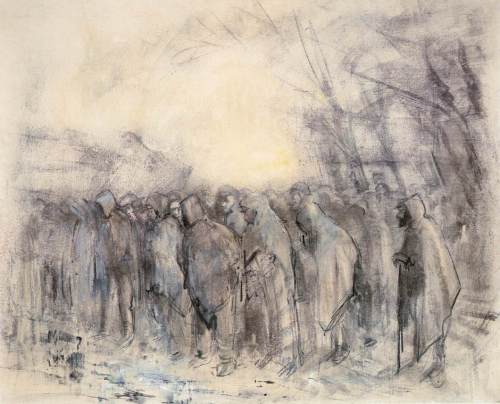 Author: László Mednyánszky (1852–1919)
 Sometimes, a first novel is well-received, with engaging characters and a plot arc that moves along to a satisfying conclusion. People want more, and so the series begins.
 The episodic series is like a television series. Each novel has a new adventure for a previously established set of characters. In some ways, these are easiest to write, especially when each book features established characters in an established world. (Sorry about the repetition there.) Many cozy mysteries and fantasy series are episodic. They are an infinite series of standalone stories.
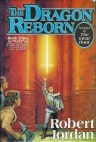 The story usually has a strong theme that unites the series. It might be a theme such as the hero’s journey or young people coming of age. Or it might follow the life of one main character and their sidekicks as they struggle to complete an arduous quest.
 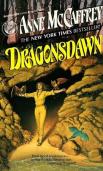 Prequels are one of my favorite kinds of novels. I am always curious as to how the whole thing started.
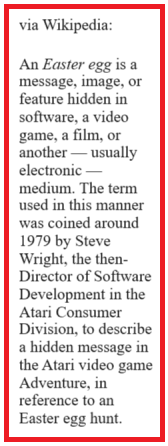 Once you have figured out the entire arc of the series, make an outline of book one. This allows your creative mind to insert foreshadowing. This will happen via the clues and literary easter eggs that surface as the series goes on.
 Next week, we will look at creating a calendar for stories set in a speculative fiction world. We will look at some of my failures and see why simpler is usually better.


 Life in the Realm of Fantasy