
In the past few weeks, we have looked at the structural elements of the story, such as theme, narrative mode, point of view, and the author’s voice. We’ve talked about showing emotions and writing believable drama. We have dissected how a story flows from scene to scene.
 So now, we realize that we must submit our work to contests or publications if we ever want to get our name out there. We have looked at our backlog of short stories and gone out to sites like Submittable or the Submission Grinder to discover contests or magazines that we’d like to send them to.
After all, some of these old ramblings could be pretty good if we dusted them off and polished them up a bit.
So now we’re going to look at the structural elements of a story that has been sitting for a while. Let’s have a look at one of many short works I wrote during lockdown but forgot about.
 The first thing we’re going to look at is the problem. Is the problem worth having a story written around it? If not, is this a “people in a situation” story, such as a short romance or a scene in a counselor’s office? What is the problem and why did the characters get involved in it?
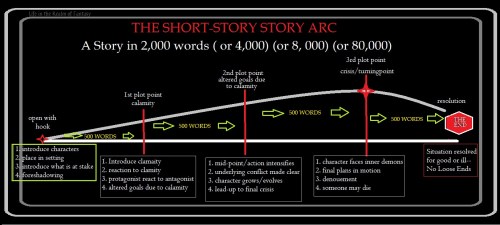
The following is the core plot of a short story that came in just under 4,000 words.
A messenger, Oriana, and her partner are on a mission to a local ruler from his brother, the king. Before they arrive there, her partner quarrels with her and attempts to steal the coins that belong to the king. She knocks him out, retrieves what he had stolen, and continues her quest to take the coins to the king’s brother.
At the brother’s town, Oriana collects a small jewel, one that is really an item of great magical power. The king will use it to end the drought that has been crippling the country. Now, she must convey it back to the king.
Oriana meets a wanderer, Geran Rose, who, unaware of what she is carrying, joins her. They travel together, but then the next day, the former partner shows up, accompanied by a demon. Now, the messenger realizes what the thief is really after. She can’t let the demon have the jewel but knows she can’t defeat him. However, a dragon can. So, she and her companion lead the demon into dragon country, knowing that they could die as easily as the demon.
First, I look at believability. It is a fantasy set in a world of humans, elves, dwarves, and dragons, so in that world, would the central event I have detailed really happen? More importantly, would it happen in the way I have shown?
- The dragons are wild creatures, sentient and, most importantly, looking for a good meal. Why would dragons desire to eat a demon? They love the taste of elves, but they love the taste of demons more. These dragons crave the darkness that the demon embodies in the same way I crave chocolate.
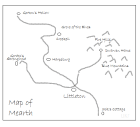 Worldbuilding is crucial in a short story. Is the setting I have chosen the right place for this event to happen? In this case, I say yes, that it is the only place where such a story could happen.
I absolutely loved writing the scenes set at the edge of the burning lands. But have I left enough clues in the setting for a reader to visualize the world? My writing group will tell me.
The next aspect I look at is characterization, or how I have portrayed the protagonist and other characters. I ask my characters the same questions that I would ask of those in a novel. Answering these questions also tells me if the plot is believable and relatable.
Are these the right people for their roles? Yes, the elf, Oriana is the only one who could carry this off. The human, Geran Rose is the perfect sidekick, intelligent, and a good fighter. The elven thief and the high-ranking demon were easy to write because they were so outrageously fun.
 Point of view: First person – Oriana tells us this story as it happens. We are in her head for the entire story. Do her actions and reactions feel organic and natural? After some work, I think yes, but again, I’ll have to run it by someone to be sure.
In a short story, conversations and brief moments of mind wandering can be vital in advancing the plot. Are the conversations unique to each character? I hope so, but my writing group will tell me more.
This is a short story, so do these scenes of conversation and internal dialogue show us something about my protagonist’s personality and provide information we need to know without dumping it? Again, I hope so.
What is the unifying theme, the thread that runs throughout the story and ties things together? In this case, it is the many nuances and ramifications of betrayal. Is that theme strong enough to lend believability to the plot?
The last thing I look at is crucial to a reader’s enjoyment of my short story.
How does it end? Is the ending satisfying and finite? I like the way my short story ends, but will my writing group agree?
In your short story, ask yourself if you wonder what could have happened next. Do you want to write more stories around these characters?
I have another story in the works for Oriana and Geran Rose, which involves a traitor, a ballgown, and the universal womanly desire for clothing with useful pockets.
Writing short stories is fun, a way of clearing the mind when I am stuck for ideas on a longer piece. Do make the effort to examine the structure of your short stories and rearrange the scenes as needed.
On Monday, we’ll walk through the steps for revising and self-editing your short work. This final phase of the process is crucial because what you submit must be grammatically clean and look professional.


 Life in the Realm of Fantasy
I’ve only recently come to short story writing, so thank you for this post.
LikeLiked by 1 person
Hello V! When I find myself unable to get ahead on my longer work, I can usually write the rudiments of a short story or a poem. I think of them as palate cleansers, the champagne sorbet served between the main courses, lol!
(Not that dinners here at Casa del Jasperson have a lot of champagne, much less champagne sorbet, but you get the drift.)
LikeLiked by 1 person
Poems, yes. I do write them in between.
LikeLike