Monthly Archives: November 2024

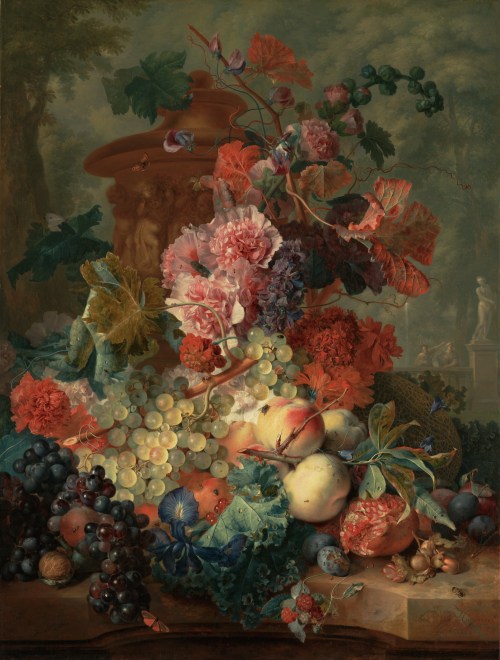
#FineArtFriday: Fruit Piece by Jan van Huysum 1722 #Thanksgiving

Fruit Piece by Jan van Huysum (Dutch, 1682 – 1749)– artist (Dutch)

Genre: still-life

Date: 1722

Medium: oil on panel

Dimensions: Height: 800 mm (31.49 in); Width: 610 mm (24.01 in)

What I love about this painting:

This painting first appeared here the day after Thanksgiving in 2020, the year of lockdown and virtual family gatherings via Zoom and Discord. Despite quarantine and lockdown, we gave thanks that year for the good things and for each other.

And this year, we did the same, with turkey, and all the family’s favorite side dishes. I made everything except the turkey using plant-based recipes that I have developed over the years of being vegan. My husband and son are not vegan, so I do go out of my way to accommodate their wishes while still keeping all the side-dishes plant-based.

I love the romance of today’s painting. The scene depicts the very essence of abundance and comfort. Every piece of fruit in this image is perfect, begging to be eaten, every flower wishes to be admired. Carnations, grapes, plums, figs, apples, a melon, raspberries, and numerous other fruits occupy the center of the image. Butterflies have found the flowers.

In the background, slightly out of focus as if the centerpiece is seen through a camera lens, we have a lush garden, a fantasy of earthly paradise. Far to the rear of the scene, painted as if they just happened to stray into it, two figures on a low bridge carry on a quiet conversation beneath a graceful statue.

More than any other artist of his time, van Huysum understood how to show the “life” aspect of still-life by combining fantasy with the faithful reproduction of perfect, ripe fruit.

Yesterday, we hosted our son and granddaughter and her husband, giving thanks for the abundance in our lives, the multitude of blessings for which we are truly grateful. While life has thrown us some hurdles in the last year, we have good food, safe shelter, and most importantly, we have each other.

This painting celebrates food in plentiful, mouthwatering profusion, a true blessing for which we should all be thankful.

About the Artist: The website at the National Gallery says:

Jan van Huysum (1682 – 1749)  was the last of the distinguished still life painters active in the Northern Netherlands in the 17th and early 18th centuries, and an internationally celebrated artist in his lifetime. Although he specialised in flower still lifes, van Huysum also painted a few landscapes.

His early works are more concentrated in design than his elaborate later paintings, like the Gallery’s Flowers in a Terracotta Vase, with its lighter background and superabundance of detail.

Van Huysum was a native of Amsterdam and was trained, according to Arnold Houbraken, by his father, who was also a still life painter. His first dated work is of 1706.

Van Huysum often travelled to horticultural centres like Haarlem so he could make sketches of rare and unusual flowers. During his lifetime, his flower paintings were sold for as much as 2,000 guilders, and he had famous patrons including the Duc d’Orléans, William VIII, Landgrave of Hesse-Kassel, and Sir Robert Walpole.


Credits and Attributions:

Wikimedia Commons contributors, “File:Jan van Huysum (Dutch – Fruit Piece – Google Art Project.jpg,” Wikimedia Commons, the free media repository, https://commons.wikimedia.org/w/index.php?title=File:Jan_van_Huysum_(Dutch_-_Fruit_Piece_-_Google_Art_Project.jpg&oldid=507579017 (accessed November 25, 2020).

National Gallery Contributors, Biography of Jan van Huysum (1682 – 1749) | National Gallery, London ©2020 National Gallery, London  https://www.nationalgallery.org.uk/artists/jan-van-huysum (accessed November 25, 2020).

4 Comments

Filed under #FineArtFriday

When the Plot Loses Its Way #writing

We have arrived at the final week of November. Storms here in the Pacific Northwest have created havoc for some, and despite that, the season of parties has begun. My neighborhood escaped the storm damage, but many others are still without power. Also, Thanksgiving is upon us and cooking abounds. I carve out my writing time in the early morning and sometimes in the evening. Sometimes, the writing flows well, and other times it’s like trying to give the dog a pill.

MyWritingLife2021For the last few weeks, many writers have been pouring the words onto paper, trying to get 50,000 words in 30 days. Some have written themselves into a corner and have discovered there is no graceful way out.

This happened to me in 2019 and again in 2023. In 2019, I took one of my works in progress back from 90,000 words to 12,000. I did pretty much the same thing in 2023.

Everything I cut was saved into a separate file, as those scenes weren’t terrible and could be the seeds of a new novel. They just didn’t work in the story I was attempting to write at that time.

Epic Fails meme2I hate it when I find myself at the point where I am fighting the story, forcing it onto paper. It feels like admitting defeat to confess that my story has taken a wrong turn so early on, and I hate that feeling. Fortunately, I knew by the 40,000-word point that last year’s story arc had gone so far off the rails that there was no rescuing it.

I’m crazy, but I’m no quitter. So, in 2019 I wasted several weeks writing more words and refusing to admit the story was no longer enjoyable. On the good side, I had accomplished many important things with the 3 months of work I had cut from that novel.

  1. The world was solidly built, so the first part of the rewrite went quickly.
  2. The characters were firmly in my head, so their interactions made sense in the new context.
  3. Some sections that had been cut were recycled back into the new version.

800px-Singapore_Road_Signs_-_Temporary_Sign_-_Detour.svgThe sections I cut weren’t a waste, they were a detour. In so many ways, that sort of thing is why it takes me so long to write a book—each story contains the seeds of more stories.

If this happens to you, I suggest taking a month or so away from this project. When I return to a manuscript that was set aside, I will spend several days visualizing the goal, the final scene, mind-wandering on paper until I have a concrete objective for my characters. Then I will write a synopsis of what needs to happen, and each paragraph of that synopsis will contain the seeds of a chapter.

Beginning a novel with half an outline and only a vague idea of the ending is why I sometimes lose my way in a first draft.

Author-thoughtsSometimes, something different happens. In 2019, I realized the novel I was writing is actually two books worth of story. The first half is the protagonist’s personal quest and is finished. The second half resolves the unfinished thread of what happened to the antagonist and is what I am currently working on. Both halves of the story have finite endings, so for the paperback version, I will break it into two novels. That will keep my costs down.

2019 and 2023 were not the only times when my plots went off the rails. While I no longer have anything to do with NaNoWriMo.org, I do participate in writing quests each November. In 2020, I was 4 days into NaNoWriMo when things got bad, and I switched to writing a completely different novel.

If you are a regular visitor here, you know what happened. In trying to resolve a twist of logic, I accidentally wrote an entirely different novel with a completely different cast of characters and plot. That manuscript is in the final stages of prepublication.

squirrelFor those of you who are curious—I have the attention span of a sack full of squirrels. Proof of that can be found in the 4 novels currently in progress that are set in that world, each at different eras of the 3000-year timeline, each in various stages of completion.
And all of this happened because I had to write history in order to avoid contradicting myself in the modern story. In the process of writing that history, historical characters and their stories grabbed my attention.

All writing is good writing. The work I cut out of my failed manuscripts has generated several short stories and novellas, so nothing is wasted.

There are going to be times when writing is work. Sometimes, we must accept that we are forcing something and it’s not succeeding. That is when I take the storyline back to where it got out of hand.

The sections you cut might be the seeds of something wonderful, a short story or a novella that you can submit elsewhere for publication.

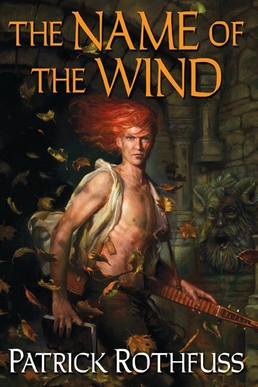
ITheNameoftheWind_cover think of Patrick Rothfuss and his struggle to write the books in his series, the Kingkiller Chronicle. The first two books, The Name of the Wind (2007) and The Wise Man’s Fear (2011), have sold over 10 million copies. Yet he is still struggling to turn out the third book in the trilogy.

Rothfuss’s work is original and powerful, but though it is highly regarded, he fights to put it on paper just as the rest of us do. His battle with mental health issues affects his ability to write the book he believes in. The fact that an author of his caliber also struggles to get the story down gives me permission to keep at it.

I believe in the joy of writing, in the joy of creating something powerful. If you lose your fire for a story because another has captured your imagination, set the first one aside and go for it.

We who are indies have the freedom to write what we have a passion for and take as long as we need to do it.

True inspiration is not an everlasting firehose of ideas. Sometimes, we experience dry spells. When I come back to the original work, I’ll see it with fresh eyes, and the passion will be reignited.

7 Comments

Filed under writing

#FineArtFriday: Barge Haulers on the Volga by Ilya Repin, 1870 #writing #prompt

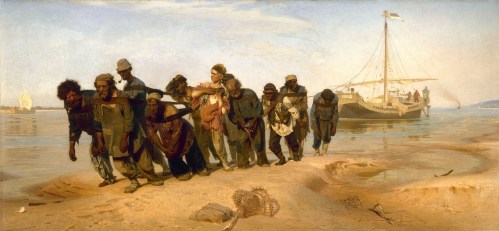
Barge Haulers on the Volga by Ilya Repin  (1844–1930)

  • Date: 1870
  • Medium: oil on canvas
  • Dimensions: Height: 131.5 cm (51.7 ″); Width: 281 cm (110.6 ″)
  • Current location: Ж-4056 (Russian Museum)
  • Inscriptions: Signature and date: И. Репин / 1870-73

To see this image best, right click on it and have it open in a new tab. or visit the Wikimedia page (which will open in a new tab).

What I love about this painting:

A burlak was a person who hauled barges and other vessels upstream from the 17th to 20th centuries in the Russian Empire. Most burlaks were landless or poor peasants.

These men are shown working, painted with brutal truth. They are beyond exhausted. Their skin is darkened and weathered from years of work in the unremitting sun, except for the young man in the middle. One day he will be like the older men, hardened to the misery and enduring his lot in life.

Each face is filled with emotion, with a story of their own. Who knows what tragedies brought them to agree to this terrible existence, this seasonal slavery of physically towing boats upriver?

For the women and men who towed the barges, winter was even worse, because once the river froze over these burlaki were unemployed. Their life was a constant circle of starvation and hellish labor under the harshest conditions.

This post first appeared in November of 2019. Each time I view this painting, I am moved by the unwritten stories, the tragedies that led these people to the life of a burlak, and the hardship shown so clearly here.

What stories are inspired by this image? Which burlak most inspires your creative mind?

About this Painting (via Wikipedia)

Barge Haulers on the Volga or Burlaki (Russian: Burlaki na Volge, Бурлаки на Волге) is an 1870–73 oil-on-canvas painting by artist Ilya Repin. It depicts 11 men physically dragging a barge on the banks of the Volga River. They are at the point of collapse from exhaustion, oppressed by heavy, hot weather.[1][2]

The work is a condemnation of profit from inhumane labor.[3] Although they are presented as stoical and accepting, the men are defeated; only one stands out: in the center of both the row and canvas, a brightly colored youth fights against his leather binds and takes on a heroic pose.

Repin conceived the painting during his travels through Russia as a young man and depicts actual characters he encountered. It drew international praise for its realistic portrayal of the hardships of working men, and launched his career.[4] Soon after its completion, the painting was purchased by Grand Duke Vladimir Alexandrovich and exhibited widely throughout Europe as a landmark of Russian realist painting. Barge Haulers on the Volga has been described as “perhaps the most famous painting of the Peredvizhniki movement [for]….its unflinching portrayal of backbreaking labor”.[5]

The characters are based on actual people Repin came to know while preparing for the work. He had had difficulty finding subjects to pose for him, even for a fee, because of a folklorish belief that a subject’s soul would leave his possession once his image was put down on paper.[8] The subjects include a former soldier, a former priest, and a painter.[9] Although he depicted eleven men, women also performed the work and there were normally many more people in a barge-hauling gang; Repin selected these figures as representative of a broad swathe of the working classes of Russian society. That some had once held relatively high social positions dismayed the young artist, who had initially planned to produce a far more superficial work contrasting exuberant day-trippers (which he himself had been) with the careworn burlaks. Repin found a particular empathy with Kanin, the defrocked priest, who is portrayed as the lead hauler and looks outwards towards the viewer.[10] The artist wrote,

“There was something eastern about it, the face of a Scyth…and what eyes! What depth of vision!…And his brow, so large and wise…He seemed to me a colossal mystery, and for that reason I loved him. Kanin, with a rag around his head, his head in patches made by himself and then worn out, appeared none the less as a man of dignity; he was like a saint.”[11]


Credits and Attributions:

Wikipedia contributors, “Barge Haulers on the Volga,” Wikipedia, The Free Encyclopedia, https://en.wikipedia.org/w/index.php?title=Barge_Haulers_on_the_Volga&oldid=918607811 (accessed November 1, 2019).

3 Comments

Filed under #FineArtFriday

Speculative Fiction—Genre and the Liberation of Ideas #writing

Speculative fiction … it’s a subcategory of fiction, a genre. But what is a genre, exactly?

MyWritingLife2021In this case, genre is a category of literature that features similarities in form, style, or subject matter, or tropes. Speculative fiction is an overarching term for a genre that bookstores break into two main subcategories: science fiction and fantasy. Each category is subdivided into many smaller sub-genres.

We should consider the meaning of those two words, “speculative fiction.

Speculative = conjectural, suppositional, theoretical, hypothetical, academic, abstract, risky, hazardousunsafe.

Fiction = novels, stories, creative writing, prose literature, narration, storytelling, romance, fable, imaginative writing, works of the imagination.

Speculative fiction takes risky, often theoretical ideas and expresses them through storytelling.

The two words, speculative fiction, give an author permission to leave the boundaries of our known world. It frees authors and philosophers to examine deep and profound concepts by exploring them in a fictional environment.

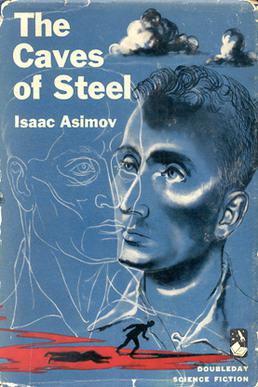
The-caves-of-steel-doubleday-coverIn 1953’s The Caves of Steel, Isaac Asimov took us into the future, a time when humanity had divided into two factions—spacers and earthmen. The Blurb:

Like most people left behind on an over-populated Earth, New York City police detective Elijah Baley had little love for either the arrogant Spacers or their robotic companions. But when a prominent Spacer is murdered under mysterious circumstances, Baley is ordered to the Outer Worlds to help track down the killer. 

The relationship between Baley and his Spacer superiors, who distrusted all Earthmen, was strained from the start. Then he learned that they had assigned him a partner: R. Daneel Olivaw.  Worst of all was that the “R” stood for robot—and his positronic partner was made in the image and likeness of the murder victim!

In 1953, racism was endemic, institutionalized. When Asimov wrote this novel, he took on bigotry and equality in a palatable way by showing us a civilization where androids are denied equality. To murder a human is a crime, but in this society, many otherwise good people refuse to believe that androids are sentient beings with a right to life. Yet, in R. Daneel Olivaw, we meet a sentient being and feel compassion for him.

Isaac Asimov trusted his readers.

Does the above example mean that speculative fiction only meant to point out our society’s shortcomings?

Not at all.

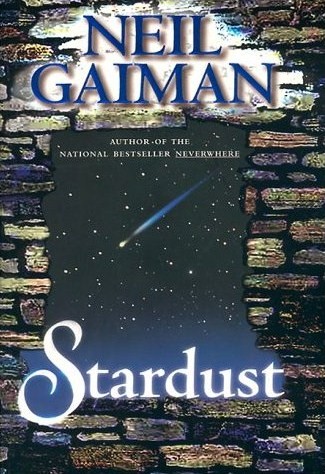
StardustGaimanbookcoverNeil Gaiman’s Stardust qualifies as a speculative fiction novel, even though it’s a literary fantasy. It is a fairytale that explores the core theme of transformation and is told with beautiful prose in an unhurried fashion. A story can be told leisurely, poetically, and still pack a punch.

In my opinion, good writing conveys a story in a crafted style. Words are chosen for their impact, and the prose is delivered with a voice that is uniquely that of the author.

Fairytales are often dark, scary stories, and always offer us morals. In Stardust, Gaiman shows us truth. He lays bare the lies we tell ourselves through the simple fairytale motif that real love is not gained through prodigious deeds. All through the narrative, Gaiman explores the difference between desiring a person and loving them. By the end of the tale, we know that love requires truth if it is to survive.

Neil Gaiman trusts his readers. That is something we all need to do. Sometimes a story needs to emerge slowly and be told with beautiful, immersive prose, and we need to trust that our readers will enjoy it if we craft it well.

There is room in the bookstore for books with a less urgent story to tell, as well as those that ambush the reader and beat them bloody with non-stop action.

Asimov showed us that tight, straightforward prose works.

Gaiman shows us that sometimes you can just have a little fun with it.

The genre of speculative fiction grew out of the repression of the 1940s and 1950s and has always been the literary field in which ideas that challenge society’s norms were sown. Radical concepts could be conveyed when couched fantasy and set in fictional worlds.

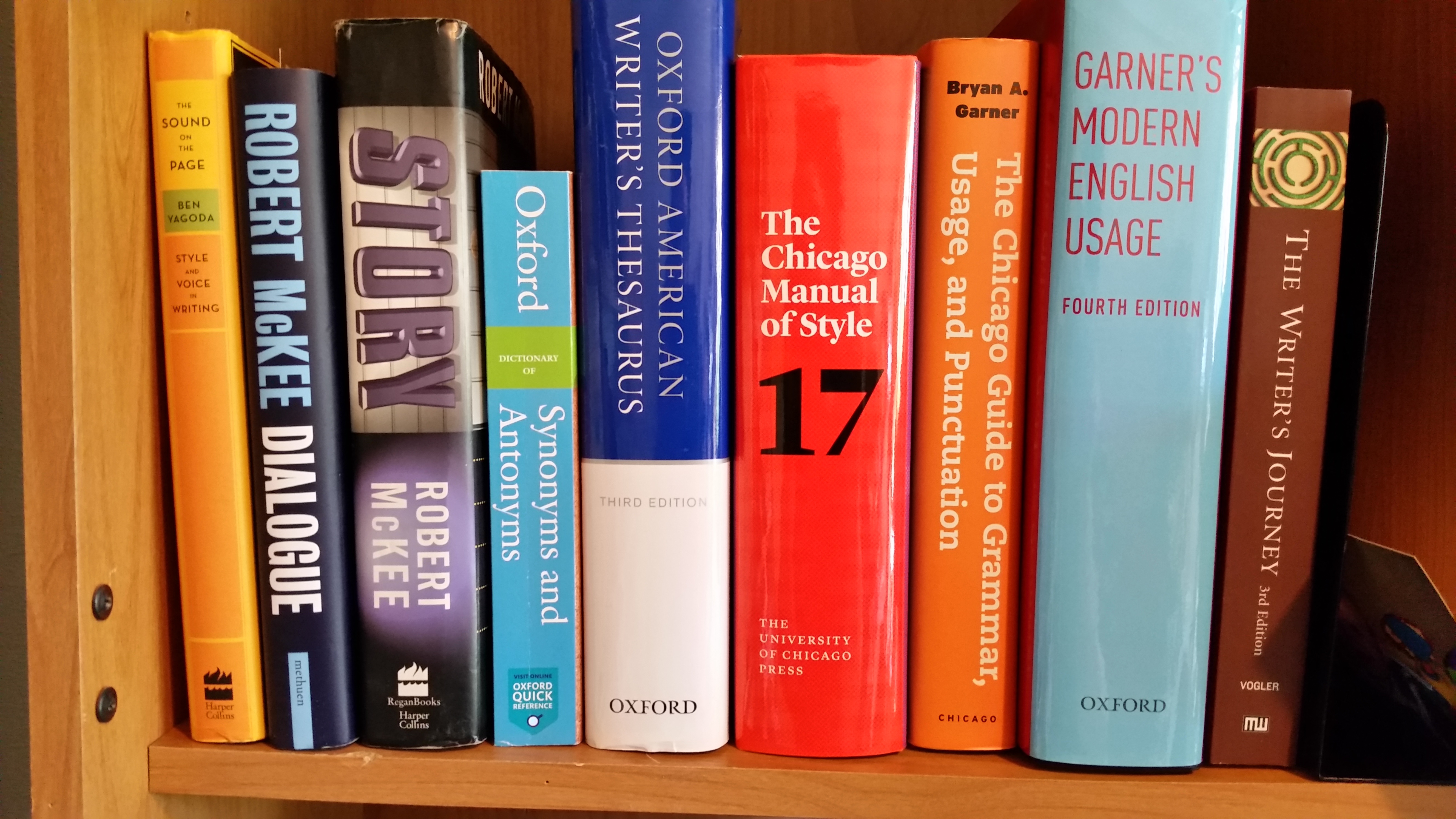
Editors_bookself_25May2018Dedicated authors are driven to learn the craft of writing, and it is a quest that can take a lifetime. It is a journey that involves more than just reading “How to Write This or That Aspect of a Novel” manuals. Those are important and my library is full of them. But how-to manuals only offer up a part of the picture. The rest of the education is within each of us, an amalgamation of our life experiences and what we have learned along the way.
I’ve said this before, but whenever I come across an author whose work resonates with me, I go back and reread it. The second time, I take notes. I study how they crafted their work, look at their word choices. Then I ask myself why it moved me.

I do the same with the books that left me feeling robbed—where did the author go wrong? What can I do to avoid this in my work?

I always learn something new from looking at how other authors combine and use words to form the moods and emotions that drive the plot. For me, writing is a journey with no finite destination other than the satisfaction of making small steps toward improvement.

Sometimes my work is good, other times Aunt Maudine’s budgie wouldn’t want the bottom of its cage lined with it. But when I look back at my early work, I can see improvement over time, which is all we can ever hope for.

the fellowship of the ringAuthors write because we have a story to tell, one that might also embrace morality and the meaning of life. To that end, every word we put to the final product must count if our ideas are to be conveyed.
Don’t lose heart, and don’t give up just because you think you can’t write like your favorite author. Write for yourself and write because you have something that needs to be said.

And don’t quit until you arrive at the place where you write “the end” on the last page.

8 Comments

Filed under writing

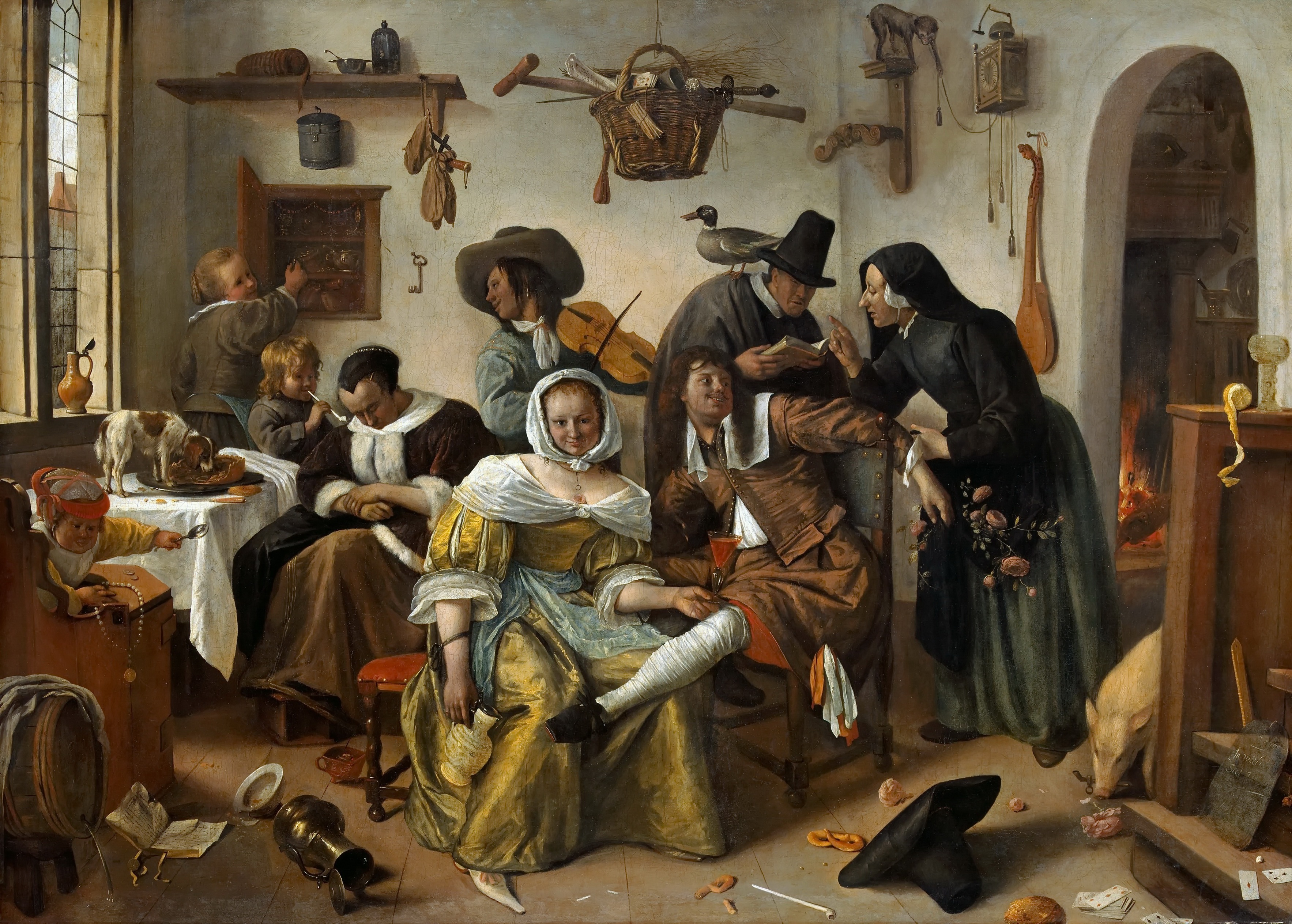
#FineArtFriday: Beware of Luxury by Jan Steen ca.1663 #prompt #NovemberWriter

Öèôðîâàÿ ðåïðîäóêöèÿ íàõîäèòñÿ â èíòåðíåò-ìóçåå Gallerix.ru

Artist: Jan Steen (1625/1626–1679)

Title: Beware of Luxury (“In Weelde Siet Toe”)

Date: circa 1663

Medium: oil on canvas

Dimensions: height: 105 cm (41.3 in); width: 145 cm (57 in)

Collection: Kunsthistorisches Museum

What I love about this painting:

Jan Steen lampoons family life in this riotous scene. Mother is taking a well-deserved nap, and the family is running wild, drinking to excess and partying like it was 1599. Grandma ignores the rumpus and instead, she is lecturing the Reverend on doctrine. The house is trashed, and the dog is on the table eating the pie. The baby is playing with the mother’s pearls. The oldest daughter’s suitor is sitting with his leg over her lap is a visual nod to promiscuity. “Getting his leg over her” was slang for premarital canoodling.

Although each of the many characters and every element of set dressing is realistically depicted, we know this is not a portrayal of a real moment in the artist’s life. We are presented with a theatrical drama here, a situation that is staged and satirized for our entertainment.

The Age of the Puritan had swept across Europe and while it was waning in the mid-seventeenth century, puritanism had a large influence on life in Holland as much as elsewhere.

This painting is a wonderful visual exhortation reminding the good people to live a sober life. Steen himself was not a puritan, as he was born into a family of brewers and ran taverns and breweries off and on throughout his life. But he did need to sell his paintings as he was never a successful businessman, and his allegorical paintings were quite popular.

About the Artist, via Wikipedia:

Jan Havickszoon Steen (c. 1626 – buried 3 February 1679) was a Dutch Golden Age painter, one of the leading genre painters of the 17th century. His works are known for their psychological insight, sense of humour and abundance of colour.

In 1648 Jan Steen and Gabriël Metsu founded the painters’ Guild of Saint Luke at Leiden. Soon after he became an assistant to the renowned landscape painter Jan van Goyen (1596–1656), and moved into his house on the Bierkade in The Hague. On 3 October 1649, he married van Goyen’s daughter Margriet, with whom he would have eight children. Steen worked with his father-in-law until 1654, when he moved to Delft, where he ran the brewery De Slang (“The Snake”) for three years without much success.  After the explosion in Delft in 1654 the art market was depressed, but Steen painted A Burgomaster of Delft and his daughter. It does not seem to be clear if this painting should be called a portrait or a genre work.

Steen lived in Warmond, just north of Leiden, from 1656 until 1660 and in Haarlem from 1660 until 1670 and in both periods he was especially productive. In 1670, after the death of his wife in 1669 and his father in 1670, Steen moved back to Leiden, where he stayed the rest of his life. When the art market collapsed in 1672, called the Year of Disaster, Steen opened a tavern. In April 1673 he married Maria van Egmont, who gave him another child. In 1674 he became president of the Saint Luke’s Guild. Frans van Mieris (1635–1681) became one of his drinking companions. He died in Leiden in 1679 and was interred in a family grave in the Pieterskerk. [1]


Credits and Attributions:

IMAGE: Beware of Luxury by Jan Steen, ca. 1663. Wikimedia Commons contributors, “File:Jan Steen 004b.jpg,” Wikimedia Commons, https://commons.wikimedia.org/w/index.php?title=File:Jan_Steen_004b.jpg&oldid=617576422 (accessed November 15, 2024)

[1] Wikipedia contributors, “Jan Steen,” Wikipedia, The Free Encyclopedia, https://en.wikipedia.org/w/index.php?title=Jan_Steen&oldid=1249713624 (accessed November 15, 2024).

Comments Off on #FineArtFriday: Beware of Luxury by Jan Steen ca.1663 #prompt #NovemberWriter

Filed under #FineArtFriday

#NovemberWriter: the Zen writing experience #writing

Every writer is different, with a unique approach to getting their work on paper. There is no one-size-fits-all method for taking a story from an idea, a “what if” moment, to a finished piece. Each of us has to find our own way.

MyWritingLife2021BI’m like everyone else. I can’t write creatively when life is too stressful. But I can always write a blog post, which is how I keep my writing muscles in “fighting form.”

However, I have a few tools in my writer’s toolbox that jar things loose, help me organize my ideas, and help me make a coherent, logical arc out of a story.

When I reach a point in a manuscript where I’ve run out of ideas, I stop forcing it. I’m an indie and my deadlines are self-imposed, so my production timelines aren’t as finite as a writer who is under contract. I begin a different project and come back to the other one when inspiration returns.

Sometimes a project begins well and despite that great beginning, it goes unfinished. This happens when I run out of ideas for that story, which leads to me loosing enthusiasm. I set that project aside and work on something else. Maybe it’s a short story or a poem, but it’s something I can finish. That way, I can relax and enjoy the act of creating something from idea to completion.

As an indie, my goals are for me, not for anyone else. I choose to embrace a Zen writing life.

monkey_computer_via_microsoft

courtesy Office360 graphics

One manuscript has sat unfinished for several years for a variety of reasons. The story was stalled at the halfway point and I had only a vague idea of how it must end. This year I managed to write a synopsis of the final half of the story arc and that has become invaluable as an outline. Writing is now moving ahead as I had hoped.

One important thing I have come to accept is this: my work is written for a niche market of those few readers who seek out the kind of work that I do. I write what I want to read, and I am an odd duck when it comes to literature.

Despite how much I love the stories that fall out of my head, my work doesn’t appeal to readers of action adventure. My stories are internal. The characters and the arc of their personal journeys are the central elements of their stories. While I love the action and the setting, those elements are only the frame within which the characters live and grow.

In the old days, I didn’t understand that. I marketed it to the wrong audience. Readers of action and adventure aren’t interested in slower-paced work. Even worse, I rushed to publish my work when it wasn’t ready.

So, the first hard-earned snippet of wisdom I have to share today is this: Write your stories for yourself and don’t stop trying.

My Coffee Cup © cjjasp 2013The second piece of wisdom is a little more challenging but is a continuation of the first point: Write something new every day, even if it is only one line. Your aptitude for writing grows in strength and skill when you exercise it daily. This is where blogging comes in for me—it’s my daily exercise. If you only have ten minutes free, use them to write whatever enters your head, stream-of-consciousness.

The third thought is a fun thing: learn the meaning of a new word every day. You don’t have to use every word you know, but it never hurts to learn new things. Authors should have broad vocabularies.

The fourth thing: is don’t sweat the small stuff when you are just laying down the first draft. I know it’s a cliché, but it is also a truism. Let the words fall out of your head, passive phrasing and all, because the important thing is to finish the story.

The fifth thing to remember is this: every author begins as someone who wants to write but feels like an imposter. The authors who succeed in finishing a poem, a short story, or a novel are those who are brave enough to just do it. They find the time to sit down and put their ideas on paper.

800px-Singapore_Road_Signs_-_Temporary_Sign_-_Detour.svgAuthors must overcome roadblocks in their personal life. Everyone has times of trouble, and they affect our ability to be creative. During the years I was raising my children, I had three failed marriages, worked three part-time jobs as a single mother, and struggled to find time and the energy to write.

Life got better financially once we survived the trickle-down economics experiment of the 1980s, and I found better jobs. In 2003, I met the love of my life but two of my children developed adult-onset epilepsy. We learned to cope with the tribulations of the dreaded “E” word, and we had many good years. And now my husband is in the later stages of Parkinson’s.

This makes life a little too interesting at times. Writing enables me to make sense of the twists and turns of our human experience.

It helps me process life’s complications in a non-threatening way.

I don’t write to win awards, and I don’t earn a lot from it. I have the time to write and not feel guilty about any arbitrary goals I don’t achieve.

virtually golden medallion of mayhem copyThe story is the goal; everything else is a bonus.
In real life, nothing is certain. Adversity in life forges strength and if you are a person blessed with empathy, it forges an understanding of other people’s challenges. Having the opportunity to make daily notes in a journal, to write poetry, blog posts, short stories, or novels is a luxury, one I am grateful for.

The first draft of your manuscript is the thinking draft. Don’t worry too much about self-editing when you are laying down what you think might be the story. Just get those thoughts down and enjoy the feeling of writing the story you need to write.

3 Comments

Filed under writing

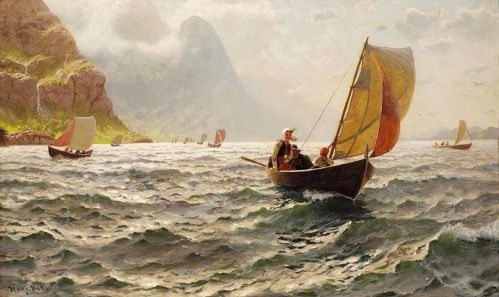
#FineArtFriday: Upon Sunny Waves, by Hans Dahl #prompt #NovemberWriter


Artist: Hans Dahl  (1849–1937)

Title: Upon Sunny Waves

Date: before 1937

Medium: oil painting

Hans Dahl was a Norwegian painter trained in Germany and is associated with the Düsseldorf school of painting, which was characterized by finely detailed imaginary landscapes. In his later years, he endured mean-spirited criticism from other artists and art critics, because he chose to remain true to his idealized fantasy art, resisting the movement from Romanticism to Modernism.

What I love about this painting:

I first featured this painting in 2019 and think it’s a good image for a writing prompt. I love the way Dahl shares with us the bold freedom of sailing on a sunny summer day. He captures the feeling of flying on the water that makes sailing a small boat so much fun.

We aren’t on a leisurely fishing expedition here—this is boating for the sake of adventure. We’re running with wind and enjoying every minute of it. The wind is brisk, and the waters are choppy. There’s a hint of danger, the glee of knowing we’re pushing the boundaries. We’d best be strong swimmers because if we capsize, the waters are cold, and someone might not survive.

Who are these people? What is their relationship to each other? What dramas are they seeking a temporary escape from on this glorious day on the waves?

Hans Dahl has given us a painting with great story potential.

About the Artist, via Wikipedia:

In the 1890s a new school of art arose, and artists like Dahl were not very popular in the leading circles in the capital. He was particularly criticized by the art historian Jens Thiis. He was severely criticized by fellow artists especially by Christian Krohg, who was one of the leading figures in the transition from romanticism to naturalism which characterized Norwegian art in this period. Throughout his life, he increasingly narrowed his range of topics. Dahl often described the scenery of the western part of Norway in brilliant sunshine with smiling people in national costumes. His vibrant colors and charming portrayals of young Norwegian girls in their national costume have always been very popular. [1]


Credits and Attributions:

[1] Wikipedia contributors, “Hans Dahl,” Wikipedia, The Free Encyclopedia, https://en.wikipedia.org/w/index.php?title=Hans_Dahl&oldid=827399492 (accessed November 7, 2024).

IMAGE: Upon Sunny Waves, by Hans Dahl PD|70 [Public domain]

Wikimedia Commons contributors, “File:Hans Dahl – Upon sunny waves.jpg,” Wikimedia Commons, the free media repository, https://commons.wikimedia.org/w/index.php?title=File:Hans_Dahl_-_Upon_sunny_waves.jpg&oldid=140877929 (accessed November 7, 2024).

Comments Off on #FineArtFriday: Upon Sunny Waves, by Hans Dahl #prompt #NovemberWriter

Filed under #FineArtFriday

#NovemberWriter: When Inspiration Fails #writing

We are now well into week one of November. Week one of a thirty-day writing challenge is the danger week. Once the first rush of creativity passes, many writers will give up. They experience a momentary lull in creativity and don’t have the tools to visualize what to write next.

Olympia Rebel Writers Sticker 2024The well of inspiration runs dry and they quit. Many will never attempt to write again, although they will always consider themselves secretly a writer.

Rather than worrying about word count, I suggest setting a more reasonable goal. If you are new at this, I suggest a goal of writing at least one paragraph a day. Write something each day for thirty days, and you will be surprised at what you produce.

I have solutions for overcoming the roadblocks that daily life throws up. And believe me, when you are caregiver for a spouse with late-stage Parkinson’s, life tends to vomit roadblocks.

PostItNotePadThe first one is one I developed when working in corporate America. Frequently, my best ideas came to me while I was at my job. If your employment isn’t a work-from-home job, using the note-taking app on your cellphone to take notes during business hours will be frowned upon. To work around that, keep a pocket-sized notebook and pen to write those ideas down as they come to you.


It’s old-school, but it worked because you don’t appear distracted or off-task.

Ideas come to me when I stop forcing my brain to work when it’s on its last legs. Strangely, cleaning and organizing my living space allows my mind to rest. Taking the time to wash dishes or clean the house helps reset my short-circuited creative mind.

But getting outside and walking helps even more. I suggest taking a notebook or dictating into your note-taking app.

Sometimes, we write an action scene that doesn’t advance a story. Arcs of action drive plots. Every reader knows this, and every writer tries to incorporate that knowledge into their work.

But some scenes don’t advance a story because they are examples of random mind wandering.

Don’t throw it out. Keep it and maybe you can use it in a different story. ALL writing is good for you, so set what doesn’t work for your current work aside. Keep on mind wandering and writing scenes.

Who knows what will grow from those seeds?

tabs of a stylesheet

I go somewhere quiet and ask myself questions about the story I’m stalled on. I carry a notebook and make a list of the answers. I write an idea here and another there, and soon I have a plot.

Novels begin a certain way: at the story’s outset, we find our protagonist and see them in their familiar surroundings. The inciting incident occurs once we have met them.

But maybe we don’t have any idea what sort of bad thing happens. Maybe we’re still doing character creation, and that is okay.

If you’re stuck, it sometimes helps to go back to the beginning and consider the following questions:

  • What is the goal/objective? What do they want?
  • Is that objective important enough to warrant risking everything to acquire it?
  • What could the protagonist face that will challenge their moral values and sense of personal honor?
  • How could this force the protagonist to become stronger?
  • Who is the antagonist? What do they want, and what are they willing to do to achieve it?
  • Does the enemy face ethical quandaries, too?

Wrong-Way-Traffic-Sign-K-101-1Every obstacle we throw in the path to happiness for the protagonists and their opposition shapes the narrative’s direction and alters the characters’ personal growth arcs. As you clarify why the protagonist must struggle to achieve their goal, the words will come.
I write my ideas down and the broad outline of a story evolves.

  • I keep my notes in an Excel workbook. It contains maps, calendars, and everything pertaining to any novel set in that world, keeping it in one easy-to-find place.
  • When logic forces change to the plot, and it always does, I go to my storyboard and update my plot outline, calendar, or maps.

When your creative mind needs to rest, step away from the keyboard and do something different. I find that when I take a break to cook or clean out a corner, ideas for what to do next in my novel will occur to me. These little flashes of inspiration carry me a few chapters further into the story.

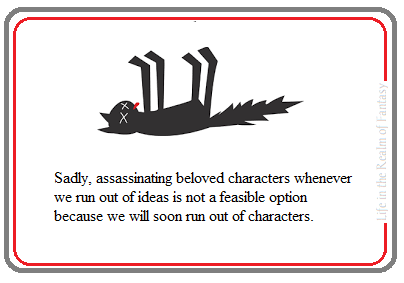
dead catFinally, let’s talk about murder as a way to kickstart your inspiration. Some people recommend it but I suggest you don’t resort to suddenly killing off characters just to get your mind working. You may need that character later, so plan your deaths accordingly.

  • Readers become angry with authors who casually kill off characters they have grown to like.

When a particular death is planned from the beginning, it is one thing. But developing characters is a lot of work. If you kill off someone with an important role, who or what will you replace them with?

Above all, relax. It’s November, a good month for writing. Write something every day, even if it is only a paragraph that has no relationship to anything else. The goal is to develop the habit of writing every day.

Perhaps you should write a haiku:

November writers

Inking worlds on paper.

Leaves fall, writers write.

Whatever you come up with, it will have to be better than that travesty!

To learn about the haiku and perhaps write one of your own, check out this website. It’s fun and it’s free! Haiku Checker – Check Haiku syllable and line counts!

microfiction

Comments Off on #NovemberWriter: When Inspiration Fails #writing

Filed under writing

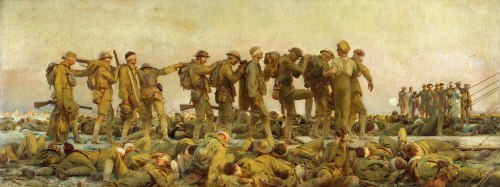
#FineArtFriday: Gassed by John Singer Sargent 1919 #prompt #NovemberWriter

2560px-Sargent,_John_Singer_(RA)_-_Gassed_-_Google_Art_ProjectArtist: John Singer Sargent (1856–1925)

Title: Gassed

Date: 1919

Medium: oil on canvas

Dimensions: Height: 231 cm (90.9 in); Width: 611.1 cm (20 ft)

Writing Prompt: November is once again upon us, the month when many people are inspired to begin their writing career. But what shall we write about?

John Singer Sargent tells many stories in this one powerful statement about war and the inhumanity of humankind. He also lays bare our resilience, our drive to survive. What thoughts, what ideas are prompted by what you see here?

What I love about this painting:

I first featured this painting in 2021 and have gone back to it every year since. This is a deeply moving antiwar statement that only John Singer Sargent could have shown us. He was commissioned as a war artist by the British Ministry of Information. He illustrated numerous scenes from the Great War. Sargent had been deeply affected by what he had seen while touring the front in France and by the death of his niece Rose-Marie in the shelling of the St Gervais church, Paris, on Good Friday 1918.

John Singer Sargent was a complicated man, as most artists are. Famous as a portrait artist, he painted landscapes that conveyed a sense of mood and emotion that few of his contemporaries could match.

The colors are muted, and even the pastels are dark and dirty. The suffering of the maimed and injured men is laid bare. Through the legs of the walking wounded, the rising moon illuminates the desire of the uninjured to try to find some normalcy. Dwarfing the players and their game, the vast sea of dead and injured stretches as far as the eye can see.

Above, two tiny figures represent the clash of biplanes in the distance, the ever-moving machine of death and inhumanity that is war.

About this painting, via Wikipedia:

[1] Gassed is a very large oil painting completed in March 1919 by John Singer Sargent. It depicts the aftermath of a mustard gas attack during the First World War, with a line of wounded soldiers walking towards a dressing station. Sargent was commissioned by the British War Memorials Committee to document the war and visited the Western Front in July 1918 spending time with the Guards Division near Arras, and then with the American Expeditionary Forces near Ypres. The painting was finished in March 1919 and voted picture of the year by the Royal Academy of Arts in 1919. It is now held by the Imperial War Museum. It visited the US in 1999 for a series of retrospective exhibitions, and then from 2016 to 2018 for exhibitions commemorating the centenary of the First World War.

The painting measures 231.0 by 611.1 centimeters (7 ft 6.9 in × 20 ft 0.6 in). The composition includes a central group of eleven soldiers depicted nearly life-size. Nine wounded soldiers walk in a line, in three groups of three, along a duckboard towards a dressing station, suggested by the guy ropes to the right side of the picture. Their eyes are bandaged, blinded by the effect of the gas, so they are assisted by two medical orderlies. The line of tall, blind soldiers forms a naturalist allegorical frieze, with connotations of a religious procession. Many other dead or wounded soldiers lie around the central group, and a similar train of eight wounded, with two orderlies, advances in the background. Biplanes dogfight in the evening sky above, as a watery setting sun creates a pinkish yellow haze and burnishes the subjects with a golden light. In the background, the moon also rises, and uninjured men play association football in blue and red shirts, seemingly unconcerned at the suffering all around them.

The painting provides a powerful testimony of the effects of chemical weapons, vividly described in Wilfred Owen‘s poem Dulce et Decorum Est. Mustard gas is a persistent vesicant gas, with effects that only become apparent several hours after exposure. It attacks the skin, the eyes and the mucous membranes, causing large skin blisters, blindness, choking and vomiting. Death, although rare, can occur within two days, but suffering may be prolonged over several weeks.

Sargent’s painting refers to Bruegel’s 1568 work The Parable of the Blind, with the blind leading the blind, and it also alludes to Rodin’s Burghers of Calais.

About the Artist, via Wikipedia:

[2] John Singer Sargent (January 12, 1856 – April 14, 1925) was an American expatriate artist, considered the “leading portrait painter of his generation” for his evocations of Edwardian-era luxury. He created roughly 900 oil paintings and more than 2,000 watercolors, as well as countless sketches and charcoal drawings. His oeuvre documents worldwide travel, from Venice to the Tyrol, Corfu, the Middle East, Montana, Maine, and Florida.

Born in Florence to American parents, he was trained in Paris before moving to London, living most of his life in Europe. He enjoyed international acclaim as a portrait painter. An early submission to the Paris Salon in the 1880s, his Portrait of Madame X, was intended to consolidate his position as a society painter in Paris, but instead resulted in scandal. During the next year following the scandal, Sargent departed for England where he continued a successful career as a portrait artist.

From the beginning, Sargent’s work is characterized by remarkable technical facility, particularly in his ability to draw with a brush, which in later years inspired admiration as well as criticism for a supposed superficiality. His commissioned works were consistent with the grand manner of portraiture, while his informal studies and landscape paintings displayed a familiarity with Impressionism. In later life Sargent expressed ambivalence about the restrictions of formal portrait work, and devoted much of his energy to mural painting and working en plein air. Art historians generally ignored artists who painted royalty and “society” – such as Sargent – until the late 20th century. [2]


Credits and Attributions:

[1] Wikipedia contributors, “Gassed (painting),” Wikipedia, The Free Encyclopedia, https://en.wikipedia.org/w/index.php?title=Gassed_(painting)&oldid=1029966714 (accessed July 15, 2021).

[2] Wikipedia contributors, “John Singer Sargent,” Wikipedia, The Free Encyclopedia, https://en.wikipedia.org/w/index.php?title=John_Singer_Sargent&oldid=1032671314 (accessed July 15, 2021).

Image source: File:Sargent, John Singer (RA) – Gassed – Google Art Project.jpg – Wikipedia (accessed July 15, 2021).

4 Comments

Filed under #FineArtFriday