Monthly Archives: August 2025

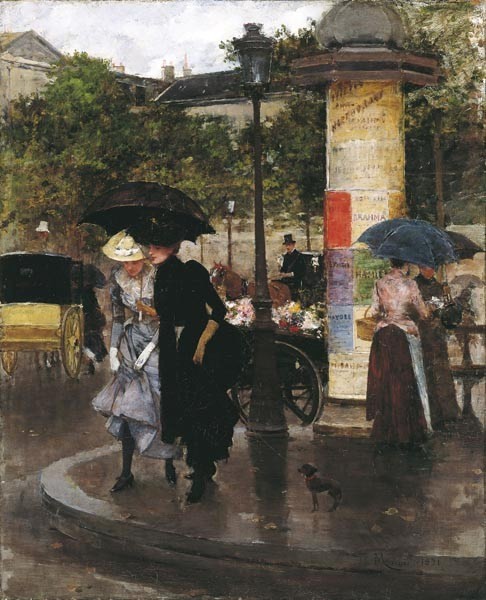
#FineArtFriday: a second look at “Street Scene on a Rainy Day” by Francesco Miralles Galup (ca. 1891)

Title: Escena de carrer en un dia de pluja (Eng: Street Scene on a rainy Day)

Artist: Francisco Miralles Galup

Date: circa 1891

What I love about this painting:

Francesco Miralles Galup understood how to show the reality of weather, especially weather that was only mildly uncomfortable. We see a perfect rainy spring afternoon in a busy cosmopolitan city. It could have been any large city at the end of the 19th century. The sky is gray, the street is busy, full of carriages, and pedestrians must be careful where they step.

A cart full of flowers passes in the background, headed for the market. Two well-dressed ladies dodge puddles in their effort to cross the street. Around them, people stop to gossip, and umbrellas abound.

Like every chihuahua I’ve ever known, the little dog is miserable, unhappy with the damp.

I think this may be one of my favorite paintings of that era, one showing real people and their social lives. It was an era before refrigeration, so people went to the market each day to purchase whatever food they planned to serve. The market is where they met up with their friends and heard news of both the wider world and the local gossip.

He shows us ordinary people, happy and living their best lives.

About the Artist, via Wikipedia:

Francesco Miralles Galup was born Francesc Miralles i Galaup (6 April 1848, Valencia – 30 October 1901, Barcelona). He was a Catalan painter, best known for his realistic scenes of bourgeois life and high society.

When he turned eighteen, he received parental permission (and financial support) to study in Paris, where he would remain until 1893, with occasional visits home. During his first years there, he copied masterworks at the Louvre and may have worked briefly with Alexandre Cabanel. He eventually had several small studios in Montmartre and on the Rue Laffitte.

He exhibited regularly at the Salon and the Sala Parés, back home in Barcelona. He also became a client of the well-known art dealership Goupil & Cie, attracting wealthy buyers throughout Europe and America. This was a relief to his family, who had initially been concerned that they might have to support him indefinitely. Their ability to do so had been compromised as they had lost much of their fortune in the Panic of 1866 and were losing more of it as they paid off their debts. In fact, they eventually moved to Paris so he could help support them. [1]


Credits and Attributions:

IMAGE: Escena de carrer c1891, Francisco Miralles Galup / Public domain. Wikimedia Commons contributors, “File:Francesco Miralles Galup – Escena de carrer c1891.jpg,” Wikimedia Commons, https://commons.wikimedia.org/w/index.php?title=File:Francesco_Miralles_Galup_-_Escena_de_carrer_c1891.jpg&oldid=1039428081 (accessed August 28, 2025).

[1]Wikipedia contributors, “Francesc Miralles i Galaup,” Wikipedia, The Free Encyclopedia, https://en.wikipedia.org/w/index.php?title=Francesc_Miralles_i_Galaup&oldid=1291581678 (accessed August 28, 2025).

Comments Off on #FineArtFriday: a second look at “Street Scene on a Rainy Day” by Francesco Miralles Galup (ca. 1891)

Filed under #FineArtFriday

The second draft – subtext #writing

Subtext is a complex but essential aspect of storytelling. As the word implies, subtext lies below the surface (sub) and supports the plot and the conversations (text).

It is the hidden story, an unstated knowledge embedded within the narrative.

Subtext can be inserted into the story through the layers of worldbuilding. It is conveyed by the images we place in the environment and how the setting influences our perception of the mood and atmosphere.

We all know good worldbuilding is more than simply detailing the setting. It starts there, but without the addition of mood and atmosphere, a coffee shop is just a room with a few tables and chairs. A reader’s perception of a gripping narrative’s reality is influenced by aspects of the setting that they may not consciously notice at the time.

How does good worldbuilding contribute to good subtext? The clues about mood and atmosphere combine on a subliminal level. This undercurrent shapes a reader’s emotional impressions of the story.

A brief mention of décor can convey atmosphere: Tess stood in line, looking around while Evan secured a table. Country-style furnishings lent a coziness to the room, a warm contrast to the rain pounding on the windows. Soon it was her turn to order. “Two large mochas, please.”

A view of the world from the characters’ point of view is essential, as it conveys mood.

“Why did they bother putting a sign on the dining hall? No matter what Temple you visit, every building is made of white sandstone and you always know where you are and what you are looking at.” Bryson’s scathing tones floated to the instructor, who glared at us all.
Afterward, while readers may not consciously remember details, they will remember what they felt as they read that novel. When asked who their favorite writer is, they will mention that author.

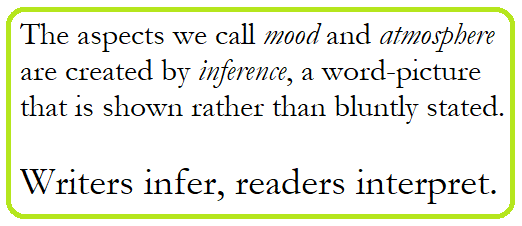
When we experience emotion, we are feeling the effect of contrasts, of transitioning from the positive (good) to the negative (bad) and back to the positive. Moodatmosphere, and emotion form the inferential layer of a story, part of the subtext. When an author has done their job well, those transitions feel personal to the reader.

Atmosphere has two aspects: overall and personal. The overall atmosphere of a story is long-term, an element of mood that is conveyed by the setting as well as by the actions and reactions of the characters.

The overall mood of a story is also long-term. It resides in the background, going almost unnoticed. Mood shapes (and is shaped by) the emotions evoked within the story.

The inferential layer of a story has another component, one we must look at in the second draft. This is where another aspect of worldbuilding, scene framing, comes into play. This component has two aspects: first, it involves the order in which we stage people and visual objects, as well as the sequence of events along the plot arc. It shapes the overall mood and atmosphere, contributing to the subtext.
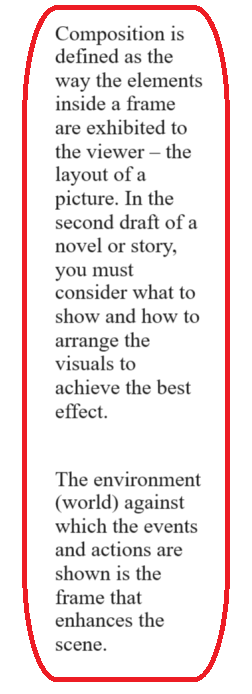
The second aspect of scene framing involves the plot arc and how we place the scenes and their transitions. We want them in a logical, sequential order.

Good worldbuilding can help us give backstory without an info dump, and symbolism is a key tool for this. Environmental symbols are subliminal landmarks for the reader. Thinking about and planning symbolism in an environment is crucial to developing the general atmosphere and affecting the overall mood.

For example, the word gothic in a novel’s description tells me it will be a dark, moody piece set in a stark, desolate environment. A cold, barren landscape, constant dampness, and continually gray skies set a somber tone to the background of the scene.

A setting like that underscores each of the main characters’ personal problems and evokes a general atmosphere of gloom.

Our characters’ emotions affect their attitudes toward each other and influence how they view their quest. This, in turn, shapes the overall mood of the characters as they move through the arc of the plot. And the visual atmosphere of a particular environment may affect our protagonist’s personal mood.

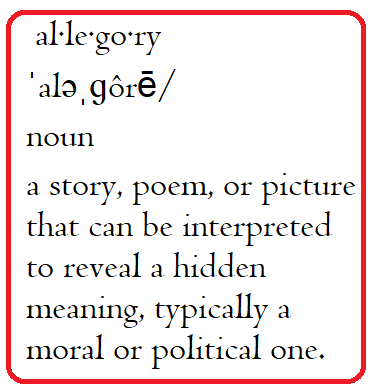
What tools in our writer’s toolbox are effective in conveying an atmosphere and a specific mood? Allegory and symbolism are two devices that are similar but different. The difference between them is how they are presented.

  • Allegoryis a moral lesson in the form of a story, heavy with symbolism.
  • Symbolismis a literary device that uses one thing throughout the narrative (perhaps shadows) to represent something else (grief).
How can we use allegory and symbolism in modern genre fiction? Cyberpunk, as a subgenre of science fiction, is exceedingly atmosphere-driven. It is heavily symbolic in worldbuilding and often allegorical in the narrative. We see many features of the classic 18th and 19th-century Sturm und Drang literary themes but set in a dystopian society. The deities that humankind must battle are technology and industry. Corporate uber-giants are the gods whose knowledge mere mortals desire and whom they seek to replace.

The setting and worldbuilding in cyberpunk work together to convey a gothic atmosphere. This overall feeling is dark and disturbing. That aspect of subtext is reinforced by the dark nature of interpersonal relationships and the often criminal behaviors our characters engage in for survival.

No matter what genre we write in, the second draft is where we expand on our ideas and fill in the gaps of the rough first draft manuscript. We find words to show the setting more clearly and use visuals to hint at what is to come. We create an immersive atmosphere by including colors, scents, and ambient sounds.

We choose our words carefully as they determine how the visuals are shown. When we have no words and feel stuck, we go to the thesaurus and find them.

Authors are painters, creating worlds out of words. We strive to create an atmosphere and mood that underscores our themes and highlights plot points without resorting to info dumps. Each word is a brushstroke that can lighten the mood as easily as it can darken it.

  • When we create a setting, intense color brightens the visuals, and gray depresses them. Those tones affect the atmosphere and mood of the scene.

In the real world, sunshine, green foliage, blue skies, and birdsong go a long way toward lifting my spirits. When I read a scene set in that kind of environment, the mood of the narrative feels lighter to me.

Worldbuilding is complex. It can feel too difficult when we are trying to convey subtext, mood, and atmosphere, using slimmed down prose and power words rather than flowery. But keep at it because the reader won’t be aware of the complexities involved.

All they will know is how strongly the protagonist and her story affected them and how much they loved that novel.

3 Comments

Filed under writing

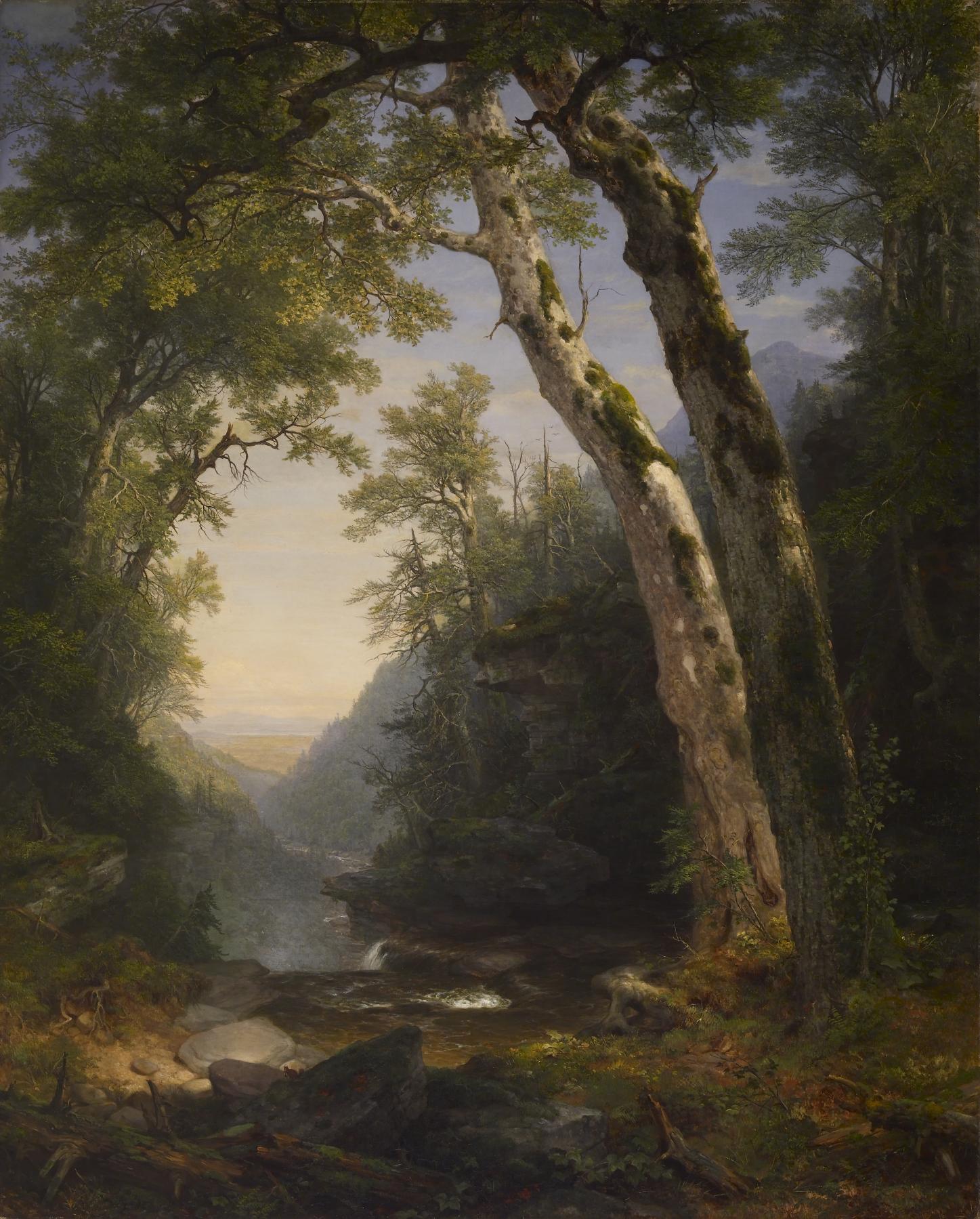
#FineArtFriday: a closer look at “The Catskills,” by Asher Brown Durand 1858

Artist: Asher Brown Durand (1796–1886)

Title: The Catskills

Date: 1859

Medium: oil on canvas

Dimensions: height: 158.8 cm (62.5 in); width: 128.3 cm (50.5 in)

What I love about this painting: 

I grew up in a forested place, not unlike that depicted here. That sentiment has endeared this style of art to me. I have become attached to the modern fantasy painters, those modern artists like Michael Whelan and the late Darrell K. Sweet, who paint images in this style for fantasy novels and RPG games. Their style is called Imaginative Realism.

What strikes me the most about this particular painting is not only the attention to detail, but the fairy-tale quality of Durand’s vision of realism. Viewed as a whole, this composition has an otherworldly quality to it, almost as if Elrond or Galadriel lurk just out of view, beyond the edges.

Quote from Wikimedia Commons on The Catskills: This painting was commissioned by William T. Walters in 1858, when the 62-year-old Durand was at the height of his fame and technical skill. The vertical format of the composition was a trademark of the artist, allowing him to exploit the grandeur of the sycamore trees as a means of framing the expansive landscape beyond. Durand’s approach to the “sublime landscape” was modeled on that of Thomas Cole (1801-48), founder of the Hudson River school of painting. The painters of this school explored the countryside of the eastern United States, particularly the Adirondack Mountains and the Catskills. Their paintings often reflect the Transcendental philosophy of Ralph Waldo Emerson (1803-82), who believed that all of nature bore testimony to a spiritual truth that could be understood through personal intuition.

>>><<<

Quote from Wikipedia (the fount of all knowledge): Asher Brown Durand is remembered particularly for his detailed portrayals of trees, rocks, and foliage. He was an advocate for drawing directly from nature with as much realism as possible. Durand wrote, “Let [the artist] scrupulously accept whatever [nature] presents him until he shall, in a degree, have become intimate with her infinity…never let him profane her sacredness by a willful departure from truth.”

Like other Hudson River School artists, Durand also believed that nature was an ineffable manifestation of God. He expressed this sentiment and his general opinions on art in his essay “Letters on Landscape Painting” in The Crayon, a mid-19th century New York art periodical. Wrote Durand, “[T]he true province of Landscape Art is the representation of the work of God in the visible creation…”


Credits and Attributions

[1] Wikimedia Commons contributors, “File:Asher Brown Durand – The Catskills – Walters 37122.jpg,” Wikimedia Commons, https://commons.wikimedia.org/w/index.php?title=File:Asher_Brown_Durand_-_The_Catskills_-_Walters_37122.jpg&oldid=354202161 (accessed August 21, 2025).

[2] Wikipedia contributors, “Asher Brown Durand,” Wikipedia, The Free Encyclopedia, https://en.wikipedia.org/w/index.php?title=Asher_Brown_Durand&oldid=1291945600 (accessed August 21, 2025)..

5 Comments

Filed under #FineArtFriday

Action, reaction, and consequences #writing

Some of my writing projects start with an idea for a good plot or character. Others are inspired by something I see or witness in my daily perambulations around town. But no matter how my ideas arrive, they all boil down to “what if….”

On rare occasions, usually at the midpoint of a story that I didn’t outline, it felt as if I was looking for water in the desert, as the ideas were few and far between. That’s when I used to find myself trying to make a novel out of a manuscript rife with unplanned stupidity.

I no longer force my brain to work when it’s on its last legs.

For me, the first stages of laying down a story are more like creating an extensive and detailed outline. This method helps me build an overall logic into the story as it evolves.

At every story’s outset, we meet our protagonist and see them in their familiar surroundings. The inciting incident occurs once we have met them, whether they are ready for it or not. At that point, we must take them to the next stumbling block. But what is that impediment, and how do we overcome it?

And, just as importantly, what repercussions will they face for having crossed that barrier?

Answering that question isn’t always easy. The place where writing becomes work is a hurdle that the majority of people who “always wanted to be an author” can’t leap. Their talents lie elsewhere, and that is okay.

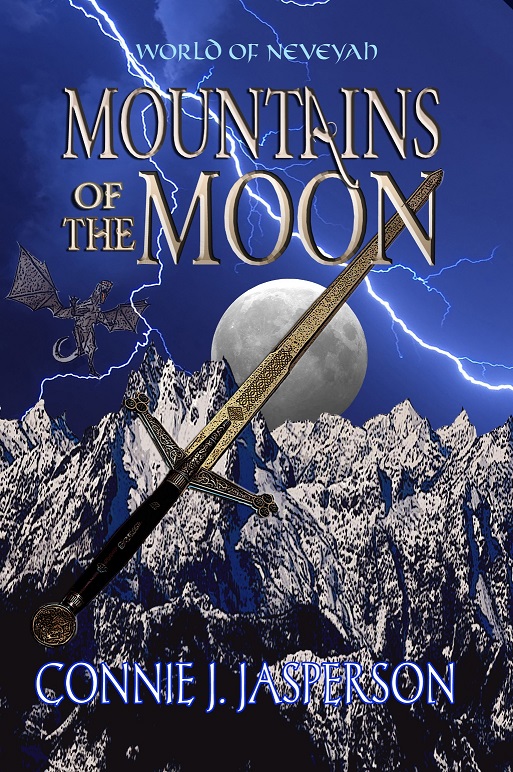
front cover of Mountains of the MoonFortunately, I know what must happen next in my current work in progress because the story is already canon, a historical side note in Mountains of the Moon. At this point, I am brainstorming the characters’ motivations that lead to the desired ending.

I have found it helps to write the last chapter first – in other words, start with the ending. My first NaNoWriMo novel in 2010 began with the final chapter. I managed to write 68,000 words in 30 days thanks to my great characters, whom I wanted to learn more about. I was desperate to know how they arrived at that ending.

What happens when the first lull in creativity occurs? It often happens within the first ten pages. But no matter where it happens, we need to remember that an imbalance of power drives plots, and knowledge is power.

The dark corners of the story are illuminated by the characters who have critical knowledge. This is called asymmetric information, and the enemy should have more of that commodity than our protagonist.

The enemy puts their plan in motion, and we have action. The protagonists are moved to react. The characters must work with a limited understanding of the situation because asymmetric information creates tension. A lack of knowledge creates a crisis.

Plots are comprised of action, reaction, and consequences. I must place events in their path so the plot keeps moving forward. These events will be turning points, places where the characters must re-examine their motives and goals, and how much they are willing to endure to achieve them.

At several points in this process, I will stop and think about the characters. What do they want? How motivated are they to get it? If they aren’t motivated, why are they there?

Answering a few questions about your characters can kick the plot back into motion. Start with the antagonist because his actions force our characters to react:

  1. Why does the enemy have the upper hand?
    • How does the protagonist react to pressure from the antagonist?
    • What are the consequences of this reaction for both characters?
    • How does the struggle affect the relationships between the protagonist and their cohorts/romantic interests?
    • What complications arise from a lack of information?
    • How will the characters acquire that necessary information?

Our characters are unreliable witnesses. The way they tell us the story will gloss over their failings. We can accidentally make them into Penny Perfects if we aren’t careful. The story takes shape as the characters are compelled to overcome their weaknesses and confront their deepest fears.

My first drafts are just the skeleton of the tale, an expanded outline. I flesh out what I can as I write, and that first draft will still be somewhat thin with significant gaps.

Once the first draft is finished, I add visuals, action, and reactions. I may have gotten the large things down, but much will evade my imagination. To resolve that problem, I insert notes to myself, such as:

  • Fend off the attack here.
  • Shouldn’t they plan an assault here? Or are they just going to defend forever? Make them do something!
  • Contrast tranquil scenery with turbulent emotions here.

We all know that arcs of action drive plots. Every reader knows this, too. Unfortunately, when I’m tired, random, disconnected events that have no value will seem like good ideas. Action inserted for shock value can derail what might have been a good plot.

I never show my first drafts to anyone because the manuscript is more like a series of disjointed events and conversations than a novel. I save that file as a first draft once I have written the ending, because if (deities forbid) something should happen to a later draft, I will need that original file, despite it being not much more than a long and fluffy outline. The file name might be: my_novel_fst_draft

I then resave the manuscript as a second draft and begin stitching it all together, focusing on worldbuilding, expanding on scenes, and filling in the plot holes: my_novel_snd_draft

I must be honest. It usually takes five or six drafts and several years for me to make a coherent story with a complete plot arc and interesting characters with logical actions and reactions.

I am not able to churn out novels the way some prolific authors have done over the years. I write for fun and don’t worry about deadlines, which, in my opinion, is the sole reason for pursuing any art form.

2 Comments

Filed under writing

#FineArtFriday: a second look at “The Painter in his Studio” by Adriaen Van Ostade

Artist: Adriaen van Ostade (1610–1685) 

Title: German: Der Maler in seiner Werkstatt. English: The painter in his Studio.

Date: 1663

Medium: oil on oak wood

Dimensions: height: 38 cm (14.9 in); width: 35.5 cm (13.9 in)

Collection: Gemäldegalerie Alte Meister

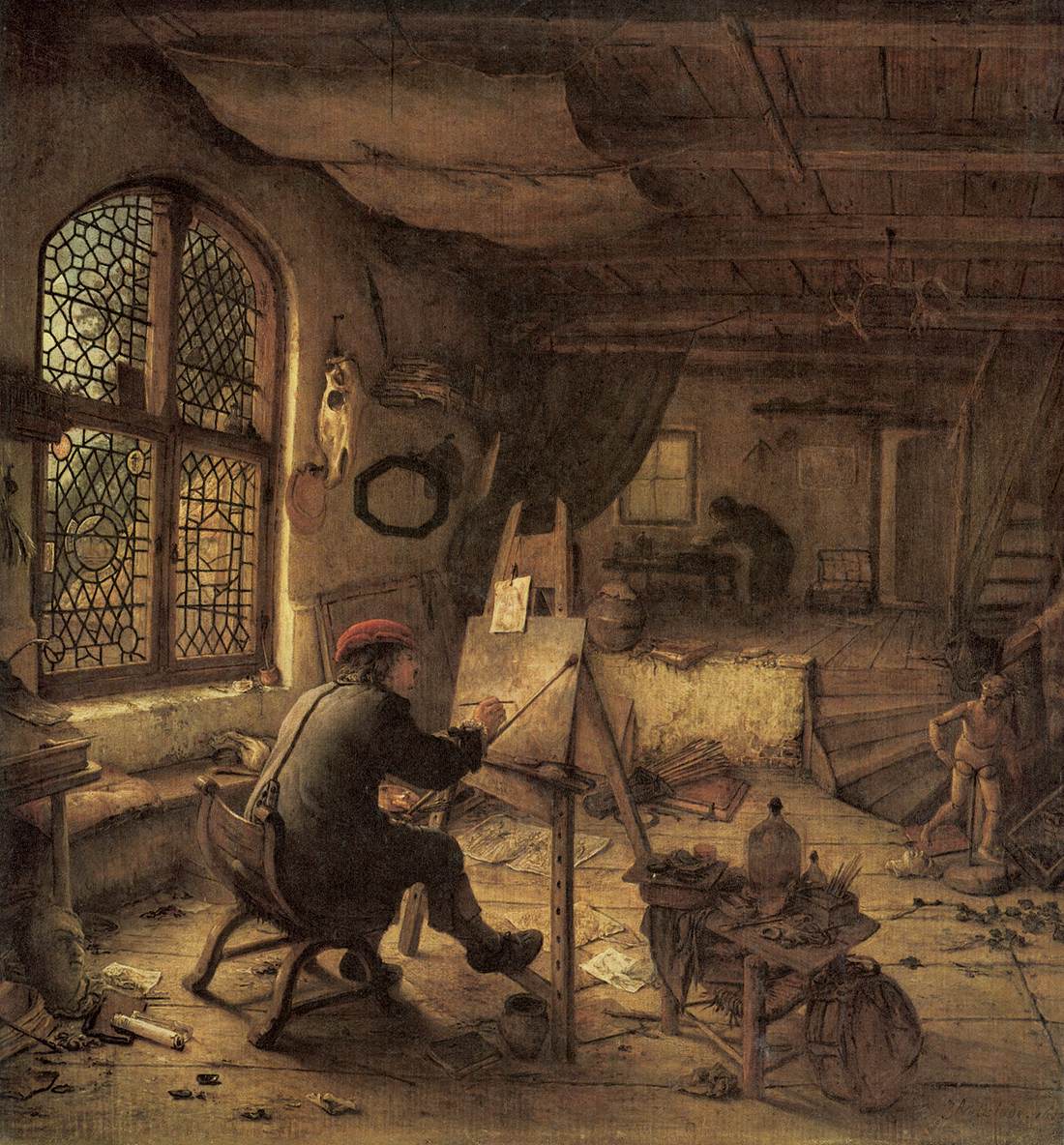
In “The Painter in his Studio” by Adriaen Van Ostade (1663), we see a self-portrait of the artist, sitting with his back to us. He is at his easel, and his brush hand rests on a ‘maulstick,’ a stick with a padded head used by painters to support the hand holding the paintbrush.  In the shadowed background, a pupil is at work, possibly preparing a palette, or maybe preparing colors.

The window, the floor with all its debris, the walls, and the ceiling are depicted with great detail. The artist and his pupil are less detailed.

The studio is untidy, with brushes fallen on the littered floor. The room is cluttered with numerous odd objects and tools of the trade, including the head of a broken bust beneath a table. On the ceiling above the artist, a canvas canopy is tacked up, possibly to protect the artist’s work area from leaks, or perhaps falling dust.

A skull of some sort hangs near the window, and antlers also decorate the ceiling. The painter’s mannequin poses near the stairs, and an indistinct trunk stands open in the background.

The room is in desperate need of a good sweeping. The large leaded-glass window, however, is clean and lets in good light. It shows us how the artist saw himself and his work space.

A Netherlandish contemporary of the Flemish painters David Teniers the Younger and Adriaen Brouwer, Van Ostade was inspired by the work of Rembrandt.

As Rembrandt did, Van Ostade painted people who had seen hard times. They were often old, sometimes ill-favored, and not always beautiful. He painted dark interior scenes, where shadows are often the dominant features. He also painted the interiors of taverns and the homes of ordinary people, so through his work we who write can see how people really lived.

Van Ostade lived and painted in Haarlem. His subjects and the mood of his work is darker than that of his Flemish contemporaries, as hard times had fallen on the people of Holland, and  Haarlem in particular.

About the artist, via Wikipedia:

Adriaen van Ostade (baptized as Adriaen Jansz Hendricx 10 December 1610 – buried 2 May 1685) was a Dutch Golden Age painter of genre works, showing everyday life of ordinary men and women. [1]

To read his full biography, go to Adriaen van Ostade – Wikipedia


Credits and Attributions:

Wikimedia Commons contributors, “File:Adriaen van Ostade – The Painter in His Studio – WGA16748.jpg,” Wikimedia Commons, https://commons.wikimedia.org/w/index.php?title=File:Adriaen_van_Ostade_-_The_Painter_in_His_Studio_-_WGA16748.jpg&oldid=661600977 (accessed August 14, 2025).

[1] Wikipedia contributors, “Adriaen van Ostade,” Wikipedia, The Free Encyclopedia, https://en.wikipedia.org/w/index.php?title=Adriaen_van_Ostade&oldid=1212324357 (accessed August 14, 2025).

5 Comments

Filed under #FineArtFriday

Riding in the Rattlebones and wearing the Cone of Shame #writing

At the sweet young age of seventy-two, I make all sorts of calculations as I go through the day. I attempt to cut recipes down to serve only one person but usually fail.

Then I give up and buy single-serve microwave meals. There is less waste, and it’s cheaper. I look for small loaves of bread in the bakery, quarts of oat milk rather than gallons, that sort of thing. That is the usual sort of math people my age do, other than managing the bills. It’s the ordinary trimming down of a once larger food-prep empire.

However, on Friday, as I sat in the emergency room at the local trauma center, I found my bookkeeper brain doing a different sort of math. I had taken my car to be serviced at the Olympia Kia dealership. While walking from the ladies’ room, which was in a separate building, back to the service center, I tripped on a curb.

I suddenly found myself face down on the concrete, in incredible pain. For a few moments, I couldn’t move, but I finally managed to roll onto my back and then sit up.

Then I couldn’t see for the blood that flowed, obscuring my vision.

The fall smashed my glasses and opened a large gash, rearranging my right eyebrow and ringing my head like a bell. I also had several other not-so-good injuries. The people in the sales office rushed to my aid, staunching the gushing wound and calling 911.

I experienced a huge sense of mortality, feeling suddenly very old as I was placed on a gurney with the right half of my face bandaged. Wearing the cervical collar/neck brace felt like the human equivalent of wearing the canine cone of shame.

This experience will lend a bit more understanding as to how I approach writing my characters’ experiences of traumatic injuries.

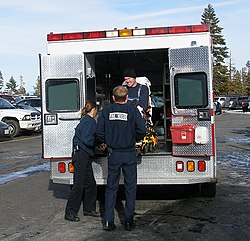
I did, however, gain a deep understanding of why some folks call the Medic One wagon a “Rattlebones.” The streets here are a bit rough and travelling down the main drag while lying on your back rattles you, the gurney, and the wagon like maracas in a mariachi band.

The EMTs were both kind and supportive. When we arrived at the hospital, they stayed with me until I was booked into triage. After numerous tests, it was determined that I didn’t have a concussion, for which I am grateful.

Via Wikipedia: An emergency medical technician (often, more simply, EMT) is a medical professional who provides emergency medical services. EMTs are most commonly found serving on ambulances and in fire departments in the US and Canada, as full-time and some part-time departments require their firefighters to at least be EMT certified. [1]

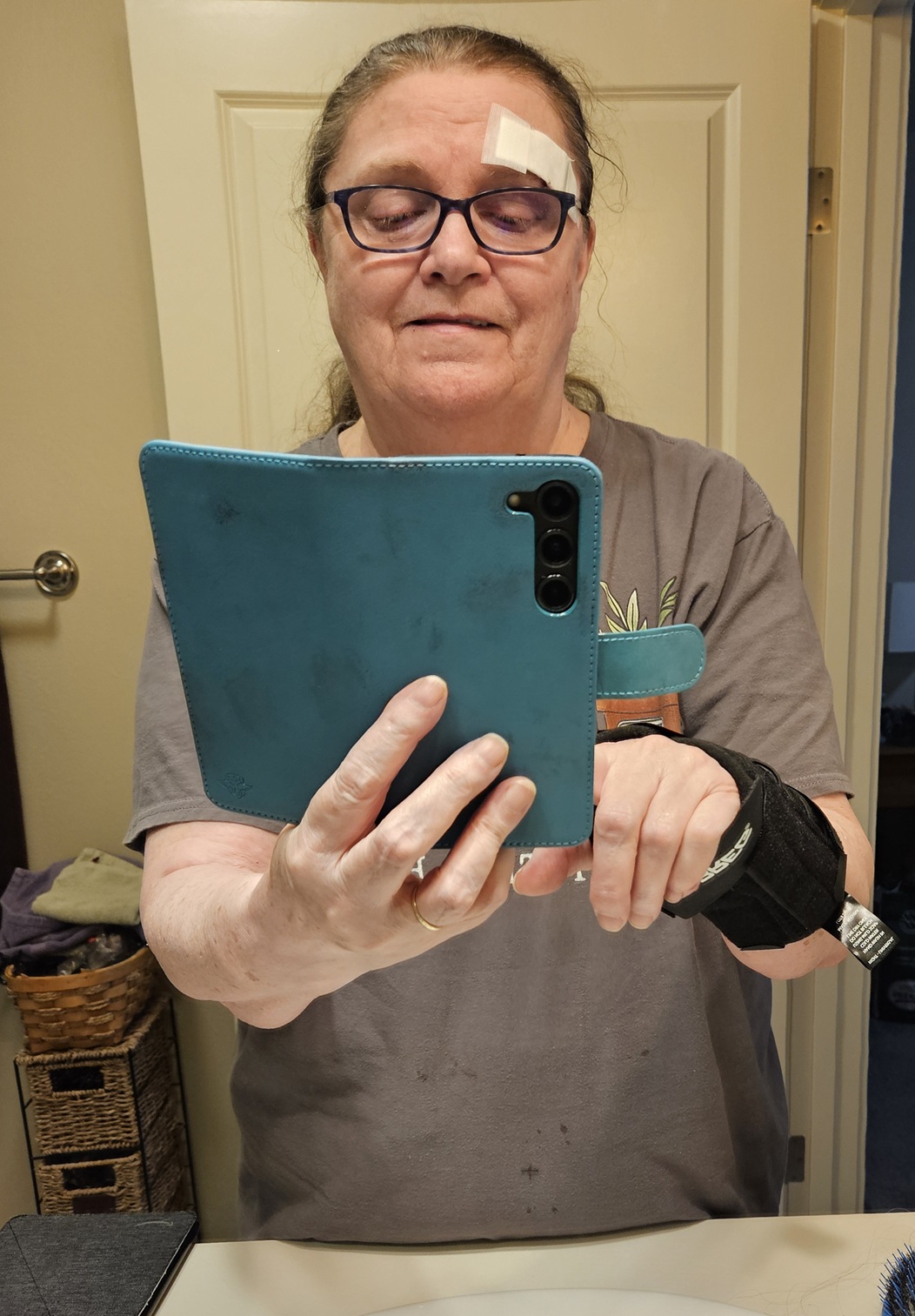
I now have a lovely black eye, partly shielded by a white bandage protecting the stitches for a few more days, and a splint that supports my wrist but inhibits movement and makes typing a challenge.

Fortunately, I still had my old glasses. I can still see well enough to read if I use a magnifier, and the distance part of my bifocal lens is still good for driving. I will go to Costco and get another pair of glasses with my new prescription.

So, what sort of math was my confused brain doing in the ER?

  • 1 slight misstep for womankind = 1 ride on a gurney in the Thurston County Medic One van, aka the Rattlebones.
  • 1 cervical collar whether you need it or not.
  • 7 stitches in the right eyebrow, and
  • 1 sprained wrist in a splint (possibly fractured, won’t know for a week).

Add in the black eye, numerous bruises and contusions, eight hours in the ER, and the sum total is:

  • 1 completely deflated ego.

the author taking a picture of herself in a mirror, with bandage over eye and splint on right hand.Yes, technically, I am a senior citizen. But I’m only 72, which, given that most women in my family live well into their 90s, is middle-aged. Mama’s admonitions in my early childhood ring in my ears: “Pick up your feet when you walk and be careful to step up at curbs!”

I should know better.

I DO know better.

But all is not lost. The words are flowing, sort of, and I’m getting them down. I have plenty of microwavable meals and DoorDash to keep me fed.  Everything else that requires mobility/flexibility is doable with a bit of figuring it out.

I suspect I will be healed before I have it completely figured out. That’s the way it is when fate sends us on another spin the Blender of Life.


Credits and Attributions:

Image: Wikimedia Commons contributors, “File:EMTs loading a patient.jpg,” Wikimedia Commons, https://commons.wikimedia.org/w/index.php?title=File:EMTs_loading_a_patient.jpg&oldid=702262046 (accessed August 10, 2025).

[1]  Wikipedia contributors, “Emergency medical technician,” Wikipedia, The Free Encyclopedia, https://en.wikipedia.org/w/index.php?title=Emergency_medical_technician&oldid=1304690357 (accessed August 9, 2025).

8 Comments

Filed under writing

#FineArtFriday: a closer look at “The Bird Concert” by Jan Brueghel the Younger ca. 1640 – 45

OLYMPUS DIGITAL CAMERA

Artist: Jan Brueghel the Younger (1601–1678)

Title: the Bird Concert

Date: between circa 1640 and circa 1645

Medium: oil on copper

Dimensions: height: 13.2 cm (5.1 in); width: 17.9 cm (7 in)

Collection: Herzog Anton Ulrich Museum

Today we are taking a second look at one of my favorite paintings of the 17th century.

What I love about this painting:

This is one of my all-time favorite paintings. Jan Brueghel the Younger was a master who stood out in a dynasty of masters. The Brueghel family descended from Pieter Brueghel the Elder, and each generation left behind works that enchant us to this day.

I love this fantasy of birds, a renaissance view of what true harmony could be.

Brueghel gives us a joyous, surreal exploration of all the birds the artist had ever seen in his native Antwerp, and many rare birds that he could only imagine. He has gathered birds from all over the world into a mystical, fairytale glen, posing them around a songbook.

They are learning to sing a in a language they all can understand, a wonderful allegory of the aspirations of the artist for humanity in the turbulent times during which he lived.

This painting also celebrates the new discoveries made by European explorers, as Brueghel had only seen scientific drawings of many of these birds. Even though he hadn’t seen some of these birds personally, he paints them as if they are before him.

The amazing flock of birds gathered here gives us an insight into the mind and sense of humor of Jan Brueghel the Younger, a man not too different from us even though he lived over 300 years ago.

This composition must have been important to Brueghel and says something about him. He went to the expense of getting copper as the base upon which he painted this scene. He was comfortable but not rich, so that tells me he intended this painting to last, to be something he would be remembered for.

About the medium of Oil on Copper, via Wikipedia:

Oil on copper paintings were prevalent in the mid sixteenth century in Italy and Northern Europe. The use of copper as a substrate for an oil painting dates back to Medieval times. The Flemish masters and other artists including Jan Breughel the ElderClaudeEl GrecoGuido ReniGuercinoRembrandtCarlo SaraceniAmbrosius Bosschaert IICopley Fielding and Vernet painted on copper. They favored copper for its smooth surface which allowed fine detail, and its durability. Copper is more durable than canvas or wood panel as a support for oil painting, as it will not rot, mildew or be eaten by insects. Contemporary painters also use copper as a base for paintings, some of them allowing the metal or patina to show through.

The old masters prepared the copper for painting first by rubbing it with fine pumice abrasive. The copper surface was then treated with garlic juice which is believed to improve adhesion of the paint. Finally a white or grey ground layer of oil paint was applied as a primer. After drying the copper panel was ready for the artist to begin painting. Later artists used the patina process, in which the copper is oxidized with the use of various acidic solutions, as part of the art work itself. The resulting patina or verdigris includes darkening of the metal, green and blue tones, depending on the chemical solution used. Patina is characterized by beautiful, variated patterns and textures which occur on the metal’s surface. [1]

About the Artist, via Wikipedia:

Jan Brueghel the Younger was born in Antwerp on 13 September 1601 as the son of Jan Brueghel the Elder and Isabella de Jode. His mother was the daughter of the cartographer, engraver and publisher Gerard de Jode. He trained and collaborated with his father in his workshop. His father was a friend and close collaborator of Peter Paul Rubens. Brueghel likely assisted with his father’s large-scale commissions.

On the wishes of his father, he traveled around 1622 to Milan where he was welcomed by Cardinal Federico Borromeo. The cardinal was a patron and friend of his father who had met in Rome about 30 years earlier. In what was likely an act of rebellion against his father, he went to Genoa where he stayed with his cousins, the Antwerp painters and art dealers Lucas de Wael and Cornelis de Wael. Their mother was a sister of Brueghel’s mother. At the time his friend and fellow Antwerp artist Anthony van Dyck was also active in Genoa. He later worked in Valletta on Malta in 1623. From 1624 to 1625 he also resided in Palermo on Sicily at the time when van Dyck was also working there.

Brueghel learned that his father had died on 13 January 1625 from cholera only after his return to Northern Italy in Turin. Wanting to return to Antwerp immediately, he had to delay his departure for 16 days due to a severe fever. After recovering from his illness, he set off for his homeland by way of France. In Paris he met the Antwerp art dealer and painter Peter Goetkint the Younger, who was the son of Peter Goetkint the Elder, the master of Jan’s father. Goetkint was eager to return to Antwerp because his wife was expected to deliver a baby soon. The child was born on 25 August, the day on which Breughel arrived in Antwerp with his traveling companion who himself died a few days later.

Brueghel took over the management of his father’s workshop, sold the finished works of his father and finished some of his father’s unfinished paintings. In the Guild year 1624-1625, Brueghel became a master painter of the Guild of Saint Luke of Antwerp.

In 1626 he married Anna Maria Janssens, daughter of Abraham Janssens, a prominent history painter in Antwerp. He continued to operate the large workshop of his father. He became dean of the Guild of Saint Luke in 1630. That same year he was commissioned by the French court to paint a series of paintings on the life of Adam. It seems that his studio declined after this period and that he started to paint smaller scale paintings which commanded lower prices than those produced earlier.

In later years, he worked independently in Paris in the 1650s and produced paintings for the Austrian court in 1651. He is recorded again in Antwerp in 1657 where he remained until his death. [2]


Credits and Attributions:

[1] Wikipedia contributors, “Oil on copper,” Wikipedia, The Free Encyclopedia, https://en.wikipedia.org/w/index.php?title=Oil_on_copper&oldid=1060711380 (accessed JAug 7, 2025).

[2] Wikipedia contributors, “Jan Brueghel the Younger,” Wikipedia, The Free Encyclopedia, https://en.wikipedia.org/w/index.php?title=Jan_Brueghel_the_Younger&oldid=1086952033 (accessed Aug 7, 2025).

Image: The Bird Concert by Jan Brueghel the Younger ca. 1640 -1645, PD|100. Wikimedia Commons contributors, “File:Bruegel Vogelkonzert@Herzog Anton Ulrich Museum (1).JPG,” Wikimedia Commons, the free media

6 Comments

Filed under #FineArtFriday, writing

#Writing in the Blender of Life

Technically, I am a full-time writer. For about ten years after I retired from corporate America, I had regular office hours for writing, and very little interfered with it. Nothing lasts forever, and once again, I am drawing on the habits I developed during my years as a hobbyist.

While I’m rarely in the right headspace to do a long stint of writing new words, I manage to fit short bursts of writing into my day, no matter what is on the calendar.

When I was still working, I sometimes wrote during breaks or at lunch. Other days, I was able to dedicate a block of time for writing by rising two hours before I had to depart for work. But waking up that early was tough, so I frequently wrote after the dishes were done and the house was clean. If I skipped watching TV, I could get a whole scene on paper.

Nowadays,  I arrange my writing time around whatever the calendar says is scheduled. I usually have all afternoon to devote to it, but some days are less productive than I wish. However, I always manage to get something done. Even though the advancement is slow, I’m creeping toward the finish line.

A happy life is all about balance, which is sometimes hard to find.

blended margarita drinkI’ve mentioned before that sometimes life is like a blended margarita. It’s a slurry of everything all at once, and here at Casa del Jasperson, things are usually in a whirl or at a dead halt. Sometimes finding my creative muse among the chaos is difficult, and other times it won’t be silent.

If you are a regular here at Life in the Realm of Fantasy, you know my husband is in the late stages of Parkinson’s. He is now in an Adult Family Home, and every morning I go to visit him. That is the one thing that happens every day without fail. All my appointments are scheduled around that morning visit.

Setting him up in a care facility was a difficult decision, as I felt caring for him was my job, my responsibility. But his decline has been exceedingly rapid. He is unable to stand without two people assisting him as he can’t transfer himself from wheelchair to bed, and is unable to reliably communicate his needs. He can no longer write, use his cellphone, or use the computer.

In May, I had to face the reality I had put off for as long as I could: my husband was no longer safe in our home. He had fallen twice and developed a blood clot in his left leg.

I had help from a Senior Living professional in finding the right place for him. We found a lovely home fifteen minutes away from my apartment, just down the road from the house I grew up in.

The home is owned and operated by two registered nurses, with two licensed CNAs (certified nursing assistants) on duty around the clock. He has his own room, the kind of food he likes, and company. Currently, there are only three residents, but the maximum capacity is six, with each resident having a private room.

They have daily activities, games, and physical therapy. Best of all is the lovely, peaceful deck where residents can take their wheelchairs to sit. He and I often sit out there absorbing the serenity of the back garden. The ongoing squabbles and dramas among the squirrels and many birds keep us both entertained.

So, things have settled into a routine here. I have more free time, which allows me to participate in my writing group and engage in write-ins with the larger writing community. I have time to mentor new authors and can enjoy the occasional lunch with friends.

walla walla onionsWriting posts for this blog and the community of friends I have found here has been the one constant during a stretch of time when everything felt out of control. The plot in our community garden has been a surprisingly relaxing hobby. I have harvested strawberries, tomatoes, and onions. In the next few days, celery will be on the menu.

The lone pumpkin plant is taking over the world, and I will get six or seven pumpkins when all is said and done. They should be small, as they are the sugar pie variety, but when I planted it, I had no idea how big a single pumpkin plant would get.

I am so grateful for the blessings, the good things that stand out sharply against the not-so-good in life. I can still be with my husband for part of the day, and I have the freedom to do a few things that I was unable to do before.

Life is different, but it’s still good.

6 Comments

Filed under writing

#FineArtFriday: Grotto Landscape with a Hermitage by Jan Brueghel II and Joos de Momper II

Artists: Jan Brueghel the Younger (1601–1678)

Joos de Momper the Younger (1564–1635)

Title:  Grotto Landscape with a Hermitage

Date:   between 1625 and 1630

Medium: oil on canvas

Dimensions: height: 56 cm (22 in); width: 99 cm (38.9 in)

Collection: Private collection

What I love about this painting:

On the surface, while it’s definitely a masterpiece, the subject is one that was done in various ways by nearly every artist of their day. Works like this sold well, as it was the fashion for every upper middleclass merchant to own paintings by the popular artists of their day. The most prolific artists and their workshops chugged paintings out like bakers turning out hot bread.

In most of these workshops, certain aspects were done by the hand of the master, while apprentices and journeymen did the bulk of the work under the master’s guidance. That was how young artists learned the craft. The masters reserved their finest works for their noble patrons, and these were completely done by their own hand.

Two masters created this painting. Joos de Momper II painted the landscape, and Jan Brueghel II did the staffage (people and animals). The two artists often worked together. Both were exceptionally good at what they did, and both made a good living from their art.

The casual observer might think there isn’t much of a story, as it’s a genre painting of people on a religious pilgrimage.

But the people are where the story lies. Why are they seeking wisdom here? What has happened that they would leave their farms and shops to visit him? Why do they not seek advice from their priest?

The artists show us a hermit [Hermit – Wikipedia], a man who has chosen a life of poverty and religious seclusion.

I see many ways a story could go here. The hermit intrigues me.  Why does an educated man choose to leave the comforts of civilization and live in such a rickety shack with only a dog for companionship? (A good choice of friends, in my opinion.)

I wonder what sort of person he was. Was he a kind man who wanted to be closer to nature?

Or perhaps he had made bad business investments and lost everything. Was he bitter about his place in the world? Was he truly a humble person, or was this his personal punishment? What wisdom did he have to offer those who visited him?

I like to think he was a kind person who just wanted to be alone with his dog and his books, and while I don’t have a dog, I often feel the same way.

About this painting via Wikipedia:

Untouched nature is the dominant theme of the right half of the painting, religion occupies the left half of the picture. The hermit set up an altar with a painting of crowned Mary on it. The painting juxtaposes religion and nature as well as civilization on the one hand (church in the background, elegantly dressed walkers) and untouched nature (crane, waterfall) on the other. [1]

To read more about this painting, go to Grotto Landscape with a Hermitage – Wikipedia

About the artists via Wikipedia:

In Flemish painting of the late 16th and early 17th centuries there was often joint work by different painters. The painters specialized in a certain area, such as landscape or figures. The painting “Grotto landscape with hermitage” is an example of the collaboration: while Brughel painted the figures and animals, Joos de Momper the grotto and the landscape. This division of labor approach was quite common among painters at that time.

Joos de Momper the Younger (1564-1635) was a Flemish landscape painter. His landscape depictions show the transition from the Mannerist world landscape to the naturalistic Dutch landscape painting of the 17th century.

Jan Brueghel the Younger (1601–1678) was a Flemish landscape, flower and animal painter from the most important Flemish painting dynasty, the Brueghel family. He was the grandson of Pieter Bruegel the Elder and son of Jan Brueghel the Elder.

Both Joos de Momper and Jan Brueghel grew up in Antwerp and were members of the Guild of Saint Luke, a guild-like brotherhood of painters and printers. Both painters also came from important families of painters. Joos de Momper often worked with Jan Brueghel the Elder and Jan Brueghel the Younger.

Grotto painting as a genre

De Momper is considered to be the most important exponent of grotto painting: These are paintings in which a rock grotto or cave is the focus of the painting. The caves are refuge for hermits, serve as a place of pilgrimage (as in this painting) or serve as the background of a mythological story. Further representatives of grotto painting are Cornelis van Dalem (approx. 1530–1573), Jan Brueghel the Elder (1568–1625) and Paul Bril (approx. 1553–1626). Another grotto landscape by Joos de Momper and Jan Brueghel the Elder is in the Liechtenstein Museum in Vienna, also here with a reading hermit.

De Momper’s name was so closely linked to rock and mountain landscapes that he was named Judocus de Momper Pictor montium Antwerpiae (Joos de Momper, Antwerp, Painter of mountains) in the then very well-known Iconography, a series of pictures by well-known painters after Anthony van Dyck.

To read more about these artists, go to:

Joos de Momper – Wikipedia

Jan Brueghel the Younger – Wikipedia


Credits and Attributions:

IMAGE: Grotto Landscape with a Hermitage by Jan Brueghel II and Joos de Momper II

[1] Wikipedia contributors, “Grotto Landscape with a Hermitage,” Wikipedia, The Free Encyclopedia, https://en.wikipedia.org/w/index.php?title=Grotto_Landscape_with_a_Hermitage&oldid=1299616328 (accessed July 31, 2025).

[2] Jan Brueghel the Younger – Jan Brueghel the Younger – Wikipedia

[3] Joos de Momper the Younger – Joos de Momper – Wikipedia

2 Comments

Filed under #FineArtFriday