Category Archives: Battles

flippin’ it

An elf markswoman from the Wesnoth fantasy setting, created by Kathrin "Kitty" Polikeit for the homepage of WTactics, the customizable card game project based on The Battle for Wesnoth via Wikimedia Commons

An elf markswoman from the Wesnoth fantasy setting, created by Kathrin “Kitty” Polikeit for the homepage of WTactics, the customizable card game project based on The Battle for Wesnoth via Wikimedia Commons

You know you’ve taken a dip into the realm of fantasy when you’re editing a manuscript and one of your comments in the sidebar reads:  ? maybe a word or two to signify it wasn’t a random customer? Does he mean the elf?  

For some reason when I found myself making that particular comment I laughed like a loon.

I  marvel at my  ‘fantasy life’.  I’m really talking about an elf, and the author whose book I am editing won’t think I’ve ‘flipped it’ again. She has ‘flipped it’ too.

Flippin’ it‘ is an occupational hazard for authors, judging from what I see on Facebook!

When I was young, in my twenties and thirties and even into my fifties, I thought sixty was old, and that I would probably be too decrepit to enjoy life once I devolved to such an old age. However, I’ve been pleasantly surprised to discover my childhood lasted through my forties, and now here I am, sixty years old and feeling like the queen of everything!

Young adulthood is a a time of living in limbo–you go to work, you get married and have kids. It’s your fertile years after all, and your biology insists you take advantage of it!Young Woman Sitting Looking at Laptop Screen In your twenties, thirties and even forties,  creativity is something you pursue only in your free time, feeling guilty for taking time away from your obligations and from your children. You enjoy life, yes and you do find ways to have a satisfying and creative existence, but it’s on hold, and something in the back of your mind asks, “Is this it? Is this all there is?” You feel guilty for even thinking such a heinous thought. How could a lovely family, a good job and all the trappings of modern life not be satisfying? Of course you’re going to write that book someday, but…Jackie has soccer, David has piano lessons,  and you’ve a briefcase full of work to do when dinner is done. That’s if they don’t need too much help with their homework. If you fall into bed by eleven you’re doing well!

These years are the foundation years, the years of your late childhood, preparing you for the real adulthood that only begins once you are free of those responsibilities.
220px-Sir_Galahad_(Watts)Life gets put on hold until that blessed day when the last child leaves the nest. On that day, your real life begins. Yes, you will still need to work, but your life has gained that one rare and beautiful commodity you never had before: free time. Time to spend doing what you want in the evening–time to paint, or time to write. Time to be selfish and no one to make you feel guilty.

Yeah, you’re glad to hear from the kids, that won’t change.  You love being with them and look forward to seeing them for family get-togethers and visits, but you don’t live only for them any more.

There will be separation anxiety. It surprises them that you don’t call every hour to check on them, but they will get used to it, and even learn to accept your independence.

Eventually they will stop fearing that your not calling every hour means you’ve fallen and can’t get up. Promise them that if that becomes a valid concern, you will get a life-alert and life will go on.

They’ll get used to you traveling on your own, and making decisions for yourself. One day they will experience this part of life for themselves. They will realize they can count on you to be there when they need you, and accept that when the crisis is over, you will load your suitcase into the car and let them get on with living the first half of their lives.

You discover that you have a meaning and a purpose in your life that goes far beyond parenthood and biological imperatives, even if it’s a purpose only you and a few friends in your writing group understand.

The first half of my life I spent working three jobs and raising kids, writing only when I could, and too embarrassed to show it to anyone. Now, here I am embarking on the second half of my life, the part where my life really begins and I not only have a career that absorbs me, I get to read all I want! 

Of course I’ve ‘flipped it’. I love the freedom of writing fantasy, and the pleasure of being involved in editing awesome books by amazing authors. It doesn’t get any better than that!


4 Comments

Filed under Adventure, Battles, Fantasy, Food, Humor, Literature, Uncategorized, writer, writing

Grandma’s Ferrari and Style

chicago manual of styleOh golly gee–it’s that time of year again. What do I use,  “that” or “which?”   And what the heck are those rules again? Good grief…where did I put that bookmark for the online Chicago Manual of Style….

What? Doesn’t everyone have a bookmark in their list of favorites so they can immediately access a FREE style manual when questions of  style arise? Good lord people–we aren’t talking shoes and handbags here! We’re talking RULES! Specifically, the rules fer writin’ and ropin’ in them thar clauses!

And always remember–for the indie author, free is good. If you don’t have the funds to buy Strunk and White’s Elements of Style, for the love of Dickens, use the internet, Tiny Tim!

Personally, I use both manuals.

The traditional approach to the question of “that versus which” is to use “that” with restrictive clauses and “which” with nonrestrictive clauses. While some writers seem to have abandoned the distinction entirely, no better rule has come along to replace the traditional rule. Moreover, the rule is easy to master.

But what, you ask, is a stinking restrictive clause and why do you need one?

799px-Handcuffs01_2003-06-021.   A restrictive clause is one that limits — or restricts –the identity of the subject in some way. When writing a restrictive clause, introduce it with the word “that” and no comma. (However, if the subject is or was a human being, use “who” to introduce the clause.) This is where “that” goes:

Correct Restrictive Use:

The photograph that was hanging in the hotel lobby was stolen.

The use of “that” in this sentence is correct if the reader intends to single out the one photograph that was in the hotel lobby as the stolen photograph. However, if there were several photographs hanging in the lobby, this use would be incorrect, since it would mislead the reader into believing that there had been only one photograph in the hotel lobby. The restriction here tells us that the one photograph that had been hanging in the hotel lobby was stolen — not the photograph in the cocktail lounge, or the one in the guest library, or any of those in the restaurant.

MH9004387282.  Use “which” with nonrestrictive clauses. A nonrestrictive clause may tell us something interesting or incidental about a subject, but it does not define that subject. When writing a nonrestrictive clause, introduce it with “which” and insert commas around the clause. (However, if the subject is or was a human being, use “who” to introduce the clause and insert commas around the clause.)

According to Wikipedia, the Fount of all Knowledge: non-restrictive clause is a clause in which a noun phrase that is used to avoid repetition (as the referent of an anaphor, meaning that it is substituted by another word but refers to the same noun) is determined by its antecedent where the dependent is peripheral (non-essential) in the secondary constituent, as opposed to a restrictive clause, where the dependent is central (essential) to its primary constituent. A non-restrictive clause does not identify the referent of its noun, but only provides information about it.

220px-Metropolitan_police_BMW_3_seriesRestrictive example:

The officer helped the civilians who had been shot.

or

The officer helped those civilians who had been shot.

In this example, there is no comma before “who”. Therefore, what follows is a restrictive clause (not all of the civilians had been shot).

Non-restrictive example:

The officer helped the civilians, who had been shot.

Here, there is a comma before “who”. Therefore, what follows is a non-restrictive clause. It changes the sentence to mean that all the civilians had been shot.[1]

Correct Nonrestrictive Use:

The photograph, which was hanging in the hotel lobby, was stolen.

Explanation: While this nonrestrictive use tells us that the photograph was hanging in the hotel lobby, it does not tell us which of the several photographs in the hotel lobby was the stolen photograph. It would be incorrect to use this nonrestrictive clause if there had been only one photograph in the hotel lobby, as the sentence leaves open the possibility that there were others.

  1. Combining Restrictive and Nonrestrictive Clauses. One can provide both limiting and nonlimiting information about a subject in a single sentence. Consider the following.

Correct Use of Both Restrictive and Nonrestrictive Clauses:

220px-Looking_across_lake_toward_mountains,_-Evening,_McDonald_Lake,_Glacier_National_Park,-_Montana.,_1933_-_1942_-_Ansel AdamsThe Ansel Adams photograph that was hanging in the hotel lobby, which was purchased in 1969 for $100,000, was stolen.

The restrictive clause beginning with “that” tells us that only one Ansel Adams photograph was hanging in the hotel lobby and that it was stolen. The nonrestrictive clause beginning with “which” tells us what the owner had paid for the photograph, but it does not tell us that the owner did not pay another $100,000 for another photograph in the same year. It does not limit the possibilities to the Ansel Adams photograph that was in the lobby.

Restrictive and Nonrestrictive Clauses beginning with “Who.” When writing about human beings, we use “who” rather than “that” or “which” to introduce a clause telling us something about that human being. Since “who” is the only option, we distinguish between a restrictive use and a nonrestrictive use by the use of commas.


Ferrari_AssetResizeImageOld Mrs. Jasperson, who drives a Ferrari, is going through her second childhood.

Yes, I am a dreamer. Indies are lucky to be able to afford bus passes.

Anyway, that “who clause” is nonrestrictive because the information in the clause doesn’t restrict or limit the noun it modifies (Old Mrs. Jasperson.) The commas signify that the adjective clause provides added, but not essential, information. Use a pair of commas to set off words, phrases, or clauses that interrupt a sentence, as in these quotes:

Rudyard Kipling said, “Words are, of course, the most powerful drug used by mankind.”

Anthony Burgess said, “Literature is all, or mostly, about sex.”

But don’t use commas to set off words that directly affect the fundamental meaning of the sentence:

Samuel Johnson said, “Your manuscript is both good and original. But the part that is good is not original, and the part that is original is not good.”

400px-CH_cow_2See? I do understand the principles, and when it comes to theory, I can talk clauses and quarks ’til the cows come home.

But truthfully folks, when I am in the zone, I just bash out the words and trust that my editors will not only rein me in when  I get too free with my commas, they will weed out all the extraneous “thats” and “whiches” that creep into every author’s raw manuscript.

Comments Off on Grandma’s Ferrari and Style

Filed under Adventure, Battles, Books, Fantasy, Food, Humor, Literature, Uncategorized, Vegan, writer, writing

What to do…what to do….

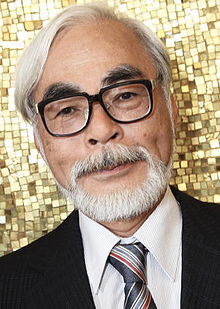
220px-Hayao_MiyazakiI found out today that the great Japanese artist and filmmaker  Hayao Miyazaki is retiring from making movies. His career has spanned over fifty years. Miyazaki  attained international acclaim as a maker of anime feature films. He and Isao Takahata co-founded Studio Ghibli, a film and animation studio. The success of Miyazaki’s films has been compared to that of  Walt Disney, British animator Nick Park and American director Robert Zemeckis. To be honest–I LOVE his work.

I first heard of Miyazaki in 1986, when my ex husband bought a little VHS movie for our daughter, Meg, called Warriors of the Wind. It was a wonderful movie, and we watched it over and over, but it felt incomplete, as if we only had part of the film.

It turns out that was indeed the case: the true name of the movie was Kaze no Tani no Naushika, translated to Nausicaä of the Valley of the Winds.  The movie tells the story of a young princess of the Valley of the Wind, Nausicaä (Shimamoto),  who gets involved in a struggle with Tolmekia, a kingdom that tries to use an ancient weapon to eradicate a jungle of mutant giant insects. Nausicaä must stop the Tolmekians from enraging these creatures.

230px-Nausicaa2coverThe underlying story is so powerful and is told so well that I was immediately hooked on Miyazaki’s work. According to Wikipedia, the most prominent themes of that movie are the anti-war and environmental focus of the film. (quote)  “Nausicaä, the heroine, believes in the value of life regardless of its form and through her actions stops a war. Loy and Goodhew state there is no evil portrayed in the film, but the Buddhist roots of evil: greed, ill will and delusion. Fear is what drives the conflicts, the fear of the poisoned forest results in the greed and resentment. Nausicaä, besides from being a transformative force, leads people to understand and respect nature which is portrayed as a welcoming, spiritual, and restorative for those who enter it peacefully.[6]

Nausicaä’s commitment to love and understanding—even to the point of death—transforms the very nature of the conflict around her and changes the attitudes and the hearts of those whose stubborn adherence to their biased views have brought the conflict to the boiling point.

It is said that Miyazaki’s inspiration for Nausicaä sprang from the works of Ursula Le Guin‘s EarthseaBrian Aldiss‘s HothouseIsaac Asimov‘s Nightfall, and J.R.R Tolkien‘s Lord of the Rings

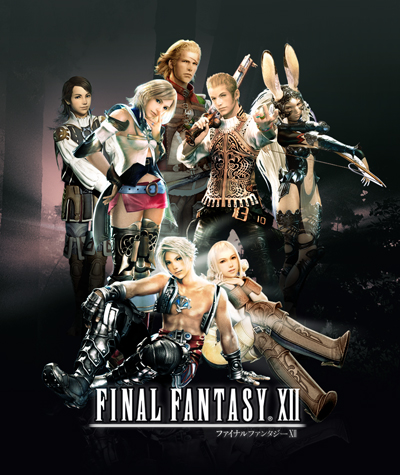
Ff12castAll I know is his work in this movie is gripping, sweeping and superlative. My Tower of Bones series was originally written to be an anime based RPG, that was proposed but never built. When I began plotting the game, I had the great Final Fantasy style plots in my mind, and Miyazaki’s art and influence is clear to anyone who has played them as obsessively as I have. When the game fell through, I was so in love with the story and the characters that I HAD to make it into a book. In my mind, my characters are much like the ones in the poster to the left. Sadly, I’ve never been able to get a cover designed that reflects this.

Because of Miyazaki I have been a devoted fan of Anime and Manga since the 1980’s. That love of sweeping sagas where good triumphs over evil at the cost of great personal sacrifice drives my own work today.

Mr. Miyazaki, I will miss your brilliant work, but I will continue to to cherish those wonderful movies you have so diligently and carefully crafted for us over the years. I can only wonder what your poor heart is feeling now, with the ever-worsening, mindbogglingly horrific Fukushima disaster. My heart and my prayers are with the people of Japan and indeed with the Pacific Ocean as the same water that washes the shores of Japan also washes the coast of Washington State.

Miyazaki’s great works taught me that we are all just one small living, breathing world, and each one of us is responsible for making it better or worse.

I choose to make it better.

1 Comment

Filed under Adventure, Battles, Brendan Fraser, Fantasy, Final Fantasy, Japan, Literature, mythology, ninjutsu, Vegan, writer, writing

Ah–sweet mysteries of life….

The Joy of Childhood  © Leah Reindl 2012

The Joy of Childhood
© Leah Reindl 2012

I’ve been babysitting The Boy this week.  This child has mad skills at keeping Grandma hopping.  We have played endless hours of hide-and-seek, we have watched “The Boy Who Cried Werewolf” five times, and we have scootered around the house until Grandma is dizzy.

Well, let’s be honest–Grandma was a bit dizzy when she got here, but you know what I mean.

And talk about fine cuisine–we walked down to the Java Haus for a pink cookie! The pink cookie was awesome, although Grandma makes the best ramen.

Yum!

Writing has been problematic, but you can’t have everything.

000510Being vegan sometimes conflicts with dining options, when I am not home.  A fully loaded pizza with three different meats and extra cheese is not really vegan. Sorry, son-in-law.

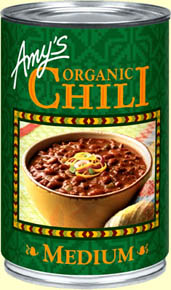
Yeah, I know it’s not a steak, but truthfully pizza is not a vegetable. Thanks for the thought anyway, dear. No worries, I have this lovely toast, made from Dave’s Killer Bread to go with my Amy’s Vegan Chili. Yay for portable processed food that not only tastes good, it’s good for you!

The wise vegan brings her own meals.

So now we are at the end of summer. School is about to begin and NaNoWriMo is just around the corner. I am not yet ready for NaNo, but I have my backup plan in place. I will get my 50,000 words, as always. I know what I have to do when my brain grinds to a halt and medieval warfare no longer rings my bells.

young frankensteinI Frankenstein it.

Yep! Some years at the end of November I have three different stories going in one manuscript. When I run out of ideas on one, I start another.  When it comes to getting your 50,000 words you have to do whatever you can. I stitch them together, using  a different colored font for each.

Using different colored fonts makes it easy at the end of NaNoWriMo to unzip the manuscript. Then when you are at a standstill on one work in progress you can easily move on to another.

Sigh.

The Boy starts first grade in only five days. I can’t believe summer is almost over.  It  feels like it only just began!

2 Comments

Filed under Battles, Books, Fantasy, Food, Literature, Vegan, writer, writing

The art of procrastination

MH900341616I have mad skills at the fine art of procrastination.  I can conjure the most amazing reasons to avoid doing tasks that would be so much simpler if I just got off my *** and did them.

I was gone all week last week, and still my house is  trashed. A mountain of dirty laundry lurks in the hall by the washer. Every inch of counter-top in the kitchen has some item (non-perishable)  of food waiting to be put away.  Sand from the beach made the journey home in our clothes and now the carpet needs a good vacuuming and perhaps a shampooing, but that’s another story.

We got home late Saturday night, and we did manage to unload the car.

That was about it. Oh yeah, the food that had to be refrigerated got put away, but the rest of it? Not so much.

MH900383000Everything sits where it was dropped, and gradually the detritus of our holiday is finding its way to the proper place.

And I don’t really find myself too bothered by the chaos. That is odd, for me.

Recovering from being sick for most of the summer and not being allowed to lift more than 10 lbs has put a bit of a damper on the cleaning frenzy I usually indulged in following our past years’ vacations.

I sit and write, and then get up and do a bit of putting away, then I sit and write again.  While in Cannon Beach I made serious headway on one of the new sections of Lackland’s tale, and yesterday, instead of cleaning house, I finished it.

Sort of.

Now I just have to flesh-out the chapter I just finished, and then there are two chapters left to write. The problem is, I know what I have to write for those chapters, because I’ve outlined them, and they are really good, action-packed chapters. It will be simple, and for me, it’s a tale that practically writes itself.

MH900399384But I can’t make myself do it.

Some will die.

I will be letting go of people I love, saying goodbye forever.

I will do many crazy things to avoid that, even if it means I actually finally clean my house.

In fact, I probably should make hummus.  Clean the kitchen, do the laundry and make hummus…avoid the whole end of the book problem….

2 Comments

Filed under Adventure, Battles, Fantasy, Humor, Literature, Vegan, writing

Unplanned Obsolescence

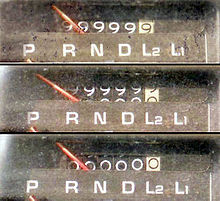
220px-Odometer_rolloverI turned sixty in June. The very next day I started falling apart. I am not kidding, my internal organs began failing the next day. Well, at least my gallbladder gave out on me.

Who knew planned obsolescence applied to the human body? At 60,000 miles you need a new timing belt, and possibly a brake-job.

Several expensive tests and a trip to urgent care later, it turned out I didn’t have gallstones. My gallbladder simply was failing, or as the doctor put it, dysfunctional. If you only knew my family, you wouldn’t be surprised.  I’m sure it’s not the only dysfunctional internal organ in the family.

ad_chevy_vega_gt_orange_1974I felt rather like the 1974 Chevy Vega we once owned, the vehicle with the duct-tape interior.  We had proudly bought it new, but at 50,000 miles the armrests fell off, the dashboard began cracking, the seats came apart–the interior was nothing but duct tape; a vast sea of silver. And the car was only three years old.

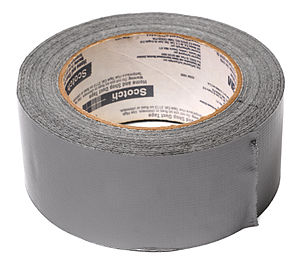
Duct tape is also known as “hundred-mile-an-hour-tape” in my family. Uncle Jim had a purple 1962  Chrysler station-wagon with both the rear-view mirror and the back bumper duct-taped on and he drove it like that for two years while he worked in the woods, planting trees.

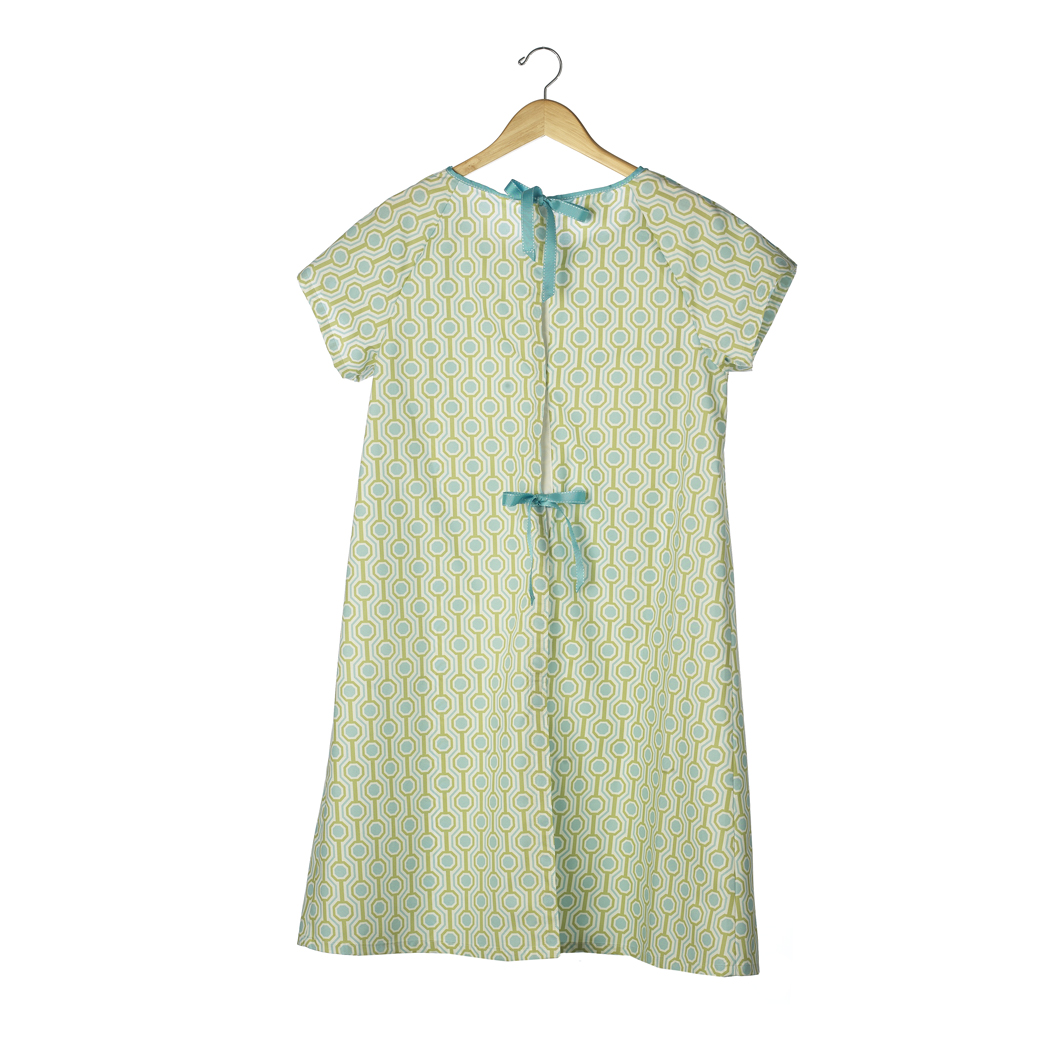
libby-gown-front_01So last Wednesday I had surgery.  It was just a bit of internal housecleaning–out with the debris cluttering up the place. Unlike Dr. Frankenstein’s monster I had nothing new to replace it with, but the gallbladder is apparently an internal organ we can do without.

Today I am hanging around the house, waiting for tomorrow when I will get the staples out.

I know! Staples–almost as classy as duct tape! My Father would have been proud!

300px-Duct-tape

11 Comments

Filed under Adventure, Battles, Books, Uncategorized, Vegan, writer, writing

Hurricane Hilton

MH900175582Last week I attended a 4 day convention in Seattle where there were several glitches on the dietary front.

The kitchen at the hotel failed miserably on Thursday and Friday, but by Saturday they had figured it out at least for the final dinner.  In the meantime, there were a lot of starving authors sharpening their pens and busily writing culinary reviews that were less than glowing.

When we reserved our place in January, we were asked what dietary requirements we had, and were given many options.  The breakfast buffet was nothing but donuts, muffins and bagelsnone of which are vegan or gluten-free – options that were offered to registrants at the time of my original sign-up.

I am not gluten intolerant, but I am vegan, and not for moral reasons. I am vegan for health reasons, as I get horribly ill from eating even small amounts of meat and dairy. So, when I realized there was NOTHING for breakfast or lunch that I could eat, I figured I’d just go to the restaurant and order side dishes off the menu. I have usually found that to be an option that works for me. After all, hash browns and steamed veggies are usually easy for the kitchen to turn out.

MH900400553When faced with a simple request, such as, “Can I have veggies sautéed in olive oil instead of butter please?” or “May I have my toast with no butter, please?” the waiters and waitresses got the deer-in-the-headlights look.  

I know what it’s like to be faced with a horde of prima donnas who think they should have special treatment.  I worked in the food service industry as both a waitress and a dishwasher, and I was a hotel maid for 12 years, actually, during the Reagan and Bush Sr. years. That was one of my 3 jobs. I was also a free-lance bookkeeper and a darkroom technician during those years. Three part-time jobs kept the kids fed and the roof over their heads, right?

Trickle down economics didn’t always trickle down too far.

It’s amazing how many hotels and restaurants are not prepared for guests with strange dietary needs like those weirdo hippy-freak vegans.

I get it, and I understand it.  I left good tips in the VERY expensive coffee shop anyway, because everyone did their best, and why be more of a pain than you have to be? My fried spuds and steamed veg averaged $15.00 to $20.00 per meal for breakfast and lunch for 4 days. Hurricane Hilton blew through my wallet leaving behind a budgetary disaster.

curry and sweet potato soupBut in this case, I was not the only hungry author there.  There was little concession made for any of the other people who’d been offered diet options, including the carnivores.  In fact the first three days were total catering catastrophes, and hardly anyone was pleased with the pathetic offerings.

By Friday, things were looking up for me but the Carnivores were starving. The catering team had gotten the 3 vegans at the convention served, and the plate they put in front of me was lovely.

Yep. There I was alone, surrounded by starving authors, armed only with a plate of grilled asparagus.

The carnivores were all looking at my veggies covetously. Irene Roth Luvaul suffered worse than me. She was told that  A: they had run out of food, and B: they weren’t going to cook any more. 6 people at our table were yet to be served.

Irene is an editor. Did I mention that? Just in case I didn’t, I will just say it’s bad juju to cross an editor. And the room was full of them.

There was blood in the water.

The announcement that no food would be forthcoming didn’t fly well with the comma-Nazi. Irene said, “What do you mean, you aren’t going to cook any more food?” Her clipped Texas tones could have shaved the fur off a cat at fifteen feet, they were so sharp.

This was the voice of the woman who edited briefs for the Texas State Supreme Court. She wrangled lawyers for a living.

The server brought her a plate of cold ravioli in pale tomato sauce.

Faced with a resounding plea-bargain, Irene desperately wished she was a vegan, and eyed my asparagus with longing.

However, by Saturday night the catering staff had redeemed themselves beautifully with a lovely, well-prepared meal that even the gluten-free authors were pleased with, along with copious quantities of decent wine, proving that giddy, well-oiled authors are a bag of fun.

Despite near starvation, it was a fun week, and meeting Greg Bear was awesome. But making new friends and connections with both sides of the industry was the best part of this for me.

4 Comments

Filed under Battles, Fantasy, Food, Literature, Uncategorized, Vegan, writer, writing

The View from the Fishbowl

Me working in a starbucks, through the fishbowl, copyright Dan Riffero 2013 <– The Starbucks in my son’s office building has a fish tank, and this is what the fish see when I am working there!

One of the more awesome things I get to do frequently is drive to and through Seattle.  It used to freak me out to even contemplate making that journey, but now I’m so used to it I barely notice it unless something is on fire alongside the road.

We’re stopping…we’re going…stopping…going…meh….

Downtown Seattle isn’t all that user friendly if you are in a car.  I am becoming the queen of negotiating  one-way blind-alleys and parking garages designed by Daedalus.

Driving in heavy traffic has a great deal in common with writing a novel. It is important to develop a sense of Zen-ness, ninja-like calm; keeping the flow going in the face of roadblocks and characters with limited vocabularies.

You start out going really well, at the speed-limit or even above. You’re sailing along! Suddenly you notice brake lights ahead and you slow down, or even come to a complete stop, hoping the guy rapidly approaching your rear bumper has insurance.

Then you go, real slow. You may be doing 10 mph, but you are doing in a forward motion. You are rolling! You pick up a little more speed and you think “This isn’t so bad, I think were past the worst of it.”

You’re wrong, but hey, you actually gained 500 feet of forward motion toward your goal before you had to stop again!  After 10 miles of that you find yourself once again sailing along and life is good!

Negotiating rush-hour traffic on I-5 is exactly like writing a book, or indeed, completing ANY artistic endeavor.

What’s important is not how fast you made the journey.

The important thing is arriving at your destination alive and with your temper and your dignity intact

6 Comments

Filed under Adventure, Battles, Books, Fantasy, Literature, Uncategorized, writing

It’s all Greek to me

Blender3D_Dragonfight_03 Sascha Kozacenko, with kind permission for GFDL.Dragons.

Two tons (or more) of muscle, scales and, frequently, fire.

What’s not to love?

They are rumored to be as devious and crafty as your mother-in-law.

Don’t bandy words with a dragon or you may lose more than the argument.

Again, not unlike your mother-in-law.

St._George_and_the_Dragon_-_Briton_Riviere Briton Rivière [Public domain], via Wikimedia CommonsMy dragons are not really the kind who bandy words about, however some do breathe fire. That heats things up a bit!

Heh heh.  Oops.

Darn it. Now we need a new hero.

I hate that when that happens.

In English, the word dragon is directly derived from Old French – dragon, which in turn comes from Latin draconem (or draco) meaning “huge serpent, dragon,” AND also from the Greek word drakon meaning “serpent, or giant sea fish”.  Both the Greek and Latin term referred to any great serpent, not necessarily mythological, and this usage was also current in English up to the 18th century. So in that sense, dragons REALLY did exist.

Which came first Latin or Greek? Greek – it’s a living language and has been spoken for over 3000 years.  Many Greek words found their way into Latin, and other proto European languages. Thus English has some roots in Ancient Greek.

Tiepolo,_Giambattista_-_Die_Unbefleckte_Empfängnis_-_1767_-_1768_-_Drachen Giovanni Battista Tiepolo [Public domain], via Wikimedia CommonsNow as far as dragons go, in my two worlds they are quite different from each other.  In Waldeyn, (Billy’s Revenge) there are two kinds. The smaller wingless variety often has a second breath that allows them to breathe fire–quite an effective weapon, as Huw the Bard will discover. The bigger ones fly and prefer to eat people, so they are considered a nuisance.

No, my dragons are NOT vegans. But that would be an interesting twist….

In Neveyah, (Tower of Bones) they tend to be immense creatures of both magic and the element water. This puts the mage at a disadvantage, as the element that heals the beast is the element of water and you must never use it against them. Water is also their best magic weapon, and they are relentless. They have high reserves of chi and strong magic at their disposal, along with excellent shielding ability, so using any magic at all against them is a no-no.

Good luck, boys.

There are ways to fight them, and all my heroes will find ways to do so with varying degrees of success.  Writing those scenes is a real adventure, as I get to put myself in the battle, and choreograph it so that it flows, is believable, exciting, and hopefully no one crucial to the story dies.

St._George_and_the_Dragon John Ruskin [Public domain], via Wikimedia Commons

1 Comment

Filed under Adventure, Battles, Books, Dragons, Humor, mythology, Vegan, writer, writing

Gurus, St. George and Uncle Orson

200px-Saint_George_-_Carlo_CrivelliI write stories.  I tell people what may have happened had St George not slain the last dragon and taken the fun out of life.  Obviously I am telling the tale from the position of a storyteller.

This works well in the first draft, where I can “he did” “they went” to my heart’s content, but during the second draft I must take these “telling” places and expand on them, making them more active.

Many people ask me what I think about ‘critique’ groups.

I don’t.

I don’t think about critique groups at all, as critiquing is only a small sliver of what an author needs to hear in order to get his or her work ready for submission. Any wannabe can trash another person’s work.

I have found that for every serious author, there are five posers who think they are Jane Austen and that gives them the right to “just tell the truth.”

My ears are bloody with the sounds of unpublished and unpublishable authors piously ranting about the rules and quoting self-help writing gurus as they shred a fellow author’s work in the guise of critiquing it. This is why I don’t go to the groups whose main focus is destroying the dreams of others.

I have found a group of writers who share an understanding of all the phases that a manuscript goes through before it reaches the final draft.  Comments, when solicited, are encouraging. Flaws are noted, yes, but more importantly the places where the story shines are also noted. The writer is a fragile creature–it takes very little abuse to make them bleed.

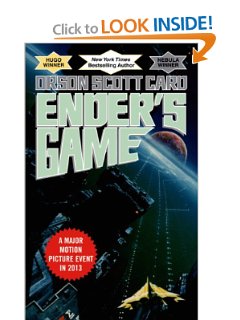
enders game orson scott cardThe award-winning author of science fiction and fantasy, Orson Scott Card is one of the guru’s whose books on writing have shaped my approach to not only my own work, but how I look at the works of others.  Uncle Orson, as he refers to himself, has a fabulous website with many links to writing seminars, Hatrack River. Orson puts himself out there with his political and religious views, but that doesn’t detract from the fact that he KNOWS about writing and how to write a good, readable book.

Orson’s wife is his first-reader. He has a list of questions that he asks his wife to answer in regard to his work, and the way those questions are phrased is interesting. I now use those same questions and so do my two writing groups when we are PRIVILEGED to be first readers of an author’s cherished manuscript.  This is the list as I have it in my own files, tailored to my own work:

Five Questions for The Wise Reader who is evaluating my tale:

1. Were you ever bored? Please tell me where it became slow and hard to stay with it.

2. What did you think of the main character _______________________? Of ____________________? Of _________________________?

3. Was there anything you didn’t understand? Is there any section you had to read twice? Is there any section you became confused?

4. Was there anything you did not believe? Any time you said ‘Oh come on!”

5. What do you think will happen to the characters now I am done telling their tale. What are you still wondering about? 

My goal is to eliminate any areas of boredom, implausibility and cliché and I need your help to do so!

I think that writers grow when another eye is on their work. Of course it is an uncomfortable thing to have a whole section pointed out as being repetitive and possibly irrelevant, but it’s better to hear it from trusted friends before you publish than to never know why you keep getting rejections. Agents and editors rarely have time to tell hopeful authors why their work isn’t acceptable. This is why they use the dreaded form-letter-of-rejection.

outhouse at lake bernardHaving received enough of these to wallpaper an outhouse, I can tell you honestly that we aspiring authors are left to struggle on our own and learn the craft of writing as well as we can. This means we take courses if we can afford them or we avail ourselves of the very good education we can receive via the internet.

It also means we must ask others to look at our work. Local writing groups are the best places to meet people you can trust. Perhaps you’re not a member of a writing group and you want to become involved in one, but you are afraid of having your work torn to shreds. This is a real possibility, but there are MANY groups in every community, and quite a few will have the same rules as my group does. Attend several meetings as an observer before you commit to bringing any of your work. Once you see how they treat each other’s work you will know what you can expect from them.

Treat others the way you want to be treated, regardless. Don’t let the occasional bully stop you from growing and achieving your dream.

And this brings me back to where I started–trying to take an idea as it was laid down in the first draft, tell the story and yet show the action without going off the rails in either direction–showing OR telling.  As a reader I cut my teeth on Louisa May Alcott and J.R.R.Tolkien. They were authors who knew how to TELL a story and I lived it as they told it. Nowadays it takes a special sort of reader to enjoy classics as they were originally written, because they were rife with telling and not showing.

The second draft is much easier when it comes to laying out the action.  In the first draft I know what is supposed to happen at a given point, but I don’t always know how to show it, so I have a conversation that tells what happened. In the second draft I take those conversations out and replace them with the event.

Now I must have my characters go forth with their swords and kill me a dragon. We’re done talking about it boys! Show mama what ya got!

7 Comments

Filed under Adventure, Battles, Dragons, Humor, Uncategorized, Vegan, writer, writing