Category Archives: Fantasy

Essays–the vegan discusses Bacon and other meaty reads

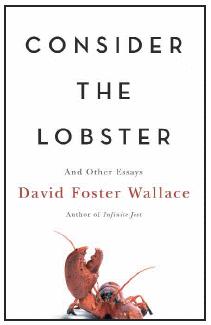
consider the lobsterWe have talked a lot about fiction and writing novels as well as short stories. You might think that outside of journalism and blogging there isn’t much left for an author. But there is another area of writing that we’ve all heard of but don’t often think about. They are Essays.

Essays are not just that bane of every school child’s existence–essays are where some of the best works of western literature can be found.

We shall go to the fount of all knowledge, Wikipedia, and ask the holy guru “what is an essay”: “Essays have been defined as “prose composition with a focused subject of discussion” or a “long, systematic discourse”.

Well–that was distinctly un-enlightening.

In her introduction to The Best American Essays 1988, Annie Dillard claims that “The essay can do everything a poem can do, and everything a short story can do—everything but fake it.”

The word essay also means to attempt–and why this meaning is important will emerge later.

But let’s take a look at essays, starting with Sir Francis Bacon, renaissance author, courtier, and father of deductive reasoning. The life and works of this English essayist and statesman had a major impact in his day and still resonate in modern literature. Essayes: Religious Meditations. Places of Perswasion and Disswasion. Seene and Allowed (1597) was his first published book.

The 1999 edition of The Oxford Dictionary of Quotations includes  91 quotations from the Essays. No one gets that many quotes unless his work has struck a chord with centuries of readers.

  • “Knowledge itself is power.”
  • “Riches are a good handmaid, but the worst mistress”
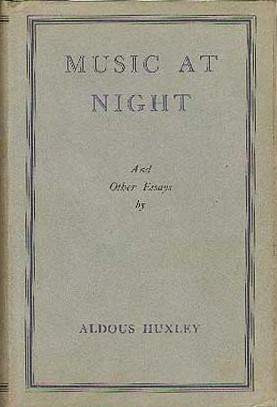
MusicAtNightAldous Huxley‘s book Jesting Pilate, an Intellectual Holiday had as its epigraph, “What is Truth? said jesting Pilate; and would not stay for an answer” quoted from Bacon’s essay “Of Truth”.  Huxley himself was a brilliant essayist and, according to Wikipedia, he defined essays in this way: “essays belong to a literary species whose extreme variability can be studied most effectively within a three-poled frame of reference”. These three poles (or worlds in which the essay may exist) are:

  • The personal and the autobiographical: The essayists that feel most comfortable in this pole “write fragments of reflective autobiography and look at the world through the keyhole of anecdote and description”.
  • The objective, the factual, and the concrete-particular: The essayists that write from this pole “do not speak directly of themselves, but turn their attention outward to some literary or scientific or political theme. Their art consists on setting forth, passing judgement upon, and drawing general conclusions from the relevant data”.
  • The abstract-universal: In this pole “we find those essayists who do their work in the world of high abstractions”, who are never personal and who seldom mention the particular facts of experience. (end quote)

Essays offer an author the opportunity to use prose to expound ideas and values. Michel de Montaigne (1533–1592) was the first author to describe his work as essays–by which he meant attempts. He used the term to characterize these short pieces as “attempts” to put his thoughts into writing. Montaigne’s essays grew out of his work that was then known as “commonplacing”:  published books that were essentially scrapbooks filled with items of every kind: medical recipes, quotes, letters, poems, tables of weights and measures, proverbs, prayers, legal formulas. Think of them as mini-encyclopedias.

Sir Francis Bacon and Aldous Huxley are two men whose works shaped modern literature and they did it though essays.

I highly recommend reading essays as a way to expand your imagination. Essays offer us ideas, philosophical, sociological, and ask us to examine our values.  This examination of the world through the eyes of essayists offers us many insights which will make their way into our own work in ways both seen and unseen, such as Huxley’s reference of Bacon’s work.

Some contemporary essayists I have read and who left an impression on me (some good, some bad) are:
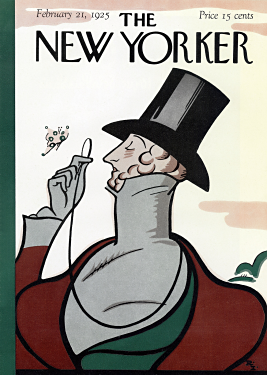
Original_New_Yorker_coverJohn McPhee, The Search for Marvin Gardens published in the September 9, 1972 issue of The New Yorker

Norman Mailer, Advertisements for Myself (published by G.P. Putnam’s Sons in 1959)

David Foster Wallace, “Consider the Lobster” (originally appeared in Gourmet, 2004)

George Saunders, “The Braindead MegaPhone” (Essays by George Saunders) (published by Riverhead, 2007)

Norman Mailer was definitely not my cup of tea, but he might be yours. Great writing is not always comfortable, but it always challenges your view of the world. I still didn’t like it.

Essays most frequently appear in magazines, so that is where to look for awesome contemporary work by today’s best-known authors of mainstream fiction–and much of it is sitting around in waiting-rooms the world over. If you fly Alaska Airlines (as I usually always do) take a look at that magazine they provide you with. You will find essays by authors like Scott Driscoll.

Essays are also frequently referred to as “Creative Non-Fiction” which sounds like an oxymoron–after all, when we are growing up “creative truthing” was called “lying.”  Get creative with your ideas and philosophies–put them in an essay.
Comments Off on Essays–the vegan discusses Bacon and other meaty reads

Filed under Humor, Literature, Publishing, Uncategorized, writer, writing

Is it damn fool, damnfool, or damned fool?

colloquialism memeOne of the more interesting things about being an editor is the amazing amount of time you spend stopping what you are doing and doing a little research. This is especially true if you are editing a piece that has a lot of colloquialisms in it.

Fortunately, some colloquialisms have made it into the Webster’s Dictionary, and the rest are out there on the internet somewhere.

Let’s consider the question of if we mean damn fool, damnfool, or damned fool:

According to the Urban Dictionary

  • A person who is extremely foolish. Their actions are not only irresponsible to themselves, but can possibly be harmful towards others.
  • If a guy tries and talk you out of using a condom, he is a damn fool. (You can’t make this stuff up–you have to go to the internet for it.)
  • Did you see that damned fool? He was swerving all over the road. (end quoted text)
And just for fun, lets see what Wiktionary has to say:
  • damn fool (adjective)
  • damnfool 
  1. (informal) Contemptibly foolish. (end quoted text)
He was a damned fool.

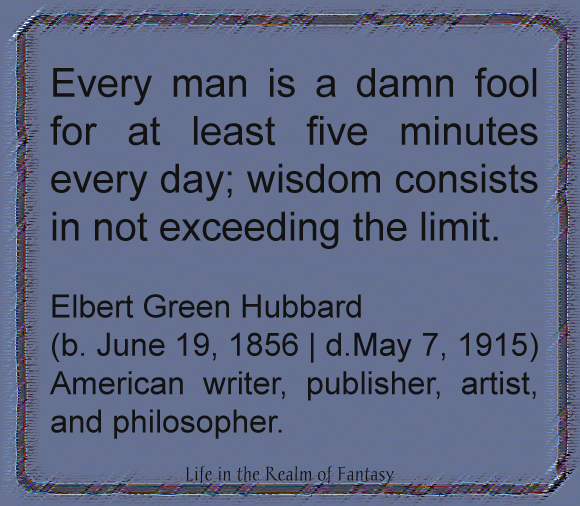
Ellbert Hubbard memeHow I see it:

  1. He was a damned fool. (I just cursed him to hell.)
  2. He was a damn fool. (He was contemptibly foolish)
  3. He did a damnfool thing. (He was contemptibly foolish and I will curse him to hell.)
Now this can be tricky if you are unsure which of these damnfool things the author meant, so this is where I insert a comment asking the author what kind of a damned fool she is writing about.
.
What other fun little “OMG I have to stop and look this up” things do I play with when I should be working?
  • I love looking up Pagan rituals, or indigenous peoples’ religious rituals.
  • I love anything to do with history, and exact dates.
  • Ooh! Ooh! Let me look it up on a map!
Yep–looking things up is part and parcel of the fun. I’m just not as keen on looking up where to properly place commas–the rules make my head hurt.
 .
So let’s talk commas and where to stick ’em, or better yet, where NOT to stick ’em. I found a wonderful website that has a handy-dandy list of comma don’ts phrased in simple language that did not make my eyes go numb: The Proper Care & Feeding of Commas
 .
chicago manual of styleImproperly installed commas can wreak havoc in a paragraph. This is because they are punctuation: “…the act or practice of inserting standardized marks or signs in written matter to clarify the meaning (of a sentence.)” (quoted from Google)
.
Commas are there to separate clauses and to make sentences understandable. Consistently used according to the accepted rules, commas make it so that every English-speaking reader understands what you have written. We don’t put them in to indicate to the reader where we pause or take a breatheveryone pauses and breathes differently and what makes sense to you will not make sense to someone else.
.
These are the same rules for everyone, which make our work understandable in Brisbane, Houston, London, Hong Kong or Seattle. But the rules in the Chicago Manual of Style (my go-to manual) are often ambiguously phrased and are hard to remember. SO, when checking on simple points, I love this website for a quick list of comma dos: Your Dictionary: Comma Rules
 .
Dialect and local sayings play a huge part in contemporary work–sometimes I get a piece that was written by a UK author.  Perhaps it is an Urban Fantasy and it will have all sorts of words I have never heard of: again, I go to Your Dictionary: Common UK Expressions. This  is also a problem with American dialects and local slangs–the internet is my friend! Texas-talk is “a whole nuther thang” and sometimes more difficult to follow than Cockney EnglishHowdy Get Rowdy
 .
It is an editor’s job to do a certain amount of research whenever a question arises in the manuscript to ensure his comments will help the author clarify ambiguous and hard-to-understand areas. Having fun surfing the internet looking up obscure and interesting facts is just one of the perks!
.
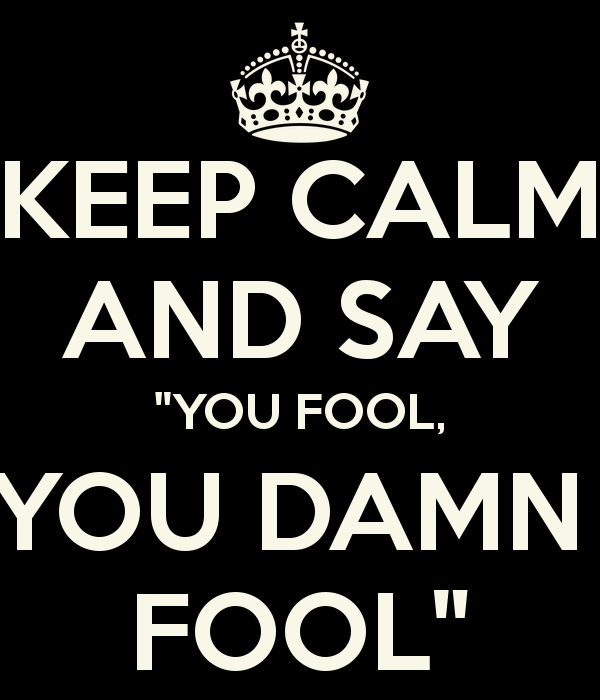
keep-calm-and-say-you-fool-you-damn-fool

2 Comments

Filed under Books, Fantasy, Humor, Literature, Publishing, Uncategorized, writer, writing

What did I just write? Labeling short fiction

Cover_of_the_WLT_March_2013_issue

World Literature Today, March 2013 issue published bi-monthly at the University of Oklahoma

When you write a lot of different short stories, you really get to explore all aspects of your creative mind. You never know what will fall out of your head, so you find yourself writing in a wide variety of genres, things you never thought you would find interesting.

But they consume you and you can’t stop writing.

So now you have this wonderful backlog of short stories to enter in contests and submit to various publications–but now you find that this contest wants general fiction, and this one is fantasy. And this one is sci-fi only!

Dude–how do I know what tale to send to who?

If your work is nonfiction, it’s no problem, because your work is targeted to a magazine with a specific readership, so the sub-genre will be readily apparent and where you should submit it was likely clear the day you decided to write it.

Where this gets dicey is when you write short fiction with no specific contest or magazine in mind. When you sit down to write a short story with an open mind, random ideas flow and because you are working within the limits of 3000 to 7000 words, your stories are creative and stretch you. But they will be widely different from your normal work, and will not always be in a genre you can easily identify. You have all this work, but no idea where to submit it.

TheJoyLuckClubMainstream (general) fiction–Mainstream fiction is a general term publishers and booksellers use to describe works that may appeal to the broadest range of readers and have some likelihood of commercial success. Mainstream authors often blend genre fiction practices with techniques considered unique to literary fiction. It will be both plot- and character-driven, and may have a style of narrative that is not as lean as modern genre fiction, but is not too stylistic either. The prose of the novel will at times delve into a more literary vein than genre fiction, but the story will be driven by the events and action that force the characters to grow.

BelovedNovelLiterary Fiction–Literary fiction tends to be more adventurous with the narrative, with the style of the prose taking a prominent place. Stylistic writing and the exploration of themes and ideas form the substance of the piece. Writer’s Relief Author’s Submission Service defines literary fiction as “…fiction of ideas. While the story must be good, emphasis on action is not often as important as emphasis on the ideas, themes, and concerns of the book. Literary fiction tackles “big” issues that are often controversial, difficult, and complex.”  (end quoted text)

Science fiction–Wikipedia says:  “Science Fiction  is fiction dealing with imaginative content such as futuristic settings, futuristic science and technology, space travel, time travel, faster than light travel, parallel universes and extraterrestrial life.” BE WARNED: the internet is rife with purists and impurists in the sci-fi field, snobs and folks with their heads up their anachronisms. Anyway, if you use magic for any reason you are NOT writing any form of sci-fi.

Parafaith_war_coverHard Sci-fi is characterized by rigorous attention to accurate detail in the physics, chemistry, and astrophysics. Emphasis is placed on accurately depicting worlds that more advanced technology may make possible. Soft Sci-fi is characterized by works based on social sciences such as psychology, economics, political science,sociology, and anthropology.

Other main sub-genres of Sci-fi include: Space-operasCyberpunk, Time Travel, Steampunk, Alternate history, Military, Superhuman, Apocalyptic and Post-Apocalyptic.

The main thing to remember, is this–Science and Magic cannot coexist in the Genre of Science Fiction. The minute you add magic to the story, you have Fantasy.

Fantasy: Wikipedia says: “Fantasy is a genre of fiction that commonly uses magic and other supernatural phenomena as a primary plot element, theme, or setting. Many works within the genre take place in imaginary worlds where magic and magical creatures are common. Fantasy is generally distinguished from the genres of science fiction and horror by the expectation that it steers clear of scientific and macabre themes, respectively, though there is a great deal of overlap between the three, all of which are sub-genres of speculative fiction.” 

I’ll be truthful–fantasy has its share of snobs and damnfools when it comes to defining the sub-genres:

Lord Fouls BaneHigh fantasy–High fantasy is defined as fantasy fiction set in an alternative, fictional world, rather than the real, or “primary” world, with elves, fairies, dwarves, dragons, demons, magic or sorcery, wizards or magicians, constructed languages, quests, coming-of-age themes, and multi-volume narrative . Often the prose is more literary and the primary plot is slowed by many side quests. Think William Morris and J.R.R. Tolkien.

Epic Fantasy–These stories are often serious in tone and epic in scope, dealing with themes of grand struggle against supernatural, evil forces. Epic fantasy shares some typical characteristics of high fantasy includes fantastical elements such as elves, fairies, dwarves, dragons, demons, magic or sorcery, wizards or magicians, constructed languages, quests, coming-of-age themes, and multi-volume narratives. Tad Williams’s Memory Sorrow and Thorn is classic Epic Fantasy.

Paranormal Fantasy–Paranormal fantasy often focuses on romantic love and includes elements beyond the range of scientific explanation, blending together themes from all the speculative fiction genres. Think ghosts, vampires, and supernatural.

Urban Fantasy– can take place in historical, modern, or futuristic periods, and the settings may include fictional elements. The prerequisite is that they must be primarily set in a city.

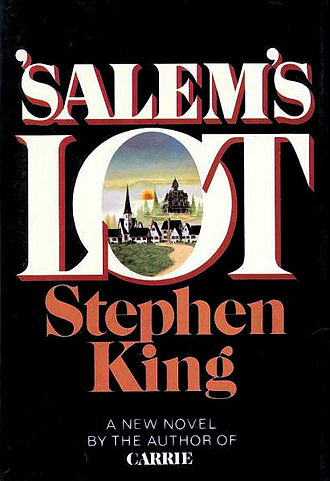
330px-SalemslothardcoverHorror–Wikipedia says “Horror fiction, horror literature and also horror fantasy are genres of literature, which are intended to, or have the capacity to frighten, scare, or startle their readers by inducing feelings of horror and terror. Literary historian J. A. Cuddon has defined the horror story as “a piece of fiction in prose of variable length… which shocks or even frightens the reader, or perhaps induces a feeling of repulsion or loathing.

Romance– Novels of this type of genre fiction place their primary focus on the relationship and romantic love between two people, and must have an “emotionally satisfying and optimistic ending.”

Now that you know what the genre of your story is, you can seek out magazines and contest looking for that sort of work. Choose carefully who you submit your work to, carefully follow their submission guidelines, and only submit the work you have that best fits what they publish.

Never submit anything that is not your best work, and do not assume they will edit it, because they won’t. And let’s be real–no one will even consider publishing work that is poorly written, sloppily formatted, and generally unreadable.

Comments Off on What did I just write? Labeling short fiction

Filed under Books, Literature, Publishing, writer, writing

Crafting the narrative: the potty-mouthed vicar

Portrait of Vsevolod Mikhailovich Garshin by Ilya Repin

Portrait of Vsevolod Mikhailovich Garshin by Ilya Repin PD|100 via Wikimedia Commons

Look at poor Vsevolod Mikhailovich Garshin. The artist immortalized him at the unfortunate moment he realized he was faced with a gazillion hours of searching for overused words in his manuscript–and all of them in Russian.

Heh heh.

I wrote a post on this subject three years ago, but it’s time to  dust it off and play with it again. Overused words can be fun if done right:

Mark Twain said, “Substitute “damn” every time you’re inclined to write “very”; your editor will delete it and the writing will be just as it should be.”

Well now, we could have some fun with that!

Think of how often some beginning authors use the word very in their work:

“We are doing very well, thank you,” replied the vicar. “The weather is very nice, and the food  is very good.” 

Let’s do as Twain suggests and see what happens:

“We are doing damn well, thank you,” replied the vicar. “The weather is damn nice and the food is damn good.”

That was fun. The word ‘damn’ leaps out at you, because you don’t really expect it. I personally enjoyed replacing ‘very’ with ‘damn.’  But, hilarious though it is to give the vicar potty-mouth, in reality it’s unnecessary. Simply eliminating ‘very’ and not replacing it with anything goes a long way toward improving it:

“We are doing well, thank you,” replied the vicar. “The weather is nice and the food is good.”

Some times we repeat certain words and phrases for emphasis. This article is not about using repetition when crafting narrative. Instead, we are thinking about words that are overused, and which we can often do without.

In our rough drafts we overuse certain words because we are flying along and they are easy–they say what we want and we can keep on moving.

But in the second draft, we must look for them. Let take the word ‘very.’

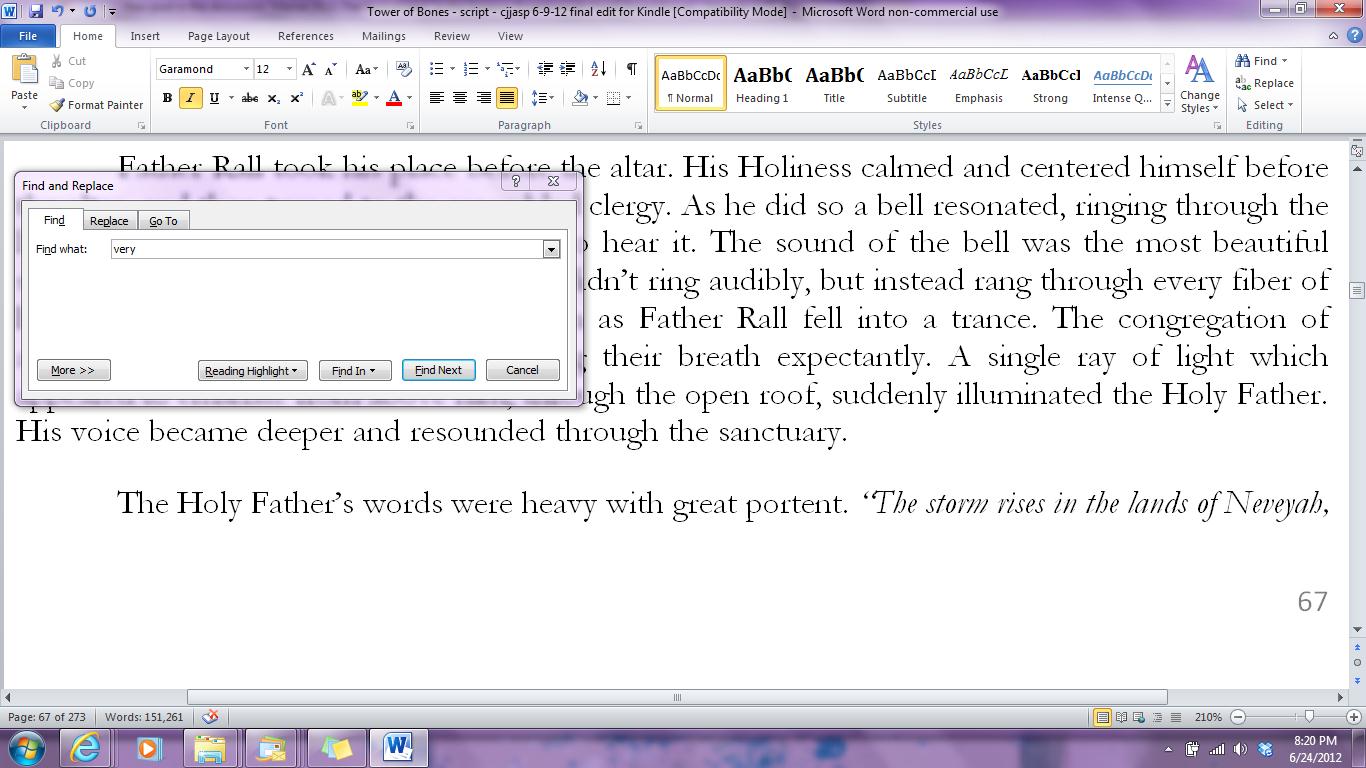
Once you are finished with your first draft, do what is called a global search – in Microsoft WORD you click on the ‘Home’ tab, and at the far right hand side click on ‘Find,’ OR press the ‘Ctrl’ key and the ‘F’ key at the same time.  This will open the ‘find and replace’ menu:

find graphics

In the ‘find and replace menu, type the word ‘very’ and click on ‘find next’.  The word ‘very’ will be highlighted in blue, and you can delete it.  I don’t recommend doing ‘replace all’ with any overused modifier, because you will create more problems than you can imagine!  Look at each individual instance of the word, and either delete it or change it to a stronger word.

Deleting them or changing to a stronger word will help you grow as writer.  You will begin to think about your sentences and stretch your vocabulary.

Next do the same with ‘that’ and ‘had.’ These are words  we all use too freely in our first draft, and until an editor pointed it out to me, I had no idea how they weakened my work. They are good words, used infrequently and only when another won’t do the job.

Here is a list of words that can appear with great frequency in your rough drafts, some of which are considered ‘tired.’ Some of these words can be made into contractions to eliminate wordiness. Some can be cut altogether, and some will need to stay. However, some of these words are ‘telling’ words, and we want to avoid that wherever possible. Look at each instance and make that decision.

  • about
  • am
  • are
  • bad
  • beautiful
  • big
  • could
  • did
  • fine
  • good
  • great
  • had
  • has
  • have
  • is
  • look
  • looked
  • nice
  • quite
  • seems
  • so
  • some
  • that
  • then
  • think
  • very
  • was
  • well
  • went

We all use these to excess in our rough draft, because we are laying the roadbed of the superhighway that is our book. The words we spew at this point are the framework we are going to build the true story around, the story that was in our heads, but that the rough draft doesn’t do justice to.

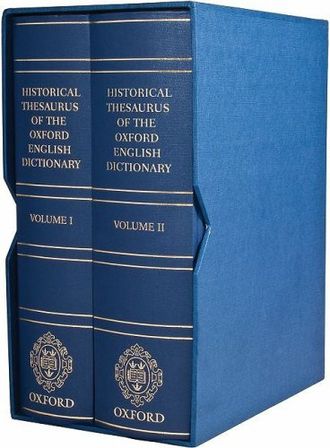
Historical_ThesaurusThis is where our thesaurus comes in handy. We need to express the thoughts our overused words evoke, but we don’t want to repeat them over and over. When a word seems to be cropping up with great frequency, try using the global search option. It will tell you how many instances of the word appears in your manuscript, and you might be surprised.

Highlight the word and right-click on it. A pop-up menu will appear. From that menu, choose ‘synonyms.’ Click on that, and a list of words with similar meanings will appear. If you need more than can be found in that list, click on ‘Thesaurus’ (at the bottom of the list) or google the word and add ‘synonyms’ to your search.

Consider my recent experience with gaped–a beta reader pointed out that I had my characters gaping at each other far too regularly. I had to go through it and have them stare, exchange glances, or simply look away. In several instances, I cut that sentence because it wasn’t really needed.

It can be difficult to see the words you have overused when it is your own work. But you can run your ms through a free, online  program like Word Count Tools and that will give you a heads up on how many times you have used each word.

2 Comments

Filed under Books, Literature, Publishing, Self Publishing, Uncategorized, writer, writing

But what about poetry?

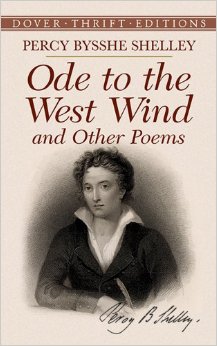
ode to the west wind-shelleyI love poetry because I love the many ways words can be manipulated on a blank page. To me, poetry is something beautiful and visually simple, a thing that looks like it should be uncomplicated. But nothing could be farther from the truth.

I guarrantee you, this post will not scratch the surface of why poetry is so much more than naughty limericks (which I do know a great many of and which are quite hilarious).

Bad poetry can be written by anyone, but writing great poetry takes a certain genius–I don’t consider myself a poet, although I do sometimes feel compelled to attempt poetry.

Poetry doesn’t always rhyme and it frequently involves complicated aesthetics that are both auditory and visual. This is because the reader may not always be reading the poem aloud, and so the visual art of the piece comes into play.

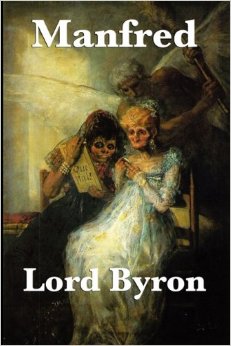
Sometimes, poetry is long, epic in actuality. Consider Manfred, by George Gordon, Lord Byron (From Wikipedia, the font of all knowledge): Manfred: A dramatic poem is a poem written in 1816–1817 by Lord Byron. It contains supernatural elements, in keeping with the popularity of the ghost story in England at the time. It is a typical example of a Romantic closet drama. (end quoted text)

Byron himself referred to his works as “closet dramas,” since they were intended more for the theater of the mind than the actual theater.

manfred-lord byronExcerpt from Act III, scene I of Manfred

There is a calm upon me–
Inexplicable stillness! which till now
Did not belong to what I knew of life.
If that I did not know philosophy
To be of all our vanities the motliest, 10
The merest word that ever fool’d the ear
From out the schoolman’s jargon, I should deem
The golden secret, the sought ‘Kalon,’ found,
And seated in my soul. It will not last,
But it is well to have known it, though but once.

And a “theater of the mind” is what Byron’s work sparks in me.

Words are bent and shaped by poets to evoke meanings, bent and formed into precise shapes. We novelists and writers’ of short fiction have the luxury of creating a long narrative. In poetry, space is intentionally limited by the author, forcing the the poet to write within narrow constraints. Thus, allegory, allusion, and indirection are common motifs in poetry.

Traditional forms have precise constraints: Sonnets are fourteen lines, following a set rhyme scheme and logical structure. Sonnets use iambic pentameter, which is characterized by the familiar “da dum da dum da dum da dum da dum” cadence of five sets of syllables.

Even in free verse, one must pay attention to the meter, the basic rhythmic structure  of a piece, the rhythm and cadence of the syllables. A clear example of this can be found in Walt Whitman’s poems, where he repeats certain phrases and uses commas to create both a rhythm and structure.

I love the poem,  When Lilacs Last in the Dooryard Bloom’d, written in free verse in 206 lines. Whitman used many of the literary techniques associated with the pastoral elegy. He composed it during the summer of 1865, a period of profound national mourning. The country was reeling in the aftermath of the assassination of President Abraham Lincoln, that occurred on April 14, 1865.

Despite the poem being an elegy to the fallen president, Whitman neither mentions Lincoln by name nor does he mention the circumstances of his death. Instead, Whitman used allegory–symbolic imagery:  the lilacs, a falling star in the western sky which was the planet Venus, and a shy bird, the hermit thrush. It is most definitely an elegy because he employed what scholars consider the traditional progression of the pastoral elegy: moving from grief toward an acceptance and knowledge of death.

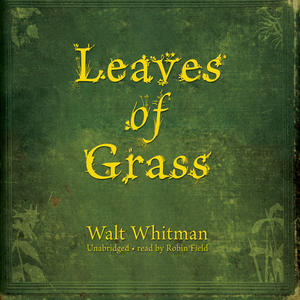
It is is a beautiful poem, and is one I often return to. Lines 18-22 of Whitman’s leaves of grass-whitman When Lilacs Last in the Dooryard Bloom’d:

In the swamp in secluded recesses,
A shy and hidden bird is warbling a song.

Solitary the thrush
The hermit withdrawn to himself, avoiding the settlements,
Sings by himself a song.

And how has poetry evolved into the 21st century? For one unique direction of evolution check out the works of Seattle poet, Bill Carty on Pinwheel

For more famous contemporary poets, check out 31 Contemporary Poets You Need to Read.

I have always been a fan of the classic masters: Dickinson, Browning, the Brontë sisters, Byron, Shelley, Frost, Whitman. Wordsworth, and my beloved Yeats, among many.  I was raised in a home with their works proudly displayed on the bookshelves in the living-room, massive tooled-leather volumes from Grolier, smelling of romance and ideas.

I didn’t always understand the works of the great poets, and I still don’t–but I love them.

I leave you with a rhyming poem, The Song of the old Mother by William Butler Yeats:

I rise in the dawn, and I kneel and blow
Till the seed of the fire flicker and glow;
And then I must scrub and bake and sweep
Till stars are beginning to blink and peep;
And the young lie long and dream in their bed
Of the matching of ribbons for bosom and head,
And their days go over in idleness,
And they sigh if the wind but lift a tress:
While I must work because I am old,
And the seed of the fire gets feeble and cold.

4 Comments

Filed under Books, Fantasy, History, Literature, Publishing, Self Publishing, Uncategorized, writer, writing

Why indies should write short stories

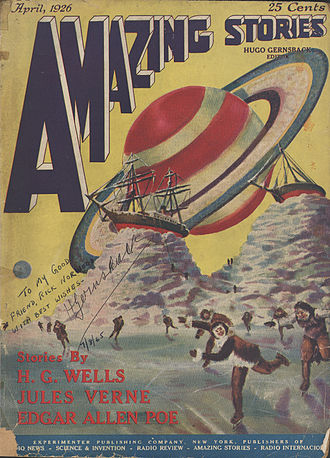
Amazing_Stories,_April_1926._Volume_1,_Number_1Some of the work that moved me most as a reader have been short stories. It is through writing short stories that people like Anne McCaffrey and Isaac Asimov first began to find acceptance in the publishing community.

Magazines focusing on speculative fiction were popular and at that time, there weren’t many authors writing in that genre. People didn’t have the internet, but they did have limited free time and short attention spans.

Magazines offered surprisingly high quality short fiction in lengths that fit into the busy lifestyle of the time.  My father subscribed to four magazines as did my mother. Magazines or books would arrive in our mailbox each week, as my parents were also members of the Science Fiction Book Club and the Double Day Book Club. This meant that besides the eight magazines, four new hard-cover books would arrive at our house every month.

Frequently, those books were anthologies of short stories.

Times have changed and so has the publishing industry. But writing short stories is still the way to get your foot in the door and not only gain visibility, but you will grow as a writer. Magazines are springing up all over the internet, and they are accepting submissions.

It is a good idea to begin putting together a collection of short pieces in a variety of genres and in as wide a range of topics as you can think of.  The following is a list of  on-line sci-fi/fantasy magazines, and many in every other genre are also accepting submissions:

Apex Magazine (submissions re-open in September)

Fantasy Scroll Magazine

Strange Horizons 

Challenger 

Space and Time Magazine 

Interzone 

Asimov’s Science Fiction 

The Magazine of Fantasy & Science Fiction

Analog Science Fiction and Fact

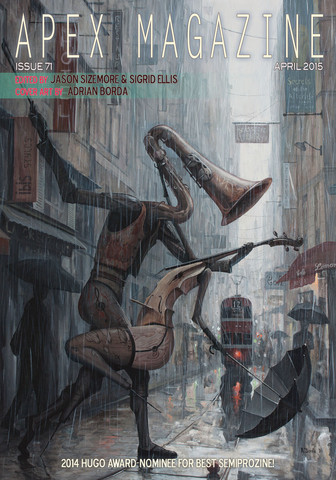
 ApexMag04_11b0889b-3b61-4c44-9a8d-9b2e89347e47_largeNow, I hear the Ghost of Rejections Past wailing in the background “But what if I get rejected?” Rejection happens. I could wallpaper the inside of an outhouse with them. Step back, take a good look at the story, and if you still think it is your best work, shop it to a different magazine. The ones I’ve listed are only the tip of the iceberg–there is opportunity out there for indies to gain both visibility and credibility by publishing short works through traditional routes.

The thing is, magazines are not the only reason you need a backlog of short stories–consider CONTESTS. Many are free and have reputable histories. The Write Life posted this article on 27 Free Writing Contests.

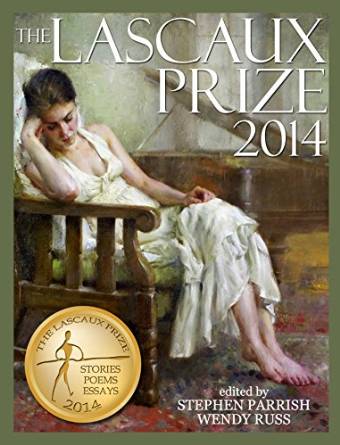
Not all contests are free, and not all contests are reputable. Exercise “due-diligence” here. I enter the Lasceaux Review contest every time a new one pops up, simply because it is highly reputable and is one of the most friendly to indies, and has a reasonable entry fee, usually $10.00.

lasceax prizeYes, that is cheap, and I know that entering contests can be far more expensive. I hear you asking if you must pay  to enter and you can’t be guaranteed a prize, why should you do it?

Writing chops. Because you must write to the parameters of the contest, you develop your writing muscles each time you exercise them. Being forced to work within the confines of an arbitrary external limit forces you to become more creative if you are (as I am) of a naturally rebellious nature.

You have to use common sense here. If you can’t afford it, don’t enter that contest. Find one you can afford and see what you have that fits their needs. Every contest has rules and limits for the work they want to see in their submissions.

Writing short stories gets you writing  more: more often, more widely on a wide range of topics, and more creatively using a variety of style. Using and building these writing-chops can only grow you as an author.

8 Comments

Filed under Books, Fantasy, Humor, Literature, Publishing, writer, writing

Epiphany, and the Writers’ Conference

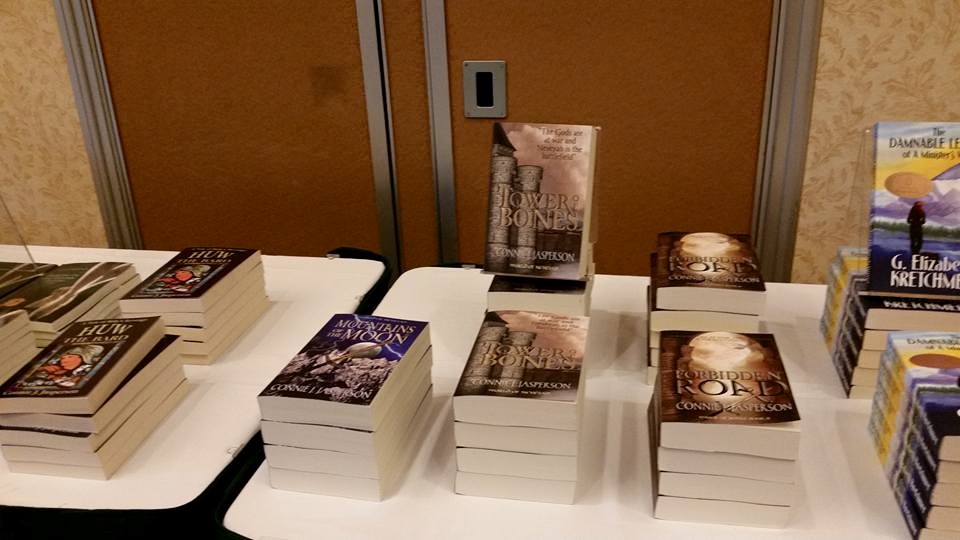
PNWA 2015 My Books in the Bookstore

Epiphany.

A sudden revelation.

A moment in time where suddenly you understand the why of a certain thing. For a writer this can mean the plot suddenly unthickens and we know what we need to do!

This often happens when I am in traffic and completely unable to put said revelation into practice, but hey, we go with what we have, right?

I had several such moments of glory while in Seattle at the PNWA 2015 Writers Conference this last week. Fortunately I was able to immediately put my chicken-scratched notes into a more readable form via the little Android tablet, and these flashes of knowledge will soon be causing some positive changes in my current works-in-progress.

Over the next few months a lot of what the speakers and teachers had to say will filter through my mind and into this blog, but first I need meditate on it until I know what their insights mean to me on a practical level.

Better You Go Home Scott DriscollI attended two seminars offered by Scott Driscoll, who cuts right to the chase and explains his ideas clearly. One was on understanding your characters’ values and how the evolution of those core values fundamentally drives the story, and the other was on the inciting incident. Those two seminars dovetailed beautifully, and I had my first “I know what I need to do” moment after leaving the one on identifying and understanding the values (or ethics) your characters hold dear. If you ever get a chance to go to a seminar offered by him, I would recommend you do it.

Another speaker whose seminar really motivated me was offered by Bill Carty, on the intersection of ‘poetry and the everyday’ as a means for generating our own poems. (Yes, I have a dark side–I write poetry when no one is watching.)

I listened to my good friend, Janet Oakleyspeaking on a panel about bringing the past to life, when writing historical fiction. That too had an “ah hah!” moment.

Bharti Kirchner gave a seminar on the five essential elements of a short story, and she is an intriguing speaker. As you know, I am a strong proponent of writing short stories as exercise, to develop your writing chops, and I came away from that class knowing how to organize my thoughts so that a short story will remain short, and not accidentally turn into a novella or an epic trilogy.

Doublesight--Terry PersunI wanted to attend the seminar on using language with intention that was offered by Terry Persun and his daughter, Nicole Persun, but I had a conflict and had to choose which class served a more immediate need, so I was unable to attend it. But all is not lost–I will be purchasing the download of that seminar. I had several wonderful conversations with Terry and he will be writing a guest post for this blog, perhaps on that subject.

Instead of that, I attended a class offered by Lindsay Schopfer on identifying the sub-genres of science fiction and fantasy so that when a book is published you can best identify your intended target audience. This is absolutely critical because when you go to publish, your publishing platform will always ask you what your “BISAC code” is. BISAC is an acronym for Book Industry Subject and Category subject headings, which are a mainstay in the industry and required for participation in many databases.

The Beast Hunter, Lindsay SchopferKnowing if you are writing Epic Fantasy or High Fantasy is critical when it comes to marketing your book to the proper audience, as die-hard readers of each sub-genre have strong feelings about what constitutes their favorite genre. Thus, there are certain tropes readers of those genres will expect, so proper labeling is critical if want your target audience to read your book.

Being able to immerse myself in learning the craft is absolutely wonderful, and I look forward to this conference every year. This year William Kenower  offered the final seminar of the event. Bill is an intriguing, energetic speaker who gets his listeners involved in what he teaching. His seminar on reconnecting with your confidence was quite appropriate for me, as I sometimes  listen to my inner critic and forget the joy I have in writing.

my sisters grave robert dugoniOther people spoke, Andre Dubus III and Robert Dugoni-two men with vastly different experiences and different styles of writing, and yet both had something to say that moved me in one way or another.  J.A. Jance, Nancy Kress , Elizabeth Boyle and Kevin O’Brien were on a panel that was fun to listen to.

If you are serious about writing, I highly recommend that you seek out and attend writing conferences. A great deal of good information can be found on the internet, but there is something about the networking and actually talking shop with the other authors that fires creativity and keeps the creativity flowing through the veins.

I suggest that you actively google writers’ conferences in your area, and see if you can find one that is affordable and offers sessions by respected authors in a wide variety of genres, and who are welcoming to authors who intend to go indie as well as those who hope to be traditionally published. It will be money well-spent.

An intriguing thing happened at this conference during the book signing event. A highly respected agent (who shall remain unnamed) stopped by my table and looked over my books. He picked up Tower of Bones, and leafed through it, checking out the cover and the graphics, and also the maps. Pausing, he asked if I was indie published, and I explained I was, through a publishing group, Myrddin Publishing. He then paid me the highest compliment ever–my books were “highly professional.”

That interaction proves how important it is to put your best work out there. When you do that, you can be proud to play on that not-so-level playing field.

2 Comments

Filed under Books, Humor, Literature, Publishing, writer, writing

Elements of the story: Conversation, gestures, and actions

My Writing LifeCreating memorable characters is the goal of all authors–after all, who would read a book if the characters are bland or uninteresting? But what is it that makes a character interesting? Is it just witty conversation?

That is surely a part of it, but think about the people you know. Picture the ones you like to spend time with. What is it about them that captured your interest in the first place? I’m not talking lovers here, so set the intangible, irresistible chemistry aside, for the moment.

Was it their gestures, their mannerisms that intrigued you before you got to know them? Something about them caught your interest, and you found a kindred spirit.

That is what we want to do for our characters.

And no, I don’t mean for you to inject an excess of flushing, smirking, eye-rolling, or shrugging into your story.

I want you to think natural: People don’t only use their faces to communicate. People’s bodies and faces are in constant motion, and that is how you want your characters to seem. You can do this in small, unobtrusive ways by visualizing your conversations and the character’s who are having them.

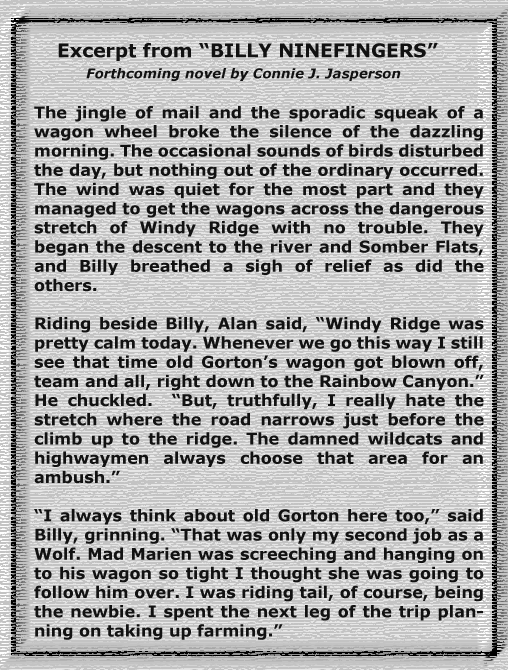
Consider this excerpt from one of my works in progress, Billy Ninefingers. These excerpts are from my rough draft and will be tightened up, but I am using them as the examples today.  This tale takes place in the world of Waldeyn, and Huw the Bard figures prominently in it, although not in the opening chapters. This conversation happens just before the first plot point. It is the calm before the storm and reveals some of Billy’s personality and his sidekick, Alan Le Clerk. It shows them as mercenaries and as people, and also shows their environment.

Conversation 1 Billy and Alan


Billy and Alan are clearly friends. It’s a sunny day and they are obviously wearing armor. Their conversation tells us they’re concerned about the trail they are on. Through that, we learn that world they live in is dangerous and people must hire guards to protect them from more than just highwaymen if they choose to travel. The three paragraphs of that conversation are all the reader needs to know about the work they do and the trail they are riding. That scene ends and the next scene  takes them and the merchant they are guarding to their destination, the dark, dirty town of Somber Flats.

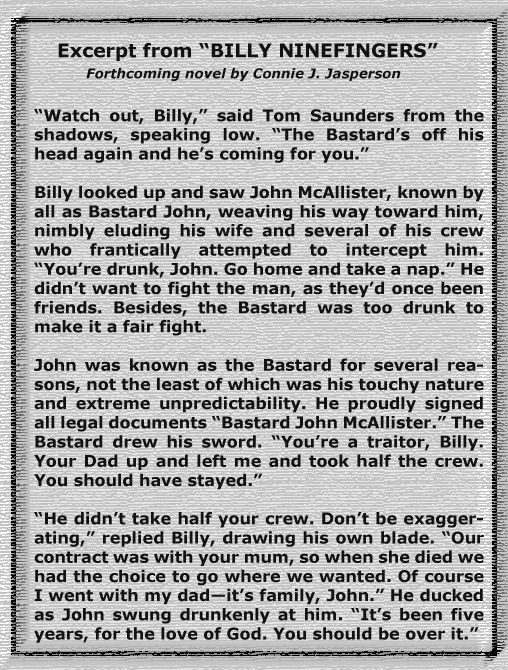
That is where we come to the lead-up to the inciting action. This is where we meet Bastard John, and it is one of the few times he will be in such a place that we can see who he is. The second plot point makes no sense unless the reader knows that the Bastard is an obnoxious bastard, and proud to be so-named.

Conversation 2 Billy and Bastard John


We know the Bastard is a bastard when he is drunk. We know he is capable of acting on any thought that passes through his alcohol-soaked mind. We also see that Billy has a sense of fair-play.

Picture your conversations as if your were there with them. People miss a few beats when they are speaking. They gather their thoughts and  speak in short bursts. They shift in their chair, or stand up, or wave a hand to emphasize a point. They turn, and they sometimes mumble.

And it is important to remember that every character’s mannerisms are individual, uniquely theirs. You, as the author visualize them this way, but it is your task to commit their personalities to paper, and that is where many authors fail.

Through physical actions and conversational interactions we make our characters knowable and likable (or not, as the case may be). Their actions also help to show the environment they exist in. Within the scene of the conversation, you have the opportunity to convey the setting and the mood of your characters.

Claude Monet Painting in his Garden, by Pierre-Auguste Renoir [Public domain or Public domain], via Wikimedia Commons

Claude Monet Painting in his Garden, by Pierre-Auguste Renoir [Public domain], via Wikimedia Commons

We use our words sparingly and with intention, painting the setting as if we were artists in the style of the  impressionists. With color and small hints a good author gives the impression of detail, offering the reader a framework for  to hang his imagination on.

When characters act and speak naturally within a clearly visualized impression of a setting, we as readers,  suspend our disbelief and become immersed in the story.

Comments Off on Elements of the story: Conversation, gestures, and actions

Filed under Fantasy, Literature, Publishing, Uncategorized, writer, writing

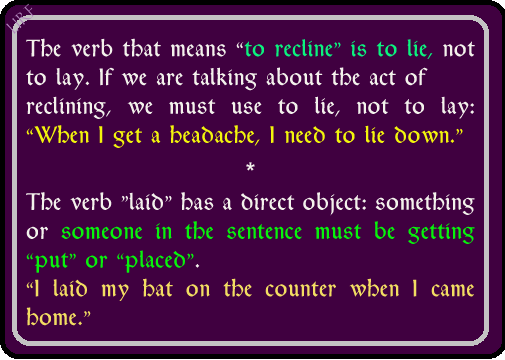
Lay, lie, laid

to lie means to restIs it to lay, to lie, or what? I want to get this right but these words can be a complicated morass of misery. It boils down to a simple concept: is it RECLINING  or was it PLACED THERE?

“Lay” is a verb meaning to put or place something somewhere. It has a direct object. Its principal parts are “lay,” “laid,” “laid,” and “laying.”

What the words refer to is the action: If you set it (object) there, it is laying there. Lay it there. Lay it on the pillow.

If it is resting or reclining, it is lying there. Lie down. Lying down. Lie down, Sally. (Clapton had it wrong? Say it isn’t so!)

The internet is your friend, and can teach you many things besides how to make cute kitty memes. Quote from the wonderful website Get it Write: The verbs to lie and to lay have very different meanings. Simply put, to lie means “to rest,” “to assume or be situated in a horizontal position,” and to lay means “to put or place.” (Of course, a second verb to lie, means “to deceive,” “to pass off false information as if it were the truth,” but here we are focusing on the meaning of to lie that gives writers the most grief.)

As another great resource, in his July 7th, 2015 post on this subject for Writers’ Digest,  Brian A. Klems gave us a useful chart:

Lay vs. Lie Chart


Infinitive    Definition         Present    Past    Past Participle    Present Participle


to lay      to put or place     lay(s)           laid     laid                     laying
something down

to lie     to rest or recline    lie(s)            lay      lain                     lying

“end of quoted text” 
Brian A. Klems is an awesome author and blogger. Check out his personal blog at The Life of Dad.

>>><<<

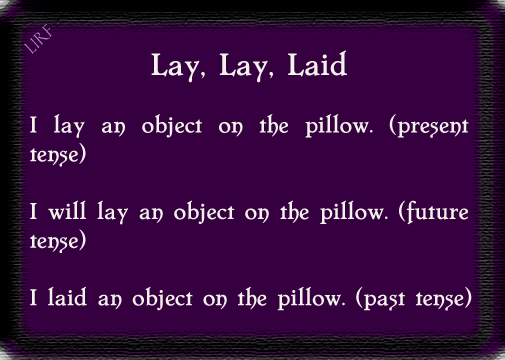
This is where things get tense: present, past and future.

A ring lay on the pillow. 

Lay, Lie, Laid

But I needed to rest:

LYING AS IN RESTING copy

So what this all boils down to is:

final comment lay laid

But just to confuse things:

A living body lies down and rests as is needed.

A dead body is cleaned up and laid out by other people,  if said corpse was important to them. However, after having been laid out, said corpse is lying in state to allow mourners to pay their respects.

5 Comments

Filed under Humor, Literature, Publishing, Uncategorized, writer, writing

Three audiobooks and why I liked them

First of all I love books. I’m the kid who was so desperate for books I would read the Encyclopædia Britannica  when the rainy Northwest summers got boring and I had read everything else. But now, beside writing, I freelance as a structural editor.

When I am editing for clients I don’t read, as it is hard to set aside my critical eye and just read for pleasure. I can’t go with out books, though, so when I am in editing mode, I rely on Audible Books to entertain me.

Three audio books that I heard over the last year really stand out. Two of them I would classify as literary fantasy and one is genre fantasy–but all are fantasy in the fullest sense.

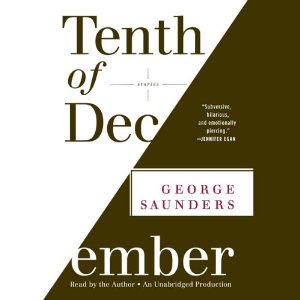
Tenth of December, George Saunders1. Tenth of December, written by George Saunders and also read by George Saunders.

Saunders has the ability to get inside each of his characters’ heads, showing them sharply as unique individuals. They aren’t always nice, and certainly not always moral as I see morality, but Saunders portrays them with such vivid strokes that you feel as if you understand their reasoning.

For me, the most powerful tale in this collection of stunning tales was “Escape from Spiderhead.” This sci-fi tale has an almost Vonnegut-like flavor. It is a stark journey into the depths to which we humans are capable of sinking in the pursuit of knowledge for the sake of knowledge. Where does punishment end and inhumanity begin? This story lays bare concepts regarding our view of crime and punishment that are difficult, but which are important to consider. The scenario is exaggerated, as it is set in a future world, but it exposes the callous view society has in regard to criminals and what punishment they might deserve.
.

George Saunders reads this book himself and he is an amazing narrator. This was an excellent, entertaining book to listen to, and I liked the audio book so much I bought the hard copy to take with me later this summer when I go on vacation.

Just so you know–I rarely buy hard copies of anything.

>>><<<

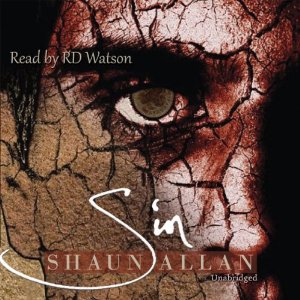
Sin audiobook coverI also listened to Sin, British author Shaun Allan’s masterpiece of stream-of-consciousness and fantasy, narrated by R.D. Watson. Allan breaks every rule of writing, and his work is powerful.

Sin is a dark, urban fantasy, written with a large dose of sardonic humor. We hear the tale from the man who was given the name ‘Sin Mathews’ at birth, but who goes by the name of Sin only, as the last name doesn’t matter; only the name which is the sum of his parts matters. R.D. Watson’s reading of Allan’s shining, witty, prose is moving and brilliant in every aspect. He gets into Sin’s head, and you are completely spellbound.

The atmosphere throughout is surrealistic, but it is well-balanced. I adore Allan’s lyrical, intimate style of prose, as in this series of images describing Sin’s disorientation, “History doesn’t relate whether Jonah, Gepetto, and Pinocchio sat around a table eating pizza, sharing stories of prophecy and puppetry while in the belly of the whale, but I thought that I could relate to being swallowed whole.”

Throughout the novel, Sin’s ruminations are self-mocking, and world-weary, yet naive and innocent.  He bears the guilt of the world, and suffers the unbearable pain of being the cause of so many deaths, but still he finds ironic humor in every situation. His sister, Joy, is grounded and guides him to the truth, but is not allowed to tell him anything.

Nothing is what it seems in this tale, and right up to the end, you are not sure which reality is real.

>>><<<

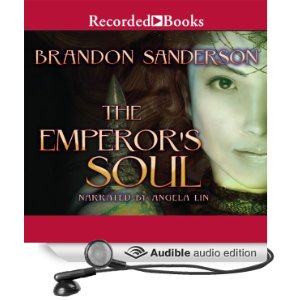
The Emperor's Soul - Brandon Sanderson. audibleThe Emperor’s Soul, by Brandon Sanderson and narrated by Angela Lin.

Shai is thief, but not just any kind of a thief. Shai has been trained to forge a replica of the original item to leave in its place. Her replicas are masterful. in many ways her replicas are better than the originals. The power of her work as she remakes her surroundings amazes Gatona, a man who holds her life in his hands, and every day he is more confused by her. This is not a love story–Gaotona struggles to understand why an artist of her caliber, who loves the craft as much as she does prostitutes her gift by making forgeries.
Two factions now control her fate. They have something she needs, and she has something they need, but for how long? The Emperor Ashravan’s condition has opened up new possibilities for some on the council, and they are ruthless. Shai is safe for the moment, but she knows her life hangs by a thread and only a miracle will save her.

In Shai, Sanderson has created a character who is compelling and completely believable. Shai is more than merely a forger, she is an artist.  She takes pride in her work, and rightfully so. The way she is portrayed is a departure for Sanderson, in that she is most definitely a woman, and she is the central figure. There is a strong sense of history to this tale, and the structure of their society is clearly drawn in only a few well-crafted words.

>>><<<

Audio books are great in the car, I think we all know that–but for me they are a way to access wonderful books when I am in too critical a state of mind to read for enjoyment. For my downtime I love to sit on my back porch and just listen to someone reading me a story.

Comments Off on Three audiobooks and why I liked them

Filed under Books, Fantasy, Literature, Publishing