Category Archives: #FlashFictionFriday

#flashfictionfriday: Christmas at the Drunken Sasquatch

Vampires have a sick sense of humor, especially Alfredo, although he pretends to be cultured. Just over a year ago he got me banned from here, by switching my orange juice for an orange soda… that dirty trick was more than embarrassing. Covering the cost of the damages to the scorched floor, replacing the furniture, and buying Sylvia Wannamaker a new coat ate into my hoard quite heavily.

Worst of all, I was banned from participating in November’s pool tournament.

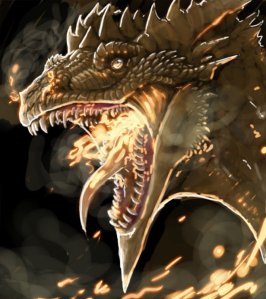
However, I’m a dragon. We like our revenge served up cold and well calculated.

The anniversary of my disgrace has passed, which would have been the obvious day for me to seek retribution. Most people have forgotten the whole incident.

But not me.

I know I look like any other old has-been, going on and on about the glory days. While that observation isn’t real flattering, it’s true. I drink more orange juice than is good for either of my livers, and I hang out here at the Drunken Sasquatch because I have nowhere else to go.

I don’t discuss it for obvious reasons, but during my years in the Middle East, Dan Dragonsworthy was far more than just a flying battle wagon. I spent a lot of time on covert missions, and one thing I learned was how to be patient, and how to spot the chinks in your opponent’s armor.

I’ve been watching Alfredo since New Year’s Eve when Bloody Bill finally lifted my punishment. I don’t intend to harm the old blood-sucker, but I’m going to give him a taste of his own medicine. There are substances vampires shouldn’t ingest, and Alfredo may have forgotten that.

A vampire tripping on chocolate is bad for everyone. I’d never do that, even to Alfredo. Fortunately, they don’t like the flavor of it. However, they do have a passion for maraschino cherries, which can cause problems for the weaker willed vampire since those fruity morsels of goodness are frequently found wrapped in dark chocolate. With one exception, the smart ones don’t succumb to temptation inside the Drunken Sasquatch, because Bloody Bill won’t tolerate that sort of behavior.

Most importantly for my purposes, vampires can’t tolerate coffee. On tiny amounts, they tend to pee themselves copiously, which the rest of us find hilarious. Vampires get quite huffy when their vampiric dignity is besmirched.

As if MY dignity meant nothing to me.

When you want to impress Alfredo, you buy him a jar of the special maraschino cherries from Italy, made with the best cherry liqueur. He can smell maraschino liqueur from anywhere in the room and, being a vampire, he lacks a conscience.

No maraschino is safe from Alfredo.

http://cookdiary.net/chocolate-covered-cherries/

The annual Christmas party and the gift exchange drives him mad. Every witch, wizard, or elf has a recipe for that most wonderful of traditional holiday treats, maraschino chocolate cordials. These kind friends are always generous with their gifts to those of us who lack their magical culinary skills.

It’s more than his old vampire heart can stand, and despite having received his own jars of cherries sans-chocolate, he takes incredible risks.

I’ll give Alfredo credit—he’s good. I’ve watched him sneak up behind Grandma and suck the cherries out of a box of cordials without getting his fangs dirty. She suspected it was him, but could never prove it. Fangs do leave holes, but it could have been any vampire.

It takes a brave (or desperate) vampire to mess with Grandma. I’d tell you to ask the Big Bad Wolf, but you can’t.

She’s wearing him.

So, anyway, last week, Grandma and I had a chat. I got on the internet and ordered the finest ingredients. They were delivered the day before yesterday, and she immediately got busy in the kitchen.

This year, one unattended box of cordials under the tree at the Drunken Sasquatch will have cherries in liqueur with unique centers. This particular batch will be vampire safe—no chance of accidental hallucinations here. Grandma created white chocolate shells filled with Cherry brandy, with a maraschino cherry floating in the middle. Each cherry is filled with a special coffee liqueur center.

It will be a joy to watch Alfredo try to deny his culpability in this year’s draining of the maraschinos as the evidence spreads around his feet.

cherry-suisse-advert-1969I hope vampire pee isn’t too acidic, although I’ve heard the stench is an excellent Zombie repellent, and no matter how you scrub, it’s impossible to get rid of the odor. Sylvia Wannamaker swears by it in a diluted form as a slug repellent in the garden, as using it there will turn your hydrangeas the brightest blue. They don’t make good cut flowers though, as they smell too bad to keep in the house.

I’m sure a pool of vampire urine won’t be as dangerous for the innocent bystanders as when he caused me to inadvertently belch fire in close quarters.

Come the day after this year’s Christmas party at the Drunken Sasquatch (even though his cash outlay won’t come near matching the damages I had to pay when he slipped me the Mickey) at least Alfredo will be out the cost of a new pair of boots. And if he can’t find a good drycleaner, he’ll be out the cost of replacing that gaudy, lace-trimmed, purple velvet suit he thinks is so stylish.

Grandma and I are both looking forward to this year’s party. Christmas could just become my favorite holiday.


Christmas at the Drunken Sasquatch, © 2016 Connie J. Jasperson, All Rights Reserved

No vampires were harmed in the making of this tale.
1 Comment

Filed under #FlashFictionFriday, Dragons, Humor

#flashfictionfriday: Scrofulous Mudd (reprise)

Scrofulous Mudd was first published here in May of 2016. The story itself was prompted by the first line. Once I had that, the rest of the story followed. 


Scrofulous Mudd was a dirty old man.

By that I mean he was an elderly man who sorted through the leavings in ancient privies and wrote highly boring papers detailing the history of what he uncovered. He kept himself moderately clean, and took baths every Saturday unless an additional effort was required, such as for his mother’s funeral.

I suppose his fascination with filth began with his elegantly disease-ridden name. His was a difficult delivery, and when the elderly volunteer came around asking about the new baby’s name, Maude Mudd was still a little out of it. A scholar of Roman Literature, what she had actually said was “Rogellus.”

The volunteer, a retired nurse of infectious diseases, had misunderstood her mumbled words. Thus, Scrofulous, or Scroffy, as he was known at school, was given a name difficult to live up to.

Young Scroffy never knew his father, nor was any father named on his birth certificate. He assumed his had been a virgin birth, as his mother had never said otherwise and to his knowledge she never had gentlemen callers.

In truth, Maude’s single night of passion with the Professor of Antiquities had occurred after both had consumed far too much sherry at a faculty mixer at the at the beginning of fall semester. Hung-over, embarrassed, and terribly disappointed by sex in general, she immediately accepted the offer of a research position at a University far, far away, in Scotland to be exact.

It wasn’t until several months later that she realized she had a little Mudd in the oven. Things were different in those days, and rather than lose her position at the University for being morally unfit, she padded her chest, making herself appear to be merely stout. She hired a live-in housekeeper and continued with her work until the day of his delivery, which occurred just at the beginning of summer break. When the next term began, a much slimmer Professor Maude Mudd returned to school as if nothing had happened.

via wikimedia commons

Nanny MacDuff cared for young Scroffy as much as she was able, which was not a lot, as she had a pinched heart, but she did do her best by him. Many times Scroffy and his pram were left parked outside the post office, forgotten until Nanny arrived home and suddenly wondered where the washing powder she had tucked in his carriage was.

However, she saw to it he was as clean and well-fed as any other child. Both the infant Scroffy and Maude Mudd’s house were vigorously scrubbed daily, and both shone like polished chrome.

Never having been a maternal woman, Maude felt she had fulfilled her parental obligation, by hiring a nanny. While she did occasionally ask after his health in a general sort of way and whether he was doing well in school, she rarely had any reason to communicate with him.

As a small child, the books in his mother’s library fascinated him, but that room was strictly off limits. Nanny explained that little boys had dirty fingers, and so he should never touch the ancient, irreplaceable tomes. However, he often stood just outside the door, peering in, wondering what mysteries lay concealed within those pages.

Scroffy spent his childhood at boarding school. He did well in primary school and was a good student during his secondary years. It was there he discovered history could be uncovered by digging through the garbage left behind by our ancestors, and it was a science called Archaeology.

Perhaps it was his lifetime of rigorously enforced cleanliness at the hands of Nanny and the various Matrons, or perhaps it was the only rebellion he could think of, but dirt, and what it concealed, attracted him.

He was rarely invited home for holidays, and thus, Maude had nearly forgotten about her son when she was surprised to receive a letter from him thanking her for his education. He also explained he would be taking his newly earned Doctorate in Archaeology to London, and hoped she would understand.

In London, he indulged his passion for filth, digging up medieval midden heaps and privies, sifting the soil, and exclaiming over dubious treasures. Unlike his fellow scientists, he didn’t mind the filthy conditions, and relished a good, big find, feeling as if the night-soil of generations past somehow filled in the blank, far-too-clean slate of his childhood. He also began acquiring his own library of rare books, and manuscripts of historical significance, all of them shining a little light on the dark, dirty realities of medieval life.

It was said by his peers that Scrofulous Mudd knew more about the dark ages than the people who’d actually lived through those times. Had he been told that to his face, he would have agreed.

Forty years passed, during which time Maude Mudd rarely gave any thought to her absent son, although he thought of her at times. At first, he’d hoped for a letter or card, or an invitation to Christmas dinner but eventually gave up believing there was any connection there.

He had a brief, cordial conversation with his mother at Nanny’s funeral. Maude was heartbroken at Nanny’s loss, and terribly concerned she would never find a cleaner with as much respect for the many irreplaceable manuscripts in her library as Nanny had embodied. Scroffy had agreed it would be difficult. On the train back to London, he comforted himself with the thought his old nanny was in floor-polishing heaven.

He was a congenial, if obsessed, guest at faculty dinner parties, and was always willing to talk about his work. The more fastidious guests suspected he was invited as much for shock value as anything else. Conversations would stutter into pained silence when he began describing how the layers of earth and ancient human waste concealed the shards of history, things tossed into the privy or accidentally lost.

The arrival of the main course would inspire the observation that usually he found evidence of what people in various strata of society dined on, in their petrified dung. Then he would casually mention he didn’t watch the telly, as he spent his evenings with his microscope, puzzling over samples.

Time passed, the world changed, and having been born and raised in a life of academia, Scroffy evolved with it. He rose to a high post at his university. He had a team of several young women and men who were as intrigued by the waste and garbage of the past as he was. The BBC made several documentaries on what his work digging up medieval privies had unearthed, and how our ancestors had really lived.

When Scrofulous was sixty-five, he received a letter from Maude’s solicitor informing him of his mother’s passing. He had inherited the house and her library, which, as a child, he was never allowed to touch.

After the funeral, he walked through Maude’s house, looking into rooms that seemed so large when he was a child.

Walking through each room, he saw his mother had found another cleaning person as deeply offended by dust and dirt as Nanny MacDuff. Every room smelled of furniture polish and gleamed in the light shed by windows so clean he had to look twice to see they were there.

The ancient tomes that were his mother’s closest companions seemed as much a mystery to him as she had been.

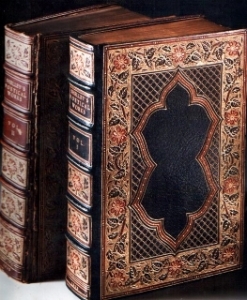
Old Restored booksA book lay on Maude’s desk, with an envelope sticking out of the top as if marking a place. A pair of clean, white, cotton gloves lay beside it. He opened the book, seeing it was a first edition of a famous treatise on an archaeological dig in Mesopotamia. It was a book which he also had in his collection, albeit his was a later edition. Then he saw the envelope was addressed to him, from his mother.

“I never really knew you, as my work precluded everything else. Nevertheless, I have always been pleased you were successful in your career. But whatever you do, wear gloves when you handle the pages of these books.”

Scroffy reflected that even in death Maude cared more for her books than her son. Yet, the scientist in him realized she must have left something behind for him to dig up about his own history, and he intended to discover it.

He looked down at the book in which he had found the note. The author had been one of his professors, a solitary man obsessed with antiquities, and who only came to life when discussing some of his more obscure finds. He’d learned a great deal from him, finding a kindred spirit when it came to unearthing the past.

He wondered why Maude had chosen that book, when she had been a scholar of Roman literature, and inherently unable to discuss anything else. He sat down suddenly, his knees giving way under the realization she had chosen the only way she knew to tell him something important, something she had withheld from him for all those years.

Nanny’s words came back to him, about little boys having dirty fingers. He was aware of how little had changed, that he was in actuality a dirty old man, due in part to his advanced age, but mostly to his profession. Accordingly, he drew on the white gloves and opened his mother’s desk. He pored through his mother’s papers, physician’s instructions, tax returns, payroll receipts–being who she was, Maude had been unable to dispose of any. She had kept everything, but had filed them as neatly as she had kept her library. He searched and sorted until he came to the year prior to his birth.

The light had begun to fade when he refiled his mothers papers as neatly she had originally, and shut the drawer. For a long while, he sat in his late mother’s study, staring into the gloom, thinking.

Having met both his mother and his father, and found them to be exceptionally solitary people, he concluded that his existence could only be explained as a miracle. And while, as a boy, he’d often wished for a less arduous name to explain to new acquaintances, he was terribly glad his mother hadn’t named him after his father.

If ‘Scrofulous Mudd’ had been the cause of the occasional fist fight at school, he suspected Hamza Pigg Jr. wouldn’t have been any easier.


Scrofulous Mudd © Connie J. Jasperson 2016, All Rights Reserved

Comments Off on #flashfictionfriday: Scrofulous Mudd (reprise)

Filed under #FlashFictionFriday

#flashfictionfriday: The Iron Dragon

Because it’s November, and National Novel Writing Month is in full swing, I am reposting a story I posted in April of 2016. This story was actually written during NaNoWriMo 2015. If you’re curious as to my word count, feel free to click on the image to the upper right, the one that says NaNoWriMo Participant. In the meantime, enjoy  The Iron Dragon.

Leaf_Decoration 1_clip_art_small


Earl Aeddan ap Rhydderch turned his gaze from the mist to the strange iron road that emerged from it, and then to where the road entered the cave. “Tell me again what happened.”

The peasant who had guided the earl and his men said, “The mist, the iron road, and the cave appeared yesterday, sir. We saw the beast entering its lair, and a fearful thing it is, too. No one dares approach it, but the monster can be heard in there. It’s a most dreadful dragon — we found the carcass of a large wolf that had been torn to shreds, trampled until it was nigh unrecognizable.”

The man’s companion said, “Everyone knows wolves are Satan’s hounds. It must have angered its hellish master. We found it lying cast to one side of the Devil’s Road.”

Aeddan looked back to the iron road, seeing where it emerged from the mist. He walked to the low-hanging fog bank, seeing that the road vanished just after it entered the mist, leaving no marks upon the soil. He turned and strode back to the peasants. “I agree it’s the work of the Devil, but why does the Lord of Hell require an iron road that leads nowhere?”

A faint grumbling sounded beneath Aeddan’s feet. “A light! Look to the mist!” shouted one of his men.

Turning, Aeddan saw a white glow forming in the fog as if a large lamp approached from a great distance. “That’s no ordinary lantern. Mount up!” Moving quickly, he leaped into his saddle and turned his steed to face the demon. He freed his lance from its holster and settled it in the arret attached to his breastplate under his right arm. His fingers fumbled as he struggled to fasten the grapper, but at last it held firm. The peasants, knowing they were no match for whatever approached, had run for shelter up the hill.

The light deep within the fog grew and strengthened, as did the rumbling noise.  It waxed brilliant, and the earth shuddered as if beneath the pounding of a thousand hooves. Smoke filled the night air, reeking of the sulfurous Abyss, combined with a howling as cacophonous as the shrieks of all the damned in Hell.

Dragon-Linda_BlackWin24_JanssonWhat emerged from the mist was impossible — an Iron Dragon of immense height and girth.

“Courage men! For God and King Gruffydd!” His bowels had turned to water, but Aeddan and his men stood firm in the face of the demon, sure that death would be their reward.

The fiery light emanating from the burning maw lit the night, and the ground shook as the beast roared and raced ever closer. As the beast sped toward him, a burning wind blowing straight out of Hell knocked Aeddan and his horse to the side of the Devils Road and using that opportunity, the Iron Dragon thundered past him, heading into its lair.

Stunned, Aeddan scrambled to his feet, staring as the length of the beast passed him by, the body taller than a house and long, like an unimaginably giant, demonic centipede. The length of the beast was incomprehensible, lit by the fire within and glowing with row upon row of openings. The faces of the damned, souls who’d been consumed by the ravening beast peered out as they flashed by. Sparks flew from its many hooves.

Terrified his men would be crushed by the immense creature he shouted for them to back off, his voice drowned by the din.

Abruptly it was gone, vanished inside its lair. In the sudden, deafening silence, Aeddan wondered how such a thing could possibly have fit into the cave. Yet it had done so, and other than the stench of its passing, there was no sign of it.

He remounted and settled his lance in the holster beside his stirrup, then turned to his men. “Rouse the village. We must seal its lair with stone and mortar. We may not be able to kill it, but at least, we can stop it from marauding and decimating the countryside.”

>>><<<

Mist shrouded the small valley just outside of the village of Pencader. Engine Driver Owen Pendergrass looked at his pocket watch and opened the logbook, noting the time and that they had just departed Pencader Station. He said to the fireman, Colin Jones, “We should be approaching the tunnel, though it’s hard to tell in this mist. We’re making good time despite the fog. We’ll be in Carmarthen on schedule.”

“Sir! Look just ahead! What…?” Colin pointed ahead.

A group of mounted men dressed as medieval knights, complete with lances lowered as if prepared to joust, appeared out of the mist, attempting to block their path. “God in heaven — what next!” Blowing the whistle to scare them off the tracks, Owen pulled the brake cord, but there was no way the train could stop soon enough. In no time at all, the train was upon the knights, scattering them and blowing past. Owen looked out the window, to see if they’d survived, but they were gone as if they’d never been.

“Vanished,” said Colin. “Like the ghosts when we passed through here yesterday.”

Hiding his trembling hands, Owen shook his head. “It was a close call, but no harm was done. We’ll not be mentioning this to the authorities, eh? Not after the way our report was received yesterday. It’s a haunted valley, but it’ll do us no good to mention it to anyone important.”

Colin agreed and turned back to fueling his fire, shoveling coal as if he could work the fear out of his mind.

The connecting door opened and Harrison, the chief steward, entered. Pendergrass told him the same thing, and the old man agreed. “We got in enough trouble at the yard yesterday for mentioning the ghosts. I’ll go soothe the passengers.”

“Tell them it was just the mist and the dark playing tricks on their eyes.” Owen shook his head and glanced out the window, seeing they had emerged from the tunnel into a clear, cold evening and would soon be at the next stop, the village of Llanpumpsaint. “Playing tricks indeed.”


“The Iron Dragon” © 2016 Connie J. Jasperson, All Rights Reserved

(first published Apr. 1, 2016 on Life in the Realm of Fantasy)

Art: Dragon By Linda BlackWin24 Jansson [Public Domain], via Wikimedia Commons

1 Comment

Filed under #FlashFictionFriday, Dragons, Fantasy, Literature

#ClasicalPoetry & #FineArtFriday: Night, by William Blake

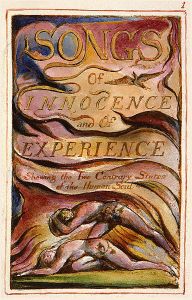
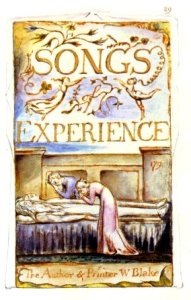
384px-songs_of_innocence_and_of_experience_copy_aa_object_1

Songs of Innocence and of Experience Showing the Two Contrary States of the Human Soul title page

Night

The sun descending in the west;

The evening star does shine;

The birds are silent in their nest,

And I must seek for mine.

The moon, like a flower

In heaven’s high bower,

With silent delight

Sits and smiles on the night.


Farewell, green fields and happy groves,

Where flocks have took delight,

Where lambs have nibbled, silent moves

The feet of angels bright;

Unseen, they pour blessing,

And joy without ceasing,

On each bud and blossom,

And each sleeping bosom.


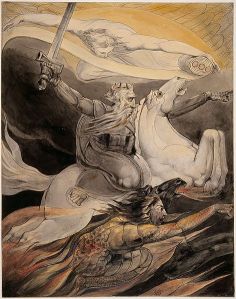
william_blake_-_death_on_a_pale_horse_-_butlin_517

Death on a Pale Horse, painting by William Blake (medium pencil, pen, and water color)

They look in every thoughtless nest

Where birds are covered warm;

They visit caves of every beast,

To keep them all from harm:

If they see any weeping

That should have been sleeping,

They pour sleep on their head,

And sit down by their bed.


When wolves and tigers howl for prey,

They pitying stand and weep;

Seeking to drive their thirst away,

And keep them from the sheep.

But, if they rush dreadful,

The angels, most heedful,

Receive each mild spirit,

New worlds to inherit.


And there the lion’s ruddy eyes

Shall flow with tears of gold:

And pitying the tender cries,

And walking round the fold:

Saying: ‘Wrath by His meekness,

And, by His health, sickness,

Is driven away

From our immortal day.


blake_experience_29

Blake’s title plate (No.29) for Songs of Experience

‘And now beside thee, bleating lamb,

I can lie down and sleep,

Or think on Him who bore thy name,

Graze after thee, and weep.

For, washed in life’s river,

My bright mane for ever

Shall shine like the gold,

As I guard o’er the fold.’


Night, by William Blake PD|100

[First published 1789 in Songs of Innocence and Experience, collected poems written and illustrated by William Blake.]

Title Page Illustrations by William Blake

Painting: Death on a Pale Horse, Commissioned from Blake and acquired by Thomas Butts c. 1800 (via Wikimedia Commons)

Comments Off on #ClasicalPoetry & #FineArtFriday: Night, by William Blake

Filed under #FlashFictionFriday, Fantasy, Literature, Poetry

#flashfictionfriday: Frost at Midnight, Samuel Taylor Coleridge

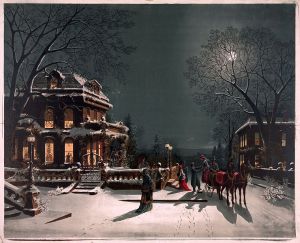
740px-No_Known_Restrictions_Christmas_Eve_by_J__Hoover,_no_date_(LOC)_(2122063062)

The Frost performs its secret ministry,

Unhelped by any wind. The owlet’s cry
Came loud—and hark, again! loud as before.
The inmates of my cottage, all at rest,
Have left me to that solitude, which suits
Abstruser musings: save that at my side
My cradled infant slumbers peacefully.
‘Tis calm indeed! so calm, that it disturbs
And vexes meditation with its strange
And extreme silentness. Sea, hill, and wood,
This populous village! Sea, and hill, and wood,
With all the numberless goings-on of life,
Inaudible as dreams! the thin blue flame
Lies on my low-burnt fire, and quivers not;
Only that film, which fluttered on the grate,
Still flutters there, the sole unquiet thing.
Methinks, its motion in this hush of nature
Gives it dim sympathies with me who live,
Making it a companionable form,
Whose puny flaps and freaks the idling Spirit
By its own moods interprets, every where
Echo or mirror seeking of itself,
And makes a toy of Thought.


Continue reading  Frost at Midnight  at

Frost at Midnight by Samuel Taylor Coleridge

Comments Off on #flashfictionfriday: Frost at Midnight, Samuel Taylor Coleridge

Filed under #FlashFictionFriday, Poetry

#FlashFictionFriday:1998 Boxing up Michael

paul cornoyer rainy day in madison square

1998 Boxing up Michael

Putting his things in boxes,

Placing them on the wet grass by the street,

Rain on my face, stinging.

Tears in my eyes, also stinging.

Anger, hot in my heart because, stupidly

I believed.

Changing sheets, changing locks,

Changing passwords, changing banks.

Doubt should have prevailed.

Sanity could have prevailed.

My trust was his tool and, stupidly

I believed.

His books and tools and clothes resided

In open boxes on rain-damp grass,

And later he found them on Sylvia’s grass

Because some things never change.

He was a lesson learned because, stupidly

I believed.


1998 Boxing Up Michael by Connie J. Jasperson © 2016 All Rights Reserved

2 Comments

Filed under #FlashFictionFriday, Poetry

#FlashFictionFriday: Ode to Autumn, by John Keats

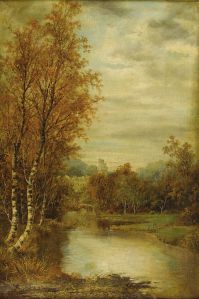
Autumn_Landscape_With_Pond_And_Castle_Tower-Alfred_Glendening-1869Autumn officially begins on Sept. 21, 2016. In honor of the changing season, and because it is Flash Fiction Friday, I bring you a classical poem, written by one of the mainstays of the Romantic movement in the arts and literature, John Keats. When Keats died of tuberculosis at the age of 25, he had been writing poetry seriously for only about six years, and publishing for only four.

In his lifetime, sales of Keats’s three volumes of poetry amounted to around 200 copies. Yet this Indie author is one of the most celebrated and studied poets of the last three hundred years.

>>><<<

Ode To Autumn – Poem by John Keats


Season of mists and mellow fruitfulness,

Close bosom-friend of the maturing sun;

Conspiring with him how to load and bless

With fruit the vines that round the thatch-eaves run;

To bend with apples the mossed cottage-trees,

And fill all fruit with ripeness to the core;

To swell the gourd, and plump the hazel shells

With a sweet kernel; to set budding more,

And still more, later flowers for the bees,

Until they think warm days will never cease,

For Summer has o’er-brimmed their clammy cell.


Who hath not seen thee oft amid thy store?

Sometimes whoever seeks abroad may find

Thee sitting careless on a granary floor,

Thy hair soft-lifted by the winnowing wind;

Or on a half-reaped furrow sound asleep,

Drowsed with the fume of poppies, while thy hook

Spares the next swath and all its twined flowers;

And sometimes like a gleaner thou dost keep

Steady thy laden head across a brook;

Or by a cider-press, with patient look,

Thou watchest the last oozings, hours by hours.


Where are the songs of Spring? Ay, where are they?

Think not of them, thou hast thy music too,—

While barred clouds bloom the soft-dying day,

And touch the stubble-plains with rosy hue;

Then in a wailful choir, the small gnats mourn

Among the river sallows, borne aloft

Or sinking as the light wind lives or dies;

And full-grown lambs loud bleat from hilly bourn;

Hedge-crickets sing; and now with treble soft

The redbreast whistles from a garden-croft,

And gathering swallows twitter in the skies.

>>><<< 

He writes, “Where are the songs of Spring? Ay, where are they?” and I know what he feels. I look forward to the changing of the seasons, the the colors of fall, the red of sumac and vine-maple, but  I confess, I will miss the summer. Sometimes, the cold dark, rain of the Northwest winter lacks appeal. I treasure the occasional patch of blue sky and the glimpse of sun.

When I read Keats, I am awed by the bold confessional tone of his prose. He is filled with emotion and passion—and expresses it with no filters. Consider the last five lines of the sonnet Bright Star:

Pillow’d upon my fair love’s ripening breast,

To feel for ever its soft fall and swell,

Awake for ever in a sweet unrest,

Still, still to hear her tender-taken breath,

And so live ever–or else swoon to death.

This is a bold confession of both sexual desire and romantic love—topics that, in polite society, were discussed behind closed doors. The poet was unafraid to say what most young men of his time felt, and he said it so beautifully it connects and resonates with modern readers.

Quote from Wikipedia (the fount of all knowledge):John Keats (Oct. 31, 795-Feb 23, 1821) was an English Romantic poet. He was one of the main figures of the second generation of Romantic poets, along with Lord Byron and Percy Bysshe Shelley, despite his work having been in publication for only four years before his death.[1]

Although his poems were not generally well received by critics during his lifetime, his reputation grew after his death, and by the end of the 19th century, he had become one of the most beloved of all English poets. He had a significant influence on a diverse range of poets and writers. Jorge Luis Borges stated that his first encounter with Keats’s work was the most significant literary experience of his life.[2]

The poetry of Keats is characterized by sensual imagery, most notably in the series of odes. This is typical of romantic poets, as they aimed to accentuate extreme emotion through the emphasis of natural imagery. Today his poems and letters are some of the most popular and most analyzed in English literature.


Ode to Autumn, John Keats PD|100

Bright Star, John Keats PD|100

Comments Off on #FlashFictionFriday: Ode to Autumn, by John Keats

Filed under #FlashFictionFriday, Poetry

#amwriting: Interview with Terry Persun, poet and author

Today we are continuing a series of interviews with published authors who are also instructors. They write in a variety of fields, and each approaches the craft from a slightly different point of view. Because they come from such varied backgrounds, I have gained a great deal of knowledge of writing craft from attending their seminars.

As it’s Friday and I often post poetry and flash fiction on Fridays, we are talking with Terry Persun, a poet and novelist who resides in the Northwest.

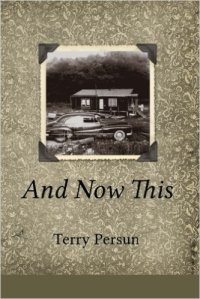
51eyfcn4pzl-_sx331_bo1204203200_CJJ: You write in three areas, poetry, nonfiction, and fiction. Your fiction work ranges through three sub-genres, Sci-fi/fantasy, mystery/thriller, and mainstream/historical. As are many poets, you’re well-known for questioning the political, spiritual, and cultural status quo.

How does your poetic bent shape your non-fiction and genre novel work?

TP: What an amazing question. I often think about how my poetry helps to shape my novels, but seldom my nonfiction. So let’s start with novels: much of the best poetry is about image, and the same goes for the novel. An image (showing not telling) can create an emotion that will stick with the reader. Poetry allows me to practice that. Even when you’re discussing cultural elements, an image is more important than abstract words like horrific or painful. A poet must know how to show those abstractions. Think about the last time you saw an image of a child in a war zone, it’s much more impactful than being told that there were several women and children killed in the attack. Even which image is important—movie directors know which angle to take. As for nonfiction: I think pacing and word choice stand out the most. In a poem, I can create a line break or a stanza break, similarly with nonfiction I might create a new paragraph or move the article from prose to bulleted copy. Again, an image might be best in nonfiction as well. For example, instead of saying, “Make sure your enclosure is leak proof.” I said, “Using the proper sealing approach will eliminate the concern of having grease oozing out of your enclosure.” Seeing the grease oozing out of something is much more impactual than telling someone to provide better sealing. There are probably many more things that poetry brings to my writing that I may not be completely aware of.

CJJ: You have published five poetry collections. I own one of them, And Now This. These poems resonated with me, as my father was also a WWII vet. These poems deal with the effects of your father’s wartime experiences on your family during the 1960s. Battle related PTSD is also a theme in my forthcoming novel. Reading your poetry made me feel less alone in that experience, and helped me develop my protagonist in the initial stages.

You seem to have an instinctive gift for meter in your free verse. One of my favorite opening passages of all time is from one of the poems in this collection, from the opening poem,

First Memory

I’m standing in the corner,

Crying.

My hands are not my own,

They’re trembling.

This passage drops the reader straight into your young reality, unapologetically showing the life you had then.  Because they are free verse, the lines don’t rhyme, yet they are poetic and speak to me on a level that the prose in a novel rarely does. I also love the opening passage from another poem in this collection, In the Story of My Father.

What advice would give budding poets in regard to meter and phrasing their free verse?

TP: Language has its own music. Even prose has music to it. It’s my assertion that the best prose can often be broken into poems. In classes I sometimes will take a Hemingway paragraph and create a poem from it. Having said that, the number of beats, the number of syllables, where you place commas or choose to create a complex sentence, all have an effect on the final work. What I advise new poets is to first of all read a lot of poetry—especially the kind you’re trying to write. Notice how much of a breath you need to take, where natural and unnatural breaks might occur (use both), and where can you end a line that leads a reader in a false direction. Poetry infused prose can only make it better.

Doublesight--Terry PersunCJJ: One of my favorite fantasy novels is Doublesight, in which you created a world populated by shapeshifters. Zimp is a wonderful character, and I like how you portrayed her growing into her responsibilities.

You have opened your Doublesight world to fans to create fanfiction in, via Kindle Worlds.

How has the work offered by others in your world affected your view of Zimp’s world, and has it changed your direction in anyway?

TP: That’s a tough question to answer, because anything written in that world changes the way I see it. Once it’s opened to other interpretations, each character becomes deeper and more mysterious. I start to see the character differently and wonder more about him or her. It also lets me see how others view the story, the time period, the characters. I become more interested in the world as others work in it. My hope is that it’s fun and expansive for the authors as well, offering them another viewpoint to explore, another idea to examine. Plus, every Doublesight story uploaded into Kindle Worlds helps to market all the other books in the world. This cross-marketing will eventually help each author gain a new audience for their own books.

CJJ: Your video course is quite extensive, and I’d like you tell the readers what the course entails, and how they can take it.

TP: I believe you’re talking about the “Make Money Writing” course. You can access it through my website or through Youtube. I have taught that class quite a bit and is often standing room only. I’ve been freelancing for 20 years and working with freelancers on the magazine side for another 20 prior to that. I know how magazine editors think, what they need, and how to reach them. I also know how to help a writer find their way into freelancing. In the course, I run through how to decide what to write, the parts of the magazine, the editorial calendar, how to touch base with editors, and the main types of articles they need for their publications. I’ve consulted with several major magazine groups about their editorial packages, as well as how to move copy through their company so that they don’t waist time and end up with the best possible pieces to publish.

CJJ: I’ve attended several of your seminars at the annual PNWA conference and enjoyed them immensely. You’re based in the Pacific Northwest and have taught many classes all over the region. Will you be offering any seminars over the next year?

TP: I will be at the PNWA Cottage in September teaching a course on working with Amazon’s 12+ platforms for writers (go to PNWA.org for the list of classes), then at Rivers of Ink in October where I’ll be one of their Keynote speakers and also teach a class called Use Your Writing as Marketing. In November, I’ll be in Kauai for their annual Writers’ Conference where I’m teaching Self and Independent Publishing, and will be working one-on-one with attendees interested in a variety of methods of publication. I was involved in three other groups/conferences earlier this year. I am always willing to come up with a program if there is enough interest. Just let me know.


Terry, thank you so much for your insights and advice, both here and at the annual PNWA conference.

I highly recommend Terry’s works. His poetry is deep and thought provoking, and his novels are fun and fantastic.  His books can be found on Amazon at:

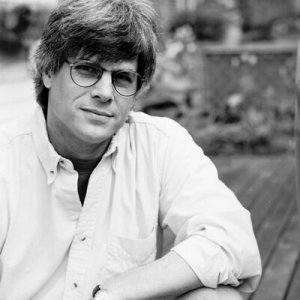
tpersun_the_mug_shot_pic_b-w_400x400Terry Persun on Amazon Author Central

For any of you who are interested in attending his seminars, or looking into his video course, you can find him at any of these places.

Facebook page:

https://www.facebook.com/TerryPersun

Website:

http://www.terrypersun.com

Twitter: @TPersun

Pinterest:

https://www.pinterest.com/terrypersun/ 

Goodreads:

https://www.goodreads.com/author/show/1219743.Terry_Persun

LinkedIn:

https://www.linkedin.com/profile/view?id=AAIAAAAwxc8B6UnSc6LNvK9rhZHPutf5VEgswes&trk=nav_responsive_tab_profile_pic


On  Monday, Scott Driscoll has agreed to join us here.

Comments Off on #amwriting: Interview with Terry Persun, poet and author

Filed under #FlashFictionFriday, Fantasy, Poetry, writing

#flashfictionfriday: Ode (to Writer’s Block)

Quill_pen smallOnce again, I am embarking on a new project, and struggling with getting the idea down on paper. Therefore, it’s time for me to face the demon that haunts all writers–that moment when you have the brilliant idea, and know what you have to say, but can’t find the words. I will defeat this demon by embracing it into submission, as I do all who oppose me. (Did I just say that? Oh, well. It’s out there now.) I will write, no matter how hokey and lame my prose is, because revisions are my friends, and I am not afraid to write garbage. I just need to get these ideas down and on paper before I forget them.

Several years ago, while suffering in similar circumstances over Valley of Sorrows, I wrote this woefully over-the-top, somewhat lame, free-verse ode to that sad condition, and I published it here on this blog then.

Ode  

What beauty is this, that lies sleeping near my heart?

‘Tis word—and word should tumble from my pen,

Not lie locked within the chamber dark and inky.

Where hides the key to free thee from thy prison?

Oh, lovely word, spring forth from the trap that is my mind,

Set thee down upon this paper, word.

Let me hold thee, and from thee let me form the dreams,

The hopes and fantasies that fill my eyes and blind me to all but thee,

Oh word! Fill my paper with thy bounteous delight,

As you fill my head with longing, and my wastebasket with scrap.


Ode © Connie J. Jasperson 2016

7 Comments

Filed under #FlashFictionFriday, Literature, writing

#flashFictionFriday: Science Officer’s Log

Today’s flash fiction was inspired by the recent announcement of the  European Southern Observatory‘s discovery of a roughly Earth-sized planet orbiting our nearest neighboring star, Proxima Centauri.  Planet Proxima b is larger than Earth, but could have liquid water on its surface. Proxima Centauri is around four light years from us. It’s a small red dwarf with a radius of around 60,000 miles (97,000 km), which is around 14% the size of our sun. It  is estimated to have a mass of around 12% of that of the sun, and is 1.4 times the diameter of Jupiter.


Science Officer’s Log

  • Week: 15
  • Month: 4
  • Day: 15
  • Year: 47 (Post Earth Era)
  • Logged by: Jamal Baines, Acting Science Officer

Last week our ship arrived at a three-star system, and stopped at the edge.  I’m not sure why we’ve stopped because, before they disappeared, no one thought to warn me it was going to happen. It’s been two weeks since the adults who used to run things disappeared. Not sure what happened, but I don’t think they planned to leave.

I’m fourteen now, so I should be an adult about things, but I miss my mom.

The internal system is functioning as it should. Maybe we were supposed to stop here. The telescopes are observing the dwarf star of the trio, and I’m logging the information as it comes in. I just don’t know how to interpret it yet.

From outside, our ship seems like an immense moon or a small planet, but it’s an asteroid ship. We’re self-supporting so things are pretty complicated. When I first joined the science pod, Dr. Abrams told me that because we live underground, we’re safe from radiation and most stray comets.

I don’t know if anyone will ever go outside again, because I don’t know if anyone apprenticed in the maintenance pod was trained to pilot the O.A. Shuttles.

We finally got all the kids together for a meeting, and we have an idea of how to go forward.  I’m not sure what I’m supposed to write here because we didn’t do anything other than deciding who was going to do what. The younger kids are afraid, and everyone agreed we needed the older kids to take charge.

Shelena’s oldest, seventeen, and she is captain. Darius is fifteen, and he’s first officer. They were apprenticed in the bridge pod, so she is most familiar with how Captain Gonzales ran things, and Darius is good at keeping things organized. Shelena knows where all the information is, so at least we’ll have that, and we can continue our education. I got to be science because that’s where I was apprenticing. Sanjay is 17, and is in charge of sickbay, for the same reason. The androids are functioning perfectly, handling the work humans don’t usually have to do, like running the mess hall and the sewage treatment plants.

There are only fifty-six of us old enough to have been apprenticed into the ship’s management systems for any length of time. The others are working in the areas where they were, still trying to learn from those of us more advanced. The pre-teen kids not old enough to have been apprenticed are minding the babies and little ones.

Darius thinks the adults got sucked into a dimensional rift. I guess that’s possible, but I can’t see how. But regardless, we have to support the farms, because they’re what keeps this ship’s environmental systems running. So, just like before the adults disappeared, we’re all taking our turns working in the agrarian pod. Things are pretty easy to work, if you know the controls. So far, we’re all getting along, no quarrels to speak of.

That’s all I can think of for right now. I’ll write more tomorrow because Doctor Abrams always kept a daily log, so I should too.

J.B.

This artist’s impression shows a view of the surface of the planet Proxima b orbiting the red dwarf star Proxima Centauri, the closest star to the Solar System. The double star Alpha Centauri AB also appears in the image to the upper-right of Proxima itself. Proxima b is a little more massive than the Earth and orbits in the habitable zone around Proxima Centauri, where the temperature is suitable for liquid water to exist on its surface.

This artist’s impression shows a view of the surface of the planet Proxima b orbiting the red dwarf star Proxima Centauri, the closest star to the Solar System. The double star Alpha Centauri AB also appears in the image to the upper-right of Proxima itself. Proxima b is a little more massive than the Earth and orbits in the habitable zone around Proxima Centauri, where the temperature is suitable for liquid water to exist on its surface. Artist’s rendering by This artist’s impression shows a view of the surface of the planet Proxima b orbiting the red dwarf star Proxima Centauri, the closest star to the solar system. The double star Alpha Centauri AB also appears in the image. Proxima b is a little more massive than the Earth and orbits in the habitable zone around Proxima Centauri, where the temperature is suitable for liquid water to exist on its surface. Credits: ESO/M. Kornmesser


Science Officer’s Log © Connie J. Jasperson 2016

6 Comments

Filed under #FlashFictionFriday, Fantasy, writing