Category Archives: Humor

#Inspiration: Seeking truth and beauty via Wikimedia Commons

Seljalandsfoss,_Suðurland,_Islandia,_2014-08-16,_DD_201-203_HDR

Inspiration.

It can be found in nature, and through the eyes of the artist or photographer. Through the miracle of the internet, I can find inspiration any time of the day or night, just by seeing what the picture of the day at Wikimedia Commons is. This was today’s gorgeous, surreal image: Sunset view from the back of the Seljalandsfoss waterfall, photo by Diego Delso, Wikimedia Commons, License CC-BY-SA 4.0.

Stiftskirche_Herzogenburg_Deckenfresken_01Several days ago, the image of the day was architectural: The ceiling frescos in Herzogenburg Monastery Church (Lower Austria). The church was consecrated on October 2nd, 1785. This image was uploaded by an author who uploaded with the user name Uoaei1, but who has won many awards for his/her images.

Roosa_hommikuudu_Tolkuse_rabasThen there was this gorgeous photograph by Märt KoseMorning in Tolkuse bog, Luitemaa Nature Conservation Area, Pärnu County, Estonia.

Inspiration in breathtaking images, free of cost, available for anyone, rich or poor. Everyday, a new picture is chosen as the image of the day, and if you like the artist, you can check out more of his/her works as, I did Diego Delso:

Iglesia_de_San_Colmano,_Schwangau,_Alemania,_2015-02-15,_DD_15Winter landscape of St Coloman church (de), photographed by Diego Delso, and located in Schwangau, Bavaria, southern Germany. St Coloman church is of baroque style and was constructed, the way it is today, in the 17th century in honor to Saint Coloman, replacing a chapel of the 15th century. The Irish pilgrim is said to have taken a break at this spot in his pilgrimage to the Holy Land in 1012.

I can visualize the crusaders riding in this winter landscape. I would have stopped there too!

The imagination transforms the beauty around us, and we create “what ifs” via the written word or the canvas and paint. This is why I always find myself looking at paintings too, when I am visiting Wikimedia Commons. I leave you with two images of a palace, seen though the eyes of two different artists:

Palacio_de_Nymphenburg,_Múnich,_Alemania,_2015-07-03,_DD_01-18_HDR_PAN

Panoramic View of the Nymphenburg Palace, Diego Delso, Wikimedia Commons, License CC-BY-SA 4.0

Nymphenburg, View From the Seaside painting by Joseph Wenglein 1883

Nymphenburg, View From the Seaside painting by Joseph Wenglein 1883 PD|100

The first is a photograph is the Panoramic View of the Nymphenburg Palace as seen through Diego Delso’s camera-eye and posted on Wikimedia Commons using the License CC-BY-SA 4.0. The painting below that is the palace as seen through the artist Joseph Wenglein‘s eye, A Seaside View of Nymphenburg Palace

Both images are the creations of artists using different mediums, both are of the same baroque palace in Munich, Bavaria (southern Germany). The palace is the main summer residence of the former rulers of Bavaria of the House of Wittelsbach. It was designed by Agostino Barelli and constructed by order of Ferdinand Maria and Henriette Adelaide of Savoy in 1664. Famous for its symmetry and extravagant beauty, the palace was expanded and redesigned several times until the last modifications in 1826.

More than 125 years separate their visions, but I am connected with and inspired by both artists because I, a middle-class woman in a rural town, can view and admire their work.
1 Comment

Filed under Fantasy, Humor, Uncategorized, writing

Yay! Its #friday

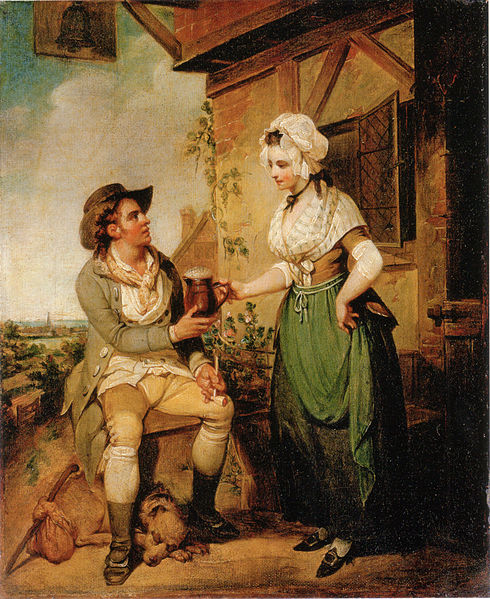
The Alehouse Door, by Henry Singleton via Wikimedia Commons

The Alehouse Door, by Henry Singleton via Wikimedia Commons

I wrote a lot of short stories last summer, which is good, because in short stories you have to be sparing with words.

This need for economy has really helped with my personal writing bugaboo, giving too much background info. When you are writing to a specific word limit, you have to choose your words carefully.

This means the only background that can remain in the tale is the minimum background that the reader must know for the tale to make any sense.

Some of what I wrote was a serial, for Edgewise Words Inn, a series of tales set in the village of Bleakbourne, on the Heath river. Bleakbourne is an unusual town, being the crossroads for the fae and mortal worlds. Many strange things happen there, and Leryn is the young bard who records it all.

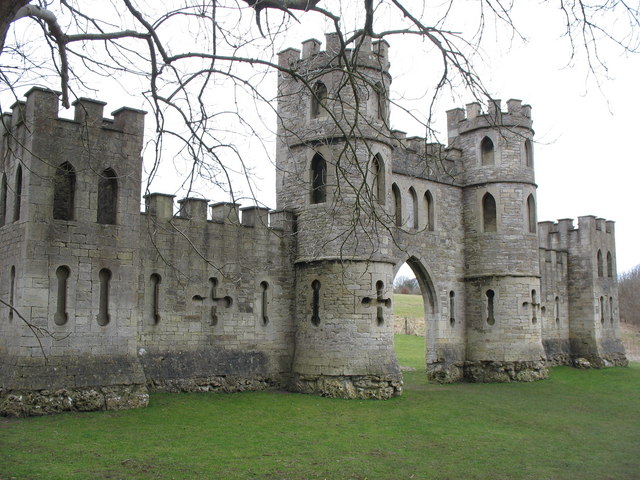
Ralph_Allens_Castle_-_geograph.org.uk_-_1762356Two installments have been posted, and several more are set to post as autumn progresses.

If you are curious, the link to chapter one is here: Bleakbourne on Heath: Tenneriff’s Curse and the link to chapter two, the Demon Knight is here.

That tale was inspired by a photo of a Castle Folly I saw on Pinterest. I love Pinterest, but I get most of my inspiration and ideas from Wikimedia Commons, just randomly searching the classical art there.

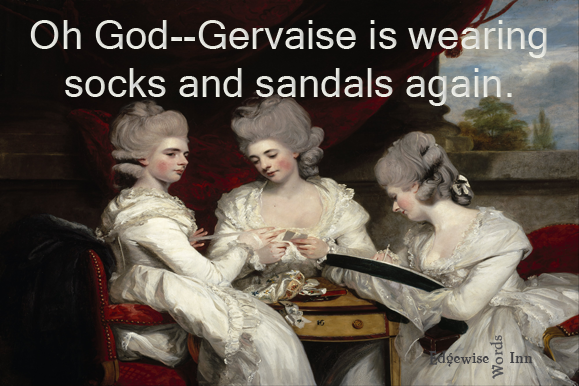
Socks and Sandals MemeI also find that lots and lots of time just sort of dissolves as I am doing that–perusing  the great art of the masters is as much of a time-eater as Facebook, but without the memes.

However, the temptation to turn them into memes is sometimes overwhelming. I look at them, and wonder what was going through their minds at the time the painter caught them. Probably it was “Please make him paint faster,” but you know I can just leave it at that.

Sometimes it’s hard to contain myself when these wonderful images give me so much food for thought.


If you happen to be at out and about Saturday the  10th of October, in the Renton area south of Seattle, stop in at the AFK E&E, and visit my friends who will be signing books and having a great time in general. They will be Reading in the Dark, and the event will run from 2:00pm to 9:00pm in the back left of the restaurant.

  • AFK Elixers & Eatery
  • 3750 E Valley Rd.
  • Renton, WA 98057

You will find these great authors: A.J. Downey, Jeffrey Cook, Lee French, Sechin Tower, Tina Shelton, and Shannon L. Reagan and several more. I can’t wait to see what they are offering us!

Comments Off on Yay! Its #friday

Filed under Humor, Publishing, Uncategorized, writing

#amwriting: keeping the Goliardic spark alive

The Battle of Carnival and Lent, Pieter Bruegel the Elder

The Battle of Carnival and Lent, Pieter Bruegel the Elder

I love ribald, rebellious humor in the works I read, and will go out of my way to read anything written by Sir Terry Pratchett, Douglas Adams, or Jasper Fforde. I admire their wit and ability to cause us to laugh at our own outrageousness.

Crazy humor at the expense of the establishment is nothing new. It’s part of the Human Condition. And to that end, I love goliardic poetry.

Carl Orff and his amazing cantata, Carmina Burana, catapulted me into the poetry of the Goliards. But who and what were the goliards?

During what we call the Middle Ages, noble and wealthy middle-class families had a tradition that the eldest son inherited everything, the second son went into the church, and the younger sons went to the crusades.

The old-fashioned practice of “primogeniture” or bestowing the rights of inheritance upon the eldest son, often leaving younger sons penniless, is responsible for some of the most ribald and hilarious poetry of the middle ages. This was because the church had far too many clergy who weren’t all that enthusiastic about having been forced into taking the ecclesiastical path, and who became, for lack a better definition, medieval frat-boys.

There was such an abundance of well-educated clergy that most were unable to gain a decent appointment within the church, despite good family connections.

Having been educated at the finest universities of France, Germany, Spain, Italy, and England these men weren’t content to spend their lives hidden away in a rural monastery painstakingly copying the great books written by others when they could be writing their own.

Going indie (or rogue) is nothing new.

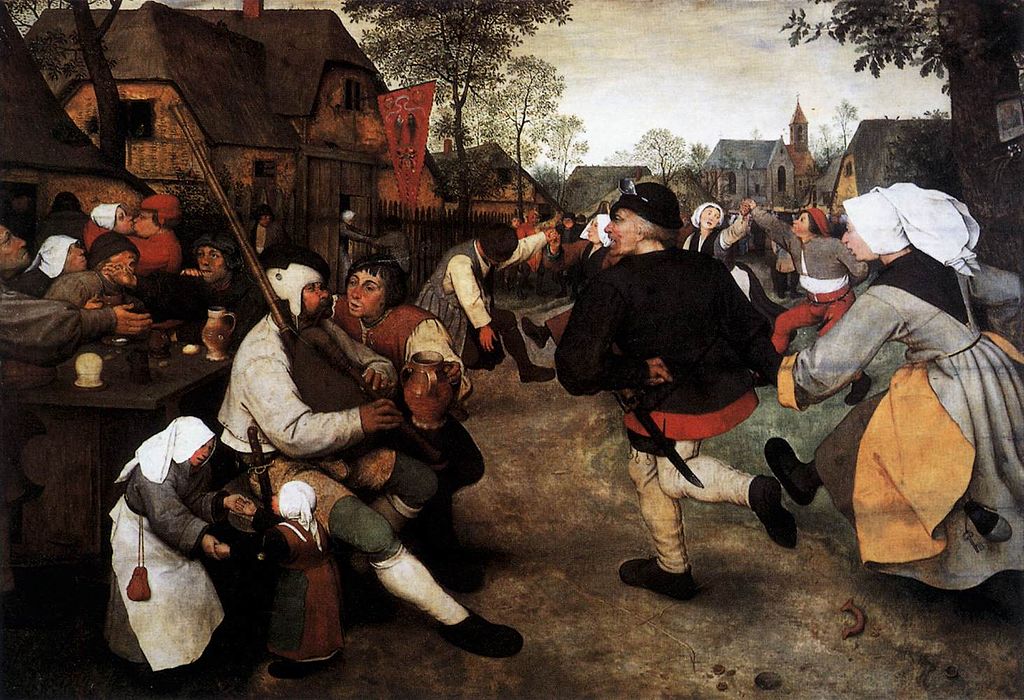
The Peasant Dance, Pieter Bruegel

The Peasant Dance, Pieter Bruegel

They took their show on the road, going from town to town, protesting the growing contradictions within the church through song, poetry and performance.

The disillusionment and disappointment they experienced in regard to the hypocritical, abusive, greedy state of the hierarchy of the Catholic Church of that time, was fertile soil for medieval mockery on a grand scale. 

Not unlike the current political climate here in the US.

Most goliardic poetry is written in Latin, as Latin was the language of commerce, and every educated person understood and read it. Remember, if someone could read, they were well off, and if they could read, they read Latin. Those were the people the indie was writing books for in the early Middle Ages.

Some of the goliards’ more popular church services when they would arrive in a new town included celebrating the annual Feast of Fools, a brief social revolution, where roles were reversed, and power, dignity and impunity was briefly conferred on the lowest of the social order. Thus, the town drunk, or the local fool would be made mayor for a day, feted and given the status of a lord for a day.

As you might imagine, the nobility was unimpressed with that particular “holy” festival, and rarely participated

Even less popular with those in power was the Feast of the Ass. From Wikipedia, the holy fount of all knowledge: A girl and a child on a donkey would be led through town to the church, where the donkey would stand beside the altar during the sermon, and the congregation would “hee-haw” their responses to the priest.

So, I guess you could say the goliards were a traveling Monty Python type of show, painfully hilarious and sometimes too good at what they did for the censor’s comfort.

Their point was that too much emphasis was placed on the pageantry and trappings of faith in Medieval Europe.

But they couldn’t run forever. Their satires were almost always directed against the church, attacking even the pope, and the church didn’t take that well. Heresy, during the Middle Ages, was not something you wanted to be accused of, as the famous heretic and collector of goliardic poetry, Peter Abelard would tell you. Yet, though he was harshly punished, he remains one of the most respected philosophers and free-thinkers of the Middle Ages.

By the 14th century, the word goliard had become synonymous with minstrel, no longer referring to this group of rebellious clergymen. However, a century after the overabundance of bored poor-little-rich-boy clergymen that spawned the goliards had been squashed by the church, that tradition of irreverence was carried on by Geoffrey Chaucer in his Canterbury Tales.

carmina burana album coverFor me, Orff’s cantata was a ‘gateway drug.’ From first becoming intrigued by the libretto to  Carmina Burana, I moved on to “the hard stuff,” studying modern translations of the works of an author who was highly influenced by goliardic poetry, Geoffrey Chaucer.

Of course, eventually that meant I had to go to the source, learning a great deal about the roots of our modern English language at the same time.

Chaucer was unique, in that he wrote in Middle English, the vernacular of his time, rather than in Latin. Because of this, and the enduring hilarity of his works, Chaucer is considered the Father of English Literature.

The goliardic works that survive to this day still surprise us with how relevant the concepts put forth in those poems and tales are to contemporary society.

It is through the surviving literature and song that the truth of a past culture is discovered. The true nature of the common medieval man and woman survives in the rebellious, ribald literary tradition of the naughty clergy, the goliards.

We may be separated in time by centuries, but we are not too different from those ancestors of ours who survived the Dark and early Middle Ages by getting drunk and singing bawdy songs, and poking fun at the establishment.

1 Comment

Filed under Books, History, Humor, writing

#amwriting: working in the blender

caloricclassic red blenderOnce you have a book published, the hardest, most difficult part is trying to fit writing the next book into all the other demands on your time. I have an editing job that I work at from 6:00 a.m. to 12:00 p.m. daily, I write five blog posts a week for various blogs (3 for this blog) I have several novels in the works, and I am my own publicist.

That last part is not going so well, just so you know.

For one of my writing gigs, I am a member of the staff for Edgewise Words Inn, which had been quite fun as I get to explore the creative writing side of my life. I just began a serial there, a medieval fantasy, called Bleakbourne on Heath. The first installment posted September 11th,  and the next will post  on Tuesday the 29th of September. This has been quite fun, as it is a series of short-stories (Less than 2000 words each) chronicled by Leryn, a bard. He is the observer, but is sometime drawn into the action against his better judgement. The first two episodes are a little dark, but episodes 3 & 4 have been far-fetched and quite fun to write.

I have also signed on to edit an anthology for my publishing group, Myrddin Publishing. That has been an absolute joy–the stories that are being included in this anthology are extremely high quality. And the good part of that is, I have wonderful people working with me on the production of that book, Alison DeLuca and Lee French.

crest-bda7b7a6e1b57bb9fb8ce9772b8faafbNaNoWriMo is approaching–and I am planning to spend the month of November writing a series of short stories, some set in Bleakbourne on Heath, and several random shorts.

But, like every other working person, I also have a home to keep in some sort of order, minimal though that effort is, laundry to do, cooking (yes, even vegans cook) and I try to maintain some sort of communication with our kids and grand-kids–even if it is just stalking them on Facebook.

And lets talk about Facebook, that soul-sucking time-waster from the Netherworld. Many of the events I do are organized though Facebook, and that means I get a lot of email to sift through, while I am trying to accomplish something productive for my clients.

So-and-so, the organizer, encourages everyone involved in the ordeal to post something in a thread:

  • But if you do, you will get 200 emails from that thread alone.
  • But if you don’t, you will miss some critical piece of information.
  • But if you do, you will get 200 emails from that thread alone.

If you are careful when you select which event to get involved with in the first place, these events can raise the indie author’s visibility, and indeed, any author’s visibility. I have done many that were not good experiences, and many that helped sell books.

To that end, I, along with many of the authors I know and a lot whom I’ve never met (over 200) will be participating in the first annual Virtual Fantasy Con in November, the 1st through the 8th.

virtual fantasy con 2015

So far, at least on the participant’s end, it is being set up like a really well-run convention, so it will be interesting to see how smoothly this goes, and how much visibility we will actually gain from this. We participating authors will have the opportunity to take part in many publicity events prior to the actual convention.

The only thing I worry about is how confusing keeping up with all the email and information is. I am afraid I will accidentally not do some critical thing–which is why I am the world’s worst personal assistant for myself.

But it’s a lot of work keeping everything organized. My ‘personal assistant’ is not as good at her job as I wish she was.

Sigh.

4 Comments

Filed under Humor, Publishing, Uncategorized, writer, writing

#amwriting: Rothfuss and Gaiman, crafting good prose

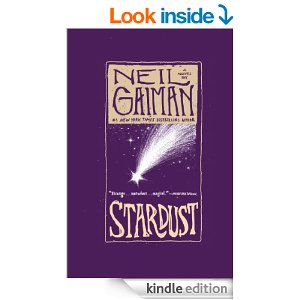
Stardust, Neil GaimanSome fantasy qualifies as literary fiction because of the way in which the story is delivered.

One example of what I think of as literary fantasy is Neil Gaiman’s Stardust. In the very first sentence of chapter one, Gaiman commits the most heinous crime an author can commit, according to those critique groups armed with a little dangerous knowledge:

Quote: There once was a young man who wished to gain his hearts desire. 

And then, to make matters worse, he throws out a bit of background:

  1. Our story starts in the village of Wall, a tiny town about a night’s drive from London. A giant wall stands next to the town, giving it its name.
  2. There’s only one spot to pass through this huge grey rock wall, and it’s always guarded by two villagers at a time, and they are vigilant at their task.
  3. This is peculiar, because all one can see through the break in the wall is meadows and trees. It looks as if nothing frightening or strange could be happening there, but no one is allowed to go through the break in the wall.
  4. The guards only take a break from the wall once every nine years, on May Day, when a fair comes to the meadow

omg! Did he really do that? What was he thinking, starting a fantasy novel with a TELLING, PASSIVE sentence followed by an info dump?  To answer your question, he thought he was offering up a good story, and guess what? HE WAS!

And he did it with beautiful, immersive prose.

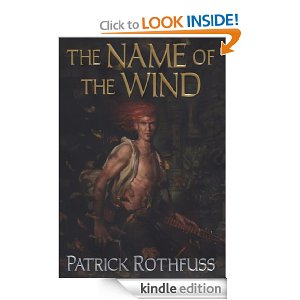
name of the wind -patrick rothfussWho else writes great prose? Patrick Rothfuss, for one. Take the first lines of The Name of the Wind. 

Quote:  It was night again. The Waystone Inn lay in silence, and it was a silence of three parts.

Rothfuss then goes on to commit what some purists (aka trolls) consider a heinous crime–he DESCRIBES THE SILENCE. He does this on the first page and guess what–the reader is sucked into the story and has no desire to leave.  To compound that crime, the story is a story within a story, told to a chronicler, and what most would use as the prologue actually comes after the first chapter, in chapter eight:

(quote) If this story is to be something resembling my book of deeds, we must begin at the beginning. At the heart of who I truly am. To do this, you must remember that before I was anything else, I was one of the Edema Ruh.

When we write, we are writing because we have a story to tell. (Yes, I said tell). To that end, every word must count, every idea must be conveyed with meaningful words, and sometimes you can just have a little fun with it.

In the opening lines of Gaiman’s Stardust, nothing unimportant is mentioned although the prose meanders in a literary way. Yes, he takes the long way, but the attitudes, mores, and personalities of Tristam’s village are conveyed with humor and the journey is the best part of this fairytale. He never devolves into purple prose.

The Elements of Style calls “Purple Prose” “hard to digest, generally unwholesome, and sometimes nauseating.”  To be fair, purple prose is subjective and each reader has a different level of tolerance for it, but it is something we definitely don’t want. What do you want to convey? Choose your words based on what you want the reader to see and feel:

  • Plain: He set the mug down. (conveys action–what’s going to happen next?)
  • Somewhere in the middle: He eased the tankard onto the table. (conveys a medieval atmosphere–what’s going to happen next?)
  • Bleah: Without haste, the tall, blond barbarian set the immense, pewter, ale-filled cup with a wooden handle onto the stained surface of the rough, wooden table. (conveys nausea–don’t care what happens next.)

Of course you are not going to devolve into sticky-sweet goo in your attempts to show the mood and atmosphere. But please, if I may use a cliché here, don’t “throw  the baby out with the bathwater.” Lean prose with well chosen imagery will express your ideas in such a way that the reader can hang their imagination on your words.

In direct contrast to Gaiman’s lighthearted opening prose in Stardust, the opening lines of Rothfuss’ The Name of the Wind, are dark and heavy with portent.  Rothfuss sets the mood, and conveys the subtle power kept restrained by Kote/Kvote, and he uses this atmosphere to drive the tale.

Both Rothfuss and Gaiman use words chosen for their imagery. Gaiman’s story is told with sardonic humor, which makes it all the darker, and Rothfuss’ prose evokes the dark of nightmares. They write with widely different styles, but both books are dark, both books are fantasy, and both books moved me.

Both authors write so well that the internet is rife with haters and trolls who can’t wait to trash their next book. THAT, sadly, is the mark of success, or genius, in today’s world of fanatics in dark rooms, armed with a rigid idea of what fantasy should be, and waging war via the internet on authors who dare to write outside those boundaries .

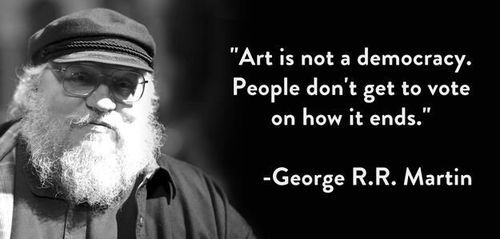
GRRM Meme 3Write from your heart, and dare to write what moves you. Think about the rush of “yeah, this is it!” that you get when you read a piece that takes you out of this world and changes your life for a few brief moments. That author knows something about the craft, or you would not have been so moved by it.

Study the prose of those whose work shocks, rocks, and shakes you. See how they craft the sentences, and form the moods and emotions that drive the plot. Learn from them how to show the true character of a protagonist, or the smell of an alley by the wharves. Read, and then apply what you’ve learned from the masters to your own work.

4 Comments

Filed under Fantasy, Humor, Literature, Publishing, writer, writing

#amwriting: Write like a pansy

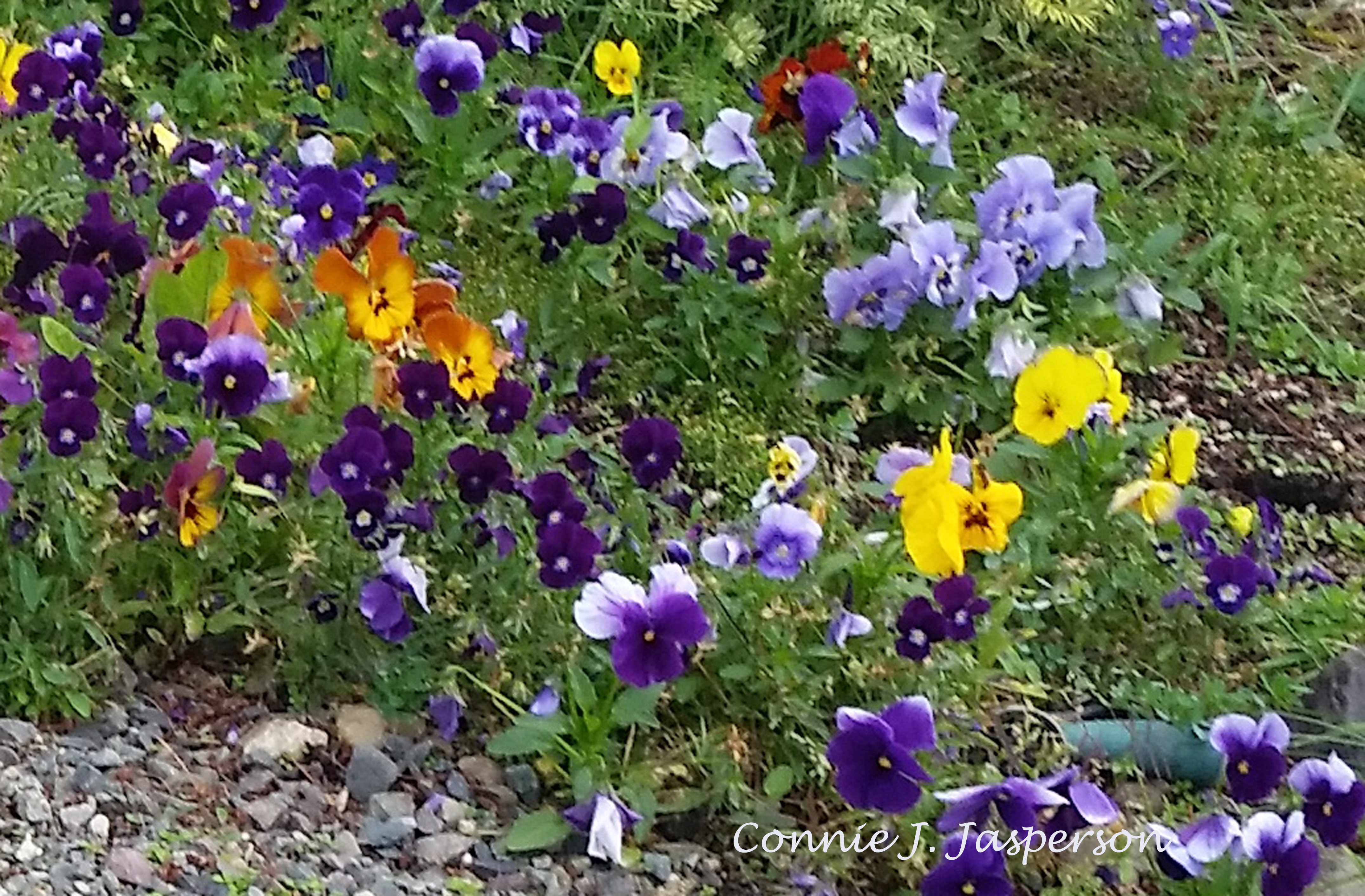
Free-Range Pansies photo credit cjjap copyMy favorite books are written by fearless writers. These authors dare to write because they have something to say, not because they have something they think will sell.

So how does that concept of fearlessness tie in with the title of this blog post? It does say “pansy,” right?

Don’t sell pansies short.

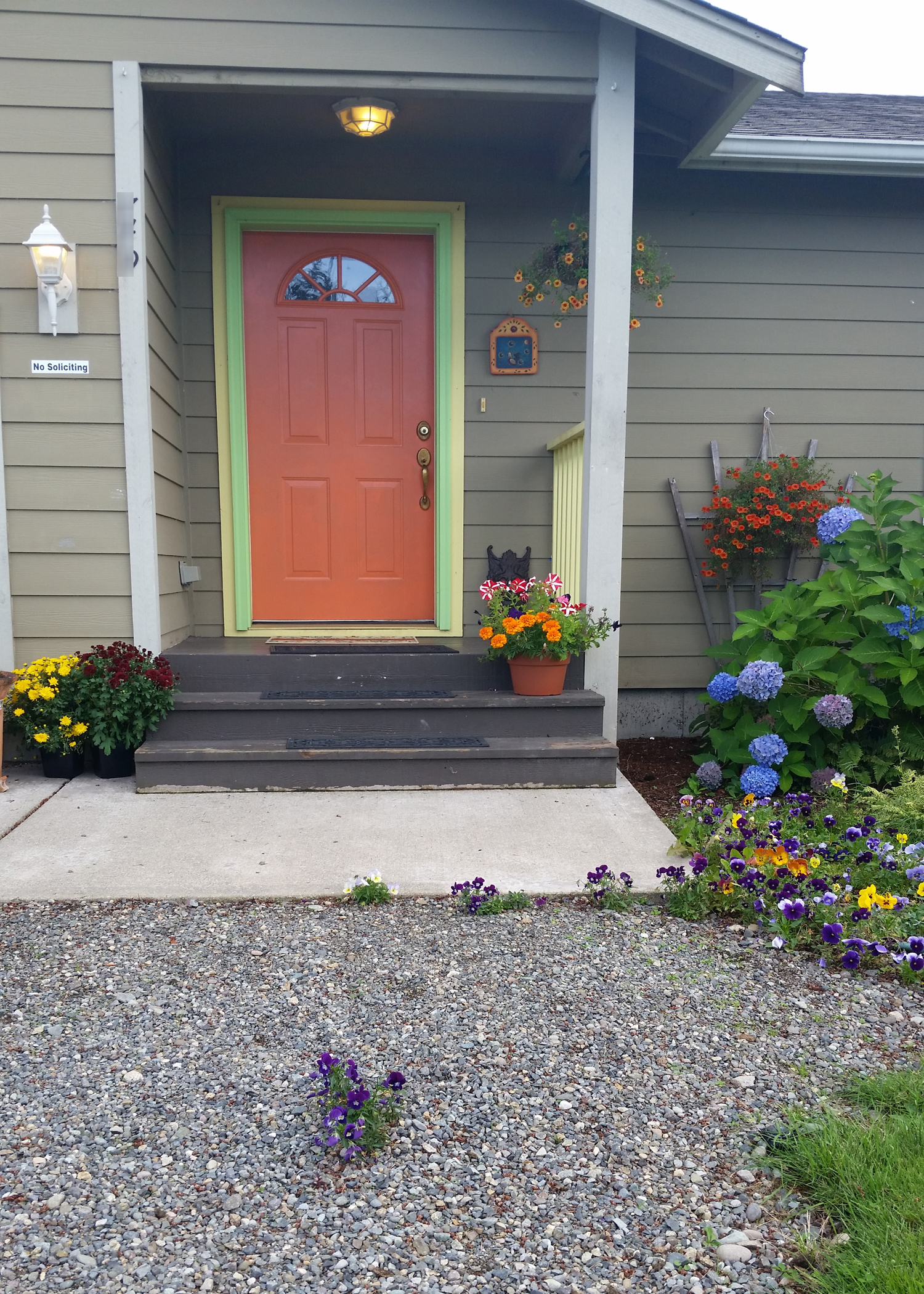
Pansies are fearless plants. They thrive in the strangest places–at least in our yard they do. My husband is an avid gardener, but he really doesn’t plant a lot of annuals. He does get a few hanging baskets and sets a few pots on the front steps for color. Other than that, our yard has large shrubs, lilacs and hydrangeas.

But it wasn’t always that way:

This story began ten years ago, when we bought our house. It was just a brand new tract-house, sticking out of the rocky, Northwest mud. No grass, no plants, nothing but mud everywhere. What we didn’t know then is that we sit on glacial tilllots of rock, and very little soil.

The house came with no landscaping, although a month after we moved in, the builder did spray hydro-seed over the scant inch of topsoil where our front…lawn…would attempt to grow. We were a little strapped for funds, so we  bought $100.00 worth of annuals, and a few perennials, and had a few yards of topsoil for berms brought in so  at least the front of the house would look decent.

Some of those annuals that made our yard look okay that year were pansies.

Ten years and a professional landscaping later, those few pansies that were just for fill that first year are still going strong, reseeding themselves and expanding their reach every year.

During those ten years, we have had deep freezes, we’ve nearly been flooded, and this year we have had an unprecedented drought.

?

And every year, those pansies have grown bolder, and stronger. They’ve thrived  when nothing else did, and this year they have staked out new territory–our driveway.

Yep! The soil they like the best is the driveway gravel. It’s harsh and dry, with few nutrients. Apparently pansies are like authors: adversity makes them strong.

My husband and I like our free-range pansies–and we’re pretty much treating them the way we do our grand-kids:

If that’s where they want to grow, fine. Just don’t break anything.

That is pretty fearless, setting down roots where a Subaru Forester is regularly parked by a man who may forget you’re there and park on top of you.

And what does this tale of resilience and free-range gardening have to do with writing?

Be fearless in your writing. Write because you have a story to tell, and only you can tell it.  If the story takes you to uncomfortable places, but you can’t stop writing it, just go with it. Sometime the best work is a little edgy, and a lot scary to write.

What you do with your work after you’ve written it is up to you, but I’ve always been glad that the bold writers dared to publish their work.

300px-JohnSteinbeck_TheGrapesOfWrath


3 Comments

Filed under Humor, Publishing, Uncategorized, writing

Elements of the story: showing the mood

My Writing LifeMost of us, if you are reading this blog, are writers who love to read for pleasure. We each enjoy different sorts of books, but all our favorite reading has one thing in common: the story, whether fictional or true, moves us in some deeper way, making us think about it long after the final page has been read.

In order for the reader to be moved by a story, his imagination must have been completely engaged in the work. Thus, the writer must perform a tightly controlled balancing act, walking the fine line between giving too much description and not enough.

As writers we are constantly admonished to show, not tell. This can be taken to extreme, and the result is a boring, unimaginative walk-though of a character’s most minute expressions. For example:

Gordon’s brow furrowed, and his eyes narrowed. His eyebrows nearly met in the middle. His lips turned down at the corners. He screamed, “You bloody idiot.”

Well, duh. Pick one, and let the reader imagine the rest.

Gordon appeared angry.

That doesn’t do it either. That is simply telling the reader Gordon was upset, rather than showing it. Perhaps Gordon’s face darkened and his voice was harsh. Or, Gordon’s eyes narrowed. “You bloody idiot!” 

If your character is angry, please don’t have them hiss their dialogue. People do not snort, hiss, or spit dialogue, no matter how angry they are unless they are a snake or a camel.

The writing world has several good handbooks on showing emotions, and these two are  in my library:

It’s good if you have bought a book on this subject and are using it to help show what is going on in  your character’s minds rather than telling it. But use some common sense. If there are fifteen ways to show dejection, please don’t use them all to describe one moment. Simply have your character sit slumped, or refuse to engage the others.

Readers don’t want to be told in minute detail what to imagine. They will put your boring book down and walk away with only one regret–that they bought it in the first place.

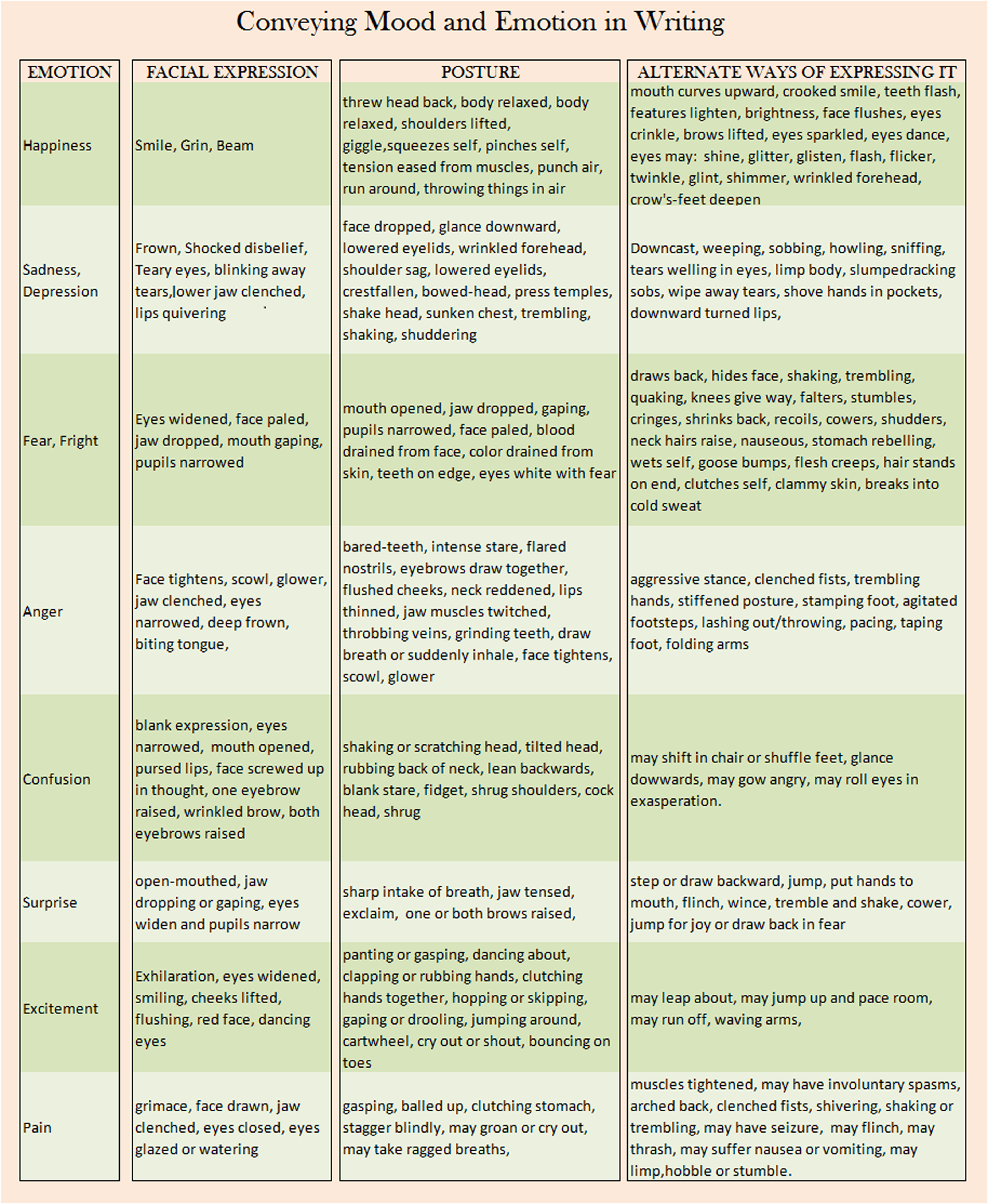
I’ve put together a little cheat sheet for showing emotions. Be sparing–show just enough to keep your readers engaged and the story moving along. If you provide a good framework and allow the reader’s imagination to do the rest, you will engage the reader. That, my friends, is priceless.

Cheat sheet for showing emotion and mood

Cheat sheet for showing emotion and mood

5 Comments

Filed under Humor, Publishing, Uncategorized, writing

Marilyn Rucker, Nick’s, and September

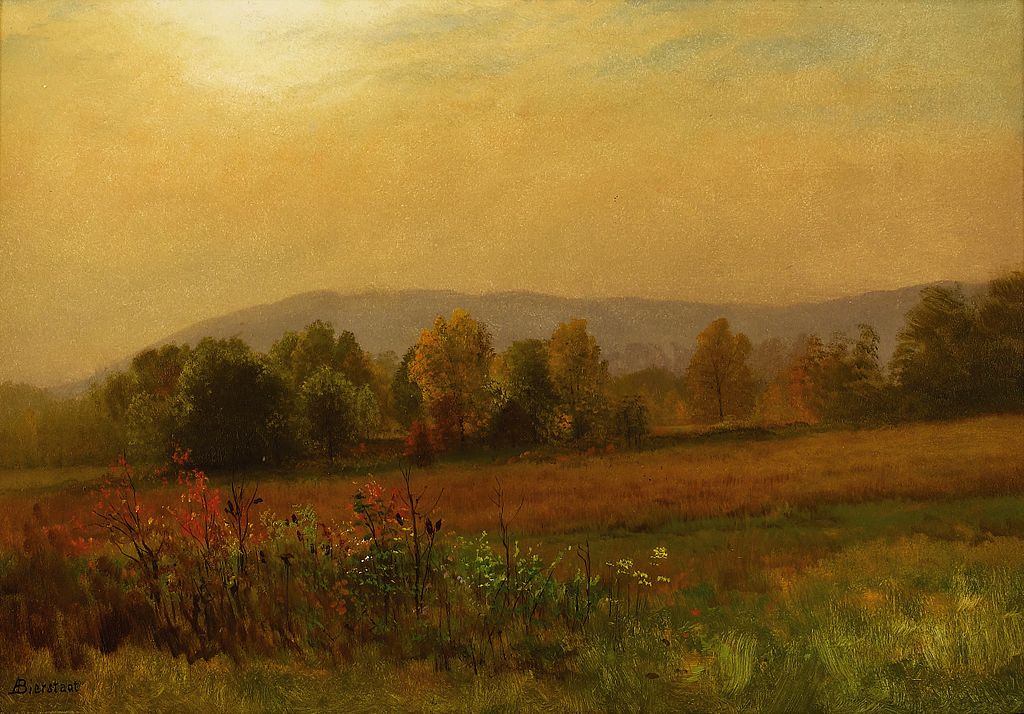
Albert Bierstadt - Autumn Landscape PD|100 via Wikimedia Commons

Albert Bierstadt – Autumn Landscape PD|100 via Wikimedia Commons

September is the month that always sneaks up too fast. This year we had a long drought, with 80 and 90 degree weather (that is 26.7  and 32.2 degrees Celsius)  and well above from the first of May through most of August.

Then, just about the time we took our vacation to Cannon Beach, the weather turned cold, and a little rain finally began to fall. Over the last week it has been cold and rainy here, so much so that I have had to wear socks in the house, and long-sleeved jammies for work. (!!!) And the rain–in the last two weeks we have had more than in the prior four months.

The unwatered lawns are turning green again in our less-than-affluent suburban neighborhood–it’s likely to be a bad year for hay up here in the Northwest.

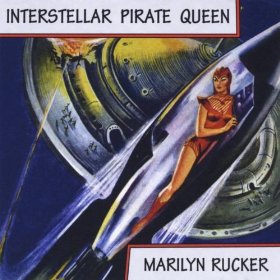
Interstellar Pirate QueenLast evening my dear old hubby and I met in Bellevue with well-known musician and author, Marilyn Rucker, who is up from Texas to perform at Tumbleweed Music Festival in Richland, Washington.  Marilyn wrote Sax and the Suburb, a hilarious and entertaining band-geek murder mystery. Marilyn is an awesome performer, and her music has been featured on King of Queens, and many other television shows. She plays with both The Studebakers and the Hootchcakes Band, but is performing solo in Richland.

If you love hilarious, witty music, give her solo album, Interstellar Pirate Queen a spin. It’s full of wry wit and fabulous, entertaining music to write to.

But we did have an amazing dinner at a place we had never been to, as we are rarely in Bellevue, and we discovered this little jewel in the culinary crown of the Puget Sound region by accident. The place is called Nicks Greek and Italian Cuisine, and all I can say is “Ooh, baby.”

And Nick himself is quite the character with his lovely accent and genuine, welcoming way.

My hiatus from contract editing is over, and I am back at work once again. Writing has to assume the secondary position in my pantheon of tasks. I have a wonderful fantasy novel by Carlie M.A. Cullen currently in my editing pile. I’m also editing an anthology for my publisher, Myrddin Publishing. The work I have received for this anthology so far is outstanding–Myrddin has some fine authors under its banner.

I will take another break from editing in November, as that is NaNoWriMo month.

This year I plan to use that as my opportunity to write a 2000 to 4000 word short-story every day until I have my 50,000 words, and then I will wing it, until November has ended. I am currently building my list of prompts.

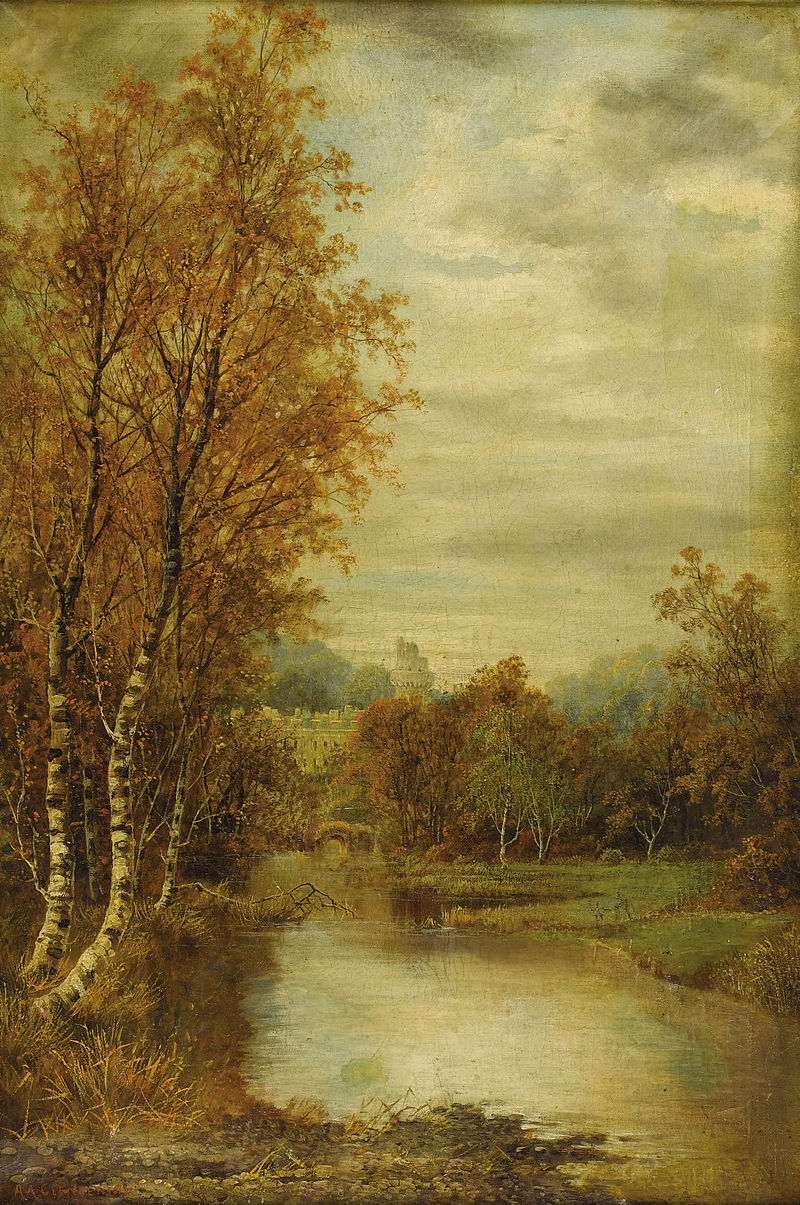
Autumn Landscape With Pond And Castle Tower-Alfred Glendening-1869

Autumn Landscape With Pond And Castle Tower-Alfred Glendening-1869

September is the month I enjoy the least. It represents the end of fun, the last hurrah of the summer. It means playtime is over and work begins in earnest. I hope the weather will turn nice again for a week or so, to give us those final few days of sunshine and 75 degrees (23.3)–that is the perfect, ideal summer day, the kind of day we were denied this year because of the unusual, San Diego-style heat.

I want to sit on my back porch with my kindle and enjoy the last bits of sunshine before the monsoons close in. I want to sit there, watching the birds and planning my next writing adventure, and I will, if only the rain would relax for a week or so, and allow me that little pleasure.

My wish for this winter is that it snows prodigiously in the mountains where it belongs, and rains frequently here in the lowlands. Then, promptly on July 5th as is expected, may our allotted six weeks of summer begin anew with temperatures in the low 80s. Please, may we have a “normal” year, if normal can be measured in our ever-changing world.

1 Comment

Filed under Fantasy, Humor, writing

Elements of the story: making effective revisions

puppy happy dance via pinterestThere is no feeling of accomplishment like that of having completed a novel, or a shorter piece. Once that final sentence is written, there is that happy-dance moment, where we are shouting and the world is singing.

Following that, we have the urge to immediately look the finished manuscript over and see where some revisions could be made.

I know it’s tempting, but don’t do it. We need to gain some distance from our work in order to see it more clearly, so put it aside. If you work on something else for a couple of weeks, or even a month or two, you will gain a better perspective on what you just finished, and your revisions will bring out the best in your work.

But when we do get back to it, where do we start?

Stephen King said it so eloquently in his book, On Writing: “I got a scribbled comment that changed the way I rewrote my fiction once and forever. Jotted below the machine-generated signature of the editor was this note: ‘Not bad, but PUFFY. You need to revise for length. Formula: 2nd Draft = 1st Draft – 10%. Good luck.’ — Stephen King, On Writing, 2000

This means we must cut the fluff.  If your 1st draft is 100,000 words, try to cut 10,000 words out of it, making it 90,000. The following is a list of things to consider:

  1. Dialogue pitfalls: Search for clichés. Speaking as a reader, do a global search for the word alabaster. If you have used it to describe a woman’s skin, get rid of it, and find a different way to describe her. It’s an overused word that has become cliché. Find different ways to say what you want, unless you have a character who uses clichés–if so, he’d better have a good reason. Even then, don’t go overboard. Click here for a looooong list of common clichés: ProWriting Aid.
  2. Try to make your sentences do without these words: very, that, just, so, and literally. There will be places where they are the only words that will work, and you will use them in that instance. Usually just cutting them out of the sentence and adding nothing makes the sentence stronger. Fluffy, over-blown prose weakens the narrative.
  3. Flowery prose, even in a medieval setting, is off-putting to a reader. Do a global search (Cntrl F) for two letters: ly. This will bring up all the adjectives  (oops adverbs, thank you David Cantrell) because they end in ly. Look at each instance and if it is possible, get rid of them. Often the sentence is stronger without that extraneous word. Find a way to show the idea without flowery prose. This is where you grow as a writer–you give visual clues that enhance the story.
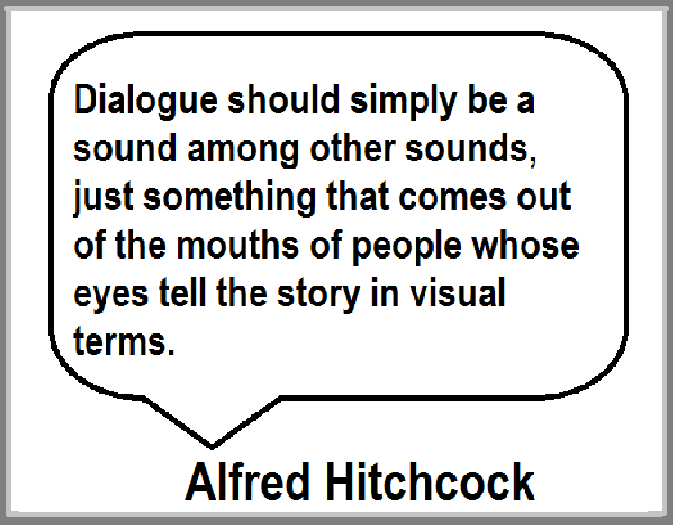
  4. Alfred Hitchcock quote re dialogueExamine the ms for conversations that are opportunities for info dumps. Info is good, but don’t dump it–dole it out as needed, and only when needed.
  5. Are people long-winded, and ranting on and on, with nary a pause for breath?  Decide what is really important in what they are saying and cut everything else.  Conversation in literature must have a purpose, or it is as boring as hell. Cut those marathon speeches down to where they sound like normal people talking, not like orators.
  6. Conversation must pertain to and advance the story. Small talk and verbal tics are obnoxious, and should be avoided at all cost. DO NOT have your characters preface sentences with “Hmmm…” and DO NOT have them use the name of the person they are speaking to, unless there are more than two characters in the scene. You can avoid things like “Well, Bill, it was like this…” just by having the speaker turn to Bill, and say it.

And now for my pet peeve: People do not smile, snort, or smirk dialogue. I mean really: “That’s a lovely dress,” snorted Clara. (eeew. )  Stick to simple dialogue tags, such as said and replied. In fact, it is often best to do away with speech tags (attributions) altogether for a few exchanges every now and then, if:  A. you have only 2 speakers, and B. you have clearly established who is speaking. You can also show who is speaking in other ways:

  1. Miss a few beats. Beats are little bits of physical action inserted into dialogue: John fell quiet and stared out the window. Halee turned and walked out the door. Used sparingly, these pauses serve to punctuate the dialogue, to give the scene movement, and to maintain a strong mental picture in the absence of description. They’re best placed where there is a natural break in the dialogue, because they allow the reader to experience the same pause as the characters.
  2. Don’t over do the action within the conversation. If your characters are rattling pans, slicing apples or staring out the window between every line of dialogue, the scene becomes about the action and not the dialogue, and the impact of the conversation can be lost entirely.

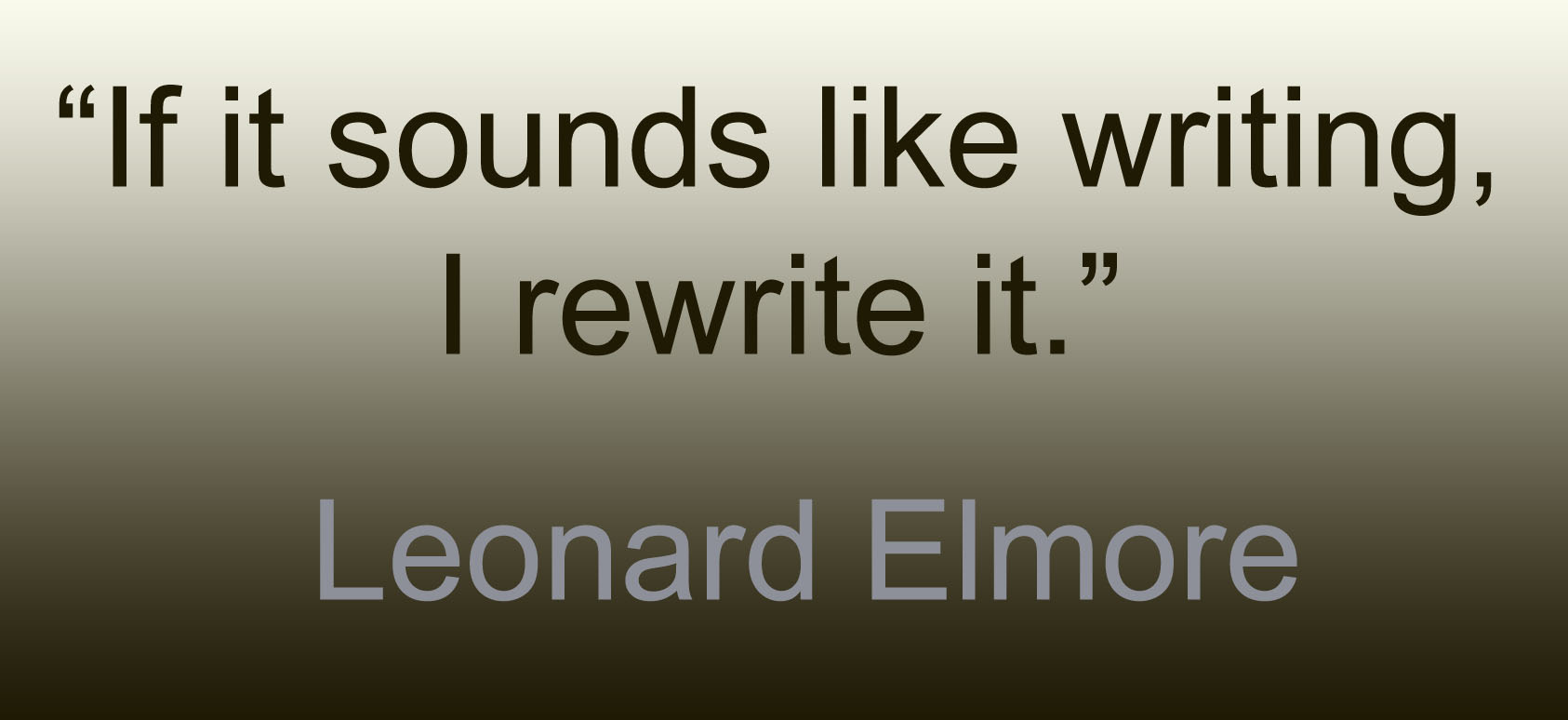
leonard elmore quoteIn our first draft we are trying to make our point, and we inadvertently repeat ourselves. A good way to find where you are repeating yourself is to read a chapter from the bottom up, one paragraph at a time. My editors frequently  tell me, “You said it once, that’s enough.”

In my own work, I hear repetitions and other things I need to cut, if I read it aloud to someone else. I think that’s because when another person is listening, we are more aware of how a given passage sounds.

Also, consider not including a prologue. About half of the readers see the word “prologue” and assume it will be a boring info dump, so they skip it.

This begs the question, “Why go to the trouble of writing it if they aren’t going to read it?” If you must have a prologue, consider calling it Chapter 1– and make it clear that is occurring twenty years before the present day (or whatever). Make it immediately exciting, make it a true first chapter. And don’t do an excerpt from a Holy Book as your prologue. I did that once, and it flew like an iron kite. So I moved my Holy Book to the appendices, and if a reader is interested, they can read it there.

These are just a few things to look for when you begin revisions. And just so you know, revisions are not editing, they are rewriting. If you are “editing” your own manuscript, you have a fool for a client. There is no such thing as self-editing–the best you can do is make revisions and admire your work. You may do very well at that–some people do.

You must make revisions before you hire an editor. Then, ask other authors who they might recommend as an editor and see if you can work well with that person. Your editor will likely point some things out that you didn’t see, but that a reader will. At that point, you will make revisions again. But the results will be so worth it!

5 Comments

Filed under Humor, Self Publishing, Uncategorized, writing

The clock, groceries, and a new thesaurus

Jetsonslogo640x480At times the world seems to be conspiring against me.  I have to drop what I’m doing, load up the van, and head up to town for something as mundane as groceries. Food should order itself, deliver itself, and put itself away.

But no. Where is my android butler and why is he not doing the shopping? Just like the flying car I was promised when I was child, my android butler is in the Jetsons‘ style garage of my imagination.

But sometimes I get two or three pages of writing done in the 20 or 30 minutes before I have to leave the house for an appointment. There is something about the pressure of knowing I will have to quit at a certain time that forces me to be more productive than I would ordinarily be.

Why is this? When I am pressed for time I use every second to get those ideas out of my head. I don’t stop and research on the good, old, time-wasting internet, and I don’t worry about whether or not I am overusing a word in the narrative. This is a rough draft–all of that can be ironed out when I have more leisure–the next day usually.

clockSome of my best ideas have come about under a time crunch.  Normally when I am writing on a stream-of-consciousness level, I can key about fifty words a minute–paltry compared to today’s young-uns who grew up keying their homework rather than writing it in cursive.

I do admit that just because I can key those words does not mean they will all make sense, or be worth reading. But that again is why we are driven to look at what we just wrote the day after we wrote it–did it say what I meant? How many times did I use the word “noose” in that particular chapter and where am I going to find six different alternatives for such a unique word?

Apricot poodle puppy portrait. Isolated on a white background (studio shoot), via Google Images

A little rephrasing here, cutting there, and voila! It looks like a poodle!

It’s a jungle in my head sometimes, and my ancient  student edition of Roget’s Thesaurus is my friend. But neither the old student version of the thesaurus from 40 years ago, nor the modern, online version is cutting it for me right now.

I need more synonyms. Lots, and lots more!

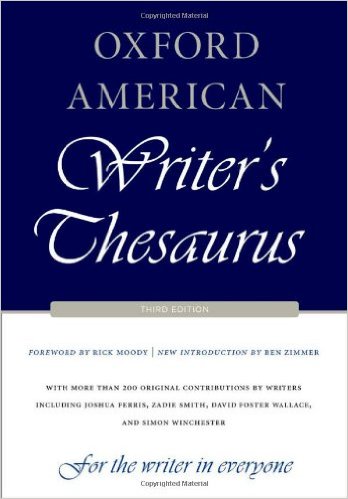
I have just now invested in a bigger, better, hardcover thesaurus. Thus I now have the Oxford American Writers’ Thesaurus winging it’s way to my doorstep. I expect the drone to drop it on Saturday.

ozford american writers thesaurusSome references have to be in hard-copy–such as The Chicago Manual of Style, which is the most comprehensive style guide geared for writers of essays, fiction, and nonfiction. Strunk and White’s Elements of Style is a good beginner style guide, but I found it hard to navigate and couldn’t always find what I wanted. The Chicago Manual of Style is written specifically for writers, editors and publishers and is the industry standard.

Just as a side note–if you are using AP style you are writing for the newspaper, not for literature–two widely different styles with radically different requirements. AP style was developed for expediency in the newspaper industry and is not suitable for novels or for business correspondence. For business, you want to use the Gregg Reference Manual.

Eternal_clock

Eternal Clock, Robbert van der Steeg CC|2.0 via Wikimedia Commons

All in all, I like the way being forced to produce words in a short time helps me lay down a rough draft. But being short on time is big pain when I am trying to revise and iron out stubborn, repetitive wrinkles in a narrative.

Summer is nearly over, and with that comes the long, dark days of the northern winter. I won’t be going as many places (I hope). But with the advent of September I will be spending longer hours editing for clients. My personal productivity will drop in regard to my own work, but I will still find time to write.

And I will also find time to revise. I am nearly at the end of two books written for the World of Neveyah series. Valley of Sorrows will wind up the Tower of Bones series–it is completed and is in revisions. The Wayward Son is nearly complete. While The Wayward Son is not actually a part of the Tower of Bones series, much of it does run concurrently with Forbidden Road, as it is the story of John Farmer’s redemption.

Today will be busy–groceries can wait until tomorrow. Today I am working as hard as I can, trying to get Valley of Sorrows ready to be edited, so that the ToB series will be complete, and also to get John’s story out there too.

2 Comments

Filed under Books, Humor, Literature, Publishing, writer, writing