Today, we are revisiting the way our habitual word choices affect the pacing of our narrative.
 We are encouraged to write active prose as opposed to passive, but what does that mean? First, the term “active prose” does not refer to the events that keep the plot arc moving.
Active prose refers to our word choices and how we construct our sentences.
A passive sentence is not “wrong.” No matter how active the phrasing, a poorly written sentence is not “better.”
Passive phrasing slows the reader’s perception of the story, which may be what you want.
- “Deep in the forest, there was a cabin.” Passive, descriptive, longer.
- “A cabin stood deep in the forest.” Active, verb forward, shorter.
The two examples say the same thing, but the words that surround and modify “cabin” change the mood of the sentence and set the tone for what follows. Neither sentence is right or wrong. It’s up to the writer to choose which style they go with.
Most modern readers don’t have the patience for long strings of descriptive, wordy sentences. However, they do like a chance to breathe and absorb what just happened.
Our task is to mingle active and passive phrasing to keep things balanced. That skill is a fundamental aspect of pacing.
Good pacing is about balanced prose as much as it is about staging the events. It is dynamic, engaging, and immersive.
How do we write balanced prose? It begins with the words we choose to show our story and the order in which we place them in the sentence.
 The ways we combine active and passive phrasing are part of our signature, our voice. By mixing active phrasing with a little passive, we choose areas of emphasis and places in the narrative where we want to direct the reader’s attention.
Some types of narratives should feel highly charged and action-packed. Most of your sentences should be constructed with the verbs forward if you write in genres such as sci-fi, political thrillers, and crime thrillers.
- Stephenie gripped the handhold, bracing herself.
The above sentence is Noun + verb + article + noun + transitive verb + noun.
Verbs are action words, but all verbs are not equal in strength.
Verbs that begin with hard consonants are power verbs. They push the action outward from a character. Other verbs pull the action inward. The two forces, push and pull, create a sense of opposition and friction. Dynamism in word choices injects a passage with vitality, vigor, and energy.
- When we employ verbs that push the action outward from a character, we make them appear authoritative, competent, energetic, and decisive.
- Conversely, verbs that pull the action in toward the character make them appear receptive, attentive, private, and flexible.
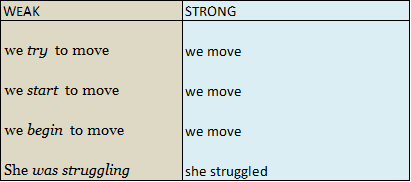 A poor choice of words makes a sentence weak. Passive construction can still be strong despite being poetic.
Has someone said your work is too wordy? An excess of modifiers could be the offenders.
- Look for the many forms of the phrasal verb to be. These words easily connect to other words and lead to long, convoluted passages.
- Look for connecting modifiers (still, however, again, etc.).
Concise writing can be difficult for those of us who love words in all their glory. Nevertheless, I work at it.
My goal during revisions is to make use of contrasts to show the story with the least number of words.
- dwell on / ignore
- embrace / reject
- consent / refuse
- agony / ecstasy
Many power words begin with hard consonants. The following is a short list of nouns and adjectives that start with the letter B. The images they convey when used to describe action project a feeling of power:
- Backlash (noun)
- Beating (noun or verb)
- Beware (verb)
- Blinded (adjective)
- Blood (noun)
- Bloodbath (noun)
- Bloodcurdling (adjective)
- Bloody (adjective)
- Blunder (noun or verb)

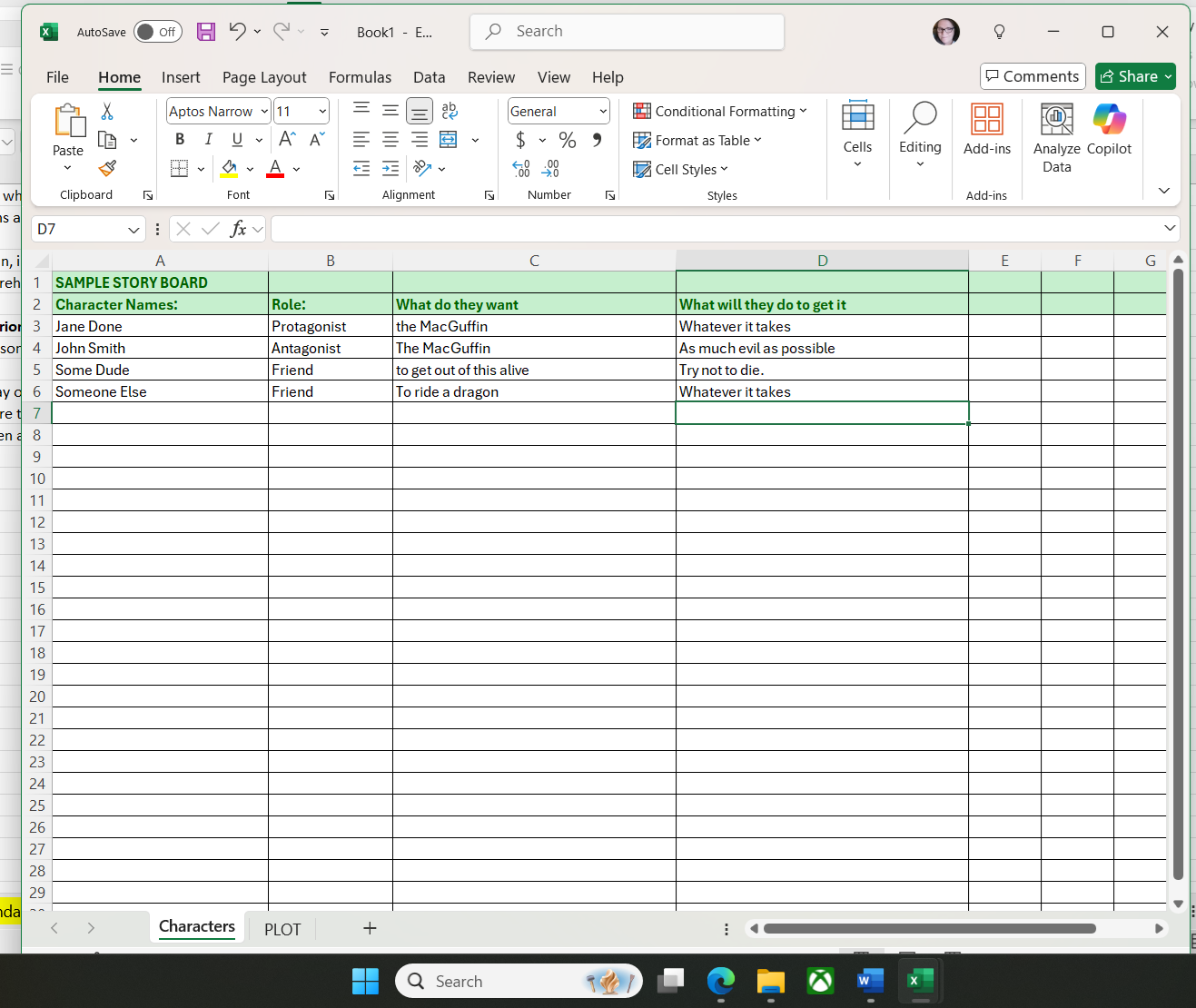
courtesy Office360 graphics
As you can see, some nouns are also verbs, such as beating or blunder. When you incorporate any of the above “B” words into your prose, you are posting a road sign for the reader, a notice that danger lies ahead.
If I want to create an atmosphere of anxiety, I would use words that push the action outward:
- Agony (noun)
- Apocalypse (noun)
- Armageddon (noun)
- Assault (verb)
- Backlash (noun)
- Pale (modifier)
- Panic (verb or noun)
- Target (verb)
- Teeter (verb)
- Terrorize (verb)
If I want to show the interior workings of a character without resorting to a dump of italicized whining, I could write their internal observations using words that draw us in:
- Delirious (modifier)
- Depraved (modifier)
- Desire (verb)
- Dirty (modifier)
- Divine (modifier)
- Ecstatic (modifier)
So why are verbs so crucial in shaping the tone and atmosphere of a narrative? When things get tricky and the characters are working their way through a problem, verbs like stumble or blunder offer a sense of chaos and don’t require a lot of modifiers to show the atmosphere.
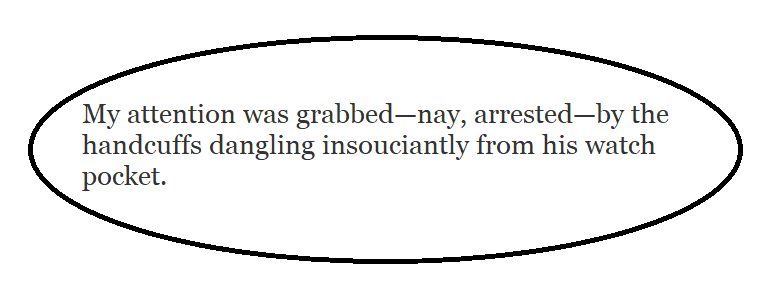 We are drawn to the work of our favorite authors because we like their voice and writing style. The unique, recognizable way they choose words and assemble them into sentences appeals to us, although we don’t consciously think of it that way.
In the second draft, I finetune the plot arc and character arcs, and most importantly, I adjust phrasing.
The tricky part is catching all the weak word choices. Those of you who write a clean first draft are rare and wonderful treasures. I wish I had that talent.
When I find a stretch of blah-blah-blah, I reimagine the scene. I go to the thesaurus to see how to strengthen the narrative while still keeping to my original intention.
There are times when nothing will improve an awkward scene, and it must be scrapped. Be brave and be bold, and cut away the dead wood.
Things to remember:
- Where we choose to place the verbs changes their impact but not their meaning.
- The words we surround verbs with change the mood but not their intention.
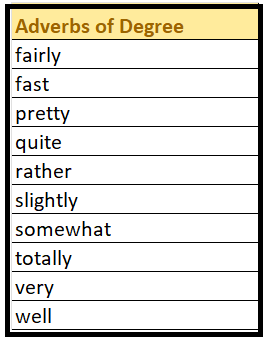
- Modifiers are words that alter their sentences’ meanings. They add details and clarify facts, distinguishing between people, events, or objects.
- Infinitives are mushy words, words with no definite beginning or end.
Modifiers and infinitives are necessary for good writing. However, like salt or any other seasoning, they have the power to strengthen or weaken our prose.
So now you know what I have been doing here at Casa del Jasperson. Cleaning up my excessively wordy work-in-progress is time-consuming. However, I enjoy this aspect of the craft as much as writing the first draft.
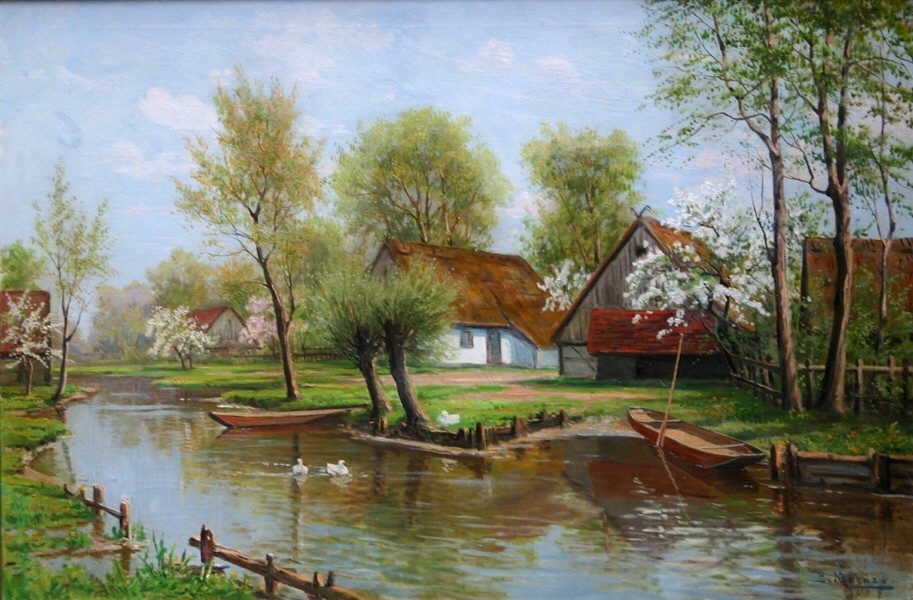
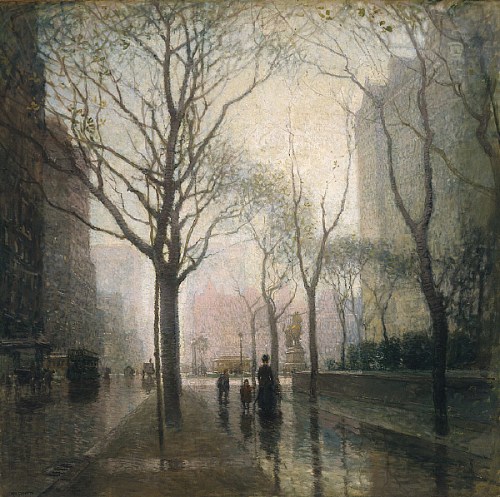 Artist: Paul Cornoyer (1864–1923)