Category Archives: writing

Speculative Fiction—Genre and the Liberation of Ideas #writing

Speculative fiction … it’s a subcategory of fiction, a genre. But what is a genre, exactly?

MyWritingLife2021In this case, genre is a category of literature that features similarities in form, style, or subject matter, or tropes. Speculative fiction is an overarching term for a genre that bookstores break into two main subcategories: science fiction and fantasy. Each category is subdivided into many smaller sub-genres.

We should consider the meaning of those two words, “speculative fiction.

Speculative = conjectural, suppositional, theoretical, hypothetical, academic, abstract, risky, hazardousunsafe.

Fiction = novels, stories, creative writing, prose literature, narration, storytelling, romance, fable, imaginative writing, works of the imagination.

Speculative fiction takes risky, often theoretical ideas and expresses them through storytelling.

The two words, speculative fiction, give an author permission to leave the boundaries of our known world. It frees authors and philosophers to examine deep and profound concepts by exploring them in a fictional environment.

The-caves-of-steel-doubleday-coverIn 1953’s The Caves of Steel, Isaac Asimov took us into the future, a time when humanity had divided into two factions—spacers and earthmen. The Blurb:

Like most people left behind on an over-populated Earth, New York City police detective Elijah Baley had little love for either the arrogant Spacers or their robotic companions. But when a prominent Spacer is murdered under mysterious circumstances, Baley is ordered to the Outer Worlds to help track down the killer. 

The relationship between Baley and his Spacer superiors, who distrusted all Earthmen, was strained from the start. Then he learned that they had assigned him a partner: R. Daneel Olivaw.  Worst of all was that the “R” stood for robot—and his positronic partner was made in the image and likeness of the murder victim!

In 1953, racism was endemic, institutionalized. When Asimov wrote this novel, he took on bigotry and equality in a palatable way by showing us a civilization where androids are denied equality. To murder a human is a crime, but in this society, many otherwise good people refuse to believe that androids are sentient beings with a right to life. Yet, in R. Daneel Olivaw, we meet a sentient being and feel compassion for him.

Isaac Asimov trusted his readers.

Does the above example mean that speculative fiction only meant to point out our society’s shortcomings?

Not at all.

StardustGaimanbookcoverNeil Gaiman’s Stardust qualifies as a speculative fiction novel, even though it’s a literary fantasy. It is a fairytale that explores the core theme of transformation and is told with beautiful prose in an unhurried fashion. A story can be told leisurely, poetically, and still pack a punch.

In my opinion, good writing conveys a story in a crafted style. Words are chosen for their impact, and the prose is delivered with a voice that is uniquely that of the author.

Fairytales are often dark, scary stories, and always offer us morals. In Stardust, Gaiman shows us truth. He lays bare the lies we tell ourselves through the simple fairytale motif that real love is not gained through prodigious deeds. All through the narrative, Gaiman explores the difference between desiring a person and loving them. By the end of the tale, we know that love requires truth if it is to survive.

Neil Gaiman trusts his readers. That is something we all need to do. Sometimes a story needs to emerge slowly and be told with beautiful, immersive prose, and we need to trust that our readers will enjoy it if we craft it well.

There is room in the bookstore for books with a less urgent story to tell, as well as those that ambush the reader and beat them bloody with non-stop action.

Asimov showed us that tight, straightforward prose works.

Gaiman shows us that sometimes you can just have a little fun with it.

The genre of speculative fiction grew out of the repression of the 1940s and 1950s and has always been the literary field in which ideas that challenge society’s norms were sown. Radical concepts could be conveyed when couched fantasy and set in fictional worlds.

Editors_bookself_25May2018Dedicated authors are driven to learn the craft of writing, and it is a quest that can take a lifetime. It is a journey that involves more than just reading “How to Write This or That Aspect of a Novel” manuals. Those are important and my library is full of them. But how-to manuals only offer up a part of the picture. The rest of the education is within each of us, an amalgamation of our life experiences and what we have learned along the way.

I’ve said this before, but whenever I come across an author whose work resonates with me, I go back and reread it. The second time, I take notes. I study how they crafted their work, look at their word choices. Then I ask myself why it moved me.

I do the same with the books that left me feeling robbed—where did the author go wrong? What can I do to avoid this in my work?

I always learn something new from looking at how other authors combine and use words to form the moods and emotions that drive the plot. For me, writing is a journey with no finite destination other than the satisfaction of making small steps toward improvement.

Sometimes my work is good, other times Aunt Maudine’s budgie wouldn’t want the bottom of its cage lined with it. But when I look back at my early work, I can see improvement over time, which is all we can ever hope for.

the fellowship of the ringAuthors write because we have a story to tell, one that might also embrace morality and the meaning of life. To that end, every word we put to the final product must count if our ideas are to be conveyed.

Don’t lose heart, and don’t give up just because you think you can’t write like your favorite author. Write for yourself and write because you have something that needs to be said.

And don’t quit until you arrive at the place where you write “the end” on the last page.

8 Comments

Filed under writing

#NovemberWriter: the Zen writing experience #writing

Every writer is different, with a unique approach to getting their work on paper. There is no one-size-fits-all method for taking a story from an idea, a “what if” moment, to a finished piece. Each of us has to find our own way.

MyWritingLife2021BI’m like everyone else. I can’t write creatively when life is too stressful. But I can always write a blog post, which is how I keep my writing muscles in “fighting form.”

However, I have a few tools in my writer’s toolbox that jar things loose, help me organize my ideas, and help me make a coherent, logical arc out of a story.

When I reach a point in a manuscript where I’ve run out of ideas, I stop forcing it. I’m an indie and my deadlines are self-imposed, so my production timelines aren’t as finite as a writer who is under contract. I begin a different project and come back to the other one when inspiration returns.

Sometimes a project begins well and despite that great beginning, it goes unfinished. This happens when I run out of ideas for that story, which leads to me loosing enthusiasm. I set that project aside and work on something else. Maybe it’s a short story or a poem, but it’s something I can finish. That way, I can relax and enjoy the act of creating something from idea to completion.

As an indie, my goals are for me, not for anyone else. I choose to embrace a Zen writing life.

monkey_computer_via_microsoft

courtesy Office360 graphics

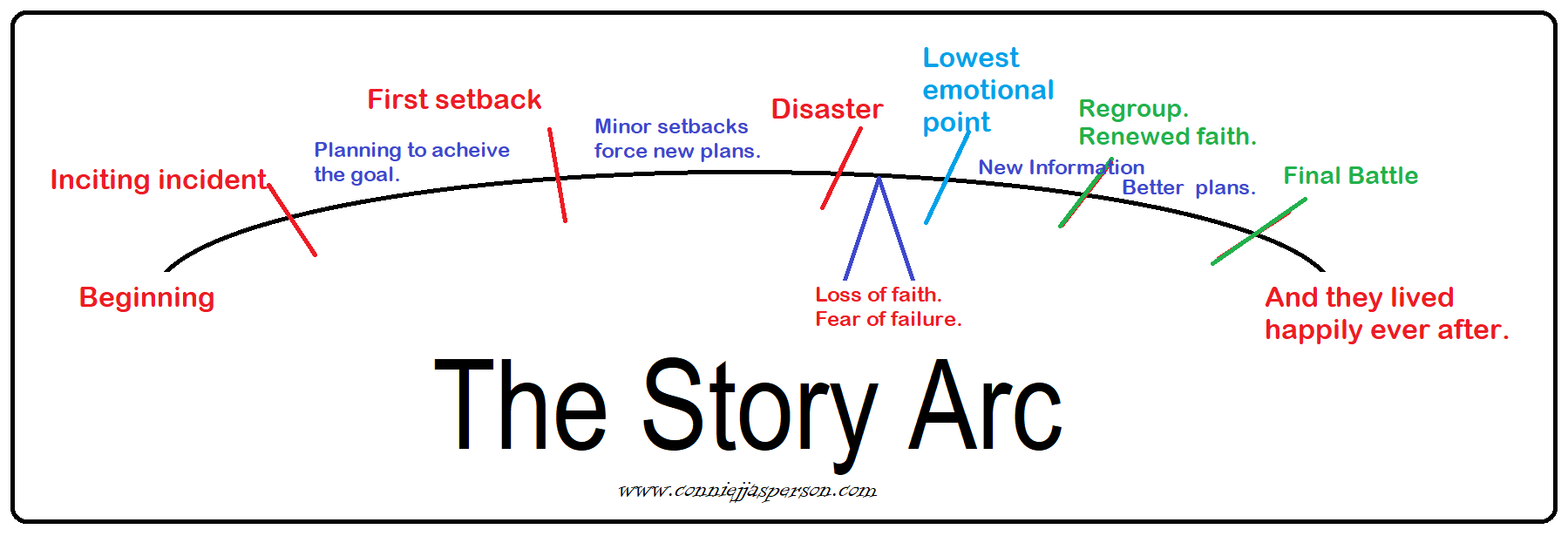
One manuscript has sat unfinished for several years for a variety of reasons. The story was stalled at the halfway point and I had only a vague idea of how it must end. This year I managed to write a synopsis of the final half of the story arc and that has become invaluable as an outline. Writing is now moving ahead as I had hoped.

One important thing I have come to accept is this: my work is written for a niche market of those few readers who seek out the kind of work that I do. I write what I want to read, and I am an odd duck when it comes to literature.

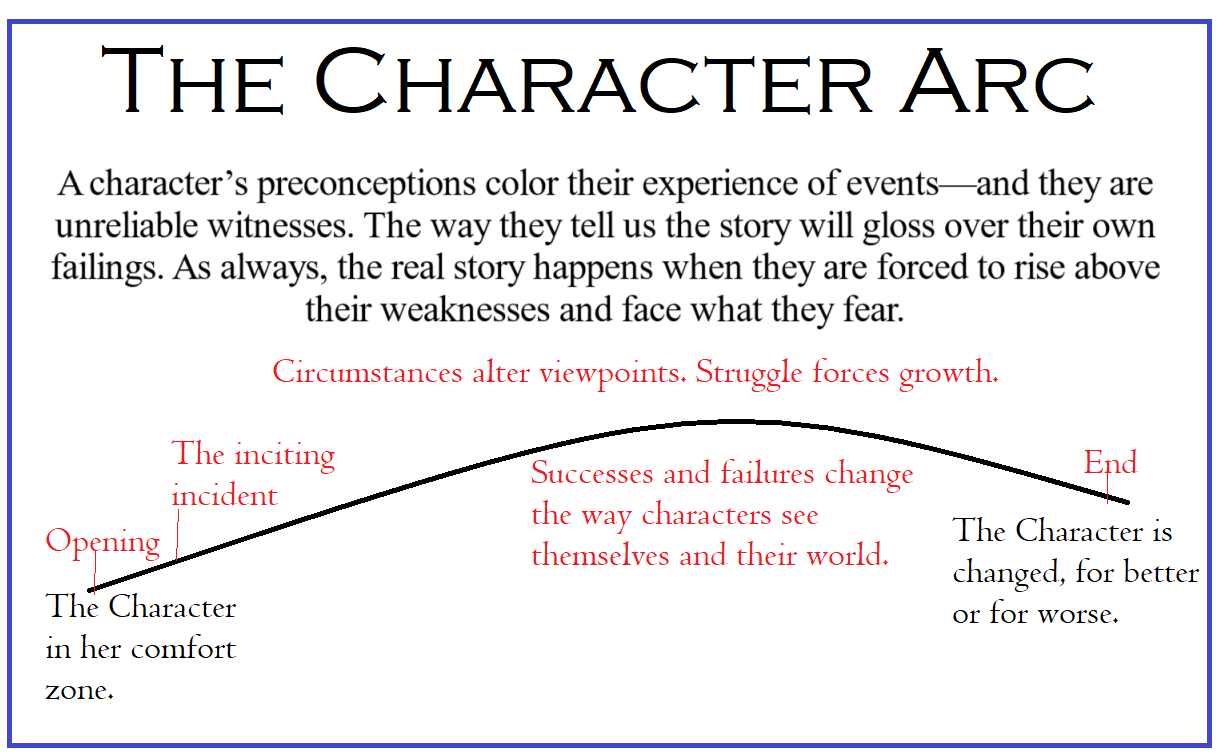
Despite how much I love the stories that fall out of my head, my work doesn’t appeal to readers of action adventure. My stories are internal. The characters and the arc of their personal journeys are the central elements of their stories. While I love the action and the setting, those elements are only the frame within which the characters live and grow.

In the old days, I didn’t understand that. I marketed it to the wrong audience. Readers of action and adventure aren’t interested in slower-paced work. Even worse, I rushed to publish my work when it wasn’t ready.

So, the first hard-earned snippet of wisdom I have to share today is this: Write your stories for yourself and don’t stop trying.

My Coffee Cup © cjjasp 2013The second piece of wisdom is a little more challenging but is a continuation of the first point: Write something new every day, even if it is only one line. Your aptitude for writing grows in strength and skill when you exercise it daily. This is where blogging comes in for me—it’s my daily exercise. If you only have ten minutes free, use them to write whatever enters your head, stream-of-consciousness.

The third thought is a fun thing: learn the meaning of a new word every day. You don’t have to use every word you know, but it never hurts to learn new things. Authors should have broad vocabularies.

The fourth thing: is don’t sweat the small stuff when you are just laying down the first draft. I know it’s a cliché, but it is also a truism. Let the words fall out of your head, passive phrasing and all, because the important thing is to finish the story.

The fifth thing to remember is this: every author begins as someone who wants to write but feels like an imposter. The authors who succeed in finishing a poem, a short story, or a novel are those who are brave enough to just do it. They find the time to sit down and put their ideas on paper.

800px-Singapore_Road_Signs_-_Temporary_Sign_-_Detour.svgAuthors must overcome roadblocks in their personal life. Everyone has times of trouble, and they affect our ability to be creative. During the years I was raising my children, I had three failed marriages, worked three part-time jobs as a single mother, and struggled to find time and the energy to write.

Life got better financially once we survived the trickle-down economics experiment of the 1980s, and I found better jobs. In 2003, I met the love of my life but two of my children developed adult-onset epilepsy. We learned to cope with the tribulations of the dreaded “E” word, and we had many good years. And now my husband is in the later stages of Parkinson’s.

This makes life a little too interesting at times. Writing enables me to make sense of the twists and turns of our human experience.

It helps me process life’s complications in a non-threatening way.

I don’t write to win awards, and I don’t earn a lot from it. I have the time to write and not feel guilty about any arbitrary goals I don’t achieve.

virtually golden medallion of mayhem copyThe story is the goal; everything else is a bonus.

In real life, nothing is certain. Adversity in life forges strength and if you are a person blessed with empathy, it forges an understanding of other people’s challenges. Having the opportunity to make daily notes in a journal, to write poetry, blog posts, short stories, or novels is a luxury, one I am grateful for.

The first draft of your manuscript is the thinking draft. Don’t worry too much about self-editing when you are laying down what you think might be the story. Just get those thoughts down and enjoy the feeling of writing the story you need to write.

3 Comments

Filed under writing

#NovemberWriter: When Inspiration Fails #writing

We are now well into week one of November. Week one of a thirty-day writing challenge is the danger week. Once the first rush of creativity passes, many writers will give up. They experience a momentary lull in creativity and don’t have the tools to visualize what to write next.

Olympia Rebel Writers Sticker 2024The well of inspiration runs dry and they quit. Many will never attempt to write again, although they will always consider themselves secretly a writer.

Rather than worrying about word count, I suggest setting a more reasonable goal. If you are new at this, I suggest a goal of writing at least one paragraph a day. Write something each day for thirty days, and you will be surprised at what you produce.

I have solutions for overcoming the roadblocks that daily life throws up. And believe me, when you are caregiver for a spouse with late-stage Parkinson’s, life tends to vomit roadblocks.

PostItNotePadThe first one is one I developed when working in corporate America. Frequently, my best ideas came to me while I was at my job. If your employment isn’t a work-from-home job, using the note-taking app on your cellphone to take notes during business hours will be frowned upon. To work around that, keep a pocket-sized notebook and pen to write those ideas down as they come to you.

It’s old-school, but it worked because you don’t appear distracted or off-task.

Ideas come to me when I stop forcing my brain to work when it’s on its last legs. Strangely, cleaning and organizing my living space allows my mind to rest. Taking the time to wash dishes or clean the house helps reset my short-circuited creative mind.

But getting outside and walking helps even more. I suggest taking a notebook or dictating into your note-taking app.

Sometimes, we write an action scene that doesn’t advance a story. Arcs of action drive plots. Every reader knows this, and every writer tries to incorporate that knowledge into their work.

But some scenes don’t advance a story because they are examples of random mind wandering.

Don’t throw it out. Keep it and maybe you can use it in a different story. ALL writing is good for you, so set what doesn’t work for your current work aside. Keep on mind wandering and writing scenes.

Who knows what will grow from those seeds?

tabs of a stylesheet

I go somewhere quiet and ask myself questions about the story I’m stalled on. I carry a notebook and make a list of the answers. I write an idea here and another there, and soon I have a plot.

Novels begin a certain way: at the story’s outset, we find our protagonist and see them in their familiar surroundings. The inciting incident occurs once we have met them.

But maybe we don’t have any idea what sort of bad thing happens. Maybe we’re still doing character creation, and that is okay.

If you’re stuck, it sometimes helps to go back to the beginning and consider the following questions:

  • What is the goal/objective? What do they want?
  • Is that objective important enough to warrant risking everything to acquire it?
  • What could the protagonist face that will challenge their moral values and sense of personal honor?
  • How could this force the protagonist to become stronger?
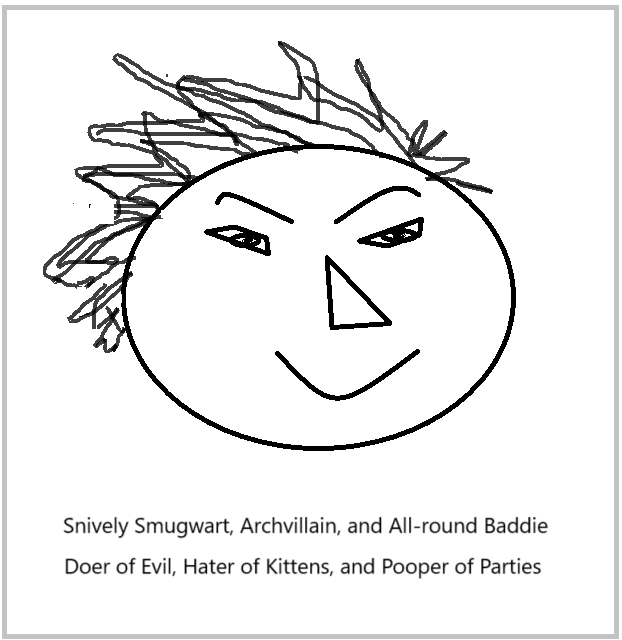
  • Who is the antagonist? What do they want, and what are they willing to do to achieve it?
  • Does the enemy face ethical quandaries, too?

Wrong-Way-Traffic-Sign-K-101-1Every obstacle we throw in the path to happiness for the protagonists and their opposition shapes the narrative’s direction and alters the characters’ personal growth arcs. As you clarify why the protagonist must struggle to achieve their goal, the words will come.

I write my ideas down and the broad outline of a story evolves.

  • I keep my notes in an Excel workbook. It contains maps, calendars, and everything pertaining to any novel set in that world, keeping it in one easy-to-find place.
  • When logic forces change to the plot, and it always does, I go to my storyboard and update my plot outline, calendar, or maps.

When your creative mind needs to rest, step away from the keyboard and do something different. I find that when I take a break to cook or clean out a corner, ideas for what to do next in my novel will occur to me. These little flashes of inspiration carry me a few chapters further into the story.

dead catFinally, let’s talk about murder as a way to kickstart your inspiration. Some people recommend it but I suggest you don’t resort to suddenly killing off characters just to get your mind working. You may need that character later, so plan your deaths accordingly.

  • Readers become angry with authors who casually kill off characters they have grown to like.

When a particular death is planned from the beginning, it is one thing. But developing characters is a lot of work. If you kill off someone with an important role, who or what will you replace them with?

Above all, relax. It’s November, a good month for writing. Write something every day, even if it is only a paragraph that has no relationship to anything else. The goal is to develop the habit of writing every day.

Perhaps you should write a haiku:

November writers

Inking worlds on paper.

Leaves fall, writers write.

Whatever you come up with, it will have to be better than that travesty!

To learn about the haiku and perhaps write one of your own, check out this website. It’s fun and it’s free! Haiku Checker – Check Haiku syllable and line counts!

microfiction

Comments Off on #NovemberWriter: When Inspiration Fails #writing

Filed under writing

#NovemberWriter: Creating Plausible Magic and Legitimate Science #writing #PrepTober

Many authors will begin writing novels on November 1st. Some will be genre fiction such as fantasy, romance, or sci-fi, etc. I read sci-fi and seek out fantasy, but I’m also a born skeptic.

MyWritingLife2021BLogic is an area many first-time authors ignore because some magic or theoretical science they believe is original has captured their imagination. Taken individually, these ideas may be good, but if the author doesn’t thoroughly think it through, the reader won’t be able to suspend their disbelief.

Science and magic are two sides of the personal-power coin. Therefore, the tropes of science, the paranormal, and magic must be written in such a way that we can easily and wholeheartedly suspend our disbelief.

Open your storyboard if you have one and create a new page or open a new document. Title the document “Rules for the Paranormal” and save it in your story file. (Or Rules for Science, or Magic, etc.).

You are going to develop a system that describes the limits of your chosen trope. By creating unbreakable boundaries, you create opportunities for conflict.

Hint: make a “glossary,” a list of the proper spellings for all words that relate to or are unique to the kind of skill your characters have access to. Trust me, this will save your sanity later on.

In designing a story where superpowers, super weapons, or magic are crucial elements, we have to keep an important idea in mind:

  • Science is not magic.

scienceThe writer of true science fiction must know the difference, especially when creating possible weapons. Superweapons and superpowers are science-based. Think Stan Lee’s Spider-Man. The theory behind superweapons and /or superpowers might be improbable. But it’s logical and rooted in the realm of theoretical physics.

Authors of sci-fi must research their ideas and understand the scientific method. This way of testing and evaluation objectively explains nature and the world around us in a reproducible way. Sci-fi authors must look things up, read scientific papers, and ask questions.

An important thing for authors to understand is who their intended readers are. Those who read and write hard science fiction are often employed in various fields of science, technology, or education in some capacity. They know the difference between physics and fantasy.

The paranormal is not science or magic. It is something else entirely and works best when the opening pages establish that the supernatural exists as a part of that world but has limitations. The paranormal should follow a logic of some sort. Start with a premise: Ghosts, vampires, shapeshifters, werewolves, or any kind of supernatural entity exist in that world.

Ask yourself, what are the conditions under which they cannot exist?

  • If ghosts, can they interact with the physical world? Why or why not?
  • What powers do the paranormal characters have?
  • Under what conditions do their powers not work?
  • What harms them? (Sunlight? A silver bullet? Something must be their kryptonite, or there is no story.)

Magic is not science, but it should be.

magicMagic works best when the local population in that world accepts that it exists and has limitations. When you think about it, magic should only be possible if certain conditions have been met. It should follow a set of rules.

For me, magic as an element of a fantasy novel only works under the following conditions:

  • the number of people who can use it is limited.
  • the ways in which it can be used are limited.
  • the majority of mages are limited to one or two kinds of magic and only certain mages can use every type of magic.
  • there are strict, inviolable rules regarding what each brand of magic can do and the conditions under which it will work.
  • there are some conditions under which the magic will not work.
  • the damage it can do as a weapon or the healing it can perform is limited.
  • the mage or healer pays a physical/emotional price for the use of magic.
  • the mage or healer pays a hefty price for abusing their gifts.
  • the learning curve is steep and sometimes lethal.
  • Is your magic spell-based rather than biological/empathic?
  • If magic is spell-based, can any reasonably intelligent person learn it if they find a teacher or are accepted into a school?

Fulfilling these conditions sets the stage for you to create the science of magic. This is an underlying, invisible layer of the world. By creating and following the arbitrary rules of this “science,” your story won’t contradict itself.

What challenges do your characters have to overcome when learning to wield their magic/superpower or super weapon?

  • Is the character born with the ability to use the superpower or magic? Or was it learned or conferred?
  • Are they unable to fully use their abilities?
  • If not, why not?
  • How does their inability affect their companions?
  • How is their self-confidence affected by this inability?
  • Do the companions also face learning curves?
  • What has to happen before your hero can fully realize their abilities?

Personal power and the desire for dominance are where the concepts of science, magic, and the paranormal converge.

In all my favorite science fiction and fantasy novels, the enemy has access to equal or better science/magic/superpower. How the protagonists overcome their limitations is the story.

Epic Fails memeConflict forces the characters out of their comfortable environment. The roadblocks you put up force the protagonist to be creative. Through that creativity, your characters become stronger than they believe they are.

You must also clearly state the limits of science for the antagonist. Take the time to write it out and be sure the logic has no hidden flaws. If the protagonist and their enemy are not from the same school of magic or science, you should take the time to write out what makes them different and why they don’t converge.

That document is just for your reference. When you create a science, technology, or magic system, you build a hidden framework that will support and advance your plot.

Within those systems, there can be an occasional exception to a rule. However, a good reason for that exception must exist, and it must be clear to the reader why that exception is acceptable.

An important thing to consider when using magic or technology is this: the only time the reader needs to be informed that these systems exist is when the characters need new information, and only if that knowledge affects their actions. Otherwise, write the chosen trope as if it is a natural part of the environment rather than wasting words on a needless info dump.

Everything will be in place for a free-wheeling dive into the consequences of your protagonist’s struggle.

The fundamental tropes of science, magic, or superpowers offer your characters opportunities for success. But to be believable, those opportunities must not be free and unlimited.

Magic, science, and superpowers share common ground in one area—they offer characters an edge in whatever struggle they face.

30 days 50000 wordsHowever, neither science nor magic can support a poorly conceived novel. Science, the supernatural, and magic are just tropes, tools we use to help tell the story. Strong, charismatic characters, mighty struggles, and severe consequences for failure make a brilliant novel.

Do a little planning now so that when you begin writing your novel, you will see your characters clearly. You will know what they are capable of and what they can’t do. Those limitations will offer you many opportunities to take the story in an original direction.

6 Comments

Filed under writing

#FineArtFriday: A Boating Party by John Singer Sargent ca. 1889

RISDM 78-086

Artist: John Singer Sargent (1856–1925) 

Title: A Boating Party

Date: circa 1889

Dimensions: height: 88.3 cm (34.7 in) width: 91.4 cm (35.9 in)

Collection: Rhode Island School of Design Museum  

What I Love About this Painting:

We’re looking at a fine day toward the end of summer. The day is warm enough that light jackets are all that are needed. The trees along the riverbank have begun to turn, and some leaves have fallen. 

One thing I have always appreciated about John Singer Sargent’s subjects is the way he captures people in the act of doing something. The eye immediately goes to the lady in white who is carefully stepping from the riverbank and into a boat, aided by a man in the shadows on the bank. Her reflection on the still waters is masterfully done.

In the right foreground, a man lounges in another boat that is tied up at the pier, with his leg thrown over both the boat’s gunwale and the dock’s rail. Beside him, another lady sits on the pier. Judging from the way Sargent has positioned them, I feel they are a married couple, and they are in no hurry to go anywhere.

About the Artist, via Wikipedia:

[1] John Singer Sargent (January 12, 1856 – April 14, 1925) was an American expatriate artist, considered the “leading portrait painter of his generation” for his evocations of Edwardian-era luxury. He created roughly 900 oil paintings and more than 2,000 watercolors, as well as countless sketches and charcoal drawings. His oeuvre documents worldwide travel, from Venice to the Tyrol, Corfu, the Middle East, Montana, Maine, and Florida.

Born in Florence to American parents, he was trained in Paris before moving to London, living most of his life in Europe. He enjoyed international acclaim as a portrait painter. An early submission to the Paris Salon in the 1880s, his Portrait of Madame X, was intended to consolidate his position as a society painter in Paris, but instead resulted in scandal. During the next year following the scandal, Sargent departed for England where he continued a successful career as a portrait artist.

From the beginning, Sargent’s work is characterized by remarkable technical facility, particularly in his ability to draw with a brush, which in later years inspired admiration as well as criticism for a supposed superficiality. His commissioned works were consistent with the grand manner of portraiture, while his informal studies and landscape paintings displayed a familiarity with Impressionism. In later life Sargent expressed ambivalence about the restrictions of formal portrait work, and devoted much of his energy to mural painting and working en plein air. Art historians generally ignored artists who painted royalty and “society” – such as Sargent – until the late 20th century. [1]


Credits and Attributions:

IMAGE: Wikimedia Commons contributors, “File:John Singer Sargent – A Boating Party – 78.086 – Rhode Island School of Design Museum.jpg,” Wikimedia Commons, https://commons.wikimedia.org/w/index.php?title=File:John_Singer_Sargent_-_A_Boating_Party_-_78.086_-_Rhode_Island_School_of_Design_Museum.jpg&oldid=809452828 (accessed October 24, 2024).

[1]Wikipedia contributors, “John Singer Sargent,” Wikipedia, The Free Encyclopedia, https://en.wikipedia.org/w/index.php?title=John_Singer_Sargent&oldid=1032671314 

(accessed Oct. 24, 2024).

5 Comments

Filed under #FineArtFriday, writing

#NovemberWriter: How the story ends, and how it begins #writing #PrepTober

Today, we’re continuing to prep our novel by thinking about the arc of a plot and the story our characters will live out on the page.

We’ll start by jumping to the end.

Olympia Rebel Writers Sticker 2024(I know it’s rude to read the end of a book before you even begin it, but I am the kind of writer who needs to know how it ends before I can write the beginning.)

Julian Lackland was my first completed novel. The first draft of this novel was my 2010 NaNoWriMo project. The entire novel was inspired by a short story of about 2500 words that I had written about an elderly knight-at-large. Julian was a Don Quixote type of character and he had returned to the town where he had spent his happiest days in a mercenary crew.

Golden Beau, Julian’s life-partner has died. Julian enters the town and finds it completely changed. The town has grown so large that he becomes lost. Julian talks to his horse, telling him how wonderful the place they are going to is and all about the people he once knew and loved. When he does find the inn that he’s looking for, nothing is what he expects.

Julian_Lackland Cover 2019 for BowkersOn October 28, 2010, I was scrambling, trying to find something I could write, but my thoughts kept returning to the old man’s story. The innkeeper had referred to him as the Great Knight, stupidly brave but harmlessly insane. Had he always been that way? Who had he been when he was young and strong? Who did he love? How did Julian end up alone if the three of them, Julian, Beau, and Mags, were madly in love with each other?

What was their story? On November 1, I found myself keying the hokiest opening lines ever written, and from those lines emerged the story of an innkeeper, a bard, three mercenary knights, and the love triangle that covered fifty years of Julian’s life.

If I know how the story will end, I can build a plot to that point. This year, in November, I plan to finish a novel that has been on the back burner for five years.

I know how it will end because it is a historical sidenote in the Tower of Bones series. The story is canon because it has always been mentioned as a children’s story, the tale of an impossibly brave hero who does amazing and impossible things.

The novel separates Aelfrid-the-shaman from the myth of Aelfrid Firesword. It details both the founding of the Temple and the truth about Daryk, the rogue-mage who nearly destroyed it all.

I have written a synopsis of what I think will be the final chapters of Aelfrid’s story. It consists of two pages and is less than a thousand words.  Each paragraph details a chapter’s events, and I’ve included a few words detailing my ideas for the characters’ moods and the general emotional atmosphere.

The way the final battle ends is canon. I have some notes, but I will choreograph the actual battle when I get to it. It is pivotal, but I won’t drag it out. I’ll show the crucial encounters and tell the minor ones, as I dislike reading drawn-out fight scenes and usually skip over them, just reading the high points.

So now, let’s go back and look at the place where the story begins. We want to focus on the day that changed everything because that is the moment we open the story.

plotting as a family picnicI suggest writing a short synopsis of the story as you see it now. This will be as useful as an outline but isn’t as detailed. It will allow you to riff on each idea as it comes to you and is a great way to develop the storyline.

Open the document and look at page one. Let’s put the protagonists in their familiar environment in the opening paragraphs. This chapter is the hook, the “Oh, my God! This happened to these nice people! chapter.” This chapter is where the author can hook or lose the reader.

How? We see the protagonist content in their life, or mostly so. A nice cup of tea might start the day, but by evening, a chain of events has begun. A stone has begun rolling downhill, the first incident that will become an avalanche of problems our protagonist must solve.

But how do we lose the reader when this is the most coolest, bestest story ever written?

When we are new in this craft, we have a burning desire to front-load the history of our characters into the story so the reader will know who they are and what the story is about.

Don’t do it.

plottingLIRF07122020Fortunately for me, my writers’ group is made up of industry professionals, and one in particular, Lee French, has an unerring eye for where the story a reader wants to know begins.

I have to remind myself that the first draft is the thinking draft. In many ways, it’s a highly detailed outline, the document in which we build worlds, design characters, and forge relationships.

  • The first draft, the November Novel, is the manuscript in which the story grows as we add to it.

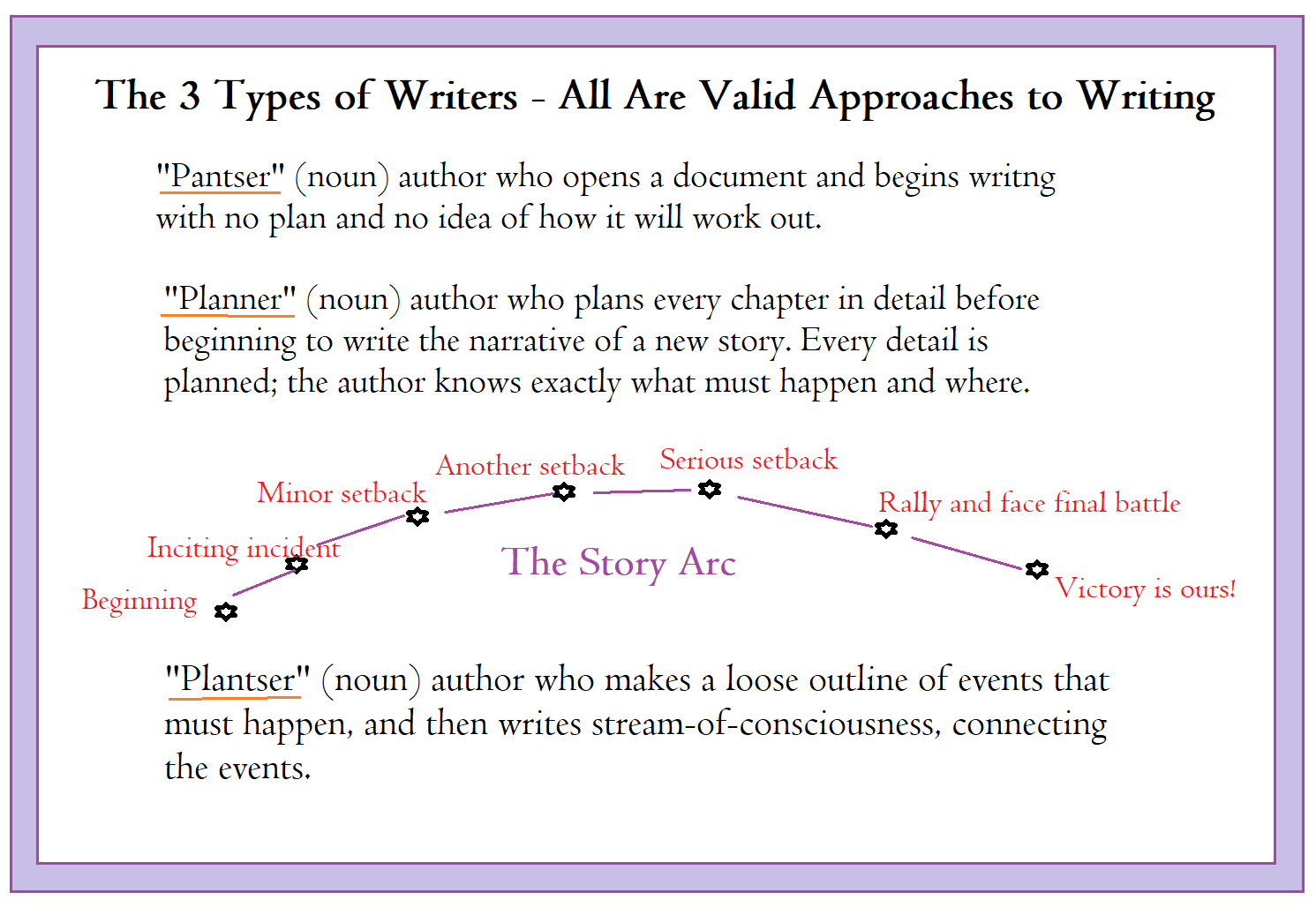
We need a finite starting point, an incident of interest. If you’re like me, you have ideas for the ending, so you have a goal to write to. At this point, the middle of the story is murky, but it will come to you as you write toward the conclusion.

The inciting incident is the beginning because this is the point where all the essential characters are in one place and are introduced:

  • The reader meets the antagonist and sees them in all their power.
  • The protagonistknows one thing—the antagonist must be stopped. But how?

The story kicks into gear at the first pinch point because the protagonist’s comfortable existence is at risk.

What else will emerge over the following 60,000 or more words (lots more in my case)?

storyArcLIRF10032021The protagonist will find this information out as the story progresses and only when they need to know it. With that knowledge, they will realize they’re doomed no matter what, but they’re filled with the determination that if they go down, they will take the enemy down, too.

If you dump a bunch of history at the beginning, the reader has no reason to go any further. You have wasted words on something that doesn’t advance the plot and doesn’t intrigue the reader.

As you write, the people who will help our hapless protagonist will enter the story. They will arrive as they are needed. Each person will add information the reader wants, but only when the protagonist requires it. Some characters, people who can offer the most help, will be held back until the final half of the story.

We know how the story begins, and we know how it ends. The middle will write itself, and by the end of the novel, the reader will have acquired what they want to know.

With the last bits of information, the final pieces of the puzzle will fall into place. The promise of gaining all that knowledge is the carrot that keeps the reader involved in the book.

For the last #PrepTober installment, we will look at science and magic and why it’s important to start out knowing the rules for each.

panster-planner-planner-stpery-arc-10012021LIRF

Comments Off on #NovemberWriter: How the story ends, and how it begins #writing #PrepTober

Filed under writing

#NovemberWriter: Worldbuilding in advance #writing

We have two weeks to go to November 1st. If you are planning to participate in a writing quest with a specific goal, now is a good time to consider the world in which your prospective story might be set.

MyWritingLife2021BI like to sit somewhere quiet and let my mind wander, picturing the place where the opening scene takes place.

Is it indoors? Are we out in the wild? How can I write this? A few notes about my thoughts will help.

A good way to develop the skill of writing an environment is to visualize the world in your real life.  When you look out the window, what do you see? Close your eyes and picture the place where you are at this moment. With your eyes still closed, tell me what it’s like.

If you can describe the world around you with your eyes closed, you can create a world for your characters.

The plants and landscape of my fictional world are partly based on the scenery of Western Washington State because it’s wild and beautiful, and I’m familiar with it. The wild creatures are somewhat reality-based but are mostly imaginary.

Remember, we don’t have to immerse ourselves immediately. All we’re doing is laying the groundwork, ensuring plenty of ideas are handy when we start writing in earnest on November 1st.

Religion is a large part of my intended story, and some things are canon, as the first book in the series was published in 2012. The tagline for this series is “The Gods are at War, and Neveyah is the Battlefield.”  The war of the gods broke three worlds, drastically changing the landscape of Neveyah and offering endless opportunities for mayhem.

St_Helens_before_1980_eruption_horizon_fixedThe novel I intend to finish this year is set at the end of the first millennium, while last year’s effort was set in the second century after the cataclysm canonically known as the Sundering of the Worlds. This means the world is very different. The forests and wildlife have had a thousand years to rebound, and while some areas are still struggling to recover, most of the west is lush in comparison.

1200px-MSH82_st_helens_plume_from_harrys_ridge_05-19-82I live only sixty-five miles north of Mount St. Helens, so I have a good local example of how things look after a devastating event. I also can see how flora and fauna rebound in the years following it. Mount St. Helens – Wikipedia

Even if ecological disasters, technology, or religion aren’t the center of the plot, they can be a part of the background, lending color to the world. In Neveyah, my fictional world, the Temple of Aeos trains mages and healers who are then posted to local communities where they serve the people with their gifts.

Those communities are autonomous as the Temple doesn’t run them, but just as in real life, somebody is in charge of running things. In Neveyah, a council of elders governs most towns and cities, and the Temple is run the same way. We humans are tribal. We prefer an overarching power structure leading us because someone has to be the leader.

We call that power structure a government.

food and drinkWhen you create a fictional world, you create a culture. As a society, the habits we develop, the gods we worship, the things we create and find beautiful, and the foods we eat are products of our culture.

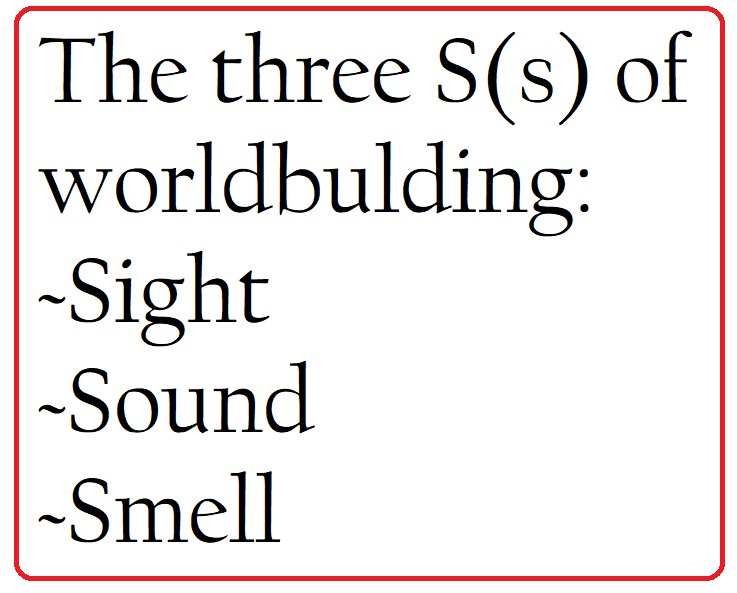
What does the outdoor world look and smell like? Mentioning sights, sounds, and scents can show the imaginary world in only a few words.

What about the weather? It can be shown in small, subtle ways, making our characters’ interactions and the events they go through feel real.

Once you have decided on your overall climate, consider your level of technology. Do some research now and bookmark the websites with the best information.

  • A note about fantasy and sci-fi food: climate and soil types limit the variety of food crops that can be grown. Wet and rainy areas will grow vastly different crops from those in arid climates, as will sandy soils and clays versus fertile loams. Look up what sort of food your people will have available to them if your story is set in an exotic environment.

I will be pantsing it (writing stream-of-consciousness) for the month of November, which means I will be writing new words every day, connecting the events I have plotted on my storyboard.  I never have time to think about logic once I begin the challenge, so the storyboard is crucial to me.

magicTo show a world plausibly and without contradictions, we must consider how things work, whether it takes place in a medieval world or on a space station. Don’t introduce skills and tech that can’t exist or don’t fit the era.

scienceFor instance, blacksmiths create and repair things made of metal. The equivalent of a medieval blacksmith on a space station will have high-tech tools and a different job title. Readers notice that sort of thing.

Society is always composed of many layers and classes. Rich merchant or poor laborer, priest or scientist—each occupation has a place in the hierarchy and has a chain of command. Take a moment to consider where your protagonist and their cohorts might fit in their society.

Maybe your novel’s setting is a low-tech civilization. If so, the weather will affect your characters differently than one set in a modern society. Also, the level of technology limits what tools and amenities are available to them.

What about transport? How do people and goods go from one place to another?

Many things about the world will emerge from your creative mind as you write those first pages and will continue to arise throughout the story’s arc.

Consider making a glossary as you go. If you are creating names for people or places, list them separately as they come to you. That way, their spelling won’t drift as the story progresses. It happened to me—the town of Mabry became Maury. I put it on the map as Maury, and it was only in the final proofing that I realized that the spelling of the town in chapter 11 was different from that of chapter 30.

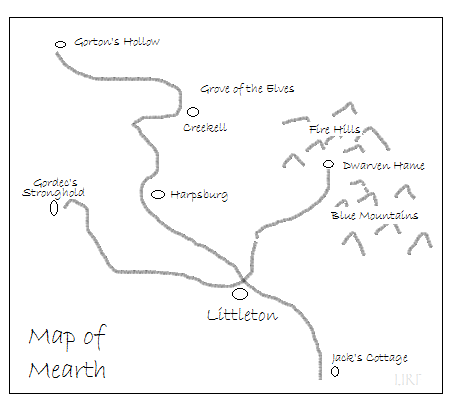
protomapA hand-scribbled map and a calendar of events are absolutely indispensable if your characters do any traveling. The map will help you visualize the terrain, and the calendar will keep events in a plausible order.

Next week, we’ll take another look at plotting so that we have a starting point with a good hook and a bang-up ending to finish things off.

Calendar Capricas 3262 Neveyah


Credits and Attributions:

Wikimedia Commons contributors, “File:MSH82 st helens plume from harrys ridge 05-19-82.jpg,” Wikimedia Commons, https://commons.wikimedia.org/w/index.php?title=File:MSH82_st_helens_plume_from_harrys_ridge_05-19-82.jpg&oldid=912891712 (accessed October 13, 2024).

Wikimedia Commons contributors, “File:St Helens before 1980 eruption horizon fixed.jpg,” Wikimedia Commons, https://commons.wikimedia.org/w/index.php?title=File:St_Helens_before_1980_eruption_horizon_fixed.jpg&oldid=575896084 (accessed October 13, 2024).

2 Comments

Filed under writing

#NovemberWriter: Preparing to speed-date your muse #preptober #writing

November is National Novel Writing Month—and I am and always will be a November Writer. It’s the month I dedicate to writing new material. However, I no longer participate in the organization known as NaNoWriMo.

MyWritingLife2021I was a dedicated municipal liaison for the Olympia, Washington Region for twelve years and a regular financial donor, but I walked away after the organization’s implosion last November. I will get my 50,000 new words in November but will not sign up to participate through the NaNoWriMo website.

Instead, my region is preparing to go rogue with our own creative contest, milestones, and rewards. We stay connected through our Facebook page and our Discord Channel.

Last year’s tomfoolery within the national organization’s headquarters included accusations of ignoring child endangerment and grooming in a particular forum, rumors of mismanaged donations (never substantiated), and the overt power grab and subsequent “cleansing of MLs” by NaNo HQ’s new regime. Those shenanigans have poisoned the waters for me.

This Lit Hub article was the capper—I’m walking away from what was once the best part of my writing life. NaNoWriMo defends writing with AI and pisses off the whole internet. ‹ Literary Hub (lithub.com)

Whether you choose to go the NaNoWriMo route and participate through their website or go rogue like me, October is #Preptober, and the world is full of writing challenges to participate in.

Olympia Rebel Writers Sticker 2024Set your goal, keep a record of your daily word count or pages edited, or whatever, and let National Novel Writing Month be your month to achieve your goals. I have had buttons and stickers made as rewards for our region’s writers, and we will have write-ins as we have always done.

We are committed to supporting all writers, whether they are traditionalists participating through the national website or rogue writers, and the community we have built over the last twelve years remains strong. More than ever, we are committed to our original goals of writing a novel (or completing a project) in 30 days.

National Novel Writing Month is about accountability. We set goals and devote thirty days to working toward certain milestones. Each milestone we achieve gets us closer to a finished project. On November 30th, we can look back and take pride in what we have accomplished in only thirty days.

So, what is #Preptober all about? It’s getting ready to spend 30 days writing new words, self-editing last year’s novel, or any number of creative projects.

During the month of November, before my husband’s Parkinson’s became a problem, I might pound out 60,000 or so words, but my novels were only half finished at that point. Maybe a year or so later, I would have a coherent first draft that tops out at around 120,000 words. Three more years and six or eight drafts later, my novel was publishable at about 90,000 words.

For me, succeeding at getting the bare bones of a novel’s first draft written during the 30 days of November requires a pre-flight checklist. The checklist becomes my permanent stylesheet/outline for that novel.

I found Excel useful when I first began writing, and I use it to this day to keep my plots and background information organized. I also use Excel to keep track of my daily word count. This was my personal April challenge–unfortunately my husband was hospitalized before the end of the challenge, so my word count ends before April 30th:

Word count spreadsheet

Google Docs, pencil and paper—ANY document or spreadsheet program will work.

Once I’m done winging it through the story and am in revisions, some scenes will make more sense when placed in a different order than originally planned. At that point, an outline allows me to view the story’s arc from a distance. The outline is a visual aid that keeps my stream-of-consciousness writing flowing.

If I am editing a story for a client who has no outline, I make one as I go.

The outline is an editing tool, an overview that allows me to see where the plot arc might be flatlining. Perhaps an event should be cut entirely as it no longer works. (I always save my outtakes in a separate file for later use.)

Over the next few weeks, we’ll talk more about my process.

But first, WHAT is our project? Are we using November for writing or editing or writing music or painting landscapes?

This is how I start my pre-flight checklist for winging it through the merry month of November. Whether we are writing a novel or editing it, the basic premise of any story in any genre can be answered in eight questions. Considering these questions on a chapter-by-chapter level is a good editing tool—when you note your observations on the outline, you can see the rise and fall of the action, follow the character arcs, and ensure the pacing is on point.

  1. Who are the players?
  2. Who is the POV character?
  3. Where does the story open? This is worldbuilding, so make the setting feel real.
  4. What does the protagonist have to say about their story? What do they want, and what will they do to get it?
  5. Who is the antagonist? What do they want, and what will they do to achieve it?
  6. What is the major obstacle to our characters’ achieving their desires?
  7. What other roadblocks hinder them?
  8. How does the story end? Is there more than one way this could go?

Plot-exists-to-reveal-characterThe answer to question number one kickstarts the plot: who are the players? Once I know the answer to this question, I can write, and write, and write … although most of what I write at that point will be background info. The answers to the other questions will emerge as I write the background blather.

I write fantasy stories most often, and they always begin with the characters. Characters usually arrive in my imagination as new acquaintances inhabiting a specific environment. That world determines the genre.

Who are youThey share some of their story the way strangers on a long bus ride might. I see the surface image they present to the world, but they keep most of their secrets close and don’t reveal all the dirt. These mysteries will be pried from them over the course of writing the narrative’s first draft.

That little bit of mind-wandering gives me the jumping-off point, which is all I need to get my story off the ground.

Knowing who the protagonist is, having an idea of their story, and seeing them in their world is a good first step.

Write those thoughts down so you don’t lose them. Keep adding to that list as ideas about that world and those characters come to you.

But what if you plan to edit last year’s novel rather than write a new project? We will go into productive self-editing next week.

real-writers-writeAnd what if you are writing poems or short stories? Graphic novels? We will also go into preparing to “speed-date your muse” when embarking on those aspects of writing.

We will look at all areas of creativity this #Preptober, because November is a month for exploring creativity on every level, and many sites offering November writing quests are springing up. We will explore the ever-expanding list of NaNo alternatives, and we will be prepared to have fun.

6 Comments

Filed under writing

What is “beta reading,” and how do I find a suitable reader? #writing

The month of September is drawing to a close, and we are winding up our dive into the second draft of a manuscript. We hope we have a perfect manuscript with no structural issues.

MyWritingLife2021BBut we know the work is just beginning. Now we need an unbiased eye looking at the structure, a beta reader.

Beta Reading is the first look at a manuscript by someone other than the author. It is the first reading of an early draft by an unbiased eye. Editing and proofreading happen further down the process, but this reading is critical.

This phase should guide the author in making revisions that make the story stronger. It’s best when the reader is a person who reads for pleasure and can gently express what they think about a story or novel.

I do suggest you find a person who enjoys the genre of that particular story. If you are asked to be a beta reader, you should know it is not a final draft. You should ask several questions as you read:

  1. My Coffee Cup © cjjasp 2013Setting: Does the setting feel real?
  2. Characters: Is the point of view character (protagonist) clear? Did you understand what they were feeling? Were they likable? Did you identify with and care about them? Were there various character types, or did they all seem the same? Were their emotions and motivations clear and relatable?
  3. Dialogue: Did the dialogue and internal narratives advance the plot?
  4. Events: did the inciting incident and subsequent roadblocks to success feel believable?
  5. Pacing: How did the momentum feel?
  6. Does the ending surprise and satisfy you? What do you think might happen next?

If you are asked to be a beta reader, you might be distracted by grammar and mechanics, and you might forget that the manuscript you’ve been asked to read is unedited.

  • I suggest you keep editorial comments broad, as a line edit is not what the author is looking for at this stage.

However, if the author really has no understanding of grammar and mechanics, you might gently direct them to an online grammar guide, such as The Chicago Manual of Style Online.

I am fortunate to have excellent friends in my writing group who are willing to read for me. Their suggestions are thoughtful and spot-on.

Let’s say that you have just joined a professional writers’ group. After attending a few meetings, you ask a member for feedback about your book or short story.

blphoto-Orange-ScissorsBe prepared for it to come back with some detailed critical observations, which may seem harsh. Any criticism of our life’s work feels unfair to an author who is new at this. And to be truthful, some authors never learn how to put aside their egos.

Some authors read the first three comments, decide the reader missed the point, and choose to ignore all the suggestions.

This is because the reader pointed out info dumps and long paragraphs the author thought were essential to the why and wherefore of things.

Maas_Emotional_Craft_of_FictionWorse, perhaps they were familiar with a featured component of the story, such as medicine or police procedures. The reader might have suggested we need to do more research and then rewrite what we thought was the perfect novel.

Even if it is worded kindly, criticism can make you feel like you have failed.

When I received my first critique, I was stunned, embarrassed, and deeply confused. I had worked and worked on that manuscript and why didn’t they know that?

Being the only one in a group who didn’t understand something made me angry, but thank heavens, my manners kicked in. I bottled it up and behaved myself.

Not understanding how to correct our bad writing habits is the core reason why we feel so hurt.

That critique was painful, but when I look back on it, I can clearly see why the manuscript was not acceptable in the state it was in.

I had no idea what a finished manuscript should look like, nor did I understand how to get it to look that way. I didn’t know where to begin or who to turn to for answers.

  • I didn’t understand how to write to a particular theme.
  • Punctuation and usage were inconsistent and showed I lacked an understanding of basic grammar rules.
  • I resented being told I used clichés.
  • I resented being told my prose was passive. But I couldn’t understand what they meant when they said to write active prose.

There was only one way to resolve this problem. I had to educate myself.

emotion-thesaurus-et-alI went out and bought books on the craft of writing, and I am still buying books on the craft today. I will never stop learning and improving.

Don’t ask a fellow member of a professional writers’ forum to read your work unless you want honest advice. Even if they don’t “get” your work, they will spend their precious time reading it, taking time from their writing to help you out, and that is priceless.

Finally, if you have offered your work to someone who is hypercritical about the small stuff and ignores the structural things you asked them to look at, don’t feel guilty for not asking them to read for you again.

Let it rest for a day or two. Then, look at their comments with a fresh eye and try to see why they made them.

activateLearning the craft of writing is like learning any other trade, from cooking to carpentry. It takes work and effort to become a master.

If you want to craft memorable work, you must own the proper tools for the job and learn how to use them. My “toolbox” contains:

  1. MS Word as my word-processing program. You may prefer a different program, but this is the one I use.
  2. Books on the craft. Self-education is critical. I refer back to The Chicago Manual of Style and numerous other books on the craft of writing whenever I am stuck. (See a short list of my favorites below.)
  3. I have trusted, knowledgeable beta-readers for my work and people who give me thoughtful feedback that I can use to make my final draft as good as I can get it.
  4. I work with a good, well-recommended freelance editor.
  5. Take free online writing classes.
  6. Attend conferences and seminars (not free, but worth the money).
  7. I meet with my weekly writing group.
  8. I read daily in ALL genres.

One day in 1990, I stumbled upon a book offered in the Science Fiction Book Club catalog: How to Write Science Fiction and Fantasy by Orson Scott Card. I’ve said this before, but the day that book arrived in my mailbox changed my life.

That was the day that I stopped feeling guilty for thinking I could be a writer.

The next book I bought was in 2002: On Writing, A Memoir of the Craft by Stephen King.

The following is the list of books that are the pillars of my reference library:

Negative feedback is a necessary part of growth. A good, honest critique can hurt if you are only expecting to hear about the brilliance of your work. This is where you have the chance to cross the invisible line between amateur and professional.

  • Editors_bookself_25May2018

3 Comments

Filed under writing

#FineArtFriday: revisiting Indian Summer by William Trost Richards 1875

Indian_Summer_MET_DT276257Title: Indian Summer by William Trost Richards

Genre: landscape art

Date: 1875

Medium: oil on canvas

Dimensions: 24 1/8 x 20 in. (61.3 x 50.8 cm)

Collection: Metropolitan Museum of Art

What I love about this painting:

Autumn is upon us once again. I was looking through the vault at Wikimedia Commons, and my eye kept being drawn to this painting by William Trost Richards. I featured this painting two years ago, and still love the feeling of “zen” that Trost Richards managed to instill into this scene.

He captured a singular moment of tranquility. A light breeze barely ruffles the surface of our pond. At the bottom right, two girls play beside a large boulder at the water’s edge.

Across the pond, in the center and nearly hidden in the shadows, a teamster and his oxen wade across the shallows.

Autumn’s haze lends a feeling of mystery to the scene, muting the reds, yellows, and oranges of leaves about to fall. This last burst of grandeur can’t hold back winter, though it tries. Soon, the forest will sleep, snow and ice will decorate barren limbs, and ice will stop the waters’ gentle motions.

But beneath the grasp of winter, new life will bide its time, and winter will fade into spring. The seasons will follow their course, but today is autumn’s day to shine, to go down in a blaze of golden glory.

A century ago, William Trost Richards painted a scene of peace and serenity, perfectly capturing it. He preserved the glory of the scenery, but more than that, he captured the mood and the atmosphere of a perfect autumn day. When we view this scene, we can sit back and admire the beauty of our world.

 >>><<<

About William Trost Richards via Wikipedia:

William Trost Richards (November 14, 1833 – November 8, 1905) was an American landscape artist. He was associated with both the Hudson River School and the American Pre-Raphaelite movement. [1]

In 1856, he married Anna Matlack Richards (1834–1900), a 19th-century American children’s author, poet and translator best known for her fantasy novel, A New Alice in the Old Wonderland. The couple had eight children, only five of whom lived past infancy. Anna educated the children at home to a pre-college level in the arts and sciences. [2]

One of the couple’s sons, Theodore William Richards, would later win the 1914 Nobel Prize in Chemistry. Anna Richards Brewster, their sixth child, went on to become an important painter in her own right, having received an early arts education from her father as well. [2]

Richards rejected the romanticized and stylized approach of other Hudson River painters and instead insisted on meticulous factual renderings. His views of the White Mountains are almost photographic in their realism. In later years, Richards painted almost exclusively marine watercolors. [1]


Credits and Attributions:

Indian Summer by William Trost Richards, Wikimedia Commons contributors, “File:Indian Summer MET DT276257.jpg,” Wikimedia Commons, the free media repository, https://commons.wikimedia.org/w/index.php?title=File:Indian_Summer_MET_DT276257.jpg&oldid=678817431 (accessed November 3, 2022). Public Domain.

[1] Wikipedia contributors, “William Trost Richards,” Wikipedia, The Free Encyclopedia, https://en.wikipedia.org/w/index.php?title=William_Trost_Richards&oldid=1089835304 (accessed November 3, 2022).

[2] Wikipedia contributors, “Anna Matlack Richards,” Wikipedia, The Free Encyclopedia, https://en.wikipedia.org/w/index.php?title=Anna_Matlack_Richards&oldid=1055684363 (accessed November 3, 2022).

4 Comments

Filed under #FineArtFriday, writing