
Week one of NaNoWriMo (National Novel Writing Month) is now behind us. I’m still zooming along and making good progress. However, this is where many writers will fall by the way. They can’t visualize what to write next and then lose momentum.
 The well of inspiration has gone dry.
Getting word count becomes too important for some of us, and we go a bit off the rails. We flail around and end up with bunny trails to nowhere.
There are ways to move the story ahead and still write something worth reading. And the story is what matters. The quest for word count is only a personal goal. National Novel Writing Month is not a race or a contest. It is a time dedicated to the act of writing.
I spent many years working in corporate America and often had my best ideas while at my job. If your employment isn’t a work-from-home job, using the note-taking app on your cellphone to take notes during business hours will be frowned upon. To work around that, I suggest keeping a pocket-sized notebook and pen to write those ideas down as they come to you.
That is an old-school solution that worked for me. The best part is that you don’t appear distracted or off-task.
Ideas come to me when I stop forcing my brain to work when it’s on its last legs. Trust me, pounding out 1,667 new words a day severely tests your creativity and endurance.
Strangely, cleaning and organizing my living space allows my mind to rest. Taking the time to wash dishes or clean the house helps reset my short-circuited creative mind. But getting outside and walking helps even more. I suggest taking a notebook or dictating into your note-taking app.
 Arcs of action drive plots. Every reader knows this, and every writer tries to incorporate that knowledge into their work. Unfortunately, when I’m tired, random, disconnected events that have no value will seem like good ideas.
- But action inserted for shock value can derail what might have been a good plot.
I avoid acting on unplanned stupidity by brainstorming in a separate document and outlining as I go. This method helps me keep the overall logic in mind.
So, where are we in the story arc when the first lull in creativity occurs? At the story’s outset, we find our protagonist and see them in their familiar surroundings. The inciting incident occurs once we have met them, whether they are ready for it or not. At that point, we must take them to the next stumbling block. But what is that hurdle and how do they leap it?
Answering that question isn’t always easy and this is where some writers give up.
I’m writing a fantasy, and I know what must happen next in the novel because it’s an origin story. I’m writing it from a historical view. I know how this tale ends, so I am writing the motivations that lead to that ending.
Sometimes, it helps to write the last chapter first – in other words, start with the ending. That is how my first NaNoWriMo novel in 2010 began. I was able to pound out 68,000 words in 30 days because I had great characters, and I was desperate to uncover how they got to that place in their lives.
 As you clarify why the protagonist must struggle to achieve their goal, the words will come.
- How does the protagonist react to pressure from the antagonist?
- Why does the enemy have the upper hand?
- How does the struggle affect the relationships between the protagonist and their cohorts/romantic interests?
- What complications arise from a lack of information?
- How will the characters acquire that necessary information?
As I write, a broad outline of my intended story arc evolves. I keep my notes in an Excel workbook. It contains maps, calendars, and everything pertaining to any novel set in that world, keeping it in one easy-to-find place.
When logic forces change to the plot (as it always does), I go to my storyboard and update my plot outline, calendar, or maps.
If you are stuck, it sometimes helps to go back to the beginning and consider these questions:
- What is the goal/objective?
- Is the objective compelling enough to warrant risking everything to acquire it?
- What will the protagonist face to challenge their moral values and sense of personal honor? How will this force them to be stronger?
- Who is the antagonist? What do they want, and what are they willing to do to achieve it? Are they facing ethical quandaries, too?
Every obstacle we throw in the path to happiness for the protagonists and their opposition forces change. They shape the narrative’s direction and the characters’ personal arcs.
When your creative mind needs a rest, step away from the keyboard and do something else for a while. I find that when I take a break to cook or clean out a corner, ideas for what to do next in my novel will occur to me. These little flashes of inspiration carry me a few chapters further into the story.
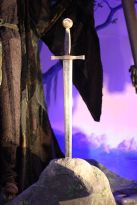
Excalibur London_Film_Museum_ via Wikipedia
Finally, let’s talk about murder as a way to kickstart your inspiration.
I suggest you don’t resort to suddenly killing off characters just to get your mind working. Readers become angry with authors who casually kill off characters they have grown to like.
When a particular death is planned from the beginning, it is one thing. But developing characters is a lot of work. If you kill off someone with an important role, who or what will you replace them with?
You may need that character later, so plan your deaths accordingly.
Whether you are participating in NaNoWriMo or not, may the words flow freely for you, and may you never run out of new ideas to write.
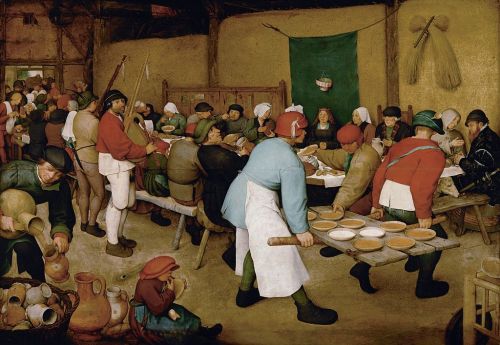
 Food scenes serve as transitions between events. The act of dining occurs, but the conversations are the point of that scene. This is an opportunity to rest and regroup.
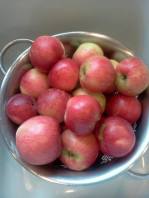 I’ve read many unforgettable fantasy books. One that shall go unnamed stands out, but not for a good reason. The author gave each kind of fruit, bird, or herd beast a different, usually unpronounceable, name in the language of her fantasy culture. She must have spent hours devising that hot mess of fantasy foods.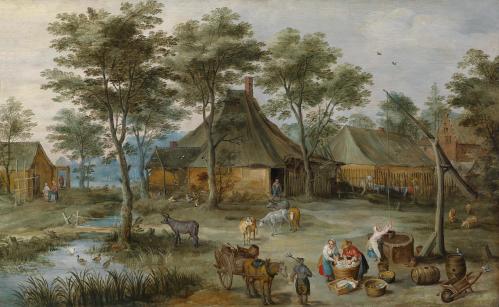
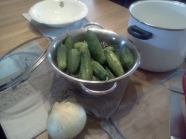
 In my current work in progress, my people have a melding of familiar European and New World ingredients for their diet and do a lot of foraging. Fish, maize, and potatoes are essential staples, as are beans and wild greens. For a good list of what this diet might entail, visit this link:
 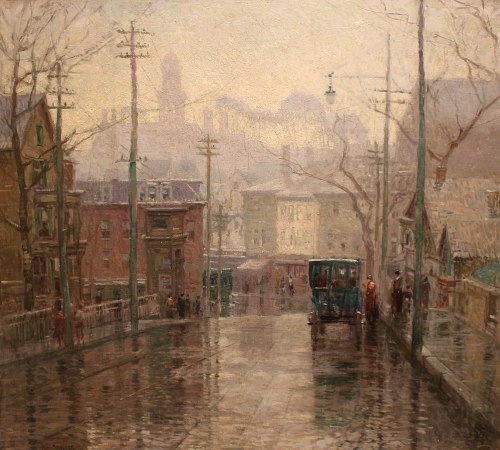 Title: After the Rain Gloucester
 On Monday, I had to drive to Seattle to take the hubby for a consult with a neurosurgeon. Getting to the doctor was fine. It was a matter of spending one hour sitting in traffic trying to leave Olympia and another hour of actually rolling forward once we made it past the Nisqually River. I had planned ahead for that, so we were on time. The upshot is no back surgery for him unless there is no other option, as Parkinson’s patients do very poorly after surgeries.
 So, what am I writing today? I’m working on the second half of a novel I began writing seven years ago, so all the world-building and character creation has happened. The plot for this half is evolving. I know the ending, and over the next thirty days, my characters will take me from this high point in the middle, through several hurdles yet to be determined, to that final victory.
 I’m settling into the new office. In my old house, my ramshackle desk was in the Room of Shame, a jumbled mess of a storeroom. My new desk is not duct taped together and has the right amount of storage for what I need.
 Today, the office/guestroom walls are barren, but I hope to have all the family pictures hung by the end of this week. The hide-a-bed sofa and side chair make a pleasant conversation area or guest room, whichever is needed. All I lack is my new desk chair, which is on its way here from Norway. (Yes, I splurged on a Stressless desk chair since I spend most of my time sitting in front of my computer.) It should be here in a week or two, and I can hardly wait as my current desk chair loses its appeal after an hour or so.
 What are some of my planned treats? Cranberry and walnut shortbread, for one thing. Shortbread is so easy and affordable to make that it always surprises me when people don’t. I have veganized all of my old traditional recipes, so everyone can sneak a treat now and then.
 Getting those ideas out of your head now is what is important. The bloopers and grammar hiccups can all be ironed out in the second draft.
 Yes, we do need to show moods, and some physical description is necessary. Lips stretch into smiles, and eyebrows draw together. Still, they are not autonomous and don’t operate independently of the character’s emotional state. The musculature of the face is only part of the signals that reveal the character’s interior emotions.
 Bad advice is good advice taken to an extreme. But all writing advice has roots in truth. So, when it comes to making revisions, consider these suggestions:
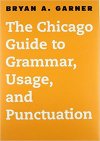 I recommend investing in a grammar book, depending on whether you use American or UK English. These books will answer your questions, and you won’t be in doubt about how to use the standard punctuation readers expect to see.
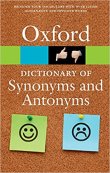 I recommend checking out the NaNoWriMo Store, which offers several books to help you get started. The books available there have good advice for beginners, whether you participate in November’s writing rumble or want to write at your own pace.
 I study the craft of writing because I love it, and I apply the proverbs and rules of advice gently. Whether my work is good or bad—I don’t know. But I write the stories I want to read, so I am writing for a niche audience of one: me.
 Magic or the supernatural are core plot elements in most of my work. I see them as part of the world, the way the Alps were a core plot element in the story of the
 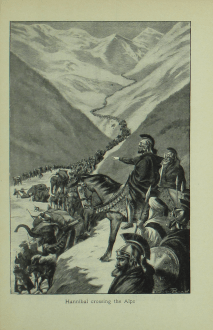 Hannibal paid a heavy price for bringing his superweapons (elephants) to the battle. The ability to use magic should come at some cost, either physical or emotional. Or it should require coins or theft to acquire magic artifacts.
  It’s fair to write stories where magic is learned through spells if one has an inherent gift, and it’s also fair to require a wand. That is how magic was always done in traditional fairy tales and J.K. Rowling took those worn-out tropes and made them new and wonderful.
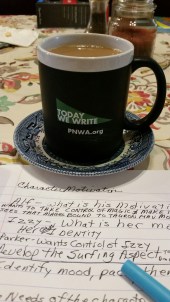 I can suspend my disbelief when magic and supernatural abilities are only possible if certain conditions have been met. The best tales featuring characters with paranormal skills occur when the author creates a system that regulates what the characters can NOT do.
 A crucial reason for establishing the science of magic and the paranormal before randomly casting spells or flinging fire is this: the use of these gifts impacts the wielder’s companions and influences the direction of the plot, creating tension.
 or the paranormal in your NaNo novel, how can you take these common tropes in a new direction?
 First, what sort of world is your real life set in? When you look out the window, what do you see? Close your eyes and picture the place where you are at this moment. With your eyes still closed, tell me what it’s like. If you can describe the world around you, you can create a world for your characters.
 What does the outdoor world look and smell like? Is it damp and earthy, or dry and dusty? Is there the odor of fallen leaves moldering in the gutters? Or have we wandered too near the chicken coop? (Eeew … get it off my shoe!) If an author can inject enough sight, sound, and scent into a fantasy or sci-fi setting, the world will feel solid when I read it.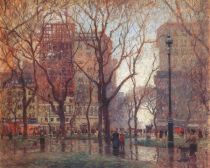
 What about transport? How do people and goods go from one place to another?
 Names and directions might drift and change as you write your first draft. Also, if they’re invented words, consider writing them close to how they are pronounced.
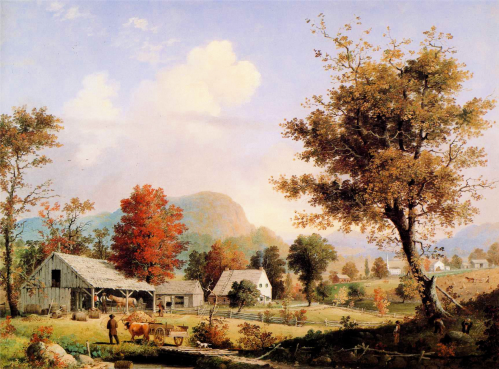 Cider Pressing by George Henry Durrie 1855
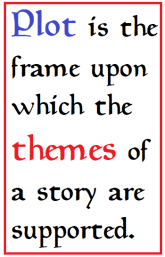
 When someone asks me what a book I wrote is about, my mind grinds to a halt as I try to decide what to say. I could give them the rundown of the plot, which is the arc of events the characters experience.
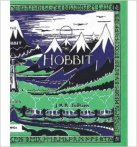
 The story writes itself when I begin with a strong theme and solid characters. A 19th-century writer many have heard of but never read,
  When
When Love is only one theme, yet it has so many facets. Other themes abound, large central concepts that build tension within the narrative.
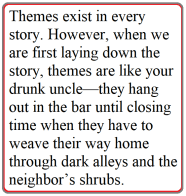 Sometimes, we can visualize a complex theme but can’t explain it. If we can’t explain it, how do we show it? Consider the theme of “grief.” It is a common theme that can play out against any backdrop, whether sci-fi or reality based, where humans interact on an emotional level.
 Even if you don’t have an idea of what you want to write, it’s time to go out to
  Once there, create a profile. You don’t have to get fancy unless you are bored and feeling hypercreative.
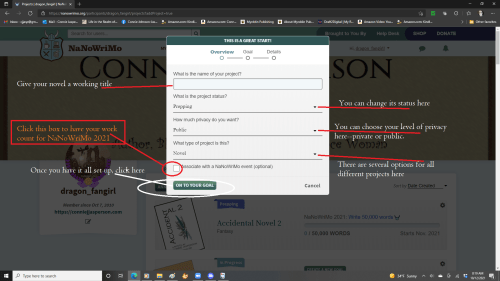 You can play around with your personal page a little to get used to it. I use my NaNoWriMo avatar and name as my
  Next, check out the community tabs. If you are in full screen, the tabs will be across the top. If you have the screen minimized, the button for the dropdown menu will be in the upper right corner and will look like the blue/green and black square to the right of this paragraph.
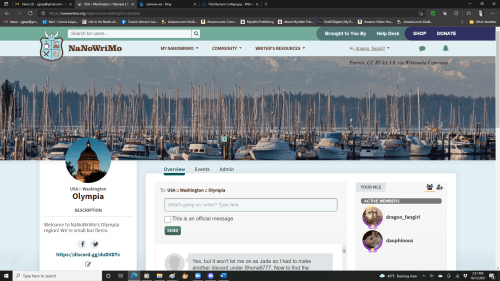 You may find the information you need in one of the many forums listed here.
 Make a master file folder that is just for your writing. I write professionally, so my files are in a master file labeled Writing.
 Give your document a label that is simple and descriptive. My NaNoWriMo manuscript will be labeled: Stowe_Bridge_NaNoWriMo_2023.
 This year we will have write-ins at the local library. The authors in our region will come together and write for two hours and support each other’s journey. We will also meet via the miracle of the internet, using Discord and Zoom. My co-ML and I are finalizing a schedule for November.


 Life in the Realm of Fantasy

