
Over the last two weeks, we have talked about the nuts and bolts of formatting the body of a manuscript for submission to a contest. Most contests want “blind” submissions (work without the author’s identifying information on the document), so we haven’t yet discussed how to make a proper “header.”
 This is the heading at the top of each page of a word-processed or faxed document. It contains page numbers, the title, and the author’s name. You won’t need one for most contests. However, if you plan to submit work to a magazine or anthology, you will want your header to follow their guidelines.
The header is important because when an editor likes your work, they might print it out to look at it more closely. If the printout of the manuscript falls off a desk, it can easily be reassembled because the pages are numbered.
We insert the header by opening the “insert” tab and clicking on “page number.” This opens a new menu. We add the page numbers using the small dropdown menu.
This is how the ribbon and menus look:
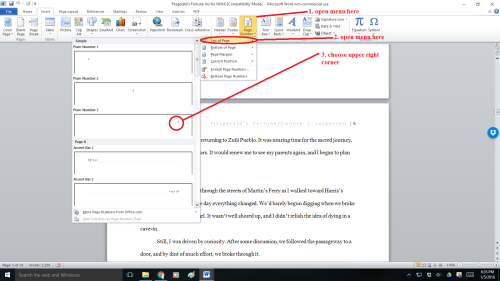
The header contains the title and your pen name. The first page contains your legal name, mailing address, contact information in the upper left-hand corner, and the word count on the right.
This may seem excessive, but if you are serious about submitting your work to agents, editors, or publishers, it must be as professionally formatted as possible.
You will insert the Title of the Book and Your Author Name just before the page number. That way, it will look tidy and be aligned to the right. You can do this on the page number tab.
That is a simple process, but occasionally, a publisher will specify that the first (title) page should have no header or page number. Instead, they might want the header and page numbers to begin on page two.
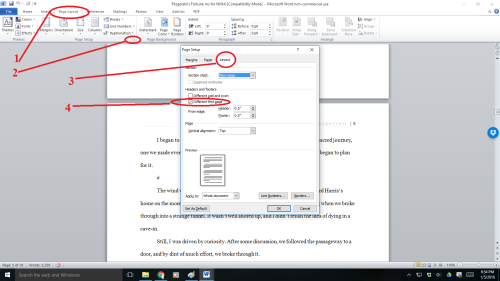
To make the page numbers begin on page two:
- Click anywhere in the document.
- On the Page Layout tab, click the Page Setup Dialog Box Launcher and
- then click the Layout
- Under Headers and Footers, select the Different first pagecheck box, and then click OK.
- The header contains the title, author name, and page numbers—all aligned right.
- The first page contains your mailing address and contact information in the upper left-hand corner.
So now we know how to make our submissions look professional—but where should we send them?
How do we find reputable publishers who are accepting submissions?
When I began this journey, I didn’t understand how specifically you must tailor your submissions for literary magazines, contests, and anthologies. Each publication has a specific market of readers, and their editors look for new works their target market will buy.
Magazine editors don’t have the time to teach you how to write. You have to learn that on your own. You have to ensure your work is clean and well-written before submitting it.
 So, what do they do if they don’t go over your work line-by-line? Magazine editors look for and bring new and marketable stories to the reading public.
Marketable is the keyword. If your submission doesn’t fit what that magazine’s readers expect, the editor will reject it. Perhaps the quality of your work isn’t the problem. Maybe you have selected a publication that features work in your chosen genre. But your subgenre may not match what the readers of that publication want to see.
After all, both spaghetti Bolognese and bruschetta are created out of ingredients made from wheat and tomatoes. But, a person who craves spaghetti Bolognese won’t be satisfied with an offering of bruschetta despite the fact they both feature wheat and tomatoes.
The genre may be Italian, and they feature the same ingredients. But the delivery method is a subgenre that may not appeal to every diner.
Another point I want to make is this. Once your story makes it through the publisher’s door and into the first part of their process, their editor may ask you for minor revisions. They may ask you to clear up small things you missed when self-editing.
But they won’t offer you technical advice.
 This is because they shouldn’t have to. Before submitting your work to an agent or submissions editor, you must have the technical skills down.
You must ensure you have a clean manuscript that is marketable to the readers of the publication you are courting. Ask someone in your writing group to proofread it before submitting it.
Professionals do the required work and don’t think twice about it—self-editing and proofreading are just part of the job.
Prominent publications have wide readerships, which helps the indie author as much as those who are traditionally published. The more people who read and enjoy your short story, the more potential readers you have for your novels. These people likely read books, and guess what? They might look for your novels when shopping for books at Amazon, Barnes & Noble, and other digital booksellers.
 When you have a story that you believe in, you must find the venue that publishes your sort of work. Read the magazines you hope to submit work to. That way, you will know what publishers are buying in your genre.
- In other words, if you write fantasy, google magazines featuring fantasy and sci-fi and buy them. Read the work that publishers are buying so you aren’t wasting your time.
An excellent place to start would be the website Worlds Without End, an author resource site listing magazines that publish fantasy and science fiction.
Not all publications will be accepting new work, but some will. Be warned—finding magazines with open calls for submissions is a lot of work.
Anthologies with open calls might be more plentiful, but you must know how to find them. You can connect with writers’ groups through the many forums on Facebook and other social media platforms.
 Those who can’t afford to buy magazines can go to websites like Literary Hub and read excellent pieces culled from various literary magazines for free. This will give you an idea of what you want to achieve in a story and where you might consider sending your work.
And may you have good luck with your submissions. Speaking as a reader, there is no such thing as too many stories. In fact, I’m going to curl up with a good book right now!
 For the most part, the requirements are basically the same from contest to contest, with minor differences. Most contests charge a submission fee but have a cash prize if your work is chosen. It doesn’t matter how brilliant your story is; if you don’t follow their guidelines for submission, you will have wasted your money. Non-conforming work will not be read, so follow their guidelines!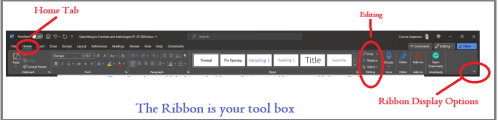
 You don’t want fancy. Stick with the industry standard fonts: Times New Roman (or rarely Courier) in 12 pt. These are called ‘Serif’ fonts and have little extensions that make letters easier to read when strung together to form words.
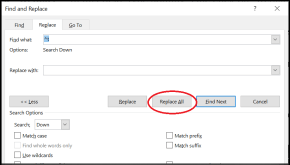 To remove tabs from a manuscript in MS Word or most other word-processing programs, open the “Find” box (right side of the ribbon on the home tab). In the “Find” field, type in ^t. (
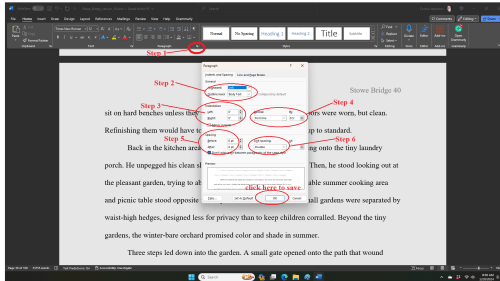 FIRST: SELECT ALL. This will highlight your entire manuscript.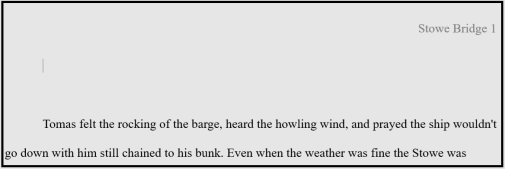
 Artist: Paul Cornoyer (1864–1923)
 You can get your foot in the traditional publishing house door this way. Also, if you are happy as an indie author, having work that places as a finalist in a contest (or is accepted into a paying anthology) will increase your visibility and gain readers for your other work.
 Many contests and publications use the
  First, let’s be clear–editors don’t enjoy sending out rejections. They want to find the best work by new authors because they love to read. If you have a story that was a contest winner, you may be able to sell it to the right publication.
 Each editor for an Anthology or magazine will have a slightly different idea of what they will accept than a literary contest. Literary contests focus heavily on knowledge of craft as well as the ability to tell a story.
 Some contests charge a fee for submissions. I’ve said this before, but it bears mentioning again. You have wasted time and money if you don’t follow the prospective contest or publisher’s submission guidelines, which are clearly listed on the contest page on their website.
 It’s hard to hear a critical view of something you have struggled with and labored over. We believe it to be perfect, but we don’t have an objective view of it. This is when you must step back and rethink certain aspects of a piece before you submit it. The external eye of your writing group can help you see the places that don’t work.
 My antagonist is a woman whom we’ll call Bad Grandma for the sake of this post. She takes what she wants and damn the consequences.
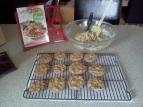 Cooking has become a primary activity for me. The weather here at Casa del Jasperson has been cold, with a layer of frigid, applied to the general iciness of the Arctic blast. As I write this post, it is a warm and balmy 18 degrees (minus 8 Celsius). It is clear and sunny, and the thin layer of snow that fell four days ago, less than an inch, is still there.
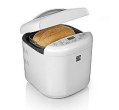 I’ve turned laziness into a fine art. I love my bread machine because it takes the work out of making the dough. However, I rarely bake my bread in the machine. It makes too large a loaf, and the crust can be a bit too crunchy.
 The constable in that town is unaware that Bad Grandma has murdered a mage but knows she’s wanted for smuggling and other crimes. However, our Bad Grandma is slippery and escapes the noose by murdering the constable.
 At this point in my writing process, I need to know what Bad Grandma is doing because my protagonist, the mage who is investigating the murders, has to respond to her actions and plan how to catch her. I am writing the scenes that she is featured in, and soon, I will have the ending of the novel written. Bad Grandma’s meeting with karma resolves the central problem in this tale of woe. Once I have that solved, winding up the other threads will be easy to write.
 When we write about mild reactions, wasting words on too much description is unnecessary because mild is boring. But if you want to emphasize the chemistry between two characters, good or bad, strong gut reactions on the part of your protagonist are a good way to do so.
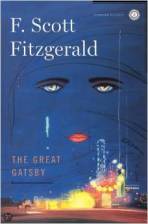 The novel was inspired by a youthful romance Fitzgerald had with
  Fitzgerald shows us Nick’s emotions, AND we see his view of everyone else’s emotions. We see their physical reactions through his eyes and through visual cues and conversations.
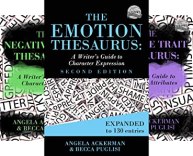 If you have no idea how to begin showing the basic emotions of your characters, a good handbook that offers a jumping-off point is
  Students taking college-level classes in literature and English are often required to read The Great Gatsby and other classic novels from that era, such as
  After we survive the middle crisis, we have falling action. We receive the crucial information, the characters regroup, and we experience the unfolding of events leading to the conclusion. The protagonist’s problems are resolved, and we (the readers) are offered a good ending and closure.
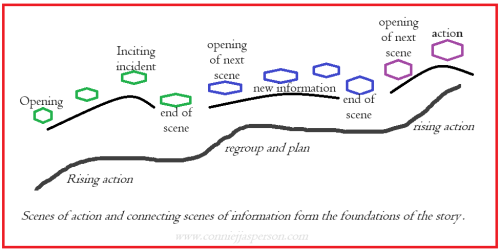 These small arcs of action, reaction, and calm push the plot and ensure it doesn’t stall. Each scene is an opportunity to ratchet up the tension and increase the overall conflict that drives the story.
 Transition scenes must also have an arc supporting the cathedral that is our novel. They will begin, rise to a peak as the necessary information is discussed, and ebb when the characters move on.
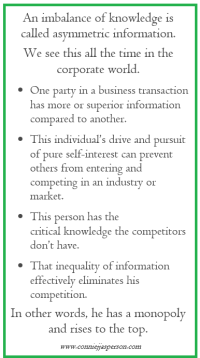 Plots are driven by an imbalance of power. The dark corners of the story are illuminated by the characters who have critical knowledge. This is called asymmetric information.
 When we write a story, no matter the length, we hope the narrative will keep our readers interested until the end of the book. We lure readers into the scene and reward them with a tiny dose of new information.
 If you have been a computer user for any length of time, you know that hardware failure, virus attacks by hackers, and other computer disasters will happen. They’re like the
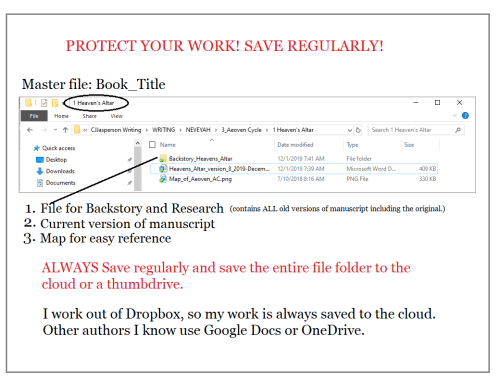
  This year, I met a young man who, being new to using a word processing program, forgot how he named his 2022 manuscript. He couldn’t find it when he decided to start writing again. I showed him how to search for files by date, taught him how to name documents, and taught him how to create a master file for all the files generated in the process of writing his book.
 I work out of Dropbox, so when I save and close a document, my work is automatically saved and backed up to
  One thing I hear from new writers is how surprised they are at how easily something that should be simple can veer out of control. The worst thing that can happen to an author is accidentally saving an old file over the top of your new file or deleting the file entirely.
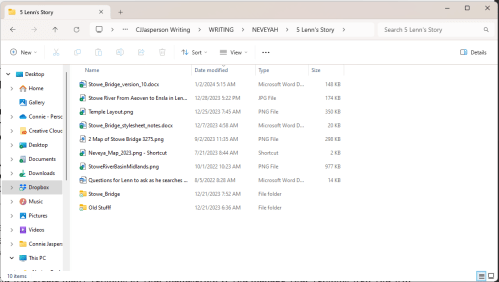 I make a separate subfolder for my work when it’s in the editing process. That subfolder contains two subfolders, and one is for the chapters my editor sends me in their raw state with all her comments: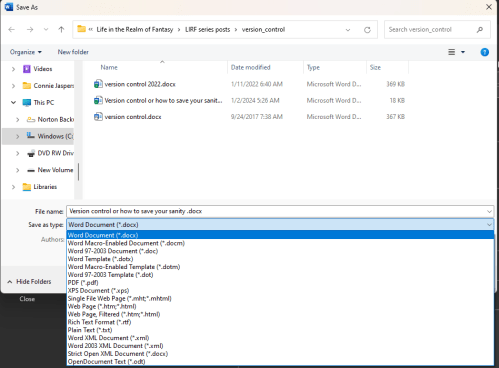
 We are at the same latitude as Paris, Zurich, and Montreal but usually get a lot more rain than those cities. The North Pacific can be wild at this time of the year, which makes for some great storm-watching.
 By the time the authors got to the meat of the matter (which was late in the second half) I no longer cared. Truthfully, when the fluff is carved away from this book, you might have 20,000 or so words of an interesting story—a novella.
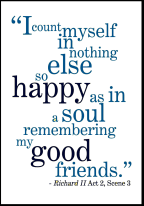 I’m planning two volumes because one will feature stories set in the world of Neveyah, and the other will be random speculative short fiction pieces.
 I have talked about this novella many times, as I consider it one of the most enduring stories in Western literature. The opening act of this tale is a masterclass in how to structure a story.
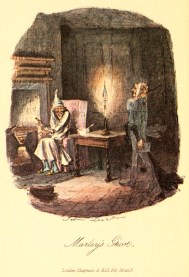 “Marley was dead, to begin with. There is no doubt whatever about that. The register of his burial was signed by the clergyman, the clerk, the undertaker, and the chief mourner. Scrooge signed it. And Scrooge’s name was good upon ‘Change for anything he chose to put his hand to. Old Marley was as dead as a doornail.”
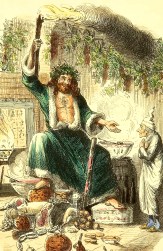 As I mentioned before, this book is only a novella. It was comprised of 66 handwritten pages. Some people think they aren’t “a real author” if they don’t write a 900-page doorstop, but Dickens says differently.


