The Pitch #amwriting

On Monday we talked about the synopsis, which you would send to lure a prospective agent. Today we’re talking about the pitch and how it differs from a synopsis.

The front cover of your book is important, but great covers alone don’t sell books. The back of a paper book is critical because it contains the all-important pitch—also known as a blurb.

For an eBook, the pitch is on the seller’s product page. Either way, the shopper will read your pitch and decide if they want to know more. If they open the book or use the “look inside” option, you have a good chance of selling that book.

But how do we write a pitch?

First, you want to identify the key elements of your book (or series of books).

Consider a fantasy that features themes of friendship, family, romantic love, honor, and duty. In this story, the obvious theme might be the successful resolution of a quest. Identifying the core plot device around which your story revolves is important.

  1. Who or what is your book about?

You can emphasize either the idea of the book or the main character. Once you choose what you want to sell, main character or idea, stick to that. If you choose the character, use only the main character in your description, and forget the others, because it is that character’s story that you are trying to sell.

  1. Keep it short. It’s easy to be long-winded about our work but not here. You only have about 60 seconds to sell that book.

Since length is bad in a pitch, we must learn to write concisely. I learned to write drabbles—100 word flash fictions. I wrote one every day for nearly a year. I did this because you really have to choose your words wisely if you want to tell your story in such a short space.

Besides helping me learn how to write concisely, writing drabbles was a great way to build a backlog of ideas that became short stories later.

  1. Use power words. Don’t use “telling” words—make every word in that pitch count.
  2. Be visual. Use words that create a visual image in your reader’s mind.

Give us just enough intriguing insight into the main character and the story to make us want to know more about them. Make us curious.

Consider the 69-word pitch for Wool,’ by Hugh Howey. Howey was an indie when he published Wool in 2012.

This is the story of mankind clawing for survival, of mankind on the edge. The world outside has grown unkind, the view of it limited, talk of it forbidden. But there are always those who hope, who dream. These are the dangerous people, the residents who infect others with their optimism. Their punishment is simple. They are given the very thing they profess to want: They are allowed outside.

Howey opted for powerful and visual right out of the gate: clawing for survival. He packed his blurb with persuasive, graphic words that spark curiosity and make you feel that you are holding a powerful story in your hand (or your eReader). He chose not to go with a tagline, but the final sentence is so powerful, it doesn’t need one.

Next, let’s look at the pitch for Roadmarks,’ a classic sci-fi fantasy written by the late Roger Zelazny. It was published in 1979 by Del Rey Science Fiction, so the publisher wrote the blurb. I was in the grocery store when I first saw this book, and the cover art caught my eye. I picked the book up and turned it over to read the pitch.

The pitch made me curious and was what sold me the novel:

The Last Exit to Babylon

“The Road runs from the unimaginable past to the far future, and those who travel it have access to the turnoffs leading to all times and places—even to the alternate time-streams of histories that never happened. Why the Dragons of Bel’kwinith  made the Road—or who they are—no one knows. But the Road has always been there and for those who know how to find it, it always will be!”

Zelazny’s publisher, Del Rey, opted for a mysterious pitch, but they also used powerful words in the first sentence:  “The road runs,” “unimaginable,”— words that pique curiosity. They began the pitch with a great tag line. When I bought that book, I ignored the glowing reviews the publisher plastered beneath the pitch because I don’t care what reviewers think–I make up my own mind.

A word of caution: Indies should never put glowing reviews on their covers unless they are reviews by big-name reviewers or authors.

Del Rey got away with it because the book had been a bestseller in hard cover for a year before the paperback came out, and Zelazny was brilliant and sold books as fast as they could print them.

We don’t put a synopsis on the back of the book. A synopsis is a bald recounting of the novel’s bare bones—why should the reader buy it if they already know the story?

What sort of pitches lure you into buying a book? We write what we want to read, so chances are, you are writing a book along those lines. Go back and read those blurbs and start creating your pitch.

Pitches give away no secrets but hint at the mysteries within. For this reason, you want to ask your friends and your writing group to look at your blurb. If they tell you it’s too long-winded and doesn’t sell the book well, don’t be angry. Be glad they were honest.

Rewrite it, pare it down again, and rewrite it until your pitch is a concise enticement that sells the mystery of what lies within your book. Make the prospective reader open the book or click on the look inside option to see more.

Once they have sampled what’s inside the book, you are halfway there. At that point, your writing and your voice is what will clinch the sale.

18 Comments

Filed under writing

The Synopsis #amwriting

If your publishing path is the traditional route, you must attempt to get an agent. It’s a rare thing for an author to get a book published traditionally without an agent. Agents want to sell your book, and they love to read. So you must first sell the book to an agent, and to do that, you must know how to write a synopsis.

The synopsis is not a blurb.

It is a short description of your book, hitting the high points and it does give away the ending.

The synopsis should only be one page long, written in third person, present tense. Many agents say three to five paragraphs will do it. So how do you fit a novel onto one page?

You give the agent the bare bones of the book.

Things they want to see detailed in those paragraphs:

  • Genre
  • Setting
  • Protagonist and major characters
  • What the conflict/major goals are
  • Character arc (how the characters grow/devolve throughout the book)
  • Resolution

Things you should leave out at this point? Don’t wax poetic on specific descriptions of

  • setting,
  • side characters,
  • sub plots, and
  • specific, highly detailed descriptions of plot points and the resolution.

You start with a statement that describes the books premise: A young man abandoned by his wife and left with a terminally ill child must find the one healer who can cure his son.

Introduce the protagonist and his/her problem:

Janse, a young water-mage, has been tapped to be his clan’s shaman. His wife who is not of the clan doesn’t understand the demands that responsibility places on him, and deserts him, leaving him to care for an infant with a terminal heart condition. His clan’s healer is young and untrained, but Janse’s grandfather tells him of a healer in a citadel far to the south, a journey of many months.

The next paragraphs should detail the bulk of the story. What does the protagonist do in reaction to the inciting incident? What obstacles does he/she face, and who helps or hinders them along the way?

Janse and his cousins, one of whom, Landry, is the clan’s healer, set out, taking the baby on the perilous journey. Many times on the journey, Janse must use his magic or his wiles to extricate them from trouble. They must pass through dark forests and travel through high mountain passes. Along the way, they are robbed. When they seek shelter at the first village on their route, they are turned away. No one will sell them supplies. Desperate to make it to a friendly village, they keep going but make a wrong turn and enter the lair of the Griphon. Using guile and magic, they escape from the beast. Just when it seems they will make it, the baby has a crisis. Landry is able to get the baby through the crisis, but now they know time is short. When they arrive at the citadel, they are at first turned away. Then they are directed down dangerous streets to an obscure address in the worst part of town.

Give the resolution in a nutshell. Detail isn’t important.

The elderly woman who opens the door welcomes them. She immediately takes the baby to her daughter, Ethella, who is the healer they have been seeking. Using her magic, Ethella is able to heal the baby, teaching Landry the skills he needs.

Janse and his cousins make ready to return to the clan, feeling confident. Janse has grown as both a mage and a shaman and now feels able to take his grandfather’s place and lead his clan with wisdom. Landry has grown in his abilities and is able to be the healer his clan needs.

The synopsis is only difficult because we have the urge to put all the details into it.

Being able to put your book into four paragraphs is a trick all authors need to know, whether we go the traditional route or not. People always ask you what the book is about, and wouldn’t it be nice to be able to tell them?

16 Comments

Filed under writing

#FineArtFriday: Saint George and the Dragon by Paolo Uccello 1470

The above painting by Paolo Uccello, from around 1470,  is a surreal, stylized retelling of the legend of Saint George and the Dragon. The legend tells of the knight slaying a dragon that demanded human sacrifices. With the slaying of the dragon, the hero has saved the princess who was chosen to be the next offering.

Nothing looks real except the dragon. I love how hyper-heroic Uccello portrayed horses. The people are pallid, with no personality to their features. The dragon and the horse are alive, as if the scene is about them only. All the passion of the moment converges in the dragon and the horse.

Done in oil on canvas, the painting was one of the last of Uccello’s creations.

According to Wikipedia, the Fount of All Knowledge: The narrative (of Saint George) has pre-Christian origins (Jason and MedeaPerseus and AndromedaTyphon, etc.),[1] and is recorded in various saints’ lives prior to its attribution to St George specifically. It was particularly attributed to Saint Theodore Tiro in the 9th and 10th centuries, and was first transferred to Saint George in the 11th century. The earliest narrative record of Saint George slaying a dragon is found in a Georgian text of the 11th century.

About the Artist (via Wikipedia)

Born Paolo di Dono, his nickname, Uccello (of the birds), came from his fondness for painting birds. He worked in the Late Gothic tradition, emphasizing colour and pageantry rather than the classical realism that other artists were pioneering. His style is best described as idiosyncratic (eccentric or unique), and he left no school of followers.

With his precise and analytical mind, Paolo Uccello tried to apply a scientific method to depict objects in three-dimensional space. In particular, some of his studies of the perspective foreshortening of the torus are preserved, and one standard display of drawing skill was his depiction of the mazzocchio.[10]

In the words of G. C. Argan: “Paolo’s rigour is similar to the rigour of Cubists in the early 20th century, whose images were more true when they were less true to life. Paolo constructs space through perspective, and historic event through the structure of space; if the resulting image is unnatural and unrealistic, so much the worse for nature and history.”[11]

The perspective in his paintings has influenced many famous painters, such as Piero della FrancescaAlbrecht Dürer and Leonardo da Vinci, to name a few.


Credits and Attributions:

Wikimedia Commons contributors, “File:Paolo Uccello 047.jpg,” Wikimedia Commons, the free media repository, https://commons.wikimedia.org/w/index.php?title=File:Paolo_Uccello_047.jpg&oldid=308602797  (accessed January 18, 2019).

Wikipedia contributors, “Paolo Uccello,” Wikipedia, The Free Encyclopedia, https://en.wikipedia.org/w/index.php?title=Paolo_Uccello&oldid=873078862  (accessed January 18, 2019).

4 Comments

Filed under #FineArtFriday

Honesty in Writing #amwriting

As writers, we are entertainers. We write books for people who want a diversion from the daily grind. No matter what the subject or genre is, we write escapes, windows into other lives, other places, other realities. When we offer the book to the public, we hope the reader will stay with us to the end, hope they find the same life in the narrative that we thought we were imparting when we wrote it.

This can only happen if we are honest. When I first started out, I wrote poetry, lyrics for a heavy metal band. I was young, sincere, and convinced I had to impart a message with every word. I didn’t know until twenty years later when I came across my old notebook—my poems weren’t honest. I wasn’t honest with myself, and when I looked back at my work, I could see the falseness clearly. My words were contrived, formed too artfully. They shouted, “Look at me! I’m young and full of angst, but I’m talented and artsy!”

When I began writing stories for my children, I still wrote crap, but it was honest crap. I no longer had anyone to impress—children are never impressed by parents who write. They are also quite honest about where a story fails to impress them, and why. I began to write fairy tales that were honest, but not written by an educated author.

With that as my training ground, learning how to make my writing enjoyable became a goal. It was there that I discovered that, besides writing honestly, an author needs to be consistent with punctuation. I had no idea I was uneducated—after all, I had done well in school.  Even so, I had to re-learn the fundamentals of American English grammar because my first real editor pointed out that I hadn’t retained much of what I was taught in elementary school.

As Ursula K. LeGuin said in her wonderful book, Steering the Craft, A 21st Century Guide to Sailing the Sea of Story, “If you aren’t interested in punctuation, or are afraid of it, you’re missing out on some of the most beautiful, elegant tools a writer has to work with.”

My rule is to embrace what I fear, so I embraced grammar. I’m not perfect, but I make an effort.

I have always been a reader, enjoying books in every genre and style.  While the books I love are scattered all across the spectrum, they have one thing in common—they are all written by authors with an understanding of the basic rules of punctuation. Sure, they break other rules of grammar with style and abandon, but they do pay attention to punctuation.

This is because punctuation is the traffic signal telling the reader to go, slow, pause, yield, go again, or stop. Punctuation at most of the right places allows the reader to forget they are reading and encourages them to suspend their disbelief.

Writers begin as readers. In his book, On Writing, Stephen King gives us permission to read for six hours a day, should we so desire. Reading is how we come to understand writing and the art of story. (He also admonishes us to learn the fundamentals of punctuation and grammar.)

In my quest to understand the art of story I have come across some pretty awful books. I don’t consider “hard to read because it is written in an old-fashioned style” awful. However, I do consider “hard to read because the author wasted my time” awful.

Contrived prose is not poetic. Hokey and forced situations are not exciting. Perfectly beautiful people bore me. Long passages about clothing and furnishings bore me.

Write me an honest story about “real” people with real problems, one that comes from your deepest soul. Set it in outer space, or the Amazon Jungle—I don’t care. I read all genres and all settings. I will forgive imperfect grammar and punctuation for a great story that rings of truth and touches my heart.

Let me sink into your story. Let me forget the world—let me become so into the book I forget to cook dinner.


Credits and Attributions:

Quote: Ursula K. LeGuin, Steering the Craft, A 21st Century Guide to Sailing the Sea of Story, ©1999 Ursula K. LeGuin, First Mariner Books Edition 2015, page 11.

10 Comments

Filed under writing

Naming Characters #amwriting

I have mentioned (several times) one of my mistakes in naming characters. In the Tower of Bones Series, I have a main character named Marya. She is central to the series. Also, in the first book, a side character was important enough to have a name. My mind was in a rut when I thought that one up because I named her Marta.

You can see why this is bad—the two names are nearly identical.

To really confuse things, halfway through the first draft of the second book in the series, Marta suddenly was a protagonist with a major storyline. She actually becomes Marya’s mother-in-law in the third book. Fortunately, I was in the final stage of editing book one, Tower of Bones, for publication, and immediately realized I had to make a major correction: Marta was renamed Halee.

In my family, “Robert” is a name with a great deal of repetition. My father was named Robert, my two brothers are both named Robert (with different middle names), and my mother’s younger brother is named Robert. My younger brother’s son is named Robert, as is his son. We have a Bob, a Little Bob, a Rob, a Bobby, a Robby, and a Quatro.

I took this absurdity to an extreme in Billy Ninefingers. In Waldeyn, every third boy is named William, which is why Billy MacNess embraces the name his mercenaries give him after the injury. In that novel, “Williams” generally go by their last names.

Other than Billy Ninefingers where it was intentional and integral to the story, my personal rule is to NEVER name two characters in such a way that the first and last letters of their names are the same. To avoid that circumstance, I try to never have two that even begin with the same letter.

But who should go and who should stay? What is the optimal number of characters for a book? Some say only four, others fifteen.

I feel an author should introduce however many characters it takes to tell the story but should also use common sense.

A name implies a character is an important part of the story. Ask yourself if the character is an example of “Chekhov’s Gun.” Does the person return later in the story or does he or she act as part of the setting, showing the scenery of, say, a coffee shop, or a store? Is it someone the reader should remember? Even if this character offers information the protagonist and reader must know, it doesn’t necessarily mean they need to be named.

Some throw-away characters will give us clues to help our protagonist complete his/her quest or show us something about the protagonist. Their comments could offer us a clue into the protagonist’s personality or past. Other random people are in the scene purely for the ambiance, part of the world-building. A woman smoking in an alley outside the back door to an office needs no name, but she serves as a visible clue about the world the main character is walking in.

Even if they do speak a few lines, if they are just part of the scenery, they don’t need a name.

In an excellent article on screenwriting, Christina Hamlett of the Writer’s Store writes:

In a screenplay, the rhythm you’re attempting to establish–along with the emotional investment you’re asking a reader to make–is disrupted whenever you devote more than two lines of introduction to a character who is simply there to take up space. In order to justify their existence, each player in your script should perform a unique function or deliver a specific line that:

  1. Advances the plot,
  2. Thwarts the hero’s objectives,
  3. Provides crucial background, and/or
  4. Contributes to the mood of the scene.

If you’ve included characters who don’t fulfill one or more of these jobs, they’re probably not critical to the storyline and can be deleted.

While she is speaking of screenplays, this is true of a novel or short story.

We want the reader to stay focused on the protagonist(s) and their story. The desire to make every character a memorable person must be ignored. When we begin revising second draft of our manuscript, we must find and resolve the distractions we inadvertently introduced in our first draft.

My current work in progress has a passage that takes place in an inn and involves a conversation overheard from a table adjacent to my two protagonists and their sidekicks. Despite the fact the merchant and his sons give my protagonists information they needed, they are in that scene for only one purpose. They are to be overheard and don’t appear again. For this reason, only my main characters are named in the full transcript of this scene.

Finding that we have too many named characters is an easy one to fix, once we decide how important that character is to the story. If they don’t appear again, the reader will move on and forget about them. The information they imparted will remain.

I have found that a great use for my extra walk-on characters is the short story. The world is already built, and they have a story, albeit a short one. Use them to your advantage.

I now keep in mind simplicity of spelling and ease of pronunciation when I name my characters. How will that name be pronounced when it is read out loud? You may not want to get too fancy with the spelling, so that the narrator can easily read that name aloud. You may not think this is important, but it is.

My advice is to keep it simple. Don’t confuse your readers by giving unimportant walk-on characters names. Be vigilant when choosing names—don’t give two characters names that are nearly identical.

Do make your spellings of names and places easily pronounceable. You may decide to have your book made into an audio book, and the process will go more smoothly if you’ve considered this in advance. I only have one book that is an Audio book and the experience of making that book taught me to spell names simply.


Credits and Attributions:

Minor Characters Don’t Need Major Introductions, Christina Hamlett, Copyright © 1982 – 2017 The Writers Store ® Incorporated, accessed Mar. 11, 2017.

14 Comments

Filed under writing

#FineArtFriday: A Sunday on La Grande Jatte by Georges Seurat circa 1884

A Sunday Afternoon on the Island of La Grande Jatte by Georges Seurat (1884–1886) is a landmark painting. Art historians agree that with this image, Seurat changed the direction of modern art and began the era of Neo-impressionism. It is one of the most recognizable of late 19th-century paintings.

About this painting from Wikipedia: In summer 1884, Seurat began work on A Sunday Afternoon on the Island of La Grande Jatte.

The painting shows members of each of the social classes participating in various park activities. The tiny juxtaposed dots of multi-colored paint allow the viewer’s eye to blend colors optically, rather than having the colors physically blended on the canvas. It took Seurat two years to complete this 10-foot-wide (3.0 m) painting, much of which he spent in the park sketching in preparation for the work (there are about 60 studies). It is now in the permanent collection of the Art Institute of Chicago.

What I love about this painting is the preciseness of each component. This painting proudly declares it is not “real”—it is instead an impression of a moment in time, a summer day spent on the River Seine. It is both sharply delineated and dreamlike. That is a neat trick.

Seurat used individual dots of only primary colors (Red, green, yellow, blue) but the way he places them, they seem muted and blended into shades of rose and purple, and even pale pink. I’m captivated by a technicality – obsessed by the way the primary colors of each dot are juxtaposed with other primary colors, tricking the eye into believing it sees light and dark, and all shades between.

About the Artist, via Wikipedia: (Seurat) is noted for his innovative use of drawing media and for devising the painting techniques known as chromoluminarism and pointillism. Seurat’s artistic personality was compounded of qualities which are usually supposed to be opposed and incompatible: on the one hand, his extreme and delicate sensibility; on the other, a passion for logical abstraction and an almost mathematical precision of mind.

This technique is one I hadn’t given much thought to until I ran across a postcard with this image on it. Other notable artists who explored this method were Paul Signac and Vincent van Gogh.

For me, studying these images of masterpieces for the Friday posts on art teaches me how to be creative with my words. Artists both push the limits of their color palettes and yet force external constraints on themselves to create images that fool the eye.

Authors must do the same with how we shape our words.

About the Pointillist technique of painting, from Wikipedia: If red, blue, and green light (the additive primaries) are mixed, the result is something close to white light. Painting is inherently subtractive, but Pointillist colors often seem brighter than typical mixed subtractive colors. This may be partly because subtractive mixing of the pigments is avoided, and partly because some of the white canvas may be showing between the applied dots.

The painting technique used for Pointillist color mixing is at the expense of the traditional brushwork used to delineate texture.

The majority of Pointillism is done in oil paint. Anything may be used in its place, but oils are preferred for their thickness and tendency not to run or bleed.


Sources and Attributions:

Wikimedia Commons contributors, “File:Georges Seurat – A Sunday on La Grande Jatte — 1884 – Google Art Project.jpg,” Wikimedia Commons, the free media repository, https://commons.wikimedia.org/w/index.php?title=File:Georges_Seurat_-_A_Sunday_on_La_Grande_Jatte_–_1884_-_Google_Art_Project.jpg&oldid=90112845 (accessed January 10, 2019).

Wikipedia contributors, “A Sunday Afternoon on the Island of La Grande Jatte,” Wikipedia, The Free Encyclopedia,https://en.wikipedia.org/w/index.php?title=A_Sunday_Afternoon_on_the_Island_of_La_Grande_Jatte&oldid=875941354 (accessed January 10, 2019).

Wikipedia contributors, “Georges Seurat,” Wikipedia, The Free Encyclopedia, https://en.wikipedia.org/w/index.php?title=Georges_Seurat&oldid=877532379 (accessed January 10, 2019).

Wikipedia contributors, “Pointillism,” Wikipedia, The Free Encyclopedia, https://en.wikipedia.org/w/index.php?title=Pointillism&oldid=874469961(accessed January 10, 2019).

Comments Off on #FineArtFriday: A Sunday on La Grande Jatte by Georges Seurat circa 1884

Filed under writing

The sound of the narrative #amwriting

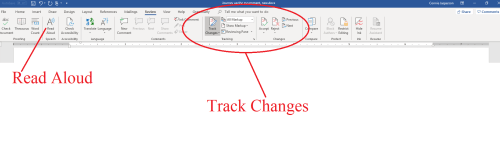
Reading aloud is a great way to quickly discover the places I want to revise. I have always read portions of my work aloud, a page or two at a time. The places where I stumble are usually always the places that need ironing, so to speak.

In the past, I have only gone to this trouble with sections that I felt had some indefinable thing wrong with them. But lately, I’ve been printing out each chapter in its entirety a day or two after I finish writing it, trying to hear where the prose doesn’t work. I use a yellow highlighter on the places that feel rough.

I’m a slow writer, but I have several looming deadlines for contests and anthologies. This seemed like a good way to speed up development, getting short stories from rough draft to finished in a timely fashion.

As anyone who regularly reads this blog knows, I rarely have a piece that is perfectly clean. I am the only eye that sees it before posting. Despite my best efforts, I catch many things the day after something was posted. I always check through my work on the computer screen, and I catch a lot there, but the eye sees what I intended to write.

This bleeds over into my other work. But if I wait a day or two and then read the paper printout with fresher eyes, I find repeated words, dropped words, and all sorts of typos. Even better, reading the printout aloud exposes the rough areas, the places where the words “fight with each other.”

When you are trying to pronounce the words, run-on sentences really stand out, and clunky prose won’t flow well. The narrative reads well for a long stretch, and then it hits a stumbling point.

That yellow highlighter of mine really gets a work out—maybe I’ll have to buy a case of them.

Another thing I have discovered by reading the entire chapter rather than just a page here and there—I can see where I am repeating entire ideas. This is a common problem for me in the first draft.

Having Natural Reader or another reading program do the reading for you helps, and I have made use of that many times. But this experience has shown me that while these wonderful programs are incredibly useful, they don’t do the job quite as well as a human voice does. They often mispronounce words that are heteronyms—words that are spelled the same as another word, but which are pronounced differently and have different meanings.

  • Read (pronounced reed) as in the act of reading
  • Read (pronounced red) as in having already finished reading the book.

Natural Reader rarely guesses those sorts of words correctly. The cadence and rhythm of the narrative is not as clearly heard when the mechanical voice does the reading, even if you are reading along silently. It tends to be rather flat, a monotone.

I’m not talking poetry here, but good prose has movement when it is read out loud. Sometimes it’s fast, sometimes slow, but it should have no rough spots for the reader to stumble over.

What I love about listening to audio books is the way prose sounds when it’s read aloud by an experienced narrator. Some narratives are beautiful when read aloud, and some are not.

If you intend to have your work made into an audio book, you want to make your work easy for the narrator to read without faltering.

So, now I will add ‘printing out and reading entire chapters aloud and marking places that need correction with a yellow highlighter’ as a regular tool in my writer’s toolbox. As long as the old printer keeps limping along, doing its job, this should speed things up.

21 Comments

Filed under writing

The Proofreader #amwriting

I see the process of getting a manuscript ready for publication as a four-part process.

  1. Writing the first draft.
  2. Beta Reading and revising the manuscript to your satisfaction.
  3. Sending it to the editor and making suggested revisions.
  4. Having the edited manuscript proofread.

Proofreading is done after the final revisions have been made. Even though an editor has combed your manuscript and you have made thousands of corrections, both large and small, there will be places where the reader’s eye will stop.

It is best if this task is done by someone who has not seen the manuscript before. That way, they will see it through new eyes, and the small things hiding in your otherwise-perfect manuscript will stand out.

Some things your proofreader must understand:

  • The proofreader should not try to hijack the process and derail an author’s launch date by nitpicking his/her genrestyle, and phrasing.
  • The proofreader must understand that the author has been through the process with a professional line editor. At this point, they are satisfied that the story arc is what they envisioned, and the characters are believable with unique personalities. The author worked with an editor to ensure the overall tone, voice, and mood of the piece is what the author envisioned.

You will note that I have used the word envisioned twice in the above list. If a proofreader can’t restrain their unasked-for editorial comments, you should find a different reader.

The edited manuscript is the author’s creation, a product of his/her vision, and by the time we arrive at the proofing stage, it is intentional in the form it is in.

This is why a professional proofreader is a good investment. The proofreader must realize that the author and his/her editor have considered the age level of the intended audience. A proofreader does not go through a manuscript with a red pen and mark it up with editorial comments. They do not critique the author’s voice or content because that is not their job.

A proofreader does highlight places where typos and other proofing errors exist and ruin the narrative.

A proofreader understands that every typo and error is different. These little landmines are insidious and may not leap out at first glance, which is why they aren’t always caught during the editorial process. Any number of small, hard-to-detect things can occur during the process of making even minor revisions.

In case you didn’t see it when I mentioned it above, I will say it again: proofreading is not editingEditing is a process that I have discussed at length elsewhere.

At the outset, the proofreader must understand that no matter how tempting it may be, they have not been invited to edit the manuscript for content. If they cannot refrain from asking for large revisions regarding your style and content, find another proofreader.

The proofreader should look for misspelled words, and homophones (words that sound the same but are spelled differently). Spell-checker may or may not catch these words, so a human eye is critical for this.

  • Wrong:  Cissy wint out the door, slamming the screen.
  • Right:  Cissy went out the door, slamming the screen.
  • Wrong: There dog escaped, and he had to chase it
  • Right: Their dog escaped, and he had to chase it.

The proofreader must also look for repeated words and cut-and-paste errors. These are the kind of error frequently introduced into a manuscript when a tired author is making revisions. When we are pushing ourselves, even the most meticulous of authors unknowingly introduce errors when cutting and moving entire sections, rearranging portions of the narrative for a more logical flow.

You must rememberthe editor won’t see any errors you introduce when you implement their editorial suggestions. Once an editor has made their recommendations and returned your manuscript to you, they are done and won’t see the book again until it is published. You will have to make those revisions, and that is where many typos and errors occur.

Cut and paste errors are insidious and difficult to spot, and spell-checker won’t always find them. But a proofreader will notice them because the prose will contain unusually garbled sentences, and sometimes, two periods (full stops) at the end of a sentence.

  • Wrong: It is is accepted practice to italicize thoughts.
  • Wrong: Itis accepted practice to thoughts.
  • Wrong: First of all, it is accepted to ot thoughts..
  • Right: It is accepted practice to italicize thoughts.

Dialogue that is missing quotes can be a problem for many authors. When they are in a hurry, they sometimes don’t hit the quote key at the end of a sentence. Also, for US authors, they must be closed (double) quotes rather than single quotes.

  • Wrong: “Doctor Mendel, you’re new to the area,’ said Officer Shultz. “What do you know about the dead man?
  • Right: “Doctor Mendel, you’re new to the area,” said Officer Shultz. “What do you know about the dead man?”

Numbers that are digits are acceptable to use when writing notes and emails. They can also be used if you are writing a blogpost, but ask any bookkeeper – digits are as easy to accidentally mess up as words.

  • Wrong: There will be 3000 guests at the reception.
  • Wrong: There will be 003 guests at the reception.
  • Right: There will be 300 guests at the reception.
  • Right: There will be three hundred guests at the reception. (In literature, we write it out.)

Dropped and missing words will make the prose seem garbled and hard to follow.

  • Wrong: Officer Shultz sat at my table, me gently.
  • Right: Officer Shultz sat at my table, grilling me gently.

Something you must be aware of if you have paid for someone to proofread for you—each time you tweak the phrasing or create a new passage in your edited manuscript, you run the risk of creating another undetected error. Never make revisions when you are tired or not fully on your toes.

If you are happy with the way your manuscript was edited, I suggest you do not ask a different editor to proofread your manuscript, as they may be unable to resist suggesting larger changes. Each editor sees things differently and editing is their nature and their job.

The problem is that this can go on forever, and you run the risk of ironing the life out of your manuscript and losing the feeling of spontaneity, making it feel contrived. You also risk publishing a manuscript that looks unedited because of the flaws that were introduced in the proofing process.

Before you publish your book, do yourself a favor and have it proofread by an intelligent reader. Find someone who understands what you are asking them to do and who is willing to do only that. If you are a member of a writing group, you have a good resource of readers there.

13 Comments

Filed under writing

#FineArtFriday: A Guardroom by Abraham Teniers

I have often said that to write about medieval and pre-industrial revolution societies, you must go to art to get the facts. This painting, attributed to Abraham Teniers, is a symbolic piece showing the transience of life and the certainty of death.

He shows us a guardroom. Abraham Teniers served as a captain of the local civil militia of Antwerp and was fond of painting guardroom scenes.

This particular scene is intriguing to me, because of the way the jumble of disjointed metal armor completely dominates the painting. In the foreground, in the light, we see flintlock pistols, muskets, breast plates, leg guards, vambraces, a drum, swords and other steel weaponry, and several helmets—all cast into a corner.

Almost unnoticed in the background, peasant soldiers are shown smoking and drinking before a fireplace. They are deliberately kept in the background of the picture, an allegory for the fleetingness of life.

The armor depicted in the picture was of a style no longer in use at the time it was painted. Metal armor was falling out of use by the time Abraham Teniers was born. Plate had lost its effectiveness as guns became the weaponry of choice. It is the allegory representing death.

Abraham is not the most famous of the Teniers family, but he was a talented and skilled painter. In this scene, he makes good use of chiaroscuro, strong contrasts between light and dark.

About the artist (from Wikipedia):

Abraham Teniers (1 March 1629 – 26 September 1670) was a Flemish painter and engraver who specialized in genre paintings of villages, inns and monkey scenes. He was a member of artist family Teniers which came to prominence in the 17th century. He was also active as a publisher. He was responsible for the publication of the Theatrum Pictorium (‘Theatre of Paintings’), the project initiated by his brother David to make a set of engravings of the entire art collection of Archduke Leopold Wilhelm.

Like his brother David before him, Abraham found appreciation at the court in Brussels and the art-loving Archduke Leopold Wilhelm of Austria – then the governor of the Southern Netherlands and a resident of Brussels – appointed him as court painter.


Credits and Attributions:

Wikimedia Commons contributors, “File:Abraham Teniers – Een wachtlokaal, 1 (Prado).jpg,” Wikimedia Commons, the free media repository, https://commons.wikimedia.org/w/index.php?title=File:Abraham_Teniers_-_Een_wachtlokaal,_1_(Prado).jpg&oldid=267098550 (accessed January 3, 2019).

Wikipedia contributors, “Abraham Teniers,” Wikipedia, The Free Encyclopedia, https://en.wikipedia.org/w/index.php?title=Abraham_Teniers&oldid=871305163 (accessed January 3, 2019).

Comments Off on #FineArtFriday: A Guardroom by Abraham Teniers

Filed under #FineArtFriday

What we can learn from midlist books #amwriting

As part of my ongoing quest to improve my writing skills, I have been reading a series of novels written by a midlist author (whom I am not going to name), trying to decipher what it that I like about her work and what I don’t like.

Midlist is a term used by the traditional publishing industry referring to books that aren’t bestsellers, but which sell enough to justify their publication. If these authors can build a consistent sales record, the big publishers will probably want future books from that author.

Most books published today are midlist titles. Bestsellers earn the largest portion of overall royalties, but midlist novels are steady earners over a long period, and many of these authors have devoted fans.

So, I have been binge-reading this series of mystery novels, trying to decide why she sells enough to keep her publisher buying her books, and in the process,  I have figured out why she’s not a bestseller. I have come up with a list of strengths and shortcomings, things I can look for in my own work.

The positives:

  • Her plots tend to be intriguing. She is creative with her murders and doesn’t rely on cliché situations.
  • She knows how to sink a hook. The details of how and why each of the murders are discovered is interesting, and at the beginning, logical, so you keep reading.
  • She has good skills in world building. The ethnicity of the immigrant Armenian neighborhood feels solid, as if you know it well.
  • The main characters reveal themselves slowly. They have an air of mystery around them. You never feel like you know all there is to know about them.

The negatives:

  • Her books tend to follow a formula that is recognizably hers, which is why she can put out four novels a year. In that regard, they are like romance novels. Once you’ve read the first three in the series, you know the basic story line.
  • They’re not memorable in any way. The one thing that keeps you reading is curiosity to discover who out of the many possibilities actually did it.
  • Toward the middle and the second half, the story arc becomes jerky, at times almost flatlining. The eye wants to skip pages.
  • Then suddenly, it’s so chaotic it’s impossible to follow what just happened, and no matter how many times you go back and re-read it, you can’t understand what is going on.
  • References to habits, such as obsessive chain smoking, start out doing the intended job, conveying a personality. But these references soon become repetitive, over-used, inadvertent crutches.
  • Her political and technological references place these books firmly in a certain period – a double-edged sword. The political references are the biggest Achilles heel. She began writing the series in in the early nineties. Publishing schedules being as slow as they are, these references immediately made the books feel slightly out of date, rather than set in an era.
  • By book three, the Main Character hasn’t grown or evolved. They’re still locked firmly in their own time-warp.
  • Her publisher misses a lot of proofing errors. This is every indie’s nightmare, so it’s annoying to find so many flaws in a book by a reputable publisher.

In retrospect, I like this author’s work, but certain of her writing habits annoy me as a reader. So, why have I subjected myself to reading so many of her books if I’m so ambivalent about them?

Education.

We all know what we love when we see it. But unless we out-and-out hate something, being able to identify what we don’t love is sometimes difficult.

And this concept is especially true about our own work. Those of us whose vocation is writing fiction must work to ensure our voice and writing style is current and fresh. It is a quest that can take a lifetime and involves more than just reading “How to Write This or That Aspect of a Novel” manuals. Books on craft are important, but they only offer up a part of the picture.

You must read widely, and outside your favorite genre. This is why I study how books in all genres, both good and bad, are constructed.

When you come across authors whose work shocks, rocks, and shakes you, study them. What did you love? What did they do right and how can you incorporate those techniques into your work?

When you don’t like a novel, ask yourself why it failed to move you. What did the author do wrong and how could you write it better?

Read widely, dissect what you read, and then apply what you’ve learned to your own work.

5 Comments

Filed under writing