#bookreview: The Couple Next Door, by Shari Lapena

the-couple-next-doorJust before Christmas, I finished reading a wonderful mystery/thriller, The Couple Next Door, by Shari Lapena. This was a book that was impossible to put down, but with one thing and another, I’m only now getting around to reviewing it.

But first, THE BLURB:

It all started at a dinner party. . .
A domestic suspense debut about a young couple and their apparently friendly neighbors—a twisty, rollercoaster ride of lies, betrayal, and the secrets between husbands and wives. . .

.Anne and Marco Conti seem to have it all—a loving relationship, a wonderful home, and their beautiful baby, Cora. But one night when they are at a dinner party next door, a terrible crime is committed. Suspicion immediately focuses on the parents. But the truth is a much more complicated story.

.
Inside the curtained house, an unsettling account of what actually happened unfolds. Detective Rasbach knows that the panicked couple is hiding something. Both Anne and Marco  soon discover that the other is keeping secrets, secrets they’ve kept for years.

.
What follows is the nerve-racking unraveling of a family—a chilling tale of  deception, duplicity, and unfaithfulness that will keep you breathless until the final shocking twist.

MY REVIEW:

The Couple Next Door, by Shari Lapena is a tale of love, fear, greed, and secrets. Nothing is what it seems, except for the central plot point: A baby is missing from her crib.

Anne and her husband, Marco Conti have gone to a dinner party in the house next door. The sitter has cancelled at the last minute, and the hostess has insisted on an adults only party, as she doesn’t like children. Since they share a wall with these neighbors, they have brought the baby monitor with them, leaving their baby home in the row house next door.

The baby, Cora, disappears during the dinner party.

No one is free of secrets.

Rasbach is the detective, Jennings is his assistant. As the case unfolds they discover that Anne Conti’s family is more than merely rich. They are old money, and secure in their sense of privilege, and her parents are quick to offer a ransom. At every step of the way, Anne’s parents are interfering, shielding Anne and Marco.

Little by little, evidence emerges about each character, none of it flattering. Anne herself is not without secrets.

Anne is a well-drawn character, with a mysterious history she has never fully told to her husband. She is portrayed realistically, flaws and all. Marco is also a flawed protagonist, which makes him intriguing.

I liked how well the story flows. With many twists and turns, it never stalls or halts. This is a gripping mystery, with an ending that took me by surprise, despite the fact the clues were there all along.

Comments Off on #bookreview: The Couple Next Door, by Shari Lapena

Filed under Books

#amwriting: kinship names and terms of endearment

misuse_grammar_consistently_memeI am in the final stages of getting a manuscript ready to send to my editor. As such, I am trying to make it as clean as I can so she won’t tear her hair out in frustration. One thing I am checking for consistency is proper capitalization of terms of endearment, such as “Sir,” or “Dad,” and “Mom.”

I discussed this topic a while back, but having read several books written by authors who clearly had no idea there are rules about terms of endearment and capitalization, it bears repeating.

The rules are basic and simple to remember:

For people who are related, if you are saying it directly to them in place of their name, capitalize it.

  • “I love you, Son.”

If you are mentioning them in conversation, don’t capitalize it.

  • “My son is wonderful.”

Terms of endearment can also

  • Be relatively impersonal.
  • Denote a friendship.
  • Be slightly patronizing in situations where the speakers are not friends.

If the speaker is not related to the person in question, do not capitalize it.

  • “I wouldn’t do that, son.”

Again, as in so many other aspects of the writing craft, context is everything. Consider the word “sir.” It is an honorific. Quoted from the Chicago Manual of Style:

Honorific titles and respectful forms of address are capitalized in any context with several exceptions:

  • sir
  • ma’am
  • my lord
  • my lady

You must also capitalize the words “sir” and/or “madam” when beginning a letter or an email.

  • Dear Sir or Madam

Where king/queen, Lord, or Sir is used as part of someone’s name, it is always capitalized, as are these honorifics:

  • King Karl, and Wanda, the Queen of Meatballs
  • the Empress Sophia
  • Lord Albert Beaucleigh; Lady Mary Cheltenham
  • Sir Julian De Portiers

Where king/queen is employed in the context of a general reference it is lowercased:

  • “Good grief,” said the king.

But should one capitalize the word “sir” when it’s used in dialogue? Which of the following would be correct? “Yes sir.” OR “Yes Sir.”

If the reply is to a respected person in general, it is written with no capital, as it’s not a formal name. But you do need a comma just you would with a formal name:

“Yes, sir.”

“Yes, George.”

The_Chicago_Manual_of_Style_16th_editionAgain, consider the context. When writing dialogue: if your speaking character is in the military and the person he/she is addressing has a military rank above them, and is speaking in their military capacity you must capitalize it.

The exception to this rule is if a younger person of lesser rank is talking to an older person of higher rank in an informal setting. At that point, the younger person is simply speaking respectfully to an older person, and “sir” does not need to be capitalized.

For a more in-depth exploration of that subject see my post of March 14, 2016: son and sir: to capitalize or not?


For further information, see The Chicago Manual of Style, 16th Edition,  issued September 2010,  section 8.32

Chicago-Style Citation Quick Guidehttp://www.chicagomanualofstyle.org/tools_citationguide.html

Comments Off on #amwriting: kinship names and terms of endearment

Filed under writing

#amwriting: Tolkien, one-star reviews, and our shifting language

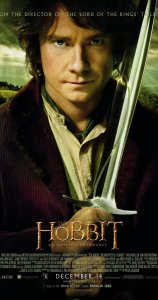
the hobbit movie poster 3Tolkien did NOT use too many words in The Hobbit, and the movie was NOT better.

The book is one thing, and the movies are something else completely. The movies, while they are awesome, exciting, and great fun, do bear some relation to the actual book. The basic plot, some of the high points, and various characters are all taken from the book. However, the movie most certainly does not chronicle the tale as Tolkien originally wrote it.

In the book (for starters) while elves are long lived and it is accepted that he must have been alive at the time, Legolas was not a character. Therefore, he did not have a love interest featured in the book. So, no– Tauriel did not exist in the book, The Hobbit. But she did in the movie, The Desolation of Smaug, and she was a great character there. In reality, no female elves are featured in the original book, The Hobbit, in more than passing, so that pretty much scotched any chance of romance for Kili in the novel.

If you read the credits at the end of the movies, you will see it clearly says “BASED ON” the book, The Hobbit by J.R.R. Tolkien.

Now, let me address the concept of “too many words,” a direct quote from one of the many one-star reviews of the book,  The Hobbit by J.R.R. Tolkien, and posted on Amazon several years ago:

J.R.R. Tolkien was a Professor of Anglo-Saxon Studies at Pembroke College, Oxford. That tells us he was educated, but he was writing stories for his children when he wrote The Hobbit and developed the world of Middle Earth. Because of that connection to his children, we know he was writing at a level they could understand. A master of languages, he invented the elfin language. We should assume he had a moderately good grasp of the English language as well.

What modern readers may not realize is this: Tolkien was writing in the early part of the twentieth century. He served in the British army during the First World War, the notorious War To End All Wars. That war was fought one hundred years ago.  Things were different then, he wrote in the literary style of his time.

The problem with the book is not in Tolkien’s writing. It is in the eye of the modern beholder who has no appreciation for the literary style of that era. That is a fair consideration, as reading the literature of this era takes time and persistence, and many readers don’t have the patience. No reader should feel guilty for not enjoying a book their friends loved. It happens to me all the time.

the hobbit movie posterThe Hobbit remains a classic of modern literature because it details that intrinsic thing all great novels consider, the search for self. That quest to discover who we are and what we are capable of is what drives Bilbo to keep going, even in the face of terrible events. Underneath the trappings of fantasy, the elves and goblins represent humanity in all its many imperfections, as does the hobbit himself.

Writers of modern fantasy might try to read what the early masters of the genre wrote, and discover what made their work classics. It will be difficult because the gap between the style and usages of today’s English versus the English of even one hundred years ago is widening with each passing year.

Readers must be patient and set aside their knowledge of what works in today’s literature. In other words, stop looking AT the words as disparate parts that you could write better, and read them in context. You might be surprised at what you will find.

Writers are always readers, and Tolkien often discussed his fondness for the work of William Morris (b.1834 – d.1896). Morris was an English textile designer, artist, writer, and socialist associated with the Pre-Raphaelite Brotherhood and English Arts and Crafts Movement. Tolkien and many of his contemporaries loved Morris’s prose- and poetry-romances.

Tolkien himself said his own work followed the general style and approach of Morris’s work. The Desolation of Smaug portrays dragons as detrimental to landscape, a motif borrowed directly from Morris. Tolkien had what he considered an accepted canon for how dragons should behave to work from.

But exactly what does “canon” mean in the context of a literary genre?

Wikipedia says, “In fictioncanon is the material accepted as officially part of the story in an individual universe of that story. It is often contrasted with, or used as the basis for, works of fan fiction. The alternative terms mythologytimeline, and continuity are often used, with the former being especially to refer to a richly detailed fictional canon requiring a large degree of suspension of disbelief (e.g. an entire imaginary world and history), while the latter two typically refer to a single arc where all events are directly connected chronologically. Other times, the word can mean “to be acknowledged by the creator(s).”

The modern image and mythology of the elf as he is written into most of today’s fantasy has been directly modeled on the elves of Tolkien’s Rivendell, whether the author knows it or not. Even the elves we find in the onslaught of modern urban-fantasy-romances are created in Tolkien’s image—close to the earth, immortal, and somehow nobler and more clever than we mere humans.

The love of a beautifully crafted tale will always endure. While future generations may have to learn to read and understand English as we speak it today, a true appreciation of Tolkien’s influence on modern epic fantasy literature will live on.

hobbit-battle-five-armies-bilbo-posterWhen I decided to read Chaucer’s Canterbury Tales in their original form, I had to take a college class. In that class we learned to read and understand Middle English, and then wrote our own modern translations. It was a lot of fun, but many great modern translations are out there if you don’t have the patience to read the original.

In the future, modern translations of Tolkien’s work will be published, and new fans of his work will emerge, just as in the case of Cervantes’ Don Quixote, a novel fully titled The history of the valorous and wittie Knight-Errant Don-Quixote of the Mancha. It was written in early modern Spanish (the equivalent of Shakespearean English) by Miguel de Cervantes Saavedra. Published in two volumes, in 1605 and 1615, Don Quixote is considered one of the greatest novels of all time. New translations are published every few decades.

So, Tolkien didn’t use too many words, and the movies were not better than his books. They were good, but they were different stories, one based on the other, but not following it.


Wikipedia contributors, “Canon (fiction),” Wikipedia, The Free Encyclopedia,  https://en.wikipedia.org/w/index.php?title=Canon_(fiction)&oldid=760595154  (accessed January 17, 2017).

1 Comment

Filed under Books, writing

#bookreview: The Heart of What Was Lost, by @TadWilliams #OstenArd

tadwilliams-the-heart-of-what-was-lostI just finished reading Tad William’s latest book. Wow! Told from three points of view, Duke Isgrimnur of Rimmersgard, a Norn leader, Viyeki, and Porto, a Perdruinese mercenary, The Heart of What Was Lost, by Tad Williams is a gripping, worthy return to the world of Osten Ard.

But first, THE BLURB:

At the end of Memory, Sorrow, and Thorn, Ineluki the Storm King, an undead spirit of horrifying, demonic power, came within moments of stopping Time itself and obliterating humankind. He was defeated by a coalition of mortal men and women joined by his own deathless descendants, the Sithi.

In the wake of the Storm King’s fall, Ineluki’s loyal minions, the Norns, dark cousins to the Sithi, choose to flee the lands of men and retreat north to Nakkiga, their ancient citadel within the hollow heart of the mountain called Stormspike. But as the defeated Norns make their way to this last haven, the mortal Rimmersman Duke Isgrimnur leads an army in pursuit, determined to end the Norns’ attacks and defeat their ageless Queen Utuk’ku for all time.

Two southern soldiers, Porto and Endri, joined the mortal army to help achieve this ambitious goal—though as they venture farther and farther into the frozen north, braving the fierce resistance and deadly magics of the retreating Norns, they cannot help but wonder what they are doing so very far from home. Meanwhile, the Norns must now confront the prospect of extinction at the hands of Isgrimnur and his mortal army.

Viyeki, a leader of the Norns’ military engineers, the Order of Builders, desperately seeks a way to help his people reach their mountain—and then stave off the destruction of their race. For the two armies will finally clash in a battle to be remembered as the Siege of Nakkiga; a battle so strange and deadly, so wracked with dark enchantment, that it threatens to destroy not just one side but quite possibly all.

Trapped inside the mountain as the mortals batter at Nakkiga’s gates, Viyeki the Builder will discover disturbing secrets about his own people, mysteries both present and past, represented by the priceless gem known as The Heart of What Was Lost.

MY REVIEW:

the-heart-of-what-was-lostI became a confirmed fan of epic fantasy in 1988 when I first entered this world of Osten Ard and the books of Tad Williams. It seemed like each character was deserving of a novel, and the diverse races whose cultures were so clearly shown fascinated me. The bigotry and arrogance some members of each race have with regard to their innate superiority struck me as illustrating a sad truth about the real world.

When this new series set in Osten Ard was announced, I was curious as to how Tad Williams would maintain that deep connection to the story after such a long absence. When The Heart of What Was Lost was launched, I bought the hard-copy, but also downloaded the Audible book, because I have a monthly subscription. Andrew Wincott is the narrator, and he’s an incredible reader. His narration makes this one of the best audiobooks I’ve ever listened to. Like some gutter-dwelling book junkie, I read along with his narration–an awesome experience.

This is not a long novel, only 224 pages. It is well-written, with the harsh, beautiful prose I have come to expect from Tad Williams. Most importantly, an inspiring story is encapsulated in those pages. I found the pacing excellent, and at times, heart stopping. There is no place where it slows or becomes pedestrian.

Osten Ard is created from both good and evil, with all the many grey places between those two absolutes clearly defined. For each misery, some small glimmer of hope is introduced, offering a reason for the characters to keep struggling. The unlikely friendship between Porto and Endri is deep despite their humorous rivalry. Through their eyes we see the truth of the conflict and what it means in terms of human suffering.

Duke Isgrimnur is strong and resolute, driven on every level. He is faced with hard decisions, an impossible task, and does what he has to. A many-layered character, Isgrimnur is one of my favorite people in the series, as is Sludig. I had wondered about them at the end of To Green Angel Tower. This ties up their threads well.

Opposite Isgrimnur is Viyeki,  a Norn who has risen high in the Order of Builders. He has also been given an impossible task. It is through him we feel some compassion for the Cloud Children, the immortal Norns, and what they have lost. His thoughts and the way he deals with the constraints he is under illustrate the alien society he loves, making their reasoning more clear to us. He sees many things that worry him, but as a Host Foreman, his position is somewhat perilous. His world is at stake, but faced with conquering the terrors of the deeps or being crushed by the enemy, he is beset on all sides, caught in the middle. He has questions, doubts, and the answers he is given offer him no comfort.

I give this book five full stars. In the watershed series, Memory, Sorrow, and Thorn, Tad Williams originally created the world of Osten Ard masterfully, exploring it through the diverse people’s thoughts and conversations. This novel is a brilliant continuation of that tale. He uses his characters’ impressions to show the setting, the history, and the core of the conflict. Through their eyes, we know this amazing world. At the end of the book, it’s hard to let them go.

You can find  The Heart of What Was Lost, by Tad Williams  in paper, as an audiobook, or a Kindle download at Amazon. It is also available at other eBook retailers, and in paper at all brick and mortar stores.

1 Comment

Filed under Books, writing

#amwriting: words to seek and destroy

It’s been about a year since I last discussed what have been termed “weed words.” Certain words and phrases don’t add to the narrative and only serve to increase the wordiness. Used too freely, they separate the reader from the experience.

In my first draft, these words are like tics–they fall out of my fingers and into my keyboard randomly, and out of my voluntary control. I never self-edit as I write the first draft because I am just trying to get the story down. The second and third drafts are where you deal with grammar and phrasing.

One of my three current manuscripts is an epic fantasy and is genre fiction. This means I must write active prose, so I don’t want to use words with no power behind them.

words_to_seek_and_destroy_lirf_cjjasp1-17-2017

And these are just the tip of the verbal iceberg. I seek out adverbs, descriptors, qualifiers, and other “weed words,” look at how they are placed in the context of the sentence, and decide if they will stay or go.

In the second draft  I address larger things like the story arc, and plotting problems. I have a reader who will gladly tell me where I have gone off the rails, and he is merciless. Call me a glutton for punishment, but putting Dave’s suggestions into play is the best part of my writing experience, even though it is hard to give up some of my favorite passages.

If they don’t add to the story, they have to go to the outtakes file, my tears notwithstanding.

The third draft is the most difficult, primarily because I just want to be done with it. This is where I go on a “search and destroy” mission, seeking out instances of weak words and timid phrasing words. Consider adverbs: I do a global search for the letters “ly.” I kid you not, a kajillion of them will pop up in my left margin, and my ms will become a mass of words with yellow highlighted “ly’s.” It’s a daunting task, but I look at each and see how they fit into that context. If they weaken the narrative, I change or remove them. When it comes to adverbs, most often simply removing them strengthens the prose.

At this stage, I am preparing this manuscript to be edited professionally. The character arcs are solid, major plot problems have been addressed, and the story is as good as I can make it. Before I bother an editor with it, I want to make the process as smooth as possible. In order to find the offending words, I do what is called  a “global search.”

With your mouse or stylus, highlight the word you want to find every occurrence of. On the far right of the home tab, click ‘find.’ This will open the navigation pane.

Or, on your keyboard press the ‘ctrl’ key and the ‘f’ key at the same time. This is the keyboard shortcut to the navigation pane. Follow the instructions in this image:

LIRF Global Search all steps

Caution: if you are hasty or impatient a global search can be dangerous and can mess up an otherwise good manuscript.

Be aware: This is a boring, time-consuming task.

stop don't click replace allYou can’t take shortcuts. If you get hasty and choose to “Replace All” you run the risk of creating inadvertent bizarreness in your work.

Suppose you decide to simply eliminate every instance of the word “very” because you have discovered you overuse it. You open the navigation pane and the advanced search dialog box. In the ‘Replace With’ box you don’t key anything, thinking this will eliminate the problem.

Before you click ‘replace all’ consider three common words that have the letters v-e-r-y in their makeup:

  • Every
  • Everyone
  • Everything

Deleting every instance of ‘very’ could mess things up on an incredibly large scale.

Examine the context. Have you used the word “actually” in a conversation? If so, you may want to keep it, as dialogue must sound natural, and people use that word in conversation. If you have used it to describe an object, consider ditching it.

Do take the time to look at each example of the offending words and change them individually. The way I see it, what’s a day or two spent doing the job right, as compared to the year or more you’ve already spent writing that novel?

As always, while I am going through this, I address the occasional awkward phrasings and other things that pop up when you look at your manuscript from a different view.

It’s unfortunate, but there is no quick way to do this. Every aspect of getting your book ready for the reading public must be done with the human eye, patience, and attention to detail.

As I have mentioned before, editing programs are out there, some free, and some for an annual fee. Grammarly is one, but the problem is, these programs are unable to see the context. They operate by finite rules and will often strongly suggest you insert an unneeded article, or change a word to one that is clearly not the right one for that situation:

  • “The tea was cool and sweet, quenching her thirst.
  • Grammarly suggested replacing quenching with quenched. I have no idea why.

Context is defined as the parts of a written or spoken statement that precede or follow a specific word or passage, usually influencing its meaning or effect. 

At this time in our technology, understanding context is still a human function. Because context is so important, I am wary of relying on these editing programs for anything other than alerting you to possible comma and spelling malfunctions.

I don’t mind taking the time to visit each problem and resolve them one at a time. Remember, readers don’t forget the authors whose work they despised.

11 Comments

Filed under writing

#amwriting: thoughts on the industry

IBM_SelectricThe ease with which anyone possessing the ability to access a computer and use the internet can publish their work independently has sparked a revolution in the publishing industry. Unfortunately, revolutions are NOT easy nor are they bloodless and pain-free.

For every book I feel good about recommending, I see on average 6 that are just plain awful. I’m not only talking Indies here–some are books that should never have made it past the gateway editor of a large publishing house, much less an agent.

It’s true that some indie books are so abysmally edited it is apparent the author is the only person who has ever seen the manuscript.

Others are moderately edited but not by a professional, or someone who knows how to write. This is a flaw that can drive away of all but the most determined readers, people who would ignore most typos and slight inconsistencies for a really good tale. For these books, the unbiased eye of the editor could have made a great novel out of a promising tale.

The core of this problem lies in the incredible number of people who are writing but have no concept of what it takes to write a good novel. Once they have rewritten the rough draft to their satisfaction, they believe they are done.

Then, they publish it.

Sadly, this sometimes happens with traditionally published books as well. I see this as evidence that editing and proofreading by the large houses for many successful traditionally published authors is sometimes overlooked in the rush to cash in on a commercial success. These publishers set impossible deadlines and race to launch what they hope will be a follow-up best seller, but because they were rushed, these books sometimes fail to live up to the hype.

The Novel Meme LIRFAnd while this means that they publish crap too, the stink washes off the traditional houses but clings to the Indie industry as a whole.

This brings me to my point: The big 5 traditional publishers pretend everything they publish is sheer magic, while loudly pointing out the faults inherent in self-publishing. And, while it makes me laugh that they decry us as worthless but leap to publish us the minute we show any sign of real success, there are hard truths here we indies who are committed to the craft of writing must face.

First off, I feel strongly that we shouldn’t rush to churn out more than one or two books a year. Romance novels can be a different kind of animal, but unless you are producing pulp fiction, the same applies. (Click here to read an article by romance novelist Merry Farmer on this subject.)

Traditional publishers fail us (as readers) by pushing successful authors to spew several books a year, beating dead horses and creating long-winded series that lose the way after the third book. We Indies have the luxury to take our time to craft a good book, as we don’t have externally imposed deadlines.

Some of the worst books I’ve read were written by traditionally published authors who also wrote books I loved. But their best (in my opinion) books were written in the early days when they weren’t book-producing machines.

Some general things for any author to do when they are first starting out:

  1. Learn the mechanics of how to write in your native language. Grammar and Punctuation are essential, even in modern literature.
  2. Join a writing group and meet other authors, either in your local area or on-line. This will help you with steps 3 and 4. Enter writing contests and participate in the boards and threads. Ignore the trolls; they pop-up everywhere (usually with badly written ego-stroking crap to their publishing credit.)
  3. Develop a thick hide, and find an unbiased eye among your trusted acquaintances to read your work as you are writing it, so you can make changes more effectively and not be overwhelmed at the prospect of rewriting an entire manuscript from scratch.
  4. Lose your ego. Your ego gets in the way of your writing.  Are you writing for yourself or for others to read and enjoy your work?
  5. Find a good, professional editor. There are hidden aspects to every great book, and they are all centered around knowledge of the craft. An external eye is essential to the production of a good book. Check their references, and when you do engage their services, do not take their observations personally. This editor must be someone you can work closely with, who makes suggestions and lets you make the changes on your masterpiece yourself. They must understand it is your work and you have the right to disagree with any suggested changes. If you have this symbiotic relationship, you will turn out a good final product.
  6. Don’t give up your day job. Even authors receiving hefty advances have to struggle to make ends meet. (Read Thu-Huong Ha’s article, A New Book Shows the Financial Cost of Leading a Creative Life.)

EDWAERT_COLLIER_VANITAS_STILL_LIFEIt’s far more affordable now for a dedicated reader to buy enough books to keep themselves happy, but making your way as a reader through the many offerings in our eBookstores is a perilous journey, and you can’t always trust the quality by reading the publisher’s label. You just have to realize that whether a novel is traditionally published or Indie, some books are frogs, and some are princes.

You may have to read a few books you wish you hadn’t on your way to finding the book that sweeps you away. For me, that’s just part of the journey.


Sources and Attributions:

How Many Books Should You Write Per Year, by Merry Farmer, Nov 13, 2013

A New Book Shows the Financial Cost of Leading a Creative Life,  by Thu-Huong Ha, Jan 11, 2017, Flipboard

IBM Selectric, By Oliver Kurmis (Self-photographed) [CC BY 2.5], via Wikimedia Commons

Still Life, By Evert Collier (1642-1708) [Public domain], via Wikimedia Commons

8 Comments

Filed under Publishing, writing

#FlashFictionFriday: Astorica (Reprise)

Astorica is a flash-fiction, set in a version of Astoria that may exist in a parallel universe, just one or two shadows away from our own frequently odd universe. It was originally posted here in July of 2016.  Enjoy!


Chance Jensen approached The Duck Walk Inn, aiming for the front door. It was classier than most of Astorica’s cocktail lounges, and was the third place she’d looked that afternoon. She entered, peering around to see if Jack was there.

He was, and ignoring the worried glances from the few men who were present in the otherwise empty bar, she walked toward him.

Stella, the bartender, chatted with Chuck Moore, Astorica’s lone hooker. Chuck’s clientele was comprised mostly of lonely, blue-collar laborers, women who worked in the shipyard. Stella nodded at Chance, as she lit Chuck’s cigarette.

Chuck exhaled a cloud of smoke, and glared at Chance. “You’ve been neglecting him, Chance Jensen. Don’t take your husband for granted. You’re a lucky woman to have a man like Jack. He shouldn’t be sitting in a place like this.”

“I know. I’ll do better, I promise.” She did have to smile, getting advice on her marriage from the local whore. But, she supposed, Chuck had seen plenty of marriages fail.

“Good. I don’t want to have this conversation again.” With a flounce, Chuck turned back to Stella.

The nervous-looking men at the corner table had moved their handbags to hide their cocktails, obviously regretting their decision to be so daring as to go into a cocktail lounge unaccompanied.

Jack looked out of place at the bar, dressed in his usual proper, suburban, house-husband style. He glanced up from his iced-tea. “What do you want? I’m not going back unless you’ve changed your mind.”

800px-Ladies_safety_bicycles1889“Jack, we had a quarrel. I’m sorry I shouted. But, you can’t file for a divorce, as you don’t have grounds. I don’t beat you or cheat on you. You’re just angry because I can’t afford to buy you a bicycle like Loris did her husband.”

Jack straightened his sweater and crossed his trouser-clad legs. “You’re right, I am unhappy about that. I might not be able to get a divorce, but I don’t need one. I’m not interested in dating, so I have no desire to be single. But no law says I have to share your roof. If I got a job as a waiter or a housekeeper, I could support myself and buy my own bicycle. One with a good-sized basket for carrying things.”

Chance attempted to reason with him. “Jack, if you took a job outside our home what would people think? They’d think I can’t manage on my salary. I’m just starting out with this company. I don’t need that kind of image dogging me, holding me back, or I’ll never be promoted. They’re assigning me better routes now, so things will improve. I promise.”

He burst out, “I have needs too, you know. I want to go places, and do things. I’m tired of being cooped up, with nothing to do but slave away, making sure that when you come home, you find a clean house and a hot meal. Where’s the joy in that?” Jack wiped a tear, a sure sign he was really worked up. His voice, however, was calm. “It’s just, if we had a child, I would feel needed. I don’t have a purpose, Chance.” He met her eyes. “Give me a purpose, and I’ll stay.”

Chance sighed. It always came back to that. “I’d like a child too. I don’t know why we haven’t been blessed. We’re both healthy. There’s no reason we haven’t conceived.”

Jack looked around the room. “See? They’re the same as me. We’re bored stiff. Playing bridge on Tuesdays and going to Tupperware parties just doesn’t fill the void. It’s not just us. Fewer and fewer babies—something’s wrong with this world, and no one will admit it.” He stared down at his handbag. “It’s more than that. It’s everything. I get up at five to cook  breakfast and fix your lunch. The darkest corners in our house are so clean they glow in the dark! I do laundry. I wash windows. Every day, the same things.”

Chance started to agree, but Jack cut her off.

“At ten I get all dressed up and take the bus to the market, then I haul the groceries home and put them away. Once that’s done, I change and go out to work in the flower beds, because God forbid the neighbors should see an untidy yard! Once every bloody just-sprouting weed has been yanked, I prepare your dinner, and fifteen minutes before you get home I get all dolled up, just to look good while I serve you dinner. Then I have to clean the kitchen. The next day it starts all over again. My life revolves around cooking, cleaning, and what the damned neighbors might think of us.”

Hoping to calm him, Chance said,“I know it’s difficult for you, depending on public transportation. But I’m a truck driver. You knew that when you married me. Maybe I’m not as romantic or rich as the wives in your soap operas, but I do try. Don’t I give you a large enough allowance? I never ask how you spend it. I don’t care if you have lunch out with the boys, or have your hair done twice a week. I love you! I married you for keeps, and I respect the vows we took.”

“You could tell me you love me more often.” Jack sat  hunched in on himself.

“I know. I’m not good at saying how I feel.” Chance put her hand on his shoulder. “I’ll try to do better.”

Jack burst out, “I could learn to drive, but men aren’t allowed to. I could vote and help pass laws that would improve society, but no, men aren’t allowed to. We’re too emotional, too high strung to be allowed the same privileges as women.”

Desperate to head off the men’s emancipation argument, Chance said, “I know you’d be great at all those things, better than some women if I’m truthful. But it’s the way things are, and we have to live with it. And guess what—I got a raise, today.”

Jack’s eyes it up. “Really? That’s wonderful.”

Pressing her advantage, Chance said, “You know what that means? We can save up for your bicycle. If we’re careful, next month you can buy it.”

Picking up his handbag, Jack stood up. “Let’s go home. I’ll make a pie to celebrate your raise.”

Relief flooded Chance. Taking his elbow, she opened the door for Jack and guided him across the parking lot, reminding herself that men were the fairer sex, and required gentle handling. Chuck was right–she had been neglecting Jack’s emotional needs. She resolved to be more attentive.

She loved Jack , but he confused her. He had an overabundance of paternal instincts. It occurred to her that a puppy might take Jack’s mind off things. And, it just so happened Chance’s new boss, Carol, was trying to find homes for six dachshund puppies.

That was a brilliant idea. She’d gain favor with the boss and surprise Jack with a puppy, solving both problems in one swoop. Smiling, Chance opened the car door for her husband, helping him into the sedan.


“Astorica” © 2016-2017 Connie J. Jasperson, All Rights Reserved

1 Comment

Filed under #FlashFictionFriday, writing

#amwriting: connecting with readers

magicWriters are offered many Facebook groups, some strictly private, professional, and writing-craft oriented. These tend to be good educational groups, and I have enjoyed them.

We can also gain membership in public groups which were created for indies to make their books available to the public. These groups are easily searchable on Facebook.

These public groups, especially those with large numbers of members (over 10,000), are good sites to drop in once every week or so and share a link to whatever book you might have free or on sale for .99 at Amazon or to promote your new release.

These sites cater to readers and posts show up in the general feed, somewhat randomly. I have found that these public groups do actually do help authors gain sales—not a lot, but a few.

Many of these groups cater to readers of romance books, but there are a few that are for any kind of book that is written. One of the best Facebook groups for Indies to post free and .99 cent Kindle books is Amazon Book Clubs. They have over 35,000 followers, and most of those followers are readers looking for a good, affordable Kindle book.

However, one must use common sense, and so I suggest you only post your books once a week at most. People get tired of seeing the same authors spamming these sites over and over.

I am a member of several groups where the same three or four authors invariably post the same books every single day. Not only that, they post all their books one link at a time.  After a month or two of this, they will complain they aren’t getting any sales no matter how hard they try. Then they drop out of sight.

What these well-intentioned authors don’t understand is that making any kind of public Facebook forum work for you is like making Twitter work. You must be patient and careful not to spam your intended market, as that will drive away potential readers. In these book forums, you want to present yourself in a competent, professional manner.

Your icon or avatar is the image of you the world sees, so choose a picture that looks professional. Your book cover will work, but I suggest using a real photo of you if you have one you like.

When it comes to both your professional Facebook page and Twitter, it works best when you share content that is original and pertains to your life as a writer. People aren’t too interested in whether or not you got the dishes done, but they do care about what books you just read, or how your own writing is going. Tweet your blog, and retweet other tweets you enjoyed. If you have a hobby, such as watching IndyCar Races or you play golf, tweet about those things too. I tend to tweet about food because I’m vegan and I love finding new recipes. You want your followers to get to know you, as well as your books.

Follow people you find interesting, follow the real people back (there will be spam-bots following you, so watch out for those and don’t follow them) and don’t spam the universe with constant “Buy my Book” tweets. Be consistent, but creative.Old books Remember, nothing ever happens as fast as you want it to. Building a fan base takes time, years, actually. It doesn’t happen over night, although rewards will occur in small leaps and bounds. Those little surges of sales are what keeps us going, the lure that keeps us plodding forward.

For an excellent blog post with links to a lot more information than I have to offer in regard to places to connect with readers, check out  How to Promote Your Fantasy Novel on Facebook, Twitter, Wattpad, YouTube, and more by Chris Well.


20 Comments

Filed under writing

#amwriting: manners and toxic professional relationships

Eye on Flat Panel Monitor, Image by © Royalty-Free/CorbisWorking authors rely on the world of the internet. We must not only have our own website, but we must also have a Facebook page, a LinkedIn page, and a Goodreads page.

In this electronic world, an icon or avatar is the pictorial representation of our alter ego or character. This is the image that appears beside our user-name on every comment we post in any forum on the internet, and is our internet face.

We carefully select what we put up to represent us because we want people to see us as who we think we are.

The common courtesy that we would extend in a face-to-face conversation should extend into our online conversations. These conversations are places where we are represented in two ways:  by the picture we have selected as our ‘icon’ or ‘avatar’ and by what we write in the comments sections of public forums.

How we interact with other authors is public information and is visible to the world. When an interested reader Googles our author name, our online interactions at Goodreads and every other public forum will be available for eternity.

We must have a care about the way we behave.  We are judged by  the manner in which we act and react in every online interaction.

This brings me to the breach of common courtesy that brought this subject up in my mind. This turned up, posted on my Facebook author page, out of the blue:

Thank you Connie for the invite to your page coming to say hello and bring some love. Hope to have some in return here: https://www.facebook.com/—-/ Be sure to check out my writing group –(deleted group name)– where Writers can post blurbs, giveaways, get beta readers, and more here: https://www. facebook.com/groups/——-/

This was a surprise, as I had not ever to my knowledge met or spoken to this person, nor had I invited her to like my page. I don’t engage in those sorts of antics as I want readers to find my page. My author Facebook page is for readers to find my work, engage with me about it if they choose, and perhaps find a book they might like.

If you, as an author, are invited to ‘like’ another author’s Facebook page or website AND you choose to do so, it’s not appropriate for you to then post a comment on their page that you have done so and also post the links to your pages or books.  The proper way to inform the author you have ‘liked’ their page is to send them a personal message saying you have done so and include those links in that message.

clip-art-lecture_recordingTo post links to YOUR website or books on another author’s page is tantamount to pissing on their doorstep. You are marking their territory with your scent, claiming a piece of it for yourself.

Some of these offenders have no idea how rude such behavior is. However, most do and don’t care, as they’re only interested in advancing themselves. These are what I think of as Toxic Professional Relationships, and I refuse to interact with them unless they are playing nice. I set boundaries.

Random authors who post ads and links for their books and websites are not welcome on my Facebook author page. Their posts are immediately deleted. I won’t disparage them, but I refuse to be a part of their PR team.

If you are desperate for FB likes and believe anything will help, there are groups out there on Goodreads for authors who want to engage in “Facebook Page Like Parties.” When I first began as an author, I was advised to do that. I ‘liked’ about 50 authors’ pages, and only about 10 of those ‘liked’ me back.

I soon realized that Goodreads ‘Like’ Parties didn’t help me find readers, which is what an author needs to do. I made a personal commitment to ‘like’ the pages of authors whose work I enjoy and not worry about whether or not they like my page in return because it doesn’t matter.

We are now seventeen years into the 22nd century. We live and interact in a world of the electronic ephemeral. It has no physical place in our lives as a tree or an animal might but the ramifications of what we do and say in that world are monumental.

The internet never forgets.

dog-using-laptop-computerThe internet is forever and deleting a comment you regret making  won’t make it go away because it has already shown up in the in-boxes of all the users on that forum.  We communicate instantly and frequently with no filters between the brain and the keyboard.

In this world of instant communication and myriad opportunities for damaging your own reputation, it is critical to think before you do.

To that end, I offer up this list of suggested “manners” for authors in the world of the internet. I didn’t invent them; they are copied directly from the website Common Sense Media and made to apply to indie authors trying to make their way in the cruel world of the internet:

Rules for Online Etiquette

Context is everything. If you want to have a silly online name that conforms to the convention of a particular online community and only your friends there will see it, fine. But for more formal communication — like email addresses, posting comments, or anything to do with work or school — choose a respectable screen name (though not your real name) that you wouldn’t be embarrassed to utter out loud in front of, say, your grandmother. If it is an author related forum, it’s okay to use your author-name.

Double-check before you hit “send” or “post”:  Could something you wrote be misinterpreted? Is it so littered with slang that it requires a Ph.D. in Urban Dictionary to be understood? Were you upset when you wrote it? Check to see if it’s rude, mean, or sarcastic. If so, don’t post it.

Take the high road (but don’t boast about it). Chatting, texting, and status updates are all “in-the-moment” communication. But if there’s an escalating sense of rudeness, sign off. No good will come of firing off a nasty comment. Authors (who are touchy, hypersensitive creatures at best) will NEVER forget how you flamed them. You can always write out a response to get something off your chest … without sending it.

Grammar rules. Rumors of grammar’s demise have been greatly exaggerated. (I love that line!) But again, context is key. An IM to a friend can dangle as many participles as you want, but anything more formal — for example, a public online comment or a note to a colleague — should represent your best self. This applies to capital letters, too. By now, everyone knows that writing in all caps means that you’re shouting, but it bears repeating once your kid starts interacting online.

Keep a secret. In today’s world, photos, texts, and videos can be posted, copied, forwarded, downloaded, and Photo-shopped in the blink of an eye. If you think something might embarrass someone, get them in trouble, compromise their privacy, or stir up drama of any kind, keep it to yourself — and maybe delete it from your timeline or the thread for good measure.

Remember the Golden Rule. Don’t post something online that you wouldn’t say to someone’s face. If you do have something negative to say, discussing it in person is a better way to resolve your issues. Post nothing on someone else’s wall that you would not be glad to have on your own.

These suggestions translate directly to Do No Harm.

Behave with dignity, and extend the common courtesies to others that you wish to have extended to you.


Credits and Attributions:

Common Sense Media  7 Rules to Teach Kids Online Etiquette By Caroline Knorr posted 

Eye on Flat Panel Monitor, Image by © Royalty-Free/Corbis

Woman at Computer http://www.classroom-clipart.com/ and Microsoft CC-SA-3.0

Dog Using Laptop Computer CC0 1.0 Universal (CC0 1.0)

8 Comments

Filed under writing

#FlashFictionFriday: Bond and Free, Robert Frost

Admiring the Galaxy |CCA 4.0 ESO/A. FitzsimmonsBond and Free

Love has earth to which she clings
With hills and circling arms about-
Wall within wall to shut fear out.
But Thought has need of no such things,
For Thought has a pair of dauntless wings.

On snow and sand and turf, I see
Where Love has left a printed trace
With straining in the world’s embrace.
And such is Love and glad to be.
But Thought has shaken his ankles free.

Thought cleaves the interstellar gloom
And sits in Sirius’ disc all night,
Till day makes him retrace his flight,
With smell of burning on every plume,
Back past the sun to an earthly room.

His gains in heaven are what they are.
Yet some say Love by being thrall
And simply staying possesses all
In several beauty that Thought fares far
To find fused in another star.


I have always loved this poem for iLouis_Français-Crépusculets complex serenity–the narrator is at peace within himself and accepts his turbulent nature.

Frost’s poems were a large part of my early life. I grew up in a house in the woods at the edge of a lake. It was quite rural, and the 1/4-mile long driveway leading from our house up to the road was a pleasant place to walk at any time of the year. Winter was especially beautiful, as the woods seemed to be peaceful, resting. When a blanket of snow had covered them they had a magical quality, one Frost had felt and written of so eloquently.

While many of Robert Frost’s poems show the tranquility of being in a quiet place close to nature, this poem, Bond and Free, is an internal poem, examining the soul and heart of a person.

When I walk in the woods or along the beach my mind strays to many places, absorbing both the sights and sounds, but also touching on ideas not previously thought of, small discoveries of “me.” Robert Frost was able to write about this simple yet complicated process, and have it make sense.

Quote from GradeSaver: The narrator describes the difference between Love and Thought. Love clings to the earth in such a way that makes it a denial of freedom and imagination. Thought, on the other hand, has cast aside the shackles of the tangible world and travels throughout the universe with a pair of wings. Yet, for all the freedom that Thought seems to have, the safe environment of Love is far more liberating.


Credits:

Bond and Free by Robert Frost, PD|1916

Images:

Admiring the Galaxy |CCA 4.0 ESO/A. Fitzsimmons

Crépuscule (Dusk) Louis Français, PD|100, By Ji-Elle (Own work) [CC BY-SA 3.0 (http://creativecommons.org/licenses/by-sa/3.0)%5D, via Wikimedia Commons

Vincent, Caitlin. Jordan Reid Berkow ed. “Robert Frost: Poems “Bond and Free” (1916) Summary and Analysis”. GradeSaver, 12 May 2009 Web. 6 January 2017.

Comments Off on #FlashFictionFriday: Bond and Free, Robert Frost

Filed under #FineArtFriday, #FlashFictionFriday, Poetry