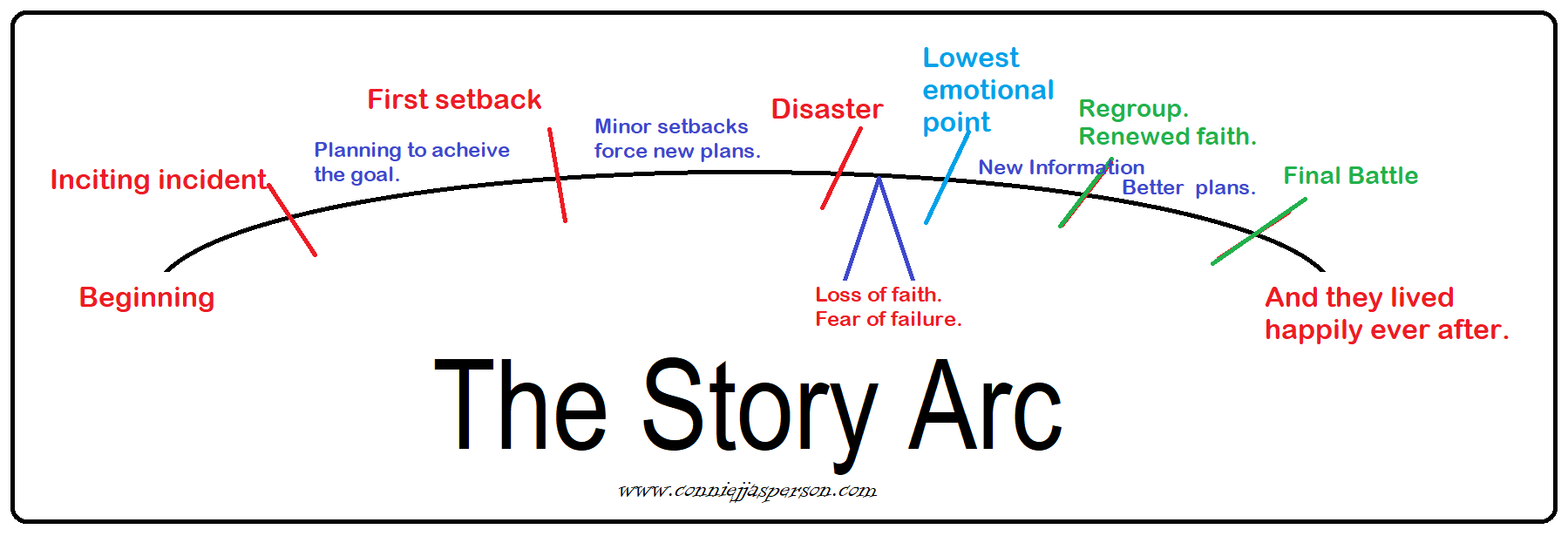
Idea to story, part 1: novel, poetry, memoir, or short story? #writing

Stories are universes that begin with the spark of an idea and burst into existence.  When an author has this fledgling thought, it grows, expands, and won’t stop nagging at her. New authors often don’t know how to make that idea into the kind of story they have always wanted to write.

The basic premise of any story in any genre can be answered in eight questions. I have listed them before, but here they are again:

  1. Who are the players?
  2. Who is the POV character?
  3. Where does the story open?
  4. What does the protagonist have to say about their story?
  5. How did they arrive at the point of no return?
  6. What do they want, and what will they do to get it?
  7. What hinders them?
  8. How does the story end? Is there more than one way this could go?

Question number two is where, once the first rush of creativity passes, many would-be writers give up. They experience a momentary lull in creativity and don’t have the tools to visualize what to write next.

When we have a lull in creativity, we wonder how to free the words and get the story back on track.

It helps to consider what kind of story those ideas want to be.

Sometimes stories want to be novels.

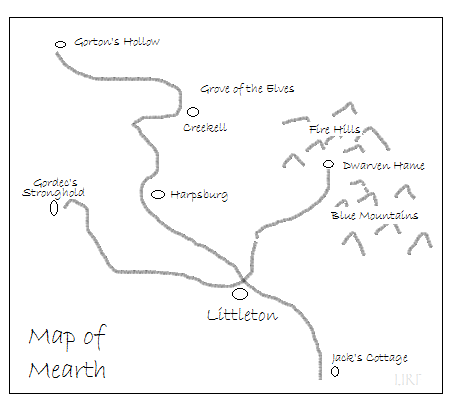
Has the story decided what genre it is? Mine always come into existence with a setting, and that determines the genre. If your story wants to be a novel, ask yourself what the central theme is.

  • Theme is a core thread, such as love lost and regained, or coming of age, etc.

If you have a theme to write to, the plot will emerge more easily.

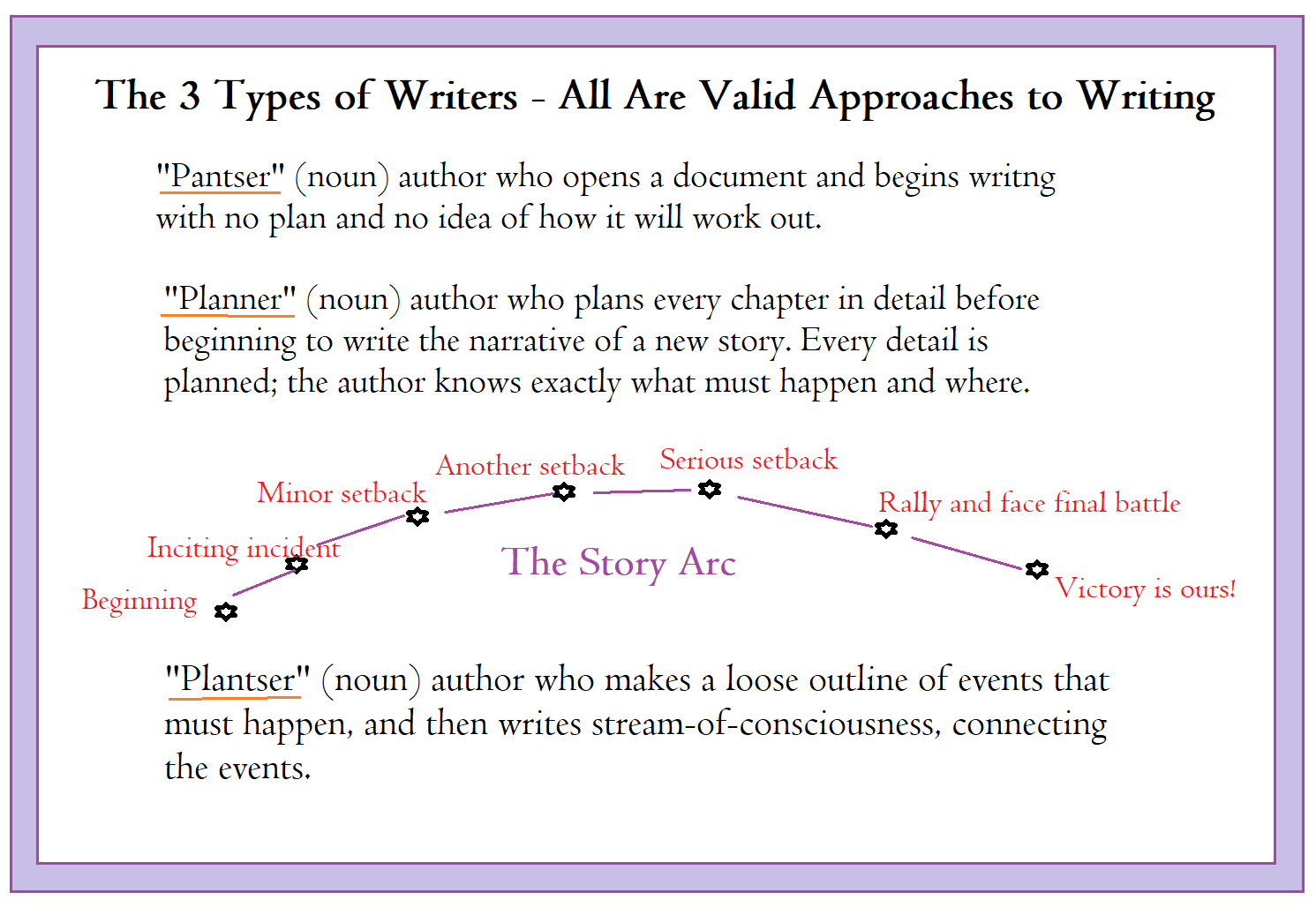
Will you “pants it” through the plot or create a plot outline? Outlines are just me thinking out loud on paper.

There are times when my stories want to be poems, because poetry is emotional and emotion powers my words. My poetry details the fantasy that is the memory of my childhood home.

It describes the way I felt about lake where I grew up, the forest surrounding our property and the swamp that bordered our driveway. A river emerged from the south end of my lake, and I write about the memories of fishing with my father.  To the west of the lake, the high hills rise above, dominating the western sky from every view in the county. When I see those hills, I know I am home.

When poetic words have a grip on your imagination, write them down. If you want to learn more about the different genres of poems and how to write them, here is a short list:

Free verse  is a modern construct that may not rhyme but the cadence and pacing of the syllables have rhythm.

Traditionally structured poetry includes OdesHaikusElegiesSonnetsDramatic Poetry, or Narrative Poetry.

In my misspent youth, I was a musician and wrote lyrics for a heavy metal band, so I tend to write lyric poetry. I have a friend who writes sci-fi poetry.

Much of my work is in the form of short stories. In the beginning of your writing life, you work might be short forms too. Will you “pants it” or write little outlines? I work both ways when it comes to short stories.

I’ve written more than a hundred short stories in the past few years, enough that I can put together several collections. I am working on editing one as we speak.

If I have learned anything over the last decade or so, it’s that a collection of stories can’t be a bunch of random tales shoved into a book. To make a coherent collection of stories in one volume, I must consider several things.

What genre? Or will it be a mix of genres? This is a risky choice but could succeed if a specific theme binds the stories together.

Another thing to consider is whether or not I have enough stories featuring a recurring character or location to bind the collection together. I do for one series but will have to rely on a theme for the other collection.

You’ve noticed that I’m repeating myself—but trust me, a fiction project is easier to create if you know what genre you are writing for and can see the central theme that will bind it together.

Sometimes new authors say their project is a memoir. If a new writer tells me this, I always wonder if they have read any. If they haven’t read any memoirs, there may be a problem. Reading the memoirs written by successful authors is the best way to learn how the plots of outstanding memoirs are constructed.

Memoirists should ask two questions of their work. Will you detail actual memories or write a fictionalized account? Do you dare to name names or not?

  • Naming names could be opening a can of worms, so think long and hard before you do that.

Some new authors have no intention of publishing a memoir. They just want to write a family history, a fun project. Here are some considerations if you fall into that category.

Are you just curious, or are you searching for an identity, trying to discover who you are and where your family comes from? Research from a site such as ancestry.com or gleaned from family bibles, letters, and other collected papers will greatly help you.

Will you include photographs or interviews with older family members who may remember something about your family’s history?

This is a project I’ve thought about embarking on, but I know I would never finish it. I don’t need another unfinished project laying around.

When we have the spark of a story, an idea that won’t let us go, we can spend years trying to get that vision out of our heads and ready for publication. It takes an incredible amount of work and a continuing habit of self-education to grow as a writer.

Getting your book to the publishing stage can be expensive. When we think we have our novel, memoir, or short story collection finished, we must consider hiring a freelance editor—even if we plan to find an agent and go the traditional route. We never submit anything that isn’t our best work.

But if you are in the “just starting out” phase, please know that you are not alone. When you hold the finished product in your hand, you will know the struggle was worth it.

1 Comment

Filed under writing

#FineArtFriday: a closer look at ‘Spanish Blacksmiths’ by Ernst Josephson 1882

Spanish Blacksmiths, by Ernst Josephson

  • Date: 1882
  • Medium: oil on canvas
  • Dimensions: width: 107 x height: 128.5 cm

What I love about this image:

This powerful painting is one of my all-time favorites–I have featured it here before. Josephson captures the boundless self-confidence and personalities of these young men. He has managed to portray their cock-of-the-walk swagger, and he has shown us the truth of their craft: that sparks fly and ruin their clothes; that the work is hard and their muscles strong. These men are full of life.

I can imagine them arriving at the tavern for supper, cleaned up and wearing their best shirts, eyeing the ladies and flirting with the serving girls.

The influence of Josephson’s having studied Rembrandt’s works closely can be seen here in the style with which he has painted their features. He has painted the men with truth—they are not classically handsome, but they are in the prime of life and have immense charisma. They wear their burned and ragged hats with pride. These men are good at what they do, and they know it. Their eyes dance and flirt outrageously with you across the years—they are full to bursting with machismo, daring you to just try to walk past and not notice them.

About the Artist, Via Wikipedia

(Ernst Josephson) was born to a middle-class family of merchants of Jewish ancestry. His uncle, Ludvig O. Josephson (1832-1899) was a dramatist and his uncle Jacob Axel Josephson (1818-1880) was a composer. When he was ten, his father Ferdinand Semy Ferdinand Josephson (1814-1861) left home and he was raised by his mother, Gustafva Jacobsson (1819-1881) and three older sisters.

At the age of sixteen, he decided to became an artist and, with his family’s support, enrolled at the Royal Swedish Academy of Fine Arts. His primary instructors there were Johan Christoffer Boklund and August Malmström. He was there until 1876, when he received a Royal Medal for painting.

After leaving the Academy, he and his friend and fellow artist Severin Nilsson (1846-1918) visited Italy, Germany and the Netherlands, where they copied the Old Masters. His breakthrough came in Paris, where he was able to study with Jean-Léon Gérôme at the École des Beaux-Arts. He soon began concentrating on portraits, including many of his friends and fellow Swedes in France. For a time, he shared a studio with Hugo Birger (1854–1887). His personal style developed further during a trip to Seville with his friend, Anders Zorn, from 1881 to 1882.

His private life did not go well, however. By his late twenties, he was afflicted with syphilis. His romantic life suffered as a consequence, as he was forced to break off a promising relationship with a young model named Ketty Rindskopf.

Josephson was deeply affected by his mother’s death in 1881, though had found respite when, in 1883, he had obtained the patronage of Pontus Furstenberg (1827–1902), a wealthy merchant and art collector. In 1885, he became a supporter of the “Opponenterna“, a group that was protesting the outmoded teaching methods at the Swedish Academy, but his interest in the group diminished when he failed to win election to their governing board.

By the summer of 1888, he was beginning to suffer delusions and hallucinations, brought on by the progression of his illness. Residing on the Île-de-Bréhat in Brittany, where he had spent the previous summer with painter and engraver Allan Österlind (1855–1938) and his family, he became involved in spiritism, possibly inspired by Österlind’s interest in occult phenomena. While in his visionary states, he wrote poems and created paintings that he signed with the names of dead artists. Some of his best known and most influential works were created during this period. [1]


Credits and Attributions:

Spanish Blacksmiths by Ernst Josephson 1882 PD|100, First published on Life in the Realm of Fantasy on August 16, 2019.

Wikimedia Commons contributors, “File:Ernst Josephson – Spanish Blacksmiths – Google Art Project.jpg,” Wikimedia Commons, the free media repository, https://commons.wikimedia.org/w/index.php?title=File:Ernst_Josephson_-_Spanish_Blacksmiths_-_Google_Art_Project.jpg&oldid=354761584 (accessed August 16, 2019).

[1] Wikipedia contributors, “Ernst Josephson,” Wikipedia, The Free Encyclopedia, https://en.wikipedia.org/w/index.php?title=Ernst_Josephson&oldid=1256604655 (accessed January 30, 2025).

2 Comments

Filed under #FineArtFriday

Action and consequences #writing

The word of the day is consequence.

It’s a large word with many meanings and usages, but the one we’re concerned with today is its synonym, repercussion. Frankly, a story of actions without consequences is not much of a story.

Every choice our characters make should have repercussions, changing their lives for good or bad.

Once again, we will go to J.R.R. Tolkien and look at Bilbo’s choices and his path to becoming the eccentric eleventy-one-year-old hobbit who vanishes, literally, leaving everything he owned to his cousin, Frodo.

At the outset, Gandalf does the unforgivable. He scratches symbols into Bilbo’s pristine front door. To ruin a beautiful door like that? The fiend!

Worse, those symbols invite himself and twelve rough-looking strangers to be overnight guests in Bilbo’s home—and Bilbo is unaware of all this until the first guests appear at his door, expecting to be fed.

I don’t know about you, but I would be hard-pressed to scrape together the food to feed thirteen guests without a little advance notice.

In the morning, after the unexpected (and unwanted) guests leave him to his empty larder, he has two choices, to stay in the safety of Bag End, or hare off on a journey into the unknown. Bilbo chooses to run after the dwarves, and this is where the real story begins.

The Hobbit or There and Back Again is the story of how an honest and respectable middle-aged hobbit became a burglar. In the process, he became a hero who was forever changed by his experiences.

The consequences of his decision will alter his view of life forever afterward. Where he was once a staid country squire, having inherited a comfortable income and existence, Bilbo is now expected to steal an important treasure from a dragon.

At the outset, the role of burglar doesn’t seem real. He is beset by problems, one of which is his general unfitness for the task. He’s always been well-fed, never had to exert himself much, and no one cares about his opinions. For someone who is used to being an important voice in the community, that disregard is painful.

Bilbo’s hidden sense of adventure emerges early when the company encounters a group of trolls. He is posing as a thief, so he is ordered to investigate a strange fire in the forest. Reluctantly, he agrees. Upon reaching the blaze, he observes that it is a cookfire for a group of trolls.

Bilbo has reached a fork in the path of life and must make a choice. He’s not stupid, and the smart thing would be to turn around at that point and warn the dwarves.

However, his ego feels the need to do something to prove his worth. “He was very much alarmed as well as disgusted; he wished himself a hundred miles away—yet somehow he could not go straight back to Thorin and Company empty-handed.” [1] Bilbo feels the need to impress the Dwarves, which drives him to make decisions he comes to regret.

In the process of nearly getting everyone eaten and having to be rescued by Gandalf, he discovers several historically important weapons. One of them is Sting, a blade that fits Bilbo perfectly as a sword. Gandalf and the dwarf Thorin also find their respective swords, Glamdring and Orcrist.

Bilbo’s blade does not acquire its name until later in the adventure, when Bilbo becomes lost in the forest of Mirkwood. He uses it to kill a giant spider, rescuing the Dwarves. These actions gain him some esteem from a few of the dwarves, the ones who aren’t as arrogant as Thorin.

Although Bilbo’s weapon is only a dagger for a human or dwarf, it is the perfect sword for a warrior the size of our hobbit. It turns out that, like the swords of Gandalf and Thorin, this dagger was forged by the elves of Gondolin in the First Age and possesses a magical property—it shines with a blue glow when orcs are close.

As the journey progresses, Bilbo develops a clearer perspective of his companions, caring about them despite their flaws. With each event, he becomes more introspective and aware, and his courageous side begins to emerge.

All along the way, every decision forces an action, which has consequences that force his character arc to grow. His experiences reshape him physically and emotionally. Bilbo no longer thinks like the naïve, slightly prejudiced member of the sedentary gentry that he was at the outset.

As the Dwarves continue to get into trouble, Bilbo makes plans for their rescue, and does so successfully, receiving only grudging gratitude from Thorin.

Bilbo is now a warrior, strong and capable of defending his friends from whatever they have dropped themselves into. However, if you asked him, he would say he was just an ordinary person.

Action and its consequences force our characters to grow emotionally. It changes their worldview. Sometimes the decisions our characters make as we are writing them surprise us. But if those decisions make the story too easy, they should be discarded.

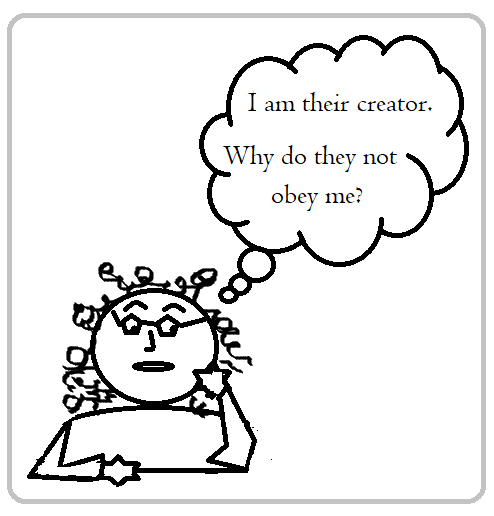
We, as their creator, must take over, cut or rewrite those scenes, and force the story back on track.

After all, consequences make the story interesting.


Credits and Attributions:

[1] Quote from The Hobbit, or There and Back Again, by J.R.R. Tolkien, published 1937 by George Allen & Unwin, Ltd.

Comments Off on Action and consequences #writing

Filed under writing

#FineArtFriday: Winter Scene in New Haven, Connecticut, by George Henry Durrie

I frequently find myself perusing the vaults at Wikimedia Commons, looking for clues about how people lived in times past. Winter Scene in New Haven, Connecticut, by George Henry Durrie is an intriguing window into the winter of 1858, a surprisingly intimate view of life in America just before the Civil War. I first posted this image in December of 2017, and it remains one of my favorite paintings, for a number of reasons.

Durrie had a modest reputation during his lifetime, an indie struggling unsuccessfully to market his works. After his death, the American printmaking firm, Currier and Ives, ensured his works were kept in the public eye.

The grandeur of the sky is reminiscent of Constable’s work, and the painting, overall, is both bold and comforting. Under a large sky, we find a small farm. It’s a simple pastoral scene, a moment painted during a winter long passed into memory. It’s pleasant, almost boring scene in its common hominess. When you look at the larger picture, you may ask, “How is this intimate? The landscape and the sky provide the drama, while the people are completely overshadowed by the scenery.”

But there is another, deeper story, one that is overshadowed by the majestic landscape and threatening winter skies, and Durrie included these people for a reason.

In Connecticut in 1858 things were not as simple and bucolic as the wide view of this image portrays.

Quote from Matthew Warshauer in his article for Connecticut History:

The state descended into chaos at the start of the war, splitting into warring Republican and Democratic factions that sometimes faced off violently.  Before the Southern states even seceded, the two parties faced off in the 1860 gubernatorial election, a contest that would decide the level of the state’s involvement once the war began.

Artists, then and now, frequently deal in allegory and misdirection. Then, as now, they were pressured to portray an acceptable vision of life as it should be. They had to sell their work to live, so they did do that, but they still painted what they saw, inserting the truth into each painting. The story that Durrie hid within this painting can be found by examining the painting in detail. I have enlarged the important section for you.

A sled, drawn by a single horse and driven by a woman, has pulled up beside the gate. A man has emerged and is talking to her. In the doorway of the farmhouse, a woman and girl stand, watching the scene at the gate.

We can imagine that some drama exists in their relationships, beginning with the way the man is standing there, not inviting the woman in. She obviously doesn’t expect to be invited in by him but has come anyway.

The man speaks to the traveler, but his gaze is not focused on the woman who has traveled through the snow, bringing a large sack filled with… what? Presents? Food-gifts? Instead, he looks away, focusing on the fencepost. Is the visitor an unwelcome mother-in-law, or is she, perhaps, a travelling merchant and he is negotiating with her?

Did she purchase something? Perhaps they’re merely chatting and he just happens to be looking away.

The sky can be a clue to the deeper story, too. Dark clouds take up fully half of the scene, dwarfing the homestead. Storms threaten the peace and prosperity of this farm, and barren trees flourish. It’s 1858 and the country is divided politically and ideologically, and the threat of a civil war looms.

The final subliminal clue is in the title: Winter Scene in New Haven, Connecticut. The artist names the picture after the larger community, a town that doesn’t appear at all in the painting, instead of offering the farm’s name. Thus, the scene. the approaching storm threatening the peaceful farm, is an allegory depicting the mood of the larger community.

Does this small detail hidden in the larger picture depict a travelling merchant, a customer, or a disliked mother-in-law bringing gifts despite her son-in-law’s aversion? Or is there something deeper here? Nothing breaks up families or divides communities as surely as strongly held opposing opinions, and we were deeply divided in those turbulent times.

The story is there, and the world in which it is set is all prepared for you. George Henry Durrie painted it, and if you are looking for a deep story that echoes our modern political state of affairs, here it is.

Or, it could simply be a passing stranger, asking for directions on a winter’s day.

When you examine the art of the past closely and look for allegories, you may find a large story hidden within the the image.  It’s up to you to interpret it and then write it.


Credits and Attributions:

Wikimedia Commons contributors, “File:George Henry Durrie – Winter Scene in New Haven, Connecticut – Google Art Project.jpg,” Wikimedia Commons, https://commons.wikimedia.org/w/index.php?title=File:George_Henry_Durrie_-_Winter_Scene_in_New_Haven,_Connecticut_-_Google_Art_Project.jpg&oldid=761233247 (accessed January 23, 2025).

The Complicated Realities of Connecticut and the Civil War, by Matthew Warshauer, Ph.D., Professor of History at Central Connecticut State University. Copyright © Connecticut Humanities. Licensed under a Creative Commons Attribution Non-Commercial Share Alike 3.0 License (accessed January 23, 2025).

3 Comments

Filed under #FineArtFriday, writing

Making Effective Revisions part 2: crutch words, style, and voice #writing

Our stories are an unconscious reflection of what we wish our favorite authors would write. But what is it that attracts us to their writing?

We love their style, their voice.

Some authors are forceful in their style and throw you into the action. They have an in-your-face, hard-hitting approach that comes on strong and doesn’t let up until the end.

Others are more leisurely, casually inserting small hooks that keep you reading.

What are voice and style?

  1. The habitual choice of words shapes the tone of our writing.
  2. The chronic use and misuse of grammar and punctuation shapes the pacing of our sentences.
  3. Our deeply held beliefs and attitudes emerge and shape character arcs and plot arcs.

We develop our own voice and style when we write every day or at least as often as possible. We subconsciously incorporate our speech patterns, values, and fears into our work, and those elements of our personality form the voice that is ours and no one else’s.

The words we habitually choose are a part of our fingerprint. First drafts are rife with crutch words. This is because, in the rush of laying down the story, we tend to fall back on certain words and ignore their synonyms. A good online thesaurus is a necessary resource.

I prefer to keep my research in hardcopy form, rather than digital. I have mentioned this before, but The Oxford Dictionary of Synonyms and Antonyms is a handy tool when I am stuck for alternate ways to say something.

And it makes the perfect place to rest my teacup.

We all have words that we choose above others because they say precisely what we mean. I think of my fallback words as a code. At this point in my career, I know what those words are and when I am making revisions, I make a global search for them and insert alternatives that show my idea more vividly.

Looking at each example of a code word and their synonyms gives me a different understanding of what I am trying to say. It gives me the opportunity to change them to a more powerful form, which conveys a stronger image and improves the narrative. (I hope.)

Saying more with fewer words forces us to think on an abstract level. In poetry we have to choose our words based on the emotions they evoke, and the way they portray the environment around us. This is why I gravitate to narratives written by authors who are also poets—the creative use of words elevates what could be mundane to a higher level of expression, and when it’s done well, the reader doesn’t consciously notice the prose, but they are moved by it.

What are some words that convey powerful imagery, some that heighten tension when included in the prose?

  • Lunatic
  • Lurking
  • Massacre
  • Meltdown
  • Menacing
  • Mired
  • Mistake
  • Murder
  • Nightmare
  • Painful
  • Pale
  • Panic
  • Peril
  • Slaughter
  • Slave
  • Strangle
  • Stupid
  • Suicide
  • Tailspin
  • Tank
  • Targeted
  • Teetering

And those are just the beginning.

Our word choices are a good indication of how advanced we are in the craft of writing. For instance, in online writing forums, we are told to limit the number of modifiers (adjectives and adverbs) we might habitually use.

We are like everyone else. Our work is as dear to us as a child, and we can be just as touchy as a proud parent when it is criticized. We should respect the opinions of others, but we have the choice to ignore those suggestions if they don’t work for us.

Our voice comes across when we write from the heart. We gain knowledge and skill when we study self-help books, but we must write what we are passionate about. So, the rule should be to use modifiers, descriptors, or quantifiers when they’re needed.

How we use them is part of our style. Modifiers change, clarify, qualify, or sometimes limit a particular word in a sentence to add emphasis, explanation, or detail. We also use them as conjunctions to connect thoughts: “otherwise,” “then,” and “besides.”

Descriptors are adverbs and adjectives that often end in “ly.” They are helper nouns or verbs, words that help describe other words. Some descriptors are necessary but they are easy to overuse.

Do a global search for the letters “ly.” A list will pop up in the left margin and the manuscript will become a mass of yellow highlighted words.

I admit it takes time and patience to look at each instance to see how they fit into that context. If, after looking at the thesaurus, I discover that the problem descriptor is the only word that works, I will have to make a choice: rewrite the passage, delete it, or leave it.

Quantifiers are abstract nouns or noun phrases that can weaken prose. They convey a vague impression or a nebulous quantity, such as: very, a great deal ofa good deal ofa lot, many, much, and rather. Quantifiers have a bad reputation because they can quickly become habitual, such as the word very.

We don’t want our narrative to feel vague, nebulous, or abstract.

  • In some instances, we might want to move the reader’s view of a scene or situation out, a “zoom out” so to speak. The brief use of passive phrasing will do that. I saw the gazelles leaping and running ahead of the grassfire, hoping to outrun it. They failed.

I saw is a telling phrase, slightly removing the speaker from the trauma.

Limiting descriptors and quantifiers to conversations makes a stronger narrative. We use these phrases and words in real life, so our characters’ conversations will sound natural. The fact we use them in our conversation is why they fall into our first drafts.

Our narrative voice comes across in our choice of hard or soft words and where we habitually position verbs in a sentence. It is a recognizable fingerprint.

Many times, I read something, and despite how well it is constructed and written, it doesn’t ring my bells. This is because I’m not attracted to the author’s style or voice.

That doesn’t mean the work is awful. It only means I wasn’t the reader it was written for.

3 Comments

Filed under writing

#FineArtFriday: Three Fisher Girls, Tynemouth by Winslow Homer

Artist: Winslow Homer  (1836–1910)

Title: Three Fisher Girls, Tynemouth

Date: 1881

Medium: watercolor over graphite pencil on wove paper

Dimensions: height: 19.8 cm (7.8 in); width: 48.9 cm (19.2 in)

Collection: National Gallery of Art

The above image is one of my favorite watercolors by Winslow Homer. In Three Fisher Girls, Tynemouth,  Winslow Homer captures the personalities and the youth of the girls who comb the cold beach for shellfish. The viewer wonders, are they good friends, or perhaps sisters? Rain has darkened the day and scarves protect their ears from the wind, yet they’ve rolled their sleeves up and fish in their ordinary work dresses. These hardy young women feed their family, and perhaps they gather enough extra to sell.

About this Image, Via Wikipedia:

Homer spent two years (1881–1882) in the English coastal village of Cullercoats, Tyne and Wear. Many of the paintings at Cullercoats took as their subjects working men and women and their daily heroism, imbued with a solidity and sobriety which was new to Homer’s art, presaging the direction of his future work. He wrote, “The women are the working bees. Stout hardy creatures.” His works from this period are almost exclusively watercolors. His palette became constrained and sober; his paintings larger, more ambitious, and more deliberately conceived and executed. His subjects more universal and less nationalistic, more heroic by virtue of his unsentimental rendering. Although he moved away from the spontaneity and bright innocence of the American paintings of the 1860s and 1870s, Homer found a new style and vision which carried his talent into new realms.

About the Artist, via Wikipedia

Winslow Homer never taught in a school or privately, as did Thomas Eakins, but his works strongly influenced succeeding generations of American painters for their direct and energetic interpretation of man’s stoic relationship to an often neutral and sometimes harsh wilderness. Robert Henri called Homer’s work an “integrity of nature”.American illustrator and teacher Howard Pyle revered Homer and encouraged his students to study him. His student and fellow illustrator, N. C. Wyeth (and through him Andrew Wyeth and Jamie Wyeth), shared the influence and appreciation, even following Homer to Maine for inspiration.  The elder Wyeth’s respect for his antecedent was “intense and absolute” and can be observed in his early work Mowing (1907). Perhaps Homer’s austere individualism is best captured in his admonition to artists: “Look at nature, work independently, and solve your own problems.” [1]


Credits and Attributions:

Image: Three Fisher Girls, Tynemouth, by Winslow Homer 1881 [Public domain] watercolor over graphite on wove paper, via Wikimedia Commons (accessed January 16, 2025).

[1] Wikipedia contributors, “Winslow Homer,” Wikipedia, The Free Encyclopedia, https://en.wikipedia.org/w/index.php?title=Winslow_Homer&oldid=1253319847 (accessed January 17, 2025).

9 Comments

Filed under #FineArtFriday

Making Effective Revisions: Power Words part one #writing

The events we imagine as we begin to write a story have the power to move us because we see each scene fully formed in our minds. We are under the illusion that what we have written conveys to a reader the same power that moved us. Once we’ve written “the end” it requires no further effort, right?

I don’t know about your work, but usually, at that stage my manuscript reads like it was written by one-hundred monkeys at a writers’ workshop.  

The trick is to understand that, while the first draft has passages that shine, most of what we have written is still in the proto-stage. It contains the seeds of what we believe we have written.

Like Michaelangelo sculpting David, we must work to shave away the detritus and reveal the truth of the narrative.

One way we do this is by injecting subtly descriptive prose into our narrative. Properly deployed, power words can serve as modifiers and descriptors, yet don’t tell the reader what to feel.

Think of these commonly reviled words like falling leaves in autumn. A sentence made of a noun and a verb weighs nothing, feels like nothing: She runs.

Put those leaves in a pile, add a day or two of October rain, and they have weight. She runs through the leaves.

Our words gain weight when we incorporate descriptors into the narrative. If we are careful, our modifiers and descriptors add to the prose, coming together to convey a sense of depth.

And yes, modifiers and descriptors are also known as adjectives and adverbs.

Modifiers are like any other medicine: a small dose can cure illnesses. A large dose will kill the patient. The best use of them is to find words that convey the most information with the most force.

Let’s consider a story where we want to convey a sense of danger, without saying “it was dangerous.” What we must do is find words that shade the atmosphere toward fear.

Power words can be found beginning with every letter of the alphabet, but words that begin with consonants convey strength. What are some “B” words that convey a hint of danger, but aren’t “telling” words?

  • Backlash
  • Blinded
  • Blood
  • Blunder

When you incorporate any of the above “B” words into your prose, you are posting a road sign for the reader, a notice that “ahead lies danger.” Mingle them with other power words, and you have an air of danger.

As authors, it is our job to convey a picture of events.

But words sometimes fail us. I look at each instance of a modifier and see how it fits into that context. If a word or phrase weakens the narrative, I rewrite the sentence. I either change it to a more straightforward form or remove it. For example, bare is an adjective, as is its sibling, barely. Both can be used to form a strong image depending on context.

Revising your manuscript seems like an overwhelming task, but it isn’t. The best resource you can have in your personal library is a dictionary of synonyms and antonyms. Your word processing program may offer you some synonyms when you right-click on a word to open the thesaurus.

For most genre work, I suggest you don’t use “highfalutin” words or use acronyms and technical jargon.

But don’t dumb it down. Readers like it when you assume they are intelligent and aren’t afraid to use a variety of words. Yes, sometimes one must use technical terms, but I appreciate authors who assume the reader is new to the terminology and offer us a meaning.

The book of synonyms and antonyms is full of words we’re familiar with and which we often forget are available for our use when we want to convey an overall mood.

Let’s look at the emotion of discontent and how we can shape the overall mood of a scene and reinforce a character’s growing dissatisfaction without saying “they were discontented.”. The following words can serve as descriptors. If you are sparing about adding suffixes [ly or ing], they’re not fluffy. But you must work harder to compose showing sentences when you avoid mushy suffixes.

  • Aggression [noun] aggressive [adjective]
  • Awkward [adjective]
  • Disgust [verb or noun, depending on context]
  • Denigrate [verb}
  • Disparage [verb]

How we incorporate words into our prose is up to each of us. We all sound different when we speak aloud even when we speak the same language and the same dialect. The same is true for our writing voice.

We can tell the story using any mode or narrative tense we choose but the opening lines on page one must hook the reader, must hint at what they are in for if they stick with the story.

I meant to run away today.

If that were the opening line of a short story or novel, I would continue reading. Two words, run away, hit hard in this context, feel a little surprising as an opener. The protagonist is the narrator and is speaking directly to us, which is a bold choice. Right away, you hope you are in for something out of the ordinary.

That single sentence comprised of five words indicates intention, implies a situation that is unbearable, and offers us a hint of the personality of the narrator.

Some lines from a different type of story, one told from a third person point of view:

The battered chair creaked as Angus sat back. “So, what’s your plan then? Are we going to walk up to his front door and say, ‘Hello. We’re here to kill you’?”

This is a conversation, but it shows intention, environment, and personality in thirty-one words. Battered is a power word and so is creaked.

And here is one final scene, one told from a close third person point of view and uses a form of free indirect speech. This is a style of third-person narration which uses some of the characteristics of third-person along with the essence of first-person direct speech; it is also referred to as free indirect discourse, or free indirect style. The paragraph ends a scene, showing yet another way to incorporate world building along with subtle power words into the prose:

Sara saw the vine-covered ruins of Marlow as an allegory of herself. The core of her, the essence of her that was Josh had been burned away. She’d been destroyed but was coming back to life in ways she’d never foreseen.

The power words are ruinsburned awaydestroyed.

When we are consumed with just getting the story down, we often lean too heavily on one word that says what we mean. This is hard for us to spot in our own work, but a friend of mine uses word clouds to show her crutch words.

When we turn a document into a word cloud, the words we use most frequently show up as the largest. Word clouds are a great way to discover where we need to consult the thesaurus and expand our word choices. Free Word Cloud Generator.

6 Comments

Filed under writing

#FineArtFriday: La Rochelle, Charente-Maritime by Leon Zanella

Title: La Rochelle, Charente-Maritime

Artist: Leon Zanella

Date: 2018

What I love about this painting:

La Rochelle is a city on the west coast of France and a seaport on the Bay of Biscay, a part of the Atlantic Ocean. It is the capital of the Charente-Maritime department, a département in the Nouvelle-Aquitaine region on the southwestern coast of France.

Leon Zanella has captured the calm water of the ancient harbor on sunny day. Sailboats and motorboats are anchored there, floating serenely beneath the sky of many shades of blue. The bright colors of the modern boats and the soft, fluid motion of the waters are contrasted against the solid stone of the medieval architecture of the ancient town.

I love the simplicity of this scene, as well as the rich colors of the sea and sky.

About the artist:

Leon Zanella (1956 — present) was born in Marseille, France. He lives and works in the medieval town of Vaison La Romaine  a town in the Vaucluse department in the Provence-Alpes-Côte d’Azur region in southeastern France.

Zanella is deeply connected to his town and the surrounding countryside, which is featured in most of his work.

His work is straightforward and powerful, a clear depiction of each scene. The use of intense color celebrates the landscapes of his area of Provence. His style is bold and some have said it is reminiscent of the fauvist movement. And yet it is a unique interpretation of how he sees the world.

You can find his work at his website or view them in person at ARTE MUSEUM LAS VEGAS.


Credits and Attributions:

Wikimedia Commons contributors, “File:17-CHARENTE MARITIME-La Rochelle-20F-2018.jpg,” Wikimedia Commons, https://commons.wikimedia.org/w/index.php?title=File:17-CHARENTE_MARITIME-La_Rochelle-20F-2018.jpg&oldid=744455658 (accessed January 10, 2025).

4 Comments

Filed under #FineArtFriday, writing

Motivating our Heroes and Villains #writing


WritingCraftSeries_character-arc

In any narrative, the shadow provides opportunities for the plot. Whether it is a person, a creature, or a natural disaster, the antagonist represents darkness (evil), against which light (good) is shown more clearly.

Best of all, the shadow, whether a person, place, or thing, provides the roadblocks, the cause to hang a plot on.

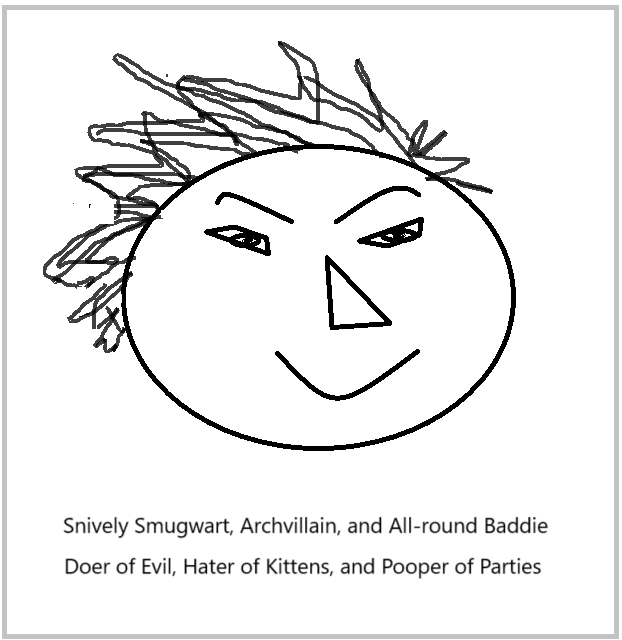
When the antagonist is a person, I ask myself, what drives them to create the roadblocks they do? Why do they feel justified in doing so?

If you are writing a memoir, who or what is the antagonist? Memoirs are written to shed light on the difficulties the author has overcome, so who or what frustrated your efforts? (Hint: for some autobiographies, it is a parent or guardian. Other times it is society, the standards and values we impose on those who don’t fit into the slots designated for them.)

In a character-driven novel, there may be two enemies, one of which is the protagonist’s inhibitions and self-doubt.


Many times, two main characters have a sharply defined good versus evil chemistry—like Sherlock Holmes and Professor Moriarty. (Trust me, the antagonist is a main character, or the hero has nothing to struggle against.)

The characters on both sides of the battle must recognize and confront the darkness within themselves. They must choose their own path—will they fight to uphold the light? Or will they turn toward the shadow?

When the protagonist must face and overcome the shadow on a profoundly personal level, they are placed in true danger. The reader knows that if the hero strays from the light, they will become the enemy’s tool.

The best shadow characters have many layers, and not all of them are bad. They are charismatic because we can relate to their struggle. We might hope events will change them for the better but know in our hearts they won’t.

Antagonists must be fleshed out. Characters portrayed as evil for the sake of drama can be cartoonish. Their actions must be rational, or the reader won’t be able to suspend their disbelief.

The most fearsome villains have deep stories. Yes, they may have begun life as unpleasant children and may even be sociopaths. Something started them down that path, reinforcing their logic and reasoning.

When the plot centers around the pursuit of a desired object, authors will spend enormous amounts of time working on the hero’s reasons for the quest. They know there must be a serious need driving their struggle to acquire the Golden McGuffin.

Where we sometimes fail is in how we depict the enemy. The villain’s actions must also be plausible. There must be a kind of logic, twisted though it may be, for going to the lengths they do to thwart our heroes.

A mere desire for power is NOT a good or logical reason unless it has roots in the enemy’s past. Why does Voldemort desire that power? What fundamental void drives them to demand absolute control over every aspect of their life and to exert control over the lives of their minions?

The characters in our stories don’t go through their events and trials alone. Authors drag the reader along for the ride the moment they begin writing the story. So, readers want to know why they’ve been put in that handbasket, and they want to know where the enemy believes they’re going. Otherwise, the narrative makes no sense and we lose the reader.

Most of us know what motivates our protagonist. But our antagonist is frequently a mystery, and the place where the two characters’ desires converge is a muddle. We know the what, but the why eludes us.

This can make the antagonist less important to the plot than the protagonist. When we lose track of the antagonist, we are on the road to the dreaded “mushy middle,” the place where the characters wander around aimlessly until an event happens out of nowhere.

The reader must grasp the reasoning behind the enemy’s actions, or they won’t be able to suspend their disbelief.

Ask yourself a few questions:

  • What is their void? What made our antagonist turn to the darkness?
  • What events gave our antagonist the strength and courage to rise above the past, twisted though they are?
  • What desire drives our antagonist’s agenda?
  • What does our antagonist hope to achieve?
  • Why does our antagonist believe achieving their goal will resolve the wrongs they’ve suffered?

None of this backstory needs to be dumped into the narrative. It should be written out and saved as a separate document and brought out when it is needed. The past must emerge in tantalizing bits and hints as the plot progresses and conversations happen.

The hero’s ultimate victory must evoke emotion in the reader. We want them to think about the dilemmas and roadblocks that all the characters have faced, and we want them to wish the story hadn’t ended.

The villains we write into our stories represent humanity’s darker side, whether they are a person, a dangerous animal, or a natural disaster. They bring ethical and moral quandaries to the story, offering food for thought long after the story has ended.

Ideas slip away unless I get them on paper first, so I create a separate document that is for my use only, and I label it appropriately:

BookTitle_Plot_CoreConflict.docx

CharacterVoidVerbNoun01052025LIRF

It’s a synopsis of the conflict boiled down to a few paragraphs. Whenever I find myself wondering what the hell we’re supposed to be doing, I refer back to it.

In my current unfinished work-in-progress, Character A, my protagonist, represents teamwork succeeding over great odds. Character B, my villain, represents the quest for supremacy at all costs.

  • Each must see themselves as the hero.
  • Each must risk everything to succeed.
  • Each must believe or hope that they will ultimately win.

When I create a personnel file for my characters, I assign them verbs, nouns, and adjectives that best show the traits they embody. Verbs are action words that show a character’s gut reactions. Nouns describe personalities best when they are combined with strong verbs.

They must also have a void – an emotional emptiness, a wound of some sort. In my current WIP, Character B fell victim to a mage-trap. He knows he has lost something important, something that was central to him. But he refuses to believe he is under a spell of compelling, a pawn in the Gods’ Great Game. He must believe he has agency—this is his void.

This void is vital because characters must overcome fear to face it. As a reader, one characteristic I’ve noticed in my favorite characters is they each have a hint of self-deception. All the characters – the antagonists and the protagonists – deceive themselves in some way about their own motives.

My task is to ensure that the stories of Characters A and B intersect seamlessly. Motivations must be clearly defined so the reader knows what their moral boundaries are. I like to know their limits because even cartoon supervillains draw the line somewhere.

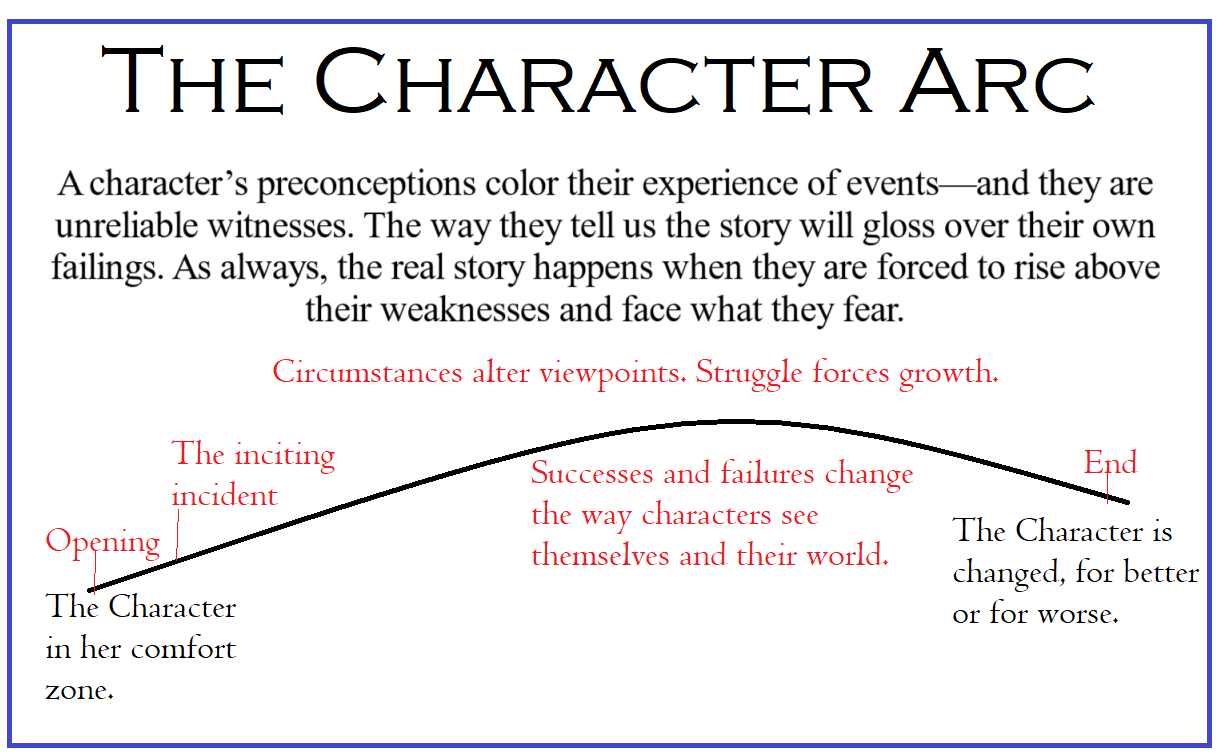
For me, plots tend to evolve once I begin picturing the characters’ growth arcs. How do I see them at the beginning? How do I see them at the end?

As I write the narrative, they will evolve and change the course of what I thought the original plot was. Sometimes it will change radically. But at some point, the plot must settle into its final form.

I love a novel with a plot arc that explores the protagonist’s struggle against a fully developed, believable adversary, one we almost regret having to defeat.

If you are currently working on a manuscript that feels stuck, I hope this discussion helps you in some way. Good luck and happy writing!

Plot-exists-to-reveal-character

3 Comments

Filed under writing

#FineArtFriday: Revisiting “The Way you Hear it is the Way you Sing It” by Jan Steen ca. 1665

Artist: Jan Steen  (1625/1626–1679)

Jan Steen: ‘As the Old Sing, So Pipe the Young’

Title: ‘The way you hear it, is the way you sing it’

Genre: genre art

Date: circa 1665

Medium: oil on canvas

Dimensions: Height: 134 cm (52.7 in); Width: 163 cm (64.1 in)

I always post a Jan Steen painting at New Years, because I love how raucous and down to earth his characters are. It’s a New Year and we’re having a party. No Puritans allowed, as we’ll have no feigning a dignified demeanor here–we’re drunk, and we don’t care. The people who posed for this painting are featured in many of Steen’s genre works, sometimes wearing the same costumes as we see here. I suspect we are seeing Steen’s family members or close friends acting out the story Jan wishes to show us.

About this painting:

Jan Steen’s work The Way you Hear it is the Way you Sing It depicts a Dutch Proverb, As the Old Sing, So Twitter the Young. It shows us a family carousing and overindulging in rich foods. Luxurious fabrics, a foot warmer, and rare birds show off this family’s wealth, which they are spending lavishly as fast as they can.

A young piper, who closely resembles a young Jan Steen (possibly one of his sons?), entertains them. He looks directly at us as if to ask what he’s gotten himself into.

Mother and Father, dressed as the King and Queen, are sumptuously attired, being served wine in an overlarge crystal goblet by the family’s servant. Both are indifferent to the chaos, too sated and drunk to care.

To the right of Father (his left, our right), a younger woman, perhaps an unmarried sister or eldest daughter, is holding the baby but has nodded off, having indulged too freely.

The wasting of money on so much luxury that one can’t consume it all is clearly represented here. Mother raises her glass high to have it refilled, as if it is the most important thing–indeed, the wine cascading down into the crystal goblet is the focal point of the picture.

A bottle of clear liquor (distilled?) and a beaker of ale are set on the windowsill behind Father, and a covered pitcher stands on the floor beside Mother. The table is laden with grapes and oysters, expensive luxuries.

Grandmother is singing from sheet music, leading the song that the family sings. This is the direct allegory for the proverb, as the old sing, so twitter the young.

A youngish man, either the eldest son or the Drunk Uncle (every family has one), finds it hilarious to teach the children to smoke.

Neither the dog nor the piper is impressed with the carrying on, and the servant has no comment, merely serving the wine as required.

In essence, Steen tells us that children learn what they live, so if you want sober, morally upstanding children, you must be a sober, morally upright parent.

About the Artist, via Wikipedia:

Jan Havickszoon Steen (c. 1626 – buried 3 February 1679) was a Dutch Golden Age painter, one of the leading genre painters of the 17th century. His works are known for their psychological insight, sense of humour and abundance of colour.

In 1648 Jan Steen and Gabriël Metsu founded the painters’ Guild of Saint Luke at Leiden. Soon after he became an assistant to the renowned landscape painter Jan van Goyen (1596–1656), and moved into his house on the Bierkade in The Hague. On Oct 3, 1649 he married van Goyen’s daughter Margriet, with whom he would have eight children. Steen worked with his father-in-law until 1654, when he moved to Delft, where he ran the brewery De Slang (“The Snake”) for three years without much success. After the explosion in Delft in 1654 the art market was depressed, but Steen painted A Burgomaster of Delft and his daughter. It does not seem to be clear if this painting should be called a portrait or a genre work.

Steen lived in Warmond, just north of Leiden, from 1656 till 1660 and in Haarlem from 1660 till 1670 and in both periods he was especially productive. In 1670, after the death of his wife in 1669 and his father in 1670, Steen moved back to Leiden, where he stayed the rest of his life. When the art market collapsed in 1672, called the Year of Disaster, Steen opened a tavern. In April 1673 he married Maria van Egmont, who gave him another child. In 1674 he became president of the Saint Lucas Guild. Frans van Mieris (1635- 1681) became one of his drinking companions. He died in Leiden in 1679 and was interred in a family grave in the Pieterskerk.

Daily life was Jan Steen’s main pictorial theme. Many of the genre scenes he portrayed, as in The Feast of Saint Nicholas, are lively to the point of chaos and lustfulness, even so much that “a Jan Steen household”, meaning a messy scene, became a Dutch proverb (een huishouden van Jan Steen). Subtle hints in his paintings seem to suggest that Steen meant to warn the viewer rather than invite him to copy this behaviour. Many of Steen’s paintings bear references to old Dutch proverbs or literature. He often used members of his family as models, and painted quite a few self-portraits in which he showed no tendency of vanity.

Steen did not shy from other themes: he painted historical, mythological and religious scenes, portraits, still lifes and natural scenes. His portraits of children are famous. He is also well known for his mastery of light and attention to detail, most notably in Persian rugs and other textiles.

Steen was prolific, producing about 800 paintings, of which roughly 350 survive. His work was valued much by contemporaries and as a result he was reasonably well paid for his work. He did not have many students—only Richard Brakenburgh is recorded—but his work proved a source of inspiration for many painters. [1]


Credits and Attributions:

IMAGE: The Way you Hear it is the Way you Sing It, Jan Steen, Public domain, via Wikimedia Commons

Wikimedia Commons contributors, “File:The way you hear it.jpg,” Wikimedia Commons, https://commons.wikimedia.org/w/index.php?title=File:The_way_you_hear_it.jpg&oldid=428340634 (accessed January 2, 2025).

[1] Wikipedia contributors, “Jan Steen,” Wikipedia, The Free Encyclopedia, https://en.wikipedia.org/w/index.php?title=Jan_Steen&oldid=1249713624 (accessed January 2, 2025).

4 Comments

Filed under #FineArtFriday