#NaNoPrep: How a strong theme will help you write that novel #amwriting

We’re closing in on November 1st. We’ve done some pre-writing, looking at our characters and the world they inhabit. We may even have jotted down a loose outline of plot points to write to. Today, we’re going a little deeper into what our book may be about.
WritingCraft_NaNoPrep_101When someone asks me what a book I wrote is about, my mind grinds to a halt as I try to decide what to say. I could give them the rundown of the plot, which is the arc of events the characters experience.

Or, I can try to interest them in the characters and the struggles they overcome.

I have discovered that neither of those answers sells books.

I have only just recently discovered that what a prospective reader really wants to know is, “What themes are explored in this book?” People buy books that delve into subjects that resonate with their own lives. They want to read novels that shed light on the human condition, regardless of genre or the setting.

Readers read for the adventure, but the themes explored in that novel stay with them. Strong themes are as memorable as the characters we grow to love.  
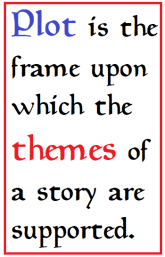
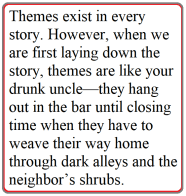
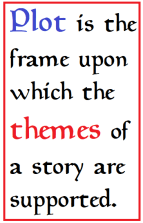
plot is the frame upon which the themes of a story are supportedThe story writes itself when I begin with a strong theme and solid characters. A 19th-century writer many have heard of but never read, Henry James has a great deal to tell us about using a story’s themes to create memorable characters. You may be familiar with some of his works, such as The Turn of the Screw and The Golden Bowl. His novels are still being made into movies and adapted as plays.

His novels feature one common theme—lust. Lust for sex. Lust for money. Lust for control.

Lust for power.

The Golden Bowl is a story featuring the themes of deception, manipulation, lust for money, and lust for control. Many of James’s novels are contemporary to his world, featuring characters going through their lives the way they did in his era.

When James sat down to write The Golden Bowl, published in 1904, he knew that the theme, the subject, and the core of the story he intended to write was the overwhelming desire for something unobtainable. Henry James played upon the reader’s secret craving for those same things by taking his characters down to their fundamental emotional components.

His work shocked his contemporary society because he peeled back the veneer of civilization and exposed their motives for the world to see. He created novels pertinent to today’s world by writing the kind of characters he knew in real life and setting them in stories that featured themes everyone could recognize and relate to in either a good or bad way.

So now, let’s look at the themes in a novel that has become a foundation book of modern fantasy. The Hobbit, by J.R.R. Tolkien, was published in 1937 as a children’s book. (Apparently, children were better educated in those days.) Courage in the face of failure and personal redemption are unifying themes of the Lord of the Rings series, along with loyalty and honor.
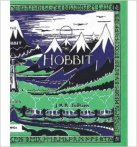
the hobbitWhen Bilbo Baggins fights the giant spiders, he also faces his own cowardice and is amazed that he could do such a thing. This is only the first step in his personal arc. As the story progresses, he discovers that he has courage, which has nothing to do with the invisibility conferred on him by the ring he found earlier. Bilbo has courage, and yes, he is afraid. But he is not afraid to be courageous.

In the “Two Towers” Boromir must also have the courage to face his dishonor, move beyond his attempted theft of the ring, and find the courage to admit his shame. He then fights to protect Merry and Pippin. This is his personal redemption.

So, we know that theme illustrates a story’s central ideas. But maybe we don’t have a clue as to what theme might unify the events of our story arc.

Romantic love is a defining feature of the genre of Romance. But what different aspects of love can be found in every genre, from fantasy to sci-fi, horror, or crime fiction?

  • Brother/Sisterly love
  • Dangerous Attraction
  • Friendship
  • Love gained
  • Love lost
  • Parental love
  • Passion
  • Selfish love
  • Tragic love

Quill_pen smallLove is only one theme, yet it has so many facets. Other themes abound, large central concepts that build tension within the narrative.

Here is a brief list, just a small jumping-off point for your creative mind. Some are significant themes that entire genres have been built around, and others are good supporting themes:

  • Abuse
  • Alienation/loneliness
  • Ambition
  • Coming of age
  • Conspiracy
  • Crime and Justice
  • Fall from Grace
  • Good vs. Evil
  • Grief
  • Humanity in jeopardy
  • Midlife crisis
  • Nostalgia for the good old days
  • Plagues
  • Rebellion and revolution
  • Redemption
  • Religious intolerance
  • Separation and reunion
  • The fall of civilization
  • The hero’s journey
  • War

theme_meme_lirf06302020Sometimes, we can visualize a complex theme but can’t explain it. If we can’t explain it, how do we show it? Consider the theme of “grief.” It is a common theme that can play out against any backdrop, whether sci-fi or reality based, where humans interact on an emotional level.

A plan is not always required because, in some stories, the flash of inspiration we start with is a strong theme. The theme develops as you write, and immediately, you see what it is. In my case, I need a plan fifty percent of the time.

Whatever the case, once I have identified the main theme, the story begins to take shape in my head. I can show it through

  • Actions
  • Symbolic settings/places
  • Allegorical objects in the setting
  • Conversations

On the surface level, each literary genre looks widely different. But when we go deeper, we find that all literary genres have commonalities: protagonists and side characters who must deal with and react to the book’s underlying themes.

Next up: creating societies, science, magic, and the paranormal.

The #NaNoPrep series to date:

  1. #NaNoPrep: creating the characters #amwriting | Life in the Realm of Fantasy (conniejjasperson.com)
  2. #NaNoPrep: The initial setting #amwriting | Life in the Realm of Fantasy (conniejjasperson.com)
  3. #NaNoPrep: What we think the story might be about #amwriting | Life in the Realm of Fantasy (conniejjasperson.com)
  4. #NaNoPrep: The Heart of the Story #amwriting. | Life in the Realm of Fantasy (conniejjasperson.com)
  5. #NaNoPrep: Signing up and getting started 2023 #amwriting | Life in the Realm of Fantasy (conniejjasperson.com)
2 Comments

Filed under writing

#FineArtFriday: Calais Pier by J.M.W. Turner, 1803

Calais_pier_Joseph_Mallord_William_Turner_024

Artist: J. M. W. Turner (1775–1851)

Title: Calais Pier

Date: 1803

Medium: oil on canvas

Dimensions: height: 172 cm (67.7 in); width: 240 cm (94.4 in)

Collection: National Gallery

What I love about this painting:

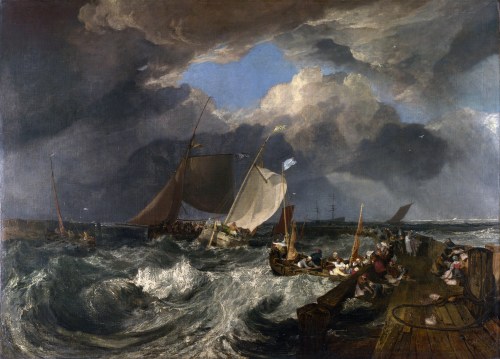
This is an emotion-packed image, the scene of a near-tragedy. The packet boat has arrived at Calais with a full load of passengers. The storm dominates the scene with lowering clouds and a heavy swell, but the sun breaks through and lights on the sail. A shaft of light shines down to the sea illuminating the center of the composition.  The young artist put his experience and terror into the image, depicting the ferocity of the sea and the violence of the landing.

The National Gallery website says of this picture, “Although it had a mixed response when first exhibited at the Royal Academy in 1803, the critic John Ruskin declared it to be the first painting to show signs of ‘Turner’s colossal power’. Calais Pier is based upon an actual event. On 15 July 1802, Turner, aged 27, began his first trip abroad, travelling from Dover to Calais in a cross-channel ferry (a packet) of the type shown here. The weather was stormy, and Turner noted in his sketchbook: ‘Our landing at Calais. Nearly swampt.’” [1] Joseph Mallord William Turner | Calais Pier | NG472 | National Gallery, London

About the Artist, Via Wikipedia:

Joseph Mallord William Turner RA (23 April 1775 – 19 December 1851), known in his time as William Turner, was an English Romantic painter, printmaker and watercolorist. He is known for his expressive coloring, imaginative landscapes and turbulent, often violent marine paintings. He left behind more than 550 oil paintings, 2,000 watercolors, and 30,000 works on paper. He was championed by the leading English art critic John Ruskin from 1840 and is today regarded as having elevated landscape painting to an eminence rivalling history painting.

Turner was born in Maiden Lane, Covent Garden, London, to a modest lower-middle-class family and retained his lower class accent, while assiduously avoiding the trappings of success and fame. A child prodigy, Turner studied at the Royal Academy of Arts from 1789, enrolling when he was 14, and exhibited his first work there at 15. During this period, he also served as an architectural draftsman. He earned a steady income from commissions and sales, which due to his troubled, contrary nature, were often begrudgingly accepted. He opened his own gallery in 1804 and became professor of perspective at the academy in 1807, where he lectured until 1828. He travelled around Europe from 1802, typically returning with voluminous sketchbooks.

Intensely private, eccentric, and reclusive, Turner was a controversial figure throughout his career. He did not marry, but fathered two daughters, Evelina (1801–1874) and Georgiana (1811–1843), by his housekeeper Sarah Danby. He became more pessimistic and morose as he got older, especially after the death of his father in 1829; when his outlook deteriorated, his gallery fell into disrepair and neglect, and his art intensified. In 1841, Turner rowed a boat into the Thames so he could not be counted as present at any property in that year’s census. He lived in squalor and poor health from 1845, and died in London in 1851 aged 76. Turner is buried in St Paul’s Cathedral, London. [2]


Credits and Attributions:

“Calais Pier” by J.M.W. Turner, 1801. Wikimedia Commons contributors, “File:Joseph Mallord William Turner 024.jpg,” Wikimedia Commons, https://commons.wikimedia.org/w/index.php?title=File:Joseph_Mallord_William_Turner_024.jpg&oldid=618399843 (accessed October 7, 2023).

[1] National Gallery contributors, Calais Pier, Joseph Mallord William Turnerhttps://www.nationalgallery.org.uk/paintings/joseph-mallord-william-turner-calais-pier (accessed  October 11, 2023).

[2] Wikipedia contributors, “J. M. W. Turner,” Wikipedia, The Free Encyclopedia, https://en.wikipedia.org/w/index.php?title=J._M._W._Turner&oldid=1179617592 (accessed October 11, 2023).

Comments Off on #FineArtFriday: Calais Pier by J.M.W. Turner, 1803

Filed under #FineArtFriday

#NaNoPrep: The Heart of the Story #amwriting.

This is the fourth installment of our NaNoWriMo Prep series. (I’ve listed links to the previous posts down below.) We now have an idea of who our characters are. We also know a bit about the world in which our narrative will be set. We know the genre we’re writing in and what the story might be about. Now we’re going to take a closer look at the plot.

WritingCraft_NaNoPrep_101I am the queen of front-loading too much history in my first drafts. Fortunately, my writer’s group has an unerring eye for where the story really begins.
I have to remind myself that the first draft is the thinking draft. It’s where we build worlds and flesh out characters and relationships. It’s also where the story grows as we add to it.

Let’s write a medieval fantasy:

Act 1: the beginning:

Setting: London in the year 1430. The weather is unseasonably cold. A bard is concealed amongst the filth and shadows in a dark, narrow alley. Tam hides from the soldiers of a prince he has unwisely humiliated in a comic song.

Opening plot point: the soldiers surround and capture Tam, hauling him before the angry prince. The trial is brief and painful. Beaten and bloody, Tam is thrown into prison and sentenced to be beheaded at dawn.

That moment of despair is the end of chapter one.

lute-clip-artYou have done some prep work for character creation, so Tam is your friend. You know his backstory, who he is attracted to (men, women, none, or both), how handsome he is, and his personal history. But none of this matters to the reader in the opening pages. The reader only wants to know what will happen next.
You know who Tam will meet in prison, someone who will help him escape. Depending on Tam’s romantic preference, Dagger (an assassin’s professional name) will be male or female and will dislike the bard on sight. Still, Dagger needs Tam’s help to escape as they too are scheduled to die at dawn.

You have decided that the prince is a dark-path warlock. His close friend is a highly placed cardinal who uses his authority to conceal the prince’s nefarious deeds.

Now we will think about Tam and Dagger’s escape, the first pinch point. The information they learn from each other while quarrelling in prison fuels a quest: killing the Warlock Prince. Each will have different reasons for this, but despite their inability to get along, the enemy of my enemy is my friend and all that.

The escape is successful. Now they are on the run and have no idea how to accomplish their mutual goal. They don’t trust each other, but are forced to work together despite their clash of personalities.

And we all know how friction heats things up. Romance or no romance, this interpersonal tension is crucial.

We (the author) know the Warlock Prince must die if Tam and Dagger are to save London, but who will be willing to help them? What roadblocks stand in their way? The people you need to help them past these hurdles will emerge as you write the first draft.

You might have had an idea for the ending and may have written it down. If you did, you have a goal to write to. If not, perhaps the ending is beginning to show itself. Either way, at this point, the middle of the story is a work in progress.

crows-clip art clicker vector dot comTam and Dagger will tell you what events and roadblocks must happen to them between their arrests and the final victory. This knowledge will emerge from your imagination as you write your way through this first draft.

But the opening moment, the scene showing a lowly bard hiding behind a rubbish heap, is the moment in Tam’s life where the story the reader wants to hear starts.

That scene is where this story begins, regardless of how fascinating Tam’s backstory, London’s history, or the Warlock Prince’s backstory was before that day. It is the beginning because this is the point where all the essential characters are in one place and are introduced.

  • The reader meets the villain and sees him in all his power
  • Tam can sink no lower—he has hit bottom and can only go up from there.
  • Dagger is in the same low emotional place, but this mysterious character has an escape plan.

The story kicks into gear at this pinch point because the assassin is at risk on two fronts, which means Tam is, too. Dagger’s original task of killing the prince has failed, so now they must avoid both the prince’s soldiers and the mysterious employer’s goons.

For Dagger, the original commission must be fulfilled despite the fact there will be no payment.  It’s more than merely a matter of pride, but the secret that drives them will slowly emerge as we write the first draft.

Tam agrees to help ensure it happens because he has a conscience and wants to protect the people of London.

Attraction often grows in the most unlikely of places. Will it blossom into romance? It’s London, a city filled with romance and intrigue. But you’re the author, so only you know how their relationship grows as you write their adventure.

What will emerge in bits and pieces over the following 40,000 or more words?

  • We will learn who Dagger’s employer is.
  • We will learn who Dagger really is and how they became an assassin.

dump no infoTam will find this information out as the story progresses and we will learn it as he does. With that knowledge, he will realize his fate is sealed—he’s doomed no matter what. But it fires him with the determination that if he goes down, he will take the Warlock Prince and his corrupt Cardinal, with him.
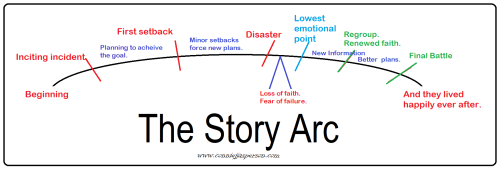
The backstory behind the song that precipitated Tam’s arrest, the assassin’s employer, and the enraged prince who intends a lingering, painful death for him must come out gradually.

If we dump Tam and Dagger’s history at the beginning, the reader has no reason to go any further. We’ll have wasted words on something that doesn’t advance the plot.

The people who will help our hapless protagonist will enter the story as he needs them. Each person will add information the reader wants, but only when Tam requires it. Some characters who can offer the most help will be held back until the final half of the story.

By the end, the reader will know everything about the relationship between Dagger and the Warlock Prince. With that information, the final pieces of the puzzle will fall into place.

The reader will follow the breadcrumbs of information. That desire to know all the secrets will be the carrot that keeps the reader turning the pages.

And making that trail into a logical story arc is why I do a certain amount of prewriting and outlining.

storyArcLIRF10032021


PREVIOUS POSTS IN THIS SERIES:

#NaNoPrep: creating the characters #amwriting | Life in the Realm of Fantasy (conniejjasperson.com)

#NaNoPrep: The initial setting #amwriting | Life in the Realm of Fantasy (conniejjasperson.com)

#NaNoPrep: What we think the story might be about #amwriting | Life in the Realm of Fantasy (conniejjasperson.com)

6 Comments

Filed under writing

#NaNoPrep: What we think the story might be about #amwriting

This is the third installment of our NaNoWriMo Prep series. I’ve listed links to the previous posts at the end of this rant. We now have an idea of who our characters are. We also know a bit about the world in which our narrative will be set. We know the genre we’re writing in.

WritingCraft_NaNoPrep_101Now, we’re going to hear what our characters have to say about what their story might be.
Our characters step from our imagination and onto the first page. When we begin writing, we see them as people we are just getting to know. At first, our characters want us to think they’re unselfish. They desperately desire what they believe they deserve. They will evolve as we write because they will tell us their backstory. But we have an idea of their personality and how they might react.

In real life, people are a mix of good and bad at the same time. Some lean more to good, others to bad. Either way, most people have good, logical reasons for their decisions. How they deal with the hurdles you will present to them will show you who they are. By the end of November, you will know them well.

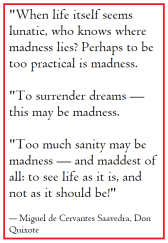
where-madness-lies-miguel-de-cervantesAn important point to remember is that no matter how decent they are, people lie to themselves about their motives. It’s human nature to obscure truths we don’t want to face behind other, more palatable truths. Those secrets will emerge as you write.
So, what is the story about at this early stage? Do you have an idea of the core conflict, the central problem that all the other events lead up to?

Sometimes, we have a banger of a plot, and the book writes itself. Other times, we have brilliant characters but only a vague idea of their conflict.

Consider the beginning: At the outset of any good story, we meet our protagonist and see them in their surroundings. An event occurs (the inciting incident), and the hero is thrown out of his comfort zone and into the situation, which is the core idea of your plot. 

This is the circumstance in which your protagonist finds himself at the story’s beginning. This is where I ask myself several questions.

  • How will the story start?
  • In the first paragraph on page one, what is the hero’s condition (strength, health, emotional state)?
  • What event could possibly entice her out of her comfort zone?
  • What is the core conflict?

If you know what the situation is, write it down:

  • Bleakbourne front Cover medallion and dragon copyIn my most recent book, Bleakbourne on Heath, Leryn the Bard hunts for strange folk tales and new songs (how it starts).
  • He wants to find a wife and have a normal life (what he wants).
  • But he has stopped in Bleakbourne on the river Heath and immediately becomes caught up in Merlin’s troubles (the conflict).
  • Leryn cares about the distinctly different people of Bleakbourne, who become his family. By the midpoint, he is driven to protect Bleakbourne and the people he loves no matter the cost (how far he will go to achieve his goal).

A few sentences detailing your flashes of inspiration will remind you of what you need when you begin writing. You don’t have to go into detail, just jot those ideas down and keep the list handy.

This kind of pre-writing serves an important purpose for novels I intend to begin in November.

I do it so I don’t become desperate and resort to off-the-wall events or killing off characters (ala G.R.R. Martin) just to stir things up.

route recalculatingI’m going off-topic here for a moment. While the death of a character stirs the emotions, it must be a crucial turning point in that story. It must be planned and be the impetus that changes everything. The death of a character must drive the remaining characters to achieve greatness.
Death for the shock value doesn’t help because you run out of characters. Readers don’t like it when you kill off someone they’ve become attached to, and you might wish you had that character later. Nothing says “oops!” more clearly than bringing a dead character back to life (Bobby Ewing).

Yeah, you can pretend the entire last year was all a dream as they did in the TV series Dallas. But I think keeping the characters I’ve invested so much time into creating alive is a lot easier than trying to bring them back from the dead.

But I'm not superstitious, LIRFUnless, of course, you are writing paranormal fantasy. Death and resurrection may be the whole point if that’s the case.
Once I begin work on my November novel, a more detailed outline of my story arc will evolve. As mentioned a gazillion times, I keep my notes in an Excel workbook. It contains maps, calendars, and everything about any novel set in that world, keeping it in one easy-to-find place.

As the writing progresses, the plot evolves and deviates from what I originally planned. It always does because nothing is engraved in stone. The characters themselves will drive the story in a different direction than was first imagined. I will note those changes on the outline and update my list of made-up words. Also, (if needed), I will edit my sketchy maps.

Many writers will fall by the way and never finish their novels, as they forget what they’re writing, don’t know how to go forward, and then lose momentum. I suggest you write those first ideas down when they occur to you, so when you begin writing the novel, you will have these keys to unlock the story.

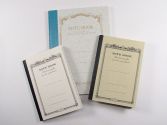
800px-NotebooksIf your employment isn’t a work-from-home job, using the note-taking app on your cellphone to take notes during business hours will be frowned upon. I suggest keeping a pocket-sized notebook and pencil or pen to write those ideas down as they come to you.
That is an old-school solution but will enable you to discreetly make notes whenever you have an idea that would work well in your story. The best part is that you don’t appear distracted or off-task, and you will have those ideas in November when you need them.

Next up, we’ll look a little deeper into discovering what the core of the story might be.


Previous posts in this series:

#NaNoPrep: creating the characters #amwriting | Life in the Realm of Fantasy (conniejjasperson.com)

#NaNoPrep: The initial setting #amwriting | Life in the Realm of Fantasy (conniejjasperson.com)

5 Comments

Filed under writing

#FineArtFriday: A Coming Storm by Sanford Robinson Gifford

Gifford_A_Coming_Storm_1863-1880_PMA

Artist: Sanford Robinson Gifford,

Title: A Coming Storm (1863)

Date: 1863 (retouched 1880)

Location: Philadelphia Museum of Art.

What I love about this painting:

Gifford demonstrates his skill as a devotee of luminism and gives us the perfect view of a fine autumn day and the approaching storm. The way he contrasts the sun’s light against the ominous black clouds is true to nature, to how storms really look as they close in.

I like the way he shows the rock outcroppings, visible evidence of the hard stone of the mountains that lies beneath the lush finery of autumn foliage.

For the moment, the waters of the pond are quiet, reflecting the sky above. Rain cloaks the view of the distant valley, and soon we will feel the brunt of it. Enjoy the blaze of color while you can, as tomorrow those trees will be half-bare, and the ground will be covered in sodden tatters of red and gold.

While there appears to be some damage in the upper center, the integrity of the painting is still intact. It was retouched in 1880, but a modern retouching would likely bring it back to its original glory.

About the Artist, via Wikipedia:

Sanford Robinson Gifford (July 10, 1823 – August 29, 1880) was an American landscape painter and a leading member of the second generation of Hudson River School artists. A highly regarded practitioner of Luminism, his work was noted for its emphasis on light and soft atmospheric effects.

Although trained as a portrait painter, the first work Gifford exhibited at the National Academy was a landscape, in 1847. Thereafter, Gifford devoted himself primarily to landscape painting, becoming one of the finest artists of the Hudson River School. He was elected an Associate of the National Academy in 1851, and an Academician in 1854.

2008 National Academy of Design controversy:

In December 2008, one of Gifford’s paintings, Mount Mansfield, Vermont (1859), became part of a controversy over deaccessioning by the National Academy of Design. The Academy was a member of the Association of Art Museum Directors, whose policy stated that member museums could not sell works of art to cover operating expenses, only to purchase superior works or to weed out inferior or redundant ones. Prior to joining AAMD, the Academy had sold two Thomas Eakins works (including his “diploma painting,” Wrestlers) in the 1970s, and Richard Caton Woodville‘s War News from Mexico (1848) in 1994. According to its former curator, David Dearinger: “When the Academy later applied to the museum association for accreditation, Mr. Dearinger recalled, it was asked about the Woodville sale and promised not to repeat such a move.”

In a 2008 sale, the Academy quietly sold Frederic Edwin Church‘s Scene on the Magdalene (1854) and Sanford Gifford’s Mount Mansfield, Vermont (1859) to a private collector for US$13.5 million. The former was the Academy’s only painting by Church; the latter was its only painting by Gifford. Both had been “donated to the Academy in 1865 by another painter, James Augustus Suydam.” News of the sale was broken by arts blogger Lee Rosenbaum. As punishment for these actions, AAMD asked its other member museums to “cease lending artworks to the Academy and collaborating with it on exhibitions.” The Academy had contemplated selling additional paintings, but those plans were abandoned after being reported by Rosenbaum. [1]


Credits and Attributions:

IMAGE: A Coming Storm by Sanford Robinson Gifford. Wikimedia Commons contributors, “File:Gifford A Coming Storm 1863-1880 PMA.jpg,” Wikimedia Commons, https://commons.wikimedia.org/w/index.php?title=File:Gifford_A_Coming_Storm_1863-1880_PMA.jpg&oldid=803742381 (accessed October 5, 2023).

[1] Wikipedia contributors, “Sanford Robinson Gifford,” Wikipedia, The Free Encyclopedia, https://en.wikipedia.org/w/index.php?title=Sanford_Robinson_Gifford&oldid=1176083433 (accessed October 5, 2023).

Comments Off on #FineArtFriday: A Coming Storm by Sanford Robinson Gifford

Filed under #FineArtFriday

#NaNoPrep: The initial setting #amwriting

If you are new to NaNoWriMo (or to writing in general), this series of posts is for you. The goal of participating in NaNoWriMo is to write 50,000 words on your novel in the month of November. A successful NaNoWriMo is easier to achieve if we have a preflight checklist (which can be found at the bottom of this post).

WritingCraft_NaNoPrep_101We talked about getting a start on our characters in Monday’s post. Today, we’re going to visualize the place where our proposed novel is set, the place where the story opens.
Where do you see your story taking place? In the real world? A fantasy realm? Space? An alternate dimension? Alternate Earth? Today, we’re focusing on the opening setting.

I write fantasy, and much of my work is set in an invented world. I began creating this world as the storyline for a post-apocalyptic anime-style RPG game for PC (that never went into production).

Fifteen years on, most of what I need to know about this world is canon and can’t be changed. But at the outset in 2007, all I knew was the premise of the conflict: the gods had been at war, and it involved three worlds. I needed to see how that conflict had changed the landscape because a disaster on that scale would dramatically affect the people of three worlds.

In science fiction and other genres, in series that are set in one world/universe, the word canon refers to historic and previously established events and occurrences in that reality. When something is declared impossible in the early narratives, it cannot be possible in later novels without some logical explanation.

plot is the frame upon which the themes of a story are supportedAll worldbuilding must show a world that feels as natural to the reader as their native environment. I used the forests and lowlands of Western Washington State as my template. The entire series evolved out of three paragraphs that answered the following question:


  • The “War of the Gods” broke three worlds – how did that affect their civilizations?

The War of the Gods is central to Neveyah’s religion, a trauma that shapes their lives as much as it does their world. One can never escape the visible scar, the immensity that divides the world in half: the Escarpment. It is the wound where the World of Cascadia was joined to the World of Neveyah.

Once I have a mental image of the visuals of the world I am writing, I ask myself, “Does the environment shape society?”

Since this example is set in a post-apocalyptic world, the characters live in a low-tech agricultural society. Resources are scarce.

  • How can the environment create tension in the narrative?

I want to see that raw, just-born environment when I begin writing. In the case of this world, one fundamental theme binding the narratives together is the balance of nature and how delicate it is.

Here is a quick, easy exercise in worldbuilding, one that will take less than five minutes:

  • Close your eyes and visualize your real-world environment.
  • Then, without looking around, write a word picture of it.

I am sitting on a balcony. My chair is a saucer chair, not easy to get out of but comfortable once I’m in it. Traffic on the street below is noisy, but the sun is shining, and rain is expected to move in over the next few days.

Once you have written a paragraph or two that describes your personal world, you understand how worldbuilding works. You can visualize your characters’ community and write a two-paragraph word picture of that imaginary place.

So—about the storyboard we discussed in Monday’s post. Now is a good time to start if you haven’t already done so. Here is a screenshot of the tabs on my storyboard/stylesheet that has been fifteen years in the making:

tabs of a stylesheet

Your storyboard/stylesheets will be much simpler, just one page to start out with.

If your work is set in an actual location, you should know where to find resources for appropriate slang, urban myths, and other local peculiarities. My co-municipal Liaison, Lee French, reminds us that we don’t have to immerse ourselves immediately. We just want to lay the groundwork for November, to have things handy when we start writing in earnest on November 1st.

Sci-fi writers should bookmark or list sites for any science you may need. If it takes place on a spaceship, you should have a good idea of what the ship looks, sounds, and smells like, a floorplan, and maybe consider what might power it.

Fantasy writers, if your novel is set in a made-up universe/world/town, what is the big-picture of your setting? Is the starting point near a river, forest, an ocean, or a desert? Again, you don’t have to know everything in precise detail, but you should put down some starter notes, because environment determines food and resources that may come into play later.

If you’re writing in the real world as we know it—make good use of Google Earth. Bookmark (or make a list of) the websites that offer accurate information about those places.

If you intend to add sci-fi or fantasy elements, such as zombies, magic, dragons, or future tech to our current world, you’ll want to think about the effect those elements will have on the environment. The presence of large flying predators would limit outdoor activities. Even if your dragons aren’t carnivorous, they are usually depicted as rather birdlike in appearance and habit.

dragonSeagulls are a good example of what could happen. They fly and do their business while on the wing, and sometime find enjoyment in “bombing” windshields.
That sort of package dropping from the sky could make for a startling end to the average family barbecue. Grandma’s potato salad would likely be served indoors so as to not encourage dragonly target practice.

My RPG-based world has creatures that cast certain magic as weapons or defensively. Their presence in the wild makes traveling without guards dangerous. Thus, the environment offers plot opportunities for employment.

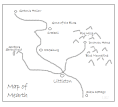
sample-of-rough-sketched-mapSome of us (Me! Me!) will make pencil-sketched maps of our fantasy world or the sci-fi setting. I find that maps are excellent brainstorming tools for when I can’t quite jostle a plot loose. It’s a form of doodling, a kind of mind wandering, and helps me find creative solutions to minor obstacles.
But you don’t have to go to all that trouble at one sitting. Just briefly note your ideas for worldbuilding because we will come back to this and flesh out the details later. For now, all you need is the overview of the world on the day your story opens.

Previous in this series:

#NaNoPrep: creating the characters #amwriting | Life in the Realm of Fantasy (conniejjasperson.com)

NaNoPrep-pre-flight-checklist-LIRF09302021

6 Comments

Filed under writing

#NaNoPrep: creating the characters #amwriting

If you are new to NaNoWriMo, or to writing in general, this post is for you. A successful NaNoWriMo is easier to achieve if we have a preflight checklist (which can be found at the bottom of this post). Today, we will take an hour or so to do some pre-writing, building our main character and their sidekicks.

nano prep namesNo matter how many characters you think are involved, one will stand out. That person will be the protagonist.
Character creation crosses all genres. Even if you are writing a memoir detailing your childhood, you must know who you were in those days. You want the reader to see the events that shaped you, but not through the lens of memory. They must see the events as they unfold.

I have mentioned (a gazillion times) that I use Excel, a spreadsheet program, to outline my projects. But you can use a notebook or anything that works for you. You can do this by drawing columns on paper by hand or using post-it notes on a whiteboard or the wall. Everyone thinks differently, so we all have to find the way that works best for us. I just happen to like working with Excel or Google Sheets.

Some people use a dedicated writer’s program like Scrivener—which I find mind-bogglingly incomprehensible. No matter your method, the characters aren’t fully formed when you begin writing the first chapters. They will evolve as a result of the experiences you write for them, but you want an idea of who they are now.

The storyboard is where I brainstorm characters and plot. When I find myself floundering in the writing process, I can see where I have gone off the rails and into the weeds.

First, we want to get to know who we’re writing about. I always have a reasonably good idea of how my characters look. However, that image can drift as the first draft evolves, and brown eyes are suddenly green (yes, this did happen, but my editor is amazing).

But don’t get too detailed. Readers have their own image of beauty, so don’t force your idea of loveliness on them. General descriptions and the reactions of other characters should convey how they look. Skin tones and hair color, curly or straight, are pretty much all you need.

a storyboard is your friendOnce I know the basic plot, I make a page in my workbook with a bio of each character, a short personnel file. Sometimes, I include images of RPG characters or actors who most physically resemble them and who could play them well—but this is only to cement them in my mind.
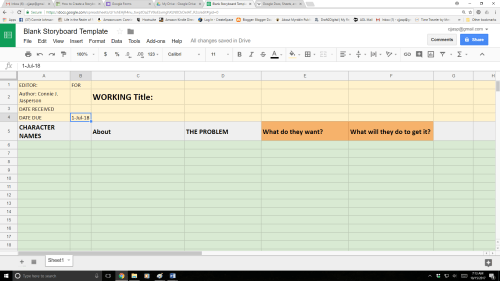
The personnel file is laid out this way:

Column A: Character Names. I list the important characters by name and the point where they enter the story.

Column B: About: Their role, a note about that person or place, a brief description of who and what they are.

Column C: The Problem: What is the core conflict?

Column D: What do they want? What does each character desire?

Column E: What will they do to get it? This column usually remains empty until I am well into the first draft, because at this point, I don’t know how far they will go to achieve their desire.

This is an image of a Storyboard Template, created in Google Sheets which is a FREE spreadsheet program. Google Docs is also free and is a perfectly fine word-processing tool if you don’t have the money for MS Office 360 or other programs.

Google Sheets Storyboard Template Screenshot 2017-10-15 07.13.09 cjjaspNames say a lot about characters. If you give a character a name that begins with a hard consonant, the reader will subconsciously see them as more intense than one whose name starts with a soft sound. It’s a little thing, but it is something to consider when conveying personalities.
Also, I’ve said this before, but with the growing popularity of audiobooks, I suggest writing names that are easy to pronounce. It will simplify the process of having your book narrated—but again, that is your choice.

A great story evolves when the antagonist and protagonist are powerful but not omnipotent. Both must have character arcs that show personal growth or an inability to grow. For the antagonist to be realistic, this must be clearly established, so once we know who they are, they should also get a personnel file.

So first, let’s create a main character. The story will grow from her experiences, so she must be someone you want to know.

Our protagonist is Lilly. For this exercise, I chose a flower name, suggesting someone who is kind, a good friend.

Who is this person? Start with the basics: race, ethnicity, age, gender, sexuality, appearance/coloration.

Race: This is a post-apocalyptic world. When the survivors prepared to leave the catacombs, they divided into 50 tribes. They blended the various races and ethnicities as evenly as possible to widen the gene pool. Everyone is of mixed-race heritage, regardless of outward coloring and appearance.

Appearance and coloration: Lilly is tall and physically fit and has straight black hair, brown eyes, and dark coloring.

Ethnicity: She was born into Asgrim’s tribe, which settled in the north.

Age: 27

Gender/sexuality: This is important, as gender and sexuality play a role in my novel. A broad view of gender/sexuality is a fact of life in their culture. Lilly and Kaye are life partners.

My co-municipal liaison, Lee French, suggests you write one sentence to describe them and move on. I’m not good at one-sentence descriptions, so a paragraph is more my style.

I suggest you write what comes to mind, and don’t worry if you can’t think of anything at this stage. Once you begin writing the narrative, the characters will tell you what you need to know.

It sounds hokey, but it’s true.

Characters don’t leap onto the page fully formed. They begin to reveal who they really are as we lay down the first draft, and this is why my narratives rarely keep to the original outline.

One thing that helps when creating a character is identifying the verbs embodied by each individual’s personality. Lilly’s verbs are: fight, defend, create, care. These words tell me how she will react in any given situation.

Also, I try to identify each character’s motivation, the metaphorical “hole” in their life. What pushes them to do the crazy stuff they do? Sometimes, that loss or lack doesn’t emerge until you’re well into writing the first draft.

What we are doing is pre-writing. It helps me to have the characters in place when I begin writing a novel on November 1st. Below is a PNG image of my pre-flight checklist. Feel free to right-click and save as a PNG or .jpeg for your own use!

We have looked at steps one and two. Next up is step three: the world as it is when the story opens.

Previous in this series:

#NaNoPrep: What do I want to write? #nanowrimo | Life in the Realm of Fantasy (conniejjasperson.com)

NaNoPrep-pre-flight-checklist-LIRF09302021

11 Comments

Filed under writing

#FineArtFriday: Dordrecht Harbor by Moonlight by Aelbert Cuyp 1643

Aelbert_Cuyp_-_Dordrecht_Harbor_by_Moonlight_4168Artist: Aelbert Cuyp (1620–1691)

Title: Dordrecht Harbor by Moonlight

Genre: landscape art

Date: 1643

Medium: oil on panel

Dimensions: height: 76.5 cm (30.1 in); width: 106.5 cm (41.9 in)

Collection: Wallraf–Richartz Museum 

What I like about this scene:

Aelbert Cuyp’s paintbrush tells a story. But what kind of story is he showing us?

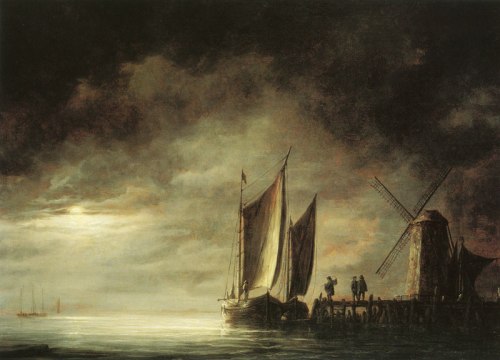
A ship is docked beside a mill at Dordrecht Harbor. Night has fallen, and a full moon, veiled by clouds, lights the scene. On the wharf, three figures stand, talking, perhaps making a deal. What could be so important that these men must discuss it in the dark?

The moonlight casts a pale glow over the scene, casting shadows and illuminating the mist rising in the distance. It adds to the mystery of the scene, conveying a feeling of clandestine conversations.

It’s 1643. The Eighty Years War, a revolution and quest for independence is still ongoing. It’s a battle for religious freedom as well as for the rights of the Dutch people to govern themselves.

Yes, indeed … some conversations by moonlight are best kept secret.

About Dordrecht in the 17th Century:

Dordrecht (Dutch: ) historically known in English as Dordt (still colloquially used in Dutch, pronounced) or Dort, is a city and municipality in the Western Netherlands, located in the province of South Holland.

During the Eighty Years’ War merchants from Dordrecht were involved in taking control and founding sugar cane plantations in the West Indies. At the end of the 17th century this led to a stable sugar refining industry in Dordrecht. This flourished in the 18th century, when Dordrecht had 16 sugar refineries, as opposed 120 in Amsterdam and 40 in Rotterdam. Dordrecht still has a few buildings purposely designed as a sugar refinery, e.g. the imposing Sugar Refinery Stokholm.

Overall, the economic importance of Dordrecht began to wane in the 18th century, and Rotterdam became the main city in the region. [1]

The Eighty Years’ War  or Dutch Revolt (Dutch: Nederlandse Opstand) (c. 1566/1568–1648) was an armed conflict in the Habsburg Netherlands between disparate groups of rebels and the Spanish government. The causes of the war included the Reformation, centralization, taxation, and the rights and privileges of the nobility and cities.

An end was reached in 1648 with the Peace of Münster (a treaty part of the Peace of Westphalia), when Spain retained Southern Netherlands and recognized the Dutch Republic as an independent country.[2]

About the Artist:

Aelbert Jacobszoon Cuyp or Cuijp (20 October 1620 – 15 November 1691) was one of the leading Dutch Golden Age painters, producing mainly landscapes. The most famous of a family of painters, the pupil of his father, Jacob Gerritszoon Cuyp (1594–1651/52), he is especially known for his large views of Dutch riverside scenes in a golden early morning or late afternoon light. He was born and died in Dordrecht.

Little is known about Aelbert Cuyp’s life. Even Arnold Houbraken, a noted historian of Dutch Golden Age paintings and the sole authority on Cuyp for the hundred years following his death, paints a very thin biographical picture.

His period of activity as a painter is traditionally limited to the two decades between 1639 and 1660, fitting within the generally accepted limits of the Dutch Golden Age’s most significant period, 1640–1665. He is known to have been married to Cornelia Bosman in 1658, a date coinciding so directly with the end of his productivity as a painter that it has been accepted that his marriage played a role in the end of his artistic career.

The year after his marriage, Cuyp became the deacon of the reformed church. Houbraken recalled that Cuyp was a devout Calvinist and the fact that when he died, there were no paintings of other artists found in his home. [3]

Credits and Attributions:

IMAGE:  Dordrecht Harbor by Moonlight by Aelbert Cuyp, 1643. Wikimedia Commons contributors, “File:Aelbert Cuyp – Dordrecht Harbor by Moonlight 4168.jpg,” Wikimedia Commons, https://commons.wikimedia.org/w/index.php?title=File:Aelbert_Cuyp_-_Dordrecht_Harbor_by_Moonlight_4168.jpg&oldid=782562344 (accessed September 28, 2023).

[1] Wikipedia contributors, “Dordrecht,” Wikipedia, The Free Encyclopedia, https://en.wikipedia.org/w/index.php?title=Dordrecht&oldid=1169436434 (accessed September 28, 2023).

[2] Wikipedia contributors, “Eighty Years’ War,” Wikipedia, The Free Encyclopedia, https://en.wikipedia.org/w/index.php?title=Eighty_Years%27_War&oldid=1177125376 (accessed September 28, 2023).

[3] Wikipedia contributors, “Aelbert Cuyp,” Wikipedia, The Free Encyclopedia, https://en.wikipedia.org/w/index.php?title=Aelbert_Cuyp&oldid=1177164314 (accessed September 28, 2023).

2 Comments

Filed under #FineArtFriday

#NaNoPrep: What do I want to write? #nanowrimo

Two weeks ago, we talked about discovering our writing style. Some people plot, some write by the seat of their pants, and others are somewhere in the middle. I plot for a while and then find myself winging it. The plot goes in a new direction until I hit a wall, and then I replot until I know what has to happen. And then I let the words fly as they will.

crows-clip art clicker vector dot comEvery year I participate in NaNoWriMo (National Novel Writing Month). I sit down and write, and by doing that for two hours every day, I manage to crank out the high points of a story and get my wordcount and the “winners” certificate. A year or so later, I have connected the dots and end up with a coherent first draft that tops out at around 120,000 words.

Three years and six drafts later, it will be publishable at about 90,000 words.

For me, succeeding at getting the bare bones of a novel’s first draft written during the 30 days of November requires a bit of pre-writing—a pre-flight checklist.

I found Excel useful when I first began writing, and I use it to this day to keep my plots and background information organized. But any document or spreadsheet program will work. The aforementioned pre-flight checklist becomes my permanent stylesheet/outline for that novel.

The outline is a visual aid that keeps my stream-of-consciousness writing flowing.

Once I’m done winging it through the story and am in revisions, some scenes will make more sense when placed in a different order than originally planned. At that point, an outline allows me to view the story’s arc from a distance.

I can see where it might be flatlining. Perhaps an event should be cut entirely as it no longer works. (I always save my outtakes in a separate file for later use.)

Over the next few weeks, we’ll talk more about my process.

But first, what are we writing?

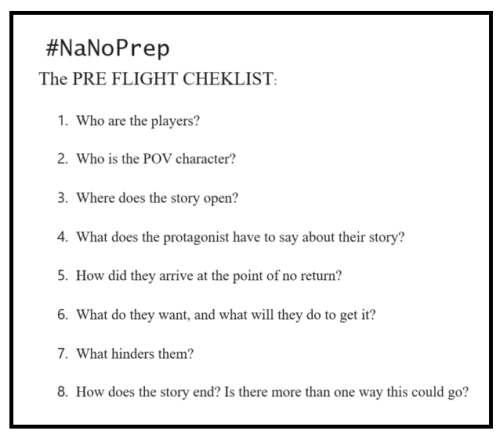
The basic premise of any story in any genre can be answered in eight questions.

  1. Author-thoughtsWho are the players?
  2. Who is the POV character?
  3. Where does the story open?
  4. What does the protagonist have to say about their story?
  5. How did they arrive at the point of no return?
  6. What do they want, and what will they do to get it?
  7. What hinders them?
  8. How does the story end? Is there more than one way this could go?

We’re starting with question number one: who are the players?

My stories always begin with the characters. They come to me, sharing some of their story the way strangers on a long bus ride might. They tell me some things about themselves. They give me the surface image they want the world to see. But as strangers always do, when I first meet them, they keep most of their secrets close and don’t reveal all the dirt. These are mysteries that will be pried from them over the course of writing the narrative’s first draft.

That little bit of sharing gives me the jumping-off point. I sit and write one or two paragraphs about them, as if meeting them for a job interview. That little word picture of the face they show the world is all I need to get my story off the ground when the real writing begins.

But before we go any further, I must ask, “What genre are we writing to?” This is important because tropes will guide the reader to see the world I envision.

Most of the time, I write a fantasy of some sort. I love alternate medieval, alternate Arthurian, and other subgenres.

Sometimes, I go nuts and write women’s fiction. I write whatever I’m in the mood to read. The story is the picture, and the genre is the frame. When selecting the frame for a picture, do I lean toward heavily carved and gilded frames, simple polished wood, or sleek polished steel?

The choice of frame depends on the picture and the room in which I intend to hang it. For my story, the frame (genre) will be determined by the reader I intend the book for. Mostly, I write for myself, so my genre is usually fantasy.

lute-clip-artCharacters usually arrive in my imagination as new acquaintances inhabiting a specific environment. That world determines the genre.

Julian Lackland, Billy Ninefingers, and Huw the Bard are alternate medieval novels because the characters live in a low-tech society with elements of feudalism. Waldeyn is an alternate world because I saw it as a mashup of 16th-century Wales, Venice, and Amsterdam with a touch of modern plumbing. I gave women the right to become mercenary knights as a way of escaping the bonds of society.

Also, I changed how religion works in that world. The church is an institution with hard and fast rules and exists to train men and women with the ability to wield magic. So, magic occurs in that world as a component of nature and spawns creatures like dragons, but they aren’t the point of those books.

Magic, dragons, and fairies are aspects of set dressing. They are the tropes readers of specific subgenres of fantasy expect, the backdrop against which the relationships and personal struggles play out.

Knowing your characters, having an idea of their story, and seeing them in their world is a good first step.

Write those thoughts down so you don’t lose them. Keep adding to that list as ideas about that world and those characters come to you.

This is how I start my pre-flight checklist for winging it through NaNoWriMo. Next week we’ll go a little deeper into the process.


Previous posts in this series:

#NaNoPrep: Discovering your writing style #amwriting | Life in the Realm of Fantasy (conniejjasperson.com)

1 Comment

Filed under writing