Revising short stories – working through the post-NaNoWriMo slump #amwriting

I write for at least two hours first thing every morning. Then ordinary life kicks in with cooking, housekeeping, appointments, lunches with friends—the days are full. I write in the evening too, as most TV shows don’t interest me.

MyWritingLife2021However, this year, I am experiencing something I haven’t before—the post-NaNoWriMo slump. My creativity levels are low, and my words seem reluctant to join the party. I know many authors who suffer through this, but since I began this journey in 2010, I have never experienced it.

The way I am dealing with this is to keep a notepad handy for writing down ideas that need to be included in the second-half outline for the current novel.

My analytical mind is operating at full force, so this is an excellent time to make revisions. Instead of forcing myself to write scenes I’m not interested in, I go to my files and pull out short stories that need revising. This way, I am moving forward despite my creative levels being a bit low.

Lucky Coffee CupMy first drafts tend to be ugly. The story emerges from my imagination and falls onto the paper (or keyboard), warts and all. Each first draft I can write “the end” on is a hot mess of repetitions, awkward phrasing, and cut-and-paste errors. I set them aside when they’re complete and often forget I’ve written them.

So now I have plenty of time to look at these stories analytically. Does the story arc flatline? Is the narrative rife with inadvertent repetition of ideas and reliance on crutch words? What is the boredom factor, and how can it be eliminated?

Those who regularly read my blog know I frequently repeat an idea phrased a bit differently further down the post. We all do this in our first drafts, and very few things are more “first draft” than a blog post.

print out the story or chapter and read it aloud. I use a yellow highlighter to mark each place where I stumble. By reading it aloud myself (instead of using the narrator app), I find passages that need rewording because they don’t make sense.

I find many other things that need addressing as well:

  • run-on sentences,
  • spell-check errors,
  • numerous small mistakes you don’t notice when reading through it on the computer screen,
  • Did I mention inadvertent repetitions?

they're their there cupThen, I turn to the last paragraph on the story’s final page and cover the rest of the page with a sheet of paper. I begin reading again, starting with the ending paragraph, working my way forward, and making notes in the margins.

You see things from a different angle when you start reading the chapter from the end and work your way toward the beginning. When I read it aloud the first time, I was going in the direction I always go, the way I know so well. The mind has its own version of autocorrect, so even though we try not to, we read what should be there instead of what is.

This admittedly involved process works for me because we don’t notice wonky grammar and mechanics as much when we see them on a computer screen.

I put the hand-corrected copy on a recipe stand (cheap to buy at Amazon) and set it beside my computer. Then, I open the manuscript and save it with a new file name labeled with the date. The date in the file label tells me which is the most recent version of a manuscript. That is the file I use for all my revisions.

My Coffee Cup © cjjasp 2013It works the same way for novels. I print out each chapter and go through the steps I described above. Then, I make the revisions in a new file labeled with the date and the word “revised.”

I keep the old files in a folder marked “outtakes” because a story might come along where I can reuse something I’ve already written.

A few things will be embarrassingly conspicuous when I read from the bottom to the top. The second version of repeated ideas are often phrased better than the first, and I go with the one that works best.

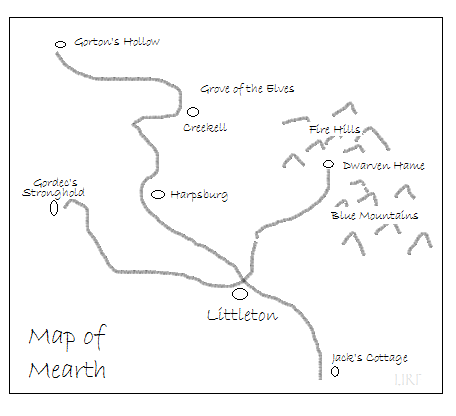
Accidental shifts in the spelling of names for people and places will be more visible. I keep a style sheet of how invented names and created words are spelled. I check to see if the word or name is listed and do a global search for each instance, changing it to the one I prefer.

What else do I find when reading forward from the end to the opening?

  • Places where I have contradicted myself, such as a town being north of the main character’s location, but they travel south to get there.
  • Punctuation errors and missing quotation marks also stand out when I see them printed.

I sometimes forget to make a note of made-up words and usages when I am really into writing. The list can take several forms, but even a simple handwritten page will do. I work in MS Word which makes it easy to copy and paste every invented name, hyphenated word, or placename to a separate document the first time they appear in my manuscript. I use an Excel spreadsheet for this list (called a style sheet) because I was a bookkeeper for a lot of years and like the program.

neveyah stylesheetYou can get fancy and use a dedicated writer’s program like Scrivener (too complicated for my squirrel brain) or a simple sheet of paper. The internet is full of software for writers, and here is an article to tell you all about them: Book Writing Software (2023): Top 10 Pieces of Software for Writers (thewritepractice.com)

All that’s needed is a list of how you want invented words spelled so that you can ensure they are consistent.

So, if you’re experiencing a little bit of the doldrums, take a look at work you might have shelved. You might find that it needs some sprucing up to make it ready to submit somewhere, but it will be worth it. January and February will see a surge of open calls for contests and anthologies, and you may have something worth submitting.

If you don’t try, you’ll never know.

4 Comments

Filed under writing

Industry news, what I am reading and #amwriting

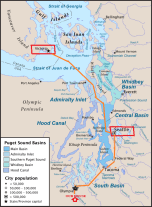
We have entered the darkest time of the year, and while the sun occasionally bursts through the dark and gloomy overcast skies, the monsoon months have arrived. The eternal rain has set in, which I don’t mind as much as some folks do. Rain in the winter means plenty of water during summer, which can be very dry here in the Puget Sound basin.

MyWritingLife2021BBut we’d prefer the snow to stay in the mountains where it belongs. Something about the slightest dusting sends the Pacific Northwest into a panic.

I write every day, no matter the season. However, December is a busy, scattered time for me, with a lot of random cooking and partying. As far as writing goes, it’s a month of inspiration racing up the steps, ringing the doorbell, and then running away.

Thus, I make notes of those random thoughts. At some point, I’ll be able to focus well enough to wrestle the Kraken that is my current manuscript, into shape. I’m still plotting the second half of this novel. Last week I managed to cut out two novellas and a short story’s worth of words out of the NaNoWriMo mess though, so that was fun. (Not.)

In the meantime, I’ve been enjoying a little downtime, reading and playing games. So, what have I been reading? Magazine articles mostly.

I’m an indie and am responsible for the success or failure of my books when it comes to marketing, which is not my strong point. But as always, the overall trends of the publishing industry interest me. What follows are the teasers and links to the more thought-provoking things I read this week.

Here is an article that is not recent, but is pertinent to our era of publishing, of writing blogs and publishing as an indie. Read the story here: Skills and Strategies | Understanding Plagiarism in a Digital Age – The New York Times (nytimes.com)

My Coffee Cup © cjjasp 2013BBC: From memoir and self-care books to comic novels, writing about our flaws and imperfections has never been so popular. But can failing ever be a success? Lindsay Baker explores this question. Read the story here: Is failure the new success? (bbc.com)

BBC: Audiobooks are having a moment. As they soar in popularity, they are becoming increasingly creative – is the book you listen to now an artform in its own right? Clare Thorp discusses this phenomenon. Read the story hereThe rise of the books you don’t read (bbc.com)

So, what else is going on in the publishing industry? Let’s have a look at the articles that caught my eye this last week:

NEW YORK, NY (AP) — Book publishing in 2023 was a story of cooling sales and rising conflict, marked by legal action, protests, censorship and the impact of forces well beyond the industry. Read the story here: 2023 in books: Protests, bannings and rise of AI helped shape the story of publishing – ABC News (go.com)

AP NEWs: The nation’s largest publisher and several bestselling authors, including novelists John Green and Jodi Picoult, are part of a lawsuit filed Thursday challenging Iowa’s new law that bans public school libraries and classrooms from having practically any book that depicts sexual activity. Read the story here: Publishing industry heavy-hitters sue Iowa over state’s new school book-banning law | AP News

NBC NEWS: Yahoo News reports that there has been a years-long surge in LGBTQ fiction sales. Read the story here: A ‘renaissance of gay literature’ marks a turning point for publishing (yahoo.com)

Publishers Weekly: This year’s Guadalajara International Book Fair (FIL), which ran November 25–December 3, drew 857,000 attendees, up from 807,000 in 2022 and 828,000 in 2019. While the fair always attracts several hundred U.S. librarians, who attend to buy Spanish-language titles, more U.S. publishers went to the fair this year than in past years—a sign that business between the U.S. and Mexican markets is growing. Read the story here: Guadalajara Book Fair Attracts More Americans (publishersweekly.com)

Pw06Also from Publishers Weekly: A confident mood prevailed among independent booksellers over this November holiday sales weekend. (…) Sales data from Circana BookScan showed that, in a year in which overall unit sales of print books are down 3.3%, sales were up 1.4% for the Thanksgiving week ending November 25, over the comparable week in 2022. Read the story here:  The Holiday Season Looks Promising for Indie Bookstores (publishersweekly.com)

So, there you have it, the articles that caught my eye this week when I was sitting at my computer and pretending to work. Now, I suppose I should go and release the Kraken—or at least get to work on that outline.


Credits and Attributions:

Cover of November 6, 2006 issue Publishers Weekly, © 2006 Publishers Weekly (Fair Use). Wikipedia contributors, “Publishers Weekly,” Wikipedia, The Free Encyclopedia, https://en.wikipedia.org/w/index.php?title=Publishers_Weekly&oldid=1180527918 (accessed December 10, 2023).

4 Comments

Filed under writing

#FineArtFriday: Hunters in the Snow by Pieter Brueghel the Elder 1565

Pieter_Bruegel_the_Elder_-_Hunters_in_the_Snow_(Winter)_-_Google_Art_ProjectArtist: Pieter Brueghel the Elder (1526/1530–1569)

Title: English: Hunters in the Snow (German: Jäger im Schnee) (Winter)

Date: 1565

Medium: oil on oak wood

Dimensions: height: 1,170 mm (46.06 in); width: 1,620 mm (63.77 in)

Collection: Kunsthistorisches Museum

What I love about this painting:

This is one of Pieter Brueghel the Elder’s most famous paintings. Even if one doesn’t know who originally painted it, they have very likely seen it at some point, perhaps on a calendar or a Christmas card.

Critics didn’t praise his work, as it is unabashedly primitive, created for the common person’s enjoyment. Nonetheless, his work is still highly prized by collectors. Even now, four centuries after his era, ordinary people can relate to his work because he had such a sense of humor and the ability to show the truth about humanity and inhumanity in his work.

He lived during a time of religious revolution in the Netherlands, and walking the line between both factions must have been difficult. Some have said that Bruegel (and possibly his patron) were attempting to portray an ideal of what country life used to be or what they wish it to be.

I disagree. On the surface and from a distance, this is a bucolic scene depicting ordinary peasants enjoying the winter. But when you look deeper, really look at it, you can see the irony of it, the honesty that Brueghel hid in plain sight.

Brueghel used symbolism to convey paradox and gallows humor in every painting. Winter was harsh and for the average person, survival required a lot of work, sometimes for nothing.

He shows us the hunters returning with empty game bags, the lone corpse of a skinny fox, and little else. One dog looks at us with starving eyes, as if hoping for scraps.

detai_Dogs_hunters_in_the_snow_Brueghel

The tavern’s sign is about to fall down, a large hint that all is not well. That symbolic broken sign tells us the owners are bankrupt.

detai_sign_hunters_in_the_snow_Brueghel

The owners are cooking outside, directly in front of the door. A woman brings a bundle of straw out of the inn to use as fuel, while in the distance an ox-drawn wagon is heavily laden with firewood. Where is it going? Not to their inn, that is for sure. And most intriguingly, a man is carrying a table away. Is he the tax collector? A thief?

detai_innkeeprs_cooking_hunters_in_the_snow_Brueghel

A rabbit has crossed the hunters’ path and evaded their snares.

detai_rabbit_tracks_hunters_in_the_snow_Brueghel

Birds of ill omen roost in the trees above the inn and the hunters and fly above the revelers, a portent of worse days to come.

detai_birds_hunters_in_the_snow_Brueghel

But Brueghel’s people have hope and faith that things will improve. In the distance (the future) people are playing winter games.

detai_skaters_hunters_in_the_snow_BrueghelBut they are indistinct and far away, shown in a fantastic, mountainous landscape, rather than the flat terrain of the Netherlands. It is almost as if they are visions of what winter could be when the harvest had been good, rather than the truth of the lone fox, hounds with empty bellies, a bankrupt tavern, and the rabbit that got away.

About this painting, via Wikipedia, the Fount of All Knowledge:

The Hunters in the Snow (Dutch: Jagers in de Sneeuw), also known as The Return of the Hunters, is a 1565 oil-on-wood painting by Pieter Bruegel the Elder. The Northern Renaissance work is one of a series of works, five of which still survive, that depict different times of the year. The painting is in the collection of the Kunsthistorisches Museum in ViennaAustria. This scene is set in the depths of winter during December/January.

The painting shows a wintry scene in which three hunters are returning from an expedition accompanied by their dogs. By appearances the outing was not successful; the hunters appear to trudge wearily, and the dogs appear downtrodden and miserable. One man carries the “meager corpse of a fox” illustrating the paucity of the hunt. In front of the hunters in the snow are the footprints of a rabbit or hare—which has escaped or been missed by the hunters. The overall visual impression is one of a calm, cold, overcast day; the colors are muted whites and grays, the trees are bare of leaves, and wood smoke hangs in the air. Several adults and a child prepare food at an inn with an outside fire. Of interest are the jagged mountain peaks which do not exist in Belgium or Holland. [1]


Credits and Attributions:

Wikimedia Commons contributors, “File:Pieter Bruegel the Elder – Hunters in the Snow (Winter) – Google Art Project.jpg,” Wikimedia Commons, https://commons.wikimedia.org/w/index.php?title=File:Pieter_Bruegel_the_Elder_-_Hunters_in_the_Snow_(Winter)_-_Google_Art_Project.jpg&oldid=723208718 (accessed December 6, 2023).

[1] Wikipedia contributors, “The Hunters in the Snow,” Wikipedia, The Free Encyclopedia, https://en.wikipedia.org/w/index.php?title=The_Hunters_in_the_Snow&oldid=1186886152 (accessed December 6, 2023).

Comments Off on #FineArtFriday: Hunters in the Snow by Pieter Brueghel the Elder 1565

Filed under #FineArtFriday, writing

Motivation, and the Council of Elrond #amwriting

Authors talk a lot about motivation, often speaking in general terms. In a writing group, if a fellow member is stuck, we will ask them what their characters want most and what they’re willing to do to obtain it.

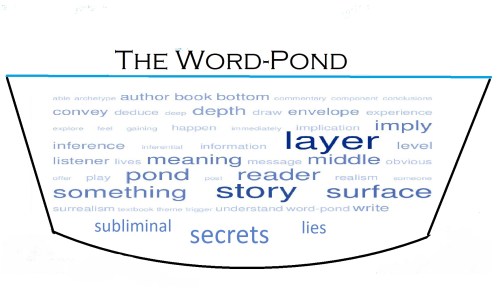
writing craft functions of the sceneThat question is a good place to start, but it is only the surface layer of the pond.

  • Motivation is sometimes defined as the overall quest.
  • Motives are more intimate, secrets held closely by the characters.

I like to use a watershed scene from the book The Fellowship of the Ring, as an example of this. If you have only seen the movie, you haven’t seen the real story as Tolkien himself told it. Let’s look at the Council of Elrond.

This scene is the only one where most of the characters are gathered in one place. They are there to decide who will mount the quest to destroy the One Ring. The scene is set in Rivendell, Elrond’s remote mountain citadel.

Each character attending the council has arrived there on a separate errand. Each has different hopes for what will ultimately come from the meeting. Despite their various agendas, each is ultimately concerned with the Ring of Power. Each wants to protect their people from Sauron’s depredations if he were to regain possession of it.

This scene serves several functions:

Information/Revelation: The Council of Elrond conveys information to both the protagonists and readers.

the fellowship of the ringIt is a conversation scene, driven by the fact that each person in the meeting has knowledge the others need. Conversations are good when they deploy necessary information. Remember, plot points are driven by the characters who have critical knowledge.

The fact that some characters are working with limited information creates tension. At the Council of Elrond, many things are discussed, and the whole story of the One Ring is explained, with each character offering a new piece of the puzzle. The reader and the characters receive the information simultaneously at this point in the novel.

Every person in the Fellowship is motivated by the need to keep the One Ring from falling into Sauron’s hands. This is the acknowledged reason for their accompanying Frodo and is the core plot point around which the story unfolds.

Yet, everyone attending the council has an unspoken agenda that will affect Frodo’s mission. Ultimately, those secret motives are the undoing of some and the making of others.

Samwise is a loyal friend who refuses to leave Frodo’s side. Fear that Frodo will need him forces him to insist on being included.

Pippin and Merry have similar but different reasons—they don’t want to be left out if Frodo and Sam are going on an adventure. Their motives are simple at the outset but become more complicated as their stories diverge and unfold.

Boromir desires the Ring for what he believes is a noble purpose and intends to take it to Minas Tirith. He knows the power of the Ring and believes that if he possesses it, Gondor will return to its former glory and be safe forever. He will rule the world with a just hand.

Thus, Boromir’s true motive is a quest for personal power. His agenda kicks into place at Amon Hen.

The Council of Elrond serves several functions:

The_Fellowship_of_the_Ring_coverInformation/Revelation: The Council of Elrond conveys information to both the protagonists and readers. It is a conversation scene, driven by the fact that each person in the meeting has knowledge the others need. Plot points are propelled by the characters who have critical knowledge. Again, limited information creates tension.

Interracial bigotry emerges, and a confrontation ensues. At the Council of Elrond, long-simmering racial tensions between Gimli the Dwarf and Legolas the Elf surface. Each is confrontational by nature, and it’s doubtful whether they will agree to work together.

Sometimes, a verbal confrontation gives the reader the context needed to understand why the action occurred. The conversation and reaction give the scene context, which is critical. A scene that is all action can be confusing if it has no context.

Other conflicts are explored, and heated exchanges occur between Aragorn and Boromir.

Pacing: We have action/confrontation in this vignette, followed by conversation and the characters’ reactions.

Negotiation: What concessions will be required to achieve the final goal? These concessions must be negotiated.

First, Tom Bombadil is mentioned as one who could safely take the Ring to Mordor as it has no power over him. Gandalf feels he would simply lose the Ring or give it away because Tom lives in his own reality and doesn’t see Sauron as a problem.

Bilbo volunteers, but he is too old and frail. Others offer, but none are accepted as good candidates for the job of ring-bearer for one reason or another.

Each justification Gandalf and Elrond offer for why these characters are wrong for the job deploys a tidbit of information the reader needs.

Turning Point: After much discussion, revelations, and bitter arguments, Frodo declares that he will go to Mordor and dispose of the Ring, giving up his chance to live his remaining life in the comfort and safety of Rivendell. Sam emerges from his hiding place and demands to be allowed to accompany Frodo. This is the turning point of the story.

The_Lord_of_the_Rings_The_Fellowship_of_the_Ring_(2001)_theatrical_posterThe movie portrays this scene differently, with Pip and Merry hiding in the shadows. Also, in the book, the decision about who will accompany Frodo, other than Sam, is not made for several days, while the movie shortens it to one day.

The fundamental laws of physics, the rules that govern the universe, are in force here: Everything in that chapter happens for a reason. There is always a causative factor.

  • Without a cause, there is no effect.
  • Cause is motivation.
  • Effect becomes cause, which becomes motivation.
  • Motivation is a chain reaction of cause and effect, which becomes the story.

And it’s all traceable back to the character’s desire to do or have something.

Characters that feel too shallow sometimes lack sufficient personal motivations. The reader can’t see why they would buy into the larger quest.

If we have supplied each character with a secret backstory, those hinted-at motives can sometimes push the story into newer, more original waters.

And, isn’t that what we readers are looking for? We read because we are searching for a story that feels new, one that offers us a fresh view of the world through the characters’ eyes.


Credits and Attributions:

The Lord of the Rings: The Fellowship of the Rings, Theatrical release poster, New Line Cinema, © 2001, all rights reserved. Wikipedia contributors, “The Lord of the Rings: The Fellowship of the Ring,” Wikipedia, The Free Encyclopedia, https://en.wikipedia.org/w/index.php?title=The_Lord_of_the_Rings:_The_Fellowship_of_the_Ring&oldid=1186704895 (accessed December 3, 2023). Fair Use.

Comments Off on Motivation, and the Council of Elrond #amwriting

Filed under writing

The Struggle is Real #amwriting

December is upon us. Family life has kicked into gear, and the season of parties has begun. I carve out my writing time in the early morning and sometimes in the evening. Sometimes, the writing flows well, and other times—

Not.

MyWritingLife2021We who write fantasy invent people and give them lives in invented worlds. Their stories involve them doing invented things. Unfortunately, there are times when we realize we have written ourselves into a corner, and there is no graceful way out.

This happened to me in 2019 and has happened to me once again. In 2019, I took one of my works in progress back from 90,000 words to 12,000. Now, I am setting the work I have to this point aside and doing something entirely different for a while. I could scrap what I’ve written but might need it later, so I never delete anything.

Once again, I am at the point where I am fighting the story, forcing it onto paper. It feels like admitting defeat to confess that my story has taken a wrong turn so early on, and I hate that feeling. Nevertheless, I knew by the 40,000-word point that this story arc had gone so far off the rails that there was no rescuing it.

But I’m no quitter. In 2019, I spent weeks writing more words and refusing to admit the story was no longer enjoyable. Fortunately, much of what I had written could be recycled into a different project.

My Coffee Cup © cjjasp 2013In 2019, I had accomplished many important things with the 3 months of work I had cut from that novel. The world was solidly built, so the first part of the rewrite went quickly. The characters were firmly in my head, so their interactions made sense in the new context.

Some sections that had been cut were recycled back into the new version.

Writing the outtakes of that novel wasn’t a waste, just a detour. And now, I’m faced with it again. This sort of thing is why it takes me so long to write a book.

So, now I need to take a month or so away from this project. When I return to it, I’ll need to spend several days visualizing the goal, the final scene, mind-wandering on paper until I have a concrete objective for my characters. Beginning this novel with only half an outline is how I lost my way.

In January, I will write a final chapter. Once I know what happened and how it all ended, I will want to write the events that led to that point.

Lucky Coffee CupSo, in 2019, I realized the novel I was writing is actually two books worth of story. The first half is the protagonist’s personal quest and is finished. The second half resolves the unfinished thread of what happened to the antagonist. Both halves of the story have finite endings, so the best choice is to break it into two novels.

This year, I was only halfway finished with the novel when I began hating the plot’s direction, but I made it to the 20th before that happened.

This seems to be a pattern for me, as 2019 was not the only time things went off the rails. In 2020, I was only 4 days into NaNoWriMo when things got ugly. If you are a regular visitor here, you know what happened. In trying to resolve a twist of logic, I accidentally wrote an entirely different novel with a completely different cast of characters and plot. That manuscript is in the final stages of prepublication.

For those of you who are curious—I have 4 novels in progress set in that world at different eras of the 3000-year timeline.

passelAnd a “passel” of short stories and novellas.

(Sighing is an unbecoming habit, and I can’t seem to stop doing it.)

Writing is work. Sometimes, we must accept that we are forcing something and it’s not succeeding. It’s best to face the misery and take the storyline back to where it got out of hand.

The sections you cut might be the seeds of a short story or a novella.

I believe in the joy of writing, in the joy of creating something powerful. If you lose your fire for a story because another has captured your imagination, set the first one aside and go for it.

We who are indies have the freedom to write what we have a passion for and take as long as we need to do it. True inspiration is not an everlasting firehose of ideas. Sometimes, we experience dry spells. Perhaps when I come back to the original work, I’ll see it with fresh eyes, and the passion will be reignited.

The Name of the Wind by Patrick Rothfuss 2nd coverI think of Patrick Rothfuss and his struggle to write the books in his series, the Kingkiller Chronicle. The first two books, The Name of the Wind (2007) and The Wise Man’s Fear (2011), have sold over 10 million copies.

Rothfuss’ work is original and powerful, but though it is highly regarded, he struggles to put it on paper just as the rest of us do. Despite a decade having passed, the third novel titled The Doors of Stone has not yet been released, and some fans are highly critical of him for that. They don’t understand how creativity works—all they know is they want that story, and they want it now.

The first two books in that series are work I consider genius, and I am willing to wait for him to be satisfied with his work.

Patrick Rothfuss’ struggle to write the book he believes in gives me permission to keep at it, to NOT just push out a novel that is a shadow of what I wanted to write.

And Patrick, if you’re listening, write the way you write, you wonderful human being, and I’ll wait as long as I must.

6 Comments

Filed under writing

#FineArtFriday: African Violet Skies by Clark Thomas Carlton

African_Violet_Skies_by_Clark_Thomas_CarltonTITLE: African Violet Skies

BY: Clark Thomas Carlton

MEDIUM: Acrylics on canvas

DATE: ca. 2016

What I love about this painting:

Today we’re dipping into 21st century fantasy landscape art. African Violet Skies by Clark Thomas Carlton is an explosion of color and form. The colors are so intense, I feel as if I could taste them.

I love how delicate the trees and foliage are as compared to the fierce thrust of the landscape. The mountains seem to burst through the earth at high speed, reaching for the incredible night sky, as if they would touch the moon.

This is true mastery of storytelling in an image as well as form and color. He gives us drama, and romance, and violence, and above it all, the moon softly gliding behind the delicate clouds, reflected on the serene stream below.

This painting is exactly what I need after four days of thick fog that refused to lift, followed by eternal rain.

About the Artist, via Wikipedia, the free encyclopedia

Clark Thomas Carlton is a novelist, playwright, and a screen and television writer living in Los Angeles. He has also worked as a producer of reality television. Carlton is best known for his science fiction/fantasy novel Prophets of the Ghost Ants published by HarperCollins Voyager in 2016.

Carlton is the author of Prophets of the Ghost Ants, Book 1 of the Antasy Series published by HarperCollins Voyage on December 13, 2016.  The indie version of the book was named a Best of 2011 by Kirkus Reviews.

In 1997, Carlton was awarded the Drama-Logue Critics Award for his play Self Help or the Tower of Psychobabble along with playwrights Neil Simon and Henry Ong. The play, a satire of the psychotherapy industry, was performed in Santa Monica, Palm Springs, Los Angeles and West Hollywood and directed by Michael Kearns and was also produced in Chicago.

Carlton is a painter who embraces the description of his work as “Grandma Moses on acid”. His work has been displayed through the Palm Springs Art Museum Annex through the Palm Springs Arts Council.

In December 1999, Carlton released an album of songs titled Salt Water through CD baby where he accompanied himself on acoustic guitar.  At present he is at work on Gardens of Babylon, a synth pop opera about the building of the Hanging Gardens of Babylon. The opera was written with his partner, Mike Dobson, an Emmy award winning music supervisor and composer on the daytime drama, the Young and the Restless. [1]


Credits and Attributions:

IMAGE: African Violet Skies by Clark Thomas Carlton. Wikimedia Commons contributors, “File:African Violet Skies by Clark Thomas Carlton.jpg,” Wikimedia Commons, https://commons.wikimedia.org/w/index.php?title=File:African_Violet_Skies_by_Clark_Thomas_Carlton.jpg&oldid=785979611 (accessed November 30, 2023).

[1] Wikipedia contributors, “Clark Thomas Carlton,” Wikipedia, The Free Encyclopedia, https://en.wikipedia.org/w/index.php?title=Clark_Thomas_Carlton&oldid=1171925222 (accessed November 30, 2023).

1 Comment

Filed under #FineArtFriday

The end is nigh, but I’m clueless #amwriting

Tomorrow is the final day of NaNoWriMo 2023. I have just over 60,000 words written on my current novel. We’ve had some gloomy days here. Fog set in on Sunday, enveloping the world (at least the world I could see from my window); as I write this, it still hasn’t lifted. To enhance the gloomy ambiance, I play my favorite writing music,  Final Fantasy Guitar Collection, Vol. 2 | John Oeth – YouTube, and write dark scenes about shady people doing evil deeds.

MyWritingLife2021BWhen I can’t write anymore, I eat chocolate and read trashy romance novels about vampires.

I’m struggling to plot the end of this novel. If I know how the story will end, I can build a plot to that point. Over the years of editing and reviewing books, I’ve assembled a list of questions that help me nudge an idea loose.

Right now, one murder has been committed, and we now know who did it. Unfortunately, the outline from the midpoint on is a bit too concise:

“Karras follows Rahlie, murders him. Also attacks and robs Lorris, who survives. Lenn and Salyan hunt the killer. Fight, Lenn wounded, they prevail. Salyan kills Karras. Or maybe Lenn does.”

That’s it.

It isn’t a lot to go on.

Author-thoughtsI need to spend several days visualizing the goal, picturing each event, and mind-wandering on paper until I have concrete scenes. I need to write a few paragraphs that will become the final chapters.

I will write a synopsis of the final events as if I had witnessed them from the sidelines. It’s a good way to visualize what happened and will give me something to expand on over the final 25,000 words. I will have scenes firmly in mind and be able to write them from Lenn’s point of view.

So now, I’m outlining again, and it will become my synopsis. I have my character notes detailing what they wanted initially.

And, no matter their failings, our protagonist is endowed with an extraordinary power not granted to ordinary mortals: plot armor. They alone are allowed to survive all manner of grievous wounds and deadly encounters because they are needed for the plot to continue.

I ask myself several questions, and the answers show me at a glance how my characters have been changed by the events they have experienced.

  1. What do the characters want now?
  2. What will they have to sacrifice next?
  3. What stands in the way of their achieving the goal?
  4. Do they get what they initially wanted, or have their desires evolved away from that goal?

conflict thesaurusMy heroes and villains all see themselves as the stars and winners in this fantasy rumble. They intend to prevail at any cost. What is the final hurdle, and what will they lose in the process? Is the price physical suffering or emotional? Or both?

What happens when they catch up with Karras?

Sometimes, neither party knows what they will do once they achieve their goal, as they haven’t thought that far ahead. They (and I, as the author) have been completely focused on getting to this point in the story.

So here we are, just after the midpoint crisis. A serious incident occurred, launching the third act and setting my protagonists on the hunt. Now, something worse must occur that makes them fear they won’t achieve their objectives after all. My protagonists must get creative and work hard to accomplish their desired goal. They must overcome their own doubts and make themselves stronger.

I also need to insert several scenes showing what the enemy knows that the protagonists do not. I need to discover more about her motives and what she is capable of.

30 days 50000 wordsMy mental rambling is accomplishing something. My characters are all getting their acts together. They are finding ways to resolve the conflict and are ready to commence the fourth act, where they will embark on the final battle.

I know they will face off with weapons. I don’t know where that will happen, so that is something I need to work out.

By the end of the book, all the threads will have been drawn together and resolved for better or worse. The ending must be finite and wrap up the conflict.

Everyone goes home to their families and lives happily. In real life, people live happily, but no one really lives deliriously happily ever after.

That’s another story and a different genre.

Thank you all for listening to my mental ramblings—I hope they help you. Now, I can write a few paragraphs and give myself a skeleton to hang the story on with dots to connect and finish this first draft.

1 Comment

Filed under writing

Resources for the struggling author #amwriting

When I was at the beginning stage of my writing life in the 1970s, I had no idea how a person could become a writer if they weren’t born under a lucky star. Over the next twenty years, I wrote reams of poetry and short stories. I also wrote the outlines of many novels.

MyWritingLife2021I still had no idea there was a wider community of writers in my area, and even if I had, I wouldn’t have felt worthy of gate-crashing one of their meetings.

One day in 1990, I stumbled upon a book offered in the Science Fiction Book Club catalog: How to Write Science Fiction and Fantasy by Orson Scott Card. The day that book arrived in my mailbox changed my life. 

That day, I stopped feeling guilty for thinking I could be a writer.

On writing stephen king 1st edition coverThe next book I bought was in 2002: On Writing, A Memoir of the Craft by Stephen King.

But if I were beginning today, I would have access to many more resources for new writers. Even if you aren’t participating in NaNoWriMo, I recommend checking out the NaNoWriMo Store, as it offers several good books to help you get started.

Brave the Page

Are you a first-time writer or a young author? While it is written for middle graders, adults just starting out will find good advice in this book.

From the official Blurb: Partly a how-to guide on the nitty-gritty of writing, partly a collection of inspiration to set (and meet) ambitious goals, Brave the Page is the go-to resource for middle-grade writers. Narrated in a fun, refreshingly kid-friendly voice, it champions NaNoWriMo’s central mission that everyone’s stories deserve to be told. The volume includes chapters on character, plot, setting, and the like; motivating essays from popular authors; advice on how to commit to your goals; a detailed plan for writing a novel or story in a month; and more!

Ready, Set, Memoir!

Are you writing a memoir, but don’t know how to get started?

From the official Blurb: Written by former NaNoWriMo Program Director Lindsey Grant, Ready, Set, Memoir! is full of helpful lists, exercises, inspiring quotes from famous memoirists, advice, lessons, and humor to help walk you through the writing process. This guided journal will inspire and motivate you to write—and finish!—your memoir.

no plot no problem_mainFinishing off the resources from the official NaNoWriMo store is Grant Falkner’s handbook, No Plot, No Problem!

This book is a resource for people who just want to write but have no idea where to start.

From the official Blurb: When you add No Plot? No Problem! to your personal library, it’ll give you a run for your lexical money! It’s a writing heavyweight, muscled with advice, activities, pep talks, and prompts that are sure to match your brain swing for swing in a literary tussle. Challenge this guide, and win, and you’ll have written a champ of a novel that can hold its own in the ring!

But maybe you are ready to move beyond the beginning stages and need more advanced information. My personal library of books on craft is huge. I can’t stop buying them. But what are the books I refer back to most frequently?

The following is the list of books that are the pillars of my reference library:

These are hard times for many would-be authors. How do we find cost-free resources? 

I usually begin my hunt for information by “googling” a question. No matter what browser you use, if you don’t ask, you don’t receive. Be wary of misinformation! Read several articles to get a broader view of the subject. I also check the date when something was posted to ensure the information is current. I bookmark the site if that information is relevant to my needs.

Note: If you are researching for a novel, your browsing history may look a little … unusual … after a while.

activateMany local libraries offer a service where one can submit a question and have it answered by email. If that isn’t an option and we’re feeling ambitious, you can check out eBooks on any subject.

Cost-free resources for authors to bookmark in general:

www.Thesaurus.Com This is good for when I need to know, “What’s another word that means the same as this word but isn’t weird or repetitive?”

Oxford Dictionary online is brilliant when I need to know, “Does this word mean what I think it means? Am I using it correctly?”

Wikipedia – The font of all knowledge, or so I hear. My go-to source of info is often Wikipedia. This resource is created and edited by volunteers. All articles must provide proper citations and reference links to outside sources to support every statement. Articles that don’t meet specific criteria are flagged. Some opinions may be presented as facts when discussing art or literature. But overall, I always find something useful by looking at the links in their footnotes and going directly to those sources.

Some other cost-free resources:

www.writersdigest.com

The Creative Penn

Creative Writing Now

Stardust, Neil GaimanHere is a link to the great Neil Gaiman’s absolutely wonderful, infinitely comforting, yet utterly challenging advice for writers: Writing Advice from Neil Gaiman | Discover MasterClass | MasterClass – YouTube

Your best resource is a good writers’ group. A good group is the best way to learn about this craft. Your area may have established writers’ groups, and some may be able to accept new members. The best way to find out is to Google writers’ groups in your town and make inquiries.

Attend a few meetings as an observer to see if this group is a good fit for you.

Maybe you don’t feel comfortable meeting in person or via Zoom. Many online writers’ forums exist, and one might fit your needs. From 2010 through 2012, I participated in an excellent online group, Critters Workshop. The support I found there gave me the courage to dive into the waters of my local writing community.

Wendig_Damn_Fine_StoryIn 2010, I gained a wonderful local group through attending write-ins for NaNoWriMo. Nowadays, we meet weekly via Zoom, as some members are now living far away from Olympia. My fellow writers are a never-ending source of support and information about both the craft and the industry. We write in various genres and gladly help each other bring new books into the world. But more than that, we are good, close friends.

I hope this short list of resources for the struggling author has been of help. May your words flow freely, and may inspiration never fail you.


Comments Off on Resources for the struggling author #amwriting

Filed under writing

#FineArtFriday: Peasant Wedding, David Teniers II (revisited)

Today is the day after Thanksgiving here in the US. Many people are out doing their Christmas shopping or looking for Black Friday bargains.

But not my husband and me. We will rest up, enjoy leftovers, and visit the storage unit to pick up our bin full of Christmas decorations. Maybe we’ll decorate the balcony, offer a little cheer to the neighbors across the way.

I love today’s painting, and yesterday’s family gathering made me think of revisiting it. The Peasant Wedding by the Flemish painter, print maker, David Teniers the Younger, is full of movement and life, and shows real people having a great party, not unlike we do in our modern world.

The musicians are playing, some people are singing, some are talking, and some are dancing. Most are eating and just enjoying themselves. A few of the men are becoming a little familiar with the ladies, who are not really having any of that, thank you. A few people have indulged a little too much.

Even the dog is having a good time.

Teniers was a prolific and skilled artist, a man remembered today as much for his lofty social ambitions as he is for the quantity and excellence of his work. He wanted to be a nobleman; indeed he once falsely laid claim to being descended from a noble line. Several times he nearly succeeded in this ambition, but nobility was one accolade he never achieved.

This world can be a hard place for some people to live. I am fortunate to be safe and well-fed, luxuries I thank God for every day. Wherever you are in this big world, I hope you have plenty to give thanks for.

About David Teniers II, from Wikipedia:

Teniers married into the famous Brueghel artist family when Anna Brueghel, daughter of Jan Brueghel the Elder, became his wife on 22 July 1637. Rubens, who had been the guardian of Anna Brueghel after her father’s death, was a witness at the wedding.

Through his marriage Teniers was able to cement a close relationship with Rubens who had been a good friend and frequent collaborator with his wife’s father. This is borne out by the fact that at the baptism of the first of the couple’s seven children David Teniers III, Rubens’ second wife, Hélène Fourment was the godmother.

Teniers’ wife died on 11 May 1656. On 21 October of the same year the artist remarried. His second wife was Isabella de Fren, the 32-year-old daughter of Andries de Fren, secretary of the Council of Brabant. It has been suggested that Teniers’ main motive for marrying the ‘spinster’ was her rather elevated position in society. His second wife also brought him a large dowry. The couple had four children, two sons and two daughters. His second wife’s attitude to Teniers’ children from his first marriage would later divide the family in legal battles.

At the behest of his Antwerp colleagues of the Guild of Saint Luke, Teniers became the driving force behind the foundation of the Academy in Antwerp, only the second of such type of institution in Europe after the one in Paris. The artist used his connections and sent his son David to Madrid to assist in the negotiation to successfully obtain the required licence from the Spanish King. There were great celebrations in Antwerp when, on 26 January 1663, Teniers came from Brussels with the royal charter creating the Antwerp Royal Academy of Fine Arts, the existence of which was due entirely to his persistence.

Teniers petitioned the king of Spain to be admitted to the aristocracy but gave up when the condition imposed was that he should give up painting for money.

He was an innovator in a wide range of genres such as history, genre, landscapeportrait and still life. He is now best remembered as the leading Flemish genre painter of his day


Credits and Attributions:

Wikimedia Commons contributors, “File:David Teniers de Jonge – Peasant Wedding (1650).jpg,” Wikimedia Commons, the free media repository, https://commons.wikimedia.org/w/index.php?title=File:David_Teniers_de_Jonge_-_Peasant_Wedding_(1650).jpg&oldid=225700063 (accessed November 2, 2018).

Wikipedia contributors, “David Teniers the Younger,” Wikipedia, The Free Encyclopedia, https://en.wikipedia.org/w/index.php?title=David_Teniers_the_Younger&oldid=858638339 (accessed November 2, 2018).

1 Comment

Filed under #FineArtFriday

Writing the Short Story part 2: The Narrative Essay #amwriting

This is part two of a series on writing short fiction. One of my favorite forms of short fiction to read is the narrative essay. For indie authors who wish to earn actual money from their writing, the narrative essay is often more salable and appeals to a broader audience.

narrative essayNarrative essays are drawn directly from real life, but they are fictionalized accounts. They detail an incident or event and talk about how the experience affected the author on a personal level.

One of my favorite narrative essays is 1994’s Ticket to the Fair (now titled “Getting Away from Already Being Pretty Much Away from It All“) by David Foster Wallace, published in Harpers. I’ve talked about this particular piece before. It’s a humorous, eye-opening story of a naïve, slightly arrogant young journalist’s assignment to cover the 1993 Iowa State Fair, told in the first person.

Wikipedia summarizes Ticket to the Fair this way: Wallace’s experiences and opinions on the 1993 Illinois State Fair, ranging from a report on competitive baton twirling to speculation on how the Illinois State Fair is representative of Midwestern culture and its subsets. Rather than take the easy, dismissive route, Wallace focuses on the joy this seminal midwestern experience brings those involved.

A-supposedly-fun-thing-first-edition-coverWallace went to the fair thinking it would be a boring event featuring farm animals, which might be beneath him. But it was his first official assignment for Harpers, and he didn’t want to screw it up. What he found there, the people he met, their various crafts, and how they loved their lives profoundly affected him, altering his view of himself and his values.

As we find in Wallace’s piece, the primary purpose of an essay is thought-provoking content. The narrative essay conveys our ideas in a palatable form, so writing this kind of piece requires authors to think.

Just like any other form of short fiction, a narrative essay has content and structure. It has

  • an introduction,
  • a plot,
  • characters,
  • a setting,
  • a climax.

Choose your words for impact because writing with intentional prose is critical. A good narrative essay has been put into an entertaining form that expresses far more than mere opinion. They sometimes offer up deep, uncomfortable views. The trick is to offer them in a way that the reader feels connected to the story. Once they have that connection, they will see the merit of the opinions and viewpoints.

So, narrative essays are a way of sharing our personal view of the world, the places we go, and the people we meet along the way.

  • Names should be changed, of course.

Harpers_Magazine_1905Literary magazines want well-written essays on a wide range of topics and life experiences presented with a fresh point of view. Some publications will pay well for first rights.

Authors make their names by being published in a reputable magazine. You must pay strict attention to grammar and editing to have any chance of acceptance. Never send out anything that is not your best work.

After you have finished the piece, set it aside for a week or two. Then, return to it with a yellow highlighter and a fresh eye. Print it out and read it aloud, checking for dropped and missing words. In this case, I do NOT recommend the narrator function of your word processing program.

In the process of reading aloud, you will find:

  • Spelling—misspelled words, autocorrect errors, and homophones (words that sound the same but are spelled differently). These words are insidious because they are actual words and don’t immediately appear out of place.
  • Repeated words and cut-and-paste errors. These are sneaky and dreadfully difficult to spot. Spell-checker won’t always find them. They make sense to you, the author, because you see what you intended to see. For the reader, they appear as unusually garbled sentences, and you will stumble over them as you read aloud.
  • Missing punctuation and closed quotes. These things happen to the best of us.
  • Digits/Numbers: Miskeyed numbers are difficult to spot when they are wrong unless they are spelled out.

oxford_synonym_antonymDon’t be afraid to write with a wide vocabulary, as people who read these publications have a broad command of language.

  • However, we never use jargon or technical terms that only people in certain professions would know unless it is a piece for a publication catering to that segment of readers.

Above all, be a little bold. I enjoy reading David Foster Wallace and George Saunders because they are adventurous in their work.

And finally, we must be realistic. Not everything you write will resonate with everyone you submit it to. Put two people in a room, hand them the most exciting thing you’ve ever read, and you’ll get two different opinions. They probably won’t agree with you.

Don’t be discouraged by rejection. I follow several well-known authors via social media because what they have to say about the industry is intriguing. They’re journalists who submit at least one piece weekly, hoping they will sell one or two a year. One says she aims for one hundred rejections a year because two or three stories or essays are bound to strike a chord with the right editor during that time.

Rejection happens far more frequently than acceptance, so don’t let fear of rejection keep you from writing pieces you’re emotionally invested in.

This is where you have the opportunity to cross the invisible line between amateur and professional. Always take the high ground—if an editor has sent you a detailed rejection, respond with a simple “thank you for your time.” If it’s a form letter rejection, don’t reply.

What should you do if your work is accepted but the editor wants a few revisions?

367px-Saturday_evening_post_1903_11_28_aIf the editor wants changes, they will make clear what they want you to do. Editors know what their intended audience wants. Trust that the editor knows their business.

Make whatever changes they request.

Never be less than gracious to any of the people at a publication when you communicate with them, whether they are the senior editor or the newest intern. Be a team player and work with them.

And when you receive that email of acceptance—celebrate! There is no better feeling than knowing someone you respect liked your work enough to publish it.


Credits and Attributions:

Wikipedia contributors. A Supposedly Fun Thing I’ll Never Do Again [Internet]. Wikipedia, The Free Encyclopedia; 2023 Sep 4, 00:32 UTC [cited 2023 Nov 20]. Available from: https://en.wikipedia.org/w/index.php?title=A_Supposedly_Fun_Thing_I%27ll_Never_Do_Again&oldid=1173714712.

Comments Off on Writing the Short Story part 2: The Narrative Essay #amwriting

Filed under writing