Route recalculating and formatting a short story #amwriting

This last weekend, we went to a family party, a fun, noisy gathering typical of how we roll. Three of our children were there with their children and all the in-laws and outlaws. The food was fabulous, of course.

MyWritingLife2021The best thing about this weekend was seeing the grandchildren behaving like their parents did at their ages. We loved hearing their parents shouting the same gentle admonishments we offered when they were children: “Hey you! Stay in the yard!” and the ever popular “Get your hand away from that cake!” followed by, “Oh God! Here, let me wipe your face.”

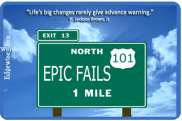
I had the distinctly uncomfortable experience of driving in an unfamiliar area and trying to obey the law while following the verbal directions of the GPS—an epic fail. Fortunately, my husband is the soul of patience. Greg says soothing things like, “Don’t worry. They’ll calm down,” and “I think that was where we were supposed to turn.”

And the GPS lady, tranquil and unflustered no matter what the half-crazed woman at the wheel does, says, “Route recalculating ….”

route recalculatingSo now we’re home and nobody died. Once again, I am preparing a short story for submission to an anthology. I think it fits the theme, but whether or not the editor will agree is another question. I know it is correctly formatted because I read and followed the submission guidelines.

Each publisher, magazine, or contest website will have a ” Submission Guidelines ” page or section.” That page contains the rules specific to that particular publication or contest:

  • length of submissions in word count, (Do not exceed or fudge this.)
  • how they want you to format your work for their best use,
  • where to submit the work,
  • what date submissions close,
  • if it is a contest, fees will be listed there.

I try to have a backlog of short fiction on hand for submission. It saves time if I have submission-ready work, as it will require minimal adjustment to fit various requirements.

money_computer_via_microsoftMost publishers use what is considered the industry standard, Shunn Manuscript Format. William Shunn didn’t invent it but made this knowledge available to all would-be authors via the Internet.

Use a 12-point font, which prints out at a pitch of ten characters per inch. This is critical knowledge because the font that the publisher’s guidelines require is the only one that will make it past the first editor’s inbox.

The preferred font will be clearly stated in their submission guidelines.

IF YOU INTEND TO FORMAT YOUR MS FOR HARD-COPY SUBMISSION TO AN OLD-SCHOOL PUBLISHER:

  • Set the margins for your document at 3cm (1 inch) on all four sides.
  • Align to the left side only; the right side should remain jagged. (THIS IS CRITICAL)
  • Use a twelve-point font in black type only. Courier, Times New Roman, or Arial fonts may be specified, so check the magazine or anthology submission guidelines.
  • Lines should be double-spaced with no extra spaces between paragraphs. (THIS IS CRITICAL)
  • Single space between sentences after periods. (This is also critical)
  • Indent new paragraphs and each new section of dialogue.
  • Indicate scene breaks by inserting a blank line and centering the hash sign (#) in the center of that line.
  • Center a hash sign # one double-spaced blank line down at the end of the manuscript. Or, simply write The End. This assures the editor that no pages are accidentally missing.
  • Use underline for italicized words if you are using Courier font. If you are using Times New Roman, you can use proper italics. (Again, check the submission guidelines)

The header goes in the upper-right corner of every page of your manuscript except the first.

Your first page should include:

  • The name of the work.
  • The approximate word count, some will want it only to the nearest hundred.
  • In the upper left, your contact details are formatted in the same font and size as the manuscript font.

Formatted_fonts_03312019MANY contests and e-magazines want your manuscript formatted similarly but may require a different font. Some want the header on all pages, and others want your full author name in the header.

I use MS Word, but other word-processing programs are similar. To format your header in MS WORD:

  1. Go to the Insert Tab and click on: page numbers > top of page.
  2. From the drop-down menu, select > plain number three (the upper right-hand corner).
  3. Type your name and the title just before the number.
  4. Click on the body of your document, and the header/page number is set. It will appear to gray out.

To Format your manuscript so the page numbers start on page two: click on this link to go to the MS Word Learning and Help Center if you are using MS Word. The process is a little more involved, and I didn’t want to fill this post up with that, so use the resource your word-processing software manufacturer offers. That’s the way I learned to use this program.

Harpers_Magazine_1905Be aware that ALL contests and magazines will want original work that has never been published.

Most anthologies will also want original, never-before-published work. The exception to this is if the collection is a promotional anthology showcasing stories the publisher printed the previous year. Often these collections are the editors’ favorites.

Most contracts will state that you can reuse or republish the work 3 months or 90 days after the date of their publication. Don’t accept any contract that doesn’t allow you to regain the rights to your own work at some point.

When you do republish the work, you must include a caveat on the copyright page stating that it was originally published in their anthology or magazine and what issue/year it appeared.

Tenth_of_DecemberAt some point this year, I plan to publish a compilation of short stories. I love reading anthologies and short story compilations. Some of the best work I’ve read has been in short story form.

I hope you have been writing short stories or flash fiction. They are fun to write and are easier to sell than novels. It’s a happy day when my work resonates with the right editor, and I get that email of acceptance.

14 Comments

Filed under writing

#FineArtFriday: Summer, Lake Ontario by Jasper Francis Cropsey 1857 (revisited)

Cropsey,_Jasper_Francis_-_Summer,_Lake_Ontario_-_Google_Art_ProjectTitle: Summer, Lake Ontario by Jasper Francis Cropsey (1823–1900)

Genre: landscape art

Date: 1857

Medium: oil on canvas

Collection: Indianapolis Museum of Art

What I love about this painting:

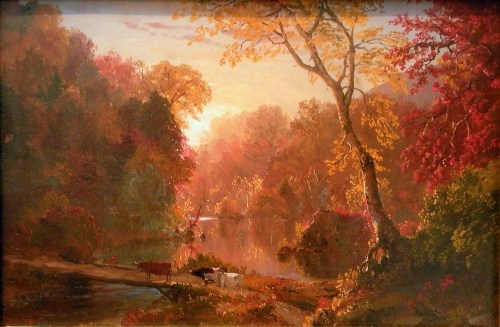
Cropsey paints a summer evening in New York State, along the shore of one of Lake Ontario’s bays. Near the bottom center, a pair of fishers are placed on the wooden bridge over a creek. This image has a fantasy quality, as if it depicts a dream or a fond memory.

Our point of view is from a hill, looking down to the creek, the bridge, and the bay shore, and then across low hills to the great lake beyond. Cropsey gives equal importance to the earth below and sky above.

Cropsey’s signature deep colors are featured in this panoramic view of a summer evening. Warm reds, browns, yellows, and dark greens are lightened by wispy mists rising in the early evening air, lit by the setting sun.

About the Artist, via Wikipedia:

Jasper Francis Cropsey (February 18, 1823 – June 22, 1900) was an important American landscape artist of the Hudson River School.

Cropsey was born on his father Jacob Rezeau Cropsey’s farm in Rossville on Staten Island, New York, the oldest of eight children. As a young boy, Cropsey had recurring periods of poor health. While absent from school, Cropsey taught himself to draw. His early drawings included architectural sketches and landscapes drawn on notepads and in the margins of his schoolbooks.

Trained as an architect, he set up his own office in 1843. Cropsey studied watercolor and life drawing at the National Academy of Design under the instruction of Edward Maury and first exhibited there in 1844. A year later he was elected an associate member and turned exclusively to landscape painting; shortly after he was featured in an exhibition entitled “Italian Compositions.”

Cropsey traveled in Europe from 1847–1849, visiting England, France, Switzerland, and Italy. He was elected a full member of the Academy in 1851. Cropsey was a personal friend of Henry Tappan, the president of the University of Michigan from 1852 to 1863. At Tappan’s invitation, he traveled to Ann Arbor in 1855 and produced two paintings, one of the Detroit Observatory, and a landscape of the campus. He went abroad again in 1856, and resided seven years in London, sending his pictures to the Royal Academy and to the International exhibition of 1862.

Returning home, he opened a studio in New York and specialized in autumnal landscape paintings of the northeastern United States, often idealized and with vivid colors. Cropsey co-founded, with ten fellow artists, the American Society of Painters in Watercolors in 1866. He also made the architectural designs for the stations of the elevated railways in New York. [1]


Credits and Attributions:

Image: Summer, Lake Ontario by Jasper Francis Cropsey 1857. Wikimedia Commons contributors, “File:Cropsey, Jasper Francis – Summer, Lake Ontario – Google Art Project.jpg,” Wikimedia Commons, the free media repository, https://commons.wikimedia.org/w/index.php?title=File:Cropsey,_Jasper_Francis_-_Summer,_Lake_Ontario_-_Google_Art_Project.jpg&oldid=618625179 (accessed June 30, 2022).

[1] Wikipedia contributors, “Jasper Francis Cropsey,” Wikipedia, The Free Encyclopedia, https://en.wikipedia.org/w/index.php?title=Jasper_Francis_Cropsey&oldid=1093620569 (accessed June 30, 2022).

2 Comments

Filed under #FineArtFriday, writing

When weather is the villain #amwriting

Hello from beautiful Olympia, Washington. We usually have the same climate as you in Wales or England. We prefer cool summers, with overcast mornings and sunny afternoons that never exceed 74 degrees Fahrenheit or 23 degrees Celsius. For most of my life, that is how summers here were. But as of the new millennium, we no longer count on typical summers.

WritingCraftWorldbuildingWeather is not just a component of world-building. Sometimes, the weather is the villain in real life. In June and early July of 2021, we here in the Pacific Northwest had strange weather climate-wise.

On June 27th, within days, we went from temperatures well below average (low to mid-60s and pouring rain) to suffering from temperatures well above 100 degrees. It reached 108 at my house, 111 at my sister’s house 10 miles away. We use Fahrenheit in the US, but for you in the UK and Europe, we topped out at around 44 degrees Celsius.

This is where weather became the villain. People were hospitalized, and some died. Many apartments on the upper stories had windows that only opened four inches (to prevent people and children from falling out) and most had no A/C. No one knew how to keep cool and prevent heat stroke.

By mid-July, we returned to temperatures slightly above average, mid to upper 80’s and sometimes 90’s. That is how it has remained here since. 2022 wasn’t too bad, and 2023 has been warm but mostly bearable. May was abnormally hot, then it cooled down, and we had a typical overcast June. It’s mid-August now, and yesterday it hit 97, which is dangerous for people with no fans or A/C. Today it is expected to top out at 94.

Air conditioning has become commonly built into homes here since the heat dome of 2021. Most people have acquired window A/C units if their central heating system has no cooling option.

Don't_Forget_a_Tarp!_(1a132339-9f55-439b-ac0f-244e244cb12f)Traditionally in the past, summers in the Puget Sound area of Washington state didn’t really begin until July 5th. We celebrated the 4th of July with low clouds and drizzle, and “blue tarp camping” was a staple of family vacations. June never became unbearably warm.

When the sun did arrive, temperatures, for most of the time we have kept records, ran into the high 70s or, rarely, low to mid-80s. We are said to have a generally mild climate, and while that is changing, we hope it will remain mostly temperate.

So, let’s look at the weather as the villain. Tornados, hurricanes, bizarre heatwaves—these weather events can be the threat our heroes must overcome.

Once you have decided on your overall climate, do some research on how the weather affects agriculture and animal husbandry. In 2021, we here in the northwest lost many crops as they had cooked in the fields during the heat wave. This caused shortages at a time when the pandemic had already bollixed the supply chain.

In any era, the weather affects the speed with which your characters can travel great distances and how they dress. Bad weather always has a detrimental effect on transportation of people and goods, a serious point to consider.

We don’t get many hurricanes here, but they are common elsewhere.

Hurricane Maria was a deadly Category 5 hurricane that devastated the northeastern Caribbean in September 2017, particularly DominicaSaint Croix, and Puerto Rico. It is regarded as the worst natural disaster in recorded history to affect those islands.

The total death toll is 3,059: an estimated 2,975 in Puerto Rico, 65 in Dominica, 5 in the Dominican Republic, 4 in Guadeloupe, 4 in the contiguous United States, 3 in the United States Virgin Islands, and 3 in Haiti. Maria was the deadliest hurricane in Dominica since the 1834 Padre Ruíz hurricane and the deadliest in Puerto Rico since the 1899 San Ciriaco hurricane. This makes it the deadliest named Atlantic hurricane of the 21st century to date. [1]

Many true stories of survival against the odds and heroism emerge from natural disasters. The kindness of strangers is a worthy plot point, as is the terrible way people behave when resources are cut off, and people lack water and access to food. Hunger, lack of water resources, and unsafe sanitary conditions are powerful drivers of civil unrest.

Wildfires are among the most common forms of natural disaster in some regions of our blue planet, including SiberiaCalifornia, and Australia.

And now, a place where we never thought it would happen is burning—Hawaii.

Via Wikipedia:

In early August 2023, a series of wildfires broke out in the US state of Hawaii, predominantly on the island of Maui. The wind-driven fires prompted evacuations, caused widespread damage, and killed at least 99 people in the town of Lahaina; at least 1,000 people remain missing and the death toll from the fires could double or triple in the upcoming days. The proliferation of the wildfires was attributed to dry, gusty conditions created by a strong high-pressure area north of Hawaii and Hurricane Dora to the south.

As of August 14, 2023, there were 99 confirmed deaths, and at least 1,000 other individuals were unaccounted for due to the Lahaina fire on Maui. Only a small number of victims have been identified. The death toll in West Maui made it the deadliest wildfire and natural disaster ever recorded in Hawai’i since statehood even though it could still double or triple in the upcoming days: the governor of the archipelago warned that he expected to find “10 to 20” bodies a day, while the search was expected to last another ten days or so. [2]

StoryMemeLIRF10052021Tragedies on this scale destroy communities but can also unite the survivors. Maui has a long road ahead. Recovery will not be easy as they are an island, and everything must be shipped to them across the ocean. However, people all over the world are stepping up, and the rebuilding is beginning.

How the people who have survived this horrible event go forward will be a testament to their resilience.

Tornadoes, hurricanes, earthquakes, wildfires, severe droughts, prolonged monsoons—weather offers many opportunities for stories of survival against the odds. Thus, large weather events make worthy threats for your characters to overcome.

One of the best movies I’ve ever seen is The Perfect Storm, an adaptation of Sebastian Junger’s creative non-fiction novel of the same name. From Wikipedia:

ThePerfectStormThe Perfect Storm is a creative nonfiction book written by Sebastian Junger and published by W. W. Norton & Company in 1997. The paperback edition (ISBN 0-06-097747-7) followed in 1999 from HarperCollins‘ Perennial imprint. The book is about the 1991 Perfect Storm that hit North America between October 28 and November 4, 1991, and features the crew of the fishing boat Andrea Gail, from GloucesterMassachusetts, who were lost at sea during severe conditions while longline fishing for swordfish 575 miles (925 km) out. Also in the book is the story about the rescue of the three-person crew of the sailboat Satori in the Atlantic Ocean during the storm by the U.S. Coast Guard Cutter Tamaroa (WMEC-166). [3]

And so, if you are looking for a plot for your NaNoWriMo novel, consider the weather. It’s not just a part of world-building. It can be the perfect adversary.


Credits and Attributions:

Image: Don’t Forget a Tarp, National Park Service, Wikimedia Commons contributors, “File:Don’t Forget a Tarp! (1a132339-9f55-439b-ac0f-244e244cb12f).jpg,” Wikimedia Commons, https://commons.wikimedia.org/w/index.php?title=File:Don%27t_Forget_a_Tarp!_(1a132339-9f55-439b-ac0f-244e244cb12f).jpg&oldid=784682623 (accessed August 15, 2023).

[1] Wikipedia contributors, “Hurricane Maria,” Wikipedia, The Free Encyclopedia, https://en.wikipedia.org/w/index.php?title=Hurricane_Maria&oldid=1170469768 (accessed August 15, 2023).

[2] Wikipedia contributors, “2023 Hawaii wildfires,” Wikipedia, The Free Encyclopedia, https://en.wikipedia.org/w/index.php?title=2023_Hawaii_wildfires&oldid=1170557024 (accessed August 15, 2023).

[3] Wikipedia contributors, “The Perfect Storm (book),” Wikipedia, The Free Encyclopedia, https://en.wikipedia.org/w/index.php?title=The_Perfect_Storm_(book)&oldid=1162518110 (accessed August 16, 2023).

5 Comments

Filed under writing

The Writer’s Toolbox – Allegory and Symbolism #amwriting

Allegory and symbolism – tools in a writer’s toolbox that are similar but different. The difference between them is how they are presented.

  • Allegory is a narrative, a moral lesson in the form of a story, heavy with symbolism.
  • Symbolism is a literary device that uses one thing throughout the narrative (perhaps red) to represent something else (danger).

allegory2Symbolism is one aspect of a story that helps create mood and atmosphere. It supports and strengthens the theme and is subtle, subliminal. When a little thought is applied to how it is used, symbolism conveys meaning to the reader without beating them over the head.

So, what is an allegory?

The storytelling in The Matrix series of movies is a brilliant example of an allegory. The Matrix was written by The Wachowskis. The narrative is an allegory for Plato’s Allegory of the Cave, a depiction of reality and illusion. The movies in the series employ heavy symbolism in both the setting and conversations to drive home the multilayered themes of humankind, machine, fate, and free will.

Wikipedia says: In the allegory “The Cave,” Plato describes a group of people who have lived chained to the wall of a cave all their lives, facing a blank wall. The people watch shadows projected on the wall from objects passing in front of a fire behind them and give names to these shadows. The shadows are the prisoners’ reality, but are not accurate representations of the real world. The shadows represent the fragment of reality that we can normally perceive through our senses, while the objects under the sun represent the true forms of objects that we can only perceive through reason. [1]

Plato used heavy symbolism in his allegorical work. In The Matrix, reality and illusion are portrayed with layers of symbolism:

  • The names of the characters
  • The words used in conversations
  • The androgynous clothes they wear

Everything on the set or mentioned in conversations underscores those themes, including the lighting. Inside The Matrix, the world is bathed in a green light, as if through a green-tinted lens. In the real world, the lighting is harsher, unfiltered.

Everything that appears or is said onscreen in the movie is symbolic and supports one of the underlying concepts. When Morpheus later asks Neo to choose between a red pill and a blue pill, he essentially offers the choice between fate and free will.

Symbolism on its own is a powerful tool. We can show more with fewer words. But while a tale may be heavily layered with symbolism, it might not be an allegory.

Take the classic Gothic novel Wuthering Heights.

It’s not an allegory because it doesn’t explore a moral or symbolic meaning beyond its obvious story. Brontë’s symbolism in her world-building supports and underscores the themes of love, revenge, and social class.

622px-Merle_Oberon_and_Laurence_Olivier_in_'Wuthering_Heights',_1939The way Emily Brontë employed atmosphere in Wuthering Heights is stellar. I would love to achieve that level of world-building.

We can find allegories in nearly any written narrative because humans love making connections and often imagine them where there are none. While Wuthering Heights is not considered an allegory in the literary sense, it is heavily symbolic.

Spark Notes says:

The constant emphasis on landscape within the text of Wuthering Heights endows the setting with symbolic importance. This landscape is comprised primarily of moors: wide, wild expanses, high but somewhat soggy, and thus infertile. Moorland cannot be cultivated, and its uniformity makes navigation difficult. It features particularly waterlogged patches in which people could potentially drown. (This possibility is mentioned several times in Wuthering Heights.) Thus, the moors serve very well as symbols of the wild threat posed by nature. As the setting for the beginnings of Catherine and Heathcliff’s bond (the two play on the moors during childhood), the moorland transfers its symbolic associations onto the love affair.

The two large estates within the book create a pocket world of sorts, where little, if anything, lies beyond their existence. Thus, windows both literal and figurative serve to showcase what exists on the other side while still keeping the characters trapped. [2]  Wuthering Heights: Symbols | SparkNotes

Like symbolism and allegory, mood and atmosphere are separate but entwined forces. They form subliminal impressions in the reader’s awareness, sub currents that affect our mood and emotions.

Emotion is the experience of contrasts, the experience of transitioning from the negative to the positive and back again. Symbolism and allegory exist in both the surface and the subtext of a story.

Mood, atmosphere, and emotion are part of the inferential layer of a story. The reader must infer (deduce, understand, fathom, grasp, recognize) the emotional experience, and it must feel personal to them.

mood-emotions-2-LIRF09152020How a setting is shown contributes to atmosphere. But the setting is only a place—it is not atmosphere. Atmosphere is created as much by odors, scents, ambient sounds, and visuals as by the characters’ moods and emotions. Emily Brontë‘s moors and windows are subliminal background elements. They convey information to the reader on a subconscious level, supporting the moods of the characters and their actions and conversations.

I create an outline as I go because using symbolism is critical if I want to convey mood and atmosphere without resorting to an info dump.

Just to be clear, a plan is not always required because sometimes the flash of inspiration we begin with is strong enough, and the theme develops as you write.

For me, a strong theme will whisper suggestions and symbols to me as I create the world and the visual environment. I note them in the outline, so I don’t lose track of them.

In my case, I need a plan most of the time, even though it evolves as the story does.

The casual reader doesn’t notice symbolism on a conscious level. They may not see the symbolic nature of your narrative. However, dedicated readers will, and that is what will keep them reading. Dedicated readers love work that holds up on closer examination, enjoying work with layers of depth, work they can read again and again and always find something new in it.

Yet, for the casual reader, the story and the characters who live out those events are what matters. The allegories and symbolisms created in the narrative sink into the reader’s subconscious, stirring thoughts and raising ideas they might not otherwise have considered.


Credits and Attributions:

[1] Wikipedia contributors, “Allegory of the cave,” Wikipedia, The Free Encyclopedia, https://en.wikipedia.org/w/index.php?title=Allegory_of_the_cave&oldid=1165911183 (accessed 12 August 2023).

[2] Wuthering Heights: Symbols | SparkNotes Copyright © 2023 SparkNotes LLC (accessed 12 August 2023). Fair Use.

3 Comments

Filed under writing

#FineArtFriday: The Hay Harvest by Pieter Bruegel the Elder, 1565 (reprise)

Haymaking,_Pieter_Brueghel_the_Elder (1)Artist: Pieter Bruegel the Elder (1526/1530–1569)

Title: The Hay Harvest

Genre: genre art

Date: 1565

Medium: oil on panel

Dimensions: Height: 117 cm (46 in) Width: 161 cm (63.3 in)

According to the Web Gallery of Art, Haymaking, also known as The Hay Harvest, belongs to the Series of the Months. All the other panels in this series are dated 1565. July and August are the months when most summer crops are harvested. This painting and the August panel (The Corn Harvest) show the bringing-in of the harvest.

I first featured this painting in August of 2021, but it is well worth a second look. Workers scythe grain in the large field toward the center of the painting. In the foreground, other laborers harvest vegetables and pick berries. Everyone works to bring in the food, men, women, and children, as winter isn’t that far away, and the hay will sustain the draft animals in the long cold months ahead.

While each painting in the series shows the traditional occupation of that month, Bruegel’s real subject is the landscape itself, its ever-changing appearance.

I have always loved Bruegel the Elder’s work because he portrays the gathering of food as a fundamental human activity. He shows us that the quantity of food we have on our tables is determined by the knowledge and labor of others.

The variety of foods we have available to us is dictated by the form of the landscape. To carve a living from the earth a farmer must understand and care for the land that sustains them. They must know what areas of soil will be best for each crop and use that knowledge when laying out how the fields will be planted, as each crop has different nutrient requirements.

Within one valley, many types of soils will exist, so what serves to grow hay may not work for more delicate vegetables.

In the lush bounty of this painting, Bruegel the Elder shows us the wisdom of farmers, knowledge that sustains us to this day. He illustrates the way all people who grow and gather our food are bound to the land.

Those who grow food in their back gardens understand and respect the labors of those small farmers who grow produce for our local markets.

About the series, Months of the Year, via Wikipedia:

(Bruegel’s) famous set of landscapes with genre figures depicting the seasons are the culmination of his landscape style; the five surviving paintings use the basic elements of the world landscape (only one lacks craggy mountains) but transform them into his own style. They are larger than most previous works, with a genre scene with several figures in the foreground, and the panoramic view seen past or through trees. Bruegel was also aware of the Danube School‘s landscape style through prints.

The series on the months of the year includes several of Bruegel’s best-known works. In 1565, a wealthy patron in Antwerp, Niclaes Jonghelinck, commissioned him to paint a series of paintings of each month of the year. There has been disagreement among art historians as to whether the series originally included six or twelve works. Today, only five of these paintings survive and some of the months are paired to form a general season. Traditional Flemish luxury books of hours (e.g., the Très Riches Heures du Duc de Berry; 1416) had calendar pages that included the Labours of the Months, depictions set in landscapes of the agricultural tasks, weather, and social life typical for that month.

Bruegel’s paintings were on a far larger scale than a typical calendar page painting, each one approximately three feet by five feet. For Bruegel, this was a large commission (the size of a commission was based on how large the painting was) and an important one. In 1565, the Calvinist riots began and it was only two years before the Eighty Years’ War broke out. Bruegel may have felt safer with a secular commission so as to not offend Calvinist or Catholic. Some of the most famous paintings from this series included The Hunters in the Snow (December–January) and The Harvesters (August). [1]

About the Artist, Via Wikipedia:

Pieter Bruegel (also Brueghel or Breughelthe Elder c. 1525–1530 – 9 September 1569) was the most significant artist of Dutch and Flemish Renaissance painting, a painter and printmaker, known for his landscapes and peasant scenes (so-called genre painting); he was a pioneer in making both types of subject the focus in large paintings.

He was a formative influence on Dutch Golden Age painting and later painting in general in his innovative choices of subject matter, as one of the first generation of artists to grow up when religious subjects had ceased to be the natural subject matter of painting. He also painted no portraits, the other mainstay of Netherlandish art. After his training and travels to Italy, he returned in 1555 to settle in Antwerp, where he worked mainly as a prolific designer of prints for the leading publisher of the day. Only towards the end of the decade did he switch to make painting his main medium, and all his famous paintings come from the following period of little more than a decade before his early death, when he was probably in his early forties, and at the height of his powers.

As well as looking forwards, his art reinvigorates medieval subjects such as marginal drolleries of ordinary life in illuminated manuscripts, and the calendar scenes of agricultural labours set in landscape backgrounds, and puts these on a much larger scale than before, and in the expensive medium of oil painting. He does the same with the fantastic and anarchic world developed in Renaissance prints and book illustrations.

He is sometimes referred to as “Peasant Bruegel”, to distinguish him from the many later painters in his family, including his son Pieter Brueghel the Younger (1564–1638). From 1559, he dropped the ‘h’ from his name and signed his paintings as Bruegel; his relatives continued to use “Brueghel” or “Breughel”. [2]


Credits and Attributions:

Wikimedia Commons contributors, “File:Haymaking, Pieter Brueghel the Elder.jpg,” Wikimedia Commons, the free media repository, https://commons.wikimedia.org/w/index.php?title=File:Haymaking,_Pieter_Brueghel_the_Elder.jpg&oldid=431869636 (accessed August 10, 2023).

[1] Wikipedia contributors, “Pieter Bruegel the Elder,” Wikipedia, The Free Encyclopedia, https://en.wikipedia.org/w/index.php?title=Pieter_Bruegel_the_Elder&oldid=1028859234 (accessed August 10, 2023).

[2] Wikipedia contributors, “Pieter Bruegel the Elder,” Wikipedia, The Free Encyclopedia, https://en.wikipedia.org/w/index.php?title=Pieter_Bruegel_the_Elder&oldid=1028859234 (accessed August 10, 2023).

1 Comment

Filed under #FineArtFriday

Dark energy part two—a deeper dive into motivation #amwriting

In the previous post, we discussed how backstory illuminates and makes our characters’ motives logical and reasonable.

WritingCraft_Dark_EnergyBut we all know infodumps are an insidious poison, so how do we apply this backstory without losing the reader?

I spend a lot of time thinking about plot and character, imagining the story, and writing. I have a vision of the story but getting it down isn’t easy. Ideas slip away unless I get them on paper first.

This is the method I use. I create a separate document that is for my use only, and I label it appropriately:

BookTitle_Plot_Core_Conflict.docx

I boil the conflict down to a few paragraphs and refer back to it whenever I find myself rambling.

Most of us know what motivates our protagonist. But our antagonist is frequently a mystery, and the place where the two characters’ desires converge is a mystery. We know the what, but the why eludes us. This can make them less important than the protagonist. Yes, the protagonist is the character we want the reader to sympathize with. But we also want the reader to see the reasoning behind the enemy’s actions, or they won’t be able to suspend their disbelief.

What follows is an example of the short document that is my reminder. These paragraphs summarize the story and detail what motivates the characters. It keeps me focused when I have lost my way:

The root of the matter: The Dark God has assaulted and imprisoned his brother in an effort to steal his wife, and the universe intervened. Now, the gods can only act against each other through the clergy of their world. However, they can corrupt another deity’s clergy through a tainted physical object.

The story: The protagonist and antagonist begin as members of a sect of hunter-mages sworn to serve the Goddess that rules their world. Most of the time, they are mages working as smiths and masons and working as ordinary community members in other crafts. Sometimes they are called to hunt rogue mages and empathically gifted healers who follow the Dark God.

dream catcherCharacter A is a shaman, a fire-mage smith and warrior, and is slated to be the next War Leader of the tribes. His shamanic purpose is to unite the people, both the tribes and those citadels who have turned tribeless. He is the chosen champion of the Goddess his sect of mages serves, and his success or failure will determine her fate.

Character A must survive the high shamanic trial to become War Leader. Then he must defeat the Dark God’s champion if he is to have the chance to fulfill his shamanic purpose. Unfortunately, his closest childhood companion is now the champion of the dark side.

Once a devoted follower of the Goddess, Character B triggered a mage trap and was forcibly converted by the Dark God. Character B has always been a traditionalist, a firm believer that the way of the tribes is the only way to keep the people strong. The Dark God twists his loyalty to the tribes and his tribal heritage into a weapon he can use to conquer the Goddess and annex her world. The deities are immortal and can’t be killed, so his quest for total domination threatens the universe’s balance. Each world must have its creator deity, and there can only be one deity for each world.

Before his conversion, Character B was the most dedicated of the sect of rogue mage hunters. After triggering the mage trap, he sees them as the enemy, a cult that stifles and weakens the tribes. He is determined to lead the tribes to conquer the tribeless citadels and regain the power the tribes once wielded.

The Dark God is adept at twisting people’s deeply held beliefs to serve his purpose. He is the ultimate antagonist, acting through the tainted artifact that was able to corrupt Character B. Therefore, Character A’s ultimate goal must be to destroy the mage trap in Character B’s possession. In doing so, he removes Character B’s source of dark power and can fight him on equal ground.

Character A represents teamwork succeeding over great odds. Character B represents the quest for supremacy at all costs.

  • Both must see themselves as the hero.
  • Both must risk everything to succeed.
  • Both must believe they will ultimately win.

When I create the personnel file for my characters, I assign them verbs, nouns, and adjectives, traits they embody. Verbs are action words that reflect how they react on a gut level. Nouns describe their personalities.

They must also have a void – an emotional emptiness, a wound of some sort. Character B knows he has lost something important, something that was central to him. But he refuses to believe he is under a spell of compelling, a pawn in the Gods’ Great Game. He must believe he has agency—this is his void.

plot is the frame upon which the themes of a story are supportedThis void is vital because characters must overcome fear to face it. As a reader, one characteristic I’ve noticed in my favorite characters is they each have a hint of self-deception. All the characters – the antagonists and the protagonists – deceive themselves in some way about their own motives.

My task is to ensure that the stories of Characters A and B intersect seamlessly. Motivations must be clearly defined.

I ask myself what their moral boundaries are. This is where I explore the lengths they will go to achieve their goal. I like to know their limits because even cartoon supervillains draw the line at doing something.

Even if it is only refusing to eat Brussels sprouts.

Like me.

The way my creative mind works, plots evolve out of the characters as I begin picturing them. When I sit down to create a story arc, my characters offer me hints as to how their story will develop.

This evolution can change the course of what I thought the original plot was and sometimes does so radically.

But at some point, the plot must solidify.

The story must finally have an arc that explores the protagonist’s struggle against a fully developed, believable adversary.

My method works for me. It might work for you and takes very little time, only a few paragraphs describing the core of the conflict.

Motivation meme

2 Comments

Filed under writing

Dark energy—villainous motivation #amwriting

One character archetype essential to any tale is the villain. Yet, despite being crucial to the story, this character is often less developed and two-dimensional.

WritersjourneysmallIn his book, The Writer’s Journey, Mythic Structure for Writers, Christopher Vogler discusses how the villain of a piece represents the shadow. The enemy injects the narrative with the momentum of dark energy, powering the plot.

Some of the best narratives I’ve read feature the antagonist as the protagonist. We want to see them succeed, yet we fear they will and know it can’t end well. This tension creates a memorable narrative.

One novel that stuck with me was Grunts! by Mary Gentle. She features the orcs as the protagonists, and one feels a great deal of sympathy for the devil.

From Wikipedia:

Grunts! (1992) is a satiric fantasy novel by British writer Mary Gentle. It is set in a basic fantasy world taken from the usual The Lord of the Rings mould, with orcs and elves using magic and typical medieval weaponry, but it plays heavily on black comedy and strong doses of violence and graphic description, frequently depicting scenes “over the top.”

Grunts!The story follows a group of orcs who always find themselves on the front lines of battle against the carefully prepared and always triumphant forces of good. The orcs decided to organize themselves and fight back. As a satire of high fantasy the novel mocks most of the conventions of the genre from using traditional villainous races, orcs, as the protagonists, to having the noble characters have much less than noble motivations and secrets.

The opening of the book plays up the orc warleader sent to reclaim a weapons cache in preparation for the ‘Last Battle’ between good and evil, which is well on its way. They are assisted by a pair of halflings whose cute demeanor is contrasted with extremely violent acts. [1]

In any narrative, the shadow provides opportunities for contrast. Whether a person, a creature, or a natural disaster, the antagonist represents darkness (evil), against which light (good) is shown more clearly. Also, the shadow, whether a person, place, or thing, provides the roadblocks, the reason the protagonist must struggle.

Large predatory animals will be aggressive toward humans because hunters need a large habitat and hefty prey. They are unpredictable and will attack when we enter what they see as their territory. This is plot-fodder for many a scary horror novel.

Storms and natural disasters make perfect antagonists. Everyone loves a good disaster novel or movie because when nature throws a tantrum, it’s terrifying and deadly. People love nothing more than tales of humanity surviving and overcoming the worst that nature can do.

Animals and natural disasters are straightforward antagonists with little room for backstory.

WoT03_TheDragonRebornHowever, when the antagonist is a person, I ask myself, why this person opposes the protagonist? What drives them to create the roadblocks they do? Why do they feel justified in doing so?

Perhaps you are writing a memoir. Who or what is the antagonist? After all, memoirs are written to shed light on the difficulties the author has overcome, so who or what frustrated your efforts? In some autobiographies, it is a parent or guardian. Other times it is society, the standards and values we impose on those who don’t fit into the slots designated for them.

For many novels, the enemy is the protagonist’s inhibitions and self-doubt.

In others, the two main characters have a sharply defined good versus evil chemistry. (Trust me, the antagonist is a main character, or the hero has nothing to struggle against.)

The struggle makes the story. The characters on both sides of the battle must recognize and confront the darkness within themselves. They must choose their own path—will they fight to uphold the light? Or will they take the easier way, following the shadow?

When the protagonist must face and overcome the shadow on a profoundly personal level, they are placed in true danger. The reader knows that if the hero strays from the light, they will unknowingly offer up their soul.

The best shadow characters are shown to have many layers, and not all of them are bad. They are charismatic because we can relate to their struggle. We may hope events will change them for the better but know in our hearts they won’t.

Characters portrayed as evil for the sake of drama can be cartoonish. Logic must support their actions, or the villain is not believable.

The most fearsome villains have deep stories. Yes, they may have begun life as unpleasant children and may even be sociopaths. Something started them down that path, reinforcing their logical reasons for what we consider villainy.

Speculative fiction has a trap waiting to snare the unwary writer. When the plot centers around the pursuit of a desired object, authors spend enormous amounts of time working on all the supporting reasons for the quest. They give the hero firm, logical reasons for struggling to acquire the Golden McGuffin.

Where some fantasies fail is in depicting the enemy. The villain must also have a plausible explanation for going to the lengths they do to thwart our heroes.

A mere desire for power is NOT a good or logical reason unless it has roots in the enemy’s past. Why does Voldemort desire that power? What fundamental insecurity drives them to acquire absolute control over every aspect of their life and to exert control over the lives of their minions?

LarrysPostRapturePetSittingService_EllenKingRiceWe must remember that the characters in our stories don’t go through their events and trials alone. We drag the reader along for the ride the moment we begin writing the story. They need to know why they’re in that handbasket and where the enemy thinks they’re going, or the narrative will make no sense.

Ask yourself a few questions:

  • What made your villain turn to the darkness?
  • What events gave them the strength and courage to rise above the past, twisted though they are?
  • What is the void that drives their agenda?
  • What do they hope to achieve?
  • Why do they believe achieving their goal will resolve the wrongs they’ve suffered?

None of this backstory needs to be dumped into the narrative. It should emerge in tantalizing bits and hints as the plot progresses and conversations happen.

We must make the hero’s ultimate victory evoke emotion in the reader. But we also want them to think about the dilemmas the characters have faced.

The villains we write into our stories represent humanity’s darker side, whether they are a person, a dangerous animal, or a natural disaster. They bring ethical and moral quandaries to the story, offering food for thought long after the story has ended.


Credits and Attributions:

[1] Wikipedia contributors, “Grunts!,” Wikipedia, The Free Encyclopedia, https://en.wikipedia.org/w/index.php?title=Grunts!&oldid=1117040155 (accessed August 6, 2023).

5 Comments

Filed under writing

#FineArtFriday: Fisherwomen, Cullercoats by Winslow Homer 1881

Homer,_Winslow_-_'Fisherwomen,_Cullercoats',_1881,_graphite_&_watercolor_on_paperArtist: Winslow Homer  (1836–1910)

Title: Fisherwomen, Cullercoats

Date:   1881

Medium: watercolor and graphite on paper

Dimensions: height: 34.2 cm (13.4 in); width: 49.2 cm (19.3 in)

Collection: Honolulu Museum of Art

What I love about this painting:

Homer shows us a foggy morning at the beach, capturing the quality of light on the strand at Cullercoats, Tyne and Wear, England. He paints the background with an impressionist’s eye and gives us realistic portraits of the working women whose labors fed the country.

The fish baskets are heavy, but they share the load. Their sleeves are rolled up for work, and skirts are shorter than if they were in town—no one wants wet skirts dragging around their ankles.

I love the way he shows these women as they were that day, treating them with respect. During his lifetime, Winslow Homer depicted men and women of all races, slaves and former slaves, and soldiers. He showed us people who worked hard, not giving us caricatures but painting portraits of real people.

Homer loved the sea and traveled widely, painting everywhere he went. Critics sometimes dismiss his work as “calendar art, appealing to the unschooled masses.” But think about it – calendars and magazines often were the only art poor and working-class people had in their homes. If you don’t have access to art, how can you become “schooled” in it? Some art critics are a little too schooled.

If you are interested in knowing more about the art of Winslow Homer, this documentary is excellent: FAKE OR FORTUNE SE1EO4 WINSLOW HOMER – YouTube

About the Artist, via Wikipedia:

Homer started painting with watercolors on a regular basis in 1873 during a summer stay in Gloucester, Massachusetts. From the beginning, his technique was natural, fluid and confident, demonstrating his innate talent for a difficult medium. His impact would be revolutionary. Here, again, the critics were puzzled at first, “A child with an ink bottle could not have done worse.” Another critic said that Homer “made a sudden and desperate plunge into water color painting”. But his watercolors proved popular and enduring, and sold more readily, improving his financial condition considerably. They varied from highly detailed (Blackboard – 1877) to broadly impressionistic (Schooner at Sunset – 1880). Some watercolors were made as preparatory sketches for oil paintings (as for “Breezing Up”) and some as finished works in themselves. Thereafter, he seldom traveled without paper, brushes and water based paints.

As a result of disappointments with women or from some other emotional turmoil, Homer became reclusive in the late 1870s, no longer enjoying urban social life and living instead in Gloucester. For a while, he even lived in secluded Eastern Point Lighthouse (with the keeper’s family). In re-establishing his love of the sea, Homer found a rich source of themes while closely observing the fishermen, the sea, and the marine weather. After 1880, he rarely featured genteel women at leisure, focusing instead on working women. [1]


Credits and Attributions:

Image: Fisherwomen, Cullercoats by Winslow Homer 1881. Wikimedia Commons contributors, “File:Homer, Winslow – ‘Fisherwomen, Cullercoats’, 1881, graphite & watercolor on paper.jpg,” Wikimedia Commons, https://commons.wikimedia.org/w/index.php?title=File:Homer,_Winslow_-_%27Fisherwomen,_Cullercoats%27,_1881,_graphite_%26_watercolor_on_paper.jpg&oldid=721923030 (accessed August 3, 2023).

[1] Wikipedia contributors, “Winslow Homer,” Wikipedia, The Free Encyclopedia, https://en.wikipedia.org/w/index.php?title=Winslow_Homer&oldid=1168361459 (accessed August 3, 2023).

Comments Off on #FineArtFriday: Fisherwomen, Cullercoats by Winslow Homer 1881

Filed under #FineArtFriday

The synopsis – genre, substance, and luck #amwriting

Last week, we discussed the query and cover letter, so today, we’re talking about the other thing we dread: the synopsis. A synopsis is a short summary, and in this case, it summarizes the content of your story or book.

MetacictionIndies occasionally have to write a synopsis if they submit their longer work to contests, agents, or publishers. When a literary contest or publisher asks for a synopsis, they don’t want a book blurb, which is a “this is why you should buy my book” teaser.

They do want a short description filled with all the spoilers so that the work goes to the right editor or (in the case of a contest) reader.

You want an editor or reader who reads metafiction if that is what you are submitting. The synopsis lets them know you understand what kind of work they’re seeking.

Most submissions these days are electronic. I know I say this far too often, but properly naming your files is crucial to a happy work life. You want your submission to be easily found in an editor’s files.

FileDocumentDon’t label your synopsis file with a generic name like “synopsis.docx.” Be specific and include the book title in the label:

  • Don_Quixote_synopsis.docx

Underscores are used in place of spaces in file names because some operating systems don’t recognize spaces. But most operating systems recognize the underscore as a space. You never know if your intended recipient is using a Mac, a PC, or a Linux machine, and you want them to be able to open your files.

The requested length of a synopsis can vary—some agents and editors will want a shorter synopsis, so check their website for the guidelines. For an average novel of less than 100,000 words, 500 to 800 words is a good length for the summary and won’t scare your intended editor/publisher.

No one likes being faced with an endless wall of words.

  • All that is usually required to summarize a short story is a paragraph or two in the cover letter.

You might wonder why agents and editors want a synopsis when they can have the whole manuscript? They receive a mountain of submissions daily and must find the time to look at everything that lands in their inbox.

Don_Quijote_and_Sancho_Panza

Don Quixote and Sancho Panza, Gustave Dore PD|100

If they like the cover letter, they will turn to the synopsis. Once you’re past that hurdle, if the characters intrigue them and they like how the plot evolves, they will look at the first chapter or two. After that, they might ask for the entire manuscript.

Your synopsis is not intended to entertain the editor, but you want your voice to interest them. It is meant to briefly recount the who, what, where, when, and why of your entire novel, but it must sound like you.

What do we include in our synopsis if we must boil a novel down to 500 – 800 words? (Which is only around two pages.) This is the most difficult aspect of my life as a writer, and frankly, I stink at it.

I can easily summarize my friends’ novels, but my own? It’s like trying to summarize your child to the new teacher who will be in charge of them for the next year. The quirks and backstory get in the way of an impartial discussion.

The Jericho Writers website tells us to summarize your novel, include all the twists, and don’t give it the hard sell. Start at the beginning and hit the high points of the plot all the way to the end.

Try to make it interesting and still keep it within the word count.

In this, as in most things, the internet is your friend. For a great article with an excellent example of a synopsis, a good template, and many more details on how to write a synopsis, go to https://jerichowriters.com/synopsis/.

The following synopsis is of a book published in 1605, which is 1,072 pages long. A book of this length would require a 2,000-word synopsis to cover the high points.

400-word Synopsis of the first 10 chapters of The Ingenious Gentleman Don Quixote of La Mancha by Miguel de Cervantes

Don Quixote is a metafictional account of the mid-life crisis and adventures of a nobleman (hidalgo) from La Mancha named Alonso Quixano. The first chapters are taken from “the archives of La Mancha,” and the rest is translated from an Arabic text by the Moorish author Cide Hamete Benengeli.

Nearing 50 years of age and living in an unnamed section of La Mancha with his niece and housekeeper, Quixano is usually a rational man. He is obsessed with reading tales of chivalry and knights-errant. However, by not sleeping adequately because he was reading, Quixano is easily given to anger. He believes every word of his fictional books of chivalry to be true.

While he is asleep in his bed, his niece, the housekeeper, the parish curate, and the local barber burn most of his chivalric and other books. The priest must decide which books are bad for morality, so he can know them well enough to describe every naughty scene.

After the books are burned, the niece and priest seal up the room which contained the library, later telling Quixano that it was the action of a wizard.

The loss of his books causes him to lose his mind. Quixano decides to become a knight-errant. He will revive chivalry and serve his nation, under the name Don Quixote de la Mancha.

After a short period of feigning health, Don Quixote requests his neighbor, Sancho Panza, to be his squire, promising him a governorship. Sancho is a poor and simple farmer but is far more practical than Don Quixote. He agrees to the offer, sneaking away with Don Quixote in the early dawn.

They begin their quest to revive chivalry, starting with Don Quixote’s attack on windmills that he believes to be ferocious giants.

The two next encounter two Benedictine friars traveling on the road ahead of a lady in a carriage. The friars are not traveling with the lady but happen to be on the same road. Don Quixote believes the friars are enchanters who hold the lady captive. He knocks a friar from his horse and is challenged by an armed Basque traveling with the company.

As he has no shield, the Basque uses a pillow from the carriage to protect himself, which saves him when Don Quixote strikes him. The combat ends with the lady leaving her carriage and commanding those traveling with her to “surrender” to Don Quixote. [1]

Don Quixote in the library Adolf_Schrödter 1834I recommend you go to the Jericho Writers site and follow their guidelines if asked for a synopsis. The article there is one of the most comprehensive and useful ones I’ve read anywhere. Again, that article can be found at https://jerichowriters.com/synopsis/.

Once you have written your cover letter and synopsis, attach them to the email or submissions website with whatever else the contest or publisher asks for—the first two chapters, possibly the first twenty pages, etc.

This is where luck comes into the equation. We can only hope the submission is opened on the day and moment when the editor is looking for a story exactly like the one we have submitted.


CREDITS AND ATTRIBUTIONS:

[1] 400-word Synopsis of the first 10 chapters of The Ingenious Gentleman Don Quixote of La Mancha by Miguel de Cervantes, condensed from Wikipedia.  Wikipedia contributors, “Don Quixote,” Wikipedia, The Free Encyclopedia, https://en.wikipedia.org/w/index.php?title=Don_Quixote&oldid=943081150 (accessed 1 Aug 2023).

Don Quijote de La Mancha and Sancho Panza, 1863, Gustave Doré [Public domain], via Wikimedia Commons.

Don Quixote in the Library, by Adolf Schrödter, 1834 PD|100, via Wikimedia Commons.

9 Comments

Filed under writing

Plotting alternate history #amwriting

A few years ago, about ten minutes into a NaNoWriMo write-in, I accepted a dare to write an Arthurian tale with a steampunk twist.

MyWritingLife2021I quickly regretted that decision.

Everyone was quietly typing away in that coffee shop, getting impressive word counts.

But not me.

I sat there asking myself where Arthurian and steampunk connect well enough to make a story. On the surface, they don’t. I experienced the mental blankness we all feel when a story refuses to reveal itself.

220px-Sir_Galahad_(Watts)Arthur and his court originated as ordinary 5th or 6th-century warlords. But the tales featuring them were written centuries later. Their 11th-century chroniclers presented them in contemporary armor as worn by Crusaders and with medieval customs and moral values.

Over the centuries, subsequent authors continued to romanticize the story but with their own twist. Alfred Tennyson’s Idylls of the King reworked the entire narrative of Arthur’s life to fit the romantic ideals of the Victorian era.

When I agreed to the challenge, I decided my protagonists must be real people, flesh and blood. They would be subject to the same emotions and physical needs as any other person.

Galahad is traditionally portrayed as a knight errant, which means wandering. The knight-errant was a popular character in medieval romance literature. Miguel de Cervantes‘ mad knight, Don Quixote, believed he was a knight errant and lived his fantasy with hilarious abandon.

Wilhelm_Marstrand,_Don_Quixote_og_Sancho_Panza_ved_en_skillevej,_uden_datering_(efter_1847),_0119NMK,_Nivaagaards_Malerisamling

Wilhelm Marstrand, Don Quixote and Sancho Panza (after 1847) via Wikimedia Commons

The Chivalric Code was a system of values combining a warrior culture, devotion to the Christian faith, and courtly manners. Adherence to the code of chivalry ensured a knight epitomized bravery, honor, and nobility.

They roamed the land looking for heroic tasks, engaged in knightly duels, or went in pursuit of courtly love. The medieval romance of highly ritualized courtly love was a rigid literary structure. It defined the written behaviors of noble ladies and their lovers and was woven with the principles of chivalry.

Medieval and Victorian authors loved superheroes. To them, nothing was more impossible or super-heroic than a man who lived a virtuous and self-sacrificing life.

I randomly picked an Arthurian knight, Galahad, and began making notes as I pondered the problem. What kind of a person might Galahad have been had he truly existed?

The established canon dictates that Galahad isn’t attracted to women. He goes on quests to find strange and magical objects, such as the Holy Grail. Since he’s not attracted to women, how about men? I asked myself, what if Galahad and Gawain were lovers?

And what really happened after the Grail was found? With no answer to that, I moved on to the next question. Where does steampunk come into the story? Steampunk is science fiction set in Edwardian times using only technology available during the reign of King Edward VII, who reigned from 1901 to 1910.

Thinking about what steampunk really is triggered the cascade of plot points:

What if finding the Grail somehow opened a door in time?

What if all the magic in the world vanished with the Grail?

What if Galahad was marooned in Edwardian England with Merlin?

How would Galahad get back to Gawain?

I sat in the coffee shop with my friends, all of them writing their novels. The November rains pounded on the windows and drowned passers-by, but I didn’t care—I had the plot I needed.

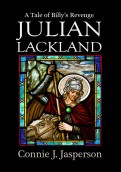
Julian Lackland Cover 2019 copyI am an abject fangirl for Don Quixote, so different versions of both Galahad and Quixote appear regularly in my work. Julian Lackland was inspired by my love of Don Quixote. they’re both insane, both deeply committed to doing good, and both have moments of hilarity mixed with the tragedy.

And Galahad–nowadays he’s considered a minor knight. However, what we regard as canon about him is taken from Sir Thomas Malory’s 1485 work, Le Morte d’Arthurin which he and his quest have a prominent role.

Malory’s collection was a reworking of traditional tales that were hundreds of years old, even in his day. Also, he wrote it while in prison for a multitude of crimes, so we can be sure it’s not historically accurate.

Traditionally, Galahad is an illegitimate son of Lancelot du Lac. He goes on the quest to find the Holy Grail and immediately goes to heaven, raptured as a virgin.

When I began plotting the tale my friend had challenged me to write, I wondered why Malory said Galahad was raptured. Why was the notion of a virgin knight and being taken to heaven before death so important to medieval chroniclers? Why would they write a saint’s virginity and rapture as though it were factual recorded history?

People always rewrite history to suit the times in which they live.

Religion and belief in the Christian truths espoused by the Church were in the very air the people of the time breathed. All the physical and material things of this world were entwined and explained by the religious beliefs of the day.

Excalibur London_Film_Museum_ via Wikipedia

Excalibur London_Film_Museum_ via Wikipedia

Literature in those days was filled with religious allegories, the most popular of which were the virginity and holiness of the Saints, especially those deemed holy enough to be raptured.

Death was the common enemy, an inescapable event kings feared as much as beggars did. Those saints who were raptured did not experience death. Instead, they were raised to heaven, living in God’s presence for all eternity.

Galahad as written by Malory and later authors never married. But humans tend to be human, so why assume he was a virgin? Galahad’s state of virginity and grace was written to exemplify what all good noblemen should aspire to.

The High Middle Ages was the period of European history that commenced around the 10th century and lasted until the 14th century (or so). That era saw a flowering of historical-fantasy writing among the clergy and educated nobility. Medieval chroniclers detailed the people and events of 300 to 400 years prior. Their sources were the oral histories as told in well-known bardic tales and local legends.

Malory was writing during the final decades of the Crusades and trying to fit the old stories into his modern time. Rumors and stories passed down became historical truths, reshaped to justify the desire for conquest. After all, the New World was just over the horizon, vast cities of Inca gold ripe for the taking.

We 21st-century authors have excellent records of 15th and 16th-century political struggles. Yet, we make things up about the Tudors and Elizabethans, because they were interesting people. We love to imagine what they must have been like.

We all know the written records from before the time of Elizabeth I are highly questionable. Sifting medieval fact from fiction is the life’s work of many historical scholars. However, they’re entertaining fantasy reads, leaving fangirls like me free to riff on them and create our own mythologies.

So, that is how my creative process works. Someone gives me an impossible idea, and I fight with it until it beats me. Once that idea has me by the throat, I know what has to be written. That tale became a short story, Galahad Hawke.

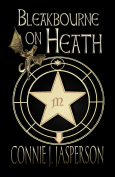
Bleakbourne front Cover medallion and dragon copyAnd sometimes a theme refuses to let go of me. I took Arthurian myth and the chivalric code and turned them inside out with the characters of Lancelyn and Galahad in Bleakbourne on Heath.

I feel quite sure I haven’t written my last Alternate Arthurian tale. Galahad Hawke may get an expansion into a novel–after all, he didn’t get the traditional happy ending.

Or maybe not. I do have an epic fantasy on deck so … maybe next year.

Comments Off on Plotting alternate history #amwriting

Filed under writing