Post NaNoWriMo World Building part 1 – creating the physics of magic #amwriting

I read fantasy novels as much as I read in any other genre. In reading five books a week, I come across both indie and traditionally published work in all genres. Many are books I cannot recommend. A sad truth is, both sides of the publishing industry are guilty of publishing novels that aren’t well thought out.

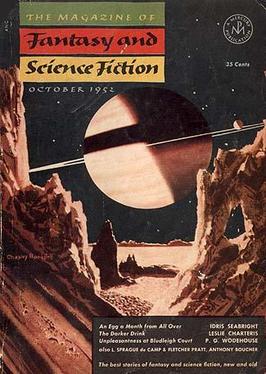
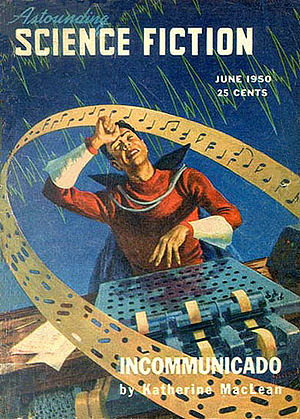
How the written universe works magic and superpowers1Fantasy is and always has been my favorite genre. I became a fan when I first read the Hobbit at the age of nine. I have read countless works written by people who understood how to construct a plot and set it in a believable world. These classics trained me to notice contradictions in what I read, whether in a magic system or elsewhere in a book.

Inconsistencies are usually only one aspect of a poorly planned fantasy novel. One can see how an author was unaware of contradictions as they emerged during the writing process. They wrote the story as it came to them and didn’t check for logic or do much revising. They wrote the first draft, edited it, and published it, trying to keep to the three or four book a year schedule that many gurus tout as the way to gain readers.

I believe keeping to this kind of schedule is unreasonable and wish some of my favorite traditionally published authors weren’t contractually obligated to produce that many novels a year. It results in shallow, throw-away books written by people whose first books were brilliant, thought-provoking novels I wished I had written.

For me as a reader, the struggle is the story.

I like fantasy novels where the author has taken the time to devise a science of magic. When magic has limitations, story is forced to become character driven. It details how the protagonists develop the skills to overcome the roadblocks in their path and succeed in their quest.

Magic should exist as an underlying, invisible layer of your written universe, the way gravity exists in reality. We know gravity works and accept it as a part of daily life.

I use the physics of light photons as an example of how magic should behave. Photons can do some things, and they cannot do others. Magic is not science as we know it but should be logical and rooted in solid theories.

Several things to consider in designing a story where magic and superpowers are fundamental plot elements:

First, you must decide if the ability to use magic is either

  • learned through spells,
  • an inherent gift,
  • or both.

Your world should establish which kind of path you are taking at the outset.

magicI can suspend my disbelief when magic is only possible if certain conditions have been met. The most believable magic occurs when the author creates a system that regulates what the characters can do.

Magic is believable if 

  • the number of people who can use it is restricted to only a small number.
  • the ways it can be used is limited.
  • most mages are constrained to one or two kinds of magic.

It becomes slightly less believable when some mages can use every type of magic, but if the author explains that exception well and limits that kind of power to only a chosen few, I will keep reading.

Why restrict your beloved main character’s abilities? No one has all the skills in real life, no matter how good they are at their job.

Expertise in any field requires practice and dedication, working on the most minor details of technique.

  • Magicians and wizards should develop skills and abilities the way musicians do.

Virtuosity requires complete dedication and focus. Some are naturally talented but without practice they never rise to the top.

Magic becomes believable when the author defines what each kind of magic can and cannot do.

  • Those rules should define the conditions under which magic works.
  • The same physics should explain why it won’t work if those conditions are not met.

Are you writing a book that features magic? I have a few questions that you may want to consider:

  • Are there some conditions under which the magic will not work?
  • Is the damage magic can do as a weapon, or is the healing it can perform somehow limited?
  • Does the mage or healer pay a physical/emotional price for using or abusing magic?
  • Is the learning curve steep and sometimes lethal?

When you answer the above questions, you create the Science of Magic.

So, what about superpowers? Aren’t they magic?

scienceSuperpowers are both science and something that may seem like magic, but they are not. Think Spiderman. His abilities are conferred on him by a scientific experiment that goes wrong.

Like science and magic, superpowers are believable when they are limited in what they can do. These limitations provide excellent opportunities for plot development.

If you haven’t considered the challenges your characters must overcome when learning to wield their magic or superpower, now is a good time to do it.

  • Are they unable to fully use their abilities?
  • Why are they handicapped?
  • How does their inability affect their companions?
  • How is their self-confidence affected by this inability?
  • Do their companions struggle to master their skills too?
  • What has to happen before your hero can fully realize their abilities?

I want you to understand that these are only my opinions as a reader, and I employ these theories in my own work. The limits an author places on magic, science, or superpowers are barriers to success, and overcoming those roadblocks is what the story is all about

magicWhile an ordinary life is comforting to those of us who simply long for peace and stability in our daily lives, we read for adventure. The story must take an average person, someone who could be your friend, into an extraordinary future.

The struggle must push the characters we grow to love out of their comfortable environment. It must force them to be creative, and through that creativity, our favorite characters become more than they believe they are. I become invested in the outcome of the story.

The next post will delve into powers that are familiar tropes of speculative fiction and fantasy: healing and telepathy.

9 Comments

Filed under writing

#FineArtFriday: The Tax-collector’s Office by Pieter Breughel the Younger ca. 1615

Pieter_BRUEGHEL_Ii_-_The_tax-collector's_office_-_Google_Art_ProjectArtist: Pieter Breughel the Younger (1564–1638)

Title: The tax-collector’s office, also known as the Village Lawyer

Date: circa 1615

Medium: oil on panel

Dimensions: height: 74.5 cm (29.3 in); width: 106.5 cm (41.9 in)

Collection: Art Gallery of South Australia 

What I love about this painting:

Pieter the Younger was never considered as fine a painter as his father, Pieter Bruegel the Elder, or his brother, Jan Brueghel. He was, however, considered a master printmaker and his workshop was highly regarded. But he was not respected as an artist. Critics of the day felt he copied his father’s style, rather than developing his own. While he did paint in a folk-art style reminiscent of his father’s, his is sharper, more refined, taking it to the next level.

The people in the above picture are looking lean and ragged. The Little Ice Age gripped Europe, and times were hard. I love the color, the action, the commotion of the people. So many stories are shown in this one painting.

About this painting via Wikipedia:

Pieter Brueghel the Younger created original works largely in the idiom of his father which are energetic, bold and bright and adapted to the 17th-century style.  One of the artist’s most successful original designs was the painting of The Village Lawyer (sometimes also called the Tax Collector’s Office, the Payment of the Tithe, the Lawyer of Bad Cases and the Notary’s Office). The different titles of the work indicate that it may have been interpreted in these different ways in the 17th century. The title The Village Lawyer is probably the best suited since the person behind the desk is wearing a lawyer’s bonnet, the collection of taxes usually did not occur in such setting and the paperwork and bags on the desk look like those for requests and decrees. The picture also shows peasants lining up with presents such as chickens and eggs to please the lawyer, which was a common occurrence, whereas tithe payments were made in grain. The painting shows his interest in and close observation of village life. Pieter Brueghel the Younger’s workshop made many copies of the composition in different formats. There exist 19 signed and dated versions of this work (from between 1615–22) out of some 25 originals and 35 questionable versions. [1]


Credits and Attributions:

Image: Wikimedia Commons contributors, “File:Pieter BRUEGHEL Ii – The tax-collector’s office – Google Art Project.jpg,” Wikimedia Commons, the free media repository, https://commons.wikimedia.org/w/index.php?title=File:Pieter_BRUEGHEL_Ii_-_The_tax-collector%27s_office_-_Google_Art_Project.jpg&oldid=708678946 (accessed December 9, 2022).

[1] Wikipedia contributors, “Pieter Brueghel the Younger,” Wikipedia, The Free Encyclopedia, https://en.wikipedia.org/w/index.php?title=Pieter_Brueghel_the_Younger&oldid=1112359702 (accessed December 9, 2022).

6 Comments

Filed under writing

Pinning Down the Themes when your Characters Have Agency #amwriting

My writing mind has temporarily lost momentum in my current work. At this point, I’m unsure how to proceed with a pivotal chapter. This has me momentarily stalled on that book.

how the universe works themeFortunately, Irene is editing the final draft of a book I finished during lockdown. She sends me one or two chapters with notes for final revisions each evening. That makes me happy—it’s been a while since I published a book.

When I am stalled on a first draft, it helps to stop and consider the central themes. Theme is one of the elements that drive a plot. This novel’s central theme is redemption, which hasn’t changed.

But this novel is in the first draft stage, and things have already shifted from what was initially plotted. And now I find that some of my characters aren’t as well-planned as I thought they were.

This happens at some point in every first draft. I don’t know the themes of three important characters.

My male protagonist’s void is the death of his brother, and his theme is living through grief. I have that theme pretty well established, but the three side characters are still unclear. Their themes are mysteries at this point. I don’t know their voids as well as I thought, so it’s back to the drawing board.

This happens because the characters have agency and have taken the plot in a different direction than was planned. They are still headed toward the intended destination but are taking the plot through unfamiliar territory.

plot is the frame upon which the themes of a story are supportedAgency is an integral aspect of the craft of writing. It means allowing your characters to make decisions that don’t necessarily follow the original plot outline. This gives them a chance to become real, the way Pinocchio wanted to be a real boy and not a puppet.

A fourth personality has emerged. She’s a side character, and I like the chemistry she has with the others. But her introduction means I must revise my plot outline. Fortunately, clues are emerging.

This constant adjusting of plot and theme is why it takes me more than a year to finish a novel’s first draft. My work is character-driven, and sometimes these people are driving in a demolition derby.

Now I need to refer back to my stylesheet and look at the calendar. I will adjust events to match the timeline when a significant change happens. Adjusting my outlines is a simple process because I create them in Excel. I can delete or move events along the timeline as needed.

My story has a specific ending, but the detours have confused me. Going back to the outline and seeing where the plot took a different turn helps me find my way when I am stuck. It sometimes jars things loose, giving me a flash of inspiration about these characters.

Themes are fundamental underpinnings of the story and can be difficult to get a grip on. They’re subtle, an aspect of our work that is rarely stated in a bald fashion. And despite not being blatantly obvious, themes unify the events of a story. They are idea threads that bind the beginning to the middle and end.

theme_meme_lirf06302020Sometimes we can visualize a complex theme but can’t explain it. If we can’t explain it, how do we show it? For me, that is the real struggle. Grief is a common theme that can play out against any backdrop, sci-fi or reality-based, where humans interact emotionally. But it is a complex theme, and people all react differently to it.

Sometimes themes emerge out of a character’s void, which is how the main theme for this story came about.

  • VOID: Each person lacks something, a void in their life. What need drives them?

Their verbs can also suggest themes.

  • VERBS: What is their action word? How does each character act and react on a gut level?

Mood words for meditationHighlighting a strong theme is challenging, even when I begin with a plan. But once I have identified these personal themes, I’ll be able to write their stories. I’ll use actions, symbolic settings/places, allegorical objects in the setting, and conversations to reinforce their personal themes. Their subthemes will support the foundational thread of redemption.

Writing requires a lot of mind-wandering on my part. I spend a lot of time playing solitaire on my computer and thinking about the plot.

When I’m stuck, it always comes back to the themes and subthemes. I have to look again at their individual voids and verbs, the aspects that define them as people. I may have to assign different verbs to them, as they aren’t reacting to each other the way I initially thought they would.

Once I know how their gut-reactions affect them, I will know their personal themes. They will become real, three-dimensional people, the way the protagonist is.

So, that is what I am working on in my current first-draft project this week. NaNoWriMo got it off to a good start, but now the real work begins.


8 Comments

Filed under writing

Finding the Words #amwriting #TheStruggleIsReal

When we sit down to write, we consciously create pictures with words. If we have done our job, the ideas they generate in the reader’s mind are infinite.

Words-And-How-We-Use-ThemWe often see memes and quotes about writing that resonate with us. Quotes often become memes because they are true and memorable and sometimes poke fun at us.

“One day I will find the right words, and they will be simple.” ― Jack Kerouac

The words we write create images in the mind of the reader. If the ideas they represent are phrased right, the complete picture will be understood. We must believe that readers will see the images we paint for them.

“The secret of being a bore is to tell everything.” – Voltaire

This is where it becomes difficult for me as a writer. I know I don’t have to spell everything out in minutia because readers are intelligent. But the insecure writer inside me fears that the reader will become confused if I don’t.

Still, I force myself to trim it down. My editor regularly points out the fluff. If I offer the reader a framework to hang their imagination on, they will see the story.

“The role of a writer is not to say what we can all say, but what we are unable to say.” – Anais Nin

I write because writing fiction helps me work my way through troubled times. When I write, I can better see how to navigate life experiences that seem too big, too scary. I face things head-on, use my incredible Office Managerial Superpowers and get things done.

I write for me, but readers may feel those emotions and sympathize with my characters’ situation. They may find a little comfort in knowing they aren’t alone.

 I’m a poet. Keeping it simple isn’t my best thing, but I’m working on it.

“My aim is to put down on paper what I see and what I feel in the best and simplest way.” – Ernest Hemingway

Hemingway gives us a truism here—don’t use “ten-dollar-words.” That’s an old-fashioned term for long words used in place of more common words. Word nerds (like me) adore those rare, bombastic morsels of linguistic delectableness.

bombasticLIRF12032022However, obscure and pretentious prose (such as I enjoyed laying down in the preceding sentence) annoys the majority of readers. I want my work to please a reader, so I don’t indulge in ostentatious phrasing except in poetry.

Right now, my editor is combing her way through the final draft of a manuscript I hope to publish this spring. She keeps me on track and points out where a reader might have to find a dictionary and look up a word.

Sometimes I leave the words in, because they are the only ones that work, and I don’t want to underestimate my readers by dumbing down my prose. Occasionally looking up a word can be fun and reading on an electronic device makes it easy.

Even though writing fiction is a solitary occupation that takes up my early morning hours, I find that writing a few paragraphs in my journal each evening helps organize my daily life. Things that happened that day become clearer once I write them out. Tasks that seem too big to accomplish are easier to resolve once I have them broken down on paper.

Writing fantasy offers me the chance to express my ideas, in a safe, non-threatening environment, without pushing them on other people. These ideas become part of the scenery, subtle hints detailing the societal framework the protagonist must live in.

All writers do this, no matter what genre or category they write in. Our personal philosophies become entwined in the book in subtle ways. Whether intentional or not, we use our words to create societies and offer ideas that challenge the status quo.

Choosing our words well is part of the job. Often, I feel a bit poetic when visualizing the world in which the story takes place. I try to tame it, but it emerges, hopefully in palatable bites. I don’t want too much—it has to be just enough to create an atmosphere.

I became a poet and songwriter because I love words, love twisting them, love rhyming them—just love them. My whole family adores words in all their glory. My parents used proper words and expected us to know and use them.

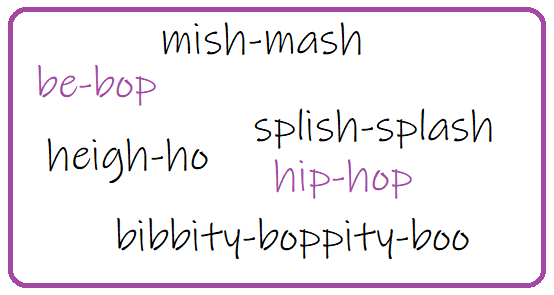
 My Dad loved words so much that he mangled them just because he liked how they sounded. He was an amputee, and sometimes he became so frustrated that he lost his words and resorted to creative cursing.

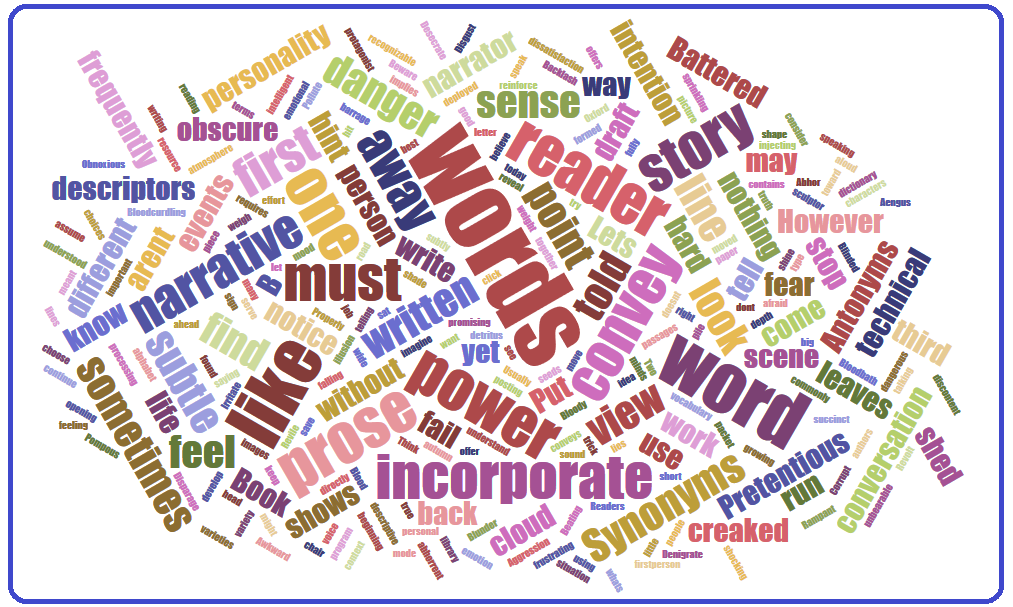
powerwordsWordCloudLIRF06192021Mama and Dad both invented words and twisted others: a screwdriver was a skeejabber. Any object can be a doo-dad, but they were often doodle-be-dads in our house. When one or the other parent was mystified, they were bumfuzzled.

Seldom-used arcane words are in my blood, so writing lean, relatable prose is an ongoing task. I’m always trying to tone it down but not flatten it. I want a little of the poet to show through and my narrative to be literate, but I also want it to be readable.

Striking the right balance is a process.

“To write well, express yourself like the common people, but think like a wise man.” – Aristotle

25 Comments

Filed under writing

#FineArtFriday: The Stonebreakers by Gustave Courbet 1849

Gustave_Courbet_-_The_Stonebreakers_-_WGA05457Artist: Gustave Courbet  (1819–1877)

Title: The Stonebreakers

Date:1849

Medium: oil on canvas

Dimensions: height: 165 cm (64.9 in); width: 257 cm (101.1 in)

Current location: destroyed in fire, 1945 (Dresden, Germany)

Today’s image comes to us via the miracle of 20th century photography and modern digital photographic restoration.

The exact number of paintings and other art masterpieces that were either destroyed or are still missing since World War II is not known, but is estimated that during World War II, the Nazis looted some 600,000 paintings from Jews and Art Museums, at least 100,000 of which are still missing. Unfortunately, the original canvas of this painting was a casualty of war, destroyed in the bombing of Dresden.

About this image, via Wikipedia: Considered to be the first of Courbet’s great works, The Stone Breakers of 1849 is an example of social realism that caused a sensation when it was first exhibited at the Paris Salon in 1850. The work was based on two men, one young and one old, whom Courbet discovered engaged in backbreaking labor on the side of the road when he returned to Ornans for an eight-month visit in October 1848. On his inspiration, Courbet told his friends and art critics Francis Wey and Jules Champfleury, “It is not often that one encounters so complete an expression of poverty and so, right then and there I got the idea for a painting.”

While other artists had depicted the plight of the rural poor, Courbet’s peasants are not idealized like those in works such as Millet’s The Gleaners. [1]

Also via Wikipedia: The Stone Breakers (FrenchLes Casseurs de pierres) was an 1849 painting by the French painter Gustave Courbet. It was a work of realism, depicting two peasants, a young man and an old man, breaking rocks.

The Stone Breakers was first exhibited at the Paris Salon of 1850. As a work of realism the subject matter addressed a scene of everyday life. This painting was intended to show the hard labor that poor citizens experienced. Courbet did not show the figure’s faces, they represent the “every man” and are not meant to be specific individuals. At the same time the clothing of the figures implies some degree of individuality, the younger man’s pants are too short and the older man’s vest is striped.

The painting was destroyed during World War II, along with 154 other pictures, when a transport vehicle moving the pictures to the castle of Königstein, near Dresden, was bombed by Allied forces in February 1945. [2]

About the artist, via Wikipedia:

Jean Désiré Gustave Courbet (UK/ˈkʊərbeɪ/ KOOR-bay,[1] US/kʊərˈbeɪ/ koor-BAY,[2] French: [ɡystav kuʁbɛ]; 10 June 1819 – 31 December 1877) was a French painter who led the Realism movement in 19th-century French painting. Committed to painting only what he could see, he rejected academic convention and the Romanticism of the previous generation of visual artists. His independence set an example that was important to later artists, such as the Impressionists and the Cubists. Courbet occupies an important place in 19th-century French painting as an innovator and as an artist willing to make bold social statements through his work.

Courbet’s paintings of the late 1840s and early 1850s brought him his first recognition. They challenged convention by depicting unidealized peasants and workers, often on a grand scale traditionally reserved for paintings of religious or historical subjects. Courbet’s subsequent paintings were mostly of a less overtly political character: landscapesseascapeshunting scenesnudes, and still lifes. Courbet, a socialist, was active in the political developments of France. He was imprisoned for six months in 1871 for his involvement with the Paris Commune and lived in exile in Switzerland from 1873 until his death four years later. [1]

Credits and Attributions:

Image: Wikimedia Commons contributors, “File:Gustave Courbet – The Stonebreakers – WGA05457.jpg,” Wikimedia Commons, the free media repository, https://commons.wikimedia.org/w/index.php?title=File:Gustave_Courbet_-_The_Stonebreakers_-_WGA05457.jpg&oldid=661589775 (accessed December 1, 2022).

Wikipedia contributors, “Gustave Courbet,” Wikipedia, The Free Encyclopedia, https://en.wikipedia.org/w/index.php?title=Gustave_Courbet&oldid=1123079028 (accessed December 1, 2022). [1]

Wikipedia contributors, “The Stone Breakers,” Wikipedia, The Free Encyclopedia, https://en.wikipedia.org/w/index.php?title=The_Stone_Breakers&oldid=1070869064 (accessed December 1, 2022). [2]

4 Comments

Filed under #FineArtFriday

Creating Mood and Atmosphere #amwriting

Today marks the final day of NaNoWriMo 2022. I achieved my goal and exceeded it, which was a surprise. The month has been crazy busy here at Casa del Jasperson, but I still managed at least 2000 new words each day and sometimes more.

creating impactNow that I have most of the foundation built for my novel (the ending is not written), I find myself going back and looking at places where I inserted notes to myself, using red fonts. These are messages like: Build tension between the factions here. Show how it affects the group’s mood. Or another note: Need an atmosphere of fear.

When writing those notes to myself, I didn’t stop to fine-tune the story. My personal quest was to get the story laid out from beginning to end and write at least 2000 words each day. At this point the novel is mostly talking heads. The world is there but barely. It’s still at the one-dimensional stage.

I’m still about 30,000 words from the end, but now I find myself relaxing, not worried about getting word count. I will still write new words every day, but I can also look back and add atmosphere.

I love to read. When an author uses mood and atmosphere well, they can elevate their novel from “not bad” to “memorable.” The way Emily Brontë employed atmosphere in Wuthering Heights is stellar. I would love to achieve that level of world building.

mood-emotions-1-LIRF09152020I know how I want the story to affect a reader’s emotions—it’s perfectly shaped in my head. The trick is making that vision come true in writing. It may take a year or more to get the mood and atmosphere to feel the way I envision it.

Mood and atmosphere are two separate but entwined forces. They form subliminal impressions in the reader’s awareness, sub currents that affect our mood.

Where you find atmosphere in the setting, you also find mood in the characters. Like conjoined twins, mood and atmosphere are best discussed together when we talk about instilling depth into a narrative.

Which is more important, atmosphere or mood? The answer is both and neither.

Characters’ emotions affect the overall mood of a story. In turn, the atmosphere of a particular environment may affect the characters’ personal mood. Their individual moods affect the emotional state of the group.

Emotion is the experience of transitioning from the negative to the positive and back again. Experiencing emotion changes a character’s values, and they grow as people. Whether they grow positively or negatively is determined by the requirements of the narrative.

This is part of the inferential layer of a story. The audience must infer (deduce, understand, fathom, grasp, recognize) the experience, and it must feel personal.

Setting can contribute to atmosphere, but the setting is only a place, not atmosphere. Atmosphere is created as much by odors, scents, ambient sounds, and visuals as it is by the characters’ moods and emotions.

While mood and atmosphere work together, there are differences in what they do:

  • Mood describes the internal emotions of an individual or group.
  • Atmosphere is connected to the setting

Mood and atmosphere are created by phrasing, conversations, descriptive narrative, tone, and setting.

High_Sunderland_Hall_1818

High Sunderland Hall in 1818, shortly before Emily Brontë saw the building. Public Domain, Via Wikimedia Commons.

Some narratives use world building to create an overall atmosphere and affect the characters’ emotional mood. In Wuthering Heights, Brontë uses the environment and setting to manipulate the characters’ moods on a personal level. She then widens the view using the architecture, the landscape, and the gloomy weather to darken the general mood and atmosphere of the entire story. This creates a feeling of insecurity, raising tension in the reader, a sense of the unknown hidden in the shadows.

She begins with seriously flawed characters, instills them with dread and uncertainty, sets their intertwined stories in an isolated environment, and wraps the entire novel in a cocoon of despair, dark skies, and barren moorlands.

Atmosphere is foundational to world building. Will I get it right? I don’t know, but as I write toward the end of this proto-novel, I won’t stop trying.

8 Comments

Filed under writing

The Author’s Toolbox – Stylesheets #amwriting

We are approaching the last days of NaNoWriMo 2022. If you haven’t already, now is an excellent time to think about creating what I think is the most helpful tool in my toolbox—the stylesheet.

toolsWhen a manuscript comes across their desk, editors and publishers create a list of names, places, created words, and other things that may be repeated and pertain only to that manuscript. This is called a stylesheet.

The stylesheet can take several forms, but it is only a visual guide to print out or keep minimized until needed. Some editors refer to it as a “bible.” Sometimes it will be called a storyboard if it also contains plot ideas or an outline.

Nowadays, I make a new stylesheet at the outset of each writing project, even for short stories. I copy and paste every new word or name onto my list, doing this the first time they appear in the manuscript. This is an essential tool because if each name, place name, and made-up word is listed the way I originally intended, I’ll be less likely to inadvertently contradict myself later on in the tale.

Some people use a program called Scrivener, which is not too expensive, but which has a tricky learning curve. I couldn’t make heads or tails of it and found it quite frustrating. Nevertheless, I understand that it works well for many people, and you might find it works for you.

Myself, I don’t want a fancy word-processing program. I use MS Office because I have been using the programs that come with that software since 1993, and I’ve been able to adapt to each upgrade they have made. It’s affordable, so I use Word to write and edit in and Excel to create stylesheets.

Mac ComputerFor short stories, the stylesheet will probably be a Word document. I have written them out by hand on occasion. You can create them in Google Sheets or Docs, which is free.

And free is good! Everyone thinks differently, so there is no single perfect way that fits everyone.

In Excel, the storyboard for my ideas works this way:

At the Top of page one: I give the piece a working title.

When I have an idea for a short story, I include the intended publication and closing date for submissions (not needed if it’s for a novel). I make a note of the intended word count. Having a word count limit keeps me alert for unnecessary backstory. For most publications, you must keep strictly within their word count requirements.

Page one of the workbook contains the personnel files.

Column A: Character Names. I list the essential characters by name and the critical places where the story will be set.

Column B: About: What their role is, a note about that person or place, a brief description of who and what they are.

Column C: The Problem: What is the core conflict?

Column D: What do they want? What does each character desire?

Column E: What will they do to get it? How far will they go to achieve their desire?

IBM_Selectric (1)Page Two:  The projected story arc will be on page two of the workbook. I list each chapter by the events that need to be resolved at various points in the manuscript.

Page three of the workbook is the most important—the Glossary. This list of made-up words, names, and places is crucial for the finished product. The way words appear on this list is how they should occur throughout the entire story or novel. This page ensures consistency and keeps the spellings from drifting as I lay down prose in the first draft.

I update the glossary page whenever a word or name is added or changed. I do this even in my non-fantasy work, as it helps to have a quick, easy-to-access reminder of how real-world names and places are spelled.

Page four will have maps and a calendar for that world. The calendar is a central tool that keeps the events happening logically.

The workbook shown below is the stylesheet for the Tower of Bones series and has been evolving since 2009. It has grown since this screenshot was taken.

neveyah stylesheetWe never really know how a story will go, even if we begin with a plan. We will probably deviate some from the original outline. Usually, for me, the major events will remain as they were plotted in advance, even though side themes will evolve. The outline keeps me on track with length and ensures the action doesn’t stall.

When I know the length of a book or story I intend to write, I know how many words each act should be and how many scenes/chapters I need to devote to that section. I like to keep my chapters at around 1600 – 2000 words. Sometimes they go longer, and other times shorter.

PinocchioThe plot usually evolves as I write each event and connect the dots. In one instance, it was completely changed. The original plot didn’t work at all, so drastic measures had to be taken.

Making that course correction was less work because I had the stylesheet with the outline. Events were easy to cut and replace or move along the timeline.

As we near the end of NaNoWriMo, we are beginning to dig deeper into all aspects of the story. We’re still writing the basic first draft, but emotions, both expressed and unexpressed, are growing more apparent.

Secrets characters have withheld from us emerge now as we write. Perhaps some ugly truths have been discovered. These details arise as I write, reshaping how the characters react to each other. In turn, these interactions can alter the plot.

Even though each manuscript starts out linearly, I work “back and forth” when writing rather than in a linear fashion. I work from an outline, but each section of my novel is written when I am inspired to work on that part of the tale.

The central plot points get written first. Then, I write connecting scenes to ‘stitch’ the sections together when the draft is complete, like assembling a quilt.

A detailed outline ensures I won’t get lost in the weeds of wacky side quests.

Book- onstruction-sign copyOnce the first draft is finished, revisions will mean updating the stylesheet, but that’s part of the job. This ensures my editor will have less work when we get to the final draft.

In the process of editing for me, Irene will find things that didn’t get listed but should have been and will update the stylesheet.

Writing a novel is a process of growth and development. It doesn’t stop until you sign off on the proof copies and the book is on sale.

And even then, you will think of things you could have done differently.

10 Comments

Filed under writing

#FineArtFriday: The Dutch Proverbs by Pieter Bruegel the Elder, revisited

Pieter_Brueghel_the_Elder_-_The_Dutch_Proverbs_-_Google_Art_ProjectToday I’m revisiting one of the best allegorical paintings of all time, The Netherlandish Proverbs (also known as The Dutch Proverbs) by Pieter Brueghel the Elder, which was painted in 1559. A master at humor, allegory, and pointing out the follies of humanity, Brueghel the Elder is one of my favorite artists.

Artist: Pieter Bruegel the Elder
Year: 1559
Medium: Oil-on-panel
Dimensions: 117 cm × 163 cm (46 in × 64 in)
Location: Gemäldegalerie, Berlin

Quote from Wikipedia:

Critics have praised the composition for its ordered portrayal and integrated scene. There are approximately 112 identifiable proverbs and idioms in the scene, although Bruegel may have included others which cannot be determined because of the language change. Some of those incorporated in the painting are still in popular use, for instance “Swimming against the tide”, “Banging one’s head against a brick wall” and “Armed to the teeth”. Many more have faded from use, which makes analysis of the painting harder. “Having one’s roof tiled with tarts”, for example, which meant to have an abundance of everything and was an image Bruegel would later feature in his painting of the idyllic Land of Cockaigne (1567).

The Blue Cloak, the piece’s original title, features in the centre of the piece and is being placed on a man by his wife, indicating that she is cuckolding him. Other proverbs indicate human foolishness. A man fills in a pond after his calf has died. Just above the central figure of the blue-cloaked man another man carries daylight in a basket. Some of the figures seem to represent more than one figure of speech (whether this was Bruegel’s intention or not is unknown), such as the man shearing a sheep in the centre bottom left of the picture. He is sitting next to a man shearing a pig, so represents the expression “One shears sheep and one shears pigs”, meaning that one has the advantage over the other, but may also represent the advice “Shear them but don’t skin them”, meaning make the most of available assets.

You can find all of the wonderful proverbs on the painting’s page on Wikipedia, along with the thumbnail that depicts the proverb.

My favorite proverbs in this wonderful allegory?

Horse droppings are not figs. It meant we should not be fooled by appearances.

He who eats fire, craps sparks. It meant we shouldn’t be surprised at the outcome if we attempt a dangerous venture.

Now THAT is wisdom!


Credits and Attributions:

The Netherlandish Proverbs (Also known as The Dutch Proverbs) by Pieter Brueghel the Elder 1559 [Public domain], via Wikimedia Commons.

Wikipedia contributors, “Netherlandish Proverbs,” Wikipedia, The Free Encyclopedia, https://en.wikipedia.org/w/index.php?title=Netherlandish_Proverbs&oldid=829168138  (accessed November 24, 2022).

4 Comments

Filed under #FineArtFriday, writing

How Gerunds can be Action’s Kryptonite #amwriting

Today’s post focuses on word choice. I’ve just finished reading a mystery novel, and while I enjoyed the plot and the characters, the editor in my soul says I can’t recommend it. Therefore, I will not name the book or the author.

transitive verbThis novel was meticulously self-edited. I could see it was run through the author’s writer’s group many times, and the major flaws were ironed out. There were few typos, and the formatting was done well.

Self-editing is a struggle. The eye is biased when it comes to the structural flaws of our own work. This is why the smart author runs things past their writing group. The problem I see most often is that writing group members are not usually editors. They are acquainted with the basics of grammar but aren’t familiar with some advanced functions. They may have been taught grammar in school but have forgotten some as they had no use for it until they began writing.

And some never understood it because of the way it was presented in the first place. When something is boring, we don’t pay attention.

chicago guide to grammarLet’s be real—style and grammar guides are tedious and hard to understand. We may own them but we hate to crack them open. Trust me, researching grammar gets easier and more interesting as you advance in writing craft.

Unfortunately, the novel I wanted to enjoy was ruined by the opening line of the first paragraph on page one. That flaw interested me, so the editor in my head continued reading, analyzing why such a promising book failed.

Positives: The characters were engaging, and the plot was an original, well-conceived premise. The mystery was intriguing, and the setting was shown well.

Negatives: The author’s penchant for beginning sentences with gerunds – “ing” words – and peppering them throughout the narrative soured me on what could have been a strong novel. The opening paragraph ran similarly to this 29-word sample, with gerunds at the front of three sentences in a row:

Moving along quickly, we hurried through the store. Huddling behind the shelves, we waited until Mason had passed. Moving quickly again, we made it safely out the door.

The rest of the book was written in that style.

If I had been in her writing group, I would have suggested (gently) that she either move the gerunds to the final clause of each sentence or eliminate them. I know it’s frustrating to hear an editor suggest you completely reword prose you have already shaped and reshaped. But trust me, a reader will appreciate it.

We hurried through the store, huddling behind the shelves until Mason had passed, then slipped out the door.

Ten words were removed from the first example, but the scene’s intention isn’t altered.

This is where the choice and placement of words come into play. Active prose is constructed of nouns followed by verbs or verbs followed by nouns.

  1. Moving the verbs to the front of the sentence makes it stronger.
  2. Nouns are inherently inert but feel active when followed by verbs.

Words ending in “ing” fall into the family of gerunds. They are often used as verbs that have been turned into nouns, such as running and dancing. They are usually intransitive verbs (but sometimes they are transitive) and are necessary for good writing. But used improperly and too freely, gerunds are action’s kryptonite. (Edited 11-23-2022 for clarity.)

We followed the river, running alongside it until we could go no farther.

5 kinds of words

Writers who use gerunds too freely mean well. After all, a gerund began life as a verb but underwent an identity change, becoming a noun by adding the “ing” suffix.

Authors who lead sentences off with them are trying to get their prose moving.

So now we know a new truth: when we lead off our sentences with “ing” words, we are opening with a verb that wants to be a noun and behaves like one. This word choice separates the reader from the action, so while a gerund is a verb form, it is a word with a supporting role.

The abundance of gerunds we put into the first draft are an aspect of passive phrasing, the mental shorthand we use to first tell the story.

In most first drafts, the passive phrasing is a code. The author’s “subconscious writer” embeds signals in the first draft. It tells the author that the characters are transitioning from one scene to the next. They, or their circumstances, are undergoing a change. This change is something the reader must know.

toolsIn this regard, gerunds and other passive code words are the author’s first draft-multi-tool. They are a compact tool that combines several individual functions in a single unit. One word, one packet of letters that serves many purposes and conveys multiple mental images to the author.

At some point, we will finish the first draft, giving our novel a finite ending. When we begin revising that first draft, gerunds and passive phrasing, these code words and clues we left ourselves, will tell us what we must expand on. They show us the scene, and we rewrite it so the reader can see it too.

15 Comments

Filed under writing

no internet, no happy, #amwriting

The internet has been out here at Casa del Jasperson since Friday.

I have been surfing the internet on my phone, which has been interesting. My word count is still on track, but I have gone wide of what was originally plotted.

This little update is coming to you from my cellphone – a first for me. So, no images or graphics today.

We should have the internet fixed this afternoon. In the meantime, write what you feel passion for and be happy.

I hope to have a post on Wednesday.

Peace, and happy writing.

Connie

12 Comments

Filed under writing