
Our universe is a mysterious, stunning place. One conundrum that has occupied scientists for decades is the observable fact that our universe has more matter and energy than it should.
Wikipedia says: In physical cosmology and astronomy, dark energy is an unknown form of energy that affects the universe on the largest scales. The first observational evidence for its existence came from measurements of supernovas, which showed that the universe does not expand at a constant rate; rather, the universe’s expansion is accelerating. [1]
 In other words, something we can’t see or measure is out there, shaping our known universe. For lack of a better term, scientists refer to it as “dark matter” and “dark energy.”
In some fantasy universes, empathic magic is an unseen, unmeasurable force that enables healing, foresight, mindreading, and possibly, gifts of prophecy. We can’t see or measure it, but how we write it affects our narratives’ shape and believability.
This force is the dark energy of a fantasy universe. And because we are the creators, we can establish rules for how that energy works.
It’s magic, so who needs rules? We do. Otherwise, believability goes out the window.
Rules of magic create limitations, requiring the characters to work harder. We care more about their struggle. But there is a more obvious reason: consistency.
Perhaps in chapter one, you have a mage who can’t use the element of lightning when it’s raining, implying that water impedes his lightning abilities. A reader will assume he can’t use lightning while swimming down a river in chapter 56 when he’s escaping.
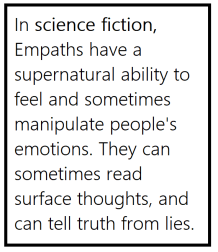 Unless your story is set in a school (such as the Harry Potter books are), magic, healing, or empathy are gifts that only one or two main characters should be given if you want your narrative to remain believable. You must establish the rules of your universe, creating parameters that will limit what empaths can do.
Limits create tension, and tension keeps the reader reading. When too many people are given superior powers, you make things too easy.
In literature, empathic gifts are a form of magic and should be treated as a science. If an empathic gift has entered your narrative, ask yourself these questions:
What sort of empathic gift does your character have: emotion reading, mind reading, healing, or foresight?
- How common or rare is this gift?
- How did they discover they had it?
- What can they do with it?
- What can they NOT do with it?
- Is there formal training for gifts like theirs?
- What happens to people who use their empathy to abuse others?
- Has society made laws regulating how empaths are trained and controlled?
Now, let’s talk about the characters themselves. What are their views of how their talents should be used?
- How important is human life?
- How is using their talent to commit murder punished?
- How do they view betrayal, hypocrisy, envy, and avarice?
- What effect does drunkenness have on them?
- What is their personal moral code?
- How important is it to be seen as honest and trustworthy?
- How many people can they control at one time?
- What actions are seen as crimes by society?
- How are they discovered, and what is the punishment?
- Who tries and convicts empaths who go rogue?
This brings me to the final concept we must consider about personal power. What constrains an empath from seizing power?
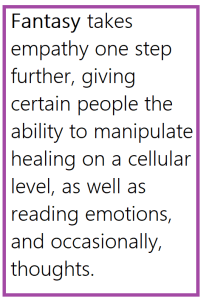 In real life, if a person had the kind of power that our fictional empaths wield, we would hope they were noble, compassionate, and above all, respectful of other people’s wish for privacy. One would want them to be circumspect and never rummage in people’s minds uninvited.
We have looked at the folks we hope are the good guys. So now, we come to the flip side. If an empath has gone rogue, what is their kryptonite? How can the heroes prevail if there is no weakness or way to negate an enemy’s powers?
In Mountains of the Moon, an herb – silf – blocks mages and healers from sensing their gifts. It is used against the heroes, unfortunately, which raises the tension.
SO, how about healing?
- What spells and abilities do healers have?
- Are they better at healing animals than people or vice versa?
Some good spells for people with healing ability might be the ability to ease pain or put a patient to sleep.
We need to talk about self-defense. Can healers in your universe use swords or other melee weapons or firearms? Sleep is a spell that could be used against a predator or aggressor.
How close might they have to be to make the spell work?
In your universe, how does empathic healing work? A story is more interesting when people have varying degrees of fighting skills, and the same is true with magic and empathy. Design the system so that some are able to do more healing than others.
When they are healing on a cellular level, how will you describe it? Some authors describe the act of healing as evil-looking lights changing to a healthier color. Others describe healing as angry looking threads that must be untangled. Still others describe it as a feeling of evil that must be smoothed away.
Or, you don’t have to be too descriptive. It’s up to you.
 What does healing cost the healer? Does it exhaust them? Does some of the healing magic come from the patient? Do they need to sleep afterward?
These are logic questions other fantasy authors have contemplated and employed in their work.
One other thing to ask your story is this: can empaths also use battle magic? And can battle mages also be healers? Either way, if not, why not?
If you make rules and then choose to have one character who is an exception, why is she the exception?
It might be good to read how some other authors handle empathic gifts and magic. Here are two fantasy books that feature telepathy, healing, and magic:
Arrows of the Queen (Heralds of Valdemar Book 1) by Mercedes Lackey (3-book series, with other books set in that world.)
Magic of Recluce by L.E. Modesitt Jr. (book one of a 22-book series)
Credits and Attributions:
[1] Wikipedia contributors, “Dark energy,” Wikipedia, The Free Encyclopedia, https://en.wikipedia.org/w/index.php?title=Dark_energy&oldid=1084333120 (accessed May 1, 2022).
 Magic should exist as an underlying, invisible layer of your written universe, the way gravity exists in reality. We know gravity works and accept it as a part of daily life.
 First, the ability to use magic is either learned through spells, an inherent gift, or both. Your world should establish which kind of path you are taking at the outset.
 Consider musicians. A person who wins international piano competitions most likely won’t be a virtuoso at brass instruments.
 Like science and magic, superpowers are believable when they are limited in what they can do.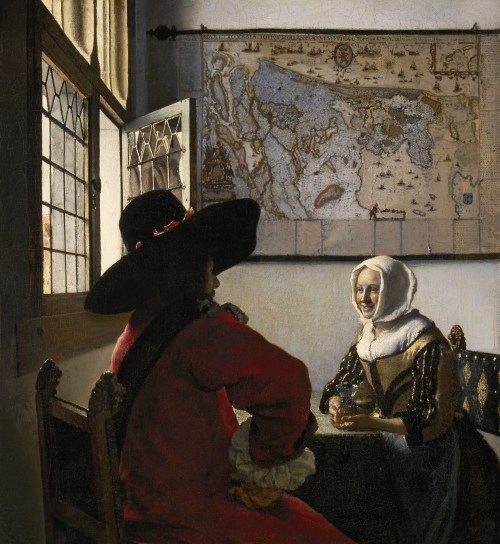
 We are not alone. We are part of a vast cosmos of authors much like us, some far more advanced and others less so.
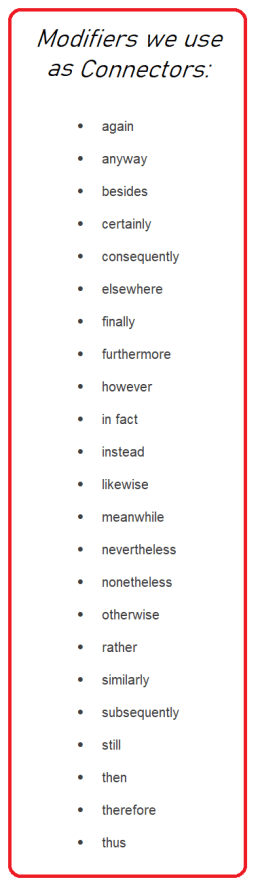 Modifiers change, clarify, qualify, or limit a particular word in a sentence to add emphasis, explanation, or detail. We also use them as conjunctions to connect thoughts: “otherwise,” “then,” “besides.”
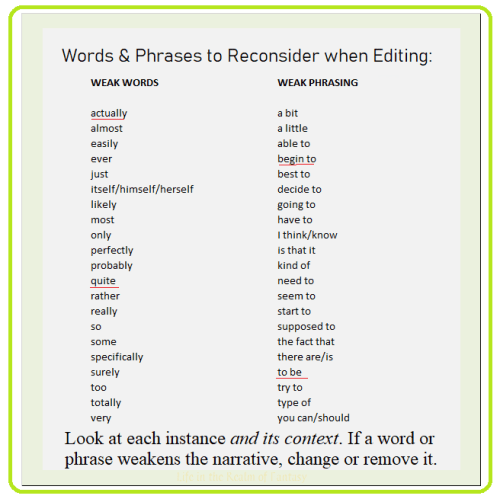 Feel free to copy the above image and save it to your files as a .png or .jpeg, and also the modifiers as connectors image, above right.
 Authors need to understand the rules of how the language we write in works. When we are just starting out, we might have a grip on the basics, but we don’t understand how or when to use the rare punctuations.
 This bring us to creative punctuation, such as the symbol “!?.” An exclamation point followed by a question mark, these mutant morsels of madness are called “interrobangs.”
 The semicolon. This joining punctuation is not complicated once you know the one rule about when to use semicolons:
 Compound sentences combine two separate ideas (clauses) into one compact package. A comma should be placed before a conjunction only if it is at the beginning of an independent clause. So, use the comma before the conjunction (and, but, or) if the clauses are standalone sentences. If one of them is not a standalone sentence, it is a dependent clause, and you do not add the comma.
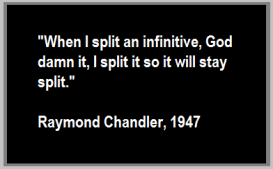 Explain why you want that particular grammatical no-no to stand, and your editor will most likely understand. If you know the rule you are breaking, you will be better able to explain why you are doing so.
 However, we can learn a great deal from books embodying poorly executed plots and badly scripted dialogue.
 Structurally, the books in this subseries feel like he knew how to end it but struggled to fill in the arc. Past events and conversations get repeated verbatim to every new character. Long passages of remembering and agonizing over what is done and dusted fluffs up the narrative.
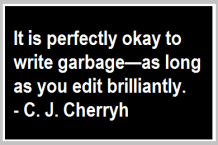 To me, book 21 reads as if (while books 19 and 20 were in the publishing gauntlet) he still had to fluff up the ending to make book 21 long enough to be considered a novel. The evidence of a lack of genuine inspiration is the absurd “scar” the protagonist is left with after winning an unbelievable victory and nearly dying.
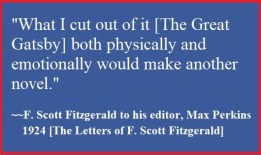 Everyone, even your favorite author, writes a stinker now and then.
  Or, in some cases, as in the book I am focusing on today, it takes us back to the world we thought we left behind.
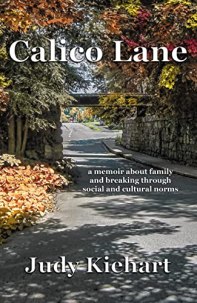 How do we survive when who we are is not the person our family expects us to be?
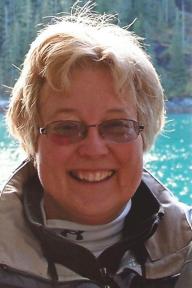 Judy’s writing achievements include two one-act plays that paced among the top three winners in national competitions and were staged in Colorado in 2005 and 2015. She was commissioned to write a ninety-minute program for Stage Left Theater in Salida for the 2010 winter holiday season. She describes herself as a glass-half-full, gay Christian and enjoys traveling—whether exploring faraway places or nearby towns. Judy and her wife managed a real estate appraisal business for eighteen years in the Rocky Mountains of Colorado and following retirement, relocated to Olympia.
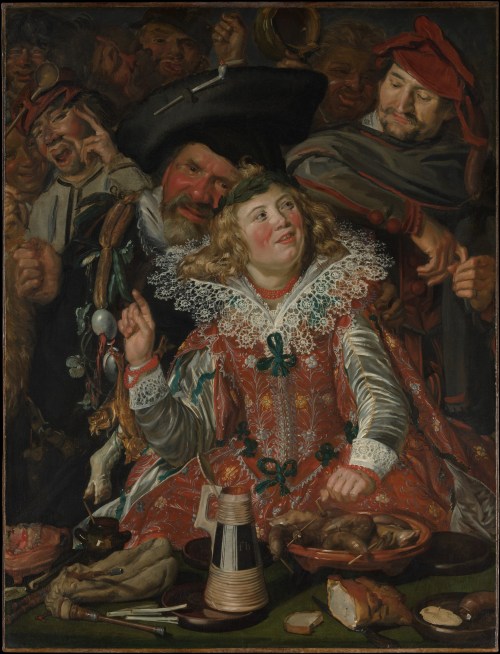 Artist: Frans Hals (1582/1583–1666)
 It deals with things like the mass of objects, the speed at which they travel, how speed and mass are converted to energy, and how mass warps the fabric of space and time.
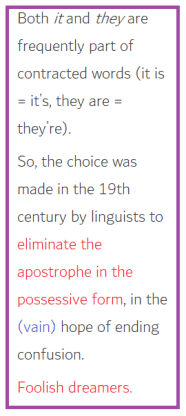 But what about “It?” Here, we are dealing with possession by the inanimate. We don’t need an exorcist, although a good maid service would resolve a great deal here at Casa del Jasperson. But in this case, we are referencing something owned by the inanimate:
 In the case of number 4, the sentence would be stronger without it. Most of the time, the prose is made stronger when the word “that” is cut and not replaced with anything. I say most, but not all the time.


 Life in the Realm of Fantasy