
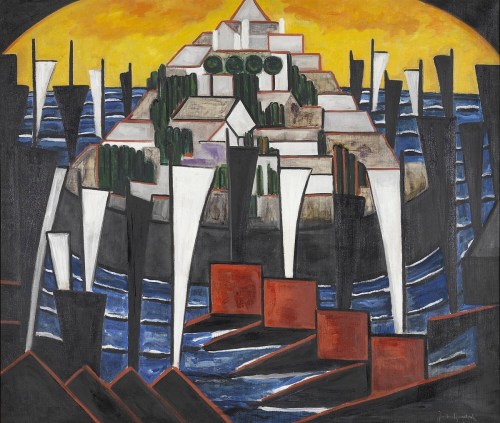
 Artist: Jacoba van Heemskerck (1876–1923)
Title: Bild no. 15 (Segelboote) (English: Painting no, 15 – Sailboats)
Date: Circa 1914
Medium: oil on canvas
Dimensions: height: 97.5 cm (38.3 in); width: 113.5 cm (44.6 in)
Collection: Museum Boijmans Van Beuningen
What I love about this painting:
The sharp corners and geometry of this composition raises the viewer’s eye toward the horizon. It feels cubist, is abstract, and reflects a spiritual connection to her subject. I love the symbolism in this image. The sailboats are souls sailing toward the next life across a deep blue sea and beneath a golden sky. The island temple toward which the boats sail is shaped like a pyramid. The elongated sails of the many boats direct the eye up. Everything, including the island temple, points toward heaven.
In this painting, it is easy to see how she would later become involved in creating stained glass—the sharp black outlines and vivid colors of her paintings are perfect for that medium.
According to the Kunstmuseum Den Haag’s website:
“But whereas Mondrian’s artistic approach eventually became austerely geometrical, Van Heemskerck’s developed as a result of a variety of influences (including anthroposophy) into an open, unconstrained and intuitive style. Throughout her life, she would seek – like Kandinsky – to express spiritual experience. The recurring subjects in her oeuvre are therefore invariably symbolic in nature: sailing ships, bridges and trees, depicted in clear, vibrant colours and with firm outlines. Although she was never to abandon the representation of the real world, Van Heemskerck’s style was eventually so abstract that her subjects became virtually unrecognisable. This approach won her great success, especially in Germany, where she exhibited at the Berlin Expressionist gallery Der Sturm every year from 1913 until her death.” [1]
About the Artist, Via Wikipedia:
Jkvr. Jacoba Berendina van Heemskerck van Beest (1876-1923) was a Dutch painter, stained glass designer and graphic artist who worked in several modern genres. She specialized in landscapes and still-lifes.
Her first contact with Modern art came in Paris, where she took lessons from Eugène Carrière.[2][3] She remained in France until 1904, then went to live with her sister, Lucie, and was introduced to the art collector, Marie Tak van Poortvliet, who became her lifelong friend and later built a studio for her in the garden of her home.[1] After 1906, she spent her Summers in Domburg, where she came into contact with avant-garde painters such as Piet Mondrian[4] and Jan Toorop, who offered her advice. Around 1911, she was briefly interested in Cubism.
Shortly after, she became involved in Anthroposophy, possibly through the influence of her former teacher, Nibbrig, who was a Theosophist. She then became an avid follower of Der Sturm, an avant-garde art magazine founded by Herwarth Walden, and turned increasingly to Abstraction.[1] In 1913, she attended the Erster Deutscher Herbstsalon in Berlin, where she met Walden and started what would be a lifelong correspondence.[3] Thanks to his efforts, her work was popular in Germany, while it remained somewhat ignored in her home country.
After 1916, she developed an interest in stained glass windows, designing them for the naval barracks and the Municipal Health Department building in Amsterdam, as well as private residences.[1] From 1922, she lived in Domburg with her old friend and patron, Tak van Poortvliet.
She died suddenly, from an attack of angina.[3] Both Tak van Poortvliet and Walden mounted exhibitions of her work, in Amsterdam and Berlin respectively. In 2005, a major retrospective was held at the Gemeentemuseum Den Haag. [2]
Credits and Attributions:
[1] Kunstmuseum Den Haag contributors, “Jacoba van Heemskerck,” Jacoba van Heemskerck A REDISCOVERY, Jacoba van Heemskerck | Kunstmuseum Den Haag (accessed March 31, 2022).
[2]Wikipedia contributors, “Jacoba van Heemskerck,” Wikipedia, The Free Encyclopedia, https://en.wikipedia.org/w/index.php?title=Jacoba_van_Heemskerck&oldid=1078279427 (accessed March 31, 2022).
 We are emotional creatures. When we are just starting on this path, getting an unbiased critique for something you think is the best thing you ever wrote can feel unfair.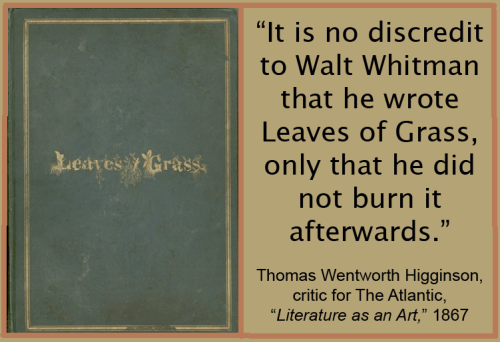
 I could have embarrassed myself and responded childishly, but that would have been foolish and self-defeating. When I really thought about it, I realized that particular plot twist had been done many times before. I thanked him for his time because I had learned something valuable from that experience.
 Treat all your professional contacts with courtesy, no matter how angry you are. Allow yourself some time to cool off. Don’t have a tantrum and immediately respond with an angst-riddled rant.
 Leah and Tom have no spare bedrooms until the remodel is done. So, we stayed at the Snohomish Inn, two blocks away. It’s an older place but clean.
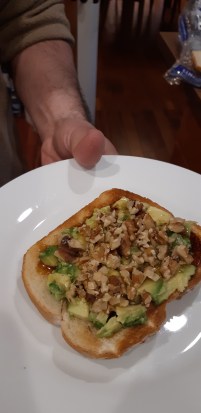 Sunday morning began with the best avocado toast I’ve ever had. Everyone who knows me has heard how much I love that particular dish. Tom’s version is incredibly simple: a good bread, toasted and topped with mashed avocado, chopped walnuts sprinkled over the top, and a teensy drizzle of honey. It sounds odd, but wow. That was a divine, filling breakfast. The picture I took doesn’t do it justice.
 And as a final twist to the craziness–we were finally getting ready for sleep in our hotel room, both of us tired but feeling good about our day. All our toiletries were in a small, dark zipper-bag.
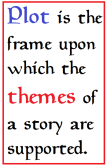
 When you are pantsing it (writing-by-the-seat-of-your-pants), themes are like your drunk uncle. They hang out at the local pub until closing time and then weave their way home through dark alleys. Sometimes, as you are leaving for work in the morning, you find them under the neighbor’s shrubs. Other times they make it home.
 I often sit on my back porch and just let my thoughts roam, thinking about nothing in particular. Usually, I will end up considering the character’s quest or dilemma. I ask myself what the root cause of the issue is—if it is a crime, why is crime rampant? Is it a societal problem, such as poverty or war? If the core dilemma is unrequited love, what are the roadblocks to a resolution?
 These layers offer us an incredible amount of subliminal information about that surreal world and what is going on in reality, what the Matrix truly is.
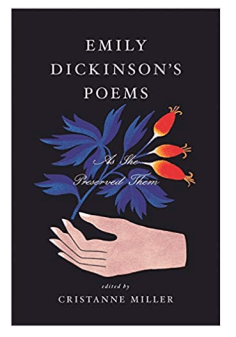
 Poets understand how central a theme is to the story. A poet takes the theme and builds the words around it. Emily Dickinson’s poems featured the themes of spirituality, love of nature, and death, which is why she appealed so strongly to me during my angsty young-adult life.
 But that would be wrong. Poets write words that range far more widely than their physical surroundings. Some poets are constrained by unrewarding jobs, others may be “on the spectrum,” as they now say, and still others are constrained by physical limitations.
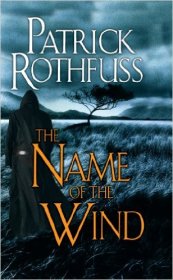 Fantasy author
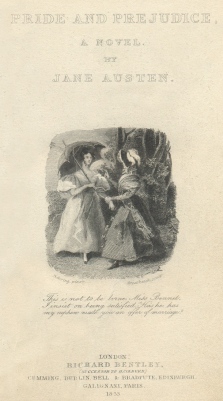
 Even today, her humor shines with sharp-edged wit delivered without condescension. Her most memorable protagonists rise above the trivialities of life that absorb the sillier characters.
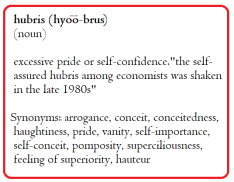 Pride is a powerful theme because it is the downfall of many characters in all literature, not just Jane Austen’s work.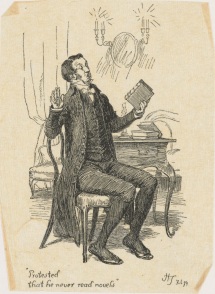
 Clearly, Mrs. Dashwood feels that ensuring her sisters-in-law are not impoverished would make her only son less rich. Less appealing to other affluent families.
 Many of James’s books feature one common theme—lust.
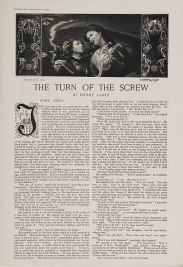 Henry James is famous for his novels and short stories laying bare the deepest motives and manipulations of the society he knew. However, he wrote one of the most famous novellas ever published,
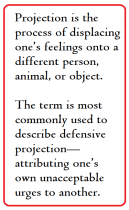 Projection


 Life in the Realm of Fantasy