Tag Archives: Allegory

#amwriting: The Art of Foreshadowing: Charles Dickens

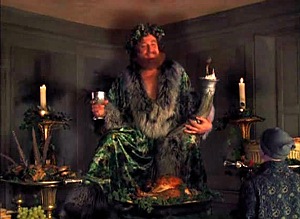
Ghost of Xmas Present[ Desmond BarrittAnother Christmas is about to join the Ghosts of Christmas Past–although, until December 26th, it is still the Ghost of Christmas Present. And as always, I want to talk about my favorite Christmas story of all time, A Christmas Carol, by Charles Dickens.

Charles Dickens was a master when it came to creating marvelous hooks and using heavy foreshadowing. Let’s have a look at the first lines of this tale:

“Marley was dead, to begin with. There is no doubt whatever about that. The register of his burial was signed by the clergyman, the clerk, the undertaker, and the chief mourner. Scrooge signed it. And Scrooge’s name was good upon ‘Change for anything he chose to put his hand to. Old Marley was as dead as a doornail.”

In that first paragraph, Dickens  tosses out the bait, sinking the hook, and landing the fish (the reader) by foreshadowing the first plot point of the story–the visitation by Marley’s ghost. We want to know why Marley’s definite state of decay was so important that the conversation between you the reader, and Dickens the author, was launched with that topic.

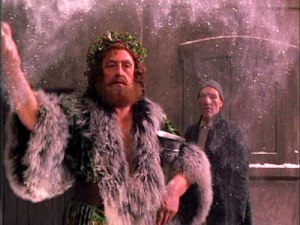
1999-xmas-present Desmond BarritHe picks it up and does it again several pages later, with the little scene involving the door-knocker, where Scrooge sees the face of his late business partner superimposed over the knocker.

At this point we’ve followed Scrooge through several scenes introducing the subplots. We have met the man who, as yet, is named only as ‘the clerk’ in the original manuscript, but whom we will later know to be Bob Cratchit, and we’ve met Scrooge’s nephew, Fred.

These subplots are critical, as our man Scrooge’s redemption revolves around the ultimate resolution of these two separate mini-stories–he must witness the joy and love in Cratchit’s family, who are suffering but happy in the midst of grinding poverty for which Scrooge bears a responsibility. We see that his nephew, Fred, though orphaned is well off in his own right, but craves a relationship with his uncle with no thought or care of what he might gain from it financially.

All the characters are in place. We’ve seen the city, cold and dark, with danger lurking in the shadows. We’ve observed the way Scrooge interacts with everyone around him, strangers and acquaintances alike. Now we come to the first plot point in Dickens’ story arc–Marley’s visitation. This is where the set-up ends and the story begins to take off.

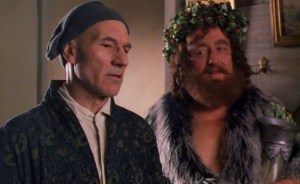
christmas-carol-1999-patrick-stewart-scrooge-desmond-barrit-ghost-of-christmas-presentI love tales of redemption–and A Christmas Carol by Charles Dickens remains one of the most beloved tales of redemption in the Western canon. Written in  1843 as a serialized novella, A Christmas Carol continues to inspire adaptations, in both movies and books.

This is a short tale, but it is a deeply moving allegory of the Christian concept of redemption that remains pertinent in modern society.

In this tale, Dickens asks you to recognize the plight of those whom the Industrial Revolution has displaced and driven into poverty, and the obligation of society to provide for them humanely. This is a concept our society continues to struggle with, and perhaps will for a long time to come.

It is that deep, underlying call for compassion that resonates down through the centuries, a call that is, unfortunately, timeless.

Comments Off on #amwriting: The Art of Foreshadowing: Charles Dickens

Filed under Fantasy, Literature, writing

#Fairytales: Myth and the Power of the Allegory

little red riding hood Illustration published in 1868 Dutch edition of Little Red Riding Hood. Engraving by English printer Kronheim & CoWhen we were children we craved stories. We begged, “Mama, read me a story,” or “Grandma, tell me story.”  Many times those stories were fairy-tales, tales of good and evil, magic, and heroic deeds succeeding against all odds.

And they were sometimes tales of failure—after all, in the tale of Little Red Riding Hood, Grandma was eaten by the wolf, and had to be rescued by the woodsman.

They were allegories—fictional stories that represent spiritual truths.

My generation learned about the world and the evil that lurks in unknown through those dreadful, violent, sexist, amazingly wonderful fairytales.

These tales were, for the most part, written when the world was a far different place, and men and women had clearly defined roles, and abuse was an accepted, fundamental aspect of daily life.

In Europe women were property. There was no doubt in anyone’s mind that this was the way it should be, and as property, they were to be protected and rescued as may be needed. It was a time of hunger and famine—the Little Ice Age had descended upon the northern hemisphere, crops frequently failed and disease was rampant.

There was a great deal to fear out there, and it was important to protect what was yours.

From Childhood's Favorites and Fairy Stories, by Various

From Childhood’s Favorites and Fairy Stories, Project Gutenberg

Once you understand the historical context of the times these tales were written, you understand why a prince who must prove his worth should be required to perform heroic deeds to gain the hand of a princess who is a valuable prize worth risking his life for.

You are not required to approve of the misogyny and misandry that is represented in the surface story—only to understand that society has vastly evolved over the last thousand years, and these tales are proof of that evolution. That is only the over-story—the structure that carries the real underlying truths about good and evil, truth and lies.

That deeper part of the story is called an allegory—something that only becomes apparent on further observation by the reader.

The tales I grew up on, that were such scary and yet entertaining stories were written originally during at time when:

  1. Tales were always told in such a way that the listener was not so much immersed in them as they were viewing them. They were told in a passive voice. This made them slightly less scary, because you knew it was just a story.
  2. Tales always employed symbolism—using objects to represent ideas such as love and honor, and personification—using talking animals and caricatures of people to represent ideas.
  3. Tales were always about morality, right and wrong, good and evil.
  4. The plot was simple—the hero and villain had only one goal to achieve, and would risk everything for that goal.
  5. Each character represented one major characteristic: love, honor, loyalty, fury, jealousy, or even lust for power.

Discrimination of either sex aside, there is a deep message in these tales. Folk and fairy tales remain the foundations of our storytelling society because while they are simple on the surface, when you examine them in a spiritual sense you can see the deeper meanings—the allegories.

Batman by Jim Lee (2002) via Wikipedia

Batman–Pencils by Jim Lee and inks by Scott Williams (2002) via Wikipedia

The most memorable fairytales are simple stories that everyone knows is only a fable, but is one everyone has read or heard. We remember them because of the hard kernel of truth that lies encapsulated within the entertainment of seeing the ugly duckling become the beautiful swan, or beast become a good man through the power of love.

Everyone loves a happy ending. When times are hard and it seems like the wolf is at the door, we need to know that better times lie ahead, to think that perhaps this time Grandma will eat the wolf.

We learn the power of hope and perseverance through fairytales and fables—we learn that if a person just keeps trying, the underdog can win the day.

It is that yearning for the power of good to defeat the minions of evil that powers our most iconic of modern myths—the modern superhero.


This article by Connie J. Jasperson was first published July 15, 2015  on Edgewise Words Inn, Alternate Realities and Food for Thoughta meeting place for  readers and authors.

4 Comments

Filed under Fantasy, Uncategorized, writing

Elements of the Story: Allegory

allegory

Proper use of the allegory is an integral tool in the author’s toolbox. An allegory is a metaphor, but it is not merely symbolism, although it is definitely symbolic. Authors, painters, and musicians can convey hidden meanings and discuss complex moral issues through the device of allegory.

Literary Devices.net describes  Edmund Spenser’s “Faerie Queen,” a moral and religious allegory, in this way:

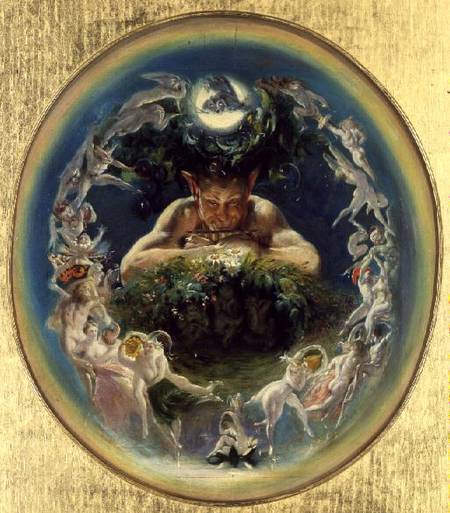
RAK9388 Faun and the Fairies, c.1834 by Maclise, Daniel

Faun and the Fairies, c.1834 by Daniel Maclise

“The good characters of book stand for the various virtues, while the bad characters represent vices. “The Red-Cross Knight” represents holiness while “Lady Una” represents truth, wisdom and goodness. Her parents symbolize the human race. The “Dragon” which has imprisoned them stands for evil. The mission of holiness is to help the truth, fight evil, and thus regain its rightful place in the hearts of human beings. “The Red-Cross Knight” in this poem also represents the reformed church of England fighting against the “Dragon” which stands for the Papacy or the Catholic Church.”

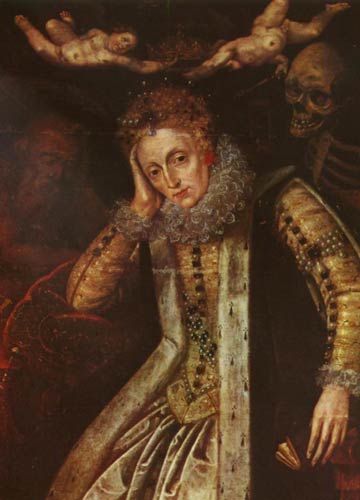
The Faerie Queene is an allegorical romance, and contains several levels of allegory, including praise for Queen Elizabeth I, who was Spenser’s great patron.

Elizabeth-I-Allegorical- painting  c.1610  by Unknown. Licensed under Public Domain via Wikimedia Commons

Allegory of Queen Elizabeth (c. 1610), with Father Time at her right and Death looking over her left shoulder. Two cherubs are removing the weighty crown from her tired head. Artist unknown.

Allegory is not always something that works well if you desire commercial success with your novels. This is because allegory is the sort of thing that only becomes apparent on further contemplation by the reader–which many casual readers don’t usually want to do and modern action-based literature does not encourage. A great many of today’s readers are action-junkies, so if you choose to present a moral concept through the use of allegory, you must take a page from Stephen King‘s work and  wrap it up in such a way that the average reader will enjoy it for the entertainment value, while the discerning reader will look deeper and find more layers to enjoy within your work.

ClassroomSynonym.com says: “At the foundation of a well-constructed allegory are carefully crafted parallels between two separate issues. To properly analyze an allegory it’s important to identify these parallels and explain why the parallels are such strong indicators that an allegory exists. Even though “The Crucible” is literally about a witch hunt, the unfair tactics for deciding who is a witch and who isn’t parallel the claims made during the McCarthy Era with little justification other than rumor and hearsay that certain people were communists. The unfair method of designation is the parallel.”

Crafting an allegorical narrative requires planning and intention. Clarity of thought on your part is absolutely crucial if your deeper story is to become clear to the reader. I suggest you outline so that the beginning, middle and end are clear before you begin.

An effective allegory narrative will have a clear moral or lesson that will become apparent at the end of the essay. Even if it is not stated directly the message will be implicit in the final resolution. You want to be sure that the ending reflects your final thought on the subject.

  1. Use Symbolism

The allegory is the symbol of your idea. This means your narrative or poem conceals the true theme you’re symbolizing. In other words, you are writing a cover story that will contain the primary one.

  1. Planning Your Characters Is Essential

Each character in an allegory represents an underlying element to your theme. Because the reader is expected to interpret the whole story and find what it means, no character can be introduced that does not directly pertain to and represent part of the underlying story. The moment you introduce a random character into it, your allegory devolves into chaos and your deeper meaning is lost.

  1. Planning Your Action is Essential

The arc of the scene becomes tricky. Every action is crucial–action must show something that pertains to the underlying theme, not just push the overlying story forward.

  1. Insert Hints Regarding the Deeper Meaning Into The Overlying Story

What that means is, you’ll be expected to leave evidence in your story for the discerning reader to grasp. Some authors have used irony, and sarcasm.  Others use large metaphors. No matter what you choose, subtle clues will guide the reader to the deeper story, and you want them to catch that underlying meaning, or you wouldn’t have written it. You don’t have to explain it baldly—readers love figuring out puzzles. But you do have to make sure a trail of breadcrumbs is there for your reader to follow.

E-how gives us this perfect, concise example: “For instance, if you want to show the damage done to the environment by humans, then the character symbolizing “everyman” could end up harming or hurting the character symbolic of the environment.”

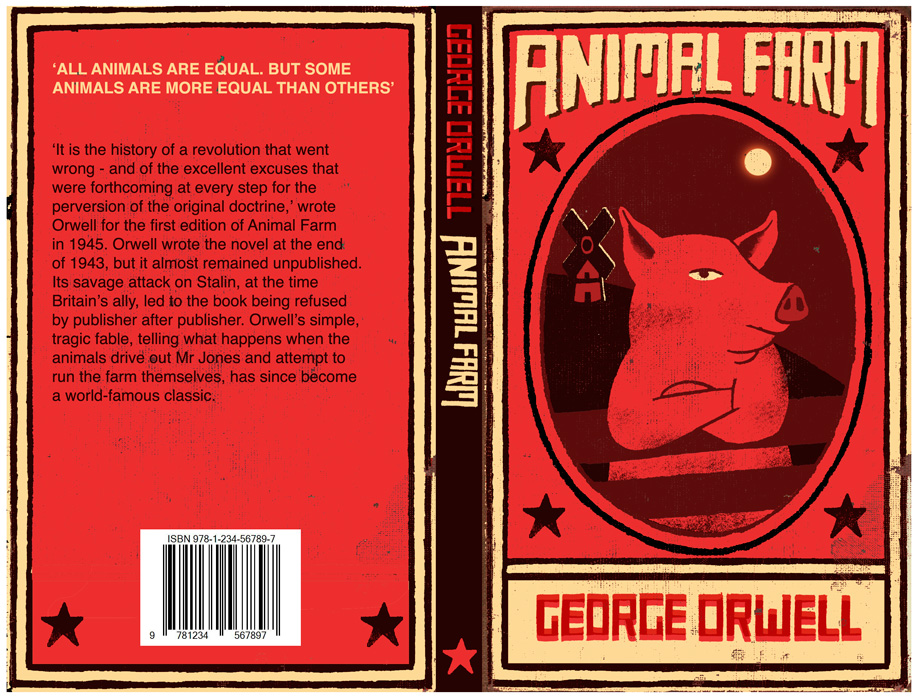
animal farm george orwellI love allegories, and I have written a great deal of poetry that is allegorical.

I have read The Faerie Queene and The Crucible, and was challenged by both, for different reasons. One reason for that challenge in The Faerie Queen is that Spenser used many words that were considered archaic even in Elizabethan times, so you have to interpret it as you go.

Some other famous allegorical novels I have read are:

Animal Farm by George Orwell

An allegorical and dystopian novella by George Orwell, first published in England on 17 August 1945. According to the author himself, the book reflects events leading up to the Russian Revolution of 1917 and then on into the Stalin era in the Soviet Union.

The Trial by Franz Kafka  Kafka’s descriptions of law and legality are considered allegories for things other than law, but it does clearly show how law and legality sometimes operate paradoxically.

Thinner by Richard Bachman (Stephen King writing under a pen name) Horror: An allegory about what lies beyond the limits of prosperous American complacency and where the responsibilities of human actions ultimately lie.

I will just say that allegorical novels are not written to be comfortable, cozy reads. They can be quite disturbing and thought provoking, as both Animal Farm and Thinner were to me. They were extremely disturbing, if you want the truth, but that was what makes them great literature. I was in the mood for a meatier read, and they took me out of my comfort zone, showing me disturbing aspects of the world I live in. These were things I could not change on a global level, but which I could possibly change within in my own sphere, thus my horizons were widened by reading them.

4 Comments

Filed under Adventure, Books, Fantasy, Humor, Literature, Publishing, Uncategorized, writer, writing